Traditional floral tattoos can fit a one-sitting appointment, but “barely painful” depends on placement, size, and your own threshold. The smartest designs stay compact, use crisp linework, and avoid high-sensitivity zones when you’re new to ink. I’ve learned that a clear plan matters more than chasing the smallest possible tattoo. Let’s make yours meaningful!
Quick answer: Choose a simple flower, a readable size, and a placement with more padding. The outer forearm, thigh, shoulder, and upper arm usually offer better comfort than the sternum, ankle, ribs, or foot.
Small Traditional Floral Tattoos With Crisp Linework
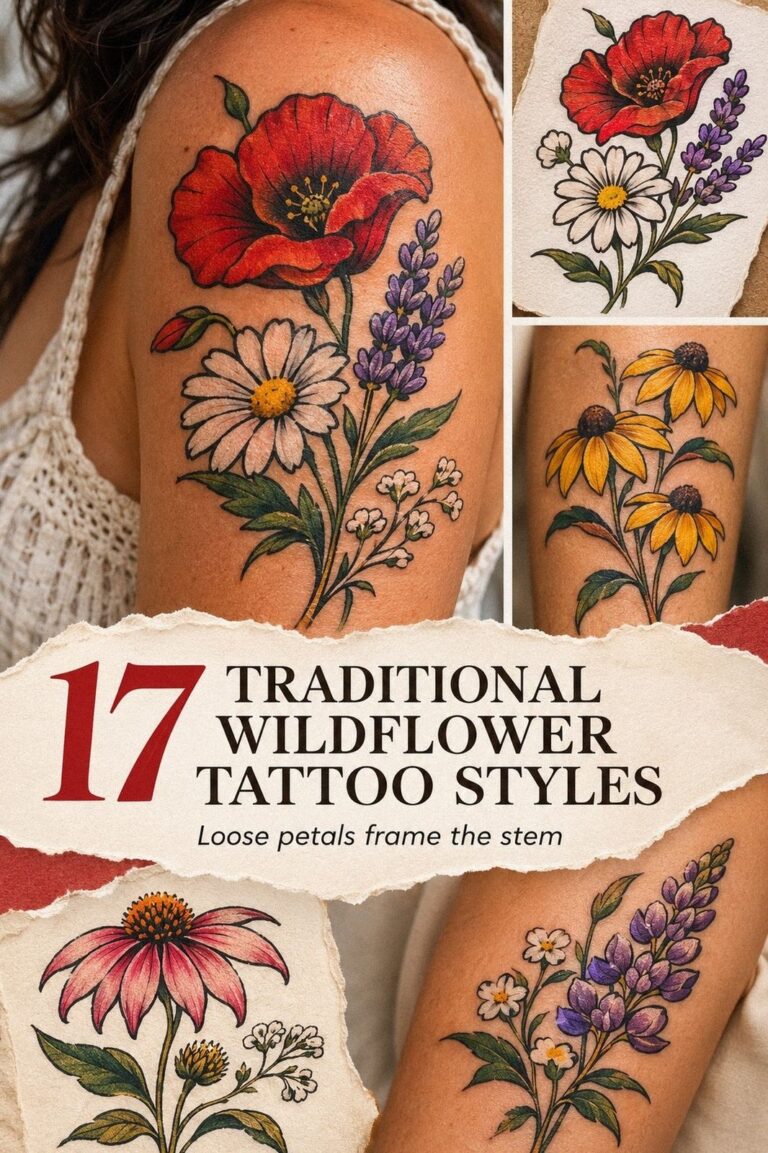
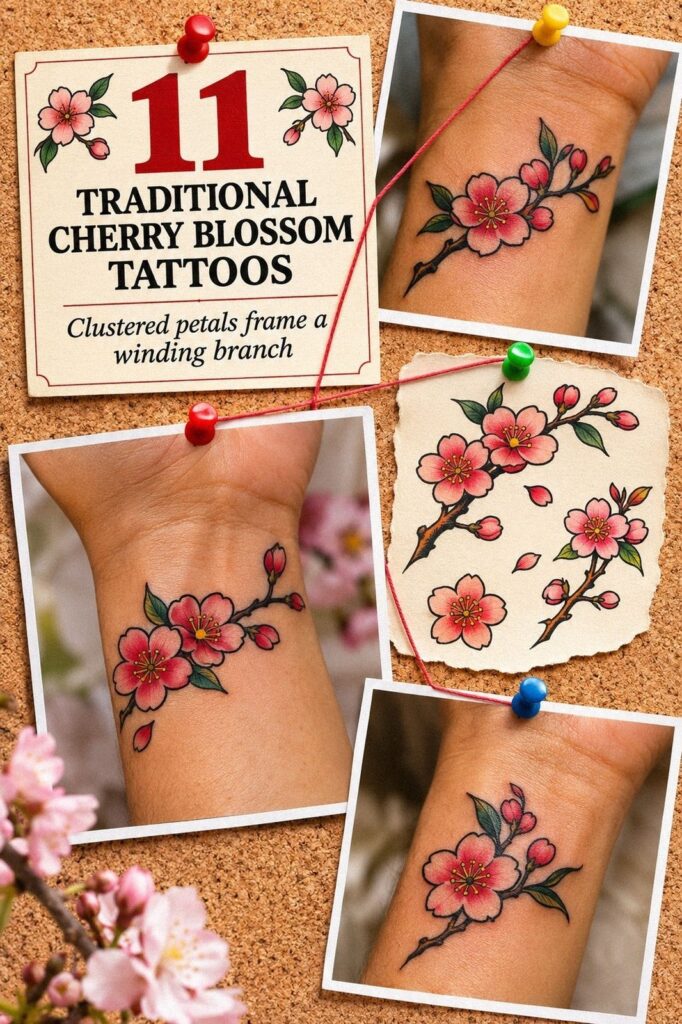
A small wildflower sprig can look striking without taking over your skin. Use crisp outlines, tiny leaves, and terracotta, stone-grey, and olive accents. I’d keep the central motif around 2.5 to 3 inches so you’re not sitting longer than needed.
A clean 3RL needle can create fine stems and petal separations. A slightly wider liner can keep the outer shape readable. Leave breathing space between the flowers.
If every petal touches, the tattoo won’t stay as expressive after healing.
The sternum can feel sharp because the skin sits close to bone. Still, a compact piece may be manageable if you’re prepared and hydrated. I wouldn’t choose this placement for a first tattoo if you’re nervous about sensitive areas.
Ask for terracotta tattoo ink in the petals, stone-grey touches in the leaves, and restrained olive accents. That limited plan feels classic and personal. You don’t need heavy shading to make a tiny wildflower memorable.
If you prefer less sensitivity, compare this with tiny floral tattoos or fine-line floral tattoos. Both can help you decide whether a sternum piece is worth it. I’d choose this idea when centered placement matters more than total comfort.
Traditional Floral Tattoos Framing the Collarbone
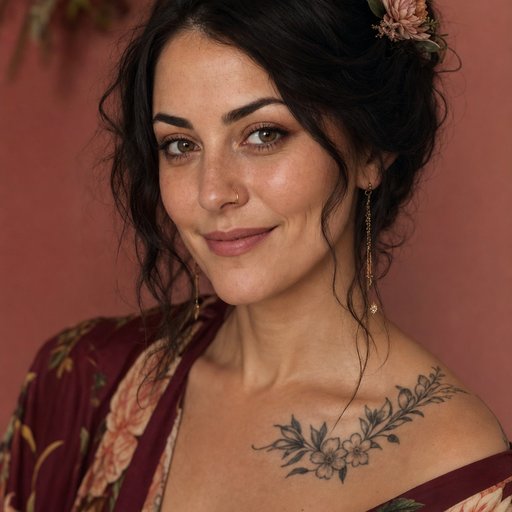
A collarbone branch follows the natural line of the body. Let the stems move beneath the bone instead of forcing a straight strip. Clay petals, warm cream highlights, and muted brass-gold accents can look elegant without requiring a large design.
I’d ask for a thermal transfer stencil in several positions before the needle starts. A design can look right on paper and feel awkward once it crosses the collarbone’s curve. Your artist should check it while you’re standing.
The collarbone is often more tolerable than the sternum. The area closest to the bone can still feel fierce, though. Don’t schedule this right before a long day carrying a bag on that shoulder.
Keep the leaves clear. Let the flowers carry the color.
A little warm cream ink behind the petals can add depth, but dense shadow may make the branch look muddy. The understated version can heal more clearly.
For a softer direction, browse delicate floral tattoos. Spacing changes the entire mood. I’d pick this placement when you want something feminine, visible in a tank top, and easy to extend later.
Bold Traditional Floral Tattoos in Color
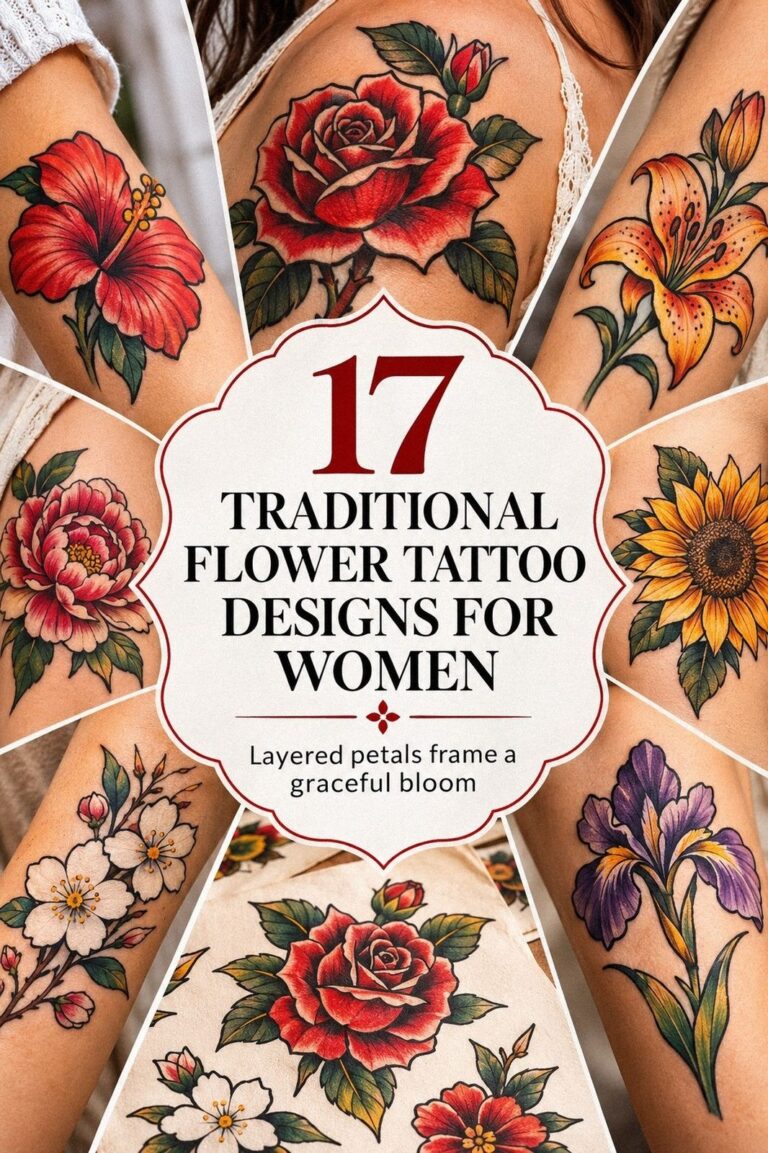
The thigh gives a rose plenty of space to breathe. Use a larger bloom, defined leaves, and plum, grey, and rose-gold color that sits clearly against the skin. You can make the flower dramatic without turning it into a long appointment.
A traditional rose needs a firm outer contour. I’d choose 5RL needle linework around the petals and reserve smaller lines for the folds. That contrast keeps the flower readable after healing.
The thigh is one of the more tolerable placements for many people. It still won’t feel effortless for everyone. Tight clothing, sweating, and friction can bother fresh ink, so plan loose clothing for the appointment and the next day.
Use plum tattoo ink for the rose, grey shading for the leaves, and a selective rose-gold accent. Keep the black outline controlled.
The plum pairing feels iconic and romantic when the color boundaries stay clean. That structure also gives you better long-term value than a fragile color fade.
If you’re comparing styles, watercolor floral tattoos show a softer approach. Black floral tattoos keep the contrast sharp. You’ll know this is your choice if you want a classic flower with more visual authority.
It’s a strong option!
Traditional Floral Tattoos With Meaningful Birth Flowers
Birth flowers work well on the calf because you can combine several blooms without crowding the skin. Choose one main flower and one supporting sprig. The result can feel meaningful without becoming a full bouquet.
Bring your birth month, a family reference, or a memory your artist can translate. A custom flower stencil should show the silhouette before the appointment. You don’t want to discover that your meaningful flower looks like three others once it’s reduced.
The calf is usually more tolerable than the foot or ankle. The area near the shin can feel sharper. If you’re planning one sitting, keep the composition narrow and vertical.
A 3- to 5-inch arrangement can read clearly. It can also hold two symbolic flowers without making the cost jump too far. Ask whether the size gives you enough detail for the value you want.
I’d use navy botanical outlines with white highlights and walnut-brown accents. Too many colors can make a symbolic design feel busy. A graceful arrangement will still feel personal years later.
For compact references, see small floral tattoos. You’ll find useful ways to reduce a larger bouquet without stripping away its identity. I’d choose this concept when every petal needs a reason.
Unique Traditional Floral Tattoos for Forearm Placement
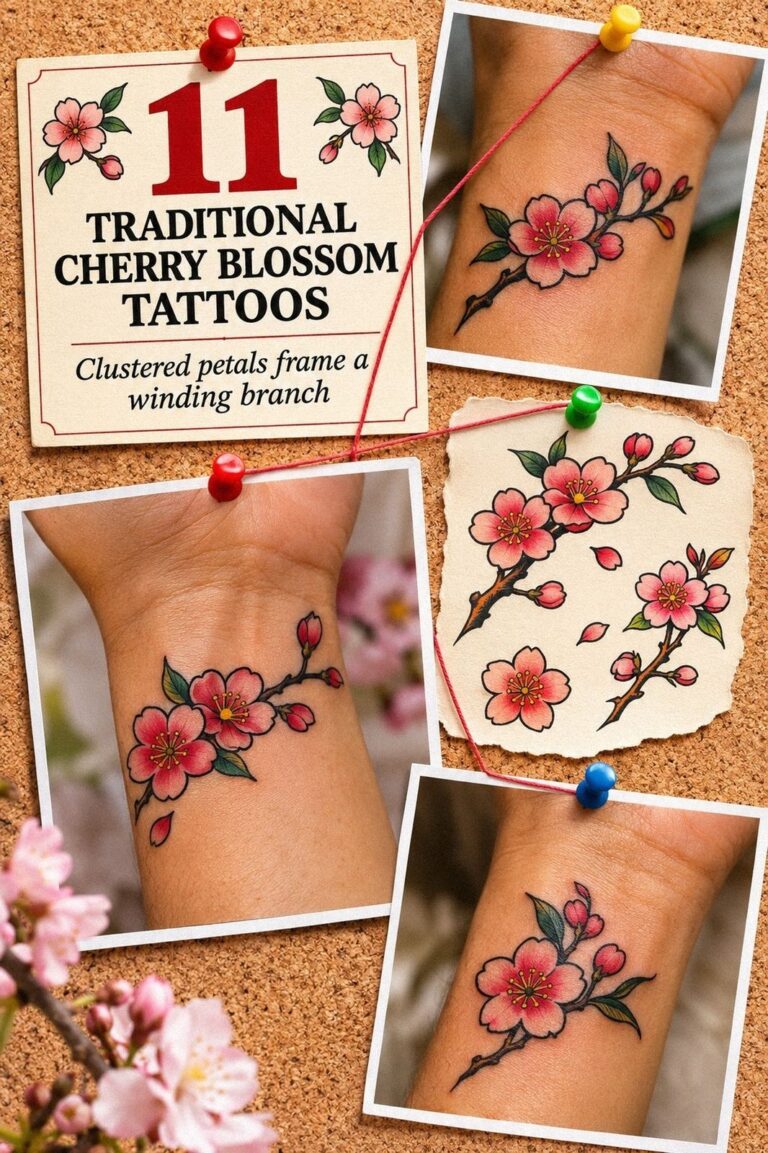
The outer forearm gives you a clear path for a hand-drawn American traditional flower. Choose one motif instead of combining every charming detail from a flash sheet. A single design often gives better value than a crowded collection of small marks.
Look for a flower with a clear silhouette and enough negative space around the leaves. Aged flash paper can inspire the shape, but it shouldn’t dictate the final scale. Your artist may need to simplify a petal or widen a stem.
The outer forearm is often more tolerable than the inner wrist, hand, or elbow crease. I’d place a 3- to 4-inch sprig where you can see it easily. The placement also gives your artist a clean visual path.
An emerald and gold ink plan with cream highlights gives the flower a distinctive identity. You can request a softer version, but I’d avoid removing every heavy line. Without that structure, the piece may look like a generic floral sketch.
If you like the sheet format but want a more geometric direction, browse geometric floral tattoos. Circles, arches, and petals can work together when the composition stays focused. I’d pick this idea when you want something unique without an inflated budget.
Delicate Traditional Floral Tattoos Behind the Ear
Behind the ear works best for a small wildflower sprig close to the hairline. Keep the design simple. This placement has very little room for extra detail, but the result can still look dainty and memorable.
Ask to see the stencil transfer gel while your head is in a natural position. The skin can shift when it’s stretched. I’d rather see a slightly larger flower with clear petals than a tiny mark that loses its shape.
The area can feel surprisingly sharp because the skin is thin and close to bone. Sound and vibration may also feel intense. If you’re sensitive to noise, bring approved ear protection and tell your artist before the session begins.
Use forest-green botanical ink for the stem, rust for the bloom, and a muted natural-brown accent. Skip heavy fill. A small tattoo here can be empowering, but it won’t hide mistakes behind visual weight.
For other compact placements, compare delicate floral tattoos with tiny floral tattoos. Scale changes the detail your skin can carry. I’d choose behind the ear only if you’re comfortable with a visible, personal mark.
Traditional Floral Tattoos With Daring Snake Details
A snake winding through a flower adds movement and symbolism. Keep the body connected to the stem instead of stacking two separate subjects. The result can feel edgy while the bloom stays easy to read.
A snake scale stencil should be simplified before the tattoo machine starts. Tiny scales can blur, especially when the piece is small. Use a few intentional marks, a clear head shape, and open skin around the body.
The calf gives you enough surface area for a compact composition. It’s generally more tolerable than the foot or ribs. Skin near the shin can still feel gritty, so discuss the exact route before the stencil is applied.
Use charcoal tattoo ink for the snake, dusty rose for the flower, and a muted brass accent. Don’t make both subjects equally dense. The flower should remain delicate while the snake supplies the fierce counterpoint.
Browse black floral tattoos for stronger contrast ideas. Then compare geometric floral tattoos if you want a more structured composition.
I’d pick this pairing when symbolism matters as much as appearance. It’s daring without becoming chaotic!
Classic Traditional Floral Tattoos Across the Shoulder
A shoulder branch can follow the rounded shoulder cap. Let the leaves move with the body’s slope. Stop before the collarbone unless you’re planning an extension.
Ask your artist to place the shoulder-cap stencil while you move your arm. A design can look balanced with your arm down and tilt when you lift it. That quick check can save you from an awkward stem.
The outer shoulder is often one of the more tolerable areas. The upper edge near the collarbone may feel sharper, though. A compact branch can still be finished in one appointment.
I’d choose black outline structure with warm-white and camel accents in the petals. Traditional structure usually holds better than hair-thin lines. If you prefer an understated look, reduce the number of blooms instead of weakening every contour.
For compact placement ideas, explore small floral tattoos. You’ll see how a reduced design can keep its personality. I’d choose the shoulder when you want a classic piece that can stay discreet under a sleeve.
Traditional Floral Tattoos Featuring Vibrant Peony Ink
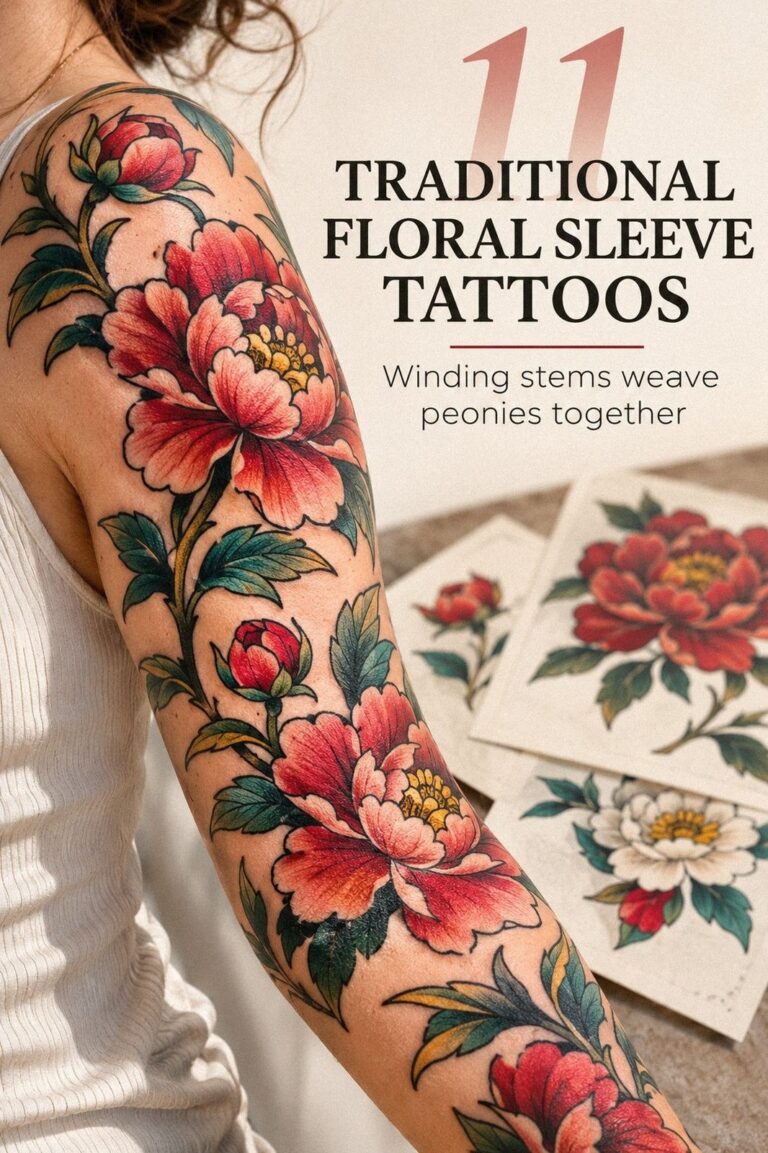
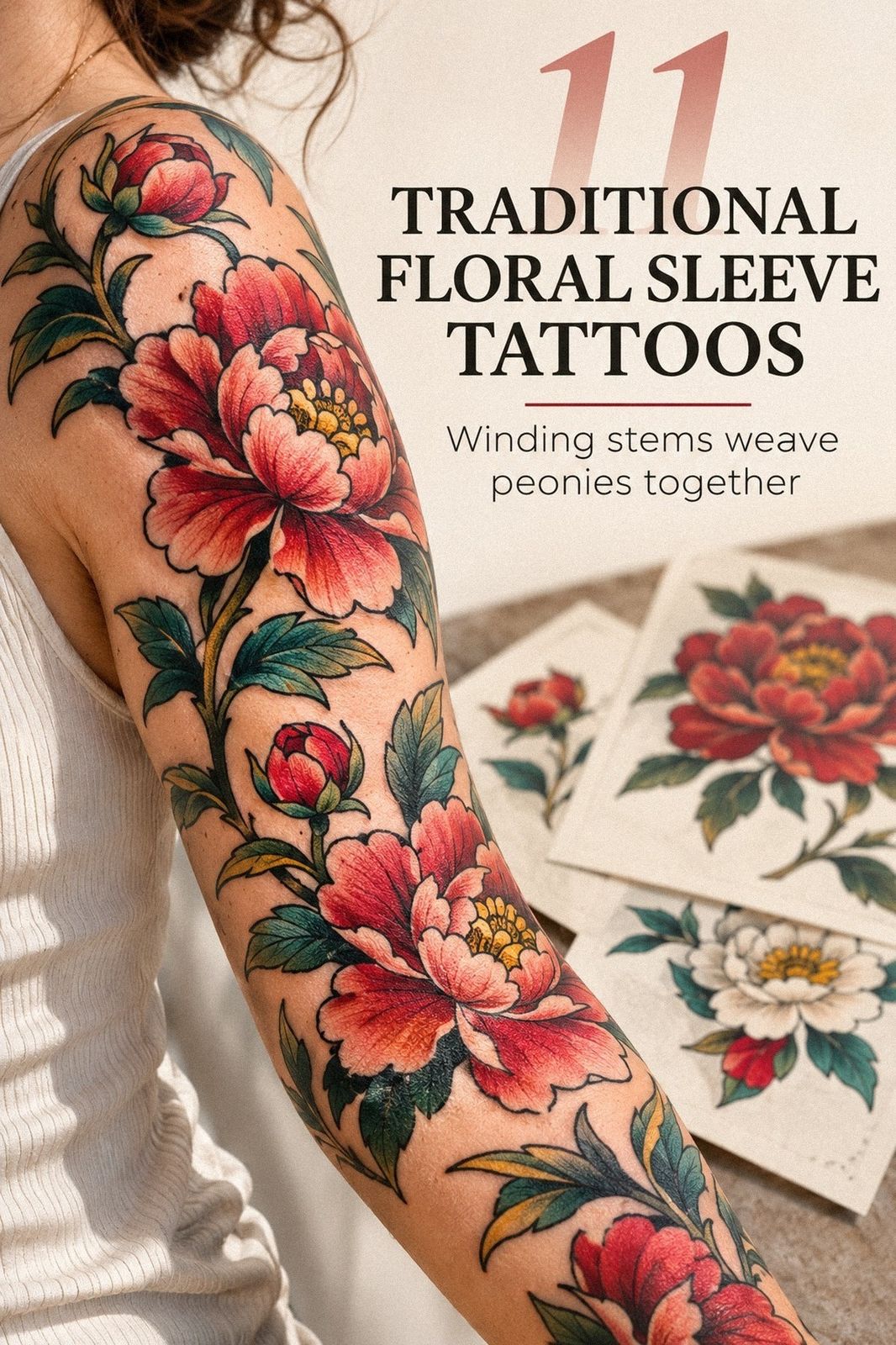
A peony needs layered petals and a clear center. Keep the outer shape readable. You can use rich color without creating an oversized appointment.
A peony color map can show where each tone belongs before the appointment. Ask for a dark center, midnight-blue petals, copper touches, and a few ivory highlights. Filling every gap can make the bloom look flat.
The upper arm is often more tolerable than bony placements. It also gives the artist a forgiving surface. You’ll still need to consider sleeve friction and sun exposure while it heals.
Use midnight-blue tattoo ink with copper accents, ivory highlights, and firm black contours. Avoid pastel-only color if longevity matters to you. Fine lines can spread over time, while solid structure often gives better value.
You can compare this with watercolor floral tattoos or fine-line floral tattoos. You’ll see the tradeoff between saturated color and soft detail. I’d choose the peony when you want an iconic flower that feels powerful.
Minimal Traditional Floral Tattoos on the Ankle
An ankle flower needs a narrow shape and clear spacing. Use one simple stem, two or three leaves, and one bloom. The placement gives the design a personal edge without requiring a large tattoo.
Keep the ankle stencil away from constant shoe friction when possible. Check the design with your foot relaxed. Stretching the ankle can change the flower’s angle.
The ankle and foot can feel more painful than the thigh, shoulder, or forearm. There’s less padding and more bone. If comfort is your priority, move the design slightly higher onto the lower leg.
Use sage-green linework with warm-cream highlights and one muted brown accent. Avoid too many tiny petals. The result can look sleek and timeless when the lines have enough separation.
For an even simpler approach, browse minimalist floral tattoos and tiny floral tattoos. You’ll find ways to reduce detail without losing the flower’s identity. I’d pick the ankle when visibility matters more than comfort.
Ornate Traditional Floral Tattoos With Sacred Symbols
A floral arrangement with a sacred symbol needs a clear center. Let the petals support the mark instead of burying it. The design can feel ethereal when every symbol remains legible.
Start with a symbolic transfer stencil and check its orientation. A crescent, star, eye, or geometric mark can carry deep meaning. Choose one main symbol and let the flowers support it.
The upper arm is generally more tolerable. Its rounded surface gives you room for a compact composition. Leave enough negative space between the symbol and petals.
Use terracotta tattoo ink for the flowers, stone-grey shading for depth, and olive accents around the central symbol. Avoid excessive greywash around it. The result can remain sacred and personal while keeping a traditional structure.
If you want a measured composition, compare geometric floral tattoos with black floral tattoos. I’d choose this design when the tattoo needs to represent something specific, not simply fill skin.
Is a One-Sitting Floral Tattoo Worth It?
A one-sitting tattoo can be worth it when the design has a clear silhouette and realistic detail. It may not be worth it when you’re forcing a full bouquet into a tiny space. I’d rather see one readable flower than five crowded ones.
Ask what the appointment deposit includes. Some artists charge for drawing time, while others include a short consultation in the final cost. A quick conversation can protect your budget.
The best value usually comes from good placement and strong structure. A simple tattoo that heals cleanly can serve you better than a complicated design that needs correction. That’s especially true for small flowers.
If the piece needs several colors, dense shading, or custom symbolism, ask whether one sitting is realistic. Your artist may suggest a larger size or a second appointment. That can be the smarter choice.
The One-Sitting Rule I Trust
I’ve changed my mind about “quick” tattoos after watching small designs become complicated during consultation. A one-sitting piece should have a clear silhouette, a realistic size, and a placement you can tolerate. I’d rather see a 3-inch flower heal cleanly than force a 1-inch design packed with fragile details.
The numbers below are typical US reference points, not a promise from every studio. Your artist’s experience, region, minimum charge, color work, and appointment length will change the final quote. Ask for a range before booking.
I’ve found that the most graceful designs respect the skin’s limits. Fine lines can widen when packed too close together. Solid structure and sensible spacing tend to age better.
Follow your artist’s aftercare instructions. Wash gently, moisturize as directed, and avoid sun and swimming during early healing. Good care protects the value of the appointment.
A daring snake, vibrant peony, or sacred symbol can be meaningful. It shouldn’t be added only to make a small tattoo feel important. If you’re unsure, choose one flower, one placement, and one clear reason.
Where Budget Changes the Design
Your budget affects more than the final price. It can change the size, color count, detail level, and appointment length. A focused design often gives better value than a crowded one.
Ask whether the shop minimum applies before discussing custom details. A small tattoo may still meet the minimum charge. Knowing that number early helps you compare artists fairly.
Color saturation can raise the cost. Dense blackwork can also take longer than a simple outline. If your budget is tight, choose one accent color and protect the main silhouette.
Custom drawing time deserves attention too. You’re paying for the artist’s design skill, not only the minutes with the machine. A clear brief can reduce revisions and keep the appointment efficient.
I’d rather reduce extra details than choose an inexperienced artist. Clean healed work is worth more than a low quote. That choice can save you from correction work later.
Before You Book: Three Questions That Matter
First, ask which placement will be most tolerable for your chosen size. Your artist may suggest moving the design a few inches. That small change can make the session easier.
Second, ask how the healed portfolio compares with fresh work. You need to see how lines settle and how color holds. Fresh tattoos can look impressive before the skin finishes healing.
Third, ask what happens if the design runs longer than expected. A clear time estimate helps with your budget and schedule. It also gives you a chance to simplify before the appointment.
Bring one focused reference. Add notes about the flower, placement, and color. Too many unrelated references can blur the direction.
Tell your artist about allergies, medications, and previous reactions. They can explain their studio process and suggest a safer plan. Don’t hide concerns because you want to seem easygoing.
Give Tiny Designs Enough Separation
Small tattoos need restraint. Every line has less room to breathe, so crowded detail becomes muddy faster. A simple flower can look more polished than a miniature bouquet.
Use a negative-space plan before finalizing the stencil. Leave gaps between petals, leaves, and stems. Those gaps help the design stay readable as the skin changes.
Avoid shrinking a large design without editing it. A full-size peony may need fewer petals at 3 inches. A snake may need fewer scales and a stronger head shape.
Your artist should explain what will survive at the chosen size. Listen when they recommend removing details. That advice protects the design’s long-term clarity.
If the smallest version doesn’t feel right, increase the size. Spending a little more can improve the result. That’s often better value than preserving an unrealistic budget.
The Questions Worth Answering First
How much does a traditional floral tattoo usually cost?
I’d expect a small traditional floral tattoo to cost about $100 to $300 in the US. Shop minimums may run $50 to $100. Custom drawing, saturated color, and a limited schedule can raise the final cost.
Are traditional floral tattoos a good idea for a first tattoo?
I think they can be a meaningful first choice. I’d select the forearm, thigh, shoulder, or upper arm before the ribs or sternum. Crisp outlines also make flowers easier to simplify.
How do I choose a tattoo artist for traditional floral tattoos?
I’d look for clean healed photos, strong linework, and experience with American traditional flowers. Healed portfolio images matter more than fresh tattoos. I’d also ask about hygiene, consultation style, and placement advice.
How much do traditional floral tattoos hurt?
I’d expect pain to vary by person and location. Ribs, feet, hands, and sternum often feel more sensitive. Placement controls comfort more than the flower itself, so I’d ask about alternatives before booking.
How long does a traditional floral tattoo take to heal?
I’d allow about 2 to 3 weeks for surface healing and 2 to 3 months for complete healing. Gentle aftercare protects the result. I’d avoid swimming, direct sun, and picking at peeling skin.
What’s the best placement for traditional floral tattoos?
I’d choose the forearm, thigh, shoulder, or upper arm for readable lines and easier sessions. The outer forearm is especially versatile. You can see it clearly and extend it later.
Which colors work best for traditional floral tattoos in 2026?
I’d choose deep red, black, muted green, or selective yellow. Limited color usually stays clearer than a crowded rainbow palette. You can still save watercolor floral tattoos as softer references.
Where I’d Start First
If I had to pick one, I’d start with the outer forearm flash-sheet flower. You’ll get clearer linework, easier aftercare, and less sensitivity than the sternum or ankle. Pin this small floral tattoo guide for later, then bring one focused reference to your artist.