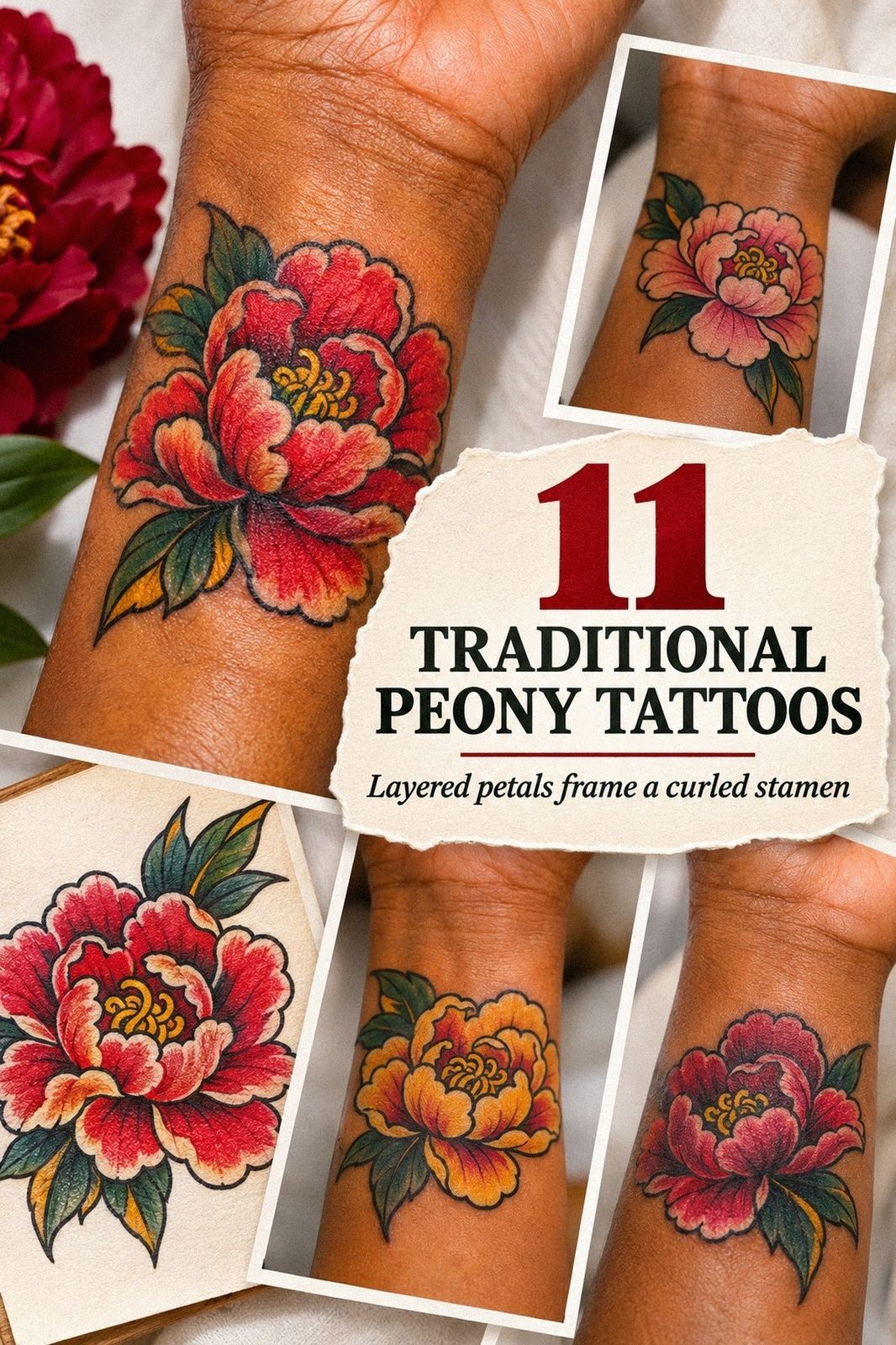
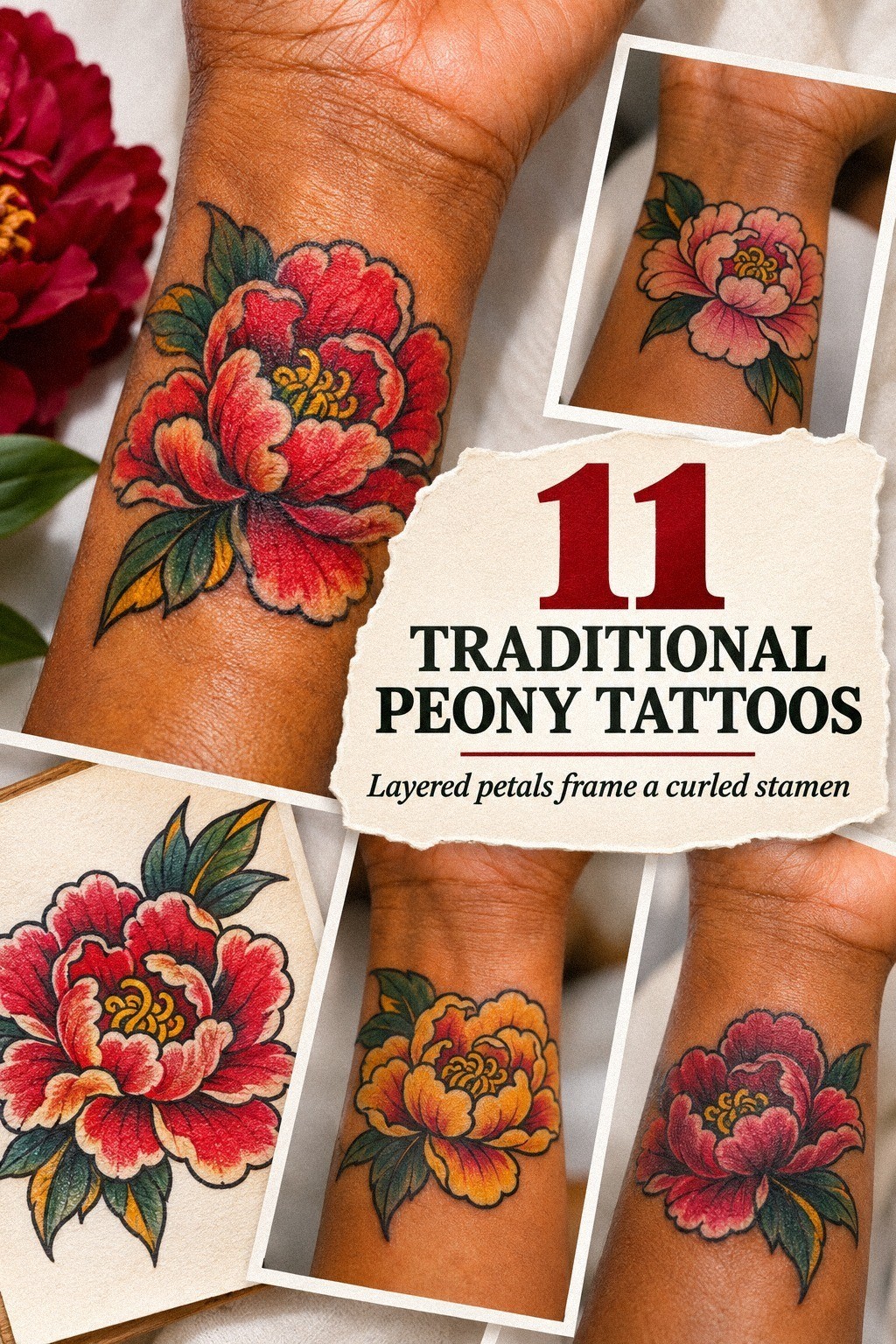
Traditional peony tattoo ideas can stay bold, readable, and personal for years when placement and line weight work together. I’d choose the skin area first, then the color balance, then the private symbolism behind the traditional peony tattoo. These 11 designs give you a sharper starting point!
- Start Small: A Traditional Peony Tattoo on the Wrist
- Let the Shoulder Carry a Bold Traditional Peony
- Why Plum Petals Still Work
A good peony doesn’t need to explain itself. It can carry a private meaning for you and still look striking to everyone else. I like designs that feel symbolic without becoming obvious.
- Start Small: A Traditional Peony Tattoo on the Wrist
- Let the Shoulder Carry a Bold Traditional Peony
- Why Plum Petals Still Work
- A Navy-and-White Traditional Peony
- The Leaf Frame: Traditional Peony With Green Leaves
- Wrap the Forearm With One Continuous Peony
- Japanese Waves Meet the Peony
- Behind the Ear: A Delicate Traditional Peony
- Pair a Traditional Peony With a Dagger
- Can a Heart Shape Stay Traditional?
- Ornamental Linework for a Spine Peony
1Start Small: A Traditional Peony Tattoo on the Wrist
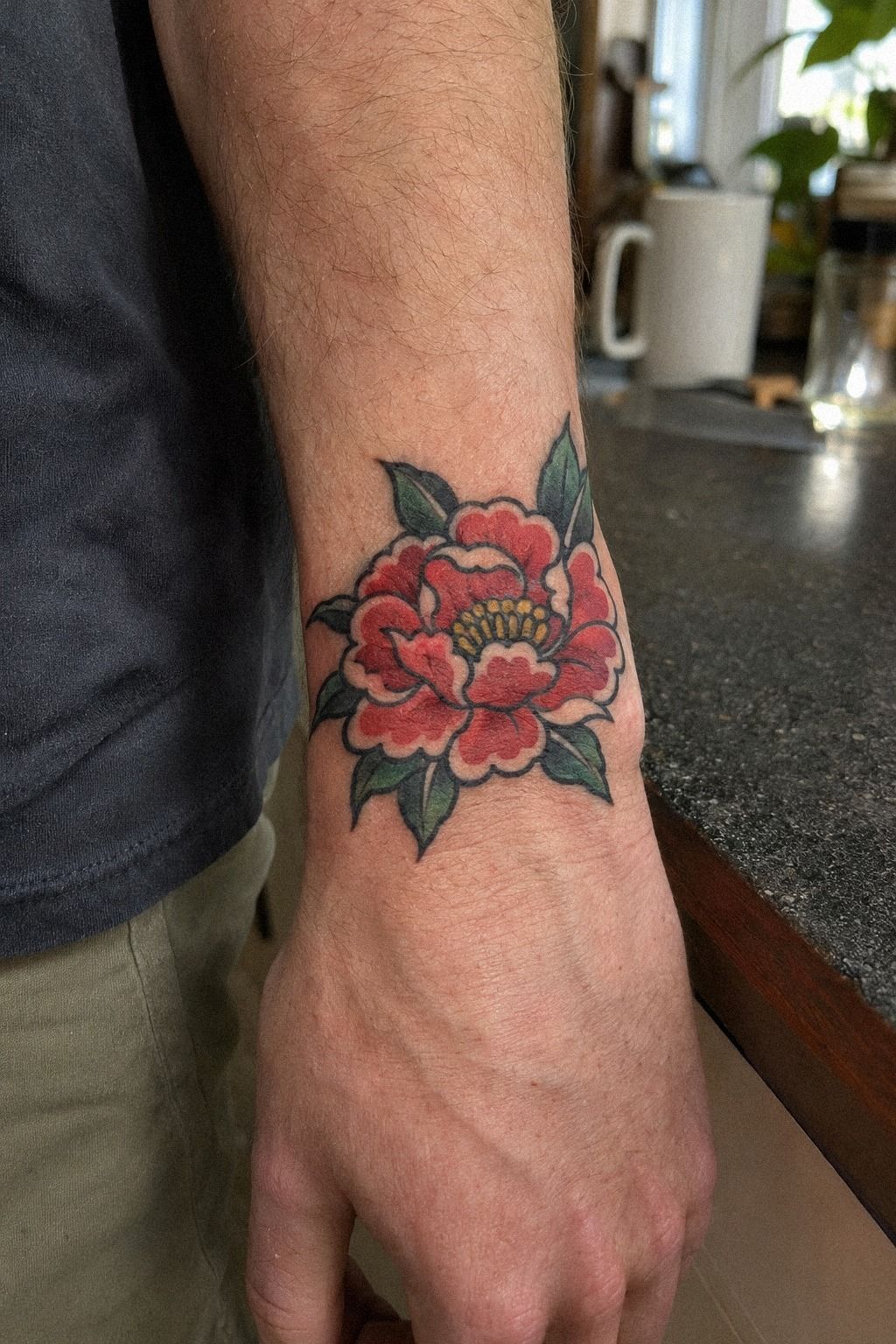
A small traditional peony tattoo on the wrist works best when the petals stay crisp. The center should remain easy to read. I’d keep the flower around 1 to 2 inches so it won’t become a crowded blur as your wrist moves.
This is the Wrist Weight Rule: the smaller the placement, the fewer decorative marks you need. Choose a crisp black outline, two or three petal folds, and a short leafy stem. Your result can feel elegant without forcing every detail into a tiny space.
Your wrist is visible often. The meaning should feel personal, not performative.
A single peony can represent devotion, resilience, remembrance, or a private turning point. If you’re comparing compact designs, browse these small peony tattoo ideas before choosing your final shape.
Movement matters, too. The skin bends, stretches, and catches sunlight throughout the day. A delicate outer petal may lose definition faster than a thicker interior line.
I’d skip ultra-fine shading here.
A terracotta-red center gives the design more presence. It also creates a clear focal point when the tattoo is viewed from a short distance. That small decision can make a dainty wrist piece feel surprisingly powerful!
2Let the Shoulder Carry a Bold Traditional Peony
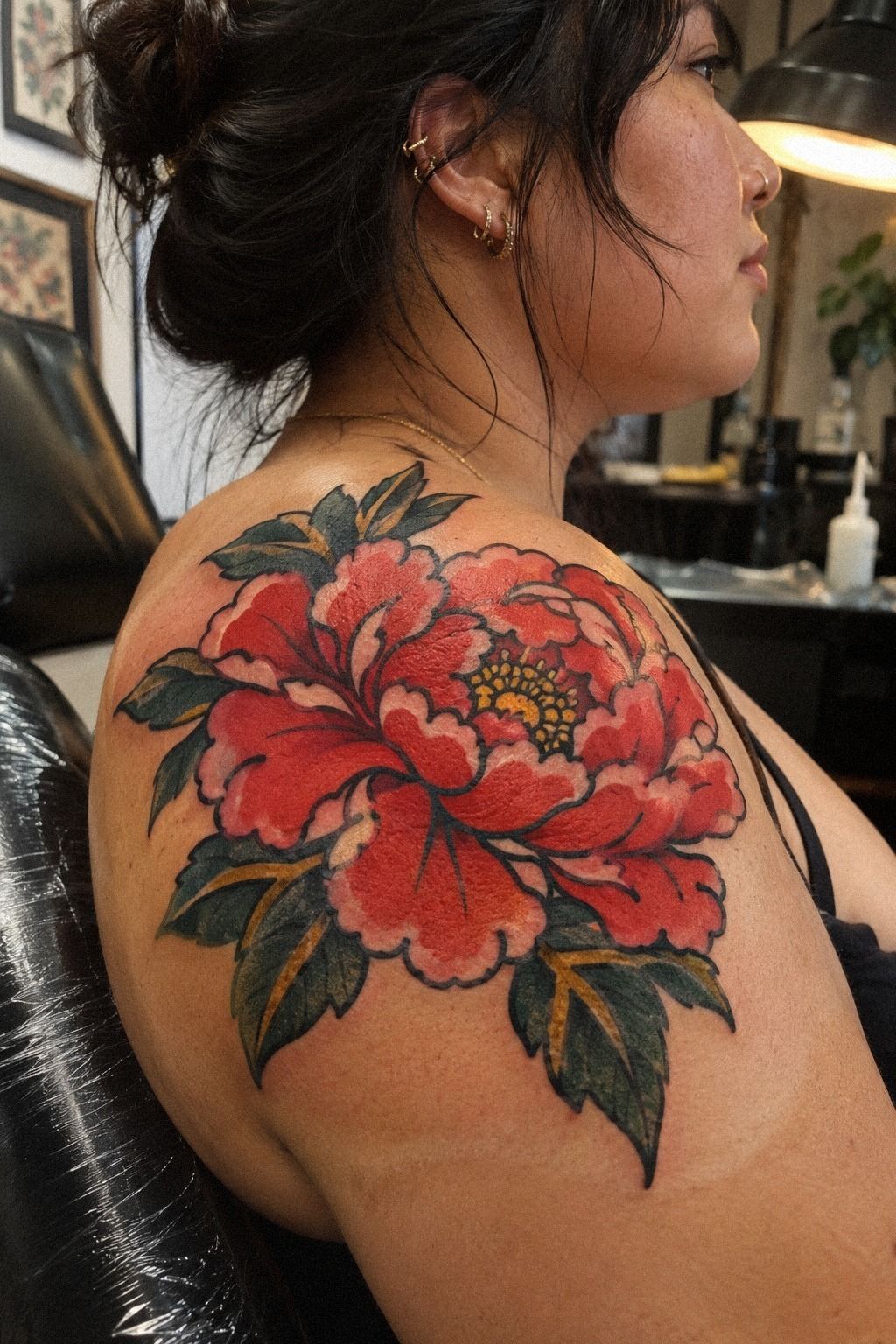
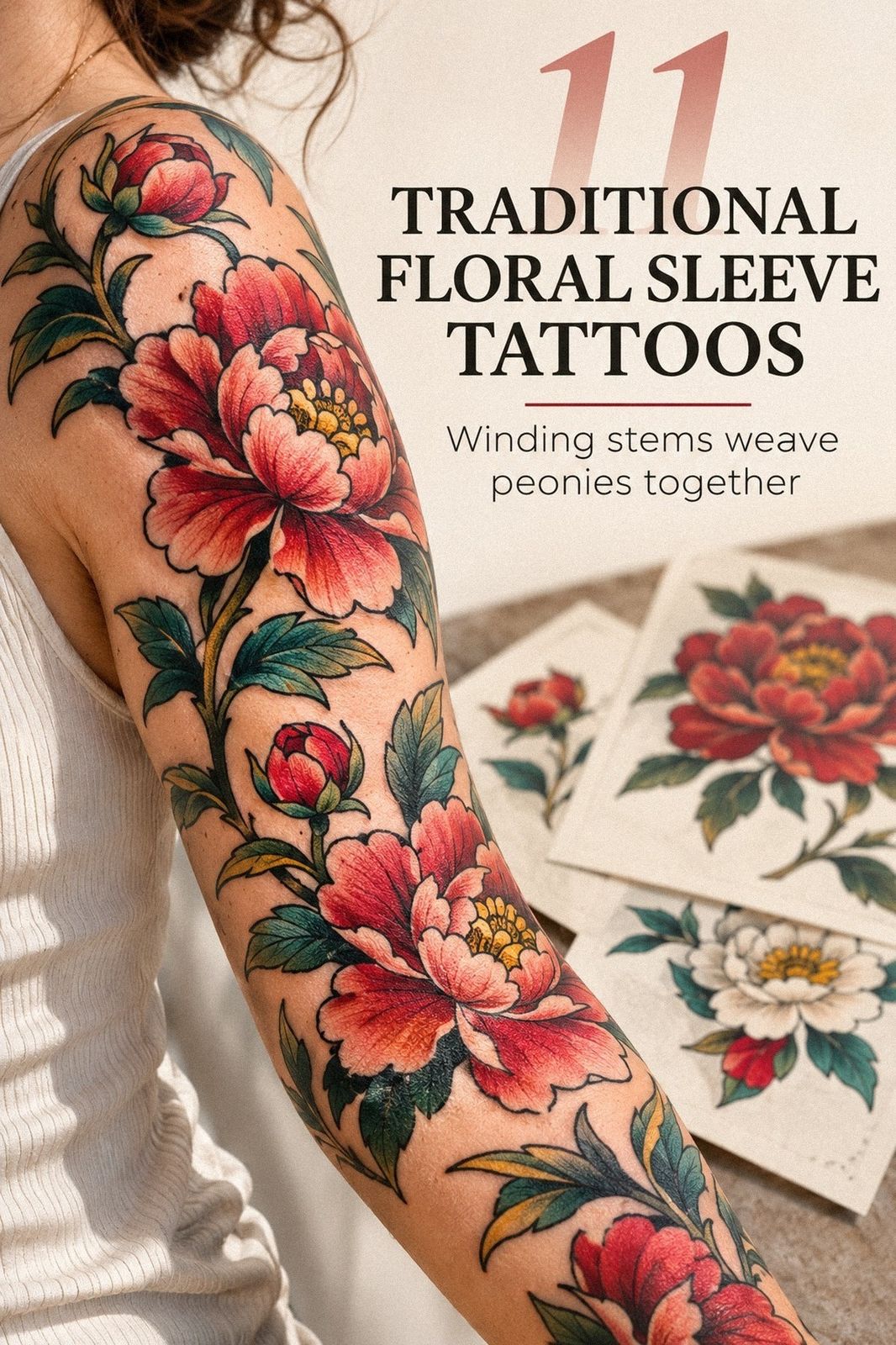
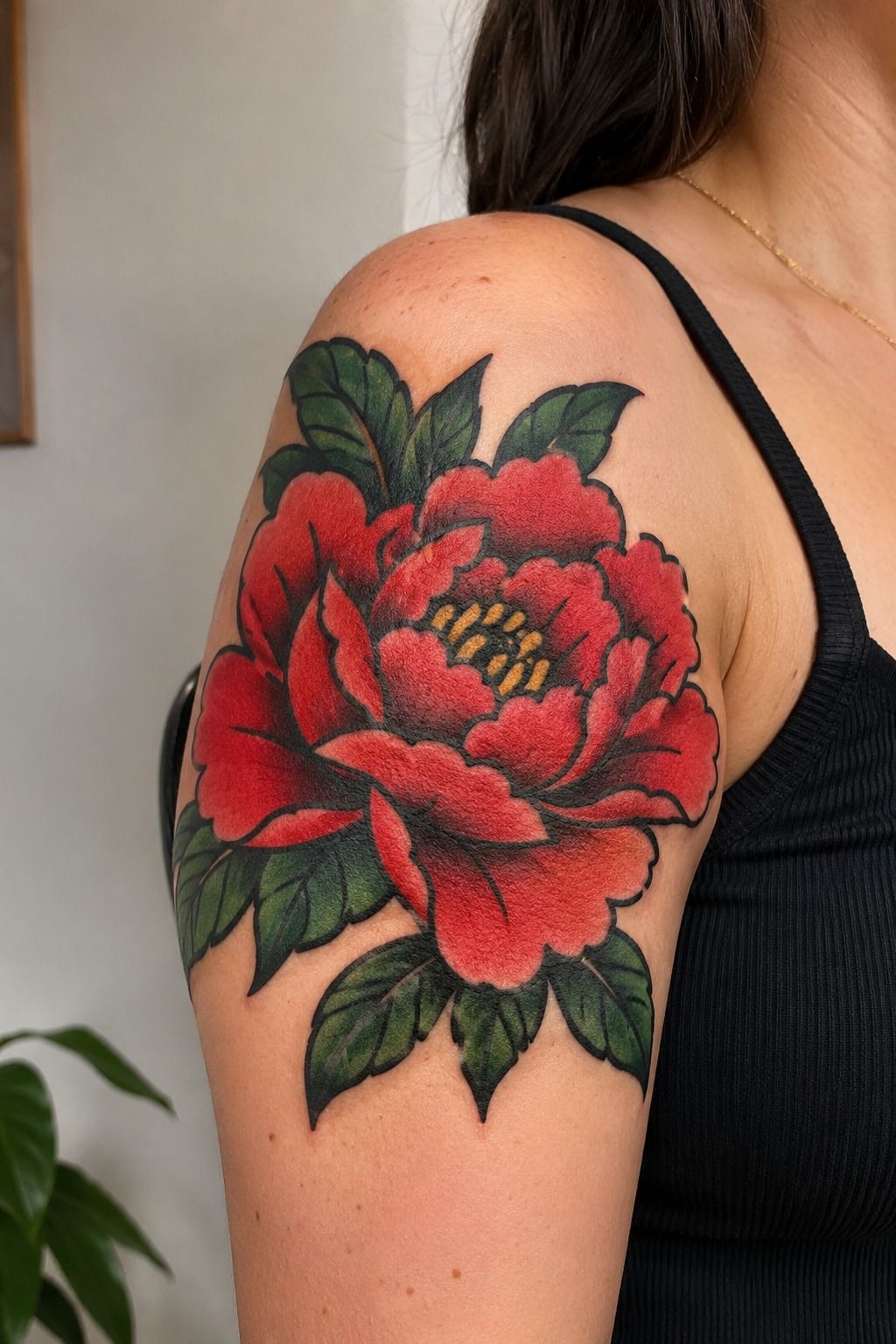
A bold traditional peony tattoo across the shoulder gives the flower enough skin to spread into a graceful arc. The warm clay-red petals can follow the shoulder’s curve without looking compressed.
I’d pair the bloom with pale cream breaks and restrained golden accents. That palette feels classic but less expected than bright red. Your tattoo can stay vibrant while the open skin keeps it readable.
The shoulder gives you room for a larger flower, thicker outlines, and a few flowing leaves. A bold shoulder placement can feel feminine, masculine, or completely personal depending on the petal shape.
Keep the outer contour decisive. Too many interior marks can weaken the silhouette. I’d ask your artist to preserve one clear center, two strong leaf directions, and enough negative space for the design to breathe.
3Why Plum Petals Still Work
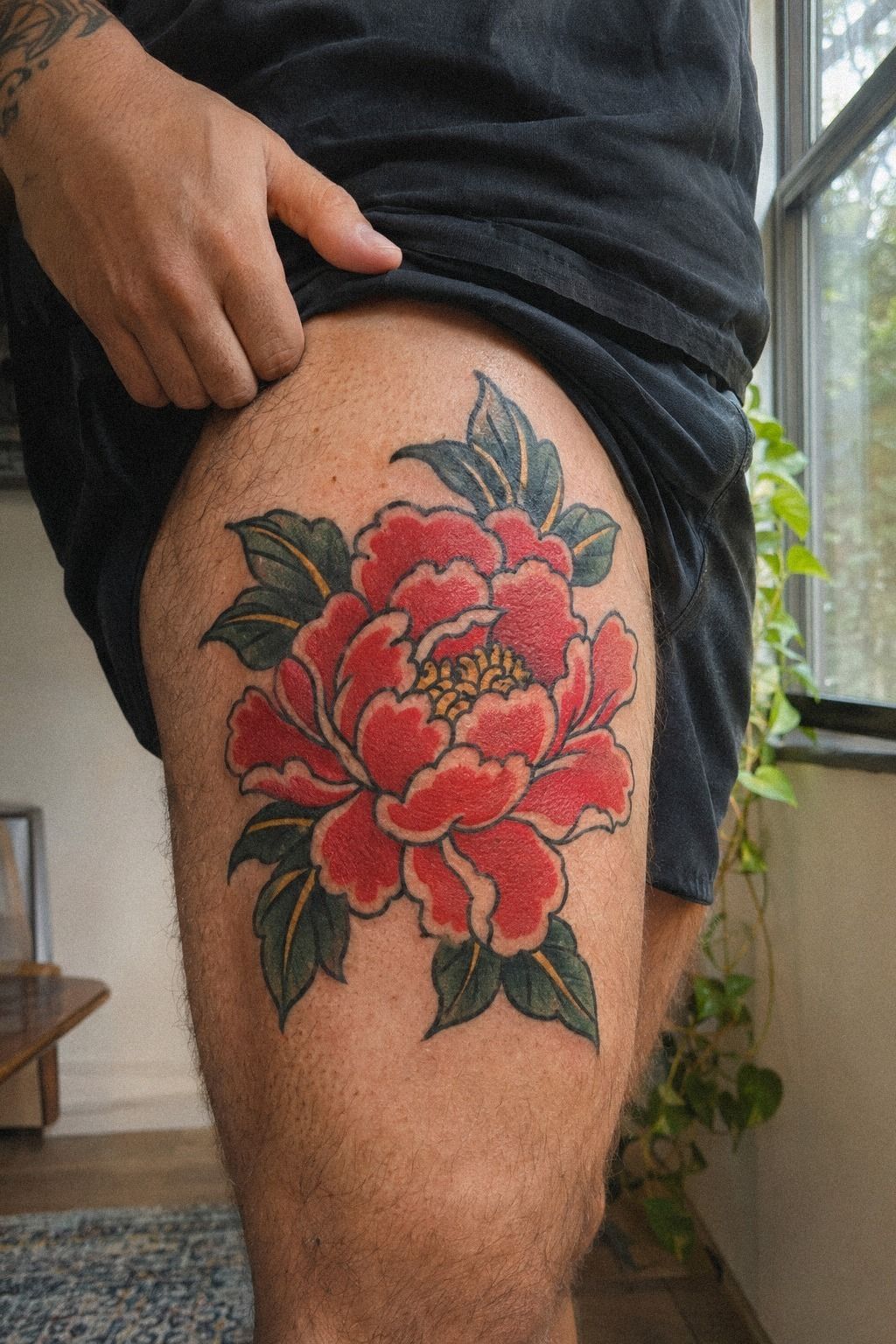
Plum petals give a traditional peony tattoo a recognizable visual language with a more haunting mood. I’d choose a deep plum rather than a bright red. The richer pigment gives the flower a timeless presence.
The Plum Petal Anchor is simple. Let one saturated area carry the emotional weight. Keep the soft grey shadows and rose-gold accents quieter.
Your eye should land on the flower first.
If every part is equally dark, the design loses hierarchy. The petals may look muddy, and the center may disappear. A rich plum fill keeps the composition clear.
A thigh placement gives you more space for a striking bloom. You’ll have room for a short banner, initials, or a second leaf.
I’d still resist adding too much text. The flower already carries a meaningful statement.
If you’re weighing plum against a restrained palette, read this guide to peony tattoo meaning. Your choice can be romantic, powerful, or personal without needing an obvious explanation. Controlled dark shading beneath the petals can protect the design’s structure as fine edges soften.
4A Navy-and-White Traditional Peony
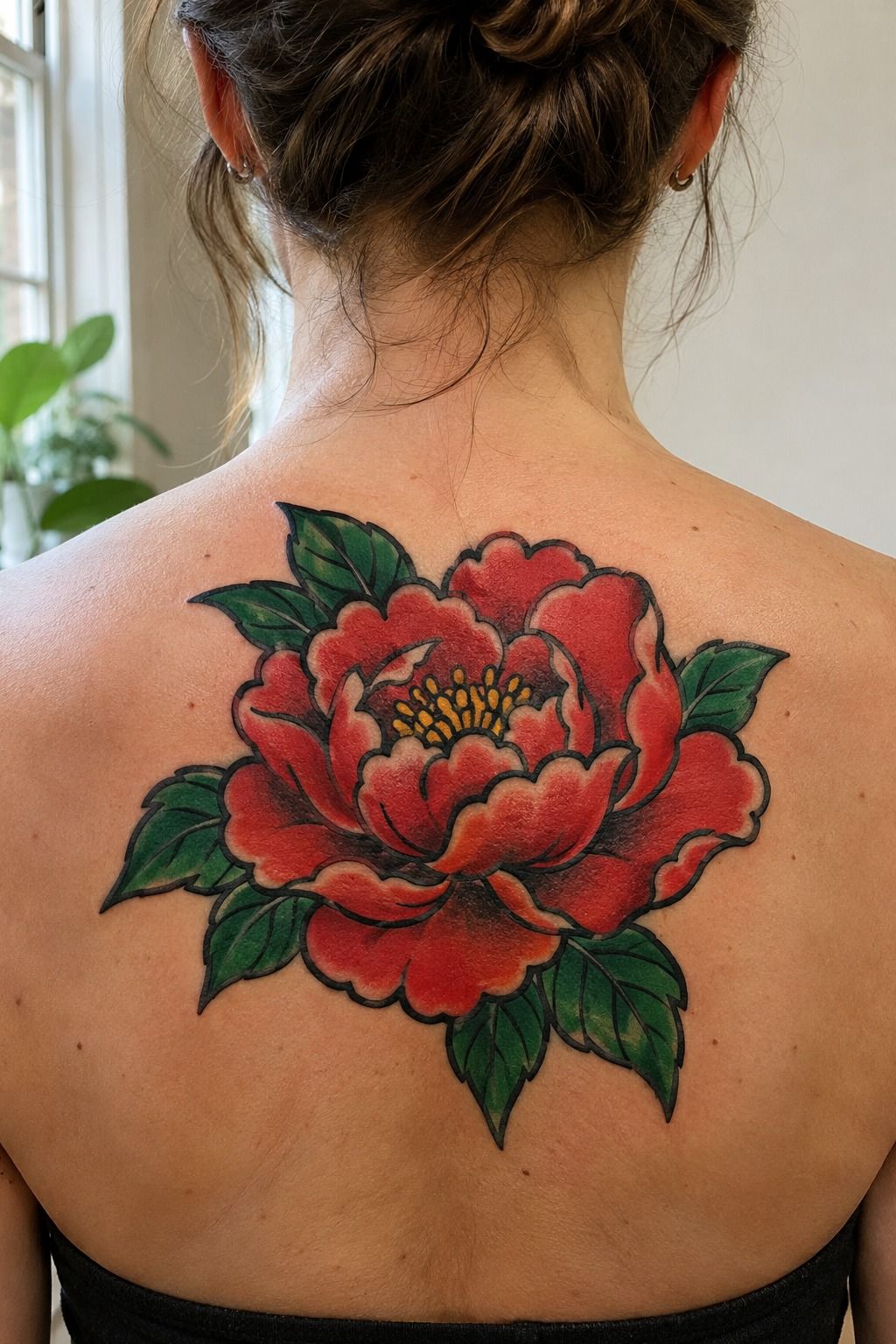
A unique traditional peony tattoo in navy and white depends on contrast rather than bright color. The design can feel raw and polished at the same time. That tension is what makes this palette memorable.
Start with a clear outside silhouette. Then choose where the darkest values belong. I’d place the deepest navy saturation in the center folds, lower leaves, or a small shadow beneath the bloom.
Navy-and-white doesn’t mean every area needs solid fill. Open skin can act as a highlight. It can also keep the flower from looking heavy on a smaller placement.
This approach suits the forearm, upper arm, calf, or shoulder blade. Your artist can adjust the petal spacing to match the area. A minimal shape may look more iconic than a crowded one.
If you want a sharper comparison, look at these traditional flower tattoo ideas. You’ll see how strong silhouettes and controlled negative space can make a simple design feel daring.
5The Leaf Frame: Traditional Peony With Green Leaves
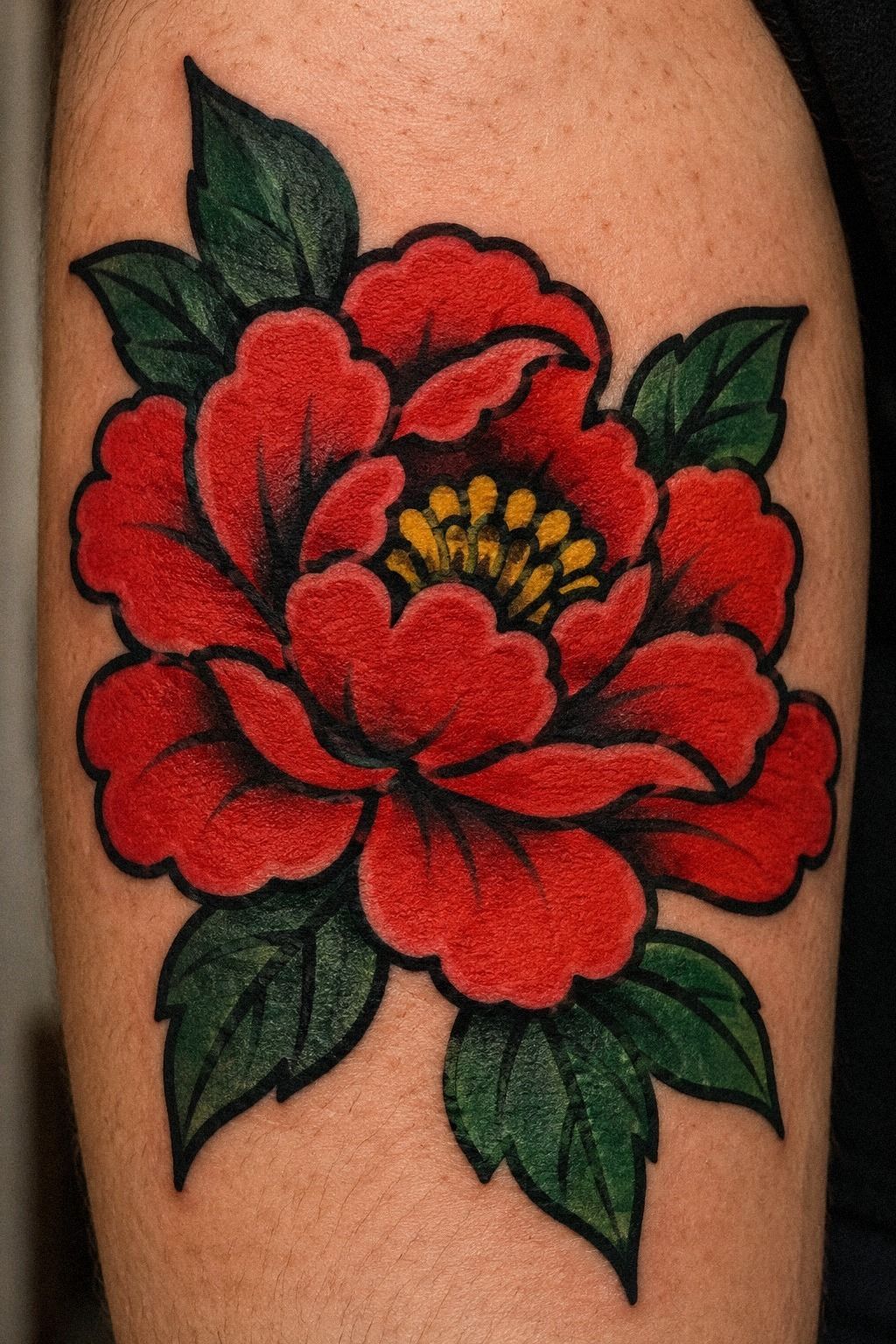
A traditional peony framed by emerald leaves feels complete without requiring extra symbols. The foliage can support the bloom’s direction. Cream petals and small golden accents can keep the composition vibrant.
The Leaf Frame Rule says your leaves should support the flower instead of competing with it. Choose two or three leaf shapes with different angles. Then add one smaller leaf to close a visual gap.
I’d skip a perfectly symmetrical border. A slightly uneven frame feels more expressive and hand-drawn. It gives your tattoo a playful edge without losing its classic structure.
When you’re reviewing a flash design, look for a clear outside contour. The best option will still read from a few feet away. That matters if your tattoo sits on the forearm, calf, or shoulder.
This concept can feel classic, vibrant, and whimsical. If you like botanical combinations, browse watercolor peony tattoo ideas for alternate color relationships. Then bring your favorite structure to an artist who specializes in American traditional linework.
6Wrap the Forearm With One Continuous Peony
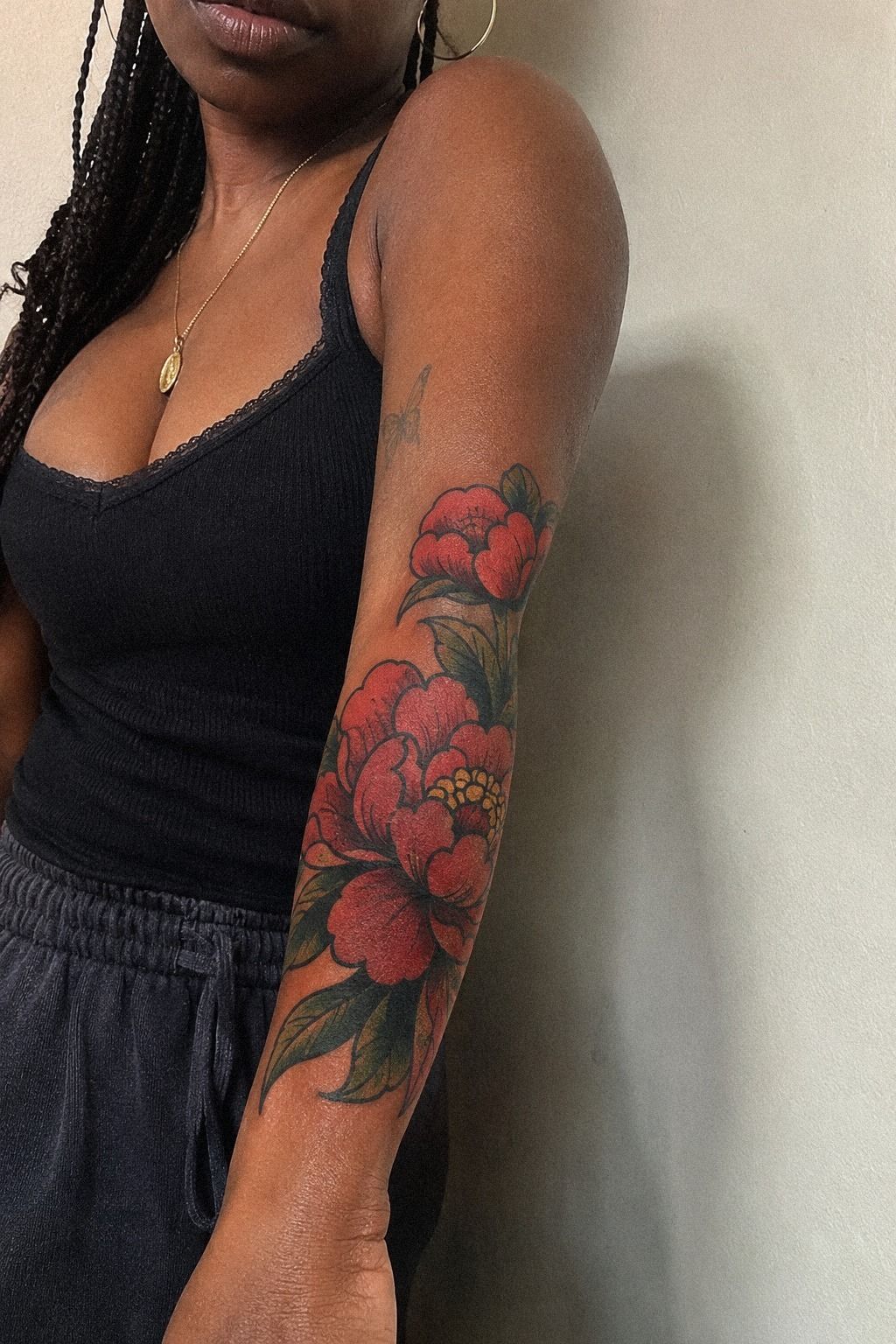
A traditional peony tattoo wrapped around the forearm creates movement by making the flower travel. It doesn’t sit in one fixed position. You’ll see the petals from several angles as your arm turns.
The Forearm Wrap Principle is about continuity. Your artist should plan the front, side, and inner forearm as one composition. Leaves should connect each view instead of ending abruptly.
I’d judge the design with your arm relaxed, turned inward, and rotated outward. The high-contrast contouring should remain readable in every position. A wrap can feel unfinished if only the front view works.
You can make this style fierce or graceful by changing the leaf direction. Pointing leaves toward the wrist creates a taper. Turning them toward the elbow makes the piece feel larger.
Forest-green leaves and rust-colored petals can give the design a grounded but daring character. Everyone responds differently to forearm work, though. A 3RL detail needle may create delicate marks, but it shouldn’t carry the entire design.
For another compact floral direction, compare this style with a tiny peony tattoo before you commit. Consider how much movement you want. A smaller flower can still feel expressive when the wrap does the work.
7Japanese Waves Meet the Peony
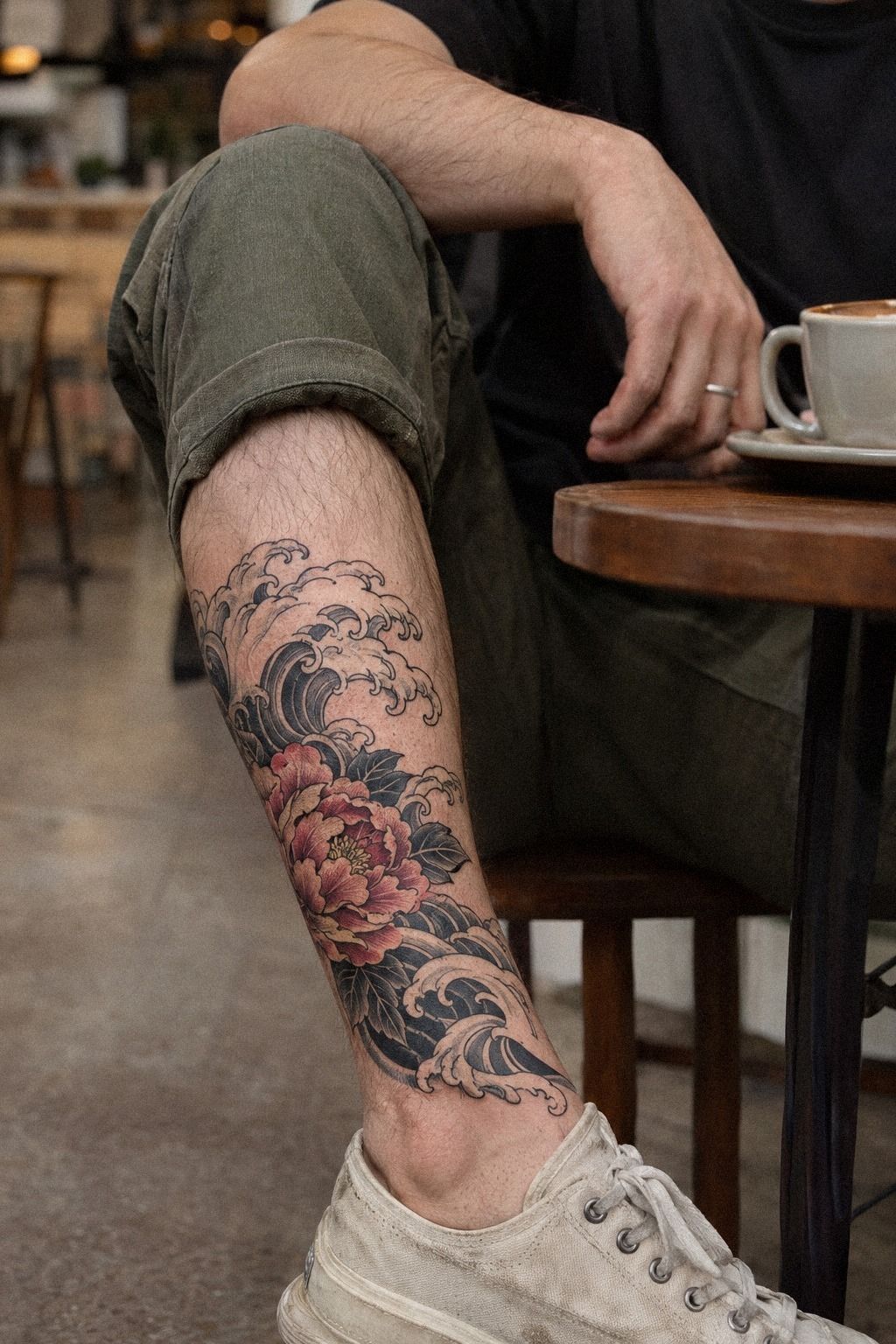
A traditional peony tattoo with Japanese wave details brings two strong visual languages together. Dusty rose petals can soften the composition while charcoal waves add a sharp, graphic edge.
I’d keep the wave shapes flowing around the bloom instead of cutting through its center. Small muted-gold accents can connect the two elements without making the design feel busy.
This combination works well on the forearm, thigh, upper arm, or calf. Your artist should repeat one curve from the wave pattern in the leaves so the full tattoo feels visually connected.
The result can feel expressive, ornate, and slightly edgy. Keep the peony larger than the surrounding wave details if you want the flower to remain the clear focal point.
8Behind the Ear: A Delicate Traditional Peony
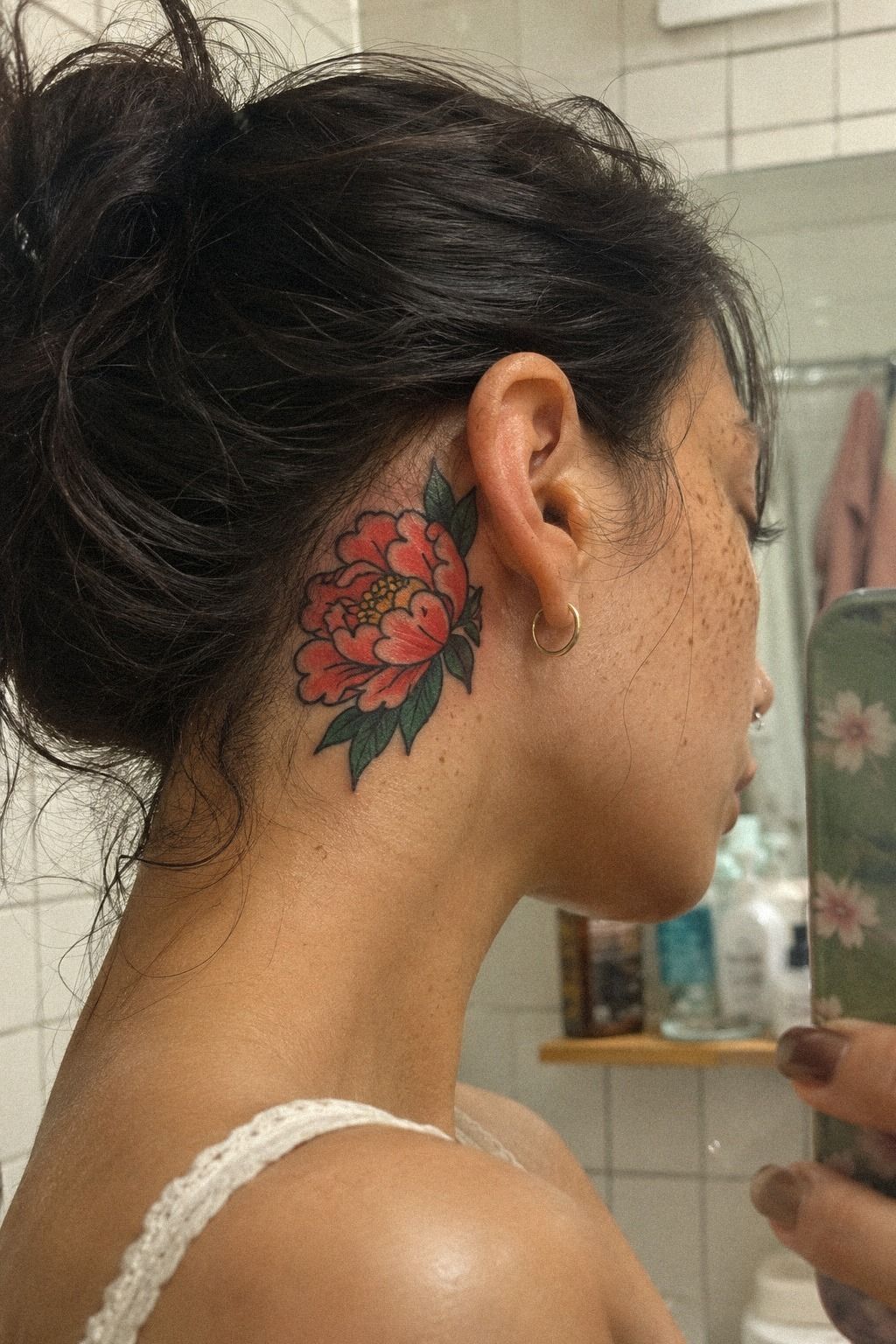
A delicate traditional peony behind the ear works when the silhouette stays simple. The black lines should remain confident. Tiny details need a clear reason to exist.
I’d choose one warm-cream bloom with two or three leaves. A small black outline can create a dainty result without making the flower look unfinished. Camel shading can add warmth while keeping the center visible from the side.
This location suits someone who wants an understated tattoo. You can show it with pulled-back hair or cover it easily. The meaning stays yours until you decide otherwise.
Behind-the-ear skin has limited space. Your artist may simplify the petals more than you expect. That isn’t a flaw.
It’s how the design stays readable.
Compare this idea with small peony tattoo ideas and ask yourself what you want to see every morning. A minimal flower can still feel romantic, personal, and timeless.
9Pair a Traditional Peony With a Dagger
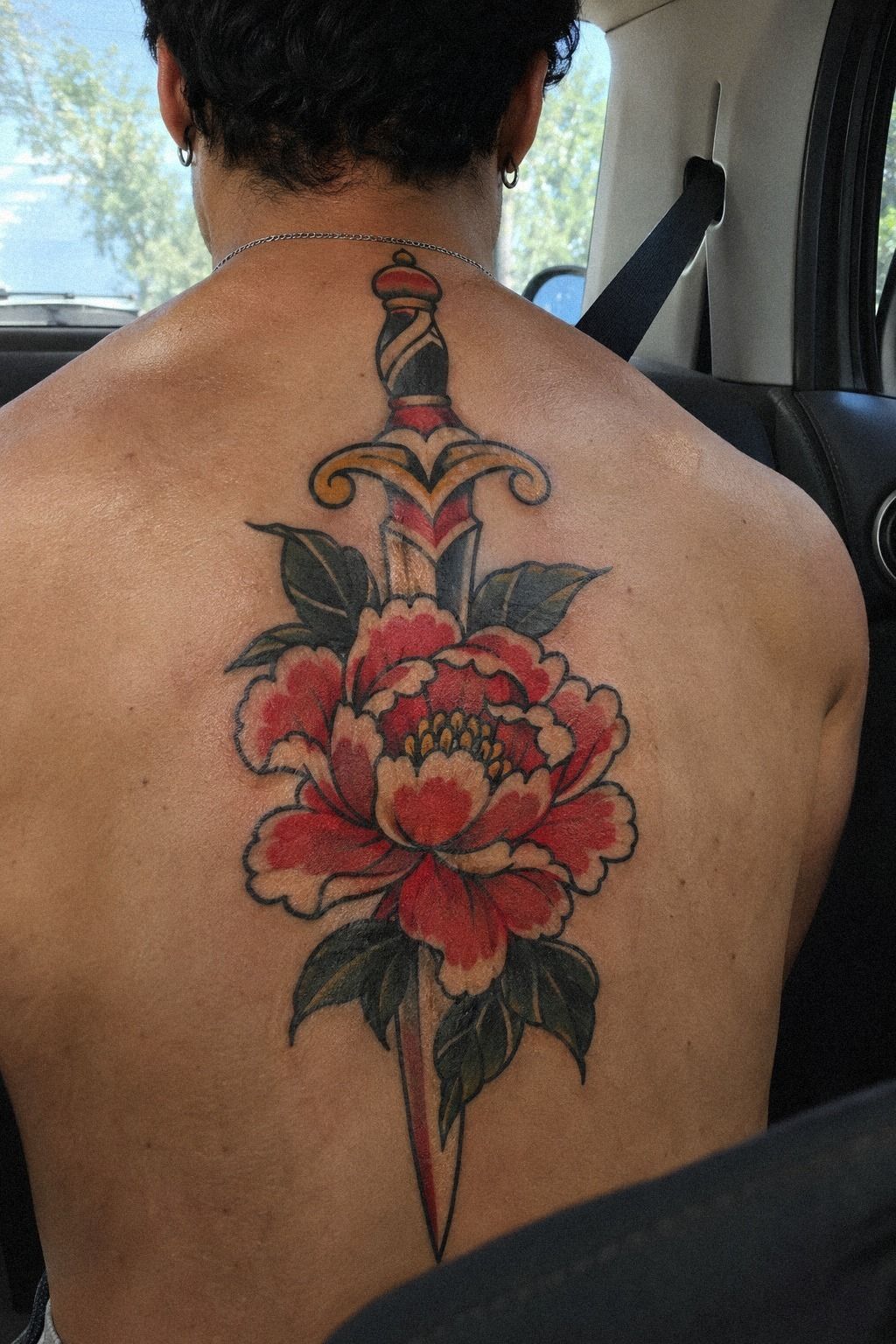
A traditional peony tattoo paired with a dagger creates a sharp contrast between softness and danger. The flower can represent tenderness. The blade can suggest protection, survival, or a boundary you’ve learned to keep.
The Dagger and Petal Contrast gives you a clear story without spelling it out. I’d place the blade behind the flower rather than cutting directly through its center. This keeps the bloom recognizable.
Your artist should give both elements a similar visual weight. Midnight-blue petal shading can keep the peony readable while copper tones define the dagger. Ivory highlights can reserve attention for the bloom.
A spine placement needs careful planning. The central line must remain balanced as your body bends. The dagger can act as a vertical anchor while the leaves soften the sides.
The spine may feel more painful than the outer forearm, thigh, or shoulder. Tight clothing can also create healing friction. See this peony flower tattoo meaning guide for symbolism you can adapt privately.
I like this design when the message stays indirect. It can feel edgy, empowering, and meaningful without looking like a literal slogan. Your personal reason can remain completely private.
10Can a Heart Shape Stay Traditional?
A traditional peony tattoo in a heart shape works best when the outline feels organic. A mechanically perfect heart can make the flower look stiff. Let the petals create the heart instead.
Start with two rounded upper blooms. Then let the leaves narrow toward the bottom point. Sage-green leaf packing and warm-cream petals can make the shape obvious without adding a separate heart outline.
This concept suits the chest, upper arm, thigh, or shoulder. You can make it romantic, symbolic, or quietly memorial. I’d keep any lettering short and give the flower most of the attention.
The heart doesn’t need to be perfectly symmetrical. A little variation can feel more human. It also helps the design follow your body instead of fighting it.
For more symbolism, compare the idea with flower tattoo meaning and traditional flower tattoo ideas. Your heart peony can be classic without feeling predictable.
11Ornamental Linework for a Spine Peony
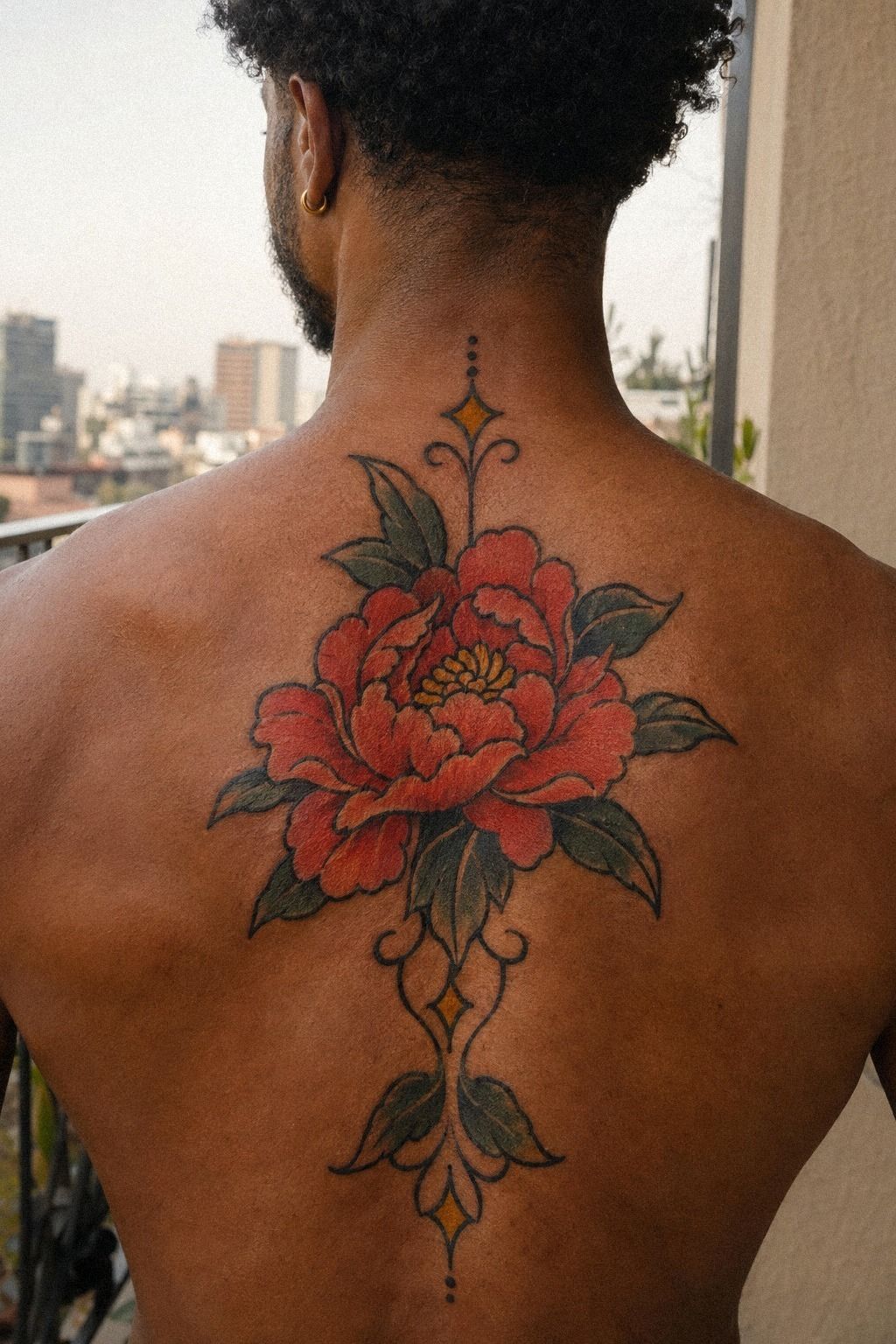
A traditional peony tattoo with ornamental linework can make a spine composition feel intricate without becoming chaotic. Terracotta petals and olive leaves can give the design a personal, expressive palette.
Use the ornamental marks to guide the eye toward the bloom. They shouldn’t compete with the petals. A clean charcoal contour can keep the structure sharp as smaller details soften.
This concept suits someone who wants a graceful vertical tattoo with a stronger decorative edge. Your artist should test the spacing carefully so the center remains readable from a distance.
A little asymmetry can make the composition feel daring instead of formal. Keep the leaves flowing with the spine rather than forcing every element into a rigid column.
How to Edit a Peony Before You Book
Start by removing one detail. Then remove another.
This sounds severe, but it helps your main flower stay powerful. A design with fewer elements can feel more iconic.
Ask yourself what you want people to notice first. Is it the bloom, the dagger, the wave, or the color? A clear focal flower gives your artist a better starting point.
You should also test the stencil at its real size. A drawing that looks delicate on a screen may look crowded on skin. I’d view it from close range and from several feet away.
If the shape still reads, your idea has value. If it disappears, increase the scale or simplify the interior. This is often worth doing before you spend money on a longer session.
Placement Changes the Read
Placement changes the mood as much as the color. A wrist peony can feel dainty and private. A shoulder peony can feel bold and expansive.
Consider visibility, movement, friction, and future work. Your stable skin placement should support the flower’s line weight. Areas with constant bending may need fewer tiny details.
A thigh or shoulder gives you more usable skin. An ankle or behind-ear design demands sharper editing. Neither option is automatically better.
Look at healed examples from the artist. Fresh ink can appear darker and cleaner than it will later. A healed result tells you more about spacing, saturation, and edge softness.
You can compare scale ideas in this tiny peony tattoo guide before your consultation. Your budget may also change with placement because awkward areas can take longer.
Color Choices That Hold Their Ground
Red, black, and green create the most recognizable traditional palette. You can still adjust the mood with plum, terracotta, muted green, or a small amount of gold. Strong color contrast helps the petals stay legible.
A softer palette may feel delicate and feminine. A darker palette can feel fierce and gritty. Your skin tone, undertone, and artist technique all affect the final result.
Ask how the color will be packed. Uneven saturation can make a flower look patchy after healing. You’ll want an artist who can show healed color work.
I’d avoid adding every possible shade. More colors don’t automatically create more value. One memorable color relationship can feel more stylish than a busy palette.
If you’re comparing softer approaches, browse watercolor peony tattoo ideas. Then decide whether the softer effect supports your meaning or distracts from it.
What to Ask at the Consultation
Bring three things: your preferred placement, your desired scale, and one sentence about the meaning. You don’t need a complete final drawing. Your artist can help refine the shape.
Ask about healed work, estimated time, touch-up policy, and aftercare. Ask what details they would remove. Artist experience matters most when the design relies on flowers and bold color packing.
You can also ask what will happen if your preferred size is too small. A trustworthy artist should explain the tradeoff clearly. You deserve a design that remains readable.
Don’t choose by price alone. The cheapest quote may not deliver the best value if the linework needs correction later. The highest cost doesn’t guarantee the right style either.
For a traditional specialist, compare portfolios through American traditional flower tattoo ideas. Your final choice should match the artist’s actual strengths.
What the Budget Usually Covers
The cost depends on the artist, location, size, color, placement, and session length. A small wrist peony may fit a shop minimum. A detailed spine composition may require multiple appointments.
A shop minimum may run around $50 to $100. Hourly rates often fall near $100 to $250. Artist experience can change the final quote, especially when the design needs precise saturation.
Ask whether the consultation, deposit, touch-up, and aftercare products are included. Clear pricing helps you compare value. A design can be worth it when the scale protects the linework.
Your budget should also include travel, time off, and a possible touch-up. Don’t stretch the design beyond what you can comfortably afford. A smaller, well-planned peony is better value than a rushed large one.
The Honest Case For Traditional Peony Tattoos
I used to think a peony had to be large before it could carry real meaning. I now see the stronger rule: a clear outer silhouette matters more than stuffing every petal into the design. Your tattoo can be small, private, and still feel powerful.
Traditional peonies keep returning because their visual language is direct. Heavy outlines, readable color blocks, and selected shadows survive visual distance better than fragile marks. That doesn’t mean every bold design will age well.
Your artist still needs to respect skin, placement, sun exposure, and the spacing between lines. You should also think about how often the tattoo will meet friction. Those practical details affect long-term value.
I’m especially drawn to the contrast between a soft flower and a harder companion element. A dagger, wave, or ornamental pattern can make the design feel expressive. Most people aren’t only one thing.
If you’re choosing between a single bloom and a full composition, ask what you’ll still want to see ten years from now. The best option may not be the most complicated. It may be the one that still feels personal.
The practical numbers matter, too. A surface layer often heals in about 2 to 3 weeks, while complete healing can take 2 to 3 months. Gentle fragrance-free soap and light aftercare help protect the skin during that period.
Avoid direct sun and swimming while the surface is healing. Follow your artist’s instructions if they differ. Good aftercare protects the cost and effort you’ve already invested.
The Questions I Get Asked Most
How much does a traditional peony tattoo usually cost?
A traditional peony tattoo often costs about $100 to $300 in the US, depending on size, placement, artist, and region. A shop minimum may run around $50 to $100. Hourly rates often fall near $100 to $250.
Artist experience and session length can shift the final quote.
Are traditional peony tattoos a good idea for a first tattoo?
Yes, they can suit first-timers because the shapes are readable and many placements are manageable. Clear black outlines may hold their structure well over time. The forearm, thigh, and shoulder are often more tolerable than ribs, feet, hands, or sternum.
How do I choose a tattoo artist for a traditional peony tattoo?
Choose an artist with a strong traditional portfolio, clean linework, healed-result photos, and a hygienic studio. Healed tattoo examples matter because fresh ink can hide spreading or uneven saturation. Confirm that the artist regularly creates flowers, leaves, and bold color packing.
How much do traditional peony tattoos hurt?
Pain depends on placement and your own sensitivity. Ribs, feet, hands, and sternum are often more painful, while the forearm, thigh, and shoulder may feel more tolerable. Shorter sessions can help if you’re nervous, especially for a small wrist, ankle, or behind-the-ear design.
How long does a traditional peony tattoo take to heal?
The surface usually heals in about 2 to 3 weeks. Complete healing can take roughly 2 to 3 months. Simple aftercare includes gentle washing, light moisturizing, avoiding direct sun, and staying out of pools until the skin has closed.
What’s the best placement for a traditional peony tattoo?
The best placement depends on visibility, pain tolerance, and the scale you want. The forearm, thigh, and shoulder give you more space for readable lines.
The wrist and behind-ear area suit smaller designs. Stable skin placement generally helps bold shapes age more evenly.
Where I’d Start First
If I had to pick one, I’d start with the bold shoulder peony. It gives the petals enough space to stay readable, and the shoulder’s curve makes the flower feel alive instead of compressed.
Pin that design for later and compare it with these traditional flower tattoo ideas. Then check traditional flower crown tattoo ideas if you want more leaf movement.
Your final choice should fit your skin, your budget, and your meaning. That’s a strong place to begin!