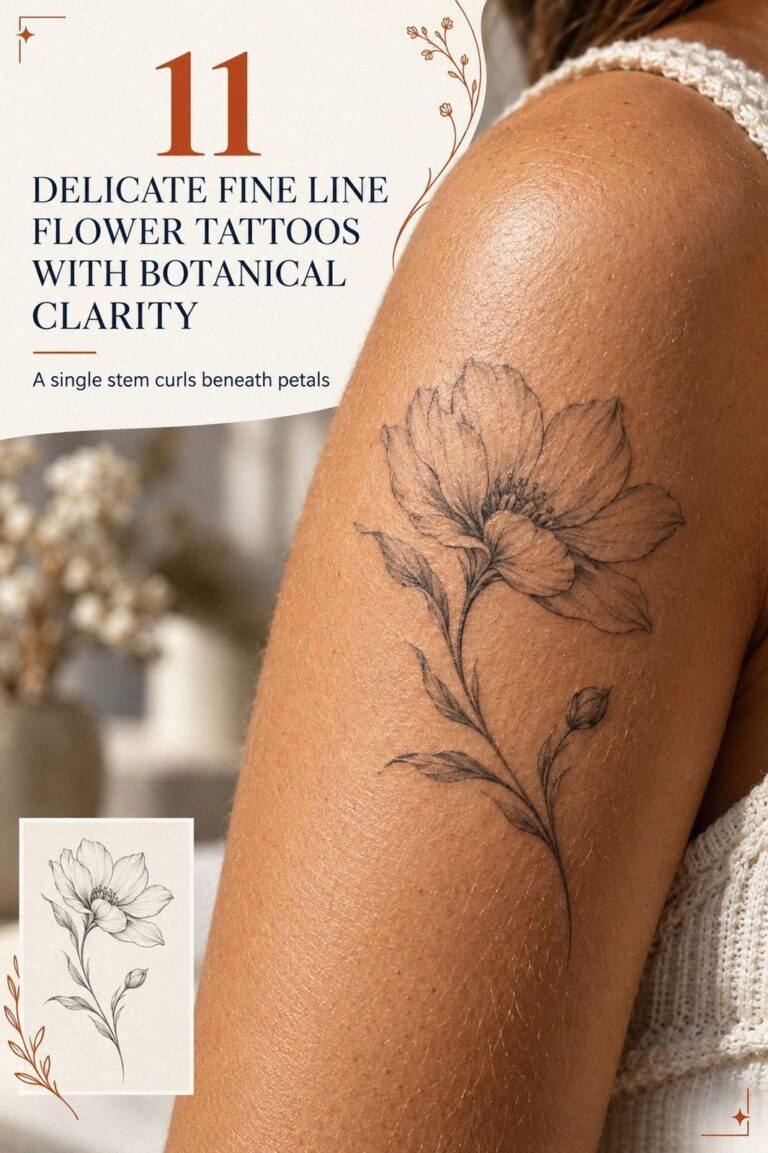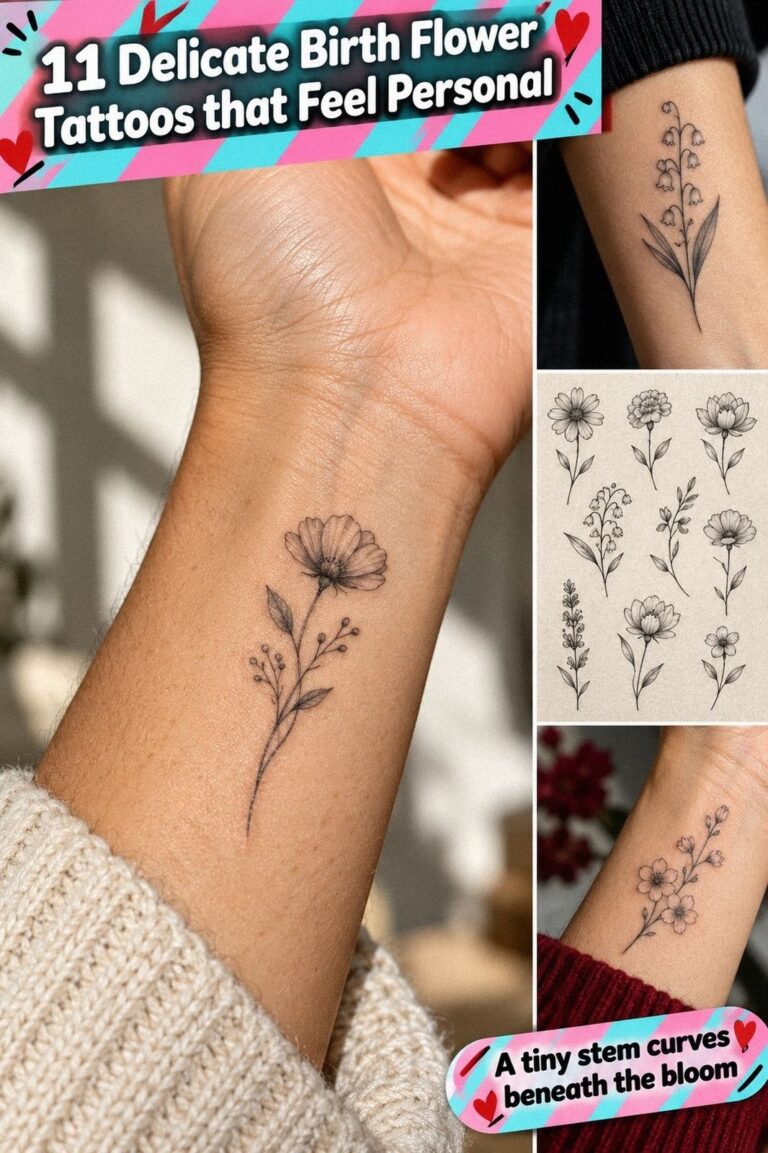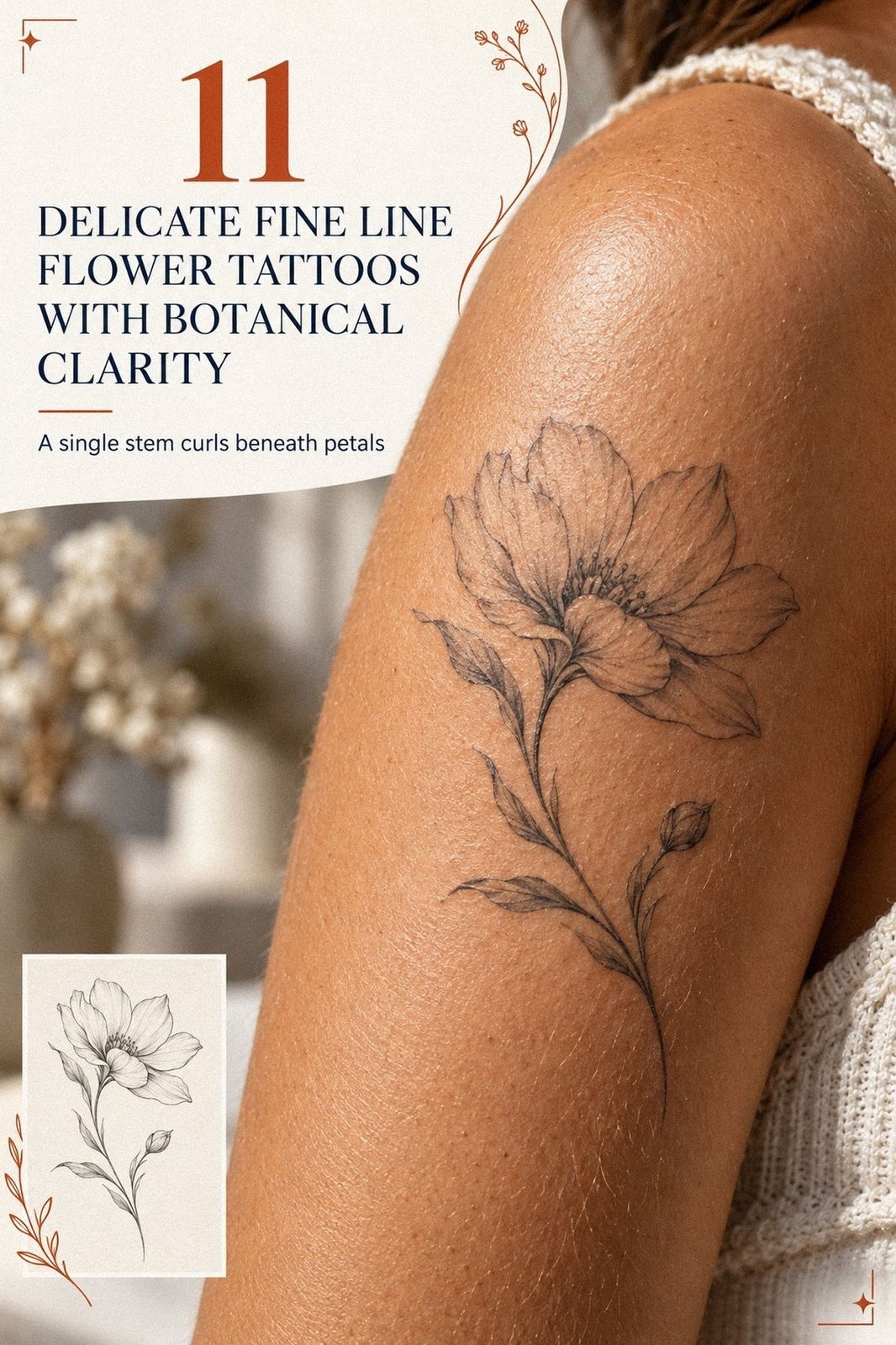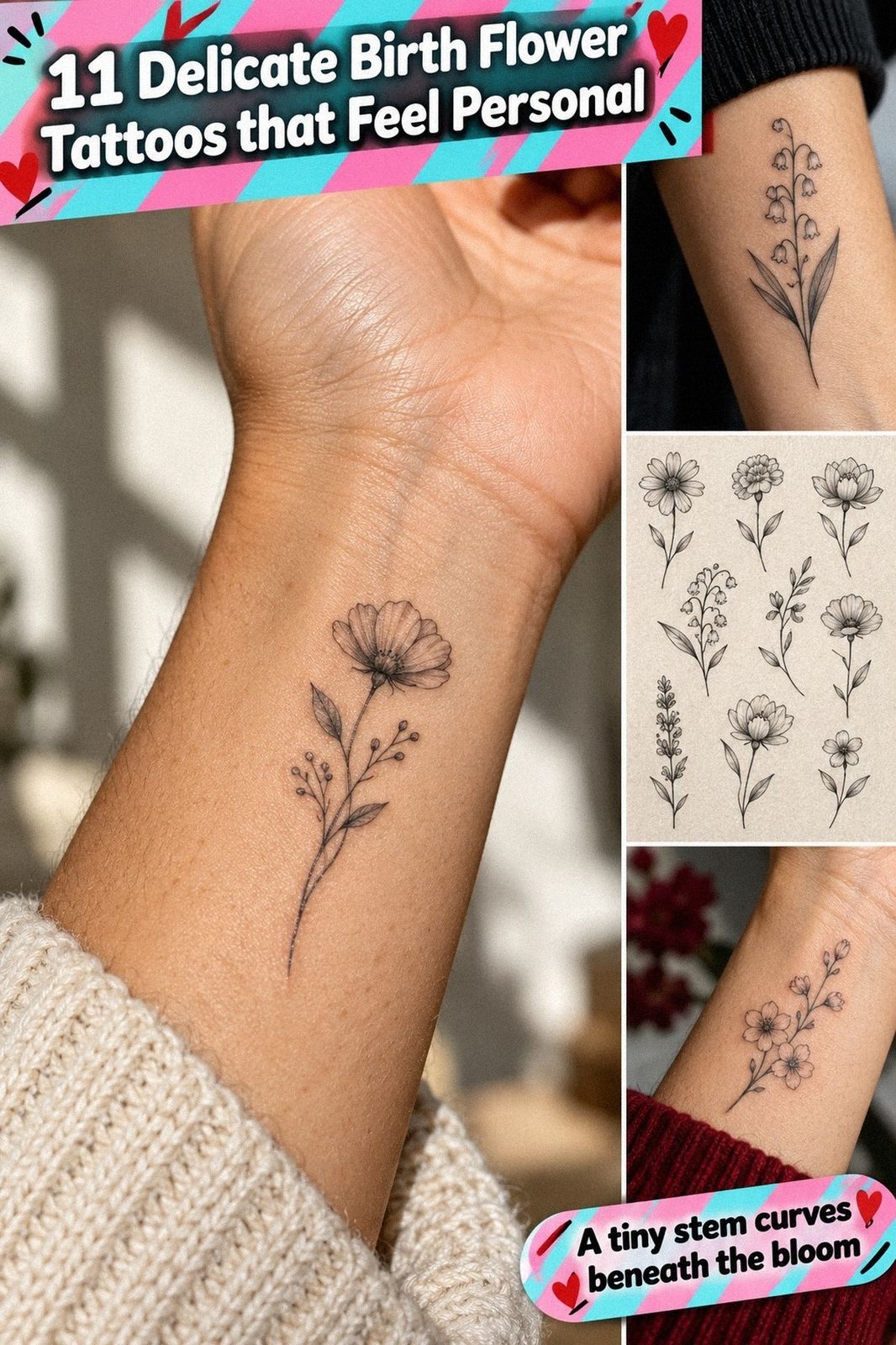
A small peony tattoo can stay crisp linework, personal, and striking when the placement matches how your skin moves. I once chose a delicate design without checking that first, and the healed result looked less graceful than the stencil. You’ll find eleven meaningful directions here, with honest notes on pain, aging, cost, and aftercare. Start simple!
Quick answer: choose one focal bloom, keep the petal structure minimal, and let your artist edit the reference for your skin. The most successful small peony tattoos usually feel intentional, not crowded.
- Start With Fine Linework Behind the Ear
- Can a Wrist Peony Stay Clear?
- The One-Stem Principle
- Fewer Petals, More Clarity
- Behind the Ear: Choose the Clearest Flash
- Will Soft Shading Hold Its Shape?
- Angle the Ankle Bloom Above the Bone
- Leaves or Less?
- Choose Red Ink When You Want More Impact
- Does Collarbone Placement Suit Your Movement?
- The Dot Density Rule
1Start With Fine Linework Behind the Ear

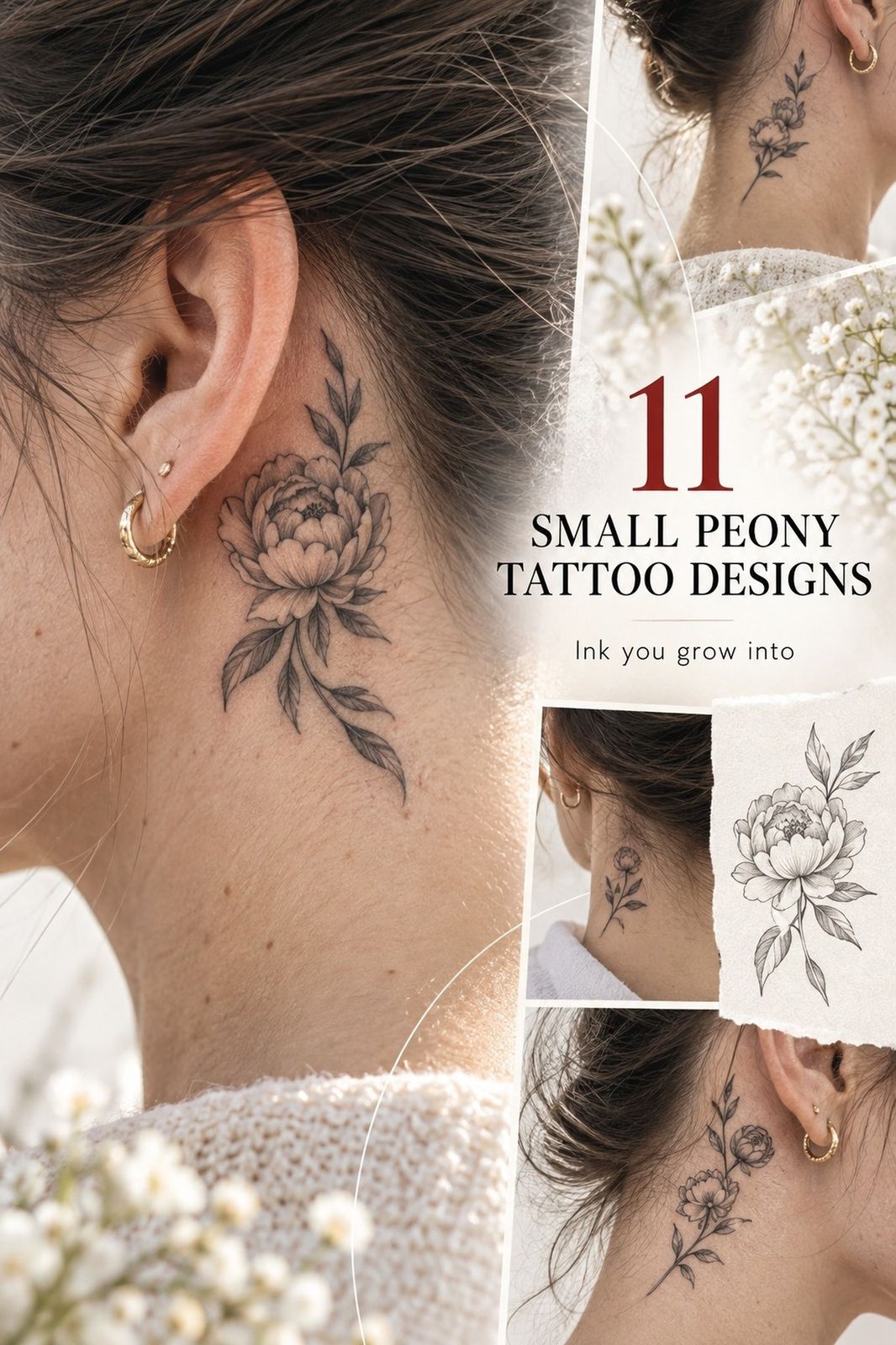
Behind the ear is an intricate place for a small peony because the bloom can follow the curve without needing heavy shading. Ask your artist for a single-needle liner and a compact flower with open negative space. If you’re comparing small peony tattoo ideas, this one feels understated without disappearing completely.
I’d request three or four petal layers, not a crowded flower. Open negative space helps intricate lines remain readable as they heal. You don’t need every fold of a real peony to make the symbol recognizable.
I call this the Single-Needle Rule: one clear focal bloom beats a miniature bouquet. A black ink outline can look elegant in a photograph, but you’ll want your artist to show healed work too. Fine lines may widen slightly over time, especially with repeated UV exposure.
If you’re unsure about the meaning, read this guide to peony tattoo meaning. The placement is visible from the side, so it works best when you’re comfortable with a personal mark that may peek out around your hair. It’s a crisp, iconic choice when restraint matters.
2Can a Wrist Peony Stay Clear?
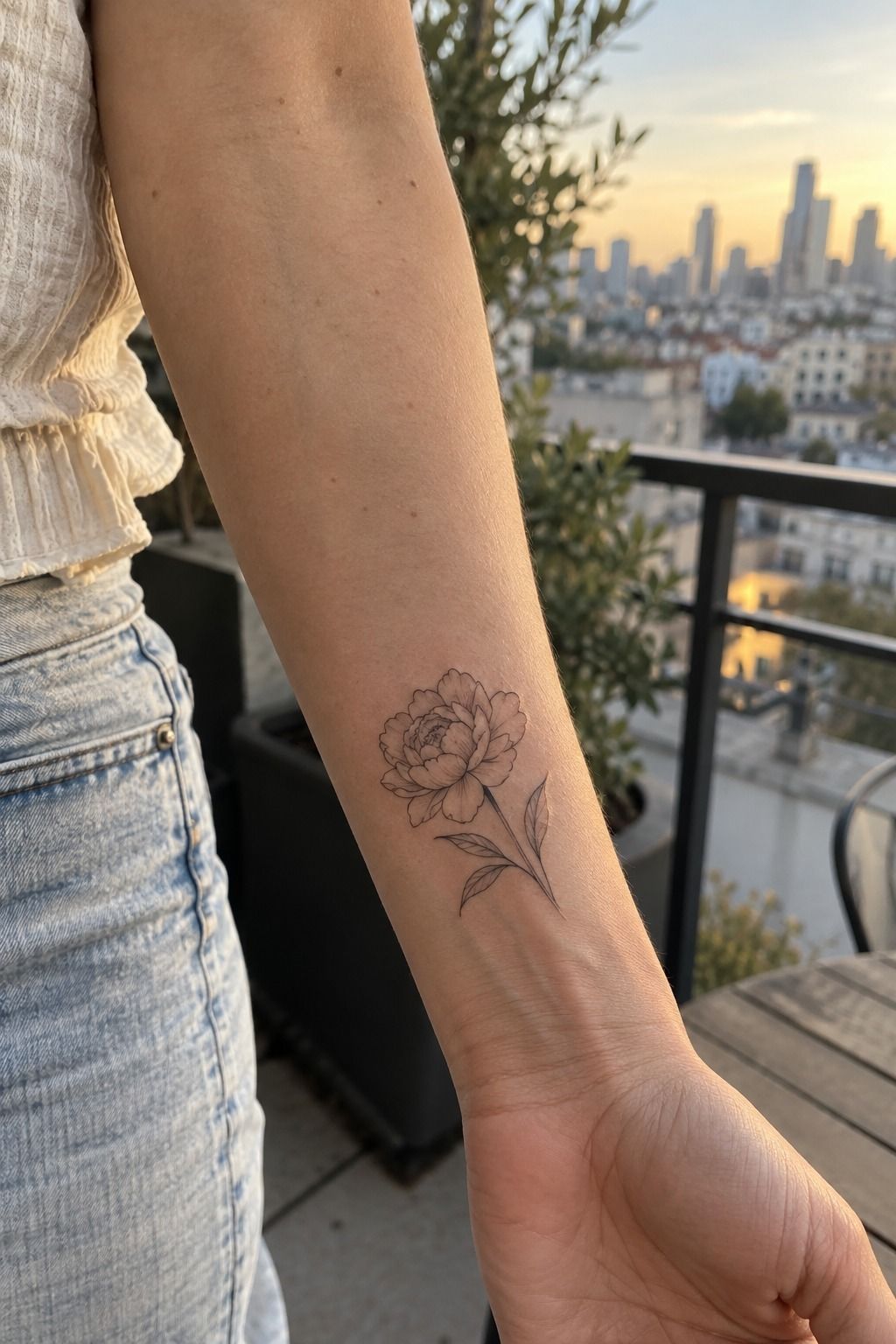
A wrist peony needs a sleek silhouette more than delicate decoration. Keep the flower compact, slightly oval, and angled along the wrist bone. That direction makes the design feel polished instead of stamped on.
Ask for sterile needle cartridges and a stencil that sits naturally when your hand is relaxed. You’ll notice that the wrist flexes constantly, and a design that looks centered with your palm flat may shift visually when you move. I made that mistake once, and the tattoo looked tilted whenever I reached for a cup.
The best version is meaningful but not overloaded: a simple bloom, two visible inner petals, and one small leaf. Don’t pack in dotwork unless your artist has enough skin to place it cleanly. A fine-line stencil should show the actual scale before the needle touches your skin.
The wrist can be more sensitive than the upper arm, especially close to the crease. You’ll want loose sleeves during healing, and you shouldn’t let fabric rub the area repeatedly.
For symbolism, compare this placement with the ideas in a peony flower tattoo meaning guide. It’s dainty, but it still has a meaningful presence.
3The One-Stem Principle
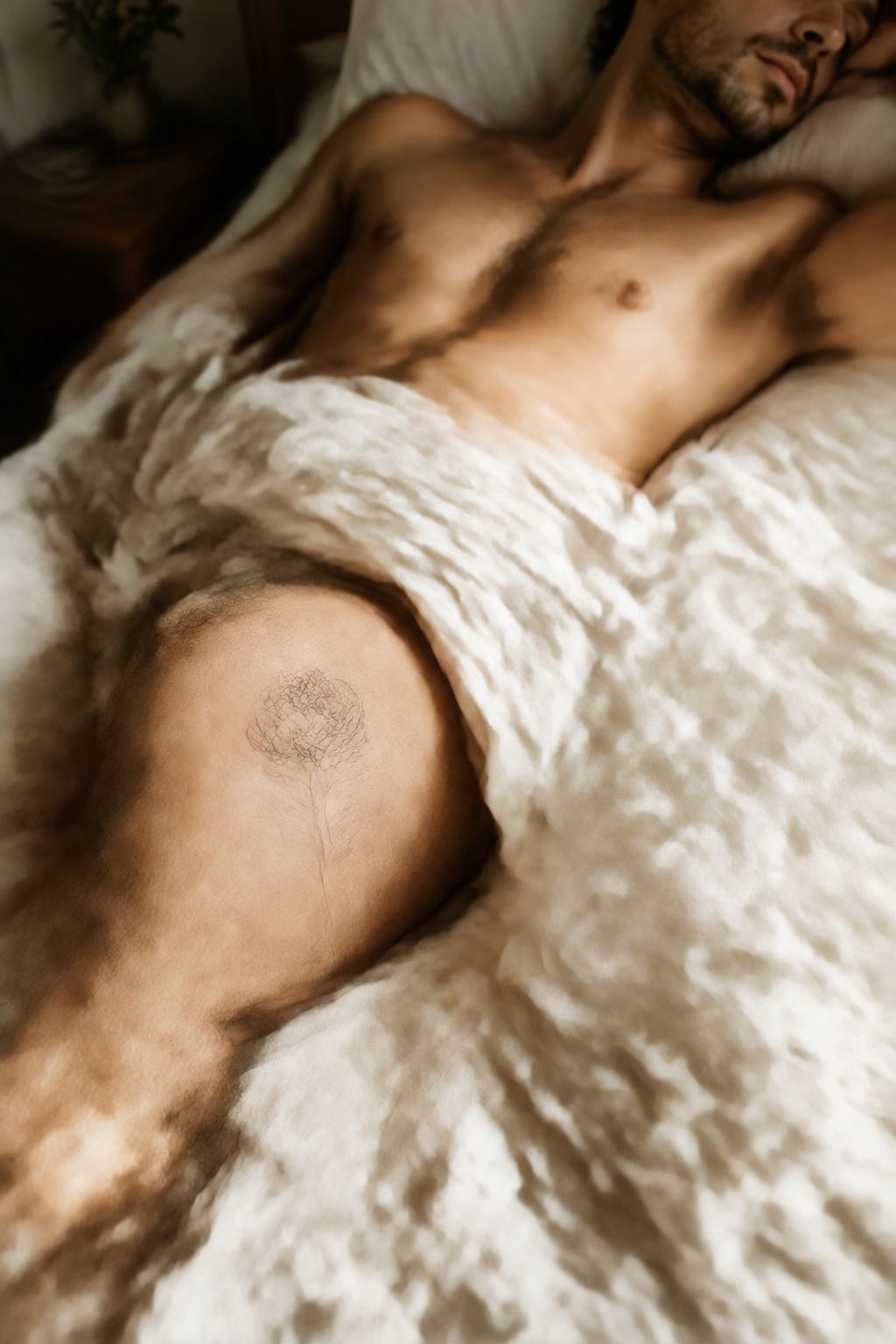
A thigh placement gives your artist more skin to shape a flowing stem, even when the flower itself stays small.
4Fewer Petals, More Clarity

Finger tattoos are bold in scale but demanding in placement. You’ll want fewer petals than you’d use on a wrist because the surface is narrow and constantly exposed to friction. A minimal black outline can read clearly when the flower sits on the side or top of the finger.
The Finger Margin Rule is simple: leave skin between every line. I’d choose a single bloom rather than trying to fit a stem, leaves, and lettering together. That restraint keeps the tattoo sharp and stylish instead of crowded.
Finger skin gets washed, bent, rubbed, and exposed to sunlight often. Even a crisp design may need a future touch-up, and your artist should explain that before the appointment.
Don’t treat a tiny size as zero maintenance. You’ll still need gentle washing and careful healing.
What looks dainty on paper can feel surprisingly edgy on the hand! If you prefer a hidden symbolic detail, compare it with a yin-yang flower tattoo meaning before committing. The best finger peony is the one you’ll accept as an evolving mark, not one you expect to remain identical forever.
5Behind the Ear: Choose the Clearest Flash
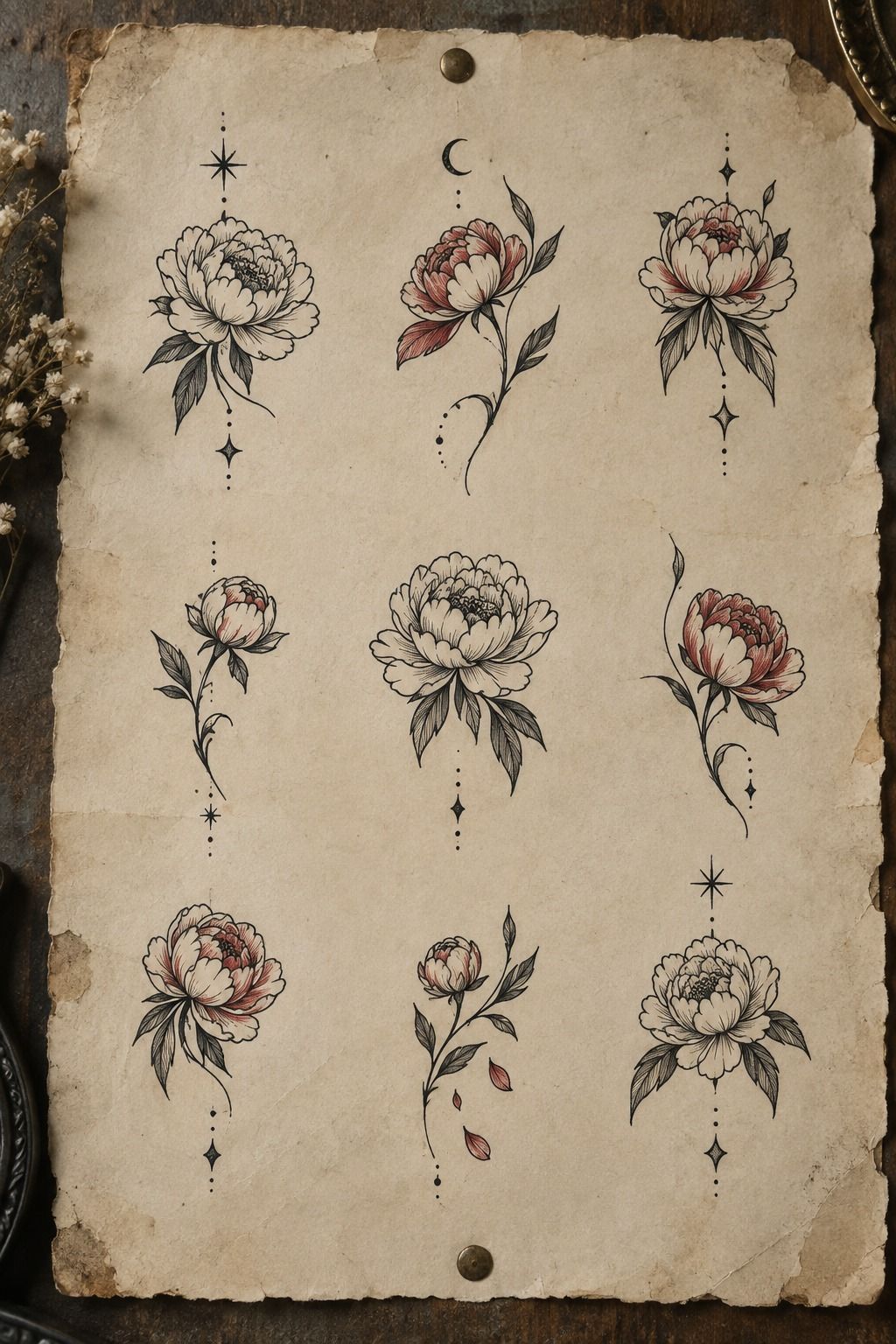
A flash sheet lets you compare scale, petal spacing, and personality before choosing a final design. Look for the version with the clearest outer contour rather than the busiest drawing. You don’t have to copy the largest design just because it catches your eye first.
I’d circle a hand-drawn flash design with one open bloom and a short stem. Ask how the image will be adjusted for the curve behind your ear, because a flat drawing won’t sit exactly like skin. That small consultation can save you money and protect the final shape.
This placement can feel sacred and personal, especially if your hair usually covers it. It’s also practical if you want something visible only by choice. A small peony behind the ear looks stylish with a short haircut, an updo, or loose hair tucked back.
Don’t choose a flash design only because it’s charming. Check the artist’s healed fine-line portfolio, studio hygiene, and stencil placement first. You’ll find more symbolic context in this Japanese peony tattoo meaning guide, especially if you want the flower to carry cultural weight rather than only decorative appeal.

6Will Soft Shading Hold Its Shape?

Soft shading can give a small flower depth on deep ebony skin without turning the design heavy.
7Angle the Ankle Bloom Above the Bone

An ankle peony can look graceful when the bloom sits slightly above the bone rather than directly on the sharpest point. I’d angle the petals toward the foot, creating flowing movement instead of a rigid emblem. The placement feels quietly timeless with sandals or cropped trousers.
The Ankle Lift is a useful placement idea: move the flower just high enough that the design follows the curve above the joint. A compact black flower will stay easier to read than a crowded botanical scene. You’ll also have more flexibility with socks if the tattoo isn’t placed exactly where the cuff rubs.
Ankles can hurt more than the thigh or upper arm because the skin is thinner near bone. That doesn’t mean the session will be unbearable, but you should expect sharper sensation than with a padded area. I’d keep the appointment focused, and you shouldn’t schedule it right before a long day on your feet.
Give yourself about two to three weeks for surface healing, while complete healing may take roughly two to three months. This yellow rose tattoo meaning guide can help if you’re weighing a peony against another flower symbol. The ankle is a hauntingly beautiful choice, but it demands practical planning.
8Leaves or Less?

Leaves change the message of a small peony because they introduce direction, growth, and movement.
9Choose Red Ink When You Want More Impact

Red ink makes a small peony feel daring without requiring a large tattoo. I’d ask for confident linework, even saturation, and a simple petal structure so the color remains the point. A single red flower can look vibrant, romantic, and fiercely personal.
The Red-Line Anchor works best when the entire design uses one controlled hue. A red tattoo ink outline can look expressive, but you’ll want to ask your artist about their healed color portfolio. Different red pigments can settle differently, and a fresh result won’t show the final appearance.
I’d skip mixing red with several other bright colors in such a small piece. The idea is already distinctive, and extra color may make the flower look busier rather than more individual. One controlled shade gives you better value than a complicated palette.
Collarbone skin can be sensitive because the area is close to bone and moves with your shoulders. Choose a shirt that won’t drag across the tattoo while it heals, and don’t expose fresh ink to strong sun.
Worth it? Absolutely!
The right red pigment can make a small design feel daring without making it oversized.
If you’re still deciding on floral symbolism, revisit this peony tattoo meaning article before booking.
10Does Collarbone Placement Suit Your Movement?

A collarbone peony works best when the angle follows your natural posture. Ask your artist to place the stencil while you’re standing normally, not while your shoulders are pulled back. That simple check keeps the flower graceful when you walk, lift your arms, or turn your head.
The Stencil-to-Skin Check asks three questions: does the flower still read at its real size, does the angle follow your collarbone, and will the negative space remain visible? A white stencil sheet can look clean and sharp, but your artist needs to place it while your posture is natural.
I’d request a slightly open bloom with one curved stem. That shape feels feminine without becoming overly ornate. You don’t need a mirror-image design on both sides, either.
A single collarbone peony often feels more personal when it follows one side’s natural line.
Before you book, ask to see healed examples in comparable fine-line work. Fresh ink can look polished and almost too perfect, while healed lines reveal the artist’s real control. This small flower crown tattoo guide offers a useful comparison if you’re tempted to expand the peony into a larger floral arrangement.
11The Dot Density Rule
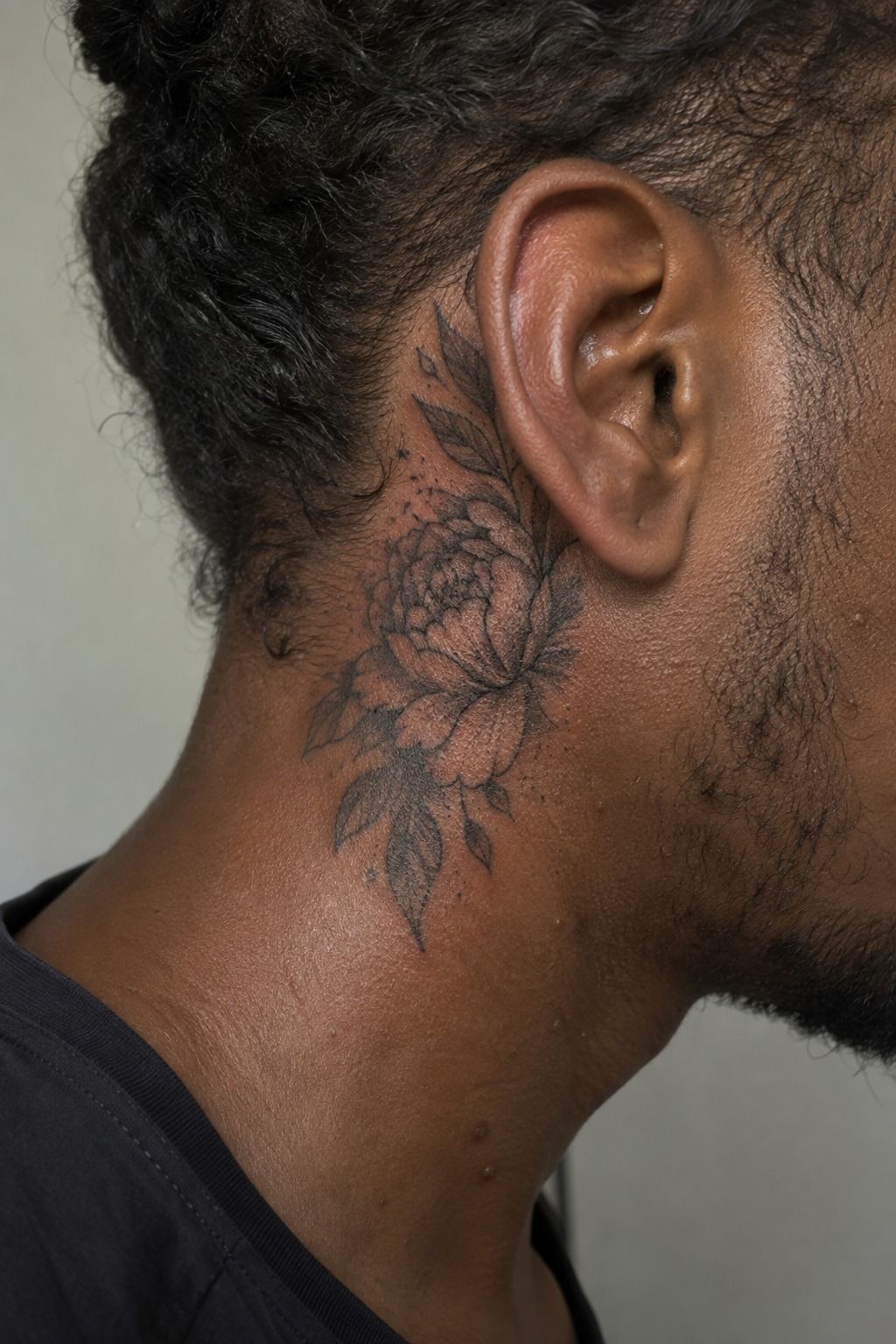
Dotwork gives a small peony a gritty, expressive quality without needing thick solid shading. I’d build the design around a bold outer contour and tightly controlled stippling near the center. It’s a raw but polished combination when the artist knows when to stop.
The Dot Density Rule matters here. A fine dotwork needle can create shadow, but too many dots in a tiny flower will merge as the tattoo heals. You’ll want the artist to leave open skin between petal layers, especially around the outer edge where clarity matters most.
I’d choose this design if you want something more iconic than purely delicate. It feels fierce and polished at once.
Don’t ask for realistic texture in every petal, though. The smaller the tattoo, the more your artist must edit the reference.
Behind the ear can be tender, and the skin may be difficult to stretch during the session. Ask how the artist positions you, and bring a calm plan for aftercare. If you’re considering a softer alternative, compare the structure with this watercolor peony tattoo guide, then choose the version that feels most like your personality.
Price the Design Before You Book
A tiny tattoo doesn’t always mean a tiny bill. Many studios have a minimum, and a detailed design may take nearly as much preparation as a larger one. Ask for a written studio minimum before you compare artists.
Your budget should cover the tattoo, the deposit, possible touch-ups, and aftercare supplies. The cheapest quote may not offer the best value if the linework heals poorly. A polished portfolio and clear consultation are usually worth paying for.
Ask what changes the final cost: color, placement, custom drawing time, and the artist’s hourly rate. You’ll get a more useful answer if you bring the approximate size and placement rather than asking for a price with no details. This peony flower tattoo meaning guide can also help you settle the concept before paying a deposit.
Compare Placement, Pain, and Longevity
If your main goal is easy healing, the upper arm or thigh may offer better value than a finger or ankle. If visibility matters most, the wrist, collarbone, and behind-the-ear areas give you a more immediate result. There’s no universally perfect placement, and your priorities matter.
A placement consultation should cover friction, sunlight, movement, and your daily routine. You’ll want to know whether your work, exercise habits, or clothing will make healing inconvenient. That conversation can prevent an expensive revision later.
Finger tattoos may fade or soften sooner because of washing and friction. A thigh tattoo may stay private and tolerate movement better.
The right choice depends on whether you care most about visibility, pain, longevity, or personal symbolism. For another perspective on floral symbolism, read this flower tattoo meaning guide.
Check the Artist’s Healed Portfolio
Fresh tattoos can look sharp, vibrant, and almost flawless. Healed photographs show whether the artist’s lines remain crisp, whether color settles evenly, and whether small details stay readable. A healed portfolio is one of the most valuable things you can request.
Look for examples close to your skin tone, chosen placement, and desired style. A fine-line peony on an arm doesn’t automatically prove that an artist can handle a tiny collarbone or finger design.
Ask direct questions about needle groupings, touch-ups, and how the artist edits references for small scale. You’re allowed to take your time.
A meaningful tattoo deserves a careful decision, not a rushed booking. The Japanese peony tattoo meaning guide may also help if cultural symbolism matters to you.
Plan Aftercare Around Your Routine
You’ll need gentle washing, light hydration, and protection from unnecessary friction while the surface heals. Don’t pick at flakes, soak the tattoo in a pool, or expose fresh ink to strong sun. Simple aftercare is easier when you’ve planned for it.
Wear loose clothing if the tattoo sits near your collarbone, ankle, wrist, or thigh. You shouldn’t schedule the appointment immediately before swimming, intense training, or a long day in tight work clothes.
If the area becomes unusually hot, swollen, painful, or increasingly red, contact a qualified medical professional. Your artist can explain normal healing, but they can’t diagnose a complication.
Save the studio’s aftercare instructions before you leave. This rose tattoo meaning guide is useful if you’re comparing the peony with another floral symbol.
The Peony Choice I’d Make For My Own Skin
I’ve learned that the strongest small tattoo isn’t always the most intricate one. My own preference would be a compact black peony with three open petals, one short stem, and enough negative space to keep the image legible. You’ll notice that every direction here depends on editing, not squeezing more detail into less skin.
The practical choice depends on your tolerance, work, and willingness to maintain the tattoo. A thigh or upper arm usually gives you more privacy and a more forgiving surface. A finger or ankle feels more visible, but it can ask more of you because friction, movement, and sun exposure are constant.
Here are useful typical US guideposts before you schedule:
The table isn’t a quote, and you shouldn’t choose an artist by price alone. Ask about healed examples, hygiene, linework, and the specific placement you want. For extra symbolism, you can also compare the meanings in this ladies flower tattoo meaning guide.
The Questions I Get Asked Most
How much does a small peony tattoo usually cost?
A small peony tattoo usually costs about $50 to $100 at a shop minimum, or roughly $100 to $250 per hour depending on the artist and region. A clean portfolio matters more than a bargain. Ask for a quote after showing the size, placement, color, and reference.
Are small peony tattoos a good idea for a first tattoo?
Yes, small peony tattoos can suit a first session because you can choose a manageable placement and a clear design. A simple outline is easier to discuss than a crowded composition.
You’ll still need to consider pain, visibility, aging, and whether the subject feels personally meaningful. Yes!
How do I choose a tattoo artist for a small peony tattoo?
Choose an artist with clean healed linework, strong hygiene practices, and examples close to your requested style. Healed tattoo photos tell you more than fresh studio pictures. There are no affiliate recommendations here, so focus on the artist’s actual portfolio and the value of their work.
How much do small peony tattoos hurt?
Pain depends on the person and placement, but ribs, feet, hands, and sternum are often more painful than the forearm, thigh, or shoulder. A padded placement may feel easier for a first session. You’ll want to ask your artist what to expect from the exact area.
How long does a small peony tattoo take to heal?
The surface usually heals in about two to three weeks, while complete healing can take about two to three months. Gentle aftercare means washing carefully, using light hydration, avoiding strong sun, and staying out of pools until the surface has closed.
What’s the best placement for a small peony tattoo?
The best placement depends on visibility, pain, and how much movement the skin gets. The upper arm or thigh is more forgiving, while the wrist, finger, ankle, and collarbone feel more visible. A stable skin surface generally gives fine lines a better chance of aging cleanly.
Where I’d Start First
If I had to pick one, I’d start with the small peony behind the ear. Its open linework stays personal, the placement lets you control visibility, and the design doesn’t need extra shading to feel complete. Pin this idea for later and compare it with the Japanese peony meaning guide before booking.