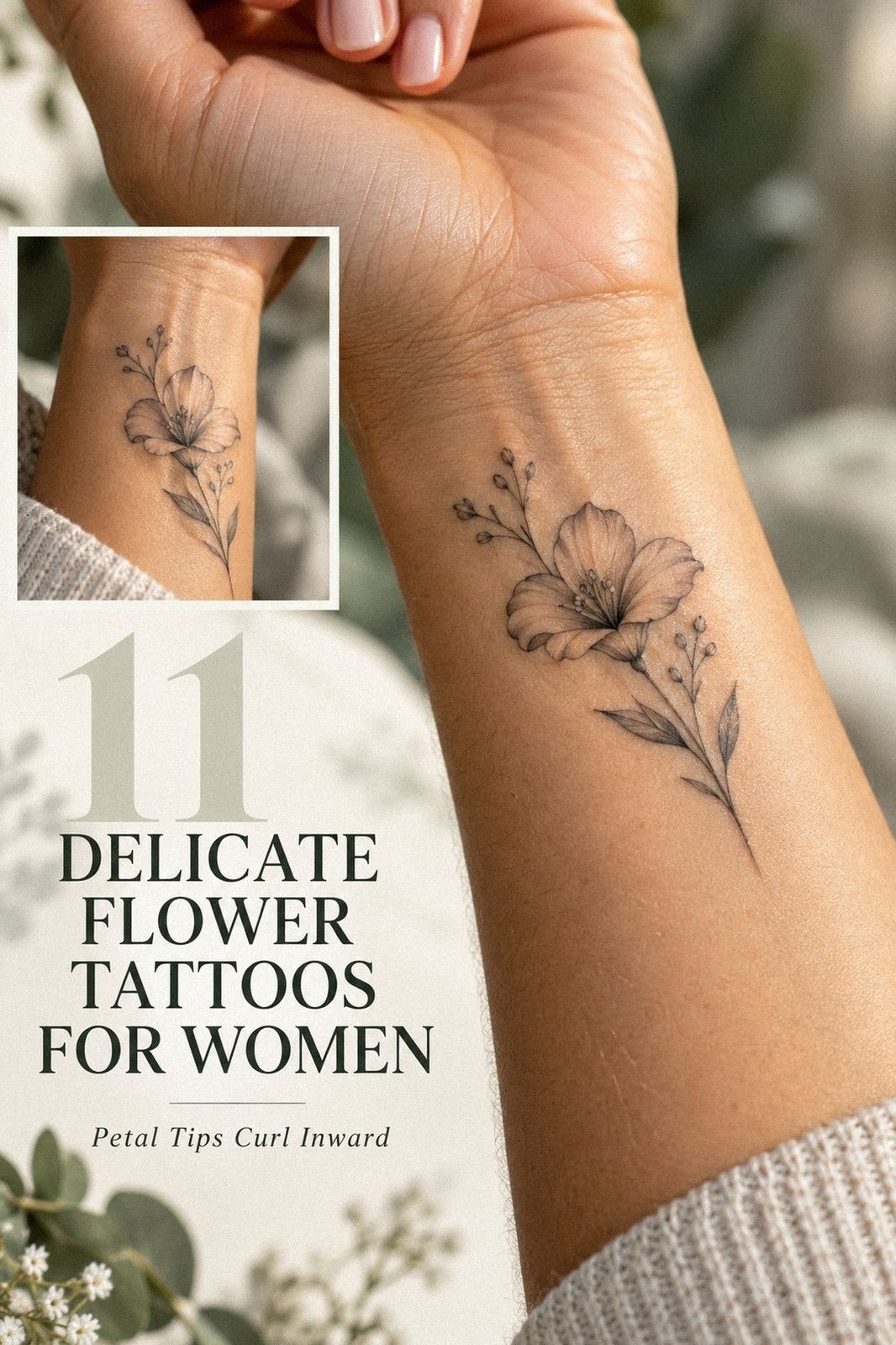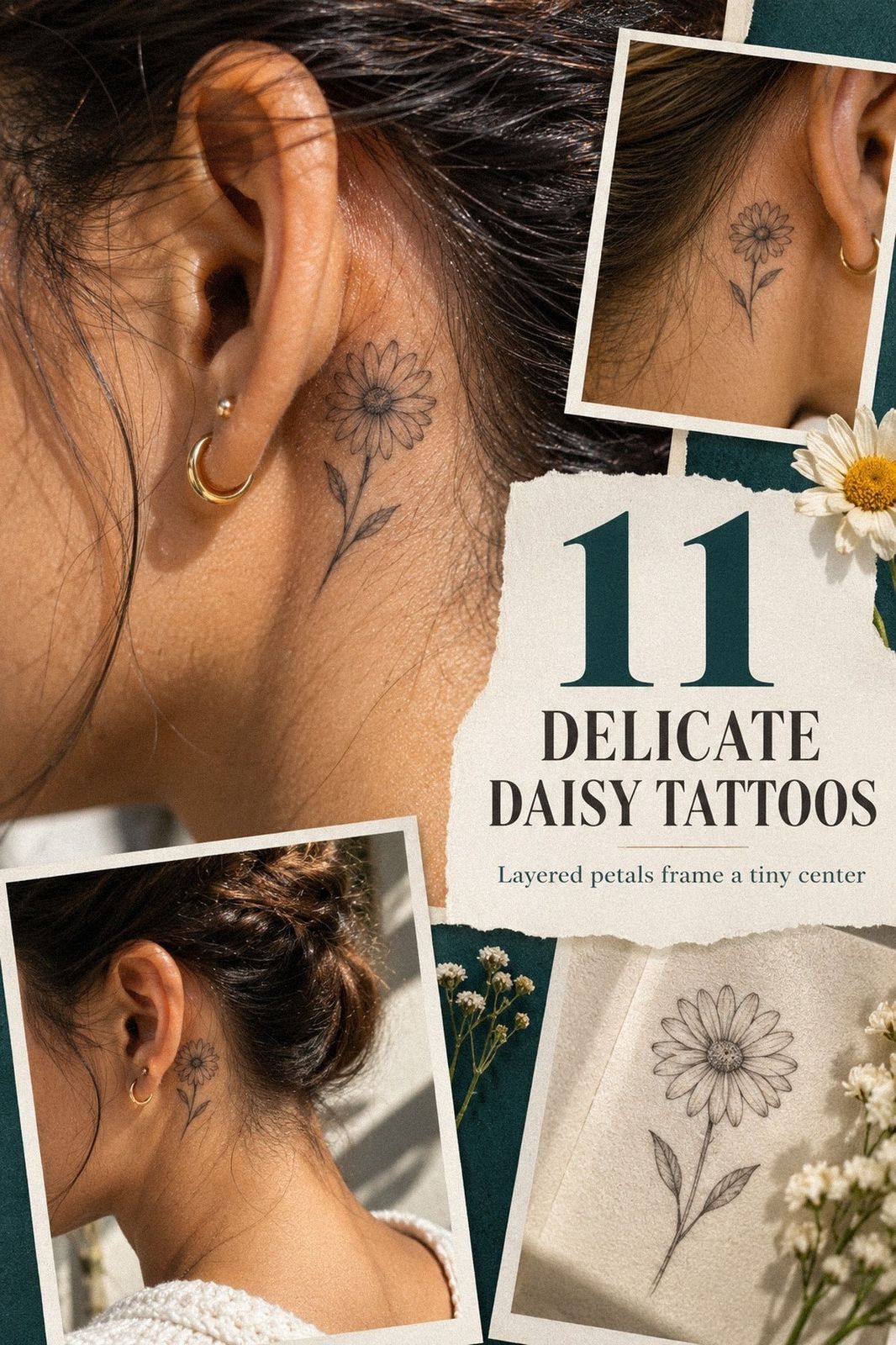
Delicate daisy tattoos can stay personal without disappearing on your skin. I once chose a placement before thinking about sun exposure, and the fine lines softened faster than I wanted. Now I look at size, skin tone, movement, and healing first. These 11 ideas keep the design meaningful, crisp, and easy to reveal when you choose.
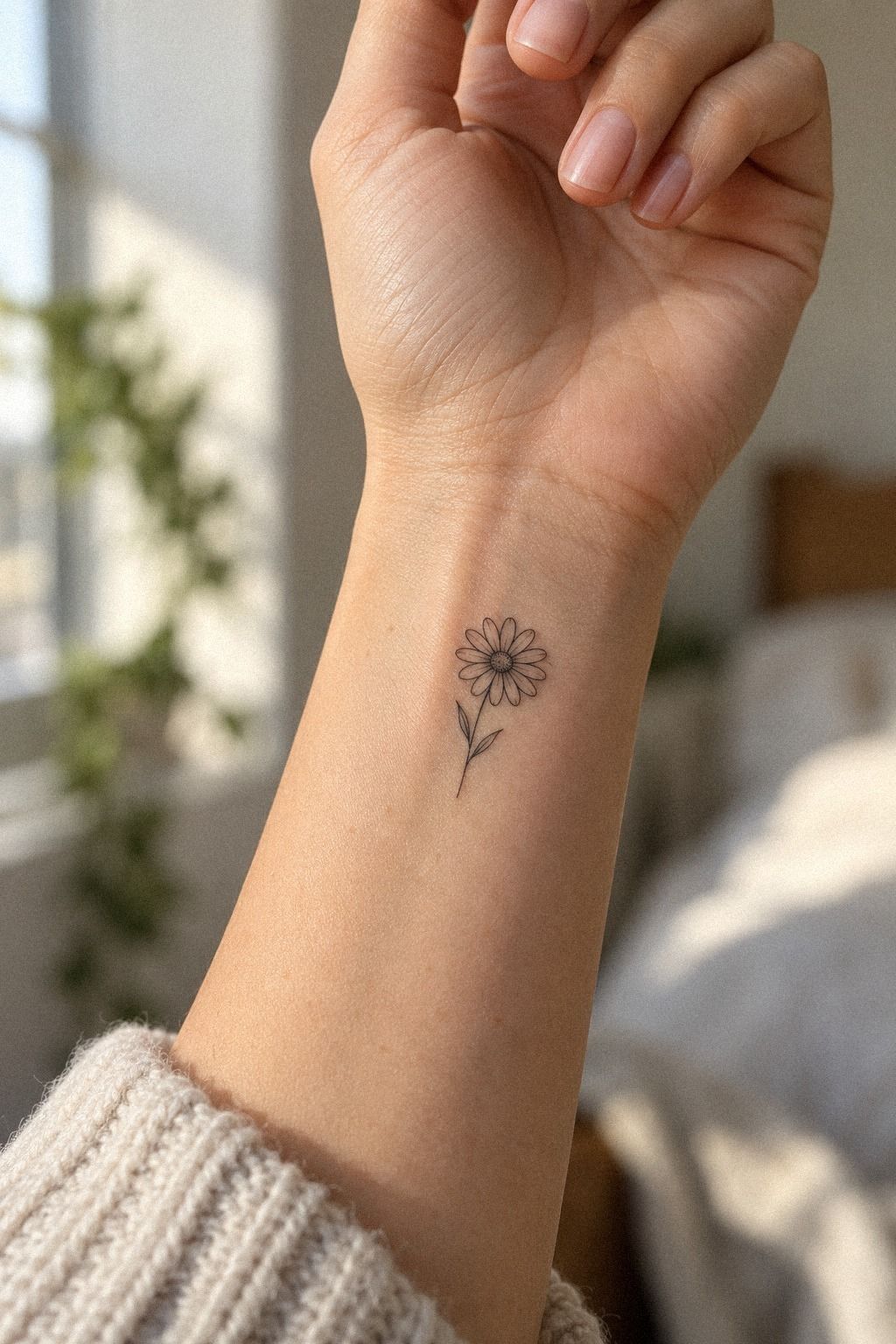
Don’t overthink: Fine-Line Delicate Daisy Tattoo on the Wrist.
My one rule: choose the placement before you fall in love with the details. Your tattoo can be striking and private, but it still needs enough space to heal cleanly.
- Tiny Delicate Daisy Tattoo Behind the Ear
- Fine-Line Delicate Daisy Tattoo on the Wrist
- Unique Delicate Daisy Tattoo with Birth Flower Details
- Minimal Delicate Daisy Tattoo Along the Collarbone
- Single-Needle Delicate Daisy Tattoo on the Finger
- Delicate Daisy Tattoo Ideas with Botanical Linework
- Small Delicate Daisy Tattoo on the Ankle
- Fine Dotwork Delicate Daisy Tattoo on the Rib
- Delicate Daisy Tattoo with a Hidden Initial
- Bold Blackwork Delicate Daisy Tattoo on the Shoulder
- Watercolor Delicate Daisy Tattoo with Soft Petals
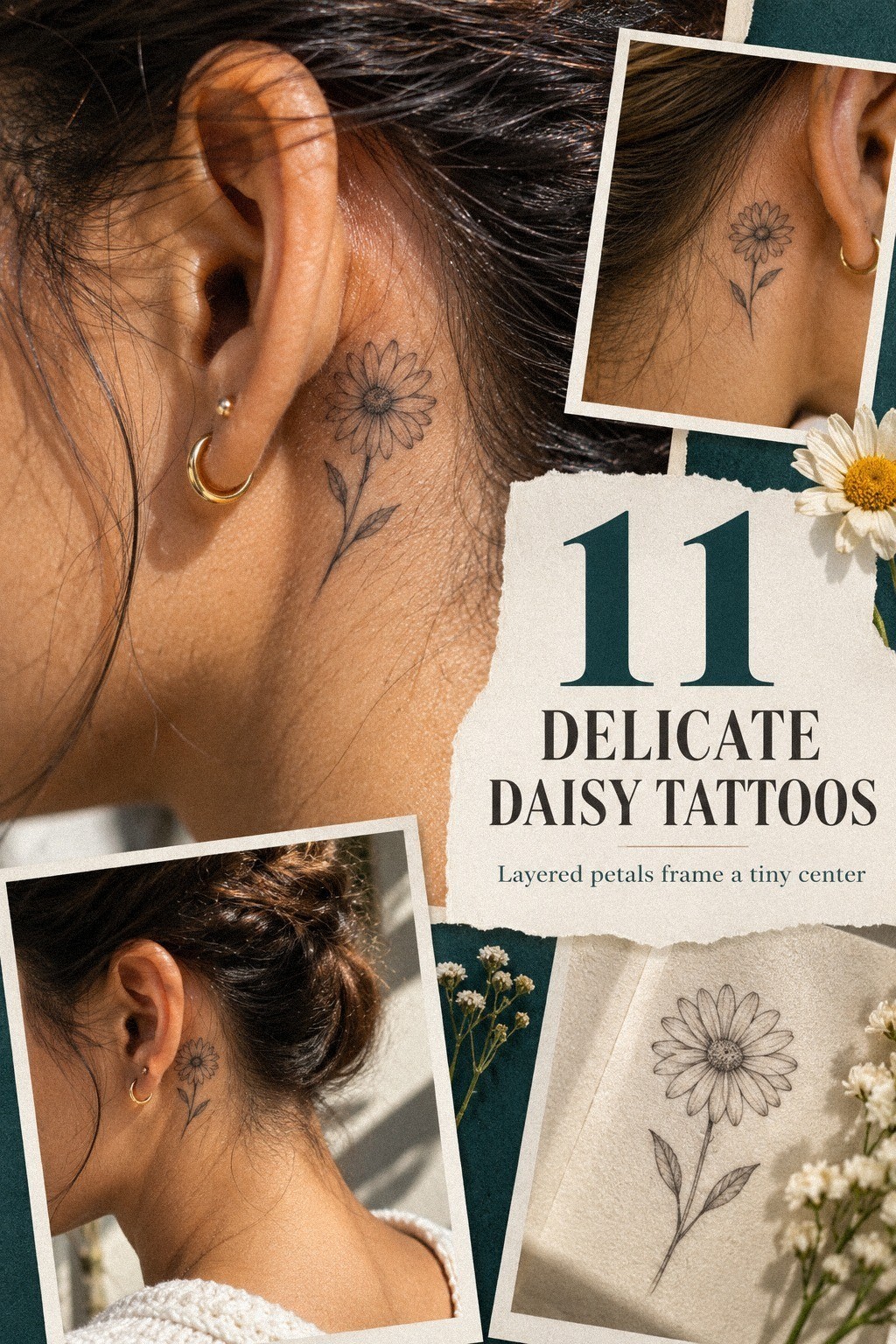
1Tiny Delicate Daisy Tattoo Behind the Ear

A tiny daisy behind the ear feels personal because you control who sees it. The rounded petals suit warm-neutral skin, while the placement gives the design a discreet, almost hidden quality. I’d ask for crisp single-needle work and a center that isn’t packed with tiny dots.
The best version stays small but readable, around one inch, or about 2.5 cm. A tattoo artist can adjust the petal spacing so it won’t become a dark speck after healing. Your reference should show the fine-line tattoo clearly, with no dense shading hiding the outline.
And this is where size matters more than ornament. An intricate stem or extra leaf might look charming on paper, but it can crowd the area behind your ear. I’d skip a long botanical spray because the curve of your skull can distort the flow.
The spot can be more sensitive than your forearm because the skin is thin and close to bone. Keep your aftercare routine simple, avoid picking, and protect the healed piece from direct sun. If you want more tiny references, compare it with tiny daisy tattoo ideas before booking.
It’s a dainty choice with a quietly personal edge, especially when your budget is limited.
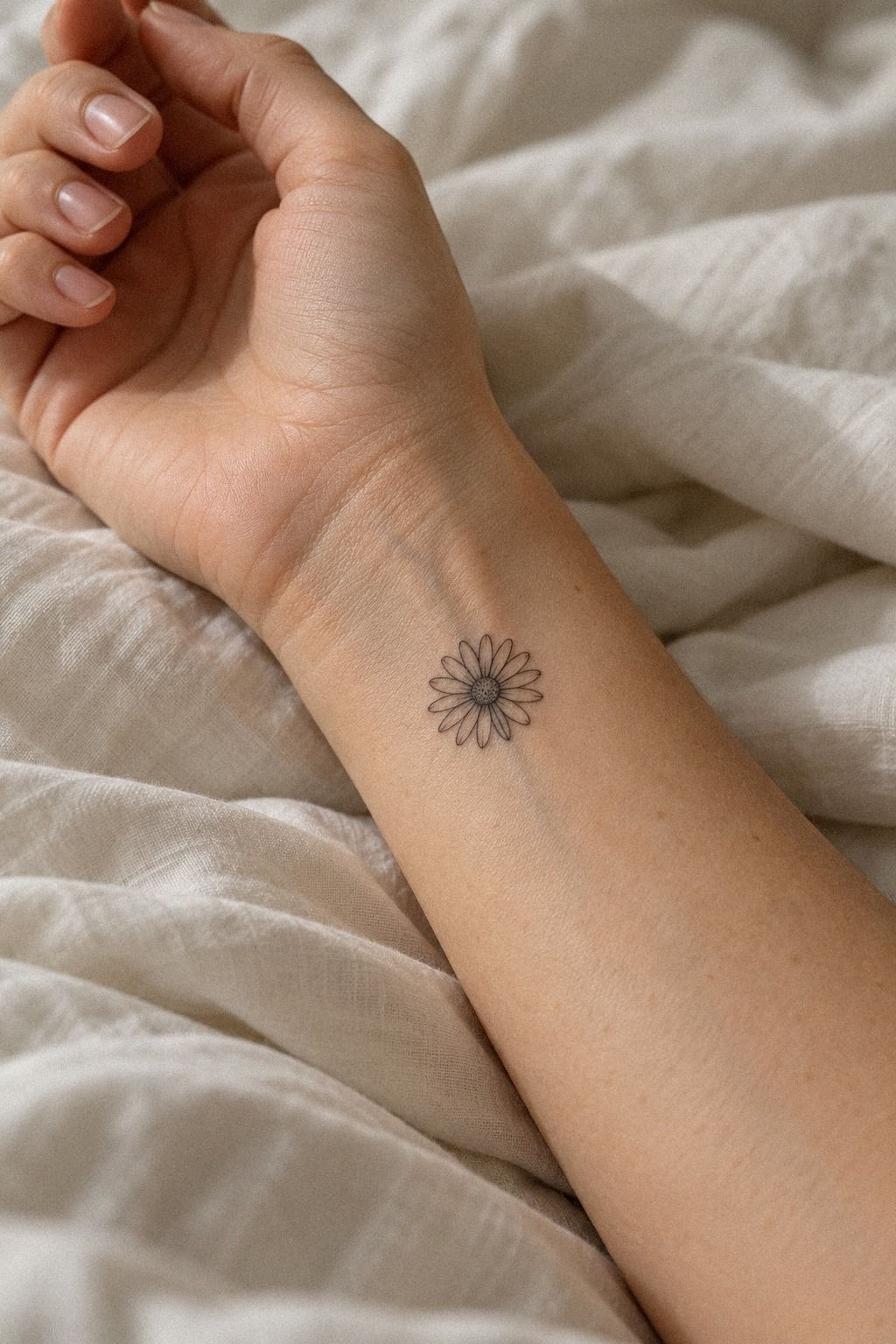
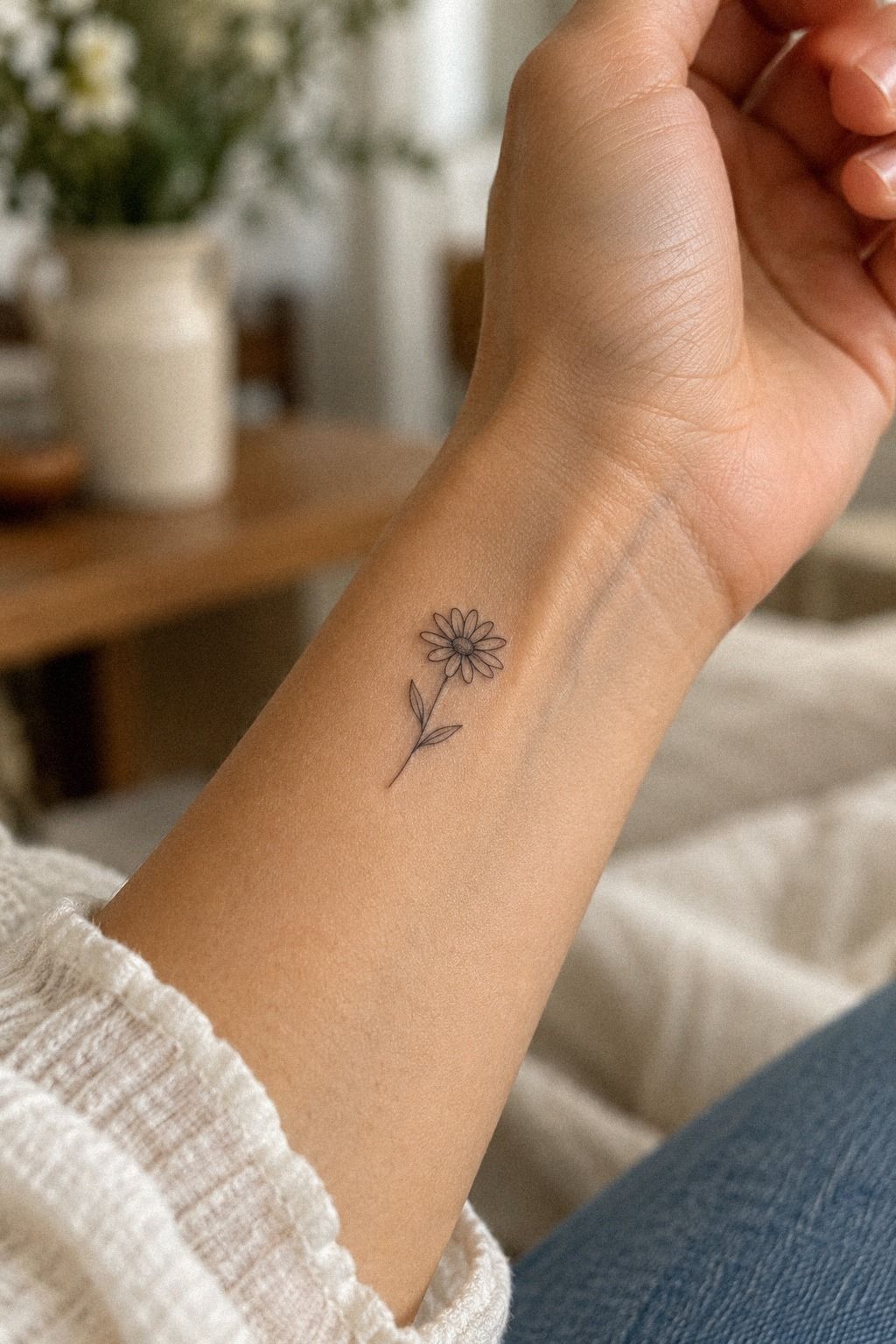
2Fine-Line Delicate Daisy Tattoo on the Wrist
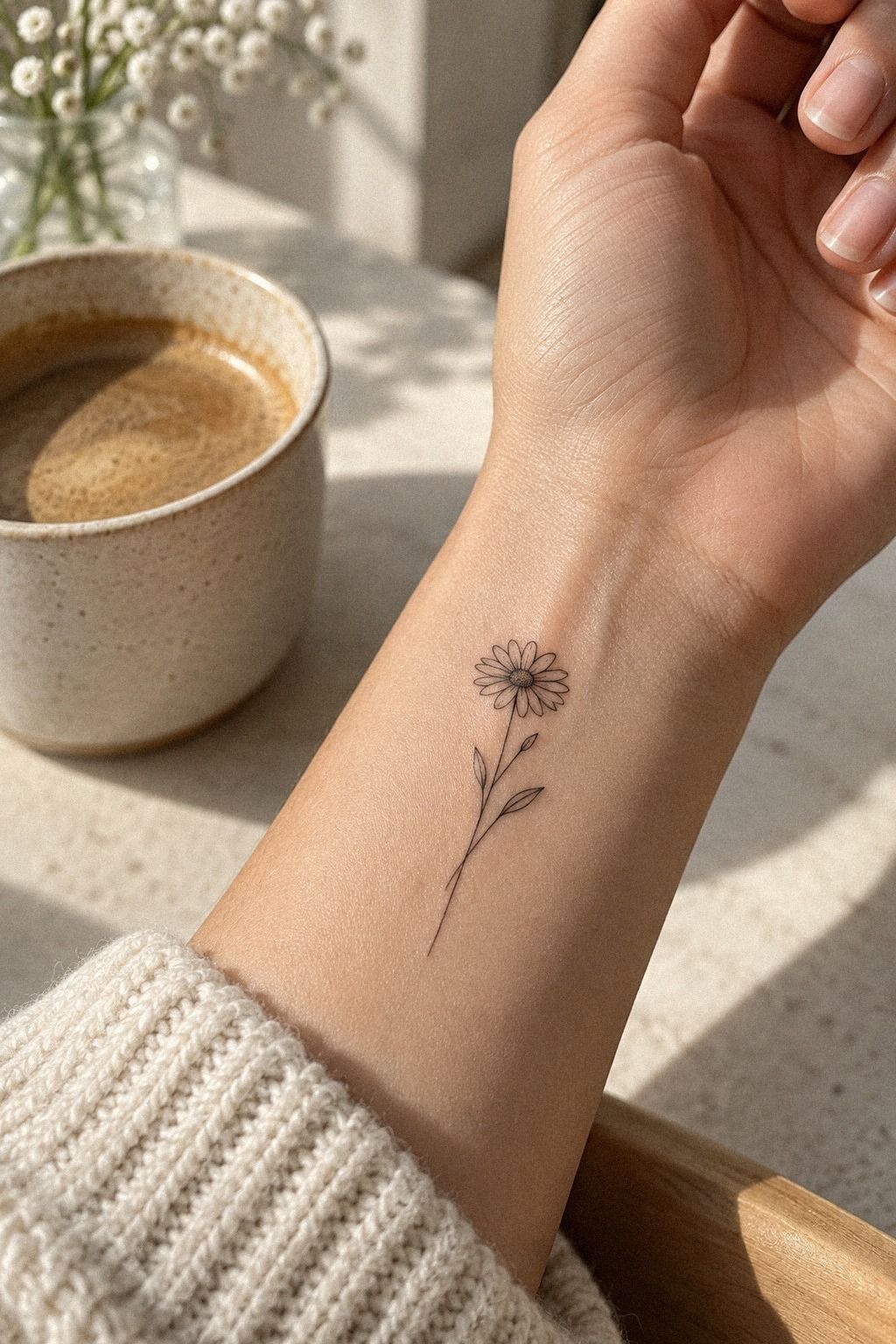
A wrist daisy gives you more visibility than the behind-ear version, but it still feels understated. The placement suits a crisp outline, a graceful stem, and a small center that won’t overwhelm the delicate shape.
I’d keep the wrist placement slightly above the crease so movement doesn’t interrupt the flower. A minimal daisy can feel sleek and polished here, especially when the petals have enough breathing room.
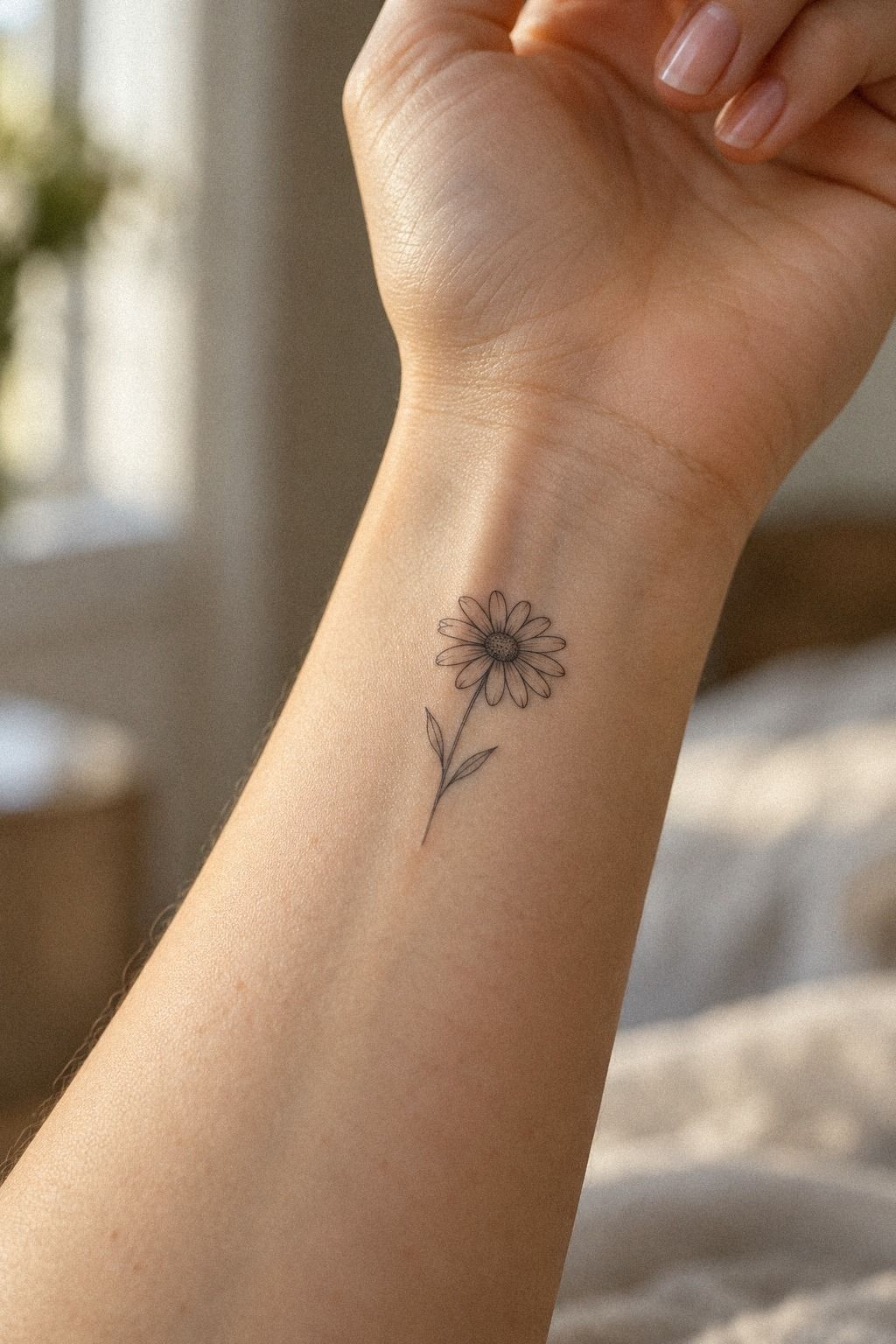
3Unique Delicate Daisy Tattoo with Birth Flower Details

This forearm idea works when your daisy carries a second layer of meaning. A single stemmed flower can feel more botanical than symbolic, while a smaller bud or leaf adds a personal story. Your birth flower could appear as one smaller bloom tucked behind the daisy.
The strongest version uses muted plum accent ink only if your artist has experience with healed color. A charcoal outline remains the anchor, while a soft rose-toned secondary shade can make the composition feel organic and personal. I’d avoid several bright colors because they compete with the delicate structure.
A birth flower addition should be readable without turning the design into a full bouquet. That’s the balance. If you’re choosing between a second flower and a hidden initial, I’d pick the flower when the symbolism matters more than privacy.
Your forearm gives this design practical space for graceful movement. Ask for the stem to follow your arm instead of sitting stiffly across it.
You can compare the botanical rhythm with delicate wildflower tattoo ideas before you settle on the final sketch. The cost is easier to justify when every detail has meaning.
4Minimal Delicate Daisy Tattoo Along the Collarbone
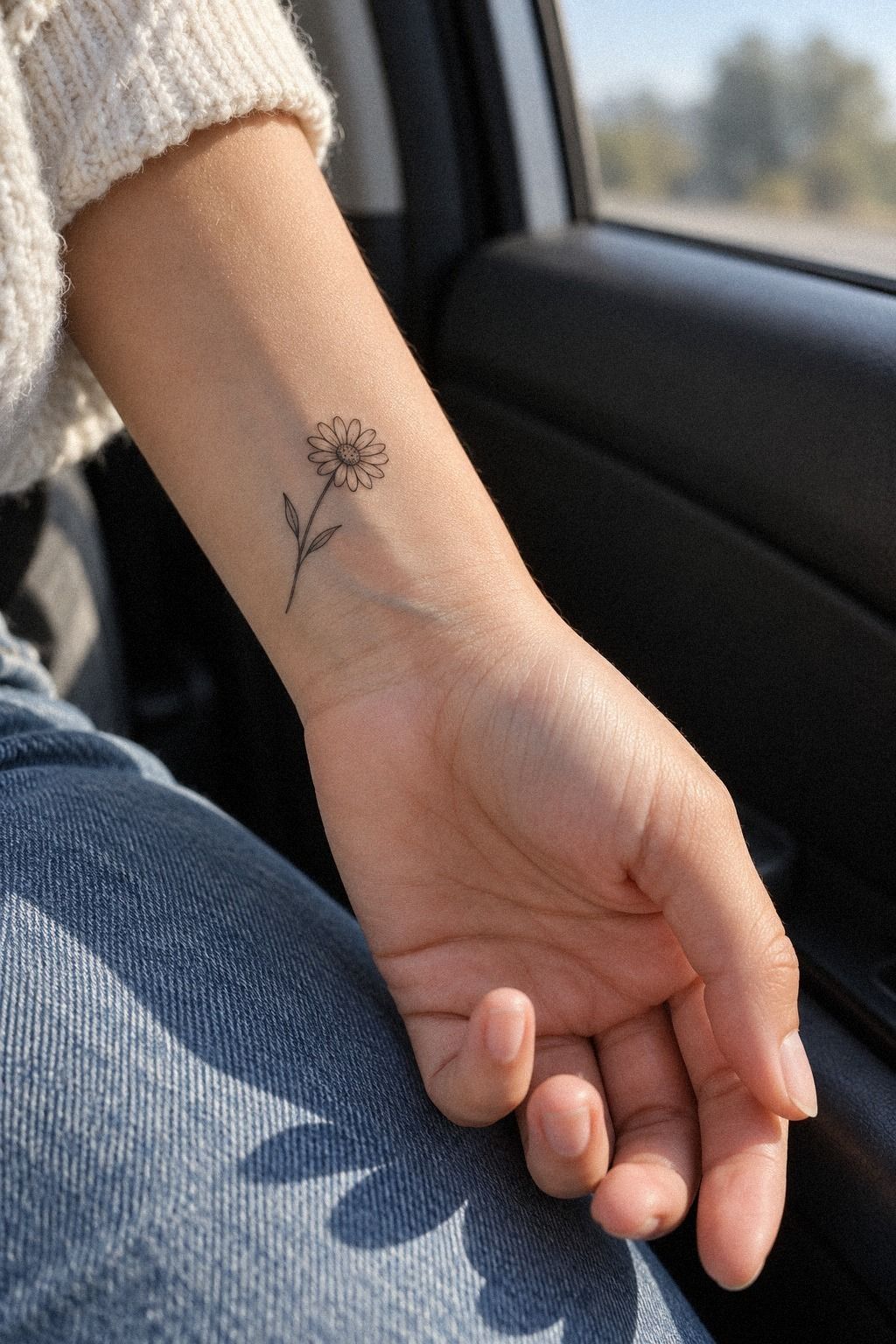
A collarbone daisy creates a sleek body line that follows the body instead of fighting it. The design can be minimal, graceful, and easy to hide beneath a neckline when you want privacy.
I’d keep the collarbone stencil narrow and leave generous gaps between petals. A single bloom or short stem usually looks more elegant than a complicated spray in this placement.
Your artist should check the stencil while you stand naturally, since shoulder position can change the curve. If the line looks tense before the appointment begins, it probably won’t feel natural after healing.
This placement can be worth it when the tattoo needs to feel intimate without being completely hidden. For another restrained direction, compare delicate flower tattoo options.
5Single-Needle Delicate Daisy Tattoo on the Finger

A finger daisy is compact, daring, and far less forgiving than a sketch suggests. Your artist needs to simplify the petals before transferring the idea to skin.
Use archival sketch paper as inspiration, not as a promise of the final result. Paper allows hairline details that skin may not hold, especially in a high-friction spot. I’d choose three or four rounded petals over eight crowded ones, even if the larger version looks more ornate.
Finger tattoos can fade or soften faster because of washing, friction, and constant movement. That doesn’t make the idea wrong, but you should book with realistic expectations. If you want the daisy to stay crisp for longer, I’d choose the side of the finger over the palm-facing crease.
The placement feels edgy and intimate at once. Ask your artist about touch-up policies before booking, and don’t compare a fresh finger tattoo with a healed forearm piece.
You can find more petite options in delicate flower tattoo ideas for women. It’s a small mark with a surprisingly fierce attitude!
Which Private Placements Are Easiest to Control?
Behind the ear offers the most discretion, while the upper back gives your artist more space for clean spacing. The wrist is easier for you to inspect, but it’s visible every day and more exposed to sunlight.
Your choice should match how private you really want the tattoo to be. A placement stencil can reveal whether the design still feels balanced when your arm, shoulder, or neck moves.
If you’re comparing options by budget, remember that a tiny design may still meet a studio minimum. The cheapest placement isn’t always the best value if it needs an early touch-up.
6Delicate Daisy Tattoo Ideas with Botanical Linework

This upper-back design has room for a more flowing composition. Botanical linework can feel romantic and expressive when the stem follows the body instead of forming a rigid horizontal mark.
Ask for botanical linework that stays readable from a short distance. A few leaves can add movement, but too many fine branches may make the daisy look busy once the skin settles.
7Small Delicate Daisy Tattoo on the Ankle
An ankle daisy gives you a classic placement with a playful reveal. A small rounded flower works well with a dotted center and a short stem. Your artist can angle the bloom toward your foot or up your leg, depending on whether you want it noticed in sandals.
The charcoal dotwork center should stay light enough that the petals remain distinct. Too many dots can merge during healing, especially in a tiny design. I’d ask for a clean outline first, then a restrained center that adds texture without turning the flower into a dark button.
Your ankle moves constantly, and shoes can rub the area during healing. Choose loose footwear when possible and follow the artist’s care instructions. I’d skip a placement directly under a tight strap because repeated friction can make the first weeks unnecessarily irritating.
This spot can feel dainty without becoming overly sweet. For another size comparison, review small daisy tattoo inspiration and notice how much open skin surrounds each flower.
A little breathing room makes the design more crisp, personal, and timeless. That balance gives you better value than adding details that may blur.
How Much Detail Can Your Skin Hold?
Fine-line tattooing looks striking when the design respects the scale of the placement. Tiny petals need open gaps, uncomplicated centers, and a clear silhouette.
Ask your artist to show healed linework at the same size you’re considering. A large healed flower can look impressive while telling you very little about how a one-inch daisy will settle.
If you’re tempted by an ornate version, compare it with fine-line daisy examples. The right design should still read as a flower from a short distance.
8Fine Dotwork Delicate Daisy Tattoo on the Rib
A rib daisy is intimate, expressive, and more intense for many people than an arm placement. The area gives you excellent privacy, but the design should remain simple enough to follow the curve of your body.
Use fine dotwork shading sparingly. A few dots around the center can create depth, while a dense cluster may lose its delicate character after healing.
Your artist should place the stencil while you breathe normally. Ribs shift with every breath, and a rigid stem can look awkward when the body moves.
If privacy matters most, this placement may be worth it despite the sensitivity. Compare the size and spacing with delicate flower tattoo references, then ask about the artist’s healing process.
9Delicate Daisy Tattoo with a Hidden Initial
A hidden initial turns a familiar flower into something more personal. Your initial might honor a person, a place, or a version of yourself you don’t want to explain.
Use simple micro-lettering only when the letter has enough room to remain legible. Tiny script can blur into the stem, while a simple uppercase form stays more readable. I’d choose one clean letter over a date because the flower remains the visual focus.
The most effective placement is slightly unexpected. Tuck the initial where you’ll know it’s there, but other people won’t notice it immediately. That hidden detail makes the design feel intimate and meaningful without announcing the story.
You’ll want to ask the artist how the letter may change as fine lines soften. If privacy matters, the upper back gives you control over visibility.
For another symbolic direction, compare delicate lotus flower tattoo designs. The daisy stays delicate, while the detail gives it an empowering edge!
Name the Meaning Before You Choose the Mark
A daisy can represent innocence, resilience, remembrance, friendship, or a private turning point. Your reason doesn’t need to be obvious to anyone else.
Write down the meaning before you choose the hidden initial or secondary flower. That small step can prevent you from adding symbols simply because they look pretty together.
If your story feels sacred, keep the design understated. If you want the mark to feel more expressive, a second bloom or sharper stem may give it the right symbolic weight. There’s no single correct answer.
10Bold Blackwork Delicate Daisy Tattoo on the Shoulder

A shoulder daisy gives you enough space for stronger contrast without losing the rounded silhouette. The design can feel polished, iconic, and readable as it heals.
A solid black petal center can anchor the design when the outline is still delicate. That contrast is useful if you want a tattoo that remains clear over time. I’d skip soft gray shading here because the blackwork already provides the strongest visual hierarchy.
Bold doesn’t have to mean oversized. A compact shoulder flower can feel elegant, especially when the leaves stay sparse. Ask your artist to show work after healing, since fresh ink can look more intense than the settled version.
Black ink generally offers the clearest long-term contrast, but ultraviolet exposure still matters. You’ll want to protect healed skin from the sun, especially if the shoulder is often exposed.
Compare the balance with delicate flower crown tattoo ideas. It’s crisp, daring, and easier to evaluate on a budget than a large custom composition.
11Watercolor Delicate Daisy Tattoo with Soft Petals
A watercolor daisy on deep brown skin with a warm undertone needs thoughtful color selection and strong structure. A terracotta watercolor wash can create softness without making the petals disappear, especially when a crisp outline keeps the flower readable.
I’d ask for controlled color transitions rather than a scattered blur. The result can feel vibrant, ethereal, and feminine while still keeping the daisy’s silhouette clear.
Cost, Value, and Touch-Up Reality
The lowest quote isn’t automatically the best choice for a delicate tattoo. Ask whether the artist’s studio minimum covers the consultation, stencil changes, and a possible touch-up.
A crisp design with sensible spacing can offer better value than a more ornate piece that needs correction later. Your touch-up budget should be part of the decision before you book.
Look at healed work, ask direct questions, and compare artists who specialize in the placement you want. That approach helps you judge the real cost instead of chasing the first number you see.
The Three-Placement Rule: Which Daisy Would You Keep Private?
I used to think the smallest tattoo required the least planning. I was wrong.
A tiny flower still has to survive movement, sunlight, friction, and the way your skin heals. Now I narrow every private tattoo down through three questions: Can I cover it when I want to? Will the lines have enough space?
Does the placement suit the way I move?
The behind-ear daisy wins for discretion, but it gives your artist very little room. The wrist is easier to inspect and photograph, yet it’s more visible and exposed. The upper back offers privacy and breathing space, though you won’t see the healed result every day.
None is automatically better.
I’m also firmly against choosing an artist from a fresh-ink photo alone. Fresh blackwork can look romantic and dramatic, but healed work tells you whether the line spacing was sensible.
Ask for healed portfolio photos. Ask how the artist approaches fine lines on your skin tone.
Ask what they’d simplify.
The most meaningful daisy isn’t always the most intricate one. Sometimes a clean five-petal outline carries more feeling than a crowded bouquet, especially when the tattoo marks a private memory. I’d rather see one deliberate stem than ten details competing for attention.
Your design can be minimal, sacred, expressive, and entirely yours.
For another restrained comparison, save these minimalist daisy tattoo ideas.
A Few Things Worth Answering
How much does a delicate daisy tattoo usually cost?
A delicate daisy tattoo in the United States often costs about 100 to 300 dollars, depending on the artist, region, size, and placement. Some studios have a minimum of roughly 50 to 100 dollars, while hourly rates may sit around 100 to 250 dollars. Ask for the studio minimum first and confirm what the quote includes.
Are delicate daisy tattoos a good idea for a first tattoo?
Yes, a delicate daisy can be a strong first tattoo because the subject is simple, symbolic, and adaptable. A small forearm, shoulder, or thigh placement is often more tolerable than ribs, feet, hands, or the sternum. Choose an artist with clean healed linework and a portfolio that feels personal to you.
How do I choose a tattoo artist for a delicate daisy tattoo?
Choose an artist who shows healed fine-line work, clear stencil placement, and consistent hygiene practices. Look for healed portfolio photos, not only fresh tattoos.
Your shortlist should include artists experienced with your preferred placement, skin tone, and line style. A strong consultation should feel specific, not rushed.
How much do delicate daisy tattoos hurt?
Pain varies, but ribs, feet, hands, and the sternum are commonly more intense, while the forearm, thigh, and shoulder are often more tolerable. Your tattoo may be small, but placement sensitivity still matters. If you’re nervous, ask whether the artist can suggest a lower-sensitivity location with a similar look.
How long does a delicate daisy tattoo take to heal?
The surface usually heals in about two to three weeks, while complete healing can take roughly two to three months. During that time, follow your artist’s instructions: wash gently, moisturize as directed, and avoid swimming and strong sun exposure until the skin is ready. Consistent healing care matters more than adding extra products.
What’s the best placement for delicate daisy tattoos?
The forearm and shoulder are practical choices because they’re usually more tolerable and easier to protect while healing. The upper back offers privacy and room for clean spacing.
If you want maximum discretion, behind the ear or the upper back may suit you better than the wrist. Consider visibility and privacy together.
The One-Choice Rule: Where I’d Start First
If I had to pick one, I’d start with the fine-line wrist daisy. You’ll see the linework clearly, and the area is usually more manageable than ribs or fingers.
Pin the wrist idea for later and compare it with our minimalist daisy tattoo guide. Start there!