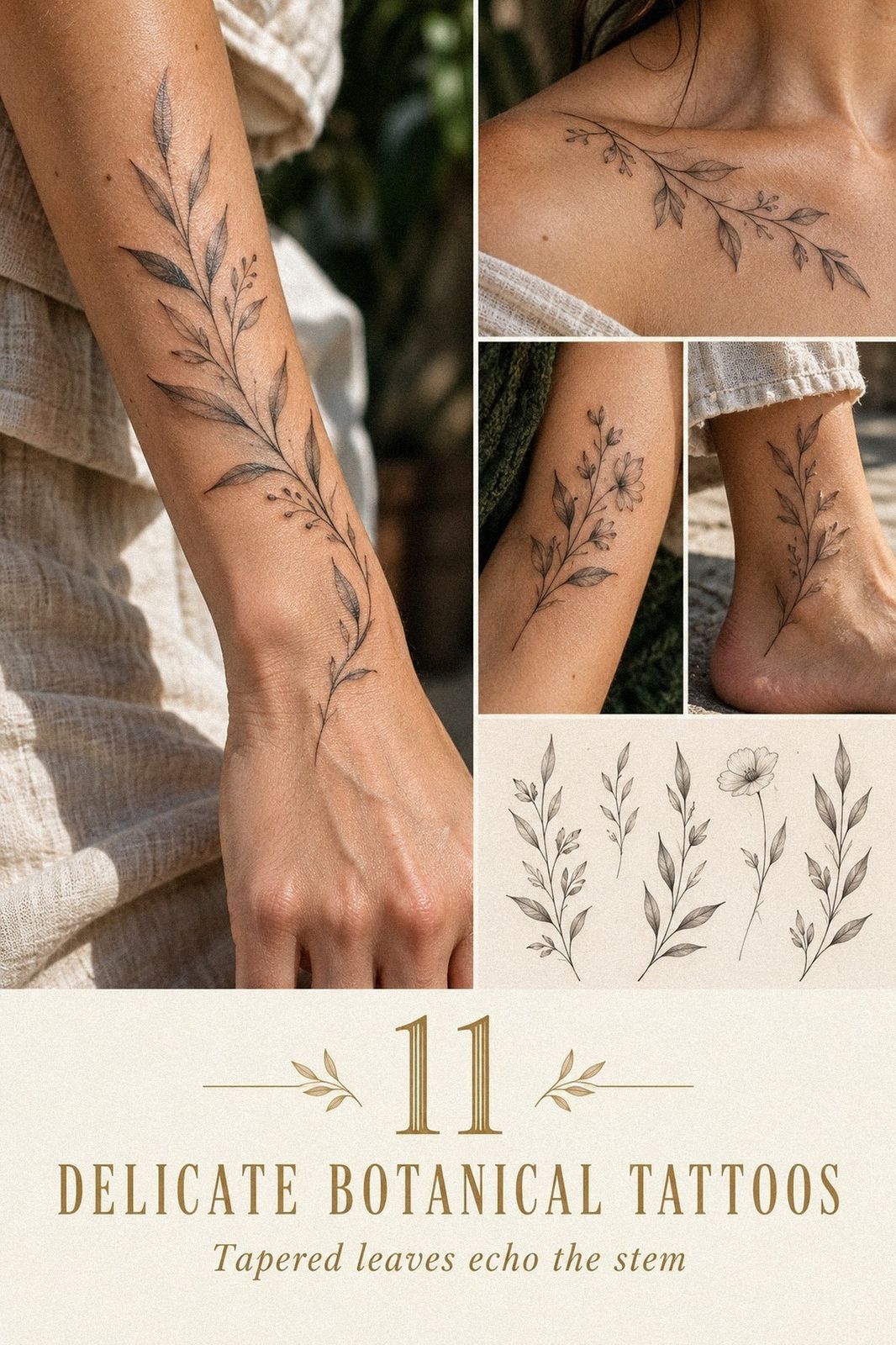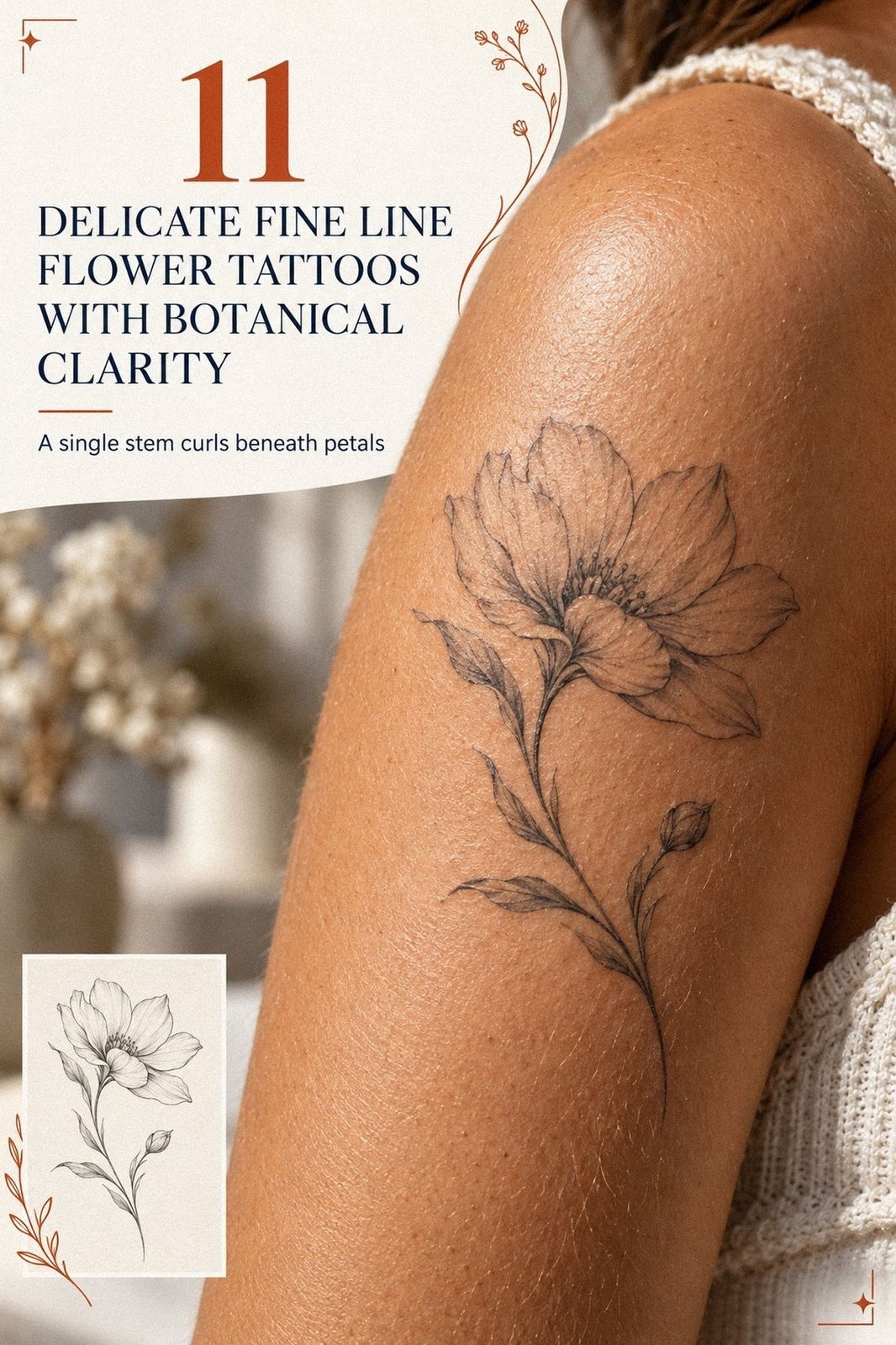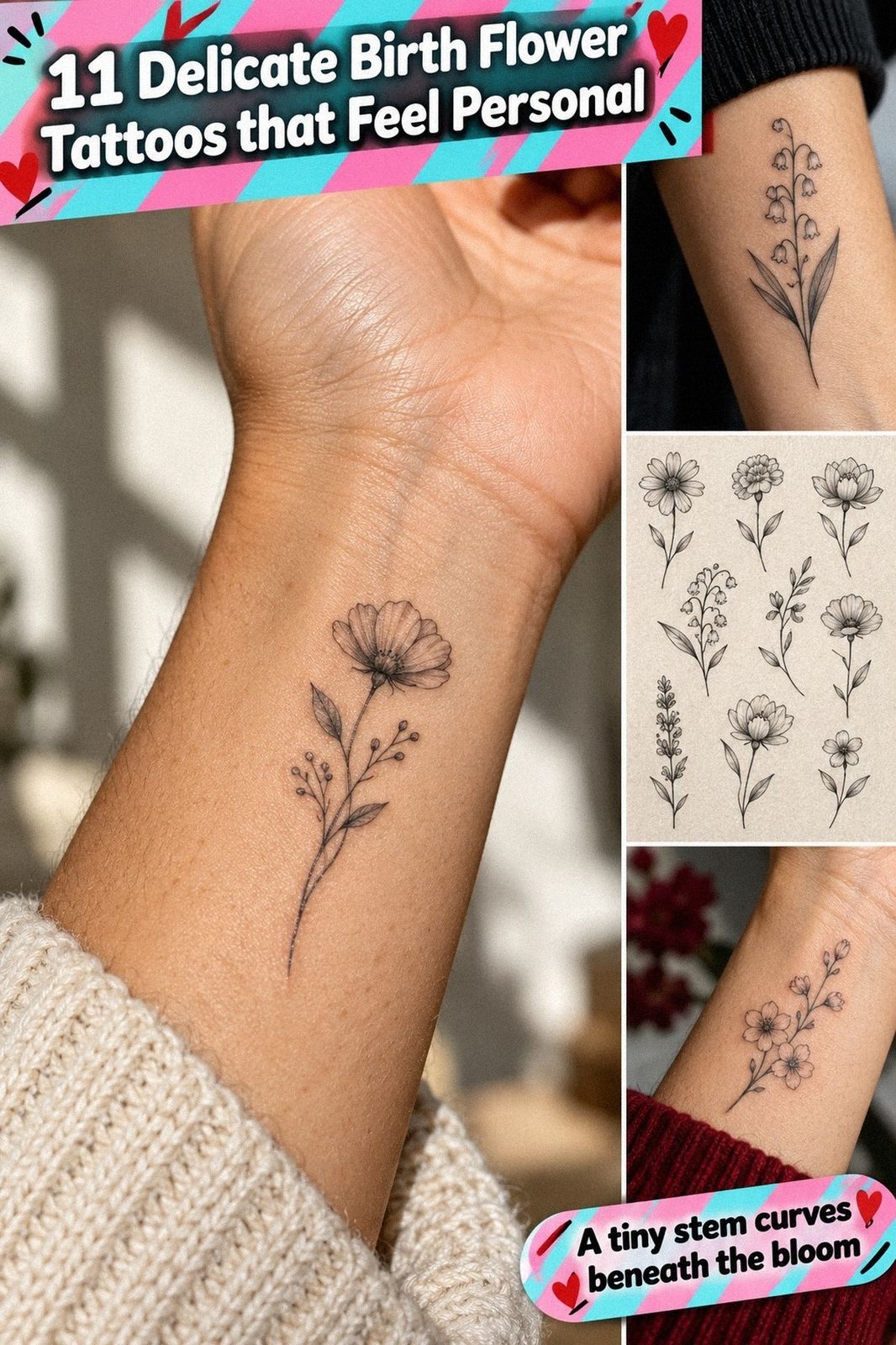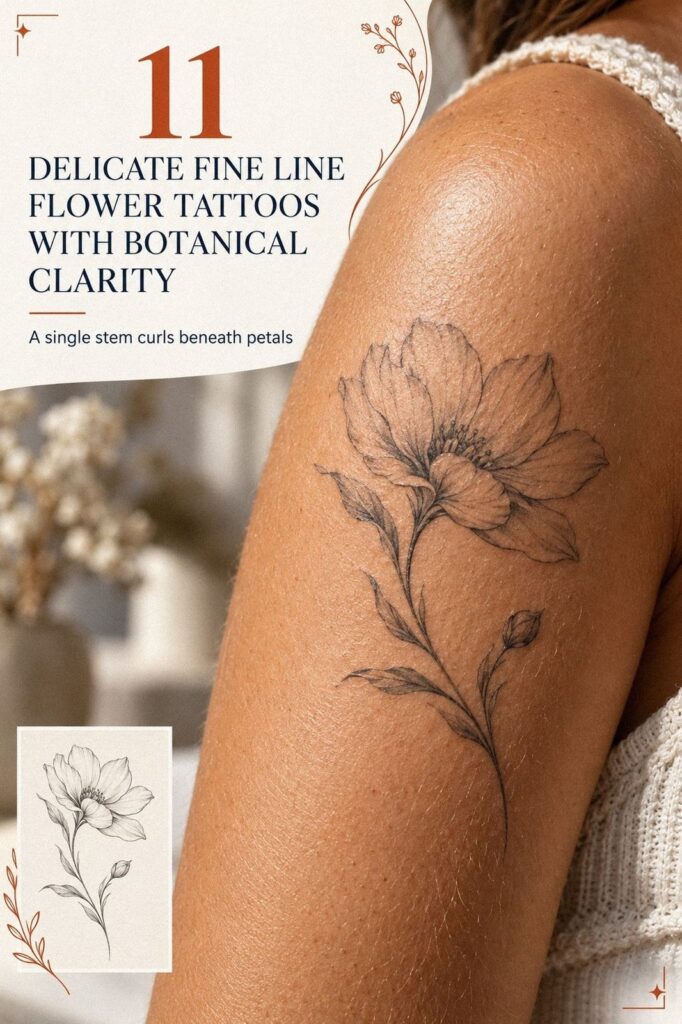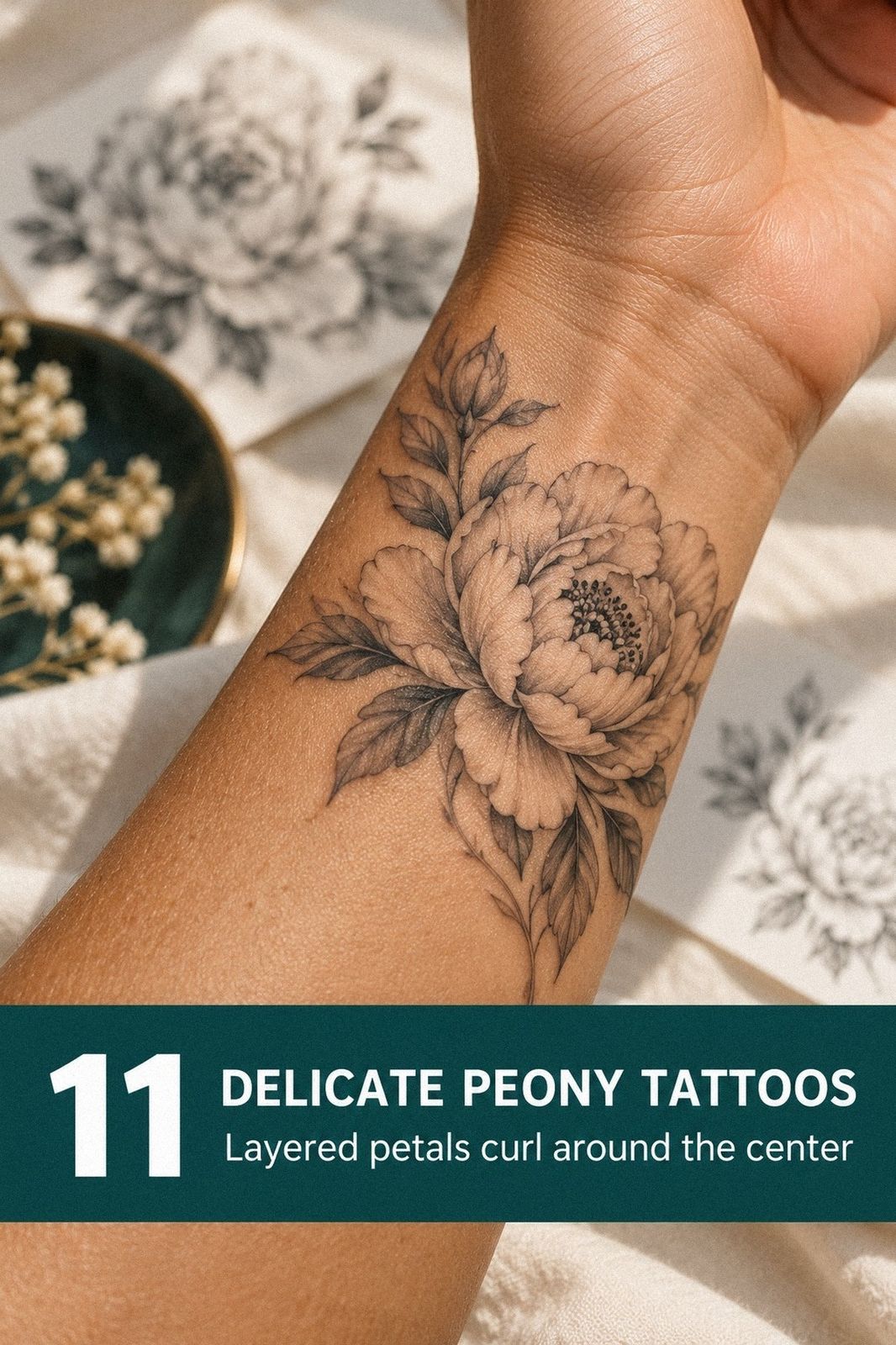
Delicate peony tattoo ideas can work beautifully for a first tattoo when the placement and line weight match your skin and daily habits. I once chose a design that was too fine for its location, and the detail softened faster than I expected. These picks focus on readable shapes, thoughtful scale, and a healed result that still feels personal years later.
I’m drawn to peonies because they can feel romantic, fierce, or quietly symbolic without losing their botanical identity. Before you book, think about visibility, healing, touch-ups, and whether the design feels worth it beyond the first exciting week! For more background, I’d start with this guide to peony tattoo meaning.
- Start Small: Delicate Peony Tattoo on the Wrist
- Behind the Ear: A Quietly Dramatic Peony
- Why the Collarbone Works for a Minimal Peony Tattoo
- Single-Needle Peony Tattoo on the Ankle: Intimate, Not Invisible
- Follow the Curve: A Delicate Peony with a Flowing Stem
- Watercolor Shoulder Peony: Color with a Clear Edge
- Is a Tiny Finger Peony Worth the Trade-Off?
- Botanical Linework, Three Lines at a Time
- The Black Anchor: A Delicate Rib Peony
- Add the Date Only If It Still Feels Personal
- Rotate the Forearm: A Unique Wrapped Peony
1Start Small: Delicate Peony Tattoo on the Wrist
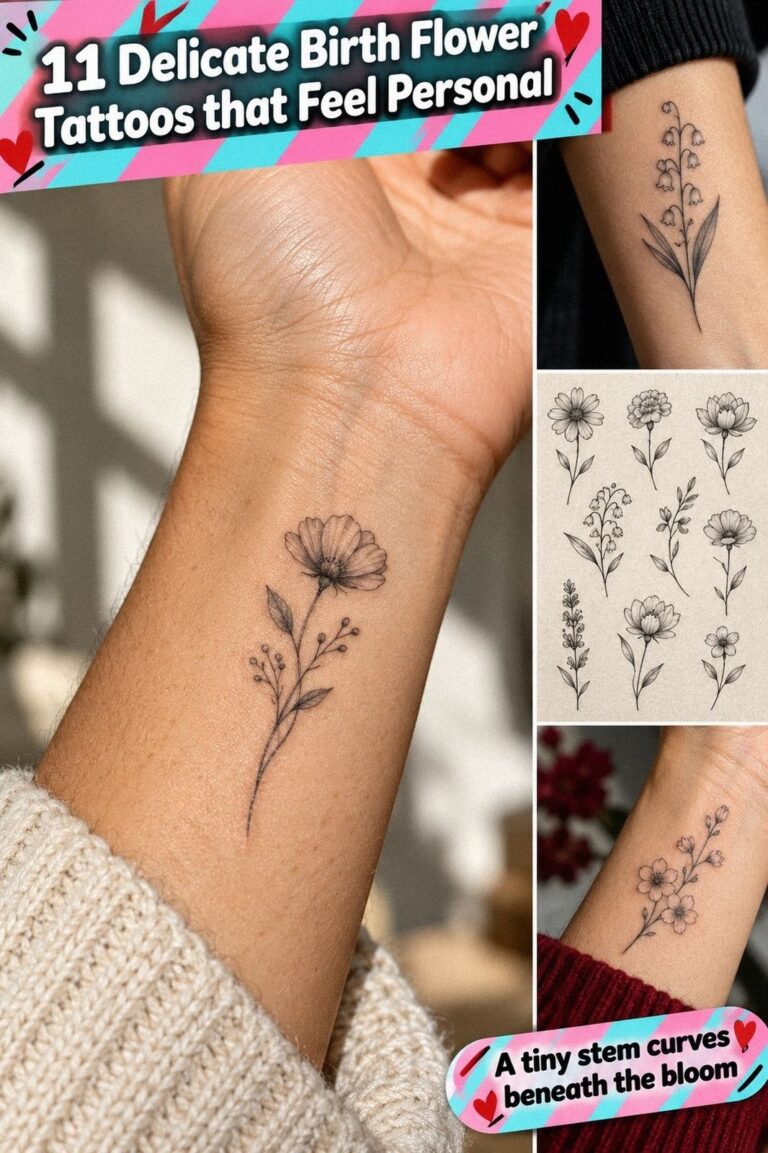
A small wrist peony has a crisp black outline and a striking, personal presence without taking over your hand. The petals can stay delicate while the center remains readable. Place the bloom slightly above the wrist crease, where repeated bending won’t crowd the wrist placement.
Keep the flower compact, but don’t shrink every petal until they merge. A diameter of roughly 1 to 2 inches gives your artist enough room for the open petal structure to remain clear. I’d skip an ultra-tiny version below that scale, because the effect can turn indistinct as the skin settles.
The wrist is visible, so your choice should feel meaningful rather than impulsive. A single peony can represent affection, resilience, or a private milestone.
For more symbolism, compare your idea with this guide to peony tattoo meaning and this minimalist peony tattoo guide. Your artist should show healed examples before you pay a deposit.
You’ll also need to protect this placement from early sun exposure and friction. Wash gently, moisturize with a light layer, and avoid swimming while the surface heals over about 2 to 3 weeks. The final result settles longer, often around 2 to 3 months, so aftercare matters!
2Behind the Ear: A Quietly Dramatic Peony
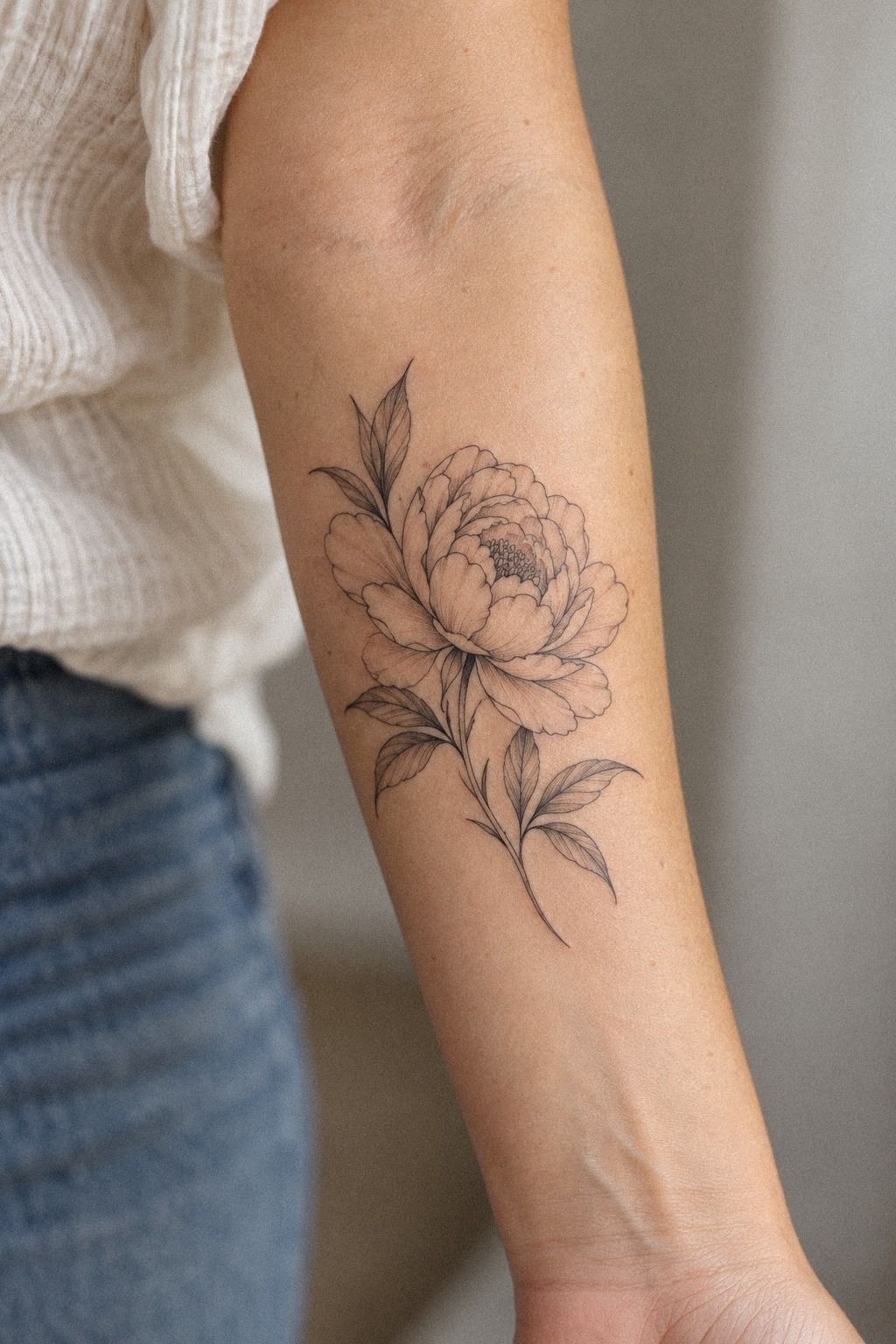
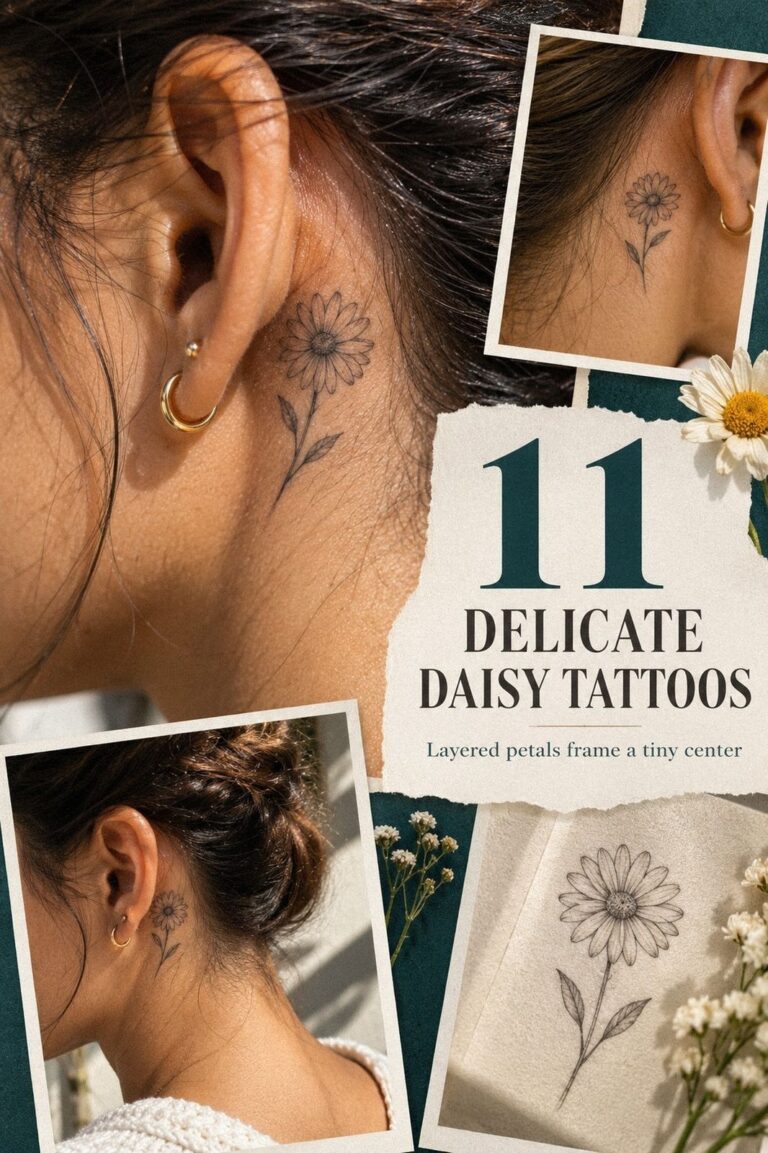
Behind the ear gives a delicate peony a quietly dramatic behind-ear placement.
3Why the Collarbone Works for a Minimal Peony Tattoo
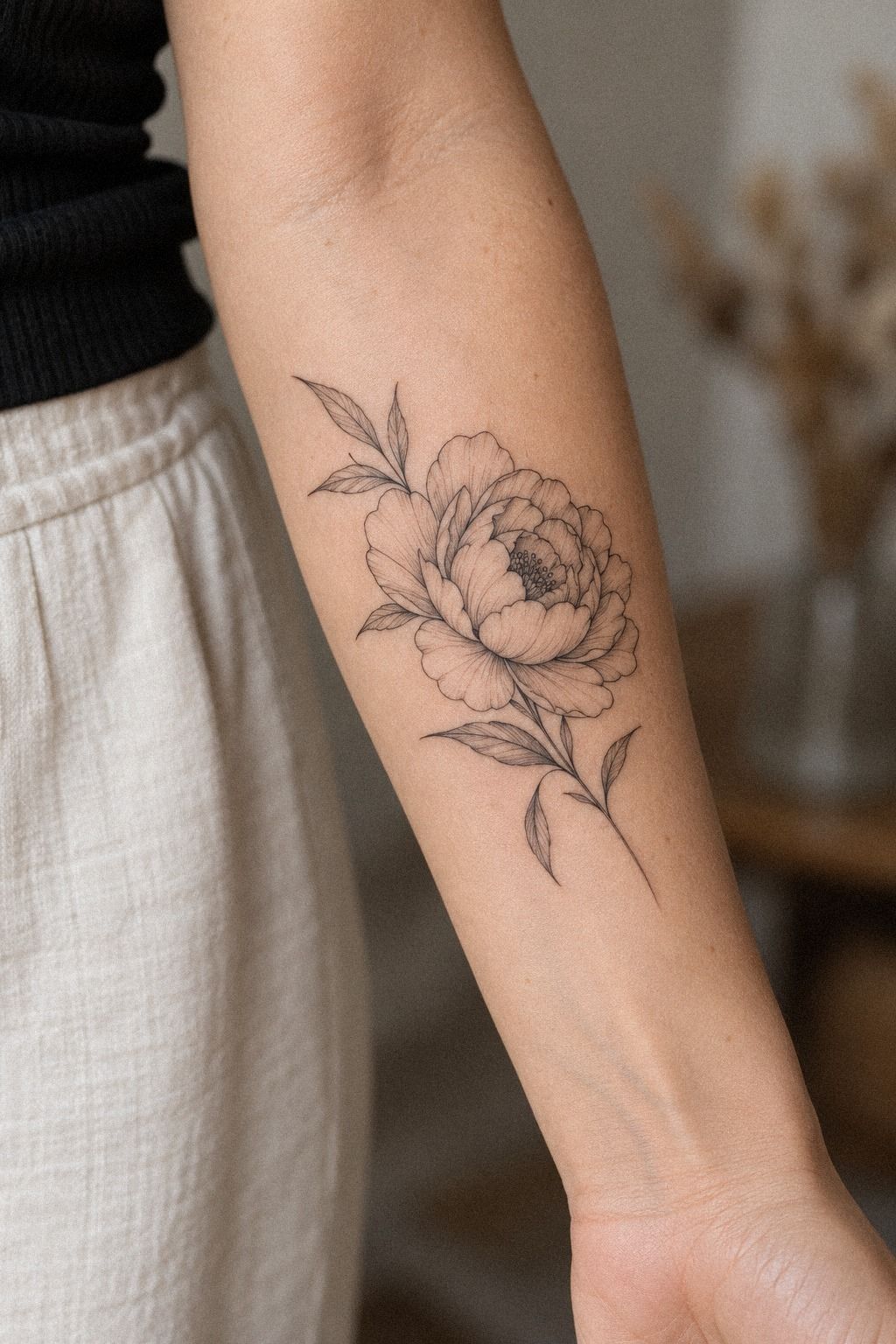
A collarbone peony can look graceful because the stem follows the body’s natural horizontal line. The black linework should keep the flower open and balanced over your skin, with enough negative space around each petal to stop the design from becoming a dark knot.
The collarbone offers more visual space than the wrist, so your artist can create a bloom around 2 to 3 inches wide without forcing every curve together. I’d avoid placing the center directly on the sharpest part of the bone, where straps and clothing may make the appointment less comfortable. Think carefully about the collarbone placement before settling on the stencil.
Your best reference should show the relationship between flower, stem, and shoulder line. Bring a clear concept, but let your artist redraw it for your anatomy. A temporary stencil lets you inspect the angle before the needle touches skin, especially if you’re unsure whether the peony should point inward or toward the shoulder.
Minimal doesn’t mean unfinished. The strongest version has deliberate petal spacing, one controlled stem, and a few elegant leaves. If you want more restrained examples, compare this idea with the minimalist peony tattoo guide and this flower tattoo meaning guide.
The best choice should look sleek from a distance and intricate up close!
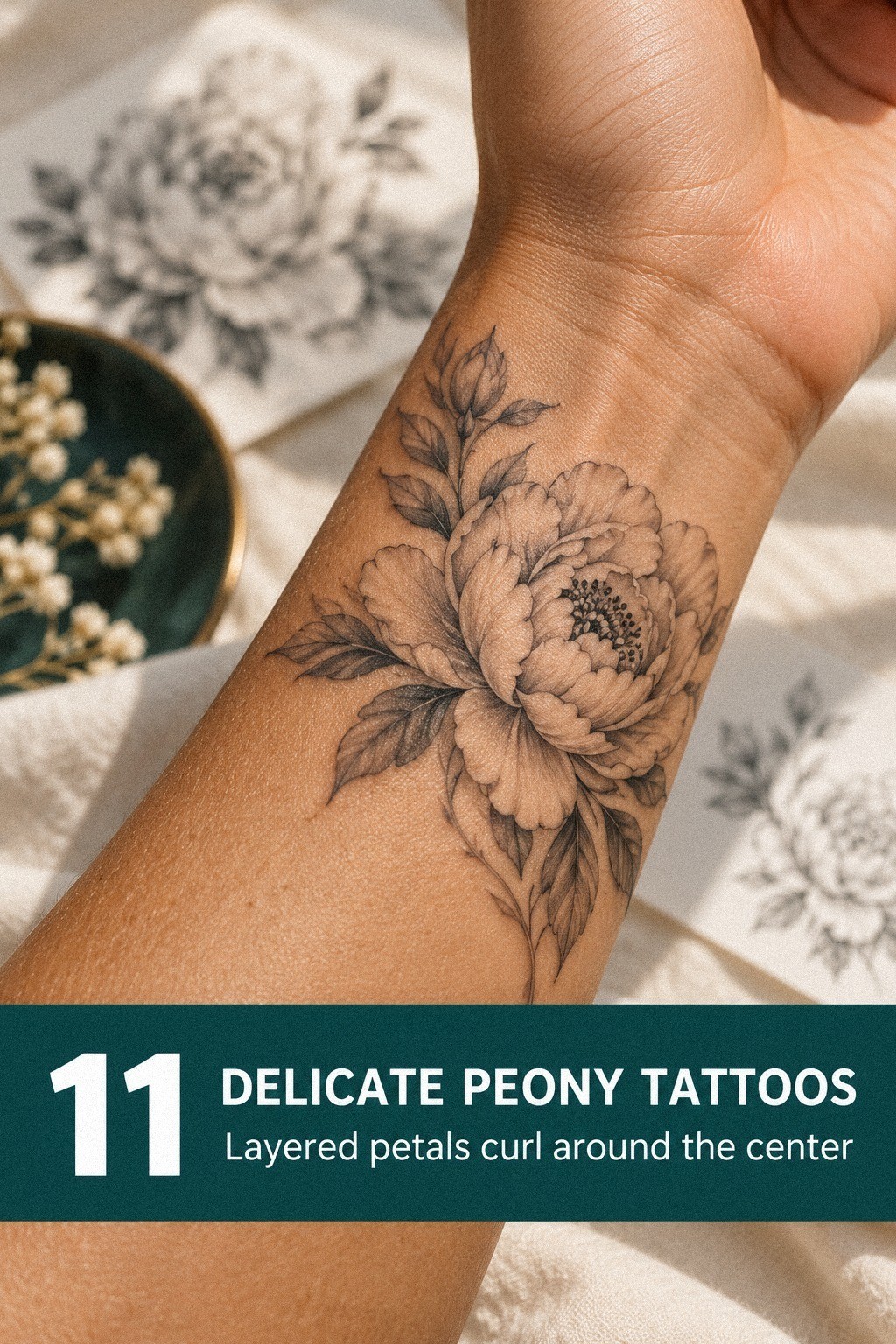
4Single-Needle Peony Tattoo on the Ankle: Intimate, Not Invisible
An ankle peony feels intimate and slightly fierce because the flower sits close to the bone and moves with every step. Discuss the ankle placement carefully, especially if your shoes rub that area.
5Follow the Curve: A Delicate Peony with a Flowing Stem
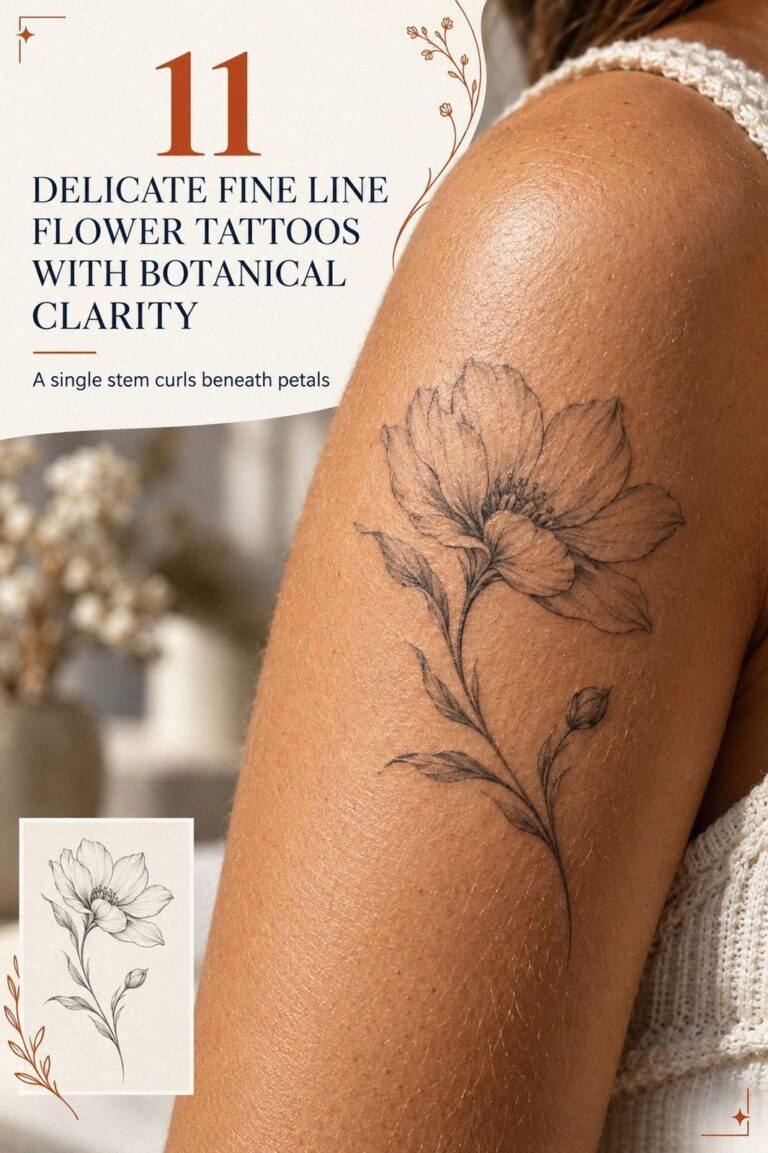
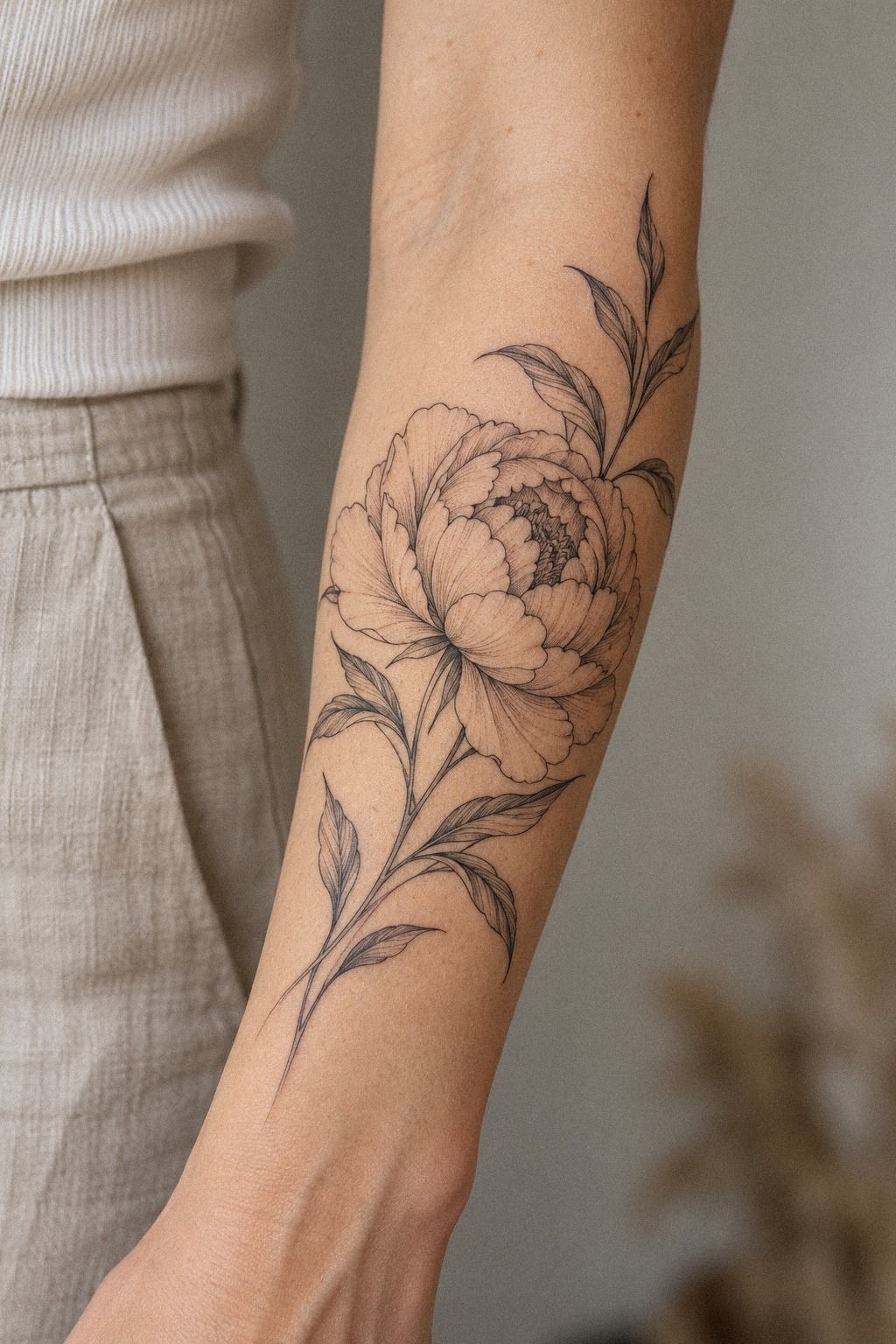
A flowing stem changes the peony from a single emblem into a graceful movement across the skin. Several flower variations can feel expressive, classic, and personal when the composition has one clear direction.
The strongest stem curves once or twice, then stops before the design becomes tangled. Your artist can make the flower bold at the center and keep the leaves minimal, which gives the composition a refined rhythm. I’d avoid a perfectly straight stem because it makes the peony feel stiff instead of organic.
Check the petal spacing before approving the final stencil.
This is where a concept I call the Single-Curve Rule helps. Choose one main movement, then let every leaf support it. A narrow carbon-black ink design can look sharp and timeless, while a faint grey wash may soften the edges if you prefer a gentler result.
Use a flash-style concept as a starting point, but make the final stencil suit your chosen placement. If the meaning matters as much as the shape, read this piece on peony flower tattoo meaning before your consultation.
You can also compare it with this peony symbolism article. Your design should feel empowering without needing a caption.
Ask to see healed examples in a similar style.
6Watercolor Shoulder Peony: Color with a Clear Edge
A watercolor peony brings bright, vibrant color to the shoulder while keeping the flower’s outline delicate. A soft crimson wash can look ethereal over deep skin, with open edges that let the petals breathe. Choose an artist who understands how watercolor color appears on your skin tone, not someone who relies on a generic reference.
Shoulder placement gives the composition enough skin to expand. A flower around 2 to 4 inches can include translucent color areas without forcing every pigment into one small space.
I’d choose one dominant color and one supporting shade rather than a crowded rainbow, because restrained color keeps the peony stylish. Confirm the shoulder placement during consultation.
Watercolor tattoos don’t behave like printed paint. The artist creates the impression through diluted pigment, open skin, and controlled edges. Your healed result may look softer than the fresh version, so ask to see diluted pigment work after healing before deciding whether the price feels worth it.
Sun protection matters here. UV exposure can fade color over time, and sunscreen belongs in your routine once the tattoo has fully healed.
For a closer comparison of color approaches, save this watercolor peony tattoo guide and review the peony tattoo meaning guide. The right version can feel enchanting without losing its crisp botanical identity!
7Is a Tiny Finger Peony Worth the Trade-Off?
A tiny finger peony is dainty, visible, and far less predictable than it looks online. Frequent washing and friction can make this placement especially demanding.
8Botanical Linework, Three Lines at a Time
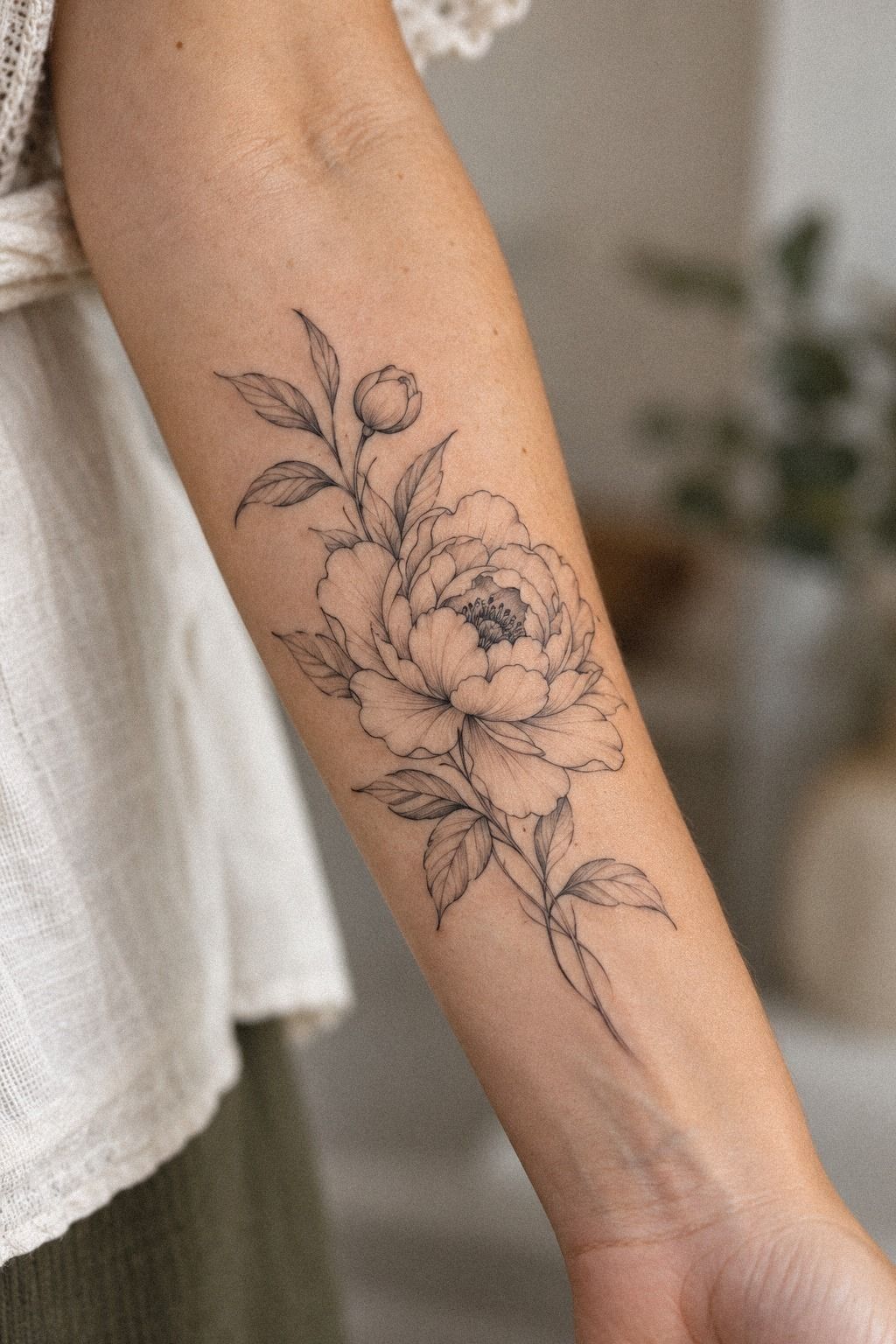
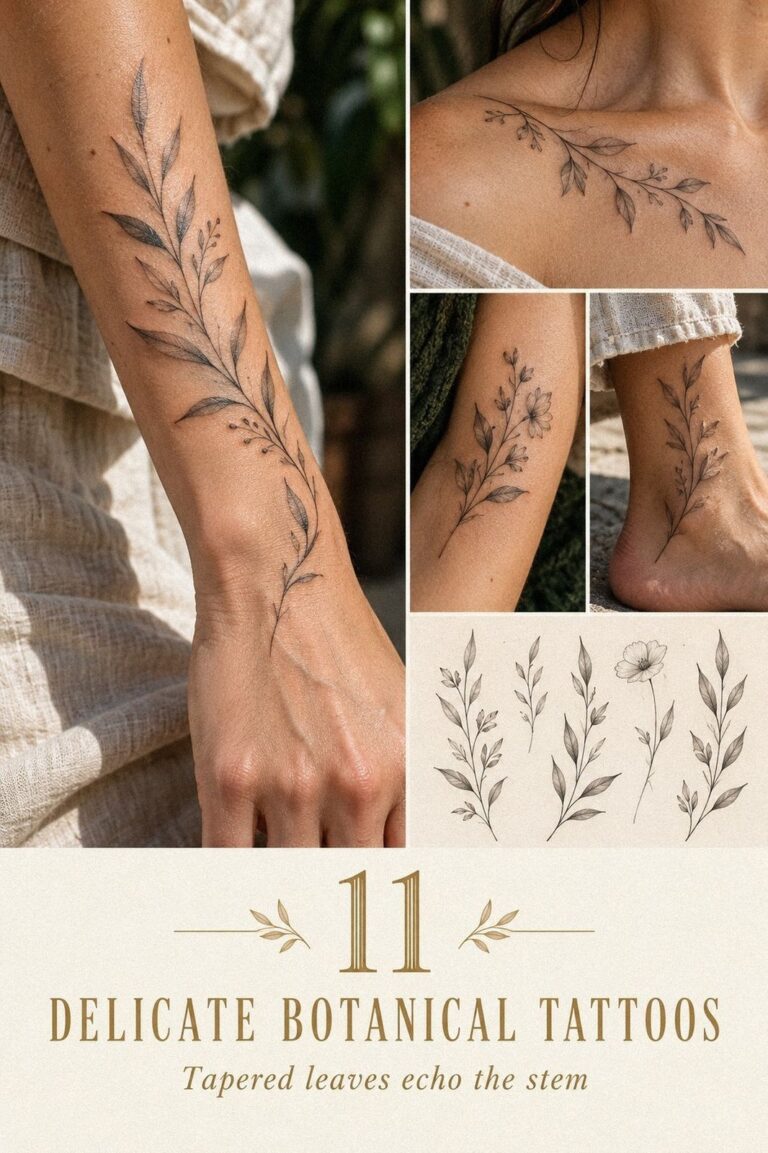
Botanical linework gives your peony more structure without making it heavy. The fine black botanical drawing can include a peony, narrow leaves, and open spaces that keep the design graceful on your skin.
This style works best when the artist varies line weight with restraint. The outer petal can stay hair-thin, while the stem receives a slightly stronger line so the composition doesn’t disappear at a glance. I’d choose two or three leaves over a full wreath, because extra foliage can dilute the flower’s symbolic focus.
Think of this as the Three-Line Hierarchy: one line for the flower’s silhouette, one for the stem, and one lighter layer for interior detail. Your artist should explain where those lines will sit and why. A crisp botanical stencil lets you test the balance before committing.
You can also borrow ideas from a delicate flower crown tattoo if you want the peony to feel connected to other plants. A second flower tattoo reference may help you compare foliage without adding too much. Don’t add greenery simply to fill skin.
The tattoo will look polished when every leaf has a visual job.
9The Black Anchor: A Delicate Rib Peony
A rib peony can be bold and intimate at the same time. Solid black petals create a sharp anchor while the outer shape stays delicate. Make the flower large enough to read clearly because the ribs move and the skin stretches with breathing.
Rib placement is often more painful than areas with more cushioning, especially near the sternum and lower edge of the ribs. That doesn’t predict your exact experience, but it does mean you should plan for a longer appointment. Comfortable clothing adds practical value.
This is where the Black Anchor Method makes sense. Use one concentrated area to give the flower longevity, then preserve negative space around it. Black pigment with clean placement may age better than an ultra-fine design that receives constant sun.
Don’t let the dramatic placement pressure you into a giant composition. A 2 to 4 inch peony can still feel powerful when its silhouette is well drawn. For symbolism before your consultation, browse this Japanese peony tattoo meaning guide and this peony meaning reference.
Your design can be raw, meaningful, and controlled in the same breath.
10Add the Date Only If It Still Feels Personal
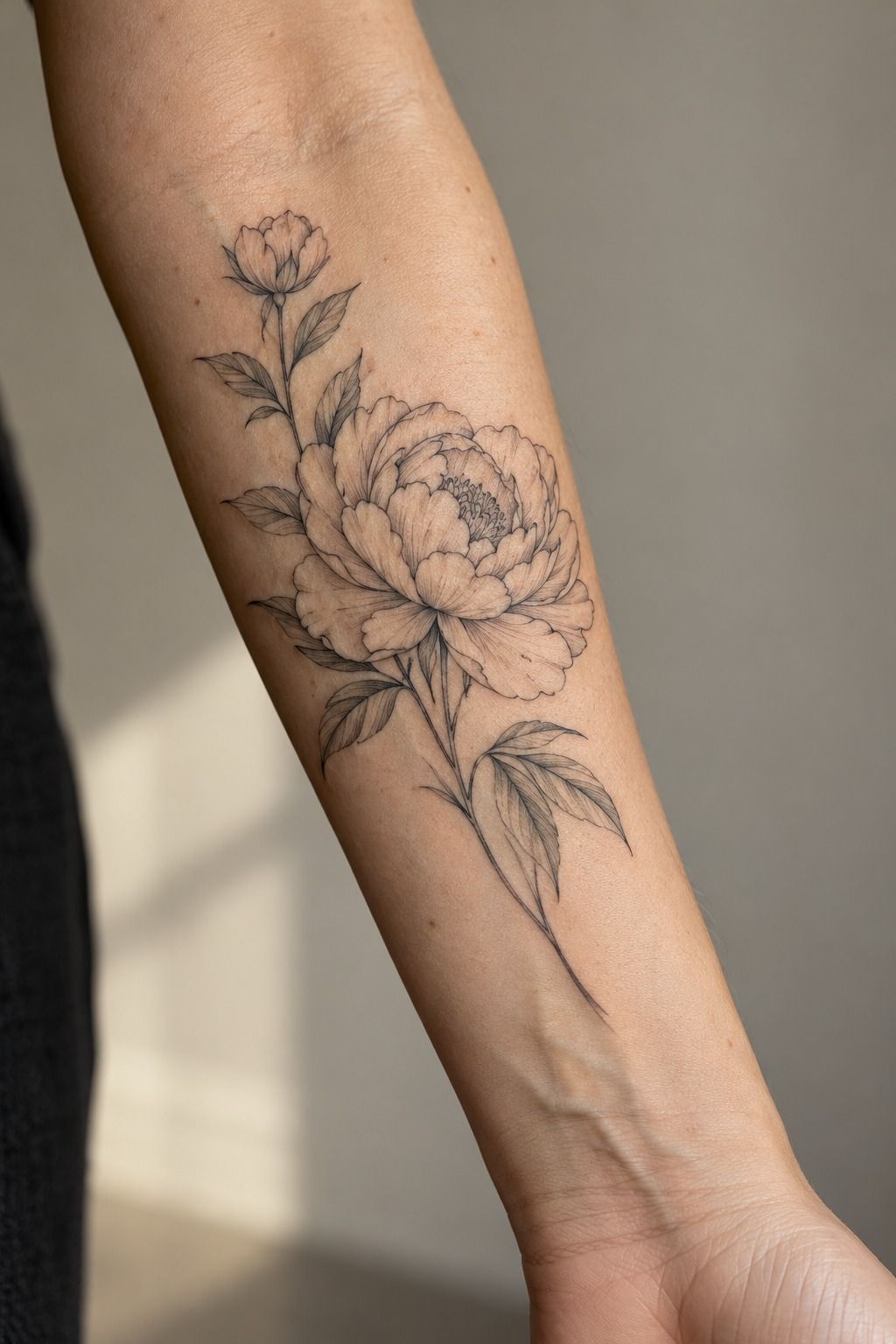
A birth-date detail can make a delicate peony feel deeply personal without adding visual clutter. Keep the date secondary to the flower. If the numbers become the first thing you notice, the concept may need a sharper edit.
Dates can use Roman numerals, a compact month-and-day format, or a sequence that only you understand. I’d avoid squeezing a full birth certificate into the design. One date, two initials, or a short year gives the peony room to remain the main image.
Your artist should print the stencil at the intended size and let you inspect it from a normal distance. Tiny numbers can look sleek on paper but lose clarity on living skin. The black numerals need separation from the petals, especially when the flower includes interior linework.
Check every digit twice before the appointment. A meaningful tattoo deserves a calm review, not a rushed glance in the studio.
If your story connects to family, love, or renewal, this peony tattoo meaning article can help shape the symbolism. The best detail is one you won’t need to explain!
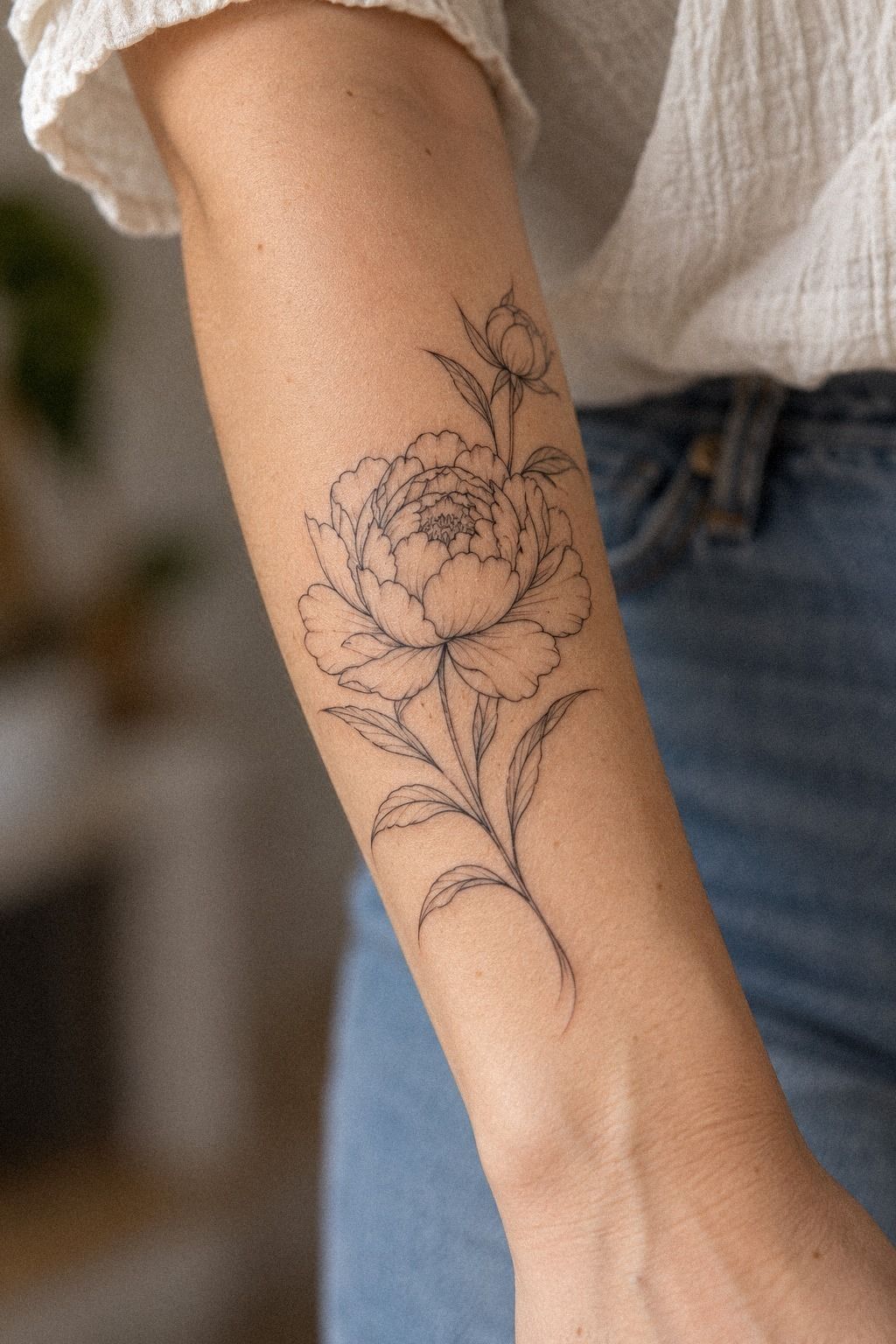
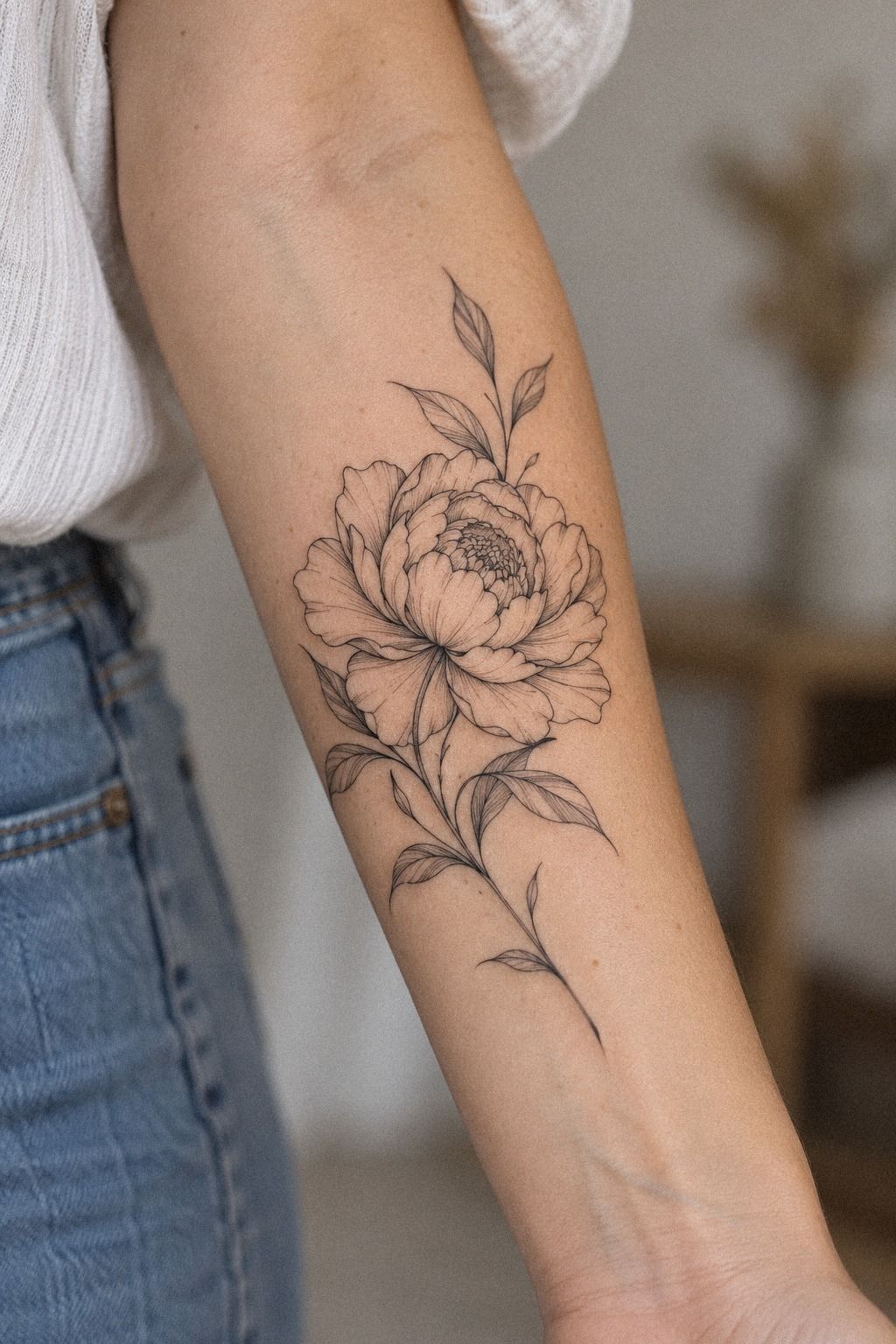
11Rotate the Forearm: A Unique Wrapped Peony
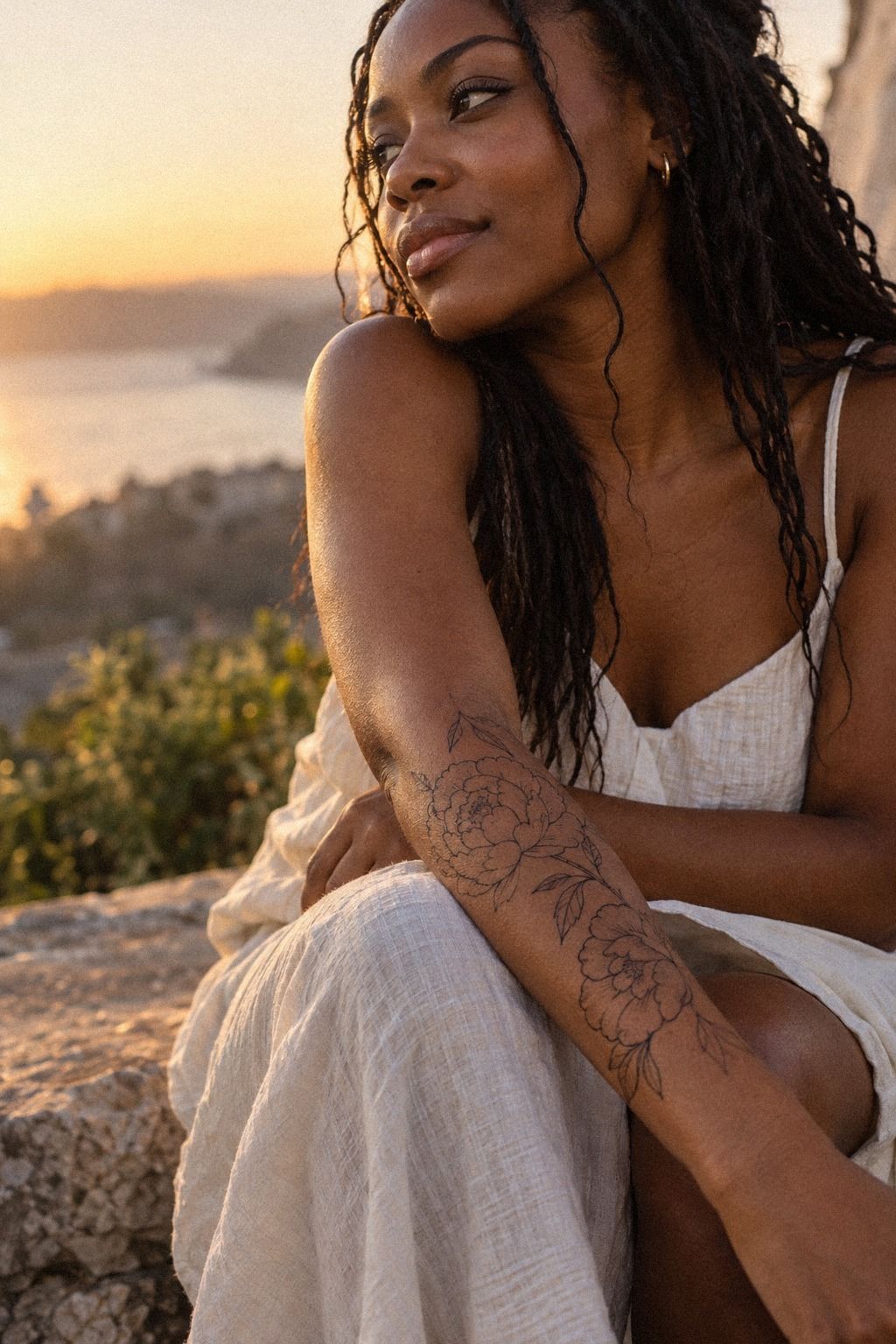
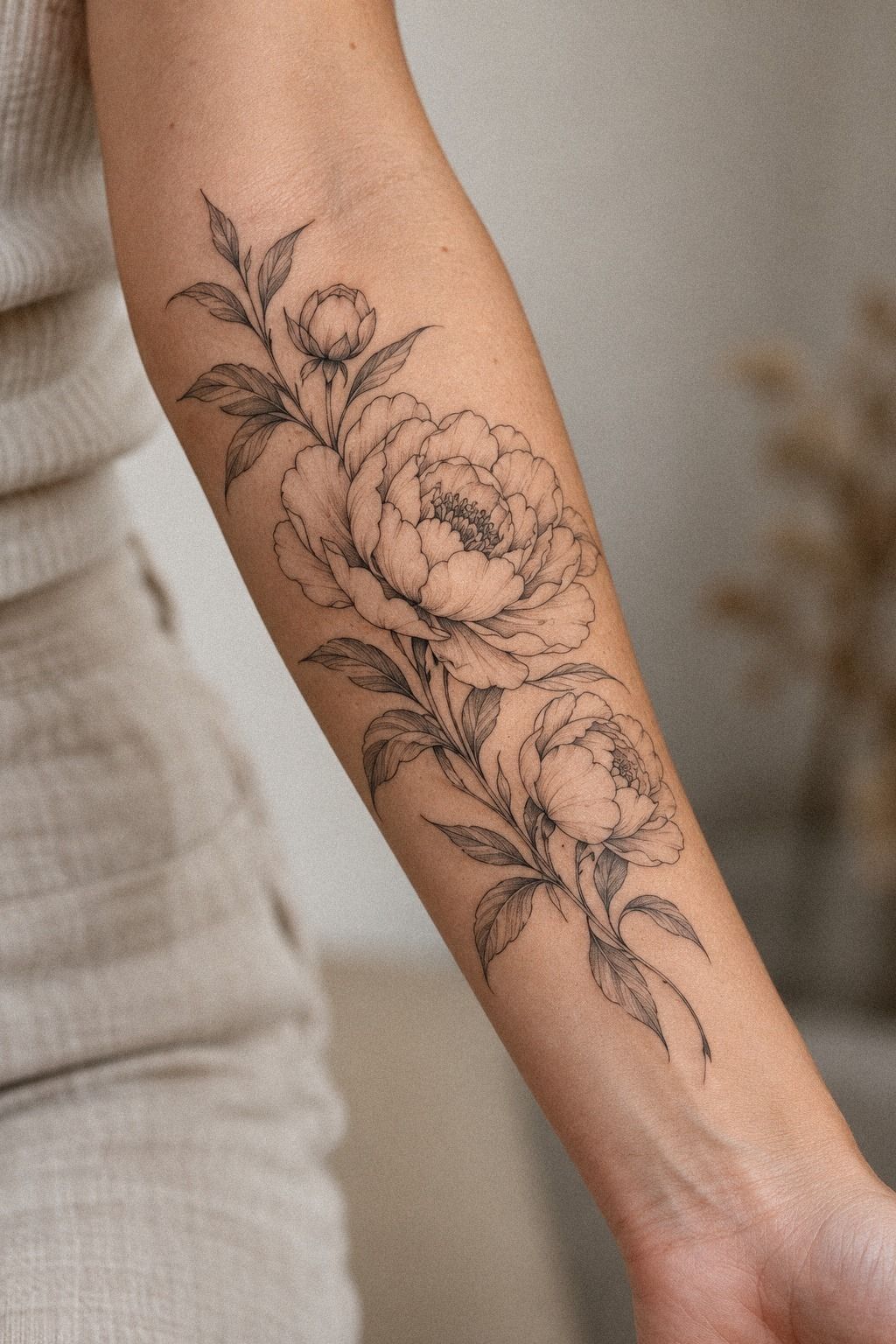
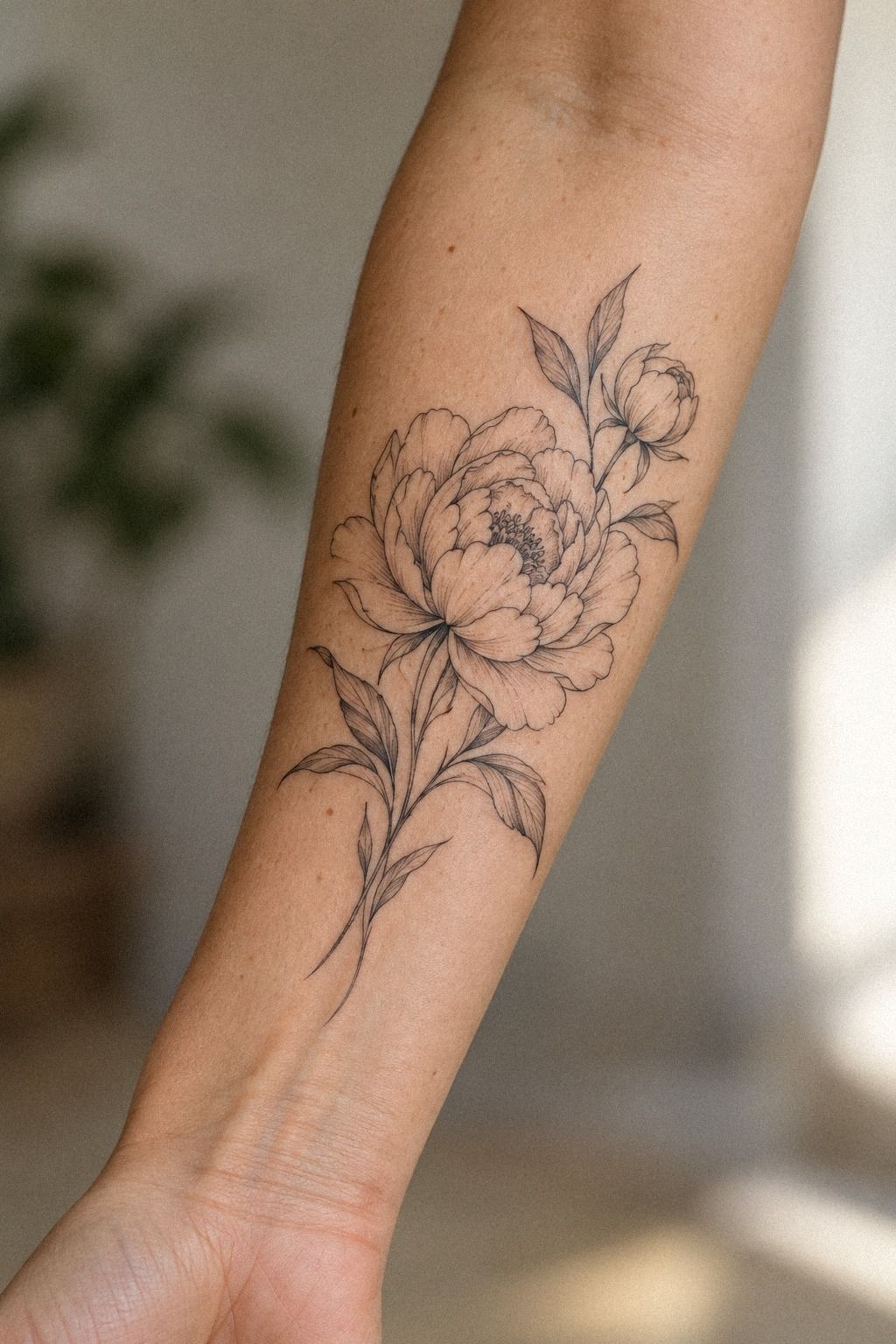
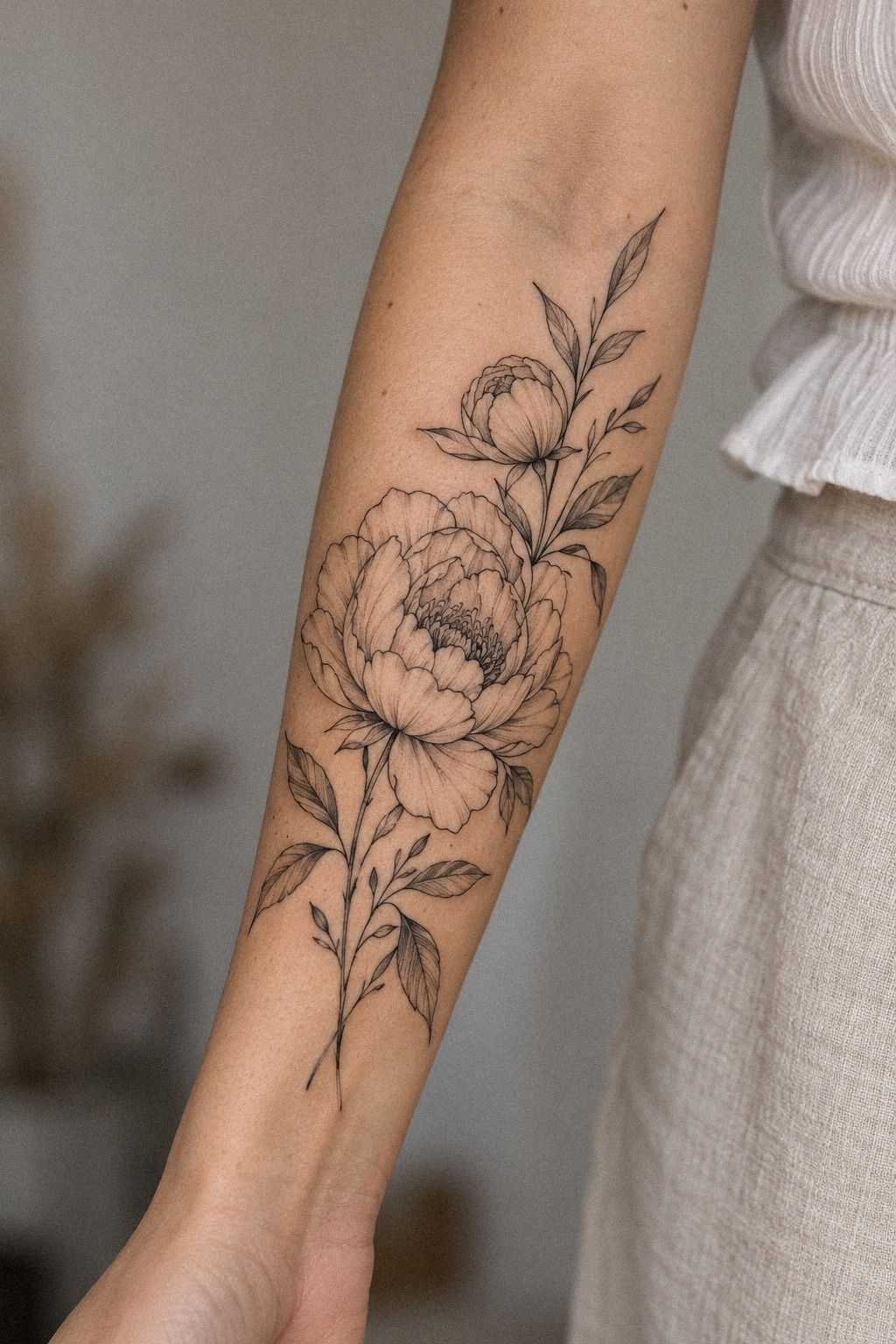
A forearm design wrapped around the arm gives your peony a flowing, almost sculptural quality. The bloom and stem can reveal themselves as your arm turns, creating an iconic effect without needing a huge composition.
Forearm skin is often more forgiving than ribs, hands, or feet. A design around 3 to 5 inches can include one peony, a long stem, and a few restrained leaves. I’d skip a full band of flowers for a first tattoo because the wrap can become visually busy.
Use the Rotation Test before committing. Your artist can place a temporary stencil, then photograph your arm from the front, side, and relaxed angle. If the flower still reads clearly in all three views, the composition is working.
For a more layered arrangement, compare this idea with the unique delicate peony tattoo guide. A forearm piece can be daring without becoming loud, especially when the artist leaves clean skin around the petals. That balance makes the design feel timeless.
How I’d Check the Stencil Before Booking
I’d check the stencil while standing, sitting, and moving naturally. A design can look striking in one pose but feel compressed when your shoulder drops or your wrist bends. Take a few minutes before approving the stencil placement.
Ask to see the flower at its actual-size stencil, not enlarged on a phone. Actual-size lines reveal whether the center is readable and whether the cost matches the detail you’re receiving. This small review can save money and second thoughts.
Ask whether the same concept would work better on your forearm, shoulder, or upper arm. This minimalist peony tattoo guide can help you compare how much negative space the design needs.
When Fine Lines Need More Space
Fine lines need breathing space around them. Petals, leaves, dates, and stems can blur together when the design tries to say too much. A slightly larger tattoo may offer better long-term value than a tiny one packed with detail.
If your idea needs a magnifying glass to read, edit it. A larger stencil layout can still feel delicate when the silhouette remains open. This is especially important for fingers, ankles, and areas that receive frequent friction.
Before booking, compare the line density with another delicate flower crown tattoo. You’ll quickly see whether the interior detail supports the peony or competes with it.
Color or Black Ink: Which Feels More Like You?
Black ink tends to feel sharp, understated, and dependable. Color can feel more playful and expressive, but it also needs thoughtful sun care. Choose the mood first, then ask how the pigment behaves on your skin.
A useful consultation question is simple: “What will this look like healed?” Ask for healed photographs in the style and color family you want. Fresh work can look flawless while hiding the practical difference between a low price and lasting value.
For another color comparison, save this watercolor peony tattoo guide. The pigment plan should suit your skin, placement, and willingness to protect the tattoo from UV exposure.
A Budget That Still Protects the Design
Set a budget before you contact artists, but leave room for quality. A very low quote may not be a bargain if the artist lacks healed botanical work. The cheapest appointment isn’t always the best investment.
In the United States, a small tattoo may start near a shop minimum of $50 to $100. Hourly rates often range from $100 to $250, depending on location, artist experience, and complexity. Ask for a written tattoo cost estimate before booking.
A consultation should explain the total appointment cost, expected duration, deposit, and any touch-up policy. If you’re still researching symbolism, this flower tattoo meaning guide may help you settle the concept before you request a quote.
What I’d Decide Before Booking a Delicate Peony Tattoo
I’ve changed my opinion on first tattoos after seeing how much placement controls the final mood. A peony that looks romantic behind the ear can feel too compressed on a finger. Your body isn’t a flat sketch, and the strongest result begins when anatomy becomes part of the artwork.
I’d decide visibility first. If you want to see the tattoo every day, the wrist, forearm, or collarbone gives you a direct relationship with it. If you want something private, the shoulder, ankle, rib, or area behind the ear may feel more personal.
Then I’d decide whether linework or pigment carries the emotion. Fine-line peonies can feel delicate, elegant, and minimal, but very thin lines may soften with time.
Blackwork gives you a more powerful anchor. Watercolor creates a vibrant impression, though UV protection becomes especially important.
The practical side matters too. Typical US tattoo pricing often starts around $50 to $100 for a shop minimum, while hourly rates commonly sit near $100 to $250. Your final quote will change with size, placement, detail, and experience, so ask for the total cost before booking.
For a final symbolism check, read this peony tattoo meaning article before you approve the stencil.
I wouldn’t choose an artist by price alone. Look for healed photographs, clean single-needle work, balanced stencil placement, and a portfolio that includes your skin tone. A polished fresh photograph can be captivating, but a healed image tells you far more about the artist’s long-term work.
The Questions Worth Answering First
How much does a delicate peony tattoo usually cost?
A delicate peony tattoo usually costs about $100 to $300 in the US. A shop minimum may be around $50 to $100, while hourly rates often fall near $100 to $250. Size, placement, detail, and artist experience change the quote, so request a written estimate before booking.
Are delicate peony tattoos a good idea for a first tattoo?
Yes. Delicate peony tattoos can be a meaningful first tattoo choice when the design has enough space and the placement suits your routine.
Forearm, shoulder, and upper-arm placements are often more tolerable than ribs, feet, hands, or sternum. Your artist should show healed fine-line work.
How do I choose a tattoo artist for a delicate peony tattoo?
Choose an artist with a portfolio showing clean linework, healed results, and botanical designs. A hygienic studio and clear consultation matter as much as style. Ask to see work on skin tones similar to yours and confirm how the artist approaches fine lines.
How much do delicate peony tattoos hurt?
Pain varies, but ribs, feet, hands, and sternum are commonly more uncomfortable because they have less padding or more sensitivity. Forearm, thigh, and shoulder placements are often more tolerable. Your session length, personal sensitivity, and the artist’s technique also affect the pain experience.
How long does a delicate peony tattoo take to heal?
The surface usually heals in about 2 to 3 weeks, while the tattoo can take roughly 2 to 3 months to settle completely. Gentle washing, light moisturizing, and avoiding sun and swimming support healing. Follow your artist’s written aftercare rather than improvising.
What’s the best placement for a delicate peony tattoo?
The best placement depends on your visibility preference and design size. A forearm or shoulder gives fine lines more room, while a wrist or behind-ear placement feels smaller and more private. Choose an area that gives the petals breathing space and fits your daily movement!
Where I’d Start First
If I had to pick one, I’d start with the forearm peony. It gives fine lines enough space, stays visible for daily meaning, and avoids the constant friction of fingers and ankles. Pin the unique delicate peony tattoo guide, compare it with your artist’s healed work, and decide whether the design feels worth the cost before booking.