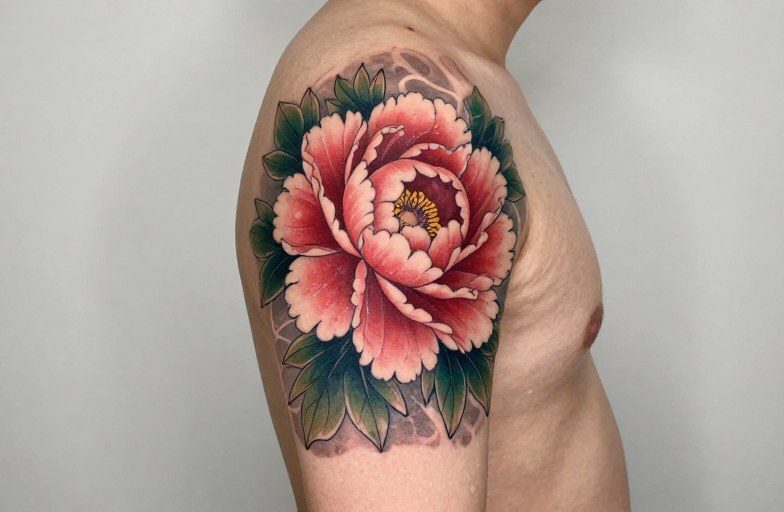
The Japanese peony, botan, is one of the most loaded images in traditional tattooing. On skin, it primarily signals courage, masculine honor, and prosperity. It also carries undertones of compassion and the fleeting nature of beauty, since the bloom opens fully and drops its petals within days. Those layers make it a staple in irezumi and a common choice far outside Japan.
Who Chooses This Tattoo
Walk into most shops with strong Japanese portfolios and you’ll find peonies on bikers, soldiers, chefs, and office workers alike. The appeal crosses hard because the symbol isn’t tied to a single identity.
Gender and Placement Traditions
Historically, the peony in irezumi paired with shishi lions in masculine compositions, full backs, sleeves, thighs. Women in the tradition more often wore peonies as softer, standalone arrangements. Contemporary tattooing has blurred those lines completely. Now you’ll see dense peony thigh pieces on all bodies, delicate sternum placements, and bold forearm wraps. The meaning shifts subtly with scale: large, saturated peonies read as protective and commanding; small, sparse ones feel more personal and decorative.
What Draws People In
Some arrive wanting the flower’s beauty without the cliché of a generic rose. Others come from martial arts backgrounds, where the peony’s association with bravery resonates. A smaller group has Japanese heritage and wants a symbol that connects without being a literal flag or character. The common thread is wanting something traditional that doesn’t require explaining every time, recognizable, but not exhausted.
Religious & Spiritual Angles
The peony’s spiritual weight sits mostly in Buddhist and broader East Asian frameworks, not in a single doctrine.
Buddhist Connections
Some trace the peony’s association with compassion to Buddhist imagery, where the flower appears in depictions of bodhisattvas and paradise gardens. The full, layered bloom suggests the unfolding of spiritual understanding. In practice, though, most tattoo wearers aren’t claiming religious devotion, they’re drawn to the resonance, not the theology. If you’re practicing Buddhist, the image can mark that path; if not, it reads more as borrowed symbolism, which is common and accepted in tattoo culture.
Protective and Superstitious Readings
Traditional Japanese tattooing often treated the peony as a talisman against evil, particularly when paired with the shishi lion. The lion guards; the peony, blooming in its presence, amplifies that protection. Some wearers still ask for this pairing specifically for that reason. Others simply like the visual balance of fierce animal and soft flower. Both approaches are valid, but knowing the layer helps you choose consciously rather than accidentally.
How It Ages on Skin
Peonies are forgiving in some ways, demanding in others. Their dense, layered petals give the tattoo structure as it ages, but that same complexity can blur if handled poorly.
Line Work and Detail Retention
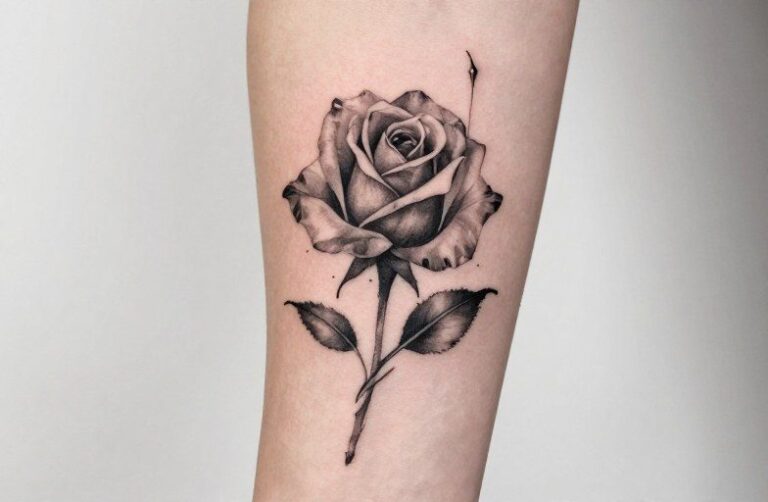
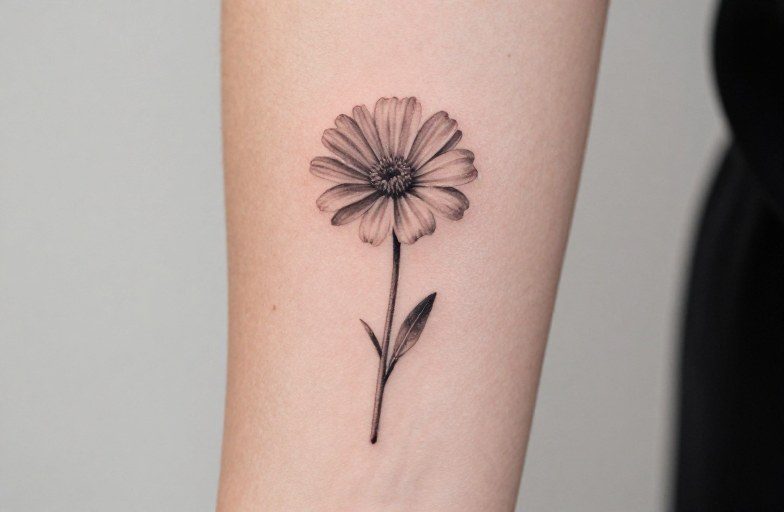
Traditional Japanese peonies rely on bold, confident outlines, often triple-weight in key petals, to hold the form. Fine-line peonies, especially the delicate single-needle styles trending now, face harder odds. Those thin interior lines and subtle petal textures tend to soften within five to eight years, sometimes becoming indistinct blobs. The outer contour usually survives longer, so the shape reads as “flower” even when detail fades. For longevity, prioritize the strength of that outer structure over interior fussiness.
Shading and Saturation
Japanese peonies use heavy black shading behind and between petals to create depth. This contrast keeps the flower readable at distance and helps it age. Color saturation matters too: deep magentas and reds hold longer than pastels or yellows, which fade toward skin tone within a few years. Black and grey peonies actually age most gracefully, since there’s no color to lose, just tonal gradation, which shifts more slowly.
Common Variations & Styles
Not every peony tattoo is trying to be traditional Japanese. Knowing the variants helps you match artist to vision.
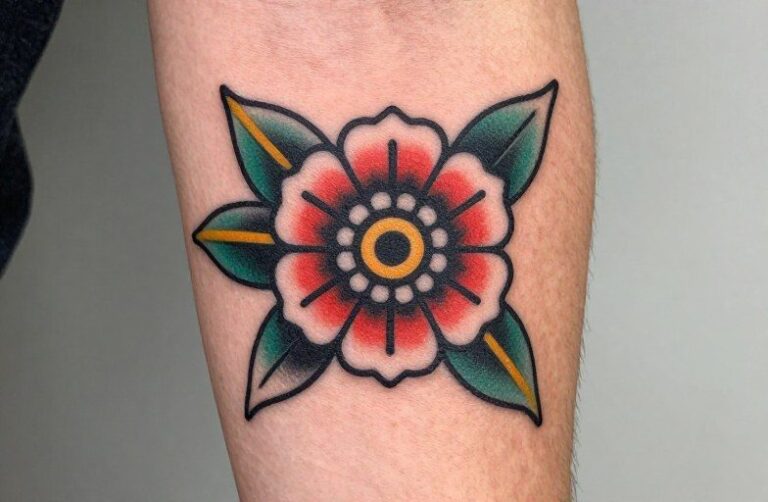
- Strict Irezumi: Flowing composition, wind bars, finger waves, often paired with dragons, tigers, or shishi. Heavy black, limited but saturated color. Requires an artist trained in the specific rules of Japanese composition.
- Neo-Japanese: Maintains the subject and some structural rules but opens color palette, simplifies backgrounds, or shifts proportions. More accessible for smaller pieces.
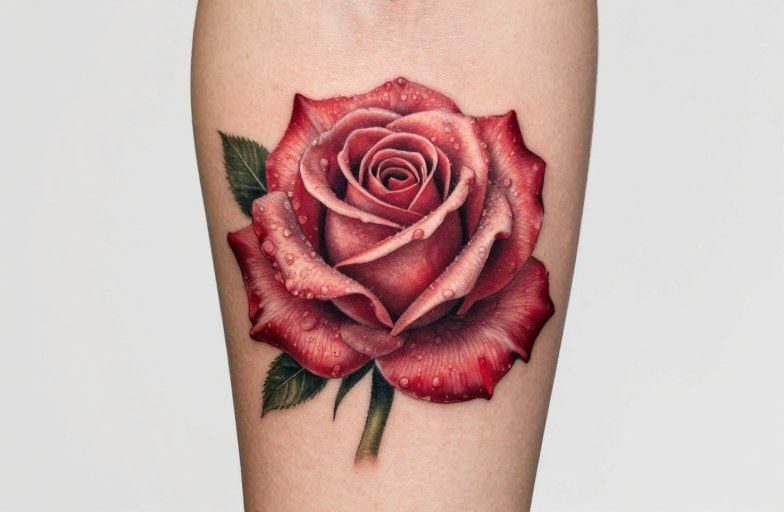
- Illustrative/Realistic: Botanical accuracy, softer edges, less black. Can be stunning fresh but ages faster without the bold graphic structure.
- Minimalist: Single peony, sparse lines, often no background. Readable for a shorter window; suits placements where you want subtlety over longevity.
The traditional approach isn’t automatically better, it’s better for specific goals: large scale, long life, cultural connection. Match the style to your commitment level and the artist’s actual strength, not their Instagram highlights.
Color vs Black and Grey
This choice changes both look and lifespan significantly.
Color: Red, Pink, and Beyond
Red peonies dominate traditional Japanese work, associated with wealth, good fortune, and vitality. Pink reads softer, sometimes more feminine in historical context, though that’s largely outdated now. White peonies exist but are harder to execute; without strong black backing, they can heal looking like scar tissue or disappear into pale skin. Purple and non-traditional colors work in neo-styles but carry no traditional symbolic weight. Expect color saturation to drop 20-30% in the first year as the top layer of skin sheds and settles.
Black and Grey
Black and grey peonies rely on wash technique, diluted black ink layered for depth. This approach emphasizes form over hue, reading as more severe and timeless. It heals more predictably, with less risk of muddying as colors bleed into each other. The tradeoff is vibrancy: a grey peony never commands attention the way a blood-red one does. For full sleeves or back pieces where cohesion matters over decades, black and grey often proves the smarter investment.
Similar & Related Symbols
Peonies rarely stand alone in Japanese tattooing. Understanding their companions helps you build or read a composition.
- Shishi (guardian lion): The classic pairing. Lion represents fierce protection; peony, the beauty and courage worth protecting. Together they balance aggression and elegance.
- Dragons and tigers: Peonies often fill background space around these dominant figures, softening the composition and adding seasonal reference (peonies bloom late spring).
- Chrysanthemums: Another noble flower in Japanese symbolism, associated with the imperial family and longevity. Similar visual weight, different season and meaning. Some compositions pair both for year-round floral presence.
- Peach blossoms: Lighter, more fleeting, associated with spring and romance. Less structural, harder to scale large.
- Lotus: Often confused with peony by outsiders. Lotus has stronger Buddhist purity associations, different petal structure, and different growing context (water, not earth). Artists spot the confusion immediately; know which you mean.
Before You Decide
A Japanese peony tattoo rewards preparation. The image carries enough history that casual execution looks wrong even to untrained eyes, something about the petal flow or background spacing reads “off.”
Research artists by their healed work, not fresh photos. Japanese tattooing is a long game; an artist’s one-year-healed portfolio tells you more than their day-of session shots. Ask specifically about their training in Japanese composition, not just whether they “do Japanese.” The rules of flow, background balance, and negative space take years to internalize.
Consider placement against your actual life, not just aesthetic. Hand, neck, and face placements carry professional weight that a peony’s traditional nobility won’t offset. Large back or thigh pieces allow the full composition this flower deserves; small wrist peonies sacrifice the layered meaning for convenience.
Finally, know that meaning accrues. The peony’s associations with courage and prosperity aren’t magic, they’re prompts. What you do with the tattoo, how you live with it, builds its actual significance over years. Choose it for the starting position, not the whole story.
Frequently Asked Questions
Does a Japanese peony tattoo always need a black background?
No, but the heavy black backing is traditional for a reason. It creates contrast that keeps the flower readable as it ages. Without it, you’ll likely need touchups sooner to maintain definition.
Can a peony tattoo be small and still look authentic?
Small peonies lose the layered petal detail that makes the image distinctive. Under three inches, you’re getting a flower symbol rather than a recognizable peony. For traditional impact, palm-sized or larger works better.
How long does a color peony take compared to black and grey?
Color adds time for saturation packing and color switching, typically 20-30% longer per session. A full peony sleeve in color might need 25-35 hours versus 20-25 in black and grey, depending on the artist’s pace.
Is it disrespectful to get a Japanese peony without Japanese heritage?
The peony is widely adopted in global tattooing and generally not considered culturally restricted. Approach it with knowledge and respect for the tradition, not as random decoration. Avoid mixing it with unrelated sacred symbols from other cultures.