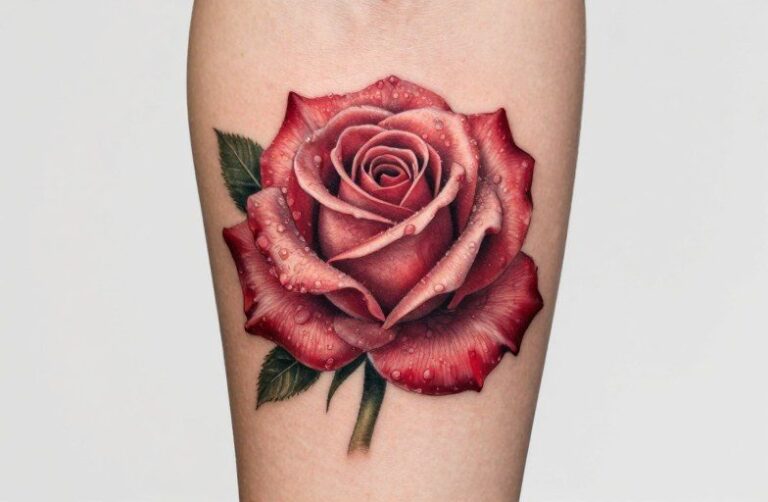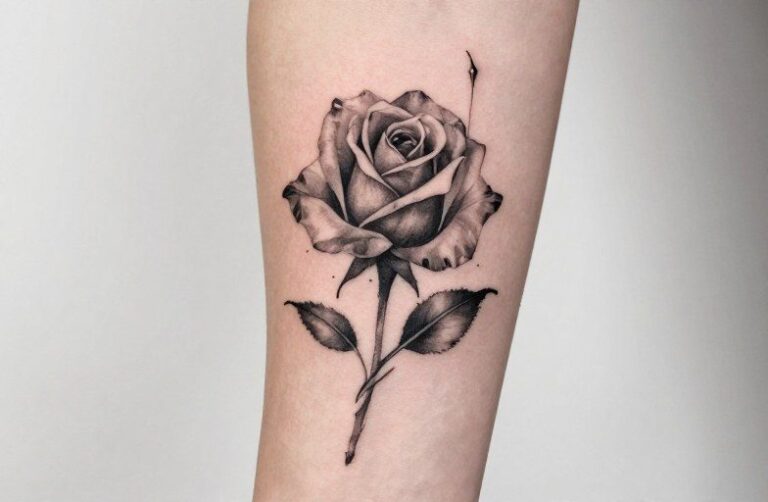
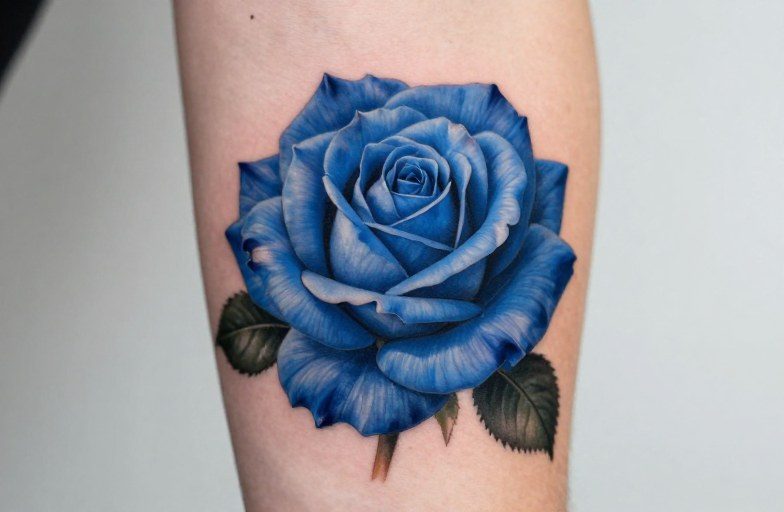
The blue rose tattoo, often linked to the character Kaiser from Blue Lock, represents the pursuit of the impossible, blue roses don’t exist in nature, so the image carries built-in tension between desire and reality. For Kaiser specifically, the design signals calculated ambition, a cold aesthetic precision, and the willingness to engineer beauty rather than wait for it. The meaning extends beyond anime fandom into broader territory: mystery, unattainable love, and the transformation of something ordinary into something extraordinary through sheer force of will.
Who Chooses This Tattoo
People drawn to this design usually aren’t looking for straightforward symbolism. The blue rose attracts those who resonate with contradiction, something beautiful that shouldn’t exist, a natural form rendered in an impossible color.
Anime and Manga Fans
Readers of Blue Lock connect Kaiser’s blue rose to his character arc: the German striker’s obsession with creating his own aesthetic of victory. These collectors often pair the rose with soccer imagery, jersey numbers, or geometric framing that echoes the manga’s visual style. The tattoo functions as identification with a specific philosophy of competition, beauty as weapon, not decoration.
Broader Symbolic Appeal
Outside anime circles, the blue rose draws people who’ve experienced something that felt impossible: recovery, a relationship that defied odds, a creative breakthrough. Roses carry this kind of personal weight across many contexts, as explored in rose tattoo symbolism and memorial meaning. The color blue in tattooing ages differently than black or red, cooler pigments fade faster, requiring more maintenance, which paradoxically suits the symbol. The fading itself becomes part of the meaning: even engineered beauty needs renewal.
- People processing unattainable or lost love
- Those identifying with “impossible” personal transformations
- Collectors drawn to botanical designs with unconventional color
- Individuals who prefer symbolism that resists easy reading
How It Ages on Skin
Blue ink presents specific challenges that anyone considering this design should understand before sitting down.
Color Fading and Touch-Ups
Cobalt and royal blue pigments break down faster than black carbon under UV exposure. On high-sun areas like forearms or calves, noticeable fading typically appears within three to five years. Lighter sky blues shift toward grey-green as yellow undertones in the skin assert themselves. Deeper navy blues hold longer but can muddy, losing the crisp distinction between petals.
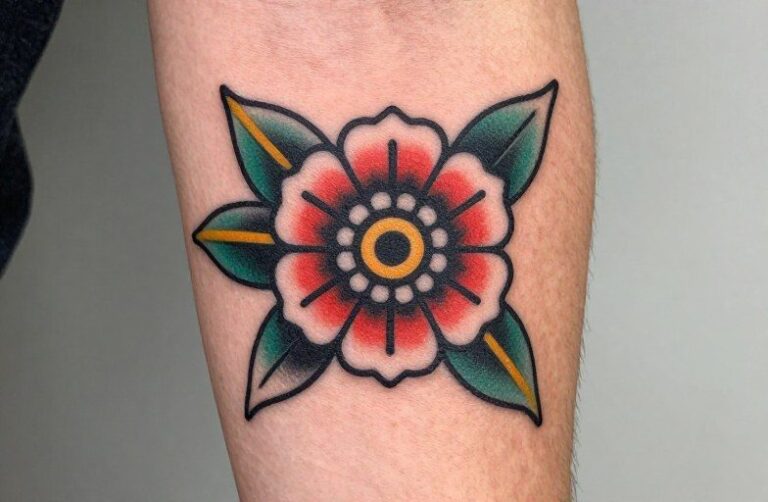
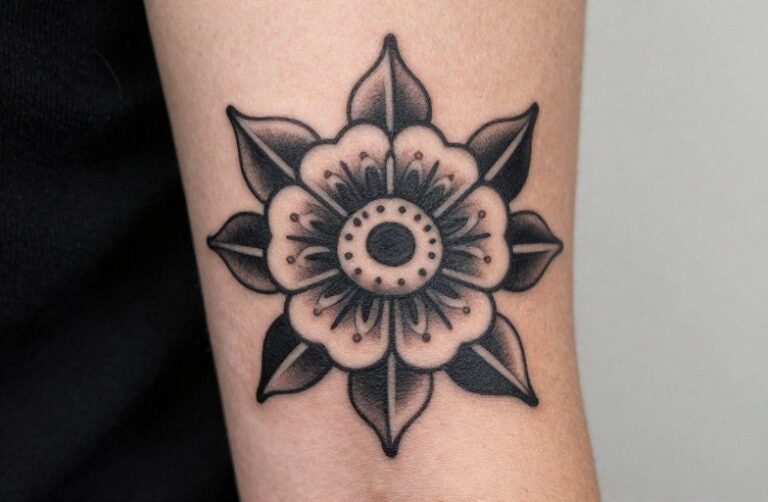
Line-only blue rose designs age more gracefully than fully shaded versions. For a contrasting approach to rose ink, abstract rose tattoo styles show how looser interpretations handle the same aging challenge differently. Without black outlines to anchor them, soft blue gradients blur faster. The most durable approach combines black line work with selective blue fills, petal edges stay defined even as interior color softens. For reference on how bold outlines hold up over time, black American traditional flower tattoos demonstrate this principle well.
Skin Tone Considerations
On darker skin, blue ink reads differently, sometimes deeper, sometimes less vivid depending on melanin density and the specific pigment blend. Experienced artists adjust by packing color more densely or shifting toward violet-leaning blues that maintain visibility. The rose’s detailed petal structure can also blur if line weight is too fine, so scaling matters: small blue roses on hands or fingers often become indistinct blobs within a few years.
Best Placements
Where you put a blue rose changes how the color performs and what the design communicates.
High-Visibility Locations
Forearms and calves offer natural display but maximum sun damage. These placements suit people who want the tattoo seen, who treat maintenance touch-ups as part of the commitment. The Kaiser association makes upper arm and shoulder placements popular, close to where a sports jersey would display a number, visible when sleeves roll up.
Neck and hand placements read as more aggressive, less botanical-garden and more statement. The blue rose here carries confrontational energy: something delicate placed where it can’t be hidden.
Protected Areas
Ribs, upper thighs, and upper back preserve color longer but sacrifice visibility. These suit private symbolism, the impossible thing you achieved, not the impossible thing you perform for others. The curved surface of ribs also shapes the rose organically, letting the design follow body contours rather than fighting them.
- Inner bicep: Moderate sun, easy to show or hide, good canvas size for detail
- Behind the ear: Small scale, quick to fade, high personal visibility
- Along the collarbone: Horizontal stretch suits stem-and-rose compositions
- Thigh front or side: Large, flat area for complex shading, minimal sun
Religious & Spiritual Angles
The blue rose carries no established religious tradition, which makes it flexible and sometimes suspect depending on context.
Western Spiritual Associations
In some New Age circles, blue roses connect to throat chakra energy, communication, expression, truth-telling. This association is modern, not ancient, but it resonates for people who got the tattoo during periods of learning to speak difficult truths. The impossible color becomes the unspeakable thing finally articulated.
Certain Marian devotion imagery includes blue roses, though this is specific to particular apparition narratives rather than mainstream Catholic tradition. Collectors with Catholic backgrounds sometimes layer this meaning onto personal blue rose designs, whether intentionally or unconsciously.
Secular Spirituality
For non-religious wearers, the blue rose often represents a kind of secular grace, beauty that doesn’t require natural justification. The engineered quality of the color (blue roses are created through dyeing, genetic modification, or simple Photoshop) mirrors how many people construct meaning deliberately rather than receiving it from tradition. The tattoo becomes a chosen mystery, not a revealed one.
Common Variations & Styles
The basic image supports substantial stylistic variation without losing recognition.
Traditional and Neo-Traditional
American traditional blue roses use heavy black outlines, limited shading, and stylized rather than realistic petals. The blue reads as flat color blocks, often with white highlights painted in during healing. Neo-traditional approaches keep the bold lines but add more dimensional shading, sometimes incorporating jewel tones or background elements like daggers, banners, or geometric frames.
Realistic and Fine Line
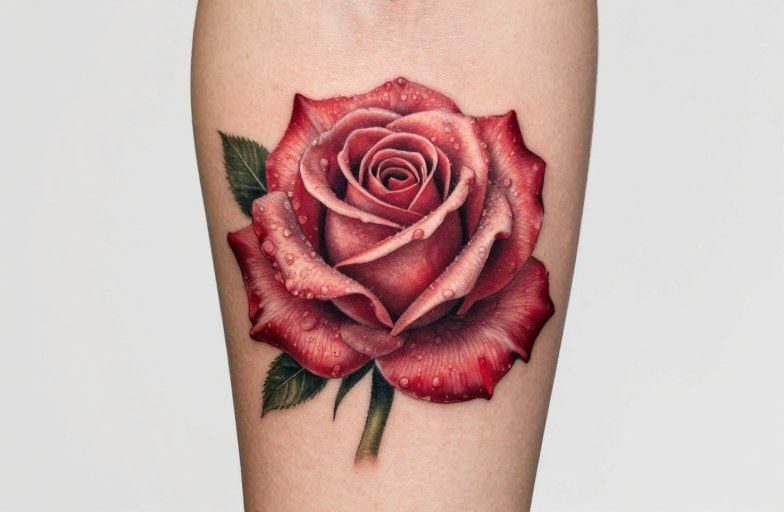
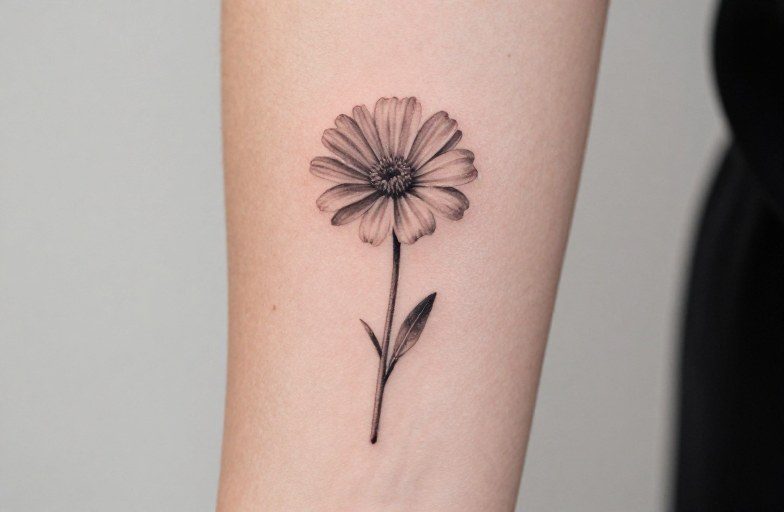
Photorealistic blue roses require substantial technical skill, petal translucency, shadow gradients, the subtle shift from violet-blue at edges to deeper tones at centers. These designs demand larger scale to prevent muddying. Fine line approaches, popular in Korean and Japanese contemporary tattooing, use single-needle work for delicate petal edges. These age poorly on high-movement areas but look striking fresh.
- Black and grey with blue accent: Most durable, blue functions as focal point
- Full color with green stem: Naturalistic, requires more skin real estate
- Geometric/deconstructed: Rose form broken into triangles or negative space
- With text or numerals: Kaiser’s jersey number, names, dates integrated into stem
Mythology & Folklore
The blue rose lacks ancient mythological pedigree, which is itself notable, it’s a modern symbol, not a recovered one.
Literary Origins
The blue rose entered Western imagination primarily through literature and horticultural aspiration. Tales from the Islamic Golden Age sometimes feature blue roses in garden descriptions, though scholars debate whether these refer to actual flowers (some morning glories or irises) or poetic convention. The 19th-century Orientalist fascination with “exotic” florals amplified the image in European art, often divorced from any specific source.
Contemporary Legend
The modern blue rose obsession traces partly to failed horticultural attempts to breed one, which created a cultural narrative of desire perpetually deferred. When Japanese researchers finally produced genetically modified blue roses in 2004, the symbol shifted: the impossible became possible, but only through technological intervention. This trajectory, natural failure, engineered success, mirrors how many people relate to their own achievements, making the tattoo resonant for self-made narratives.
What to Remember
The blue rose tattoo works best when the wearer understands its contradictions: a symbol of nature that doesn’t exist in nature, a color that requires maintenance to persist, an image that reads differently depending on whether viewers know the Kaiser reference. The design rewards honesty about its artificiality rather than pretending to organic authenticity.
Choose an artist with specific experience in blue pigment work, not just general floral expertise. Ask to see healed photos, not just fresh tattoos. Consider placement in terms of sun exposure and your willingness to return for touch-ups. And recognize that the meaning, whatever it holds for you, will shift as the color does, neither static nor entirely within your control, which may be the most honest thing about wearing an impossible flower on your skin.
Frequently Asked Questions
Does the blue rose tattoo always reference the Blue Lock character?
No. While Kaiser’s blue rose has popularized the design recently, people choose it for broader symbolism, unattainable love, personal transformation, or simply the aesthetic appeal of an impossible color. The meaning depends on the wearer’s intent, not universal association.
Will a blue rose tattoo look good on darker skin tones?
Yes, with proper pigment selection and technique. Deeper violet-blues or navy tones often read clearer than lighter sky blues. An experienced artist adjusts line weight and color density to ensure the design stays visible and crisp as it heals.
How often do blue rose tattoos need touch-ups?
On sun-exposed areas, expect noticeable fading within three to five years. Protected placements like ribs or upper thighs may last seven to ten years before significant color loss. Black outlines extend longevity substantially compared to color-only designs.
What’s the most cost-effective style for a blue rose that will age well?
Black line work with selective blue filling offers the best durability-to-cost ratio. Full color realism requires more sessions, more ink, and more frequent maintenance. Single-needle fine line approaches, while trendy, typically age poorly for this specific design.