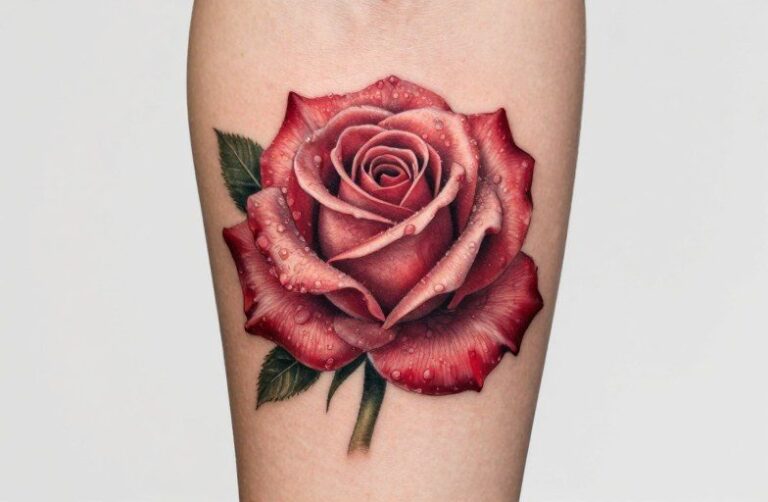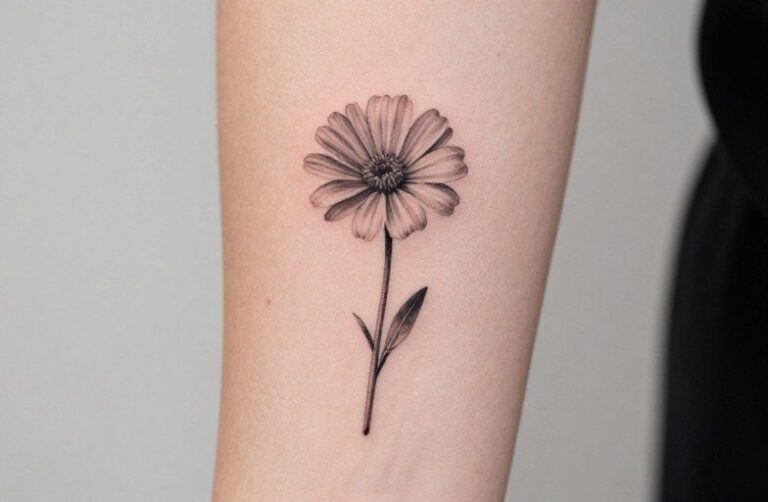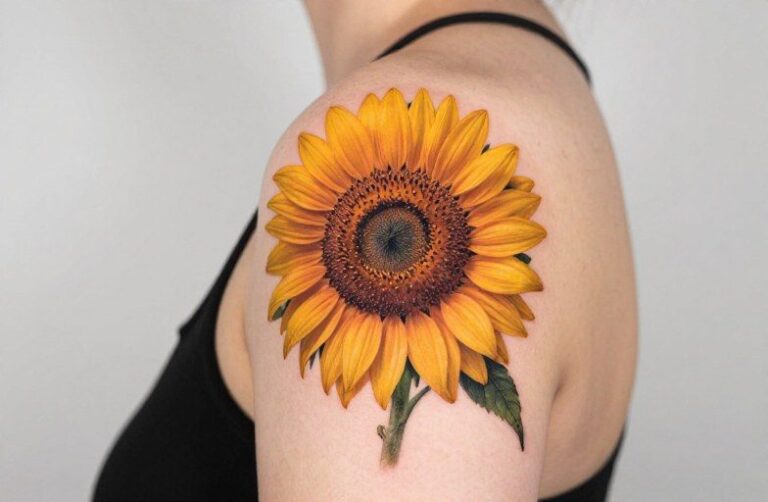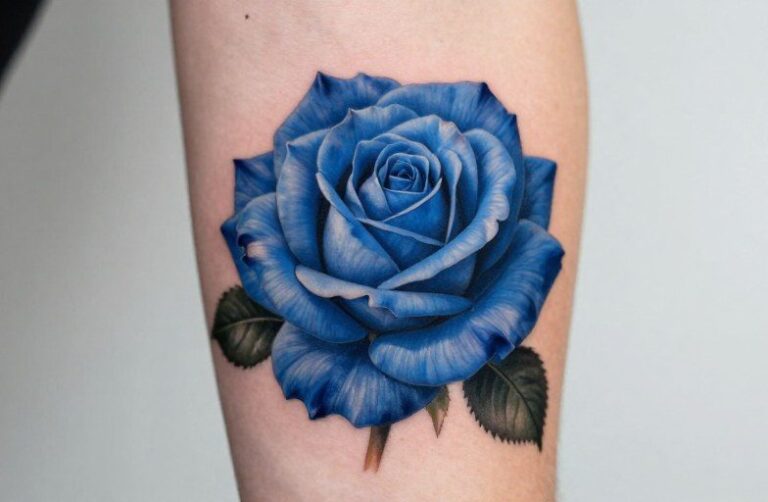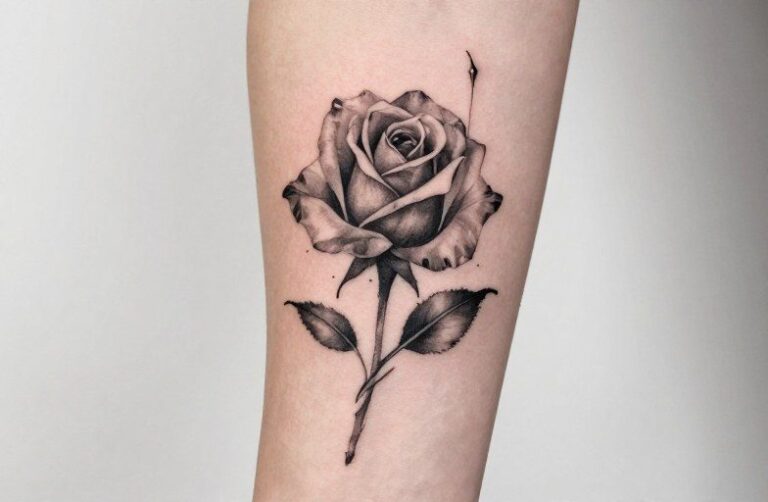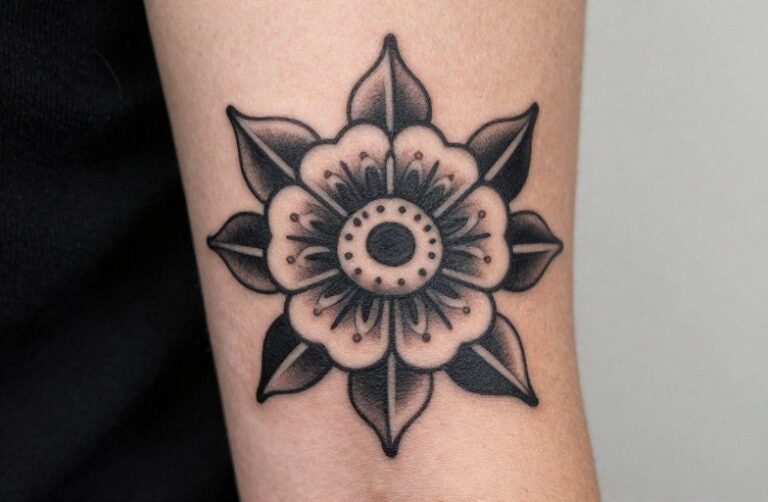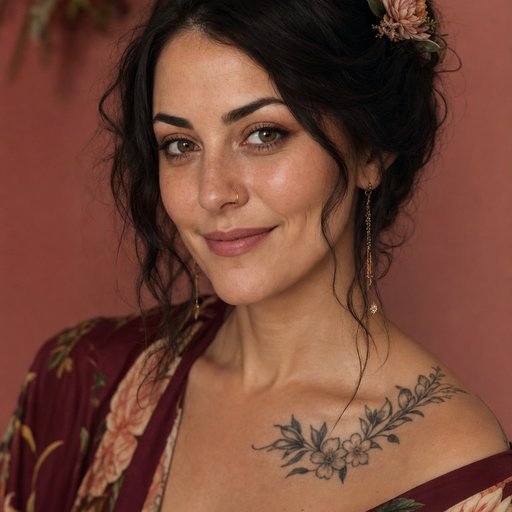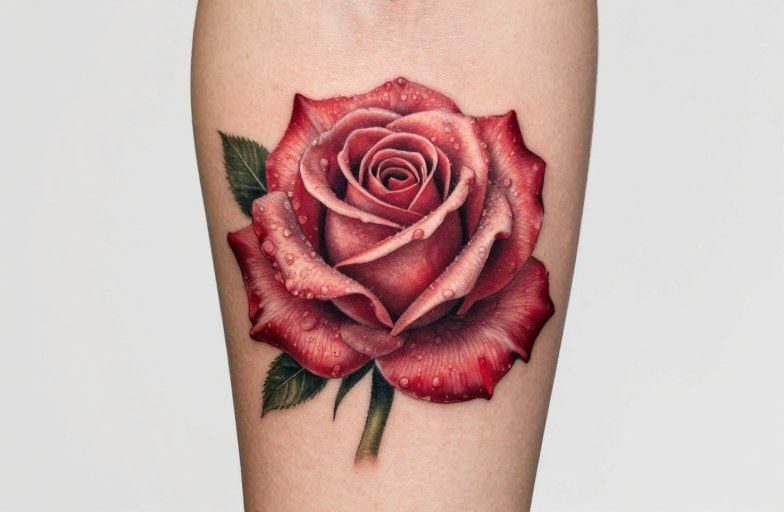
American traditional flower flash is the bold, graphic style of botanical tattoos born from street-shop sheets in the early-to-mid 20th century. Think thick black outlines, limited saturated color palettes, and flowers rendered as readable symbols rather than botanical illustrations. Roses dominate, but peonies, chrysanthemums, lotuses, and carnations all appear, each carrying specific associations within the tradition. The “flash” part matters too: these designs were meant to be picked from a wall, sized, and tattooed same-day, which shaped their visual DNA, immediate readability, strong silhouette, and no fine detail that wouldn’t hold at a glance from across a room.
Linework & Technique
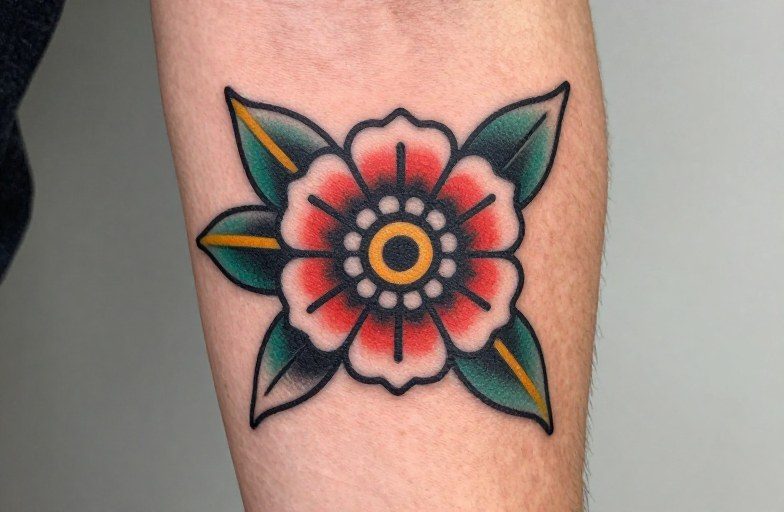
The backbone of any traditional flower flash is its line weight. Outlines run thick, typically 7 to 14 round liner groupings, creating a dark, uniform border that separates the flower from skin and from adjacent elements. This isn’t stylistic preference; it’s structural engineering. Those heavy walls contain the color and prevent the design from dissolving as skin ages and shifts.
Building the Fill
Color gets laid in with tight, directional whip shading or solid saturation packing. Petals receive a single light source, usually from the top-left or top-right, with the shadow side filled in solid and the highlight side left open or lightly stippled. Leaves get the same treatment: dark green base, black shadow wedge, maybe a touch of yellow-green for pop. There’s no soft airbrush gradient, no photorealistic petal texture. The goal is a flower you can name in half a second from ten feet away.
Negative Space as Design Tool
Skin tone does real work here. Highlights aren’t white ink; they’re unstitched skin. A rose petal’s curl gets defined by a crescent of bare arm showing through. This discipline means flash artists must plan every gap, because you can’t hide a mistake with soft shading later. The best sheets from the 1940s-60s show this mastery, every white space intentional, every black line doing multiple jobs.
Color vs Black and Grey
Classic American traditional demands color: blood red roses, lemon yellow centers, deep green leaves, maybe a blue banner if there’s lettering. That limited palette, red, yellow, green, blue, black, white, came from available pigments and the need for quick, reliable work. Color traditional flower flash reads instantly and photographs well.
When Black and Grey Works
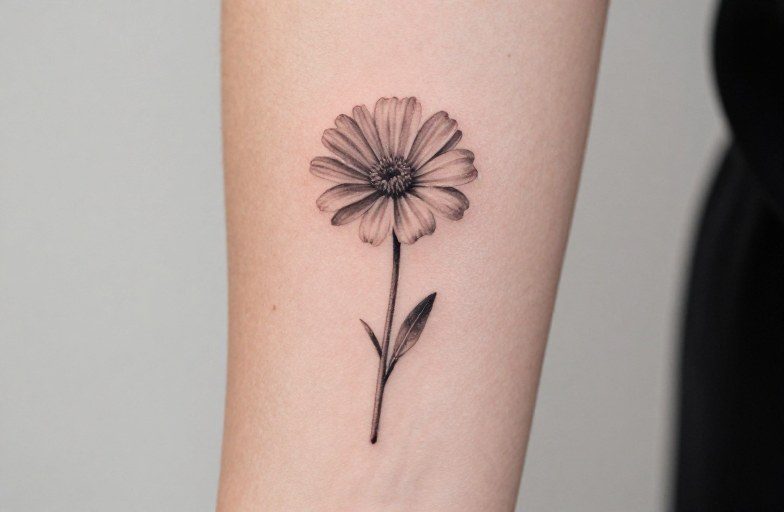
Black and grey traditional flowers exist, but they require adjusted design logic. Without color temperature to separate elements, you rely more on contrast density: solid black leaves against grey-wash petals, or vice versa. The risk is muddiness, petals can collapse into similar grey values. Successful black and grey traditional flowers push harder on graphic pattern, letting the stencil-like quality carry what color normally would. Some collectors prefer this for professional environments, but purists often feel something essential gets lost.
Best Placements
Traditional flower flash was designed for arms, legs, and chests, areas with relatively flat planes and enough real estate for the design to breathe. The classic “rose on the hand” or “peony on the forearm” aren’t accidents; they’re where the original flash sheets sold.
Arms and Legs
Outer forearms and upper arms remain ideal. The cylindrical shape lets the flower face forward, and the muscle movement adds subtle life without distorting the image. Thighs and calves work similarly well. Ankle and wrist placements are trickier, small diameter curves can warp the circular bloom, and the limited space forces detail reduction that weakens the graphic punch.
Torso and Beyond
Chest pieces, especially over the heart, carry the traditional association of memorial or devotion. Ribs and stomachs are less common for standalone flower flash; the skin there stretches and compresses dramatically, and the bold style doesn’t flex as gracefully as Japanese or neo-traditional alternatives. Back pieces exist but usually as multiple flash elements composed together rather than single large blooms.
How It Ages
This is where traditional flower flash earns its reputation. Those heavy black outlines don’t just look bold fresh, they’re insurance. As ink spreads slightly in skin over years (the unavoidable process of blowout and fading), the wide lines absorb the blur without breaking. A ten-year-old traditional rose still reads as a rose. A ten-year-old fine-line botanical may read as a pink smudge.
Color Longevity
Reds and yellows fade toward skin tone faster than blacks and greens. In traditional flash, this actually helps: the flower becomes slightly softer, slightly more “vintage,” without losing its structure. The black outline and black shadow wedges remain, maintaining the drawing. Touch-ups are straightforward, re-saturate the red, maybe sharpen a line or two. Compare this to watercolor or realism styles where fading destroys the illusion entirely.
Sun and Lifestyle Factors
UV exposure accelerates any tattoo’s aging. Traditional flash handles it better than most because the contrast is so high, but a sun-baked arm will still yellow and blur faster than a covered one. Moisturizing helps skin quality, which helps ink appearance, but no product “revives” pigment that’s actually gone.
Common Mistakes to Avoid
Collectors and newer artists both stumble on the same points. One frequent error is adding too much detail, extra petal lines, attempted texture, tiny highlights. Traditional flash collapses under this. The strength is in reduction, not addition. A rose with fifteen petal lines looks busy; a rose with five bold shapes reads instantly.
Proportion and Stencil Discipline
Another pitfall is stretching or compressing the design to fit awkward spaces. Flash was drawn at specific ratios; distorting the bloom to wrap a wrist or squeeze between existing tattoos breaks the visual logic. Similarly, trying to “update” the style with softer edges or gradient shading usually produces a confused result, neither fully traditional nor successfully modern.
Color Choices
Using too many colors, or colors outside the traditional range (neon pink, pastel lavender), fights the historical grammar of the style. If you want those colors, consider neo-traditional or illustrative work instead. For how design freedom works at the opposite extreme, abstract rose tattoo styles show what happens when the traditional constraints are removed entirely. Forcing them into classic flash makes both the design and the color choice look uncertain.
Modern Variations
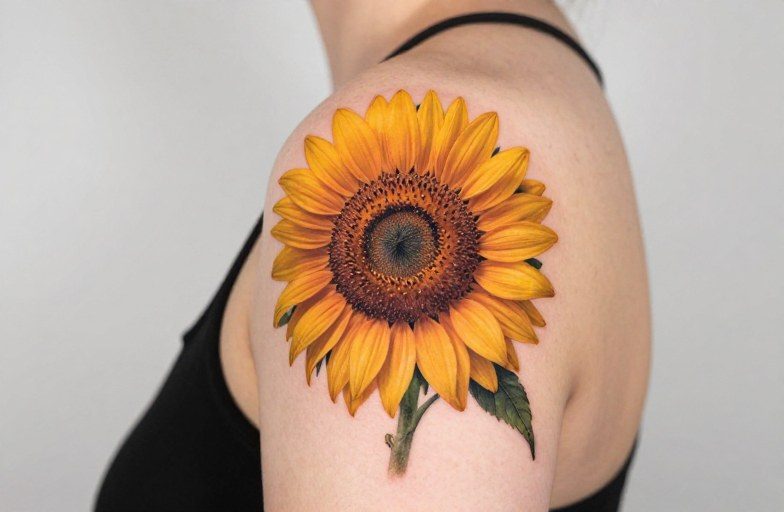
Contemporary artists have stretched traditional flower flash in several directions without breaking it. Some work larger, filling more skin with the same bold language, big peonies on thighs that would have been unthinkably huge in 1950s street shops. For how modern placement choices intersect with flower symbolism, shoulder sunflower tattoo placement thinking covers related ground. Others play with background treatments: traditional flowers emerging from non-traditional smoke, waves, or geometric frames.
Mashups and Hybrids
There’s a productive tension between strict traditional and what’s sometimes called “traditional-adjacent” work. Artists like Valerie Vargas or Duncan X maintain the line weight and color discipline but introduce slightly more complex drawing or personal symbolism. The flower flash remains recognizable, but it’s not a museum piece. Other artists deliberately contrast traditional flowers with realistic elements, say, a bold rose with a photorealistic bee, which creates visual friction that some collectors love and others find incoherent.
Flash Sheet Revival
Printed flash sheets themselves have returned as collectibles and social media content. Artists sell painted sheets alongside the tattoos, and collectors frame them. This has reinforced the original aesthetic: designs meant to be seen at arm’s length, not inspected for hidden detail.
Before You Decide
American traditional flower flash rewards commitment to the style’s constraints. If you want photorealistic petal veining, soft color transitions, or deeply personal hidden imagery, this isn’t your vocabulary. But if you value immediate readability, decades of proven aging, and a direct connection to tattoo history, there’s little that competes.
Study actual flash sheets from established artists, Sailor Jerry, Bert Grimm, later figures like Don Ed Hardy or contemporary painters like Bryan Burk. Notice how few lines define a rose, how the green leaf is almost a geometric shape, how the banner’s curve echoes the flower’s curve. The best traditional flower tattoos feel inevitable, like they always existed and the artist just revealed them. That confidence, earned through decades of refinement, is what you’re buying into. Choose an artist who actually works in this style regularly, not one who “can do traditional too.” The difference shows in the line weight, the color saturation, and whether the flower still looks like itself when the swelling goes down.
Frequently Asked Questions
What’s the difference between traditional flash flowers and neo-traditional botanicals?
Traditional flash uses heavier lines, flatter color, and more stylized forms. Neo-traditional allows softer shading, more naturalistic drawing, and expanded color palettes while keeping some boldness. The two overlap but have different priorities.
Do traditional flower tattoos need touch-ups more often than blackwork?
Not necessarily. The black outlines hold exceptionally well. Reds and yellows may soften over time, but the structure remains readable. Touch-ups are usually optional aesthetic choices rather than structural repairs.
Can I add a traditional flower to an existing non-traditional sleeve?
It’s challenging. The graphic boldness of traditional flash can make adjacent realism or fine-line work look washed out. Some artists bridge the gap with transitional elements, but mixing requires careful planning.
Why do most traditional flower flash sheets feature roses specifically?
Roses carried the clearest symbolic language in early American tattooing, love, beauty, but also thorns suggesting defense or sacrifice. For how that symbolism carries through to modern rose tattoos, rose tattoo symbolism in contemporary context makes useful reading. Their layered petal structure also adapted well to the bold, readable style that flash required.