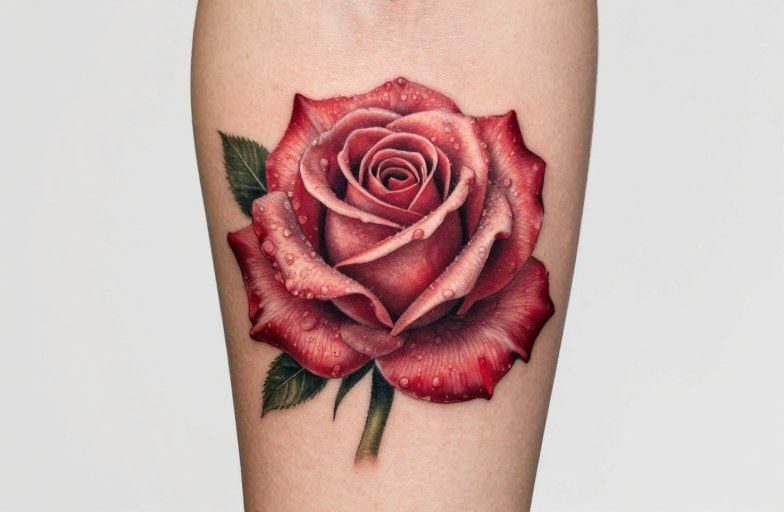
The rose tattoo on Selena Gomez’s upper back, inked alongside her closest friends, carries layered meaning: a tribute to a lost loved one, a marker of female solidarity, and a personal emblem of growth through pain. The design itself, a delicate, traditional-style rose with a stem, draws from centuries of symbolic use rather than inventing something new. What makes it matter is the context she gave it.
Symbolism & Core Meaning
Roses don’t need much introduction as symbols, but Gomez’s specific tattoo shifts the weight toward particular meanings. The flower has long functioned as shorthand for love in its complicated forms, not just romance, but the kind that persists through grief.
Loss and Remembrance
Gomez has been open about the tattoo connecting to her friend Christina Grimmie, the singer killed in 2016. In this context, the rose operates as a memorial marker without becoming a tombstone. The living, blooming quality of the flower distinguishes it from more static remembrance imagery like dates or portraits. A rose continues to carry associations with beauty and vitality even when used for mourning, which suits someone who wants to honor a life rather than fixate on a death.
Friendship and Collective Ritual
The tattoo was done as a group, Gomez and her friends got matching or coordinated designs. This matters for the meaning. Shared tattooing creates a bond that outlasts the session itself, and the rose becomes a private language between the wearers. For anyone considering similar ink, the placement (upper back, near the shoulder blade) allows for concealment or display depending on context, which suits someone whose public life involves constant visibility.
Mythology & Folklore
Rose symbolism predates Christianity by millennia and appears across cultures with remarkably consistent associations.
Greek and Roman Roots
The rose often linked to Aphrodite and Venus carried dual meaning from the start: beauty and the pain that attends it (the thorns). This isn’t accidental. The flower’s physical structure, soft petals, hard thorns, lends itself to metaphor about love’s complications. In some versions of the Adonis myth, the rose springs from Aphrodite’s tears mixed with her lover’s blood, embedding grief directly into the flower’s origin story.
Medieval European Traditions
During the medieval period, the rose became associated with secrecy and confidentiality. The term “sub rosa” (under the rose) indicated that whatever was spoken should not leave the room. This adds a useful dimension for friendship tattoos: the rose as keeper of shared confidence, of experiences not publicly disclosed. For Gomez and her circle, this layer probably wasn’t consciously intended but fits the circumstances anyway.
Common Variations & Styles
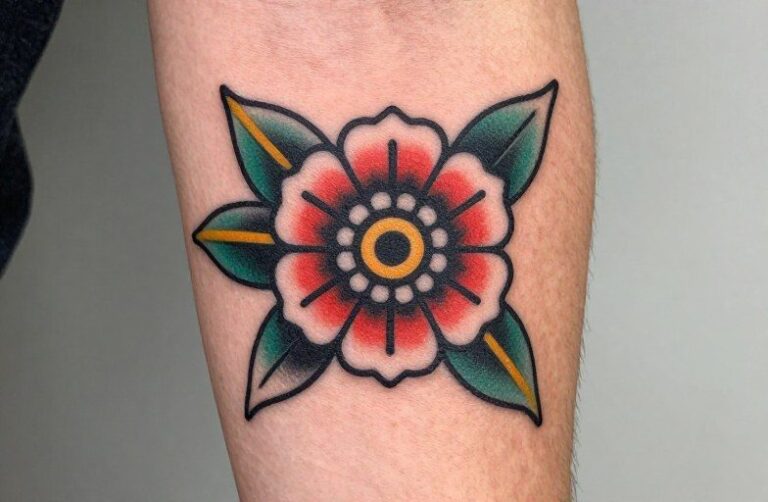
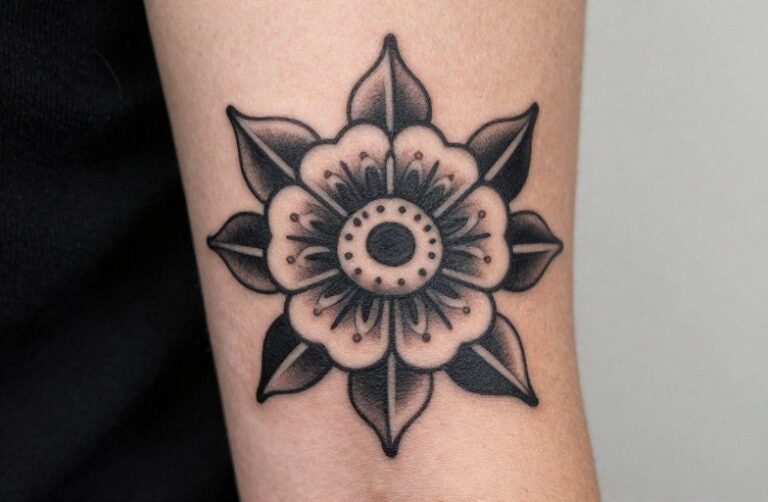
Gomez’s tattoo sits in the traditional American style lineage, bold enough to read clearly, restrained enough to age well. Understanding the style choices helps if you’re considering something similar. Those drawn to looser interpretations can also explore abstract rose tattoo styles and their meanings.
Traditional vs. Realistic Approaches
- Traditional/Old School: Heavy black outlines, limited color palette, stylized rather than botanically accurate. Heals reliably, stays readable for decades. Gomez’s leans this direction. For a broader look at how this style developed, see the American traditional flower flash style guide.
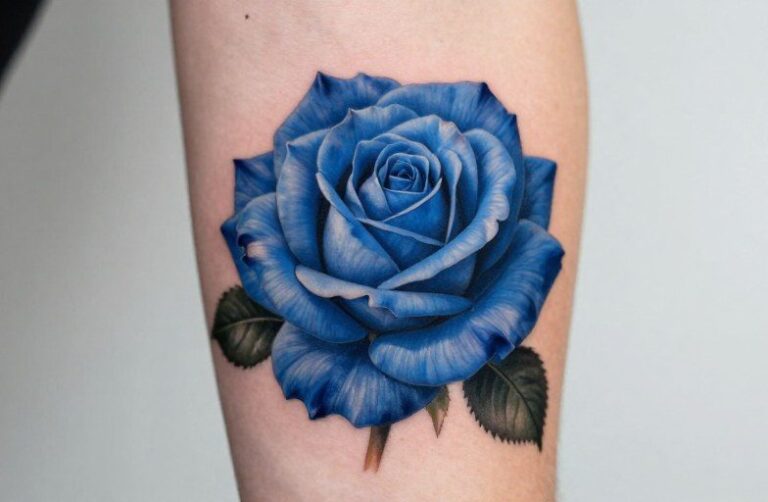
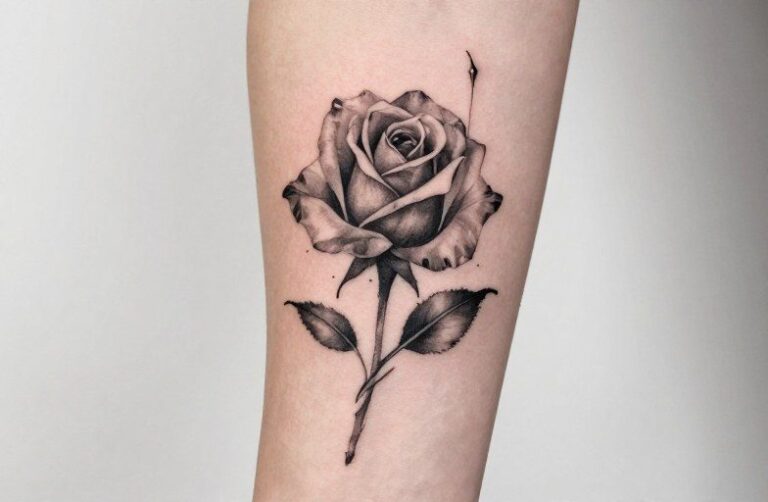
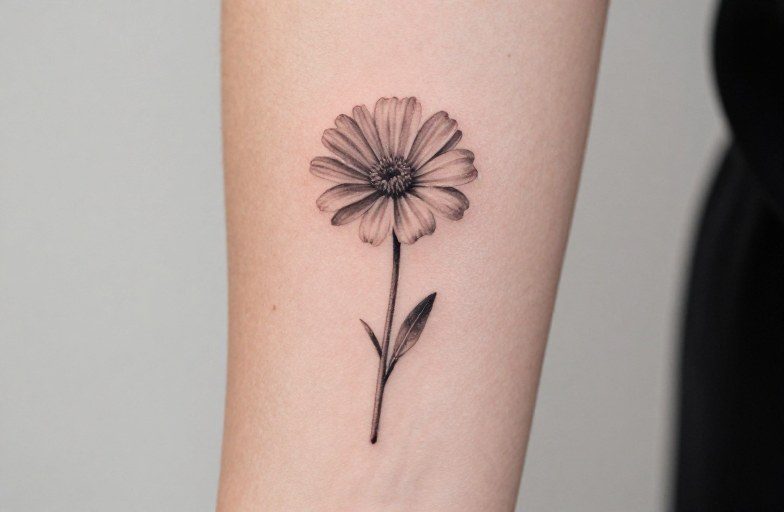
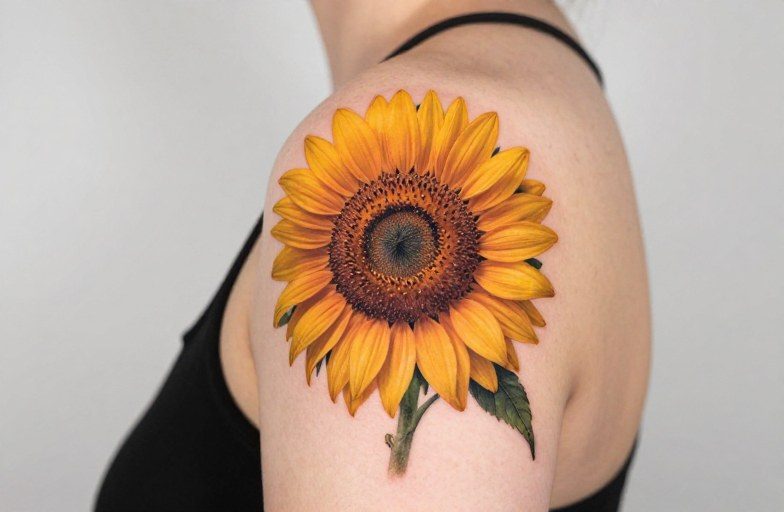
- Realistic/Black and Grey: No hard outline, relies on shading and contrast. More immediately impressive but requires more skin real estate to work well; small realistic roses often blur into muddy shapes within five to ten years.
- Single-Needle Fine Line: Popular now, especially for smaller pieces. The risk: thin lines spread and fade faster, and roses have complex edges that don’t simplify well. What looks delicate at six months can look like a bruise at six years.
Color vs. Black Ink
Gomez’s appears to be black ink, possibly with minimal shading. This is a practical choice for longevity. Red tattoo pigment has improved but still carries higher risk of allergic reaction and faster fading than black. A black rose also carries its own symbolic weight, associated with death, endings, or rebirth depending on interpretation, without the cheerful connotations of a bright red bloom that might feel mismatched with memorial intent. For more on this approach, black American traditional flower tattoos offer a range of styles worth comparing.
Religious & Spiritual Angles
The rose carries significant weight in several spiritual traditions, though Gomez’s personal use seems more secular.
Christian Iconography
The Virgin Mary commonly associated with the rose, specifically the “rose without thorns” as a symbol of sinless purity. Medieval devotion often used the rosary (from Latin “rosarium,” rose garden) as a meditation tool. The juxtaposition of thorns and petals also maps onto the crucifixion narrative, beauty emerging from suffering. For someone with Gomez’s public Catholic upbringing, these associations may hover in the background even if not explicitly invoked.
Contemporary Spiritual Use
More recently, the rose appears in New Age and wellness contexts as a heart-opening symbol, associated with self-love and emotional healing. This softer interpretation has proliferated in tattoo culture, sometimes diluting the symbol’s edge. Gomez’s specific context, mourning a violent death, preserves more of the traditional tension between beauty and pain than the self-care version typically allows.
How It Ages on Skin
Upper back tattoos age better than many placements, but roses present specific challenges.
The petal structure involves many small, enclosed shapes. As skin naturally shifts and ink spreads slightly, these can fill in. A traditional rose with clear negative space between petals resists this better than a densely shaded realistic version. The stem and leaves, with their longer lines, tend to hold definition longer than the flower head itself.
Sun exposure matters enormously. The upper back sees less direct sun than forearms or hands, which helps preserve black ink. Still, sunscreen matters for any tattoo you want to keep crisp. Without protection, black roses often develop a blue-grey cast as the pigment breaks down and scatters in the dermis.
Touch-ups are normal and expected. A well-done traditional rose might need attention after seven to twelve years, sooner if the wearer tans frequently or the artist was heavy-handed, causing blowout (ink spreading beyond intended lines).
Best Placements
Gomez’s placement, upper back, slightly off-center toward the shoulder blade, works for several reasons worth considering.
Visibility and Concealment
The upper back allows coverage by most professional and formal clothing while remaining visible in swimwear, backless dresses, or casual tank tops. This suits public figures and private citizens alike who want personal meaning without constant explanation. The shoulder blade specifically provides relatively flat, stable skin that moves less with expression than chest or neck placements.
Size Considerations
- Small (2-3 inches): Wrist, ankle, behind ear. Roses at this scale must be extremely simplified. Often reads as generic flower rather than specifically rose.
- Medium (4-6 inches): Shoulder, upper arm, ribcage. Gomez’s approximate size. Allows enough detail for recognizable rose structure without requiring massive commitment.
- Large (8+ inches): Full back, thigh, chest. Permits realistic detail, multiple elements, complex composition. The rose becomes a scene rather than a symbol.
Ribcage placement, popular for similar designs, hurts more and shifts more with breathing, which can affect long-term clarity. The upper back’s relative stability makes it a pragmatic choice for a design meant to last decades.
Final Thoughts
Gomez’s rose tattoo works because the symbol carries enough historical weight to support personal meaning without requiring explanation, yet remains common enough not to demand attention. The specific context, friendship, grief, collective ritual, transforms a familiar image into something particular.
If you’re drawn to similar ink, the lesson isn’t to copy her design but to consider how a traditional symbol might carry your own specific weight. The rose’s thorns and petals, its associations with love and loss, its capacity for both public display and private significance, all of this predates any celebrity adoption. What matters is the meaning you anchor it to, and whether the style and placement you choose will still carry that meaning clearly in twenty years.
Choose an artist who understands how the design will settle, not just how it photographs fresh. The best rose tattoos look like they could have been done in 1985 or 2025, timeless because the symbol and execution both respect the medium.
Frequently Asked Questions
Did Selena Gomez design her rose tattoo herself?
She collaborated with her tattoo artist and chose the design together with her friends for their matching pieces. The specific traditional-style rose was selected for its clean lines and lasting readability.
How much would a similar rose tattoo cost?
A medium-sized traditional rose from an experienced artist typically runs $150-$400 depending on location and artist reputation. Major metropolitan areas and well-known shops charge more.
Does the black rose have a different meaning than a red one?
Black roses traditionally suggest death, endings, or rebirth, while red emphasizes passion and romantic love. Context matters more than color alone, Gomez’s black rose functions as memorial rather than solely gothic statement.
How painful is upper back tattoo placement compared to other spots?
The upper back rates moderate on the pain scale, more bone and nerve density near the spine and shoulder blade edges, but fleshier areas toward the center hurt less. Most people find it manageable, far easier than ribs or feet.