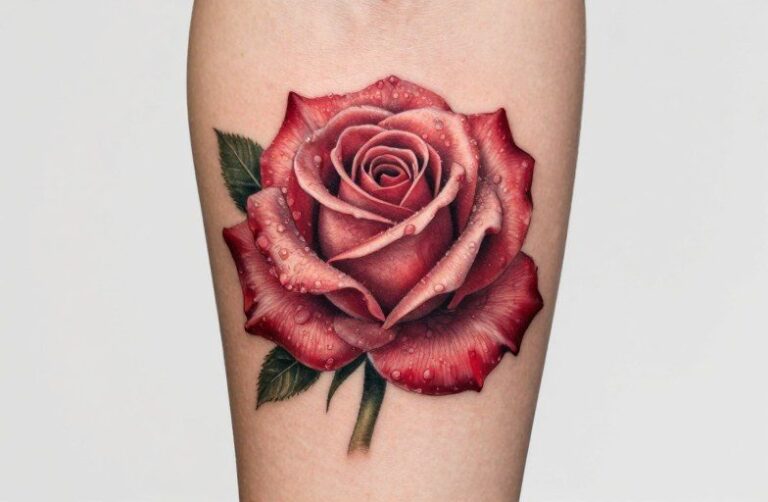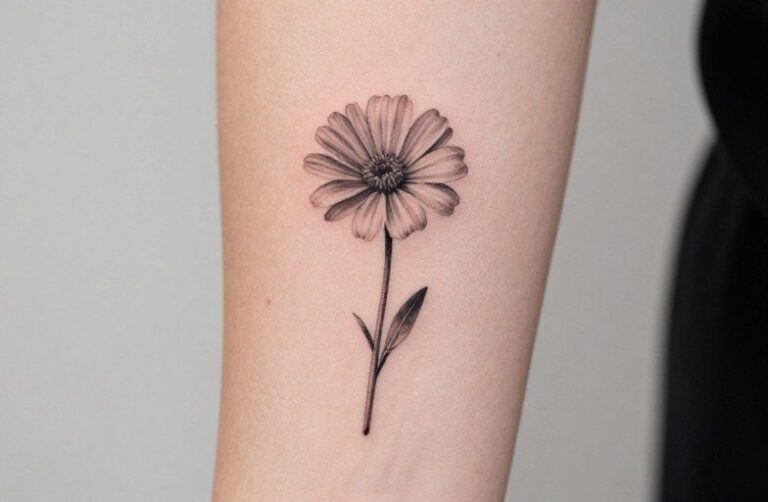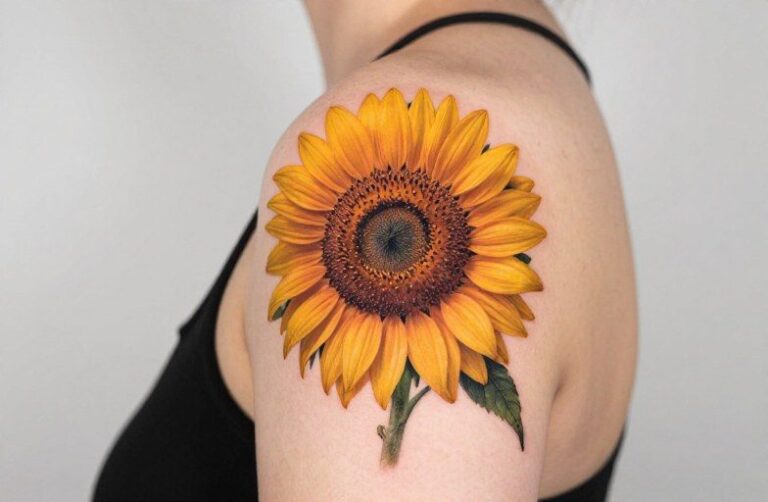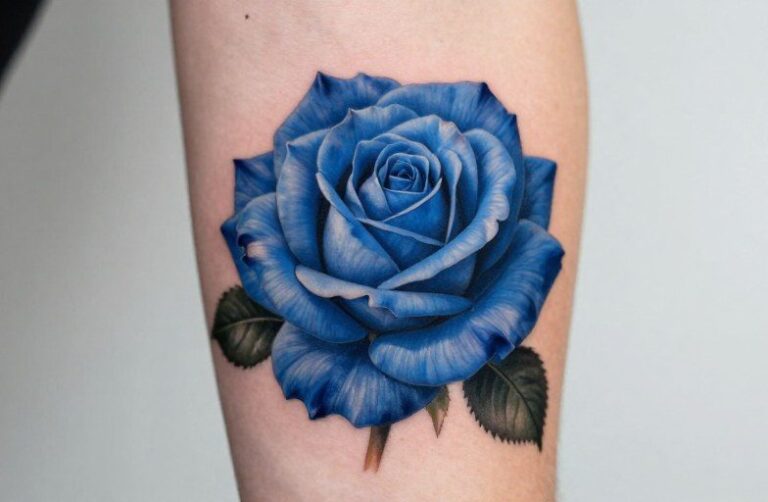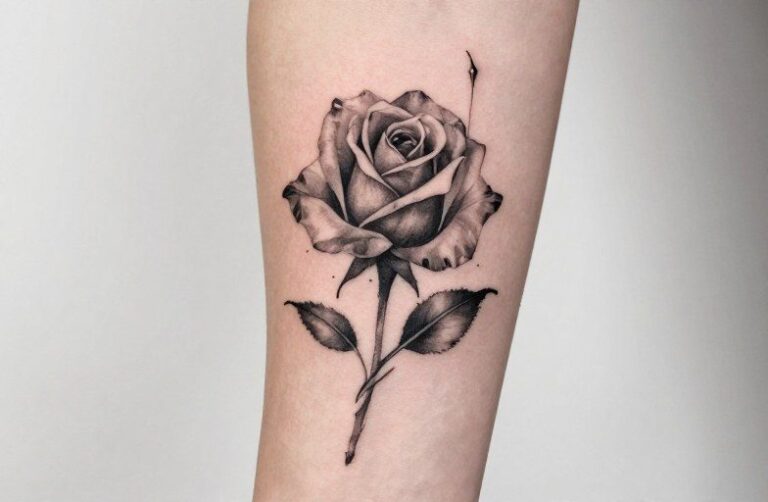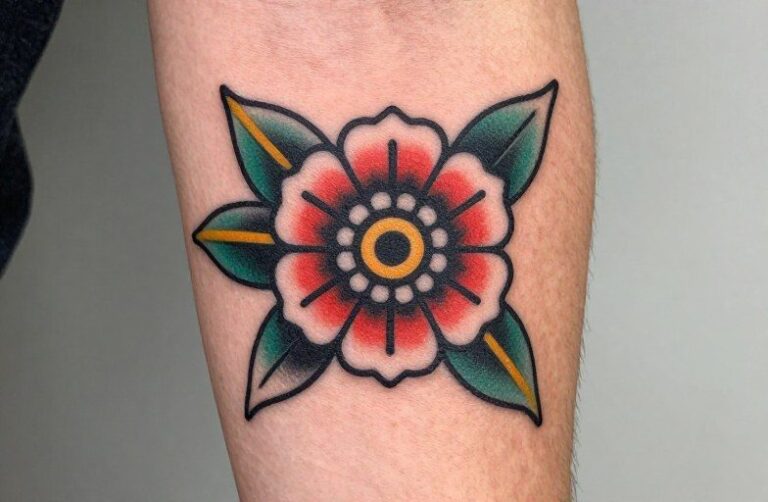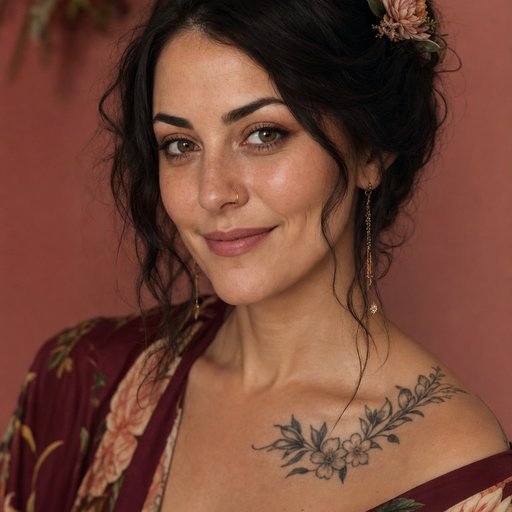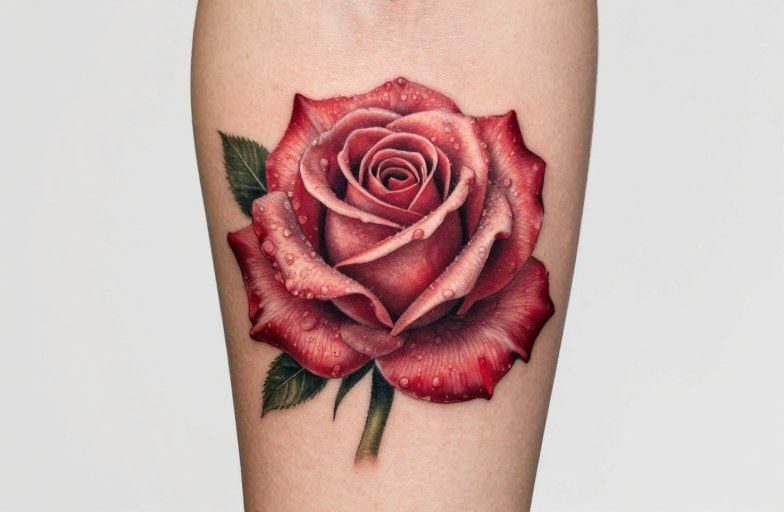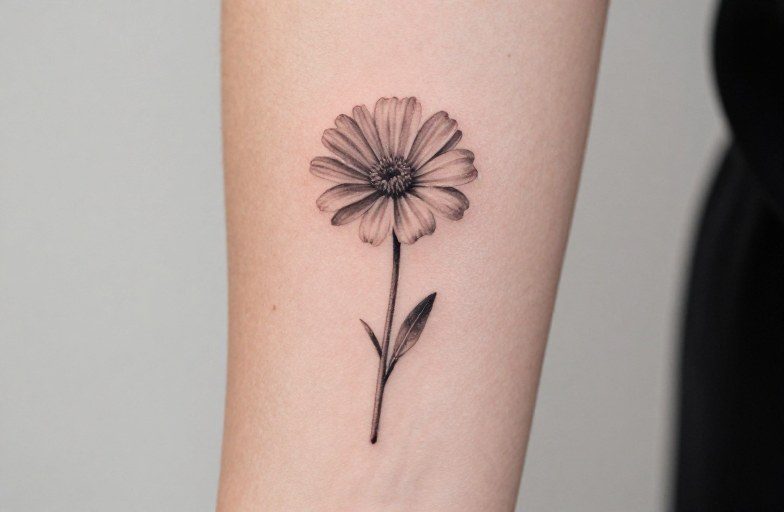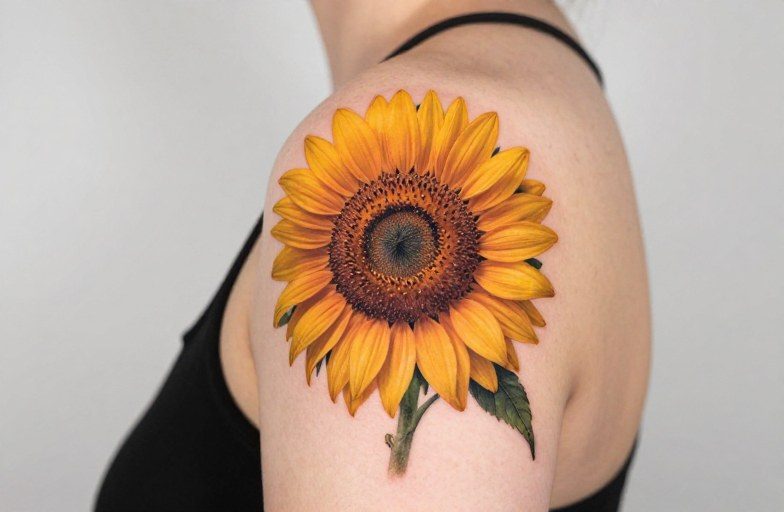
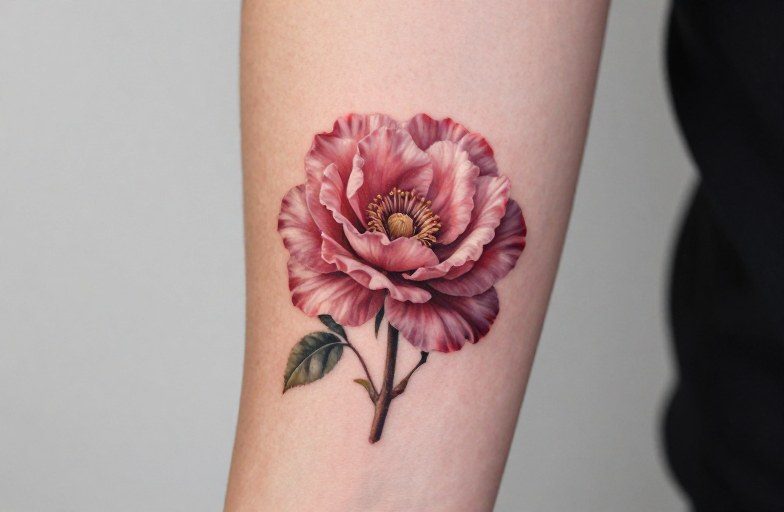
A botanical illustration tattoo, sometimes called a pictures flower or specimen-style piece, takes its visual language from pressed herbarium sheets, vintage seed catalogs, and scientific reference plates. The meaning centers on preservation, memory, and the deliberate act of capturing something perishable before it changes. Where watercolor florals suggest movement and traditional blooms carry symbolic weight through bold iconography, the pictures approach treats the flower as a documented object, catalogued and kept.
What the Style Communicates
The Language of Flowers
Botanical illustration tattoos carry the residue of floriography, the 19th-century practice of encoding messages through specific blooms. A specimen-style rose carries different weight than a specimen-style lily, and many wearers choose the flower for its coded meaning rather than appearance alone. The illustration format reinforces this reading: flat, labeled, precise, as if pulled from a reference book where each entry carries fixed significance.
Preservation and Loss
The tension between a flower’s natural lifespan and its permanent ink capture drives much of this tattoo’s emotional weight. Real petals brown and drop; the tattooed version persists. Some choose this style after loss, the specimen format echoing how we keep pressed flowers from funerals or memorial bouquets. Others see it as personal archiving, their own body as the collection site for meaningful flora.
- Scientific accuracy signals intentionality and research
- Flat shading mimics printed plates, not living tissue
- Latin labels or common names add scholarly or personal layers
- Monochrome palettes age more predictably than color botanicals
Religious and Spiritual Contexts
Christian Iconography
The lily, often rendered in pictures style, carries long Marian associations: purity, resurrection, the Annunciation. Medieval and Renaissance botanical manuscripts frequently included these flowers in religious contexts, and the tattoo format can channel that illuminated-manuscript gravitas. The rose appears in Catholic tradition as the symbol of the Rosary and of mystical union, with its five-petal structure mapped to Christ’s wounds in some devotional imagery.
Eastern Traditions
Lotus illustrations in this style draw from Buddhist and Hindu visual culture, where the flower’s growth from mud to bloom maps spiritual progress. The pictures format, precise and diagrammatic, can emphasize the lotus’s geometric perfection, its petals counted and arranged according to symbolic number. Chrysanthemum specimens connect to Japanese Buddhist memorial traditions and the imperial family, though Western wearers often miss these specific resonances.
Mythology and Folk Roots
Classical Transformation Stories
Narcissus, hyacinth, anemone: flowers born from transformation myths translate naturally to the specimen format, which itself implies transformation from living to preserved. The anemone’s link to Adonis’s blood, the hyacinth’s to Apollo’s slain lover, these narratives of beauty emerging from violence suit the tattoo’s permanent, unchanging quality. The visual language of scientific illustration predates modern tattoo culture by centuries, and its adoption into skin art is often linked to the broader neoclassical revival in 1990s tattooing, though specific attribution remains scattered.
Protective and Heritage Blooms
Rowan, St. John’s wort, bluebell: flowers with protective or cautionary folk associations appear in this style for wearers drawn to heritage or witchcraft-adjacent symbolism. The herbarium format lends a particular credibility, almost spell-book authority, to these choices. Unlike a stylized rendering, the scientific illustration claims documented, verifiable status.
Who This Style Suits
Professional and Personal Motivations
The reference-book aesthetic appeals to people whose work or temperament aligns with documentation and precision. Archivists, scientists, historians, and gardeners often gravitate toward the style because the accuracy matters to them; they know what the real plant looks like and want the tattoo to reflect that knowledge. The tattoo reads as intellectual rather than emotional, though the emotional content often runs underneath.
Memorial and Minimalist Wearers
People marking loss form another significant group. The specimen format’s association with preservation, with keeping something past its natural death, speaks directly to grief work. Unlike a photorealistic bouquet, the pictures style universalizes the specific loss into something catalogued and filed, manageable in its documentation. Aesthetic minimalists also land here: the flat shading, limited palettes, and clean lines suit people who want botanical imagery without the romantic softness of watercolor or the heaviness of traditional Americana.
Related Visual Languages
Overlapping Formats
Pressed flower tattoos share the preservation theme but add fragility, the actual petals’ delicacy versus the illustration’s ink permanence. Herbarium sheet tattoos often include collector’s labels, dates, locations, making the personal archive explicit. Scientific diagram tattoos might show cross-sections, root structures, the flower’s reproductive parts exposed, emphasizing knowledge over beauty.
Adjacent Botanical Styles
Engraving-style florals overlap significantly but carry more dramatic shadow and line weight. Linework botanicals strip away tonal shading entirely. Etching-style pieces add crosshatching texture that pictures-style tattoos typically avoid in favor of smooth gradation. Each variant shifts the mood from clinical to romantic, from scholarly to expressive.
- Seed packets and catalog illustrations: commercial, nostalgic, agricultural
- Pharmaceutical botany: mandrake, foxglove, poison plants with warning labels
- Japanese botanical studies: influenced by woodblock print tradition, flatter color areas
- Tattoo flash sheets: ironic or meta-commentary on the format itself
Design and Technical Considerations
Placement and Scale
The pictures flower needs room for detail. Fine lines defining stamens and pistils blur over time if packed too small. Inner forearm, outer upper arm, calf, and thigh offer the flat planes where this style reads best. Ribs and spine work for larger compositions but challenge the artist with curved surfaces. Finger and hand placement generally fails: the detail level collapses, and the scientific precision becomes illegible.
Line Work and Shading
Line weight matters enormously. Too thin, and the illustration dissolves in five years; too bold, and it loses the delicate reference-plate quality. Experienced artists vary line weight within the piece, heavier outlines, finer interior details. Shading typically stays smooth and flat, avoiding the dimensional modeling of realism. Color choices range from full botanical accuracy to sepia monochrome to stark black-and-gray, each option shifting the temporal feel (vintage, contemporary, timeless).
Pairing with text requires care. Latin binomials in clean serif fonts reinforce the scholarly tone; handwriting or script undermines it. Decorative borders, double lines, corner ornaments, can frame the specimen without overwhelming. Some successful pieces incorporate actual herbarium elements: the paper’s aged tone as background wash, collector’s stamps, handwritten location data.
What to Remember
Research your specific flower beyond generic symbolism. The poppy means remembrance in British Commonwealth contexts, opiate danger in others, California pride in a specific regional reading. A pictures-style tattoo’s precision invites closer inspection, and viewers who know botany will notice if you have chosen a cultivar that contradicts your intended meaning.
Consider how the style ages. The flat shading and fine lines that make this look fresh at two years can soften unpredictably at ten. Touch-ups maintain crispness but cannot restore lost detail. Discuss long-term expectations with your artist: how they will handle the inevitable spread, whether the piece is designed to age gracefully or to need periodic refinement.
Finally, the pictures format commits you to a particular relationship with the image: observer rather than participant, archivist rather than gardener. Make sure that distance matches your actual connection to the flower. Some people find the clinical quality cold after the initial appeal fades. Others discover that the documentation frame lets them carry something they could not otherwise bear to keep so permanently present.
Frequently Asked Questions
What is the difference between a pictures flower tattoo and a realistic floral tattoo?
Pictures flower tattoos use flat shading, clean outlines, and often include labels or diagrammatic elements that reference scientific illustration. Realistic floral tattoos aim for dimensional depth, shadow, and the appearance of living tissue. The pictures style prioritizes documentation and preservation; realism prioritizes lifelike presence.
Do pictures flower tattoos have to be black and gray?
No, though monochrome is common. Some artists use limited color to mimic vintage botanical plates, while others pursue full botanical accuracy. Color choices affect longevity: saturated pigments in yellows and pinks tend to fade faster than black ink or deep blues and greens.
How do I choose a flower with authentic meaning rather than generic symbolism?
Start with personal connection (a species you have grown, received, or encountered meaningfully). Then research its specific cultural and historical resonances rather than relying on chart-style symbolism lists. Consult botanical history sources, regional folklore, and, if applicable, your own family or cultural traditions.
Will the fine lines in a pictures flower tattoo blur quickly?
Fine lines do spread over time, but proper initial scale, experienced application, and appropriate placement on flat, low-friction skin areas slow this process. Expect touch-ups every several years to maintain crispness. Discuss aging strategy with your artist before application.
Can I add text or labels to my botanical tattoo?
Yes, and when done well, text reinforces the scholarly tone. Latin binomials in clean serif fonts work best. Handwritten script generally clashes with the reference-book aesthetic. Keep labels small and precise; they should read as part of the specimen plate, not as a separate caption.