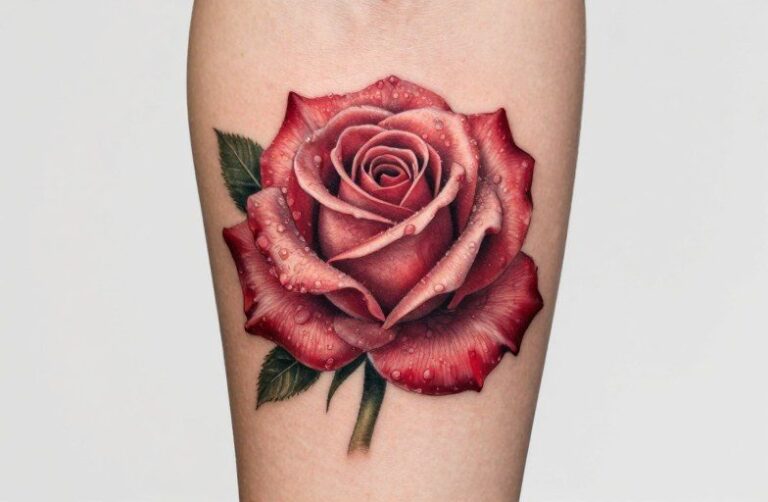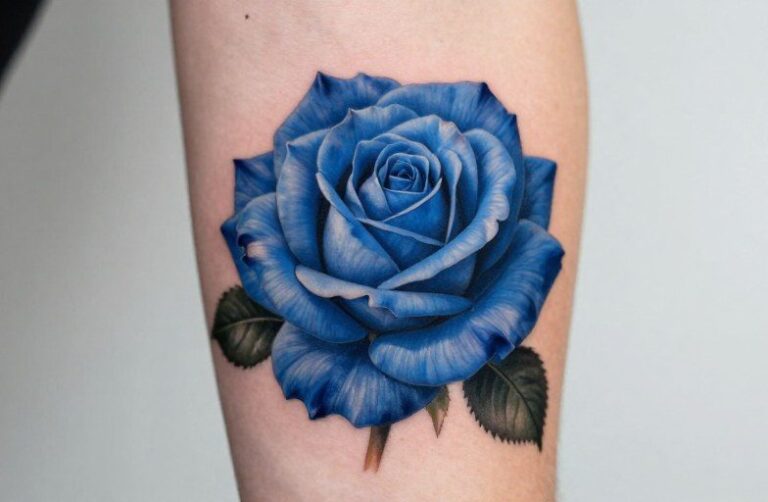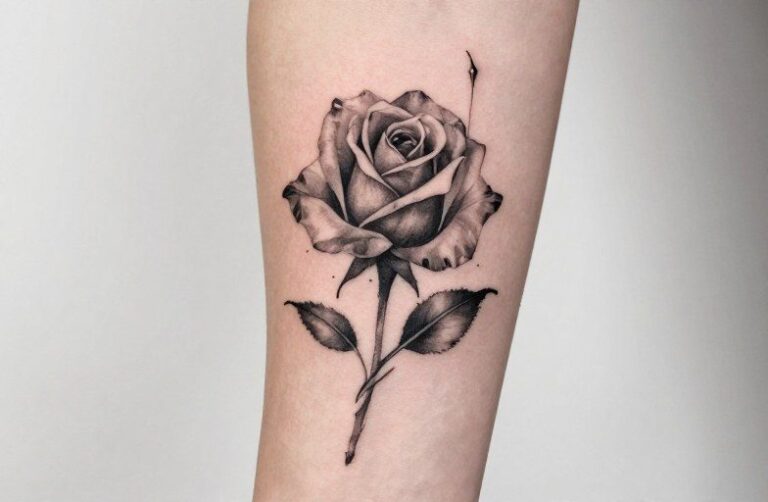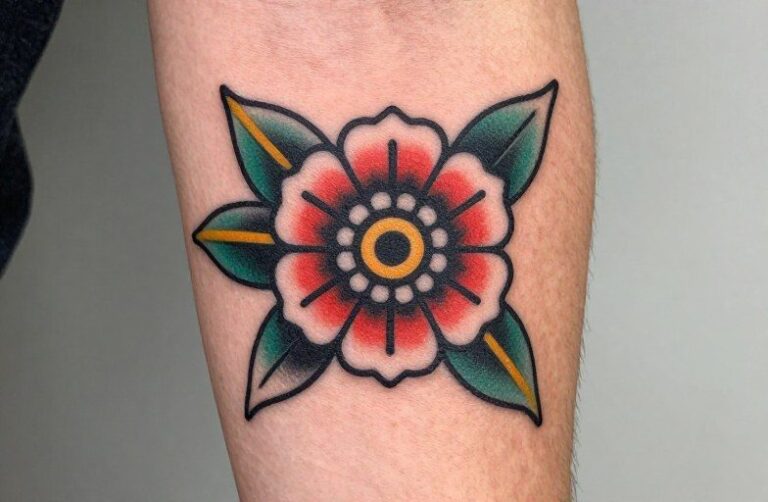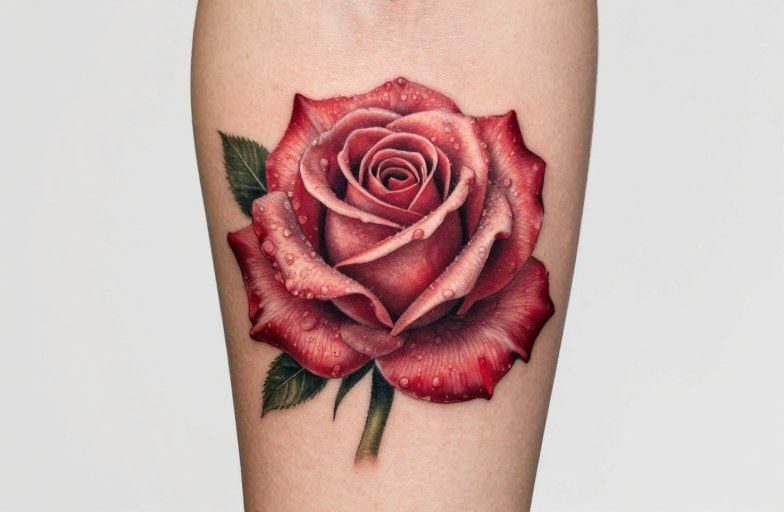
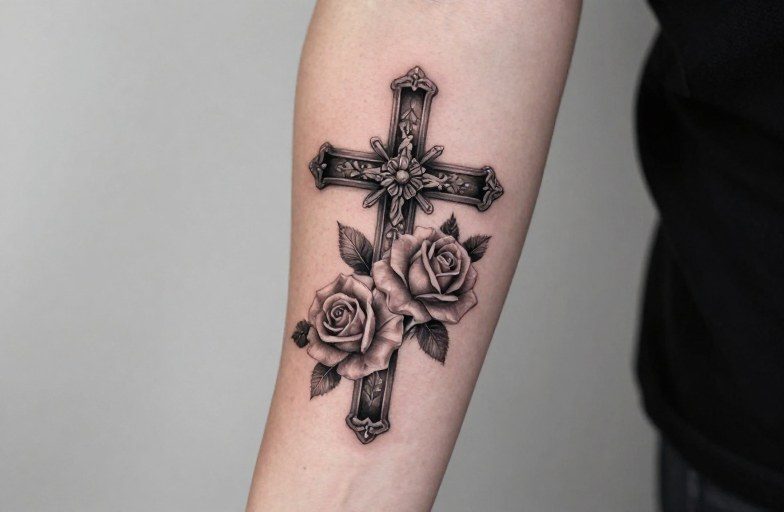
A cross with rose tattoo fuses two potent symbols into one image. The cross typically carries weight around faith, sacrifice, or memorial; the rose layers in beauty, love, and the shortness of life. Together, they often mark loss, devotion, or the tension between pain and beauty, though the exact meaning shifts with the design choices you make.
How It Ages on Skin
These designs age differently depending on whether you lean linework-heavy or pack in shading and color. Understanding how each element holds up helps you choose a piece that looks intentional years down the line.
Line-Heavy vs. Shaded Designs
Thin, delicate lines around the rose petals and cross edges tend to blur and soften within five to eight years, especially on high-movement spots like wrists or collarbones. Bold outlines, think traditional American or neo-traditional styling, stay readable much longer. If you want fine detail in the rose, pair it with a heavier cross structure that anchors the composition even as the softer elements spread slightly.
Color vs. Black and Grey
- Red roses in color fade to pink or muddy orange depending on ink quality and sun exposure; deeper crimsons hold better than bright scarlets
- Black and grey roses age more gracefully overall, though lighter grey washes can disappear into skin tone over time, especially on medium to deep complexions
- Green leaves and stems often fade faster than the flower itself, sometimes leaving a “floating rose” effect if not touched up
Placements with less sun and friction, upper arms, chest plates, thighs, preserve detail better than hands, necks, or feet. The cross’s straight lines make it forgiving; the rose’s curves demand more strategic thinking about long-term clarity.
Common Variations & Styles
The specific arrangement of cross and rose changes what the tattoo communicates and how it functions visually.
Rose Wrapped Around the Cross
Vines or stems winding around the cross beam suggest endurance, growth through hardship, or love that persists despite struggle. This layout works well as a forearm or calf piece where the vertical cross can extend with the limb. The wrapping motion creates movement; the eye travels rather than settling on a static image.
Rose at the Base or Center
A single rose positioned at the cross’s foot or where the beams intersect reads more like an offering or memorial. This placement often appears in religious tribute pieces, think of roses laid at grave sites. The composition feels grounded, less dynamic but more solemn. Chest placements, centered over the sternum, amplify this effect.
Multiple Roses
- Three roses commonly reference the Holy Trinity alongside the cross
- Two roses can signify dual memorials or the union of two people in faith
- A rose on each side of the cross balances the image for back pieces or upper arms
Style-wise, Chicano black and grey rendering dominates much of this imagery, with soft gradients in the petals against solid black cross structures. Traditional American approaches use limited color palettes and bold borders. Realistic styles demand larger scale to prevent the rose from becoming muddy as it ages.
Religious & Spiritual Angles
The cross’s religious significance is straightforward; the rose adds complexity that varies across Christian traditions and beyond.
In Catholic iconography, the rose often connects to the Virgin Mary, her titles include Mystical Rose and Rosa Mystica. A cross with rose can therefore signal Marian devotion specifically, not just general Christian faith. The combination appears in prayer cards, ex-voto imagery, and cemetery art, particularly in Mexican and Italian Catholic communities.
Protestant traditions generally place less emphasis on the rose symbolically, so the combination reads more broadly as “faith plus beauty” or “faith plus love” rather than Marian specificity. Some evangelical wearers choose it simply as a visually softer alternative to a plain cross, particularly if the tattoo memorializes a loved one.
Outside Christianity, the cross as a pre-Christian symbol of the four directions or cosmic axis paired with a rose can signal earth-based spirituality. The rose’s association with secrecy (sub rosa) and inner transformation adds esoteric layers that some Hermetic or Rosicrucian-influenced wearers intentionally invoke.
History & Cultural Roots
The pairing of cross and rose has visual precedents that long predate modern tattooing.
Funerary and Memorial Art
Cross-topped grave markers with carved roses appear in American and European cemeteries from the 19th century onward, particularly in Catholic and Anglican burial grounds. The rose’s seasonal blooming, beautiful, brief, returning, made it a natural metaphor for resurrection and memory. Tattooed versions often directly reference specific headstones, translating family memorials into living skin.
Chicano and Pachuco Influence
Cross with rose imagery became central to Chicano tattooing through the 20th century, often linked to Catholic identity, neighborhood pride, and memorials for deceased relatives. The black and grey approach, soft-focus roses against architectural cross elements, developed in East Los Angeles and San Diego shops. This tradition continues globally, though often separated from its original community context when adopted by non-Chicano wearers.
Some trace the specific cross-and-rose composition to French and Italian religious folk art imported to the Americas, where it merged with indigenous and African visual traditions. The symbol’s persistence in tattooing reflects its earlier life in woodcarving, metalwork, and textile, media where the same combination carried mourning and devotional functions.
Mythology & Folklore
Rose mythology independently enriches what the symbol can carry.
Greek tradition associates the rose with Aphrodite and Adonis, beauty born from blood, love entangled with death. When paired with a cross, this mythological resonance can amplify themes of sacrifice: something beautiful emerging from suffering. The rose’s thorns add their own vocabulary; they appear in some designs wrapped around the cross beam, suggesting protection, pain, or the cost of devotion.
In medieval European folklore, the rose blooming in winter or on a grave signified divine favor or a soul’s salvation. Tattooed versions sometimes reference this literally, snowdrops or frost rendered with the rose, or metaphorically through color choices: white roses for purity, red for passion or martyrdom, black for mourning or rebellion.
The Rosy Cross (Rosy Cross or Rosicrucian symbol) merges these elements in esoteric traditions, though most tattooed cross-and-rose designs lack the specific geometric proportions and additional symbols (crowns, inscriptions) that identify actual Rosicrucian imagery. Wearers sometimes discover this connection later, finding their personal symbol overlaps with historical esotericism.
Similar & Related Symbols
Understanding adjacent imagery helps clarify what cross-with-rose specifically communicates and offers alternatives if the combination feels overused.
- Cross with lilies: More specifically funerary, often associated with restored innocence after death; less versatile for living devotion
- Cross with heart: Directly emphasizes love and sacrifice but loses the mortality/transience layer the rose provides
- Anchor with rose: Naval and maritime memorial tradition; similar emotional territory but different cultural framing
- Crown of thorns with rose: More explicitly Christ-focused, less open to personal reinterpretation
- Skull with rose: Mortality and beauty without the faith element; common in non-religious memorial pieces
The cross with rose occupies a middle space: more spiritually grounded than skull imagery, more open to personal narrative than crucifixion-specific symbols, more visually complex than plain cross designs. That flexibility explains its longevity.
Key Takeaways
A cross with rose tattoo works because it holds multiple meanings without collapsing into vagueness. The cross anchors it in sacrifice, faith, or memorial; the rose introduces beauty, love, and impermanence. How you arrange them, wrapped, centered, multiplied, shifts the emphasis. How you render them, bold traditional, soft black and grey, photorealistic, determines how they age and what communities of style you align with.
Before committing, consider whether you want the rose’s specific cultural weight (Catholic, Chicano, Romantic) or just its general aesthetic appeal. The symbol carries enough history that unintentional appropriation happens easily, particularly with black and grey Chicano-influenced styling. A thoughtful conversation with your artist about reference points and personal intent usually produces something more durable than the trend-driven version.
Most importantly, this design demands technical skill. The cross requires straight, confident lines; the rose needs soft gradation and anatomical understanding. Artists who excel at one sometimes struggle with the other. Portfolio review matters here, look for healed photos, not just fresh work, to judge whether their roses hold their form and their crosses stay true.
Frequently Asked Questions
Does a cross with rose tattoo always mean someone died?
Not always. While it’s common as a memorial, many people choose it for living faith, transformation through struggle, or simply the visual balance of the two symbols. Context and placement usually reveal intent.
What’s the best size for a cross with rose tattoo?
At least palm-sized for the rose to hold detail as it ages. Smaller than that, and the petal gradients blur together; the cross becomes a simple plus sign. Forearms, upper arms, and calves offer good real estate.
Can this design work without religious meaning?
Yes, though the cross carries unavoidable religious association for most viewers. Some non-religious wearers reinterpret it as a symbol of burden borne or sacrifice made, with the rose softening the severity. Be prepared for misreading.
Why do so many cross with rose tattoos look similar?
The composition has strong traditional roots, particularly in Chicano and Catholic memorial imagery. Originality comes from specific personal elements, particular rose varieties, custom cross proportions, or integrated names and dates, rather than reinventing the basic pairing.