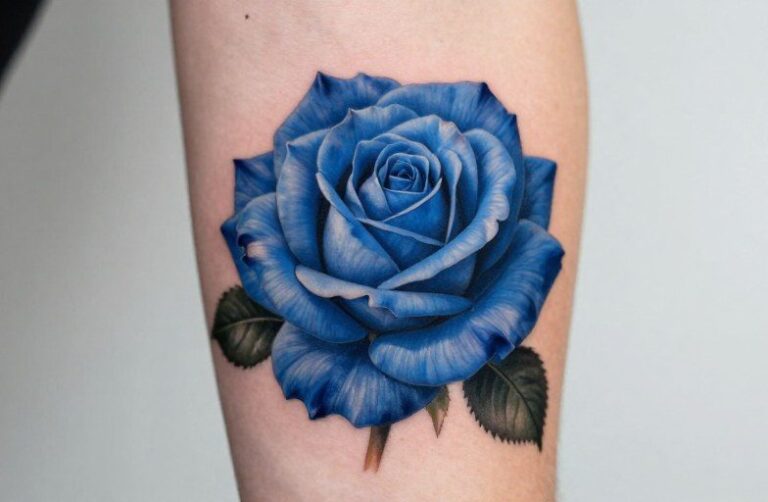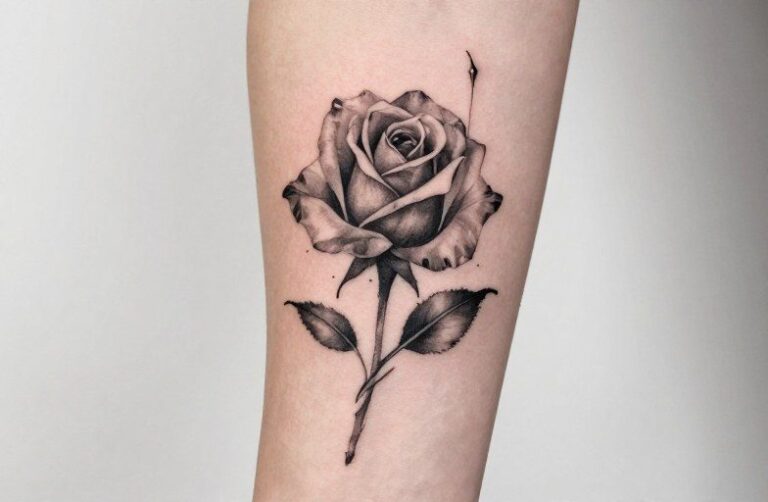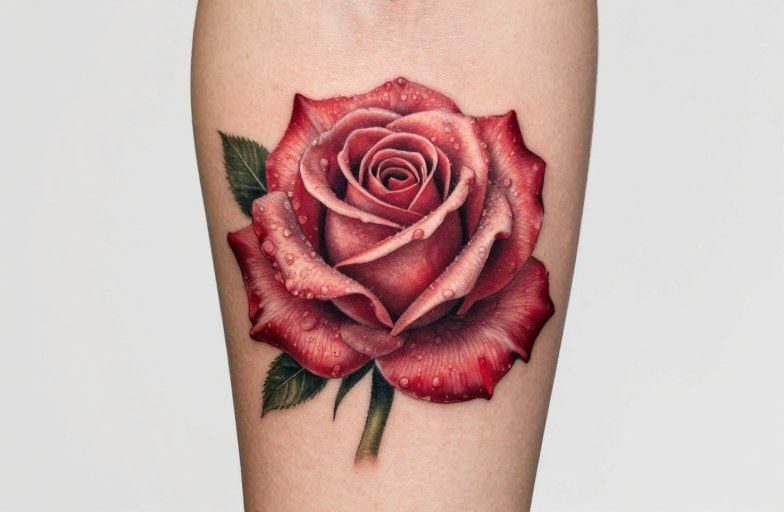
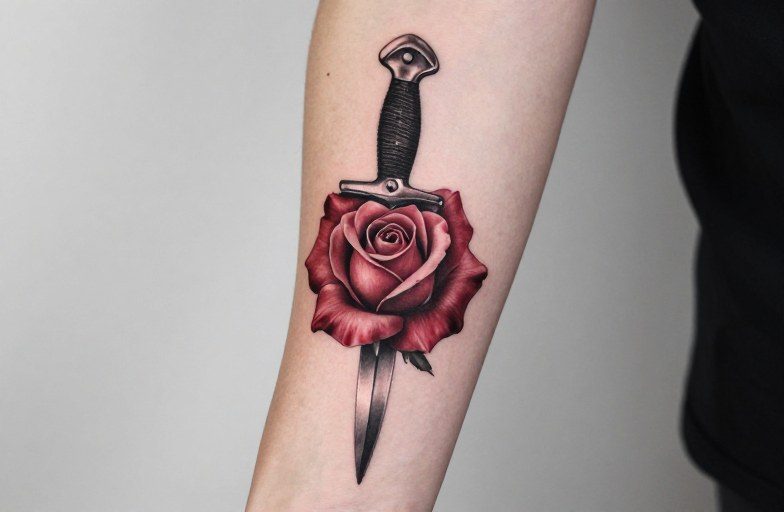
A dagger piercing a rose is one of tattooing’s most enduring dual images. it represents the collision of beauty and pain, love that cuts, protection of something delicate, or the survival of heartbreak. The rose stands for passion, beauty, or a loved one; the dagger introduces danger, betrayal, loss, or the hard edge required to guard what matters. Together, they create a tension that resonates across decades of tattoo culture.
Symbolism & Core Meaning
This design thrives on contradiction. The soft, organic rose against the cold, mechanical blade creates visual and emotional friction that makes the tattoo memorable beyond mere decoration.
Love and Vulnerability
The rose has long symbolized romantic love, desire, and the fleeting nature of beauty. A dagger thrust through it suggests that love carries inherent risk, that opening yourself to another person exposes you to potential wound. Some wear this as a memorial to a relationship that ended painfully; others as acknowledgment that love requires courage, not just sentiment.
Protection and Defense
Flipping the symbolism, the dagger can represent the guard dog rather than the attacker. The blade defends the rose from those who would pick it carelessly. This reading appeals to people who’ve had to develop hard boundaries to protect their capacity for tenderness, parents, survivors of betrayal, anyone who’s learned that softness survives only when paired with discernment.
- Heartbreak survived: the wound didn’t kill the beauty
- Romantic sacrifice: love given despite known cost
- Guarded passion: openness protected by vigilance
- Memento mori: beauty’s inevitable end, often linked to traditional tattooing’s fascination with mortality
Personal & Modern Meanings
Contemporary wearers stretch the design beyond traditional romantic readings. The same image now carries weight for grief unrelated to romance, loss of family, of a former self, of innocence. The dagger becomes the event that pierced; the rose, what persisted despite it.
Some choose the design after significant personal transformation. Getting through addiction, leaving a destructive environment, or rebuilding after financial collapse can all map onto the visual logic: something sharp entered, something beautiful remained (or grew). The tattoo becomes a private marker of survival without requiring explanatory text.
Gendered readings have shifted notably. Where once this was coded masculine, tough guy protecting or avenging feminine beauty, now it’s equally common on all bodies. The dagger through rose no longer belongs to sailors and bikers; it sits on teachers, nurses, software developers, anyone who’s lived through the central tension.
Color vs Black and Grey
Your choice between color and black and grey substantially alters the tattoo’s emotional temperature and practical longevity.
Color Realism
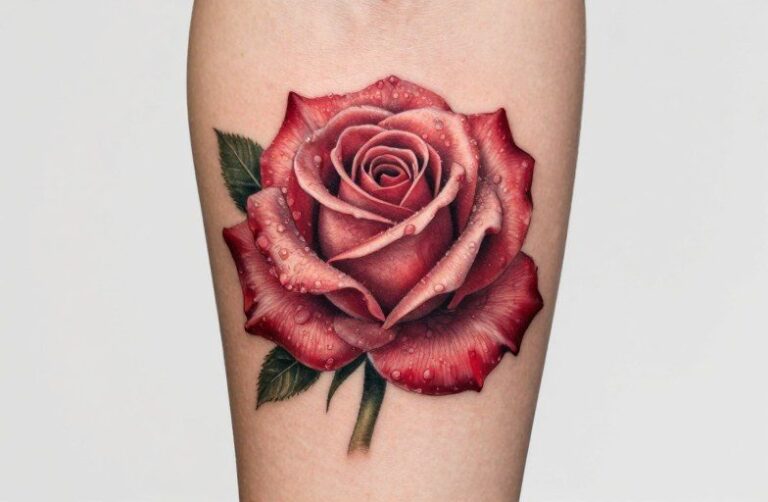
Traditional red roses with steel-grey daggers and perhaps a drop of blood remain the classic presentation. The red demands attention and carries immediate emotional charge, passion, violence, vitality. However, red pigment fades faster than black, especially on areas with frequent sun exposure. Expect touch-ups every 5-8 years to maintain saturation. Yellow and pink roses soften the aggression, suggesting different emotional registers: friendship betrayed, innocence lost, or gentler forms of love.
Black and Grey
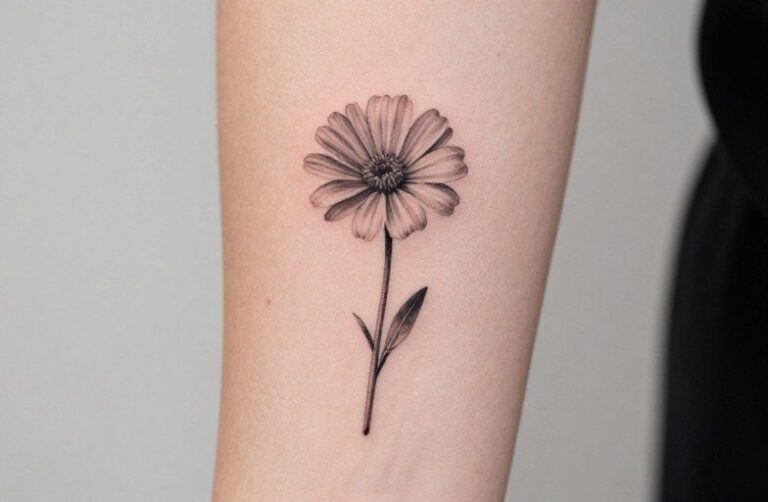
Stripped of color, the design becomes more somber, more timeless. The contrast between soft grey-wash petals and sharp black lines on the dagger blade can actually read more dramatically than color. Black and grey ages more gracefully, less blurring, less color shift to muddy tones. For a design meant to carry weight for decades, this approach offers practical advantages alongside its aesthetic restraint.
Consider skin tone: on darker skin, black and grey with careful highlight work often pops more effectively than color that can appear muted. A skilled artist adjusts contrast rather than forcing inappropriate color choices.
How It Ages on Skin
The dagger through rose contains elements that age very differently, making technical execution crucial for long-term satisfaction.
Fine lines in the dagger’s hilt and crossguard blur over time. What reads as intricate engraving at month six becomes indistinct grey smudge by year fifteen. Bold, simplified geometry in the metalwork holds crisper. The rose’s petal edges, if too thinly lined, bleed outward and lose definition. A competent artist builds the flower with weighted outlines and strategic areas of solid fill rather than relying on delicate linework throughout.
Shading technique matters enormously. Whip-shaded petals create soft gradients that age into pleasant, readable forms. Overly dark, packed black in the rose’s center can spread and swallow detail. The dagger’s blade benefits from smooth grey transitions suggesting polished metal; blotchy or inconsistent shading here looks like damage rather than reflection.
White highlights, popular for suggesting dew or blade gleam, typically disappear within 2-5 years as the body absorbs the less stable pigment. Design accordingly, don’t make the tattoo’s readability depend on white accents.
Best Placements
The vertical orientation of a dagger through rose suits certain body areas naturally while fighting others.
Forearm and Calf
These cylindrical surfaces accommodate the design’s length without excessive distortion. The forearm offers visibility for personal significance and easy display. Inner forearm provides flatter canvas but more frequent movement during healing. Outer forearm shows more sun, accelerating fade. The calf protects the tattoo from daily wear and allows generous scale, though pants coverage means less frequent viewing.
Chest and Thigh
Broader canvases permit larger, more detailed work. A chest piece can center the dagger along the sternum with roses spreading across pectorals, dramatic and symmetrical. Thigh placement offers substantial flat area, good for detail, and easy concealment. Both locations experience more skin stretch and weight fluctuation than limbs, which can distort the design over time.
Small versions on wrists, hands, or behind ears generally fail this imagery. The dagger’s necessary detail becomes illegible; the rose collapses into a red blob. Minimum effective size for recognizable execution sits around 4-5 inches in height.
History & Cultural Roots
The pairing of weapon and flower predates modern tattooing by centuries, though its specific visual formulation owes much to 20th-century American tattoo tradition.
European emblem books and vanitas paintings from the 16th-17th centuries often juxtaposed beauty’s ephemerality with violence or time’s passage. The rose specifically, with its brief blooming period, served as memento mori, a reminder that pleasure and life itself end. The dagger’s addition intensified this into active rather than passive destruction.
American traditional tattooing, often linked to Sailor Jerry and his contemporaries in the mid-1900s, standardized the visual vocabulary. Bold outlines, limited color palette, and immediate readability suited the medium’s constraints and clientele. The dagger through rose entered this lexicon as a recognizable, emotionally legible design that could be executed reliably across different artists and shops. Its persistence speaks to the image’s fundamental resonance rather than mere tradition.
Some trace similar imagery to Mexican folk art and the symbolism of Santa Muerte, where beauty and death intertwine differently than in European traditions. Japanese tattooing offers parallel but distinct traditions of weapon and flower pairings, though the specific rose-dagger combination remains primarily Western.
Final Word
The dagger through rose endures because it captures something structurally true about human experience: the things we love make us vulnerable, and vulnerability itself requires strength. Whether worn as memorial, warning, or quiet self-recognition, it works best when the technical execution respects the image’s weight. Choose an artist who understands how bold lines and strategic shading carry meaning across decades, not just across Instagram’s first post. The best version of this tattoo looks like it always belonged on your skin, history, personal significance, and craft all converging in one deliberate image.
Frequently Asked Questions
Does a dagger through rose always mean a breakup or heartbreak?
No. While heartbreak is one common reading, many wearers intend protection of love, survival of non-romantic grief, or simply appreciation for the visual tension between beauty and danger. The meaning depends on the wearer’s intent, not a fixed dictionary definition.
Should the dagger point up or down in the design?
Upward-pointing daggers traditionally suggest aggression, action, or readiness; downward points read more defensive or memorial. Neither is wrong, but the direction subtly shifts emotional tone. Discuss with your artist which orientation suits your intended meaning and chosen body placement.
How much does detail in the dagger hilt matter for aging?
Extremely fine engraving in the hilt and crossguard typically blurs within 10-15 years into indistinct grey. If you want recognizable detail long-term, instruct your artist to use bolder, simplified geometry with stronger black outlines rather than delicate etching.
Can this design work as a cover-up tattoo?
The dagger’s solid black blade and the rose’s layered petals provide excellent cover-up potential for smaller existing tattoos, especially if positioned strategically. Large or very dark previous work may limit placement options, but the design’s natural density helps conceal older ink beneath.