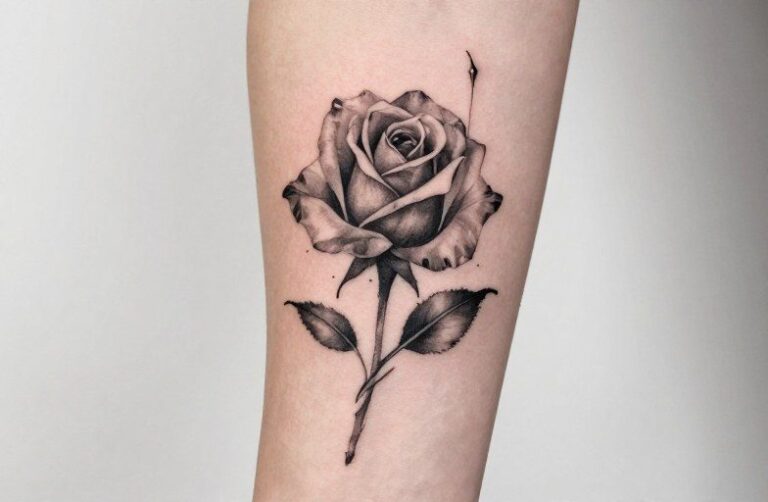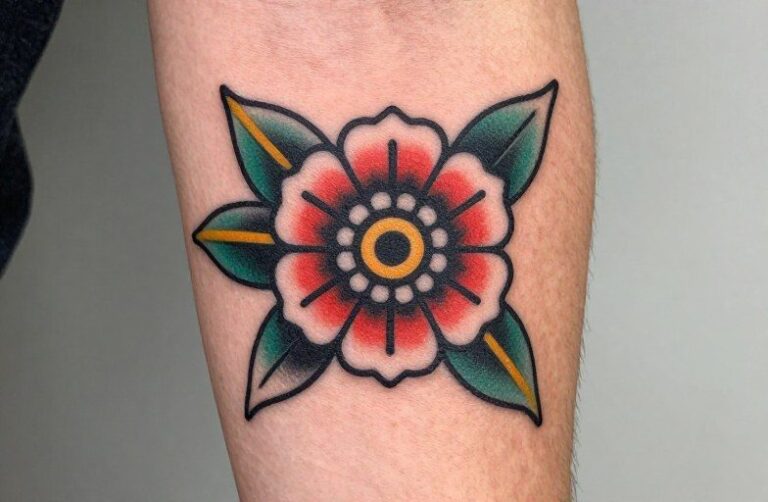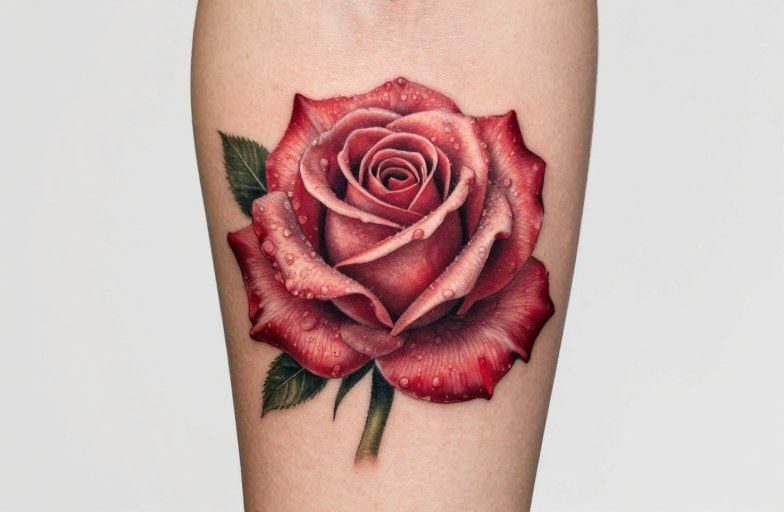
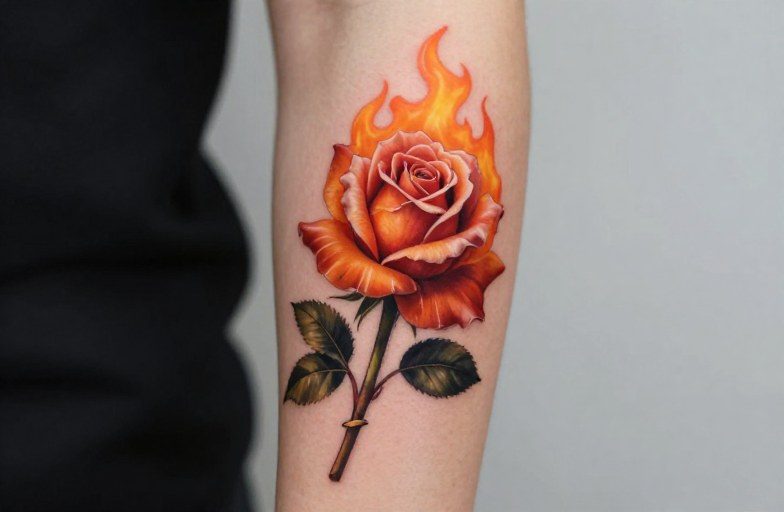
A fire rose tattoo fuses two ancient power symbols into one charged image. The rose carries its own weight, love, secrecy, beauty with thorns, while fire adds destruction, purification, and rebirth. Together, they create something more volatile than either alone: passion that consumes and renews, beauty that survives burning, or love intense enough to scar.
Symbolism & Core Meaning
What Each Element Brings
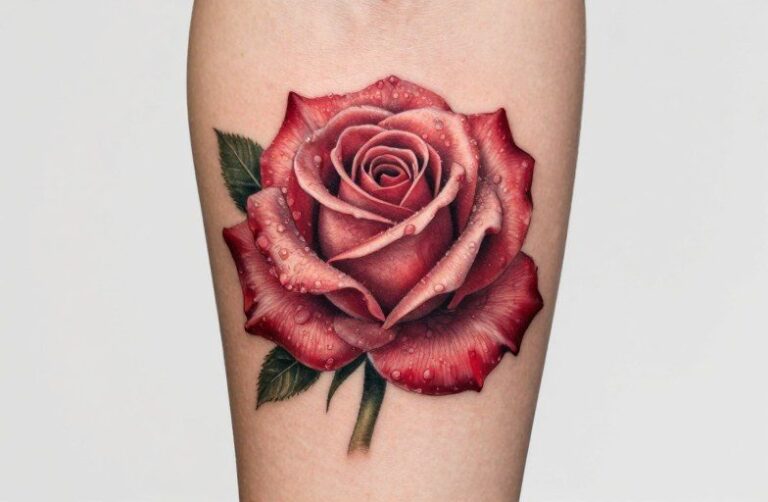
The rose has never been a simple flower. In tattoo tradition, a red rose signals romantic love, a black rose marks loss or rebellion, a white rose suggests purity or new beginnings. The thorns matter too, they’re the price of beauty, the defense mechanism, the reminder that getting close means getting hurt.
Fire operates differently. It destroys, yes, but it also clears dead growth for new life. It transforms raw material into something else entirely, wood into ash, ore into metal. In this pairing, fire isn’t background decoration. It’s the test the rose undergoes. The image asks: what survives when everything burns?
Common Interpretations
- Passion with consequences, love or desire intense enough to damage
- Resilience through destruction, surviving trauma, emerging changed but intact
- Creative destruction, burning down an old life to build something new
- Warning and attraction, beautiful but dangerous, like the moth’s relationship to flame
Some wearers choose this after divorce, addiction recovery, or career collapse. Others get it in the thick of destructive love, not after. The meaning depends on whether the fire is current or past tense.
Best Placements
Where the Design Actually Works
Fire rose tattoos need room for both elements to read clearly. The rose requires enough space for petal layers; the fire needs flowing lines that don’t compress into muddy blobs. Small designs, under 3 inches, often lose the distinction between flame and flower.
The upper arm and outer thigh handle the curved composition well. The shoulder blade gives a natural canvas for fire rising upward. Forearms work for vertical designs with the stem becoming smoke. Ribs and sternum suit larger, more dramatic pieces where the fire can wrap around the rose realistically.
Placement Pitfalls
- Hands and fingers, too small for detail; fire reads as smudge within months
- Inner bicep, soft skin blurs fine lines faster; fire tips lose definition
- Ankles, constant sock friction fades reds and oranges unevenly
Color choice affects placement longevity. Bright orange and yellow pigments fade faster than deep reds. On sun-exposed areas like forearms, expect significant fading in 3-5 years without religious sunscreen use.
History & Cultural Roots
European Alchemical Connections
The fire-rose pairing appears in alchemical imagery, often linked to the concept of the “alchemical rose”, beauty refined through fire’s crucible. Some trace it to Rosicrucian symbolism, where the rose and cross merged spiritual and material worlds. The fire added purification to this existing framework.
Medieval and Renaissance emblems used the burning heart or flaming flower to represent divine love’s intensity. This wasn’t tattoo imagery then, emblem books circulated among educated classes, and the symbols migrated through folk art, fraternal organizations, and eventually into tattoo flash sheets by the early 20th century.
Modern Tattoo Tradition
Fire rose designs gained visibility in American traditional and neo-traditional tattooing during the 1980s and 1990s, commonly associated with biker and rock culture’s embrace of destructive romance imagery. The design offered a more aggressive masculine alternative to the classic sweetheart rose, while still carrying recognizable romantic symbolism.
Contemporary interpretations draw from multiple sources: Japanese irezumi’s flame rendering techniques, Chicano black-and-grey realism for smoke effects, and watercolor styles for the color transitions between petal and fire.
Design Tips & Pairings
Making the Fusion Convincing
The biggest design challenge: making fire and rose look like one integrated image rather than two separate stickers overlapping. Successful approaches include petals with flame-tipped edges, the rose emerging from smoke rather than sitting beside it, or the stem becoming a trail of sparks.
Line weight matters. Bold outlines on the rose with no outline on the fire creates visual hierarchy, fire as atmosphere, rose as subject. Alternatively, both elements in solid black-and-grey with fire rendered through negative space and whip shading produces a more unified, less cartoonish result.
Common Pairings and Complications
- Skulls, mortality added to the burn; works but risks cliché overload
- Daggers, betrayal and burning together; compositionally tricky
- Clocks or hourglasses, time running out before the fire consumes everything
- Script, names or dates in the smoke; smoke must be dark enough for legibility
Adding too many elements destroys the central tension. The fire rose already carries heavy symbolism. Each additional icon dilutes rather than deepens.
Similar & Related Symbols
Close Cousins in Symbolic Territory
The phoenix shares the rebirth-through-fire narrative but lacks the rose’s romantic specificity. A phoenix tattoo says “I came back”; a fire rose says “I came back, and I still love.” The burning heart, sacred heart imagery, or the stylized tattoo version, keeps the passion but drops the botanical complexity and the thorn’s defensive edge.
The lotus rising from mud parallels the fire rose’s emergence from destruction, but with Eastern philosophical associations rather than Western romantic-gothic ones. Some artists combine all three: lotus base, rose center, fire crown, though this tends toward symbolic overloading.
Design Evolution
Black rose tattoos preceded fire roses in popularity, carrying similar “beauty through damage” messaging without the color requirements. The fire rose essentially adds kinetic energy and color drama to the same thematic territory. For clients wanting the meaning without the visual complexity, a black rose with minimal flame accents offers a compromise.
Mythology & Folklore
Stories That Feed the Image
Greek mythology offers no direct fire-rose myth, but the anemone sprang from Adonis’s blood, and the hyacinth from Apollo’s slain lover, flowers born from violent death. The fire rose extends this pattern: beauty from destruction, but with the agent of destruction still present, still burning.
Norse mythology’s Surt, the fire giant who destroys and renews the world at Ragnarök, provides a catastrophic frame. Some trace Celtic Beltane fire traditions as background for purification-through-flame concepts, though the rose itself lacks specific Celtic fire associations.
Contemporary Folk Meanings
Within tattoo culture, specific meanings have emerged organically. A fire rose with the bloom facing down suggests love already burned, the aftermath. Facing up, burning from below: love currently tested. Fully engulfed but intact: survival of total destruction. These aren’t codified rules, more like accumulated shop wisdom that varies by region and artist generation.
Key Takeaways
The fire rose tattoo works because it keeps two contradictory truths in tension: beauty and destruction, desire and damage, growth and burning. It suits people who don’t want their tattoo to resolve neatly into pure positivity or pure darkness.
For the best results, give the design enough space, choose placement with fading in mind, and resist adding too many companion symbols. The image already says plenty. Find an artist who can render both elements convincingly, portfolio review should show solid roses and convincing flame work, not just one or the other.
Healing follows standard tattoo aftercare, but note that heavy red and orange saturation in fire areas may peel more noticeably during healing. The color density creates thicker scabbing. Patience through the two-week healing window pays off in color retention.
Frequently Asked Questions
Does a fire rose tattoo always mean someone went through trauma?
Not necessarily. Some people choose it for the intensity of new love, creative passion, or simply the visual power. The trauma-survival reading is common but not universal.
Should I get color or black-and-grey for a fire rose?
Color captures fire’s glow but fades faster, especially yellows and oranges. Black-and-grey lasts longer and can achieve dramatic contrast through shading techniques. Discuss both options with your artist based on your skin tone and sun exposure habits.
How much does a fire rose tattoo typically cost?
A medium-sized fire rose with decent detail runs $300-600 at most shops, depending on location and artist experience. Large pieces or highly detailed color work can reach $800-1500. Always prioritize artist skill over bargain pricing for this design’s complexity.
Can a fire rose work as a cover-up tattoo?
The dark fire elements can mask older tattoos effectively, but the rose’s lighter center needs clean skin to read properly. An experienced cover-up artist can evaluate whether your existing tattoo’s location and darkness allow this design to work.