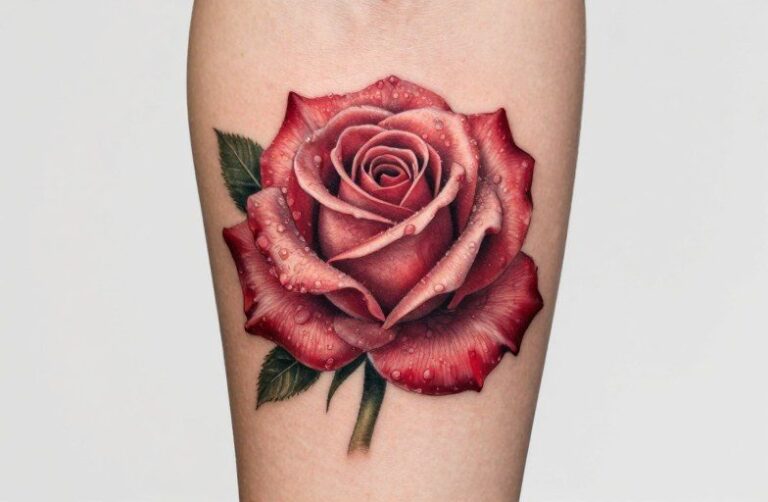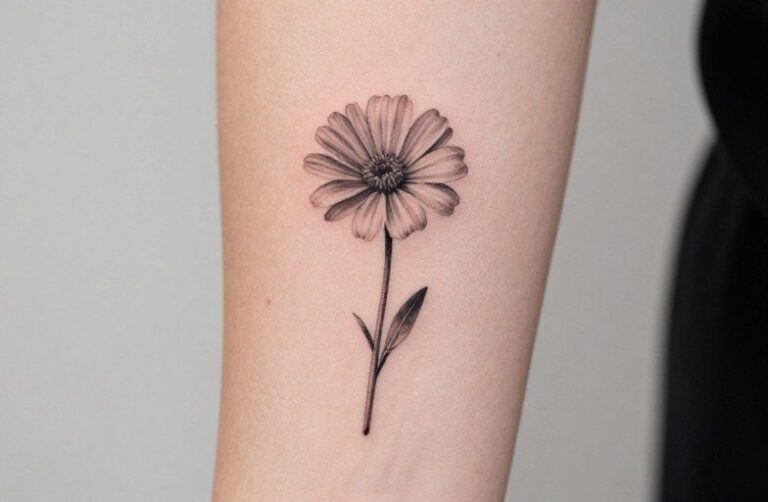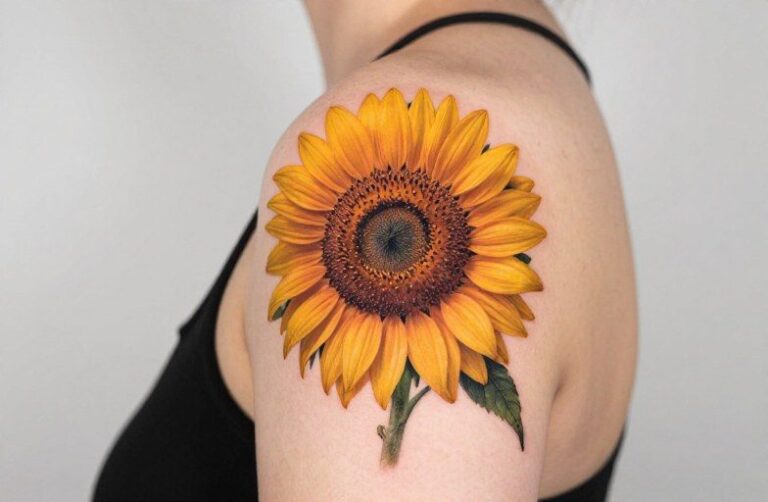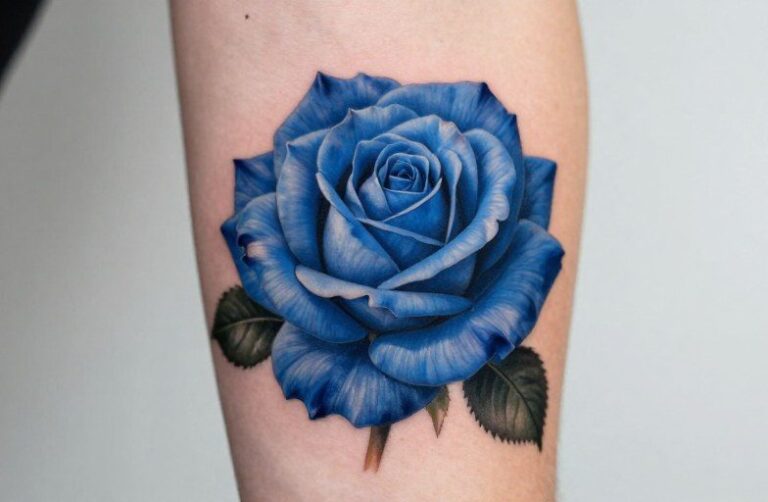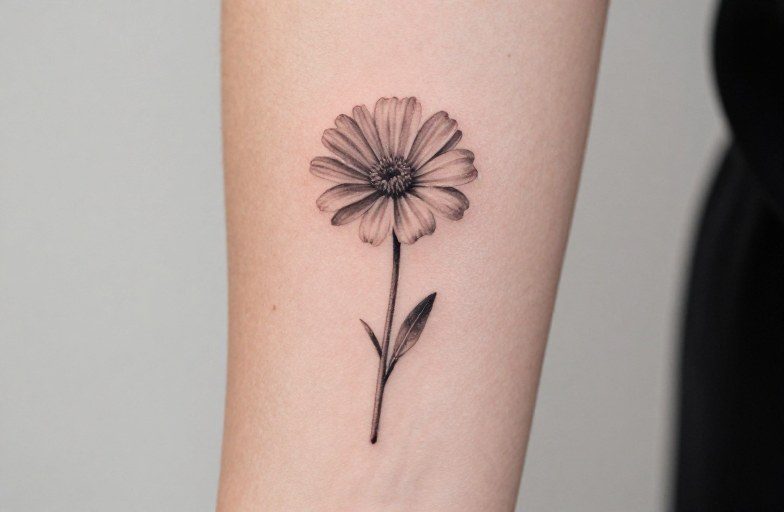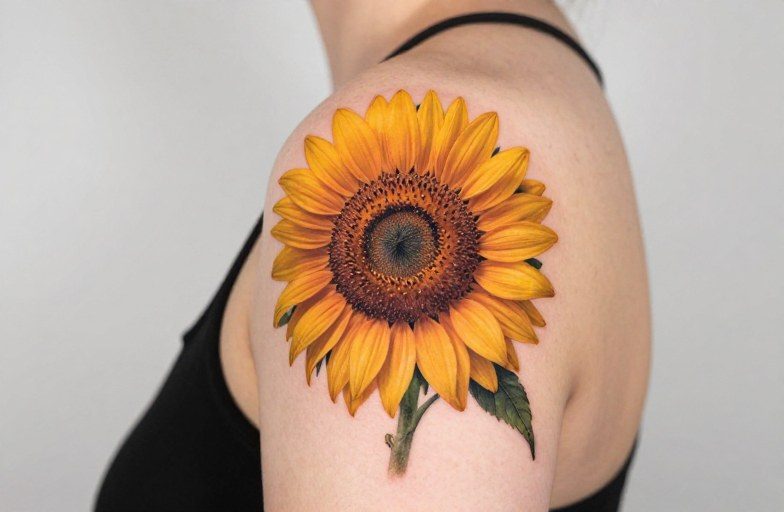
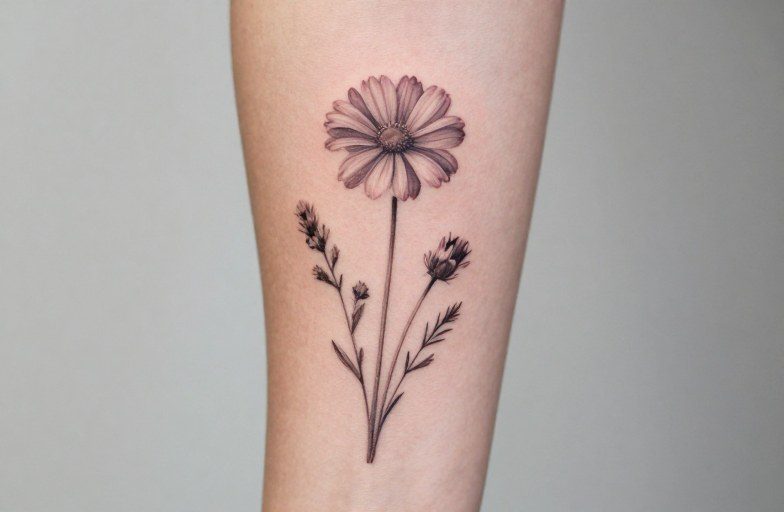
A wildflower tattoo most often represents resilience, natural beauty, and the refusal to be tamed. Where garden roses are bred and tended, wildflowers push through cracked asphalt and dry hillsides on their own terms. That distinction matters. The meaning centers on thriving without controlled conditions, surviving by adaptability rather than care. For many, this translates to personal growth through hardship, a rejection of rigid expectations, or simply an affinity for things that exist outside formal structure.
Similar & Related Symbols
Cultivated Flowers vs. Wild Growth
Traditional floral tattoos, roses, peonies, lilies, carry established symbolic vocabularies. Roses mean passion or memorial. Lotuses mean spiritual awakening. Wildflowers operate differently. Their meaning comes from context and combination rather than fixed tradition. A single wildflower lacks the immediate readability of a rose, which forces a more personal interpretation. That ambiguity is either the point or the problem, depending on what you want from your tattoo.
Botanical accuracy matters here. A California poppy carries different weight than a Texas bluebonnet or a Scottish thistle. Regional specificity can anchor the tattoo to place and memory. Some artists specialize in native flora documentation, work that functions almost like a botanical illustration pressed into skin.
Related Imagery That Pairs Naturally
- Bees and pollinators: Direct ecological connection, also themes of productive busyness
- Field grasses and wheat: Emphasizes the “wild” setting over individual bloom
- Broken concrete or stone: Visual metaphor for persistence through pressure
- Weather elements: Rain, sun rays, or wind suggesting seasonal cycles
- Skulls or animal bones: Memento mori contrast, life growing from death
Who Chooses This Tattoo
The Practical Pattern
Wildflower tattoos attract people with specific life circumstances more than demographic categories. Common threads include: recovery from illness or addiction, leaving restrictive environments (families, religions, relationships), career changes into creative fields, and memorial work for someone who loved the outdoors. The through-line is transition, moments when controlled identity breaks open.
Placement trends follow this. Wrists and forearms dominate for visibility during daily self-reminder. Ribcage and shoulder blade work suits private significance with selective sharing. Ankle and foot placements often connect to walking, travel, or groundedness. There’s no wrong placement, but the choice reveals intent.
Gender and Style Associations
While florals are coded feminine in mainstream culture, wildflower specifically attracts across gender lines. Men often choose stylized or single-species versions to avoid decorative associations, think bold linework of a single yarrow stem rather than a soft cluster. Women more frequently select watercolor or fine-line cluster arrangements. The subject itself is neutral; execution carries the gendered coding.
Symbolism & Core Meaning
The Anti-Perfect Bloom
Garden flowers are selected for symmetry, color saturation, and obedient growth patterns. Wildflowers are irregular, sometimes weedy, often overlooked. Choosing one rejects the aesthetic of cultivation. This resonates with people who feel malformed by expectation, who found their value only after leaving systems that tried to shape them.
The specific species amplifies this. Dandelions, technically wildflowers, carry additional meaning of tenacious survival and even wishes (the seed-head blowing ritual). Queen Anne’s lace suggests delicate complexity. Fireweed colonizes burned ground first, literal regeneration from destruction.
Seasonal and Cyclical Reading
Unlike evergreen symbols, wildflowers are explicitly temporary. They bloom, seed, die, return. This makes them unusually suited to marking impermanent states: grief that will soften but not disappear, difficult years that will pass, love that changed form. The tattoo becomes a timestamp rather than an eternal statement. Some people add species that bloom during significant months, birth month flowers, death anniversaries, sobriety dates.
Mythology & Folklore
European and Celtic Threads
Foxglove carries heavy folklore, often linked to fairy presence, also to poison and healing simultaneously. In some traditions, picking certain wildflowers invited bad luck or fairy abduction. This dual danger-beauty quality persists in tattoo choices. People drawn to foxglove often want that edge: lovely but capable of harm.
St. John’s Wort, another common wildflower, was historically gathered for midsummer protection rituals. Some trace it to pre-Christian sun worship. Tattoos of this species sometimes carry pagan or folk-magic associations, though most wearers choose it for the bright yellow visual impact rather than esoteric knowledge.
Indigenous and Regional Knowledge
Specific wildflowers hold meaning in Indigenous plant knowledge systems. Beargrass, fireweed, and various lupines have documented uses and stories. Non-Indigenous people should approach these with caution, adopting symbols from cultures not their own requires genuine relationship and permission, not aesthetic appreciation. Better choice: learn what grows where you actually live, build knowledge of your specific bioregion, and let that ground the work.
Color vs Black and Grey
How Each Reads Over Time
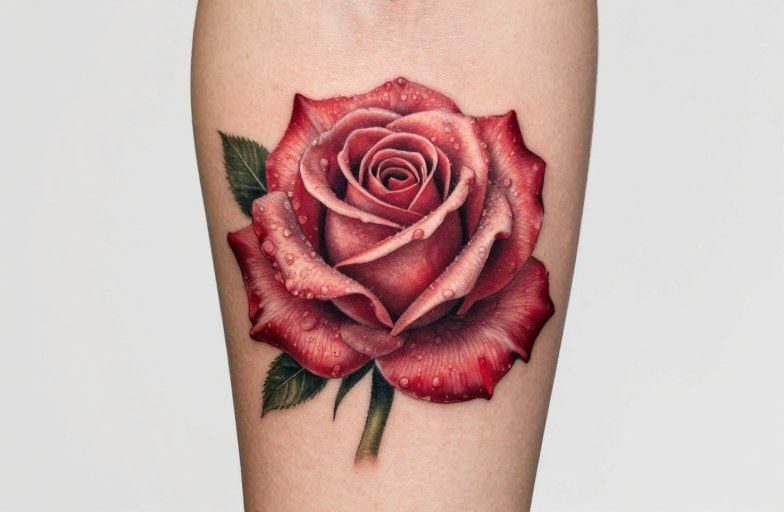
Color wildflower tattoos age predictably based on pigment behavior. Yellows and light greens fade fastest, often becoming muddy or disappearing entirely within 5-10 years depending on sun exposure. Deep purples (lavender, certain thistles) and reds hold better. Blues are historically difficult in tattoo ink, what looks bold at month three may shift toward grey-green by year five.
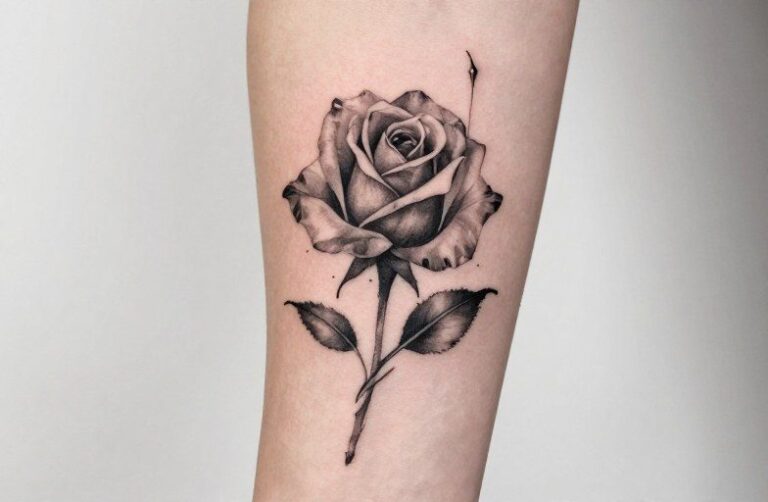
Black and grey wildflowers emphasize form over species identification. A botanist might struggle to name the flower from a greyscale version. The tradeoff is longevity: black line and shading hold crisp for decades with minimal maintenance. For people prioritizing the symbolic over the specific, this makes practical sense.
Style-Specific Considerations
- Watercolor: Mimics the soft, bleeding quality of actual petals; requires touch-ups, looks best on lighter skin tones where pigment shows true
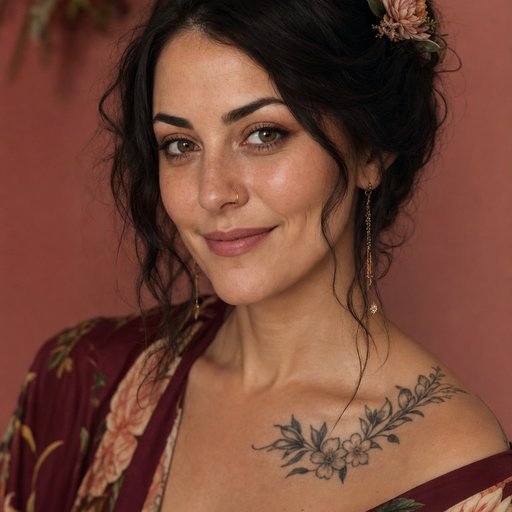
- Botanical illustration: Fine lines, scientific accuracy, ages poorly if too delicate, lines spread and blur below certain thresholds
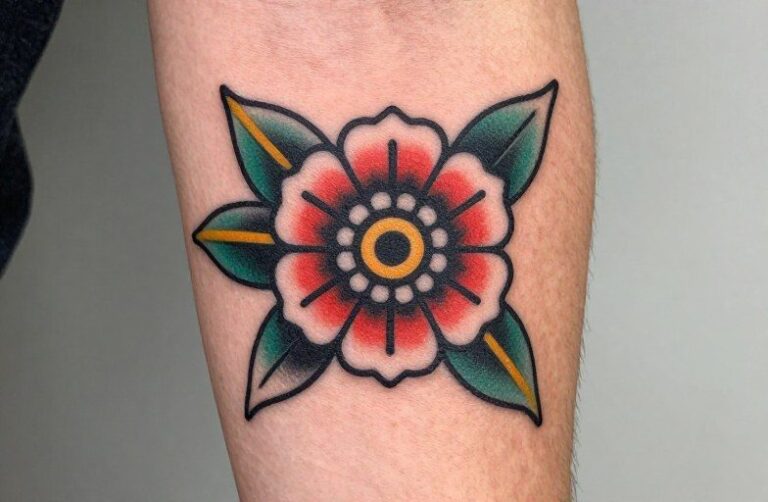
- American traditional: Bold outlines, limited palette, readable at distance, survives decades with minimal degradation
- Dotwork/stipple: Texture mimics seed heads or pollen; time-intensive, requires specialist skill
Design Tips & Pairings
Composition That Works
Single wildflowers work best with negative space around them, too much competing detail kills the “found in nature” quality. Clusters need rhythm: varying heights, some buds and some full blooms, stems that cross naturally rather than arranged in parallel. The worst wildflower tattoos look like clip art bouquets. The best look like someone pressed pause on a meadow.
Text pairings are common but risky. Script with wildflowers easily becomes sentimental in ways that undermine the subject’s toughness. If you want words, consider location names, coordinates, or dates rather than phrases. Let the image carry the emotional weight.
Technical Execution Notes
Line weight matters enormously. Stems need enough weight to hold; petals need delicacy without fragility. Experienced artists vary needle configurations within a single piece, tight liners for detail, mag shaders for soft petal transitions. Ask to see healed photos, not just fresh work. Wildflowers especially suffer from overworking; the freshness of the flower should read in the healed piece, not just the swollen new tattoo.
Skin tone affects color choices significantly. On darker skin, high-contrast approaches (deep magentas, crisp whites with black outline) read better than pastel washes. On very fair skin, subtle color shifts show beautifully but require more sun protection to maintain. This isn’t about limitation; it’s about designing for the actual canvas.
The Bottom Line
A wildflower tattoo works when the specific flower, the specific life context, and the specific execution align. The category is too broad for automatic meaning, you need to know what grows where you walked, what bloomed when you changed, what pushed through when nothing else would. The symbolism isn’t in the word “wildflower.” It’s in the particular plant, the particular place, the particular refusal to be cultivated.
Choose an artist who understands botanical structure, not just floral decoration. Prioritize healed results over fresh photos. Know that color will shift and lines will settle. The tattoo, like the flower it depicts, will change with time. That’s not failure. That’s the point.
Frequently Asked Questions
Do wildflower tattoos have a specific meaning or does it depend on the flower?
The general concept suggests resilience and natural freedom, but specific species carry distinct associations. A poppy differs from a thistle differs from a dandelion. The meaning deepens when you choose a flower with personal or regional significance rather than generic “wildflower” imagery.
How well do colorful wildflower tattoos age compared to black and grey?
Color wildflowers require more maintenance. Yellows and light greens fade fastest; deep purples and reds hold longer. Black and grey versions stay readable for decades but sacrifice species-specific identification. Expect touch-ups for color work, especially with heavy sun exposure.
What’s the best placement for a wildflower tattoo?
Wrists and forearms suit daily visibility as personal reminders. Ribcage and shoulder blades work for private significance. Ankles connect to travel and groundedness. Avoid areas with heavy friction or frequent sun if you want delicate linework to last.
Can I combine multiple wildflower species in one tattoo?
Yes, but composition matters. Mixing species that don’t naturally coexist reads as artificial. Consider bloom times, native ranges, and scale relationships. A skilled artist can create naturalistic clusters; poor execution produces clip-art bouquets. Bring reference photos of actual meadows, not other tattoos.