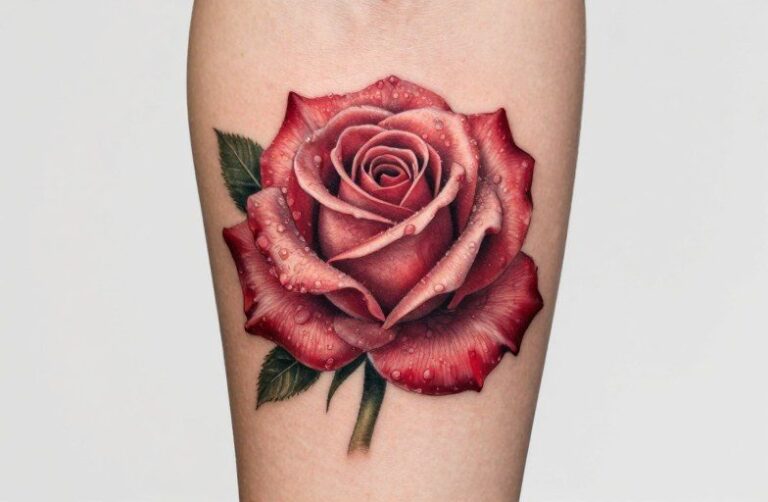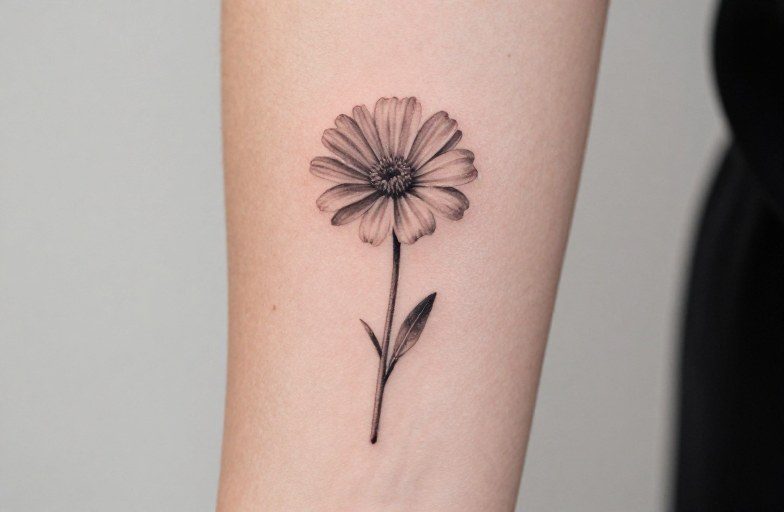
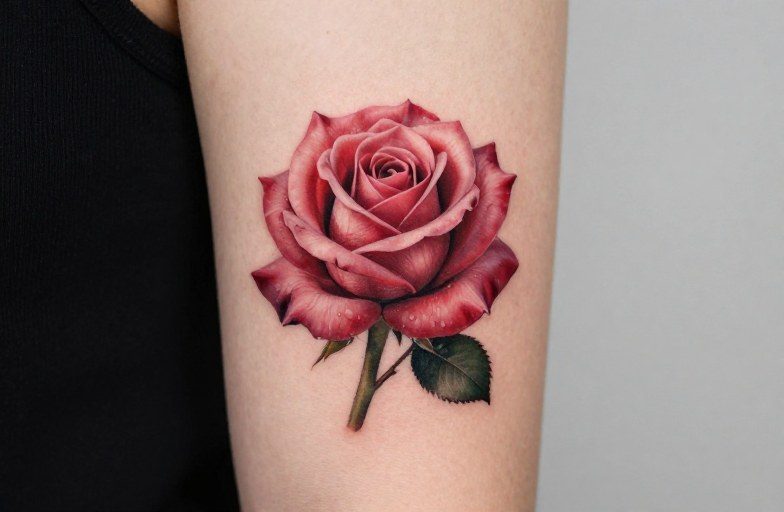
A rose tattoo on a woman most commonly signals love in its many forms, romantic, familial, or self-directed, alongside the thorn’s warning of pain survived or boundaries defended. The flower’s brief bloom and sharp guard together create a symbol of beauty that doesn’t come without cost. Specific meanings shift with color, placement, and accompanying imagery, but the core tension between softness and defense remains constant.
Similar & Related Symbols
Flowers compete for the same skin space, and each carries distinct weight. Understanding where roses sit among botanical tattoos helps clarify the choice.
Peonies, Lotus, and Cherry Blossoms
Peonies read as prosperity and bashful romance, fuller, less structured, without the thorn’s edge. Lotus flowers demand water context and spiritual rebirth; they’re harder to place organically on certain body parts. Cherry blossoms compress the same mortality message into a more fragile, specifically Japanese aesthetic. Roses offer more structural versatility: the spiral center draws the eye, petals layer for dimensional shading, and the stem provides natural line flow for wrapping around limbs.
- Peonies: softer, rounder, associated with wealth and honor, no defensive element
- Lotus: explicitly spiritual, mud-to-bloom narrative, less adaptable to small placements
- Chrysanthemums: longevity and grief in East Asian contexts, less recognized in Western tattoo culture
- Wildflowers: unstructured freedom, but lack the rose’s immediate symbolic recognition
Women choosing roses often want that balance: recognized meaning without being pinned to a single interpretation.
Mythology & Folklore
Roses carry accumulated cultural weight that tattoo wearers sometimes reference consciously, sometimes absorb unconsciously.
Greek and Roman Threads
Aphrodite and Venus, goddesses of love, are often linked to the rose’s origin, white turned red by blood or passion. The flower’s association with secrecy comes from the Roman sub rosa tradition: confidential matters discussed under hanging roses. This dual nature, love and hidden knowledge, persists in tattoo choices. Women sometimes place roses near the heart or collarbone without knowing they’re echoing ancient associations of the flower with what must be protected or concealed.
Christian and Medieval Layers
The Virgin Mary became the “rose without thorns” in medieval iconography, sinless, perfect. Conversely, the rosary’s name and the prayer cycle’s structure bind the flower to devotional practice. Some trace the five-petal wild rose to the five wounds of Christ. These layers mean a rose tattoo can read as devotional or entirely secular depending on context, and the ambiguity is sometimes the point.
Color vs Black and Grey
Ink color changes meaning more dramatically with roses than with most subjects. This is where technical tattoo knowledge matters for the decision.
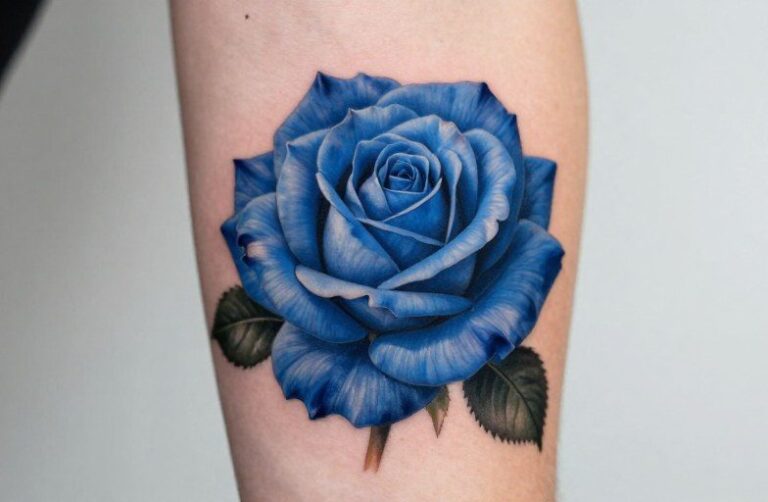
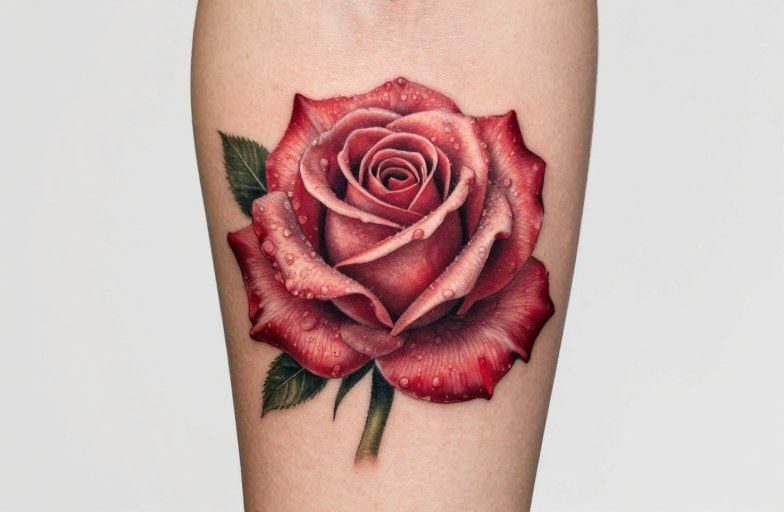
Red: Romantic love, passion, courage, the classic, most immediately readable choice. Red pigment also fades fastest, especially in sun-exposed placements. Expect more frequent touch-ups.
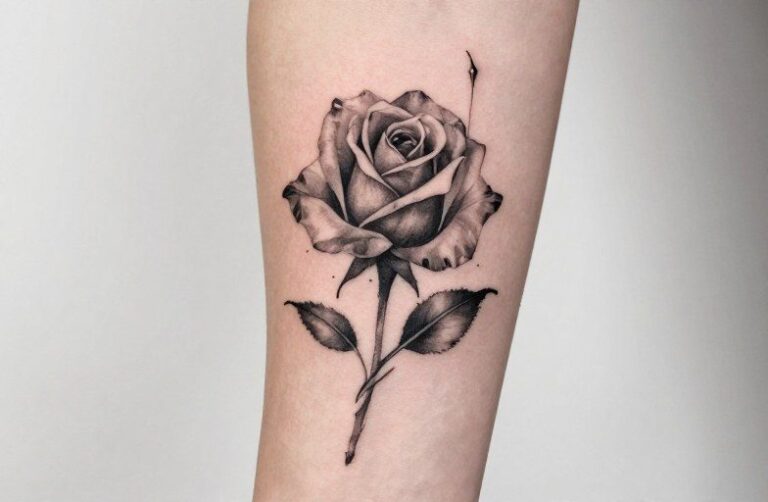
Black and grey: Grief, memorial, timelessness, or simply aesthetic preference. Heals cleaner, ages better, allows focus on form over symbolism. Many women choose this for first tattoos or for pieces commemorating loss.
White: Purity, new beginnings, or ghost-like presence of someone absent. White ink alone on lighter skin yellows or disappears; it’s usually layered as highlight within black and grey.
Yellow: Friendship, jealousy, or joy, unstable readings, rarely chosen for deep personal meaning.
Pink: Grace, gratitude, gentler love. Often selected by women wanting to soften the rose’s intensity.
- Color realism demands larger size; small color roses blur into muddy shapes over time
- Black and grey permits finer detail at smaller scales
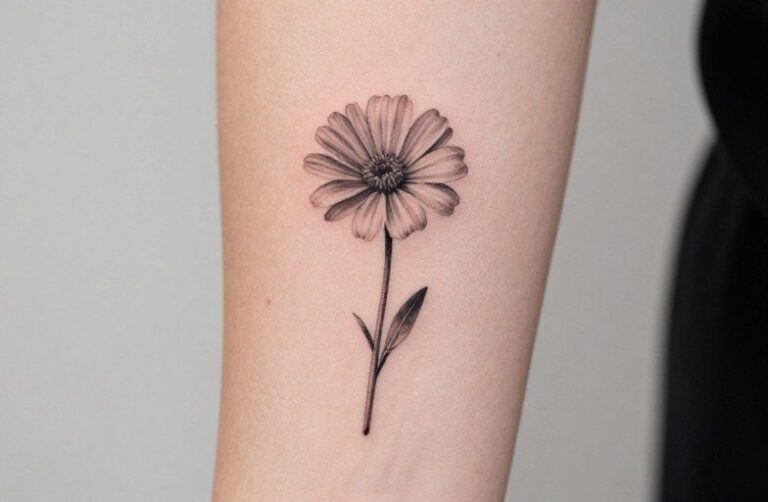
- Single-needle black and grey achieves delicate line work that suits wrist, behind-ear, or finger placements
Common Variations & Styles
How the rose is rendered matters as much as the flower itself. Style signals era, subculture, and intent.
Traditional and Neo-Traditional
American traditional roses, bold black outlines, limited red and green palette, stylized leaves, carry working-class tattoo history. They’re readable from distance, hold up for decades, and connect to sailor and biker aesthetics. Neo-traditional allows more color variation, ornamental framing, and naturalistic petal structure while keeping the bold outline’s durability. Women choosing these styles often want the tattoo to announce itself, not hide.
Realism and Fine Line
Photographic roses require significant skin real estate to render detail, upper thigh, ribs, upper arm. Fine line single-needle work achieves ethereal, almost drawn-on quality but fades faster and demands experienced hands; poorly executed fine line roses collapse into grey smudges within years. The trade-off is immediate delicacy versus longevity.
Other variations carry specific weight: dagger-through-rose (love and pain, or betrayal), skull-and-rose (beauty and death, Memento Mori), rose with clock or pocket watch (time’s effect on love). Each combination narrows the meaning while adding visual complexity.
Personal & Modern Meanings
Beyond inherited symbolism, women currently choose roses for reasons that would puzzle a Victorian.
Self-love and reclamation dominate contemporary interpretations. The rose as gift-to-self, thorns included, rejects the passive recipient role. Placement reinforces this: forearm or bicep visibility claims space; ribcage or hip placement retains privacy; sternum or between-breast placement centers the self.
Some women use rose tattoos to mark survived relationships, romantic, familial, or platonic, not as memorial but as documentation. The thorn becomes the point. Others choose birth-flower connections (June roses, though this varies by tradition) or simply respond to the form’s structural satisfaction.
Social media has flattened some distinction: the Pinterest rose, the Instagram fine-line aesthetic. But the tattoo’s permanence still separates it from trend. A rose chosen for visual appeal alone still accumulates meaning through duration on the body.
Religious & Spiritual Angles
For some women, the rose operates within explicit spiritual frameworks.
Catholic and Marian Devotion
The rosary, the Mystical Rose title, the Rosa Mystica apparition, Catholic tradition offers dense connection. A rose tattoo paired with rosary beads, a sacred heart, or specific blue-white color schemes signals this affiliation. The tattoo becomes wearable devotion, not merely decoration.
Sufi and Mystical Traditions
Rumi’s rose and nightingale imagery, the rose as divine beauty that draws the lover toward destruction of ego, some trace these threads through Persian poetry into contemporary spiritual practice. Less common in Western tattoo shops but present among women with specific cultural or literary backgrounds.
Secular spirituality also claims the rose: the blooming as personal growth metaphor, the thorn as necessary protection during transformation. These interpretations borrow religious language without institutional attachment.
Final Word
A rose tattoo on a woman carries no single meaning, rather, it concentrates multiple possibilities into a form that ages recognizably on skin. The technical choices (color or black and grey, bold or fine line, placement that sees sun or stays hidden) shape how the symbol lives over decades. What begins as romantic gesture might, fifteen years later, read as documentation of who you were when you chose it. The rose’s endurance as tattoo subject comes from this flexibility: specific enough to signify, open enough to adapt. Choose based on what you need the image to hold now, with the understanding that ink shifts slightly with skin, time, and the life that happens around it.
Frequently Asked Questions
Do rose tattoos age well on older skin?
Black and grey roses with bold outlines age significantly better than fine-line color work. As skin loses elasticity, detailed petal shading softens but the structural form remains readable. Sun protection on visible placements matters more than any design choice.
What’s the most painful placement for a rose tattoo?
Ribs, sternum, and spine top the list due to thin skin over bone. The sternum’s nerve density and proximity to breast tissue make it particularly intense. Fleshy areas like outer upper arm or thigh carry less sensation.
Can a small rose tattoo still look good?
At very small sizes, roses lose petal distinction and become blurry shapes over time. Minimum effective size for a recognizable rose is roughly 2-3 inches in any direction. Single-needle black and grey achieves the smallest viable detail.
Why do some women add thorns while others don’t?
Thorns explicitly introduce the pain-defense element; their absence softens the symbol toward pure beauty or love. The choice is rarely discussed with artists but significantly changes the tattoo’s emotional register.