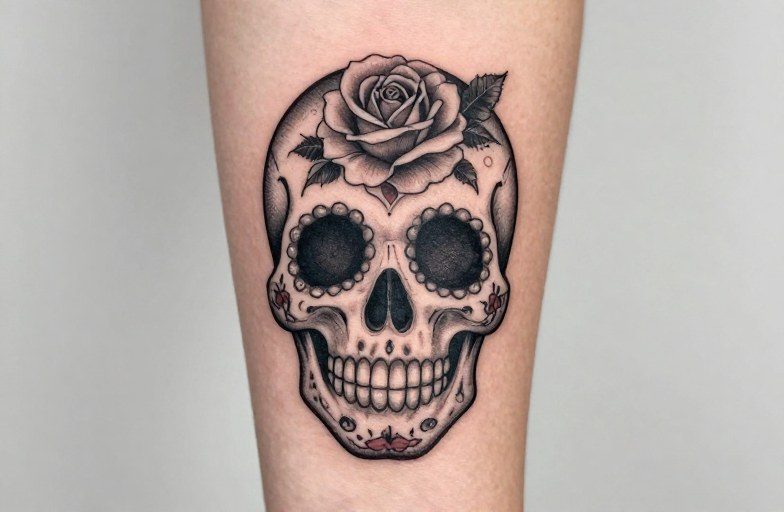
The sugar skull with roses tattoo carries a dual current: the skull honors death as a natural return, while roses insist that beauty and love persist alongside loss. Together, they frame mortality not as an ending but as a passage worth celebrating. Someone wearing this design usually marks a specific loss, claims their own resilience, or both.
Symbolism & Core Meaning
The Skull: Death as Invitation
In Mexican tradition, the calavera, especially the decorative sugar version, invites the living to commune with the dead. Unlike the grim reaper or hollow-eyed memento mori of European art, the sugar skull grins. Its bright colors and floral patterns say death belongs at the table, not locked in a closet. Tattooed, this becomes a refusal to let grief sour into fear.
The Roses: What Refuses to Wilt
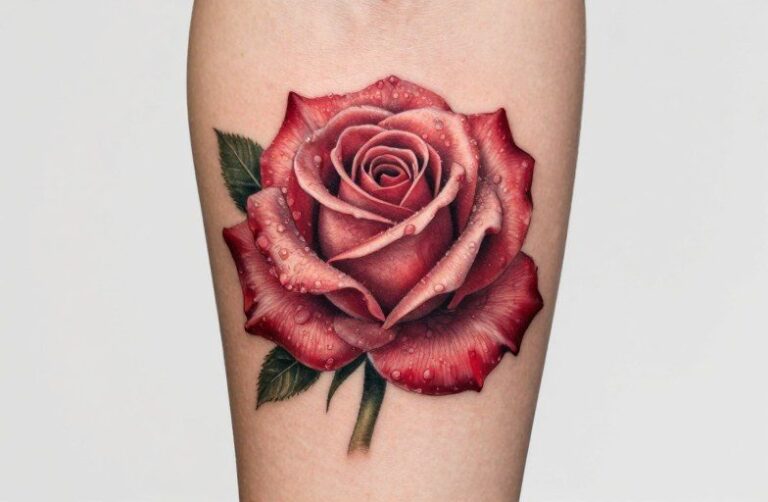
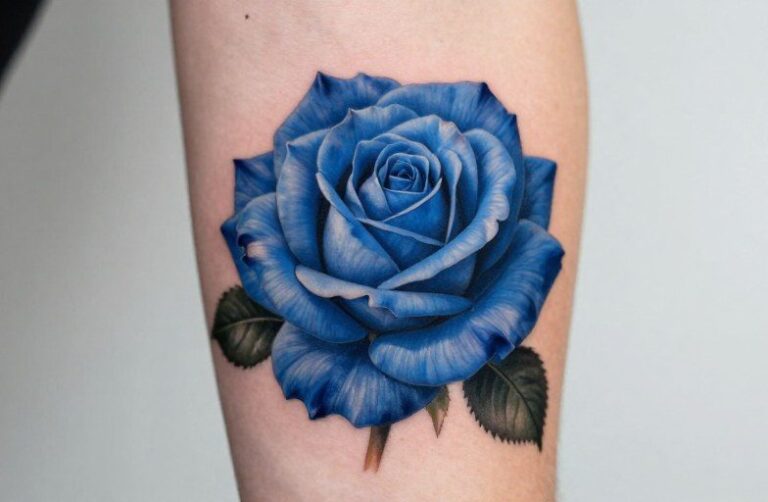
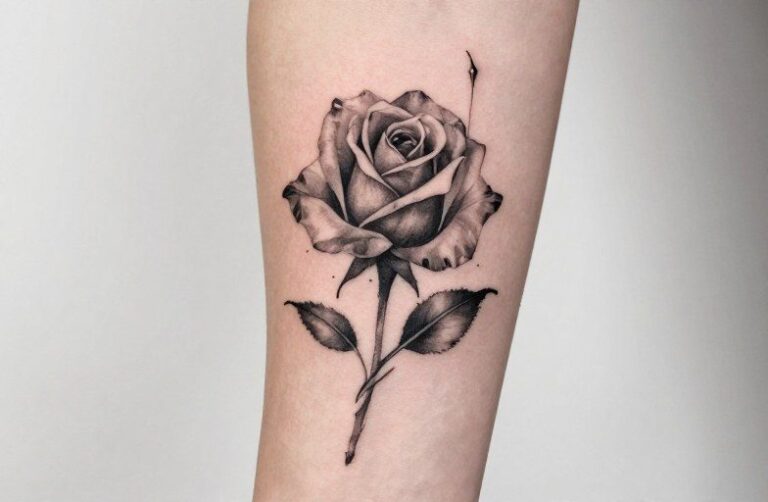
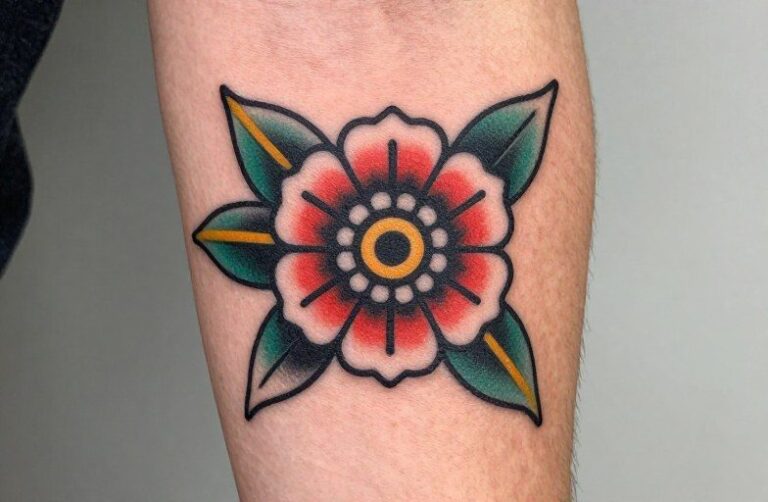
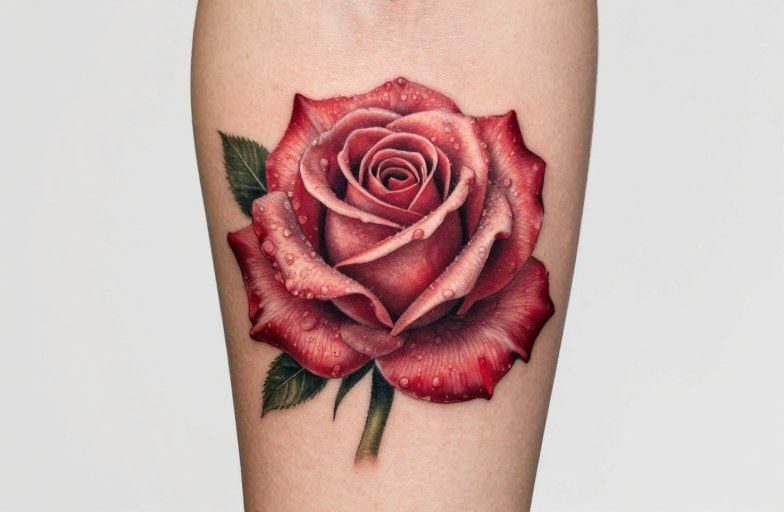
Roses layered onto or around the skull complicate the message. Red roses speak to passionate love, often romantic or familial. Pink leans maternal; white, purity or innocence lost; yellow, friendship that outlasts the grave. Black roses, common in this pairing, don’t mean evil, they signal the death of something specific: an era, a relationship, an old self. The thorns matter too. They acknowledge that remembrance hurts, that love and loss arrive tangled together.
Some wearers arrange roses growing from the skull’s eye sockets or jaw, implying life sprouting from what remains. Others frame the skull in a wreath, suggesting the dead are crowned, honored, enclosed in ongoing care. The specific arrangement shifts the emphasis more than most people realize.
History & Cultural Roots
From Altar to Skin
The sugar skull descends from pre-Columbian Mesoamerican practice, where skulls figured prominently in Aztec rituals honoring Mictecacihuatl, the “Lady of the Dead.” Spanish colonization folded these observances into the Catholic calendar, creating Día de los Muertos. The edible calavera de azúcar emerged in the 18th century, often linked to Mexican folk art and the production of decorative sugar figures for religious festivals.
Tattoo adaptation began in earnest during the 1990s and 2000s as Chicano art traditions gained broader visibility. The style traveled through prison art, lowrider culture, and eventually into mainstream American tattooing, not without friction. Some Mexican-American artists emphasize that casual adoption risks flattening a living tradition into aesthetic wallpaper. Respectful wearers typically learn the holiday’s customs, perhaps even building an altar themselves.
The Rose’s Long Migration
Roses entered Mexican visual culture through multiple doors: Spanish colonial religious painting (the Virgin of Guadalupe stands on roses), floriography in 19th-century courtship, and eventually the narcocorrido and gang identifiers of the late 20th century. In tattooing, roses proved adaptable enough to pair with almost anything, anchors, daggers, clocks, skulls, without losing legibility.
Mythology & Folklore
La Catrina’s Shadow
José Guadalupe Posada’s famous zinc etching, “La Calavera Catrina,” often shapes how people imagine the elegant dead. The image satirized indigenous Mexicans adopting European aristocratic fashion, but its skeletal figure in a feathered hat became an enduring symbol. Sugar skull tattoos with elaborate headdresses or jewelry directly echo this lineage. The roses soften the satire into something more intimate, less social commentary, more personal elegy.
Legends of Return
Folklore surrounding Día de los Muertos holds that the dead journey back to the living world when ofrendas call them. Marigolds guide the path; sugar skulls welcome the arrival. A tattooed skull with roses can function as a permanent ofrenda, a body-altar that needs no annual reconstruction. Some trace this impulse to older European traditions where rosemary (“remembrance”) was worn at funerals, roses serve a similar mnemonic function here, but with fuller sensual presence.
Similar & Related Symbols
Sugar skulls with roses sit within a broader visual family. Understanding the distinctions helps clarify what this specific combination communicates.
- Plain skull without decoration: Memento mori, pirate affiliation, or goth aesthetics. Stripped of cultural context, the message reads more individualist, sometimes aggressive.
- Sugar skull alone: Cultural identification, Día de los Muertos observance, or appreciation for folk art. The celebratory tone dominates; personal grief stays secondary.
- Skull with clock or hourglass: Time’s passage, urgency, carpe diem. Less about specific relationships, more about existential anxiety.
- Skull with snake: Often linked to knowledge, temptation, or medical professions. The rose-and-skull pairing avoids these associations entirely.
- Realistic human skull with photorealistic roses: Shifts toward vanitas still-life tradition, European art history, and a more somber, contemplative mood. The sugar skull’s cartoon brightness keeps things approachable.
Adding a name, date, or banner beneath the design pushes it firmly into memorial territory. Some artists resist this, preferring the symbolism to carry the weight without text.
Best Placements
Where Detail Survives
Sugar skulls demand space for the decorative elements to read: the floral forehead pattern, the swirled eye sockets, the teeth details. The forearm, outer thigh, and shoulder blade offer enough flat real estate for a 4-6 inch piece that won’t blur beyond recognition in ten years. Hand and finger placements, trendy as they are, chew through fine lines fast; the skull’s grin becomes a smudge, the roses lose their petal separation.
Flow and Body Curves
Roses wrapping around the skull’s base or trailing from its crown let the tattoo move with muscle and bone. On a calf, the skull sits centered while roses cascade toward the ankle. Across the chest, the composition often mirrors the heart’s position, especially when memorializing a loved one. Rib placements work but hurt substantially, thin skin over bone, constant breathing motion during the session.
Color versus black-and-grey changes placement logic too. Bold pinks and reds need sun protection to prevent fading; easily covered spots (upper arm, thigh) make more sense for someone who works outdoors than a constantly exposed forearm.
Who Chooses This Tattoo
The Grief-Bearers
Most commonly, someone mourning a specific death, parent, sibling, partner, child, selects this design. The sugar skull’s festive frame prevents the piece from reading as pure sorrow; the roses specify what kind of love remains. Often planned around the anniversary of a death or during the Día de los Muertos season itself.
The Culturally Rooted
Mexican-American wearers may choose this as heritage marker, especially if separated from direct participation in family observances by geography or assimilation. The tattoo becomes a portable tradition, a claim that can’t be lost or left behind.
The Transformers
Less discussed: people marking their own survival. Overdose recovery, cancer remission, escape from abusive relationships. The skull acknowledges what died, the old self, the close call, while the roses affirm what continues. This usage sometimes irritates traditionalists, but tattooing has always stretched symbols to fit private need.
Final Thoughts
A sugar skull with roses succeeds or fails on the specificity of its execution. Generic flash off the wall reads as decoration; custom work with chosen colors, particular flower types, and personal ornamental details becomes something else entirely. The best pieces result from conversations about who was lost, what they loved, how the living want to carry them.
Line weight matters for longevity. Bold outlines around the skull’s major shapes hold up; delicate stippling in the rose petals softens and spreads. An experienced artist will balance the decorative impulse against how skin actually ages. Ask to see healed photos, not just fresh work. The skull that looks crisp on Instagram may have been photographed two hours after completion; the real test comes three years later, when the white highlights have yellowed and the black lines have settled.
However someone arrives at this design, through grief, heritage, survival, or visual attraction, the combination offers a rare equilibrium. Death and beauty, finally, are not opponents. They share the same stage, and the tattoo refuses to look away from either.
Frequently Asked Questions
Does a sugar skull with roses tattoo have to be colorful?
No. Black-and-grey versions read more somber and graphic, while color emphasizes the celebratory Día de los Muertos tradition. The choice should match the emotional tone you want, mourning versus festivity.
Can someone without Mexican heritage get this tattoo respectfully?
Possible, but requires genuine education about the tradition. Learn the holiday’s practices, avoid treating the design as mere aesthetic, and consider commissioning a Mexican or Chicano artist who carries cultural fluency in their work.
How much detail can realistically fit in a small sugar skull tattoo?
Less than most people hope. Below 3 inches, the decorative patterns blur together and the rose petals merge. For intricate work, plan for at least 4-5 inches in the longest dimension.
What’s the difference between a sugar skull and a regular skull tattoo?
The sugar skull’s decorative elements, floral patterns, bright colors, grinning expression, frame death as celebration and continuation. A plain skull typically signals memento mori, danger, or individual rebellion without that cultural context of communal remembrance.