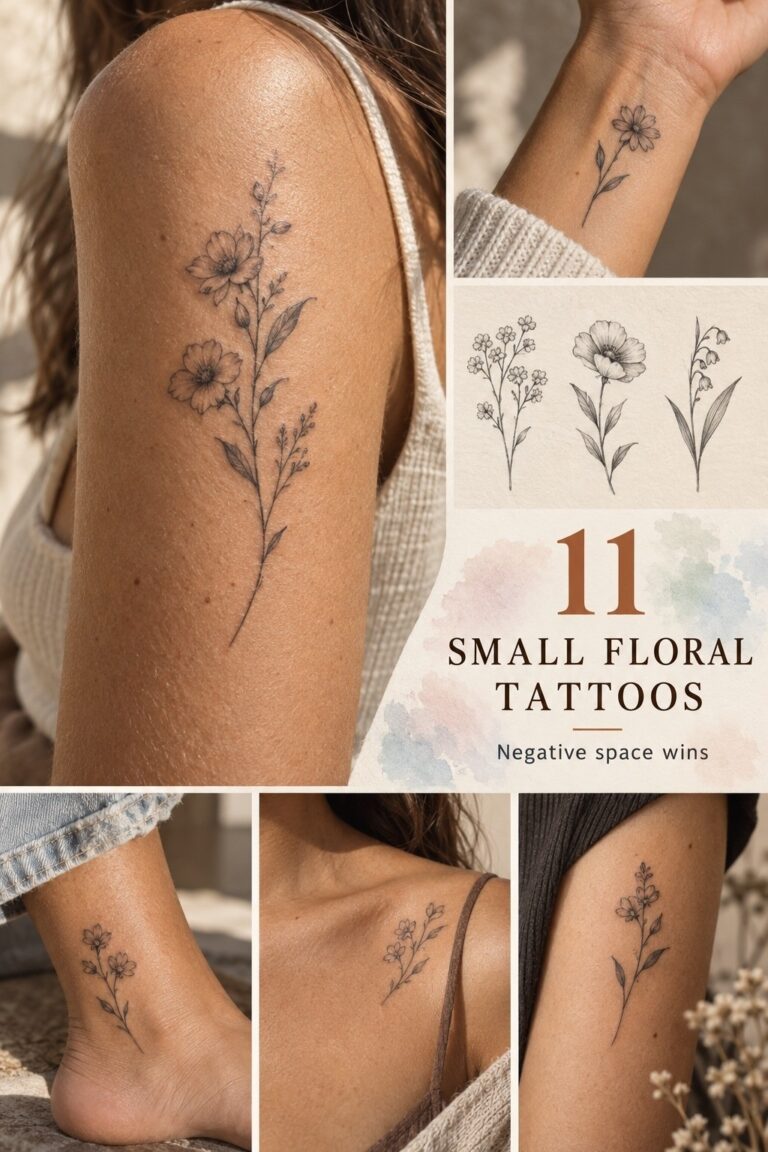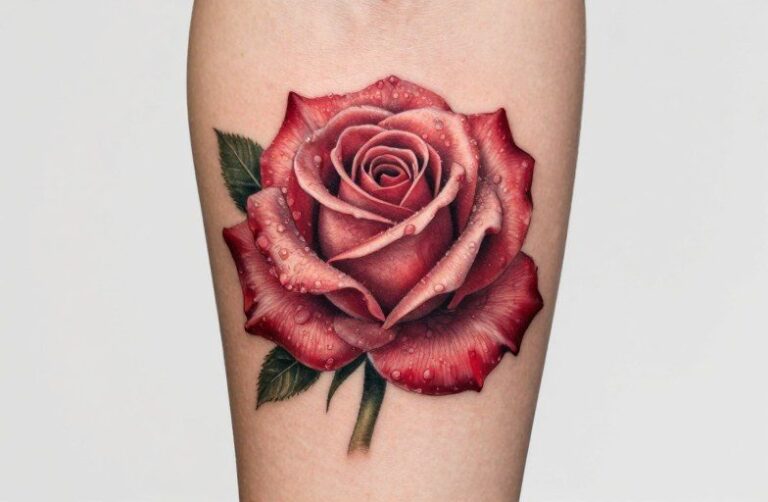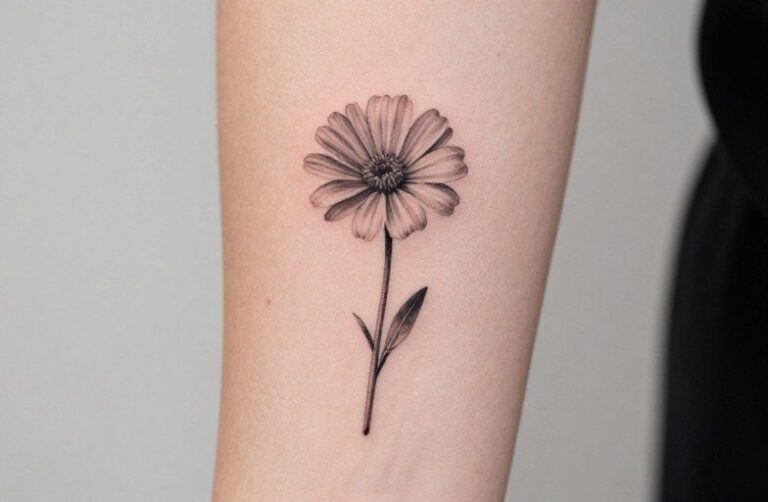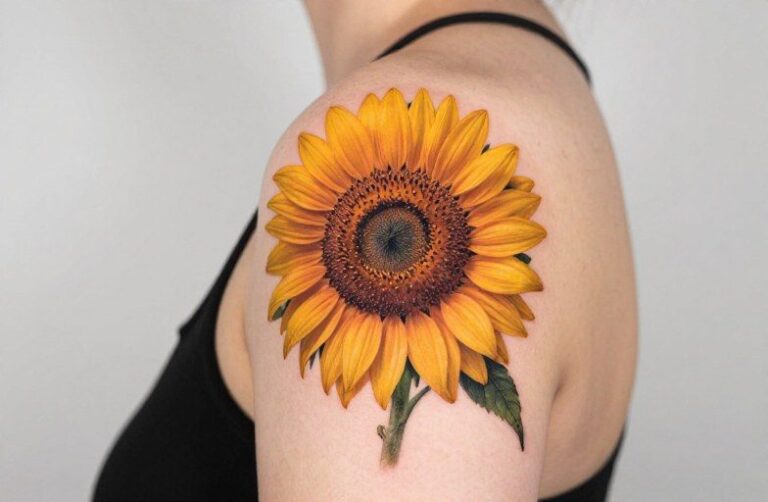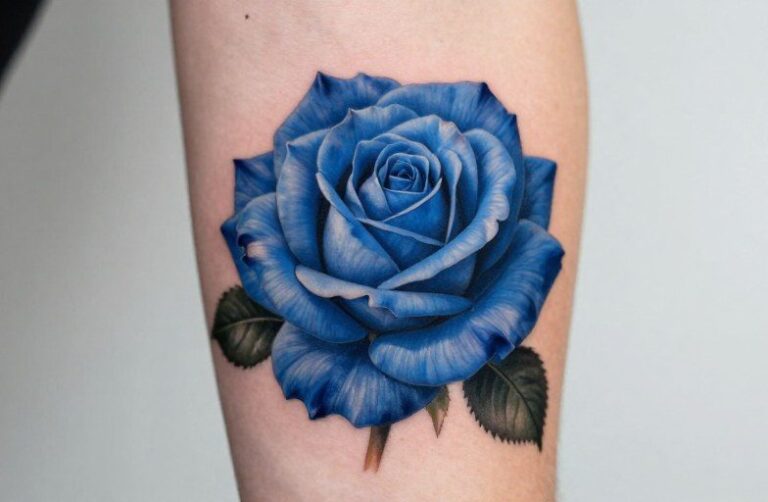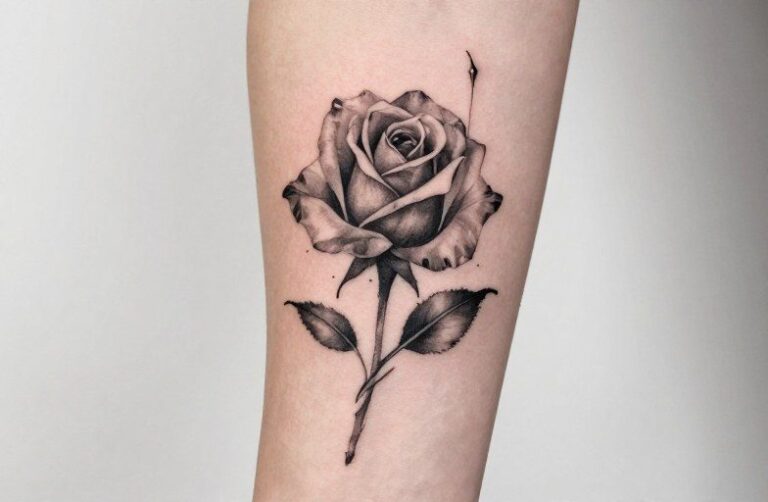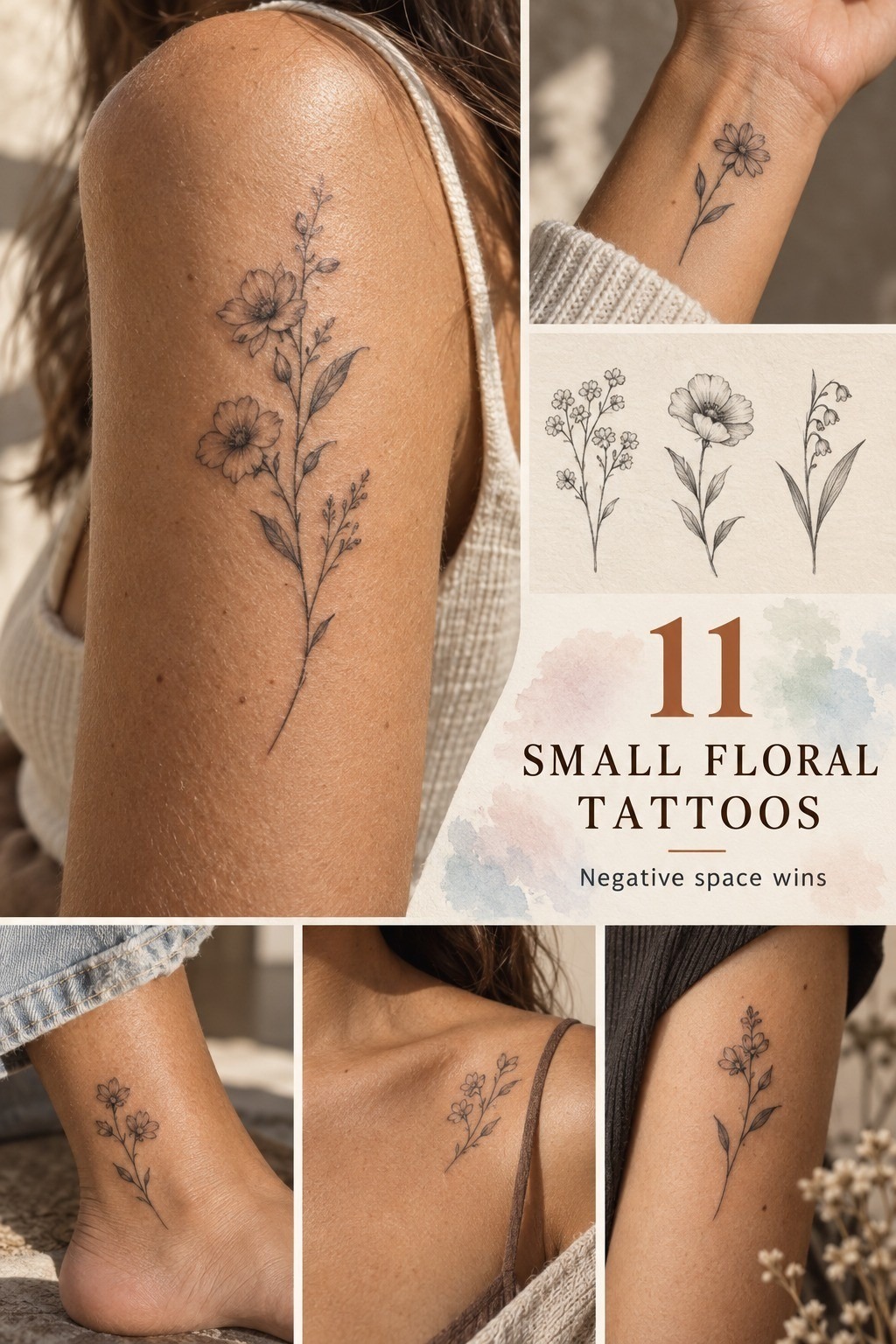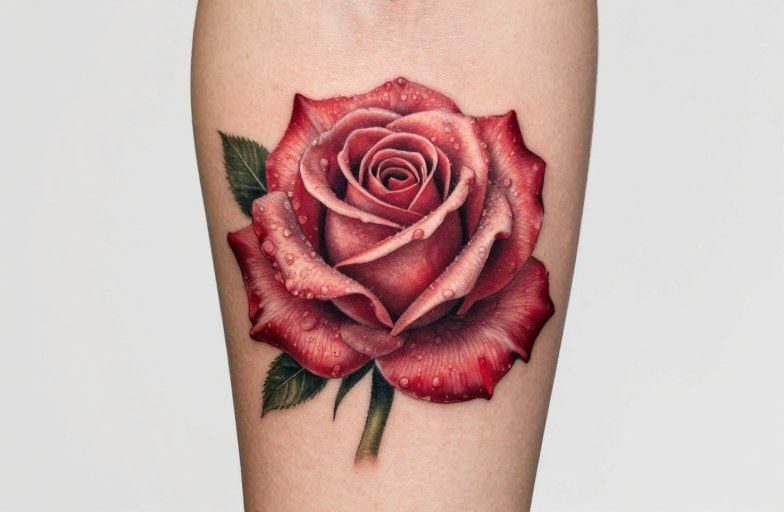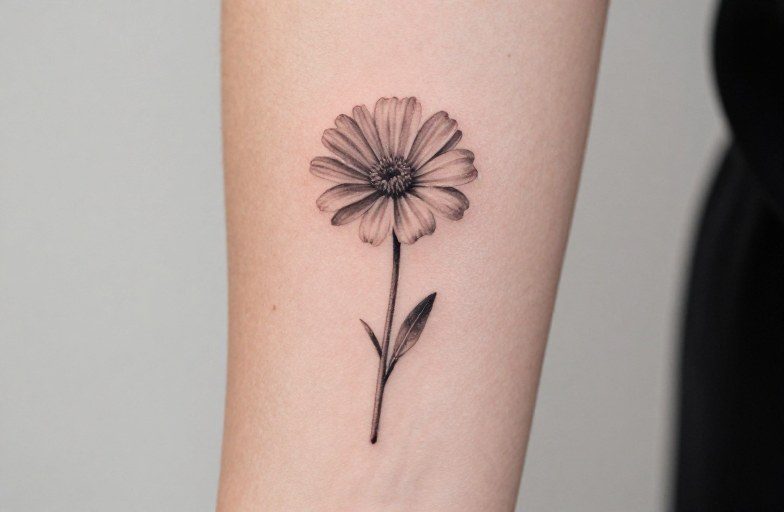
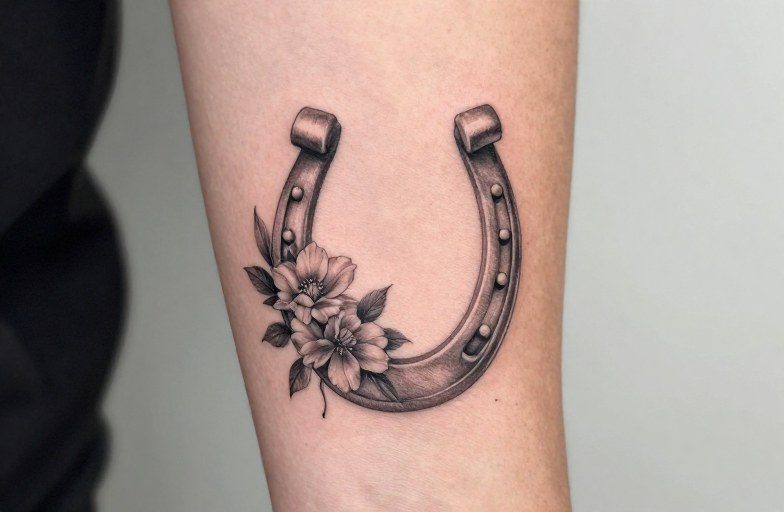
A horseshoe with flowers tattoo combines two powerful symbols: the horseshoe’s long-standing association with luck and protection, and flowers representing growth, beauty, and the natural cycle of life. Together, they create a design that balances ruggedness with softness, tradition with personal expression. Most people choose this pairing to honor both the desire for good fortune and an appreciation for something delicate and alive.
Design Tips & Pairings
Placement shapes how this design reads. On the shoulder blade or upper arm, the curved horseshoe cradles a floral arrangement naturally. Around the ankle or wrist, the shape wraps the body part, which can look either elegant or awkward depending on scale. The calf offers a flat canvas where the horseshoe can sit upright, flowers spilling from its open end.
Line Work vs. Shading
Thin, clean lines suit smaller pieces and keep the horseshoe’s metal texture readable without muddying the flower details. Heavy black shading inside the horseshoe creates contrast that makes bright flowers pop. For a softer look, stippled or whip-shaded grey tones inside the horseshoe let the flowers carry the color weight. Mixing both approaches, solid black horseshoe, greywash flowers, rarely works; pick a hierarchy and commit.
Flower Choices That Actually Matter
- Roses: classic, readable at any size, but overdone unless stylized uniquely
- Wildflowers: daisies, cornflowers, poppies, better for a looser, less “tattoo flash” feel
- Peonies or chrysanthemums: fuller shapes that fill the horseshoe’s curve without looking forced
- Dead or wilting flowers: increasingly common, shifts meaning toward impermanence rather than luck
Stems and leaves should extend beyond the horseshoe’s edge. Trapping everything inside the shape looks like a sticker. Letting growth break the boundary sells the idea that luck and life can’t be contained.
Personal & Modern Meanings
Contemporary wearers rarely intend literal superstition. The horseshoe functions more as shorthand for “I could use some good fortune” or “I survived something.” Adding flowers complicates that, growth after hardship, beauty found in unexpected places, or simply a love for rural aesthetics without the full country-western cliché.
Some use this design to memorialize. The horseshoe references a beloved horse, farm life, or a grandparent’s barn. Flowers specify the person, birth month blooms, favorites from a garden, species that grew near a childhood home. The combination becomes specific rather than generic through these choices.
Others invert the traditional luck reading entirely. A horseshoe hung upside-down is sometimes said to pour luck out; paired with flowers, this becomes intentional, letting fortune flow, sharing it, or rejecting the idea that luck needs to be hoarded. Tattoo artists see this orientation more often now than twenty years ago.
Similar & Related Symbols
Four-leaf clovers share the luck territory but read as more playful, less substantial. A horseshoe carries weight, literally, historically, visually. Anchors with flowers hit some of the same notes (stability + growth) but lean nautical. Snake and flower pairings share the danger/beauty tension but feel more explicitly edgy.
The closest relative is probably the heart with flowers: both take a hard, protective container and soften it with organic growth. Hearts, though, carry romantic baggage that horseshoes avoid. For someone wanting protection symbolism without religious or romantic overtones, the horseshoe fills a specific gap.
Compass roses overlap in the travel/luck Venn diagram but demand more detail to execute well. A horseshoe’s simple silhouette works better at small sizes and ages more gracefully.
Color vs Black and Grey
How Each Ages
Color flowers against a black horseshoe look striking fresh but require maintenance. Reds and pinks fade toward orange or grey within five to seven years depending on sun exposure and skin type. Yellows disappear fastest. A black and grey version with subtle brown or olive washes in the flowers ages more uniformly, though it sacrifices the immediate “flower” recognition that color provides.
White ink highlights on petals rarely last; most artists skip them or use negative space instead. The horseshoe’s metal sheen can be suggested with grey gradients, but attempting photorealistic chrome usually fails, tattoo ink doesn’t reflect light, and the effect flattens over time. Simplified, illustrative metal reads better long-term.
Skin Tone Considerations
Darker skin carries black linework and deep shading beautifully but can lose subtle color distinctions in lighter flower hues. Saturated purples, deep reds, and bold oranges perform better than pastels. On very fair skin, even muted colors show well, but black-only designs can look harsh without some grey softness.
Religious & Spiritual Angles
The horseshoe’s protective reputation predates Christianity but was absorbed into it, often linked to Saint Dunstan and the legend of nailing a horseshoe to the devil’s hoof. Some Christian wearers retain this association, pairing the symbol with crosses or ichthys hidden among the flowers. More commonly, the spiritual reading is non-denominational: the horseshoe as a kind of amulet, the flowers as creation’s beauty, both suggesting divine favor without specifying doctrine.
In folk spirituality, iron, horseshoes were iron, repelled fairies and harmful spirits. Modern pagan or witchcraft-adjacent wearers sometimes reference this, choosing the design as protective rather than lucky. The flowers then specify intent: lavender for calm, rosemary for remembrance, nettles for boundaries.
Secular humanists gravitate toward this pairing too, reading the horseshoe as human craft and the flowers as nature, together representing our relationship with the non-human world. No supernatural belief required.
History & Cultural Roots
European Origins
The horseshoe’s symbolic use is often linked to iron’s rarity and value in early European societies, and to the shape’s vague resemblance to a crescent moon, associated with various goddesses and protective powers. Some trace it to Roman practices of hanging iron objects above doors. The “lucky” attribution solidified in medieval England and spread through colonial channels. The direction, up or down, has varied by region and era, with no single “correct” orientation.
American Adaptation
In the United States, the horseshoe became strongly associated with cowboy and ranch culture, then with country music aesthetics. The flower addition partly softens this masculinity, making the symbol accessible to wearers who want rural associations without the full Marlboro Man package. Tattoo flash sheets from the 1960s-80s show horseshoes increasingly paired with roses as the design crossed into mainstream American tattooing.
Contemporary artists sometimes reference this flash history explicitly, using bold outlines and limited color palettes for a vintage feel. Others reject it, rendering the elements in fine-line or watercolor styles that would have been technically impossible in the classic era. Both approaches carry meaning through their chosen aesthetic language.
The Takeaway
A horseshoe with flowers works because the two elements genuinely need each other. Alone, the horseshoe can feel like a casino sign or a truck decal. Alone, flowers can feel generic. Together, they create tension, hard and soft, made and grown, luck and effort. The meaning isn’t fixed; it shifts with the specific flowers chosen, the orientation, the style, the placement, the wearer’s own history.
What remains constant is the design’s structural intelligence. The horseshoe provides a frame that tattoo artists understand how to execute. The flowers provide infinite variation that keeps the frame from feeling mass-produced. It’s a template that rewards personalization, which explains its persistence across decades of tattoo trends. Good design does that, offers a reliable foundation and invites you to make it yours.
Frequently Asked Questions
Which way should the horseshoe face, up or down?
Tradition varies by region; points up supposedly holds luck in, points down lets it flow out to others. Modern tattooing treats either orientation as valid depending on what you want to communicate. Pick one and stick with it rather than overthinking.
Do horseshoe tattoos bring actual luck?
Tattoos don’t possess supernatural power, but carrying a symbol you associate with positive outcomes can affect mindset and behavior. The psychological boost is real even if the mechanism isn’t magical.
How much detail can flowers have in a small horseshoe tattoo?
Below two inches, petal details blur together within a few years. Simplified shapes with strong contrast between flower and background read better at small sizes than photorealistic attempts. Ask your artist to show you healed photos of similar-sized floral work.
Is this design too common or cliché?
The basic concept is common, but specific flower choices, placement, and artistic style make it unique. A custom-drawn piece with personally meaningful blooms differs enormously from picking flash off a wall. The cliché risk lies in generic execution, not the concept itself.