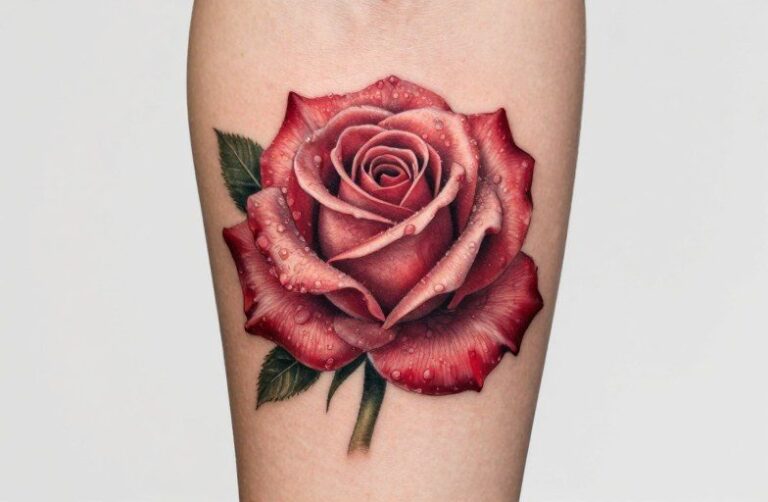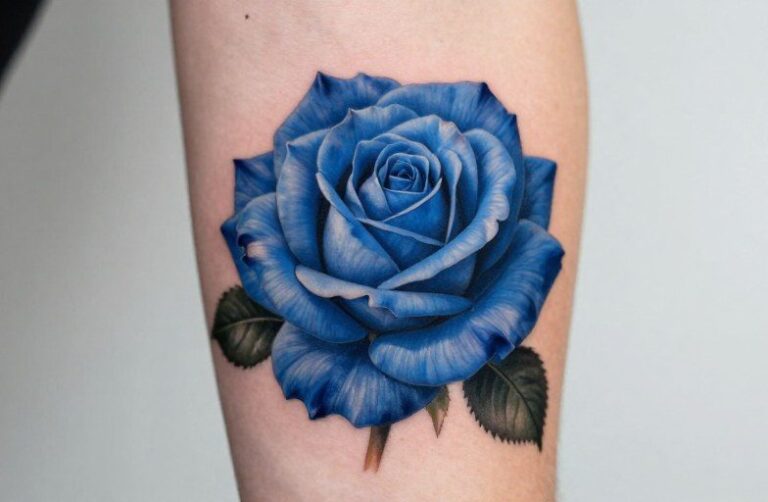
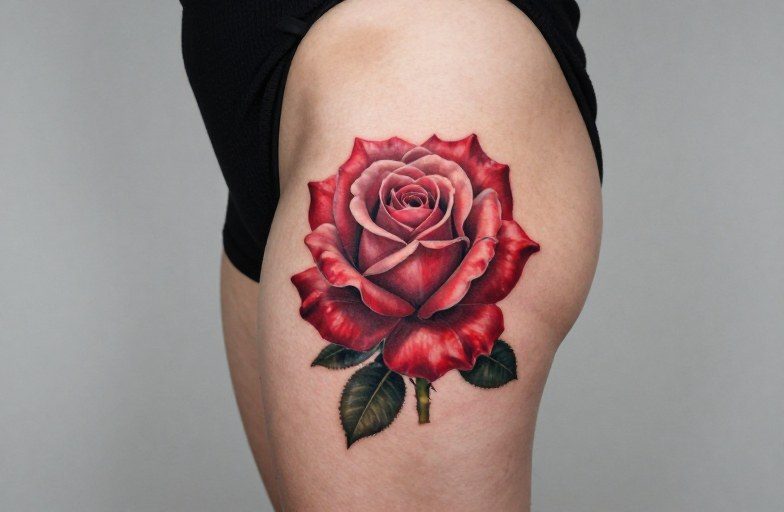
A hip and thigh rose tattoo carries layered meaning rooted in the flower’s long association with love, beauty, and the passage of time. The placement itself adds significance: the hip and thigh are private, personal zones, making the rose feel like a secret kept close rather than a billboard for public consumption. Together, the image and location often signal intimacy, feminine power, or a marker of growth through difficulty.
Color vs Black and Grey
What Red, Pink, and White Actually Convey
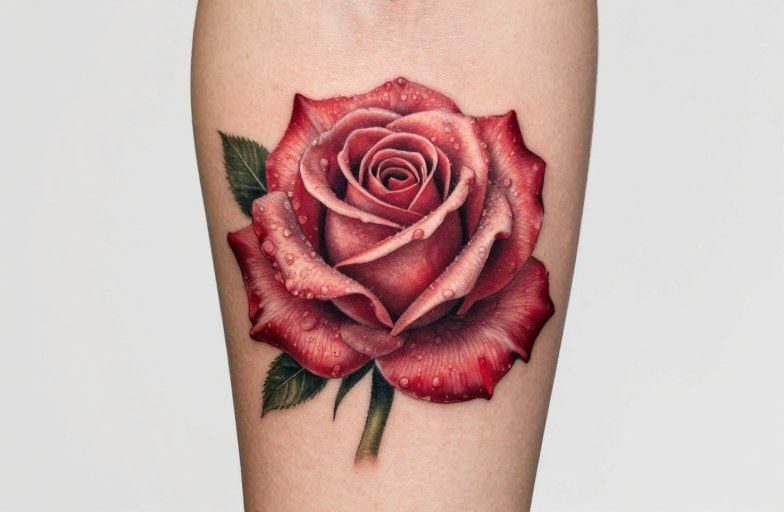
Color choice shifts the emotional register without changing the core symbol. Deep red roses on the hip or thigh most commonly read as romantic love or passionate commitment, though some wearers choose them to honor blood ties, mothers, daughters, sisters. Pink softens the message toward admiration or gratitude, a gentler statement that sits well on the upper thigh where only select viewers see it. White or pale cream roses signal new beginnings or memorial, the hip placement turning the tattoo into something carried quietly through daily life.
Color saturation on thighs demands technical attention. The skin here contains more adipose tissue than the forearm or calf, which can cause ink to spread slightly during healing. Experienced artists adjust needle depth and pull slower through these areas. Bright colors also fade faster on the hip where friction from waistbands and underwear rubs against the surface. Expect touch-ups every few years if you want crimson petals to stay vivid.
Black and Grey: Shadow and Structure
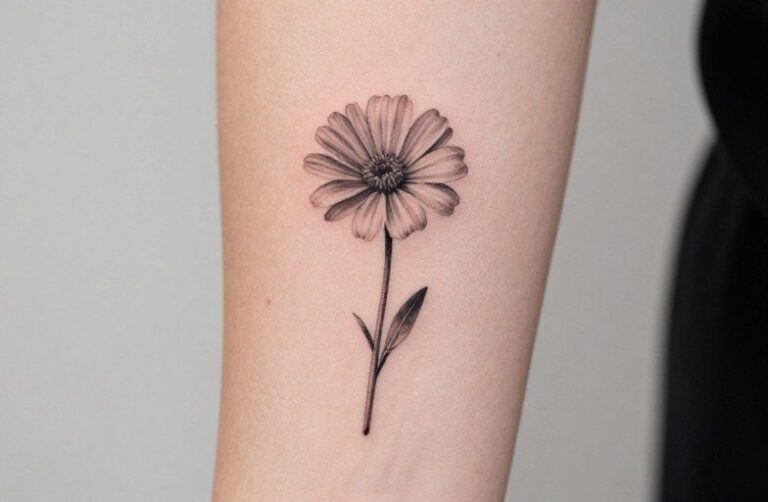
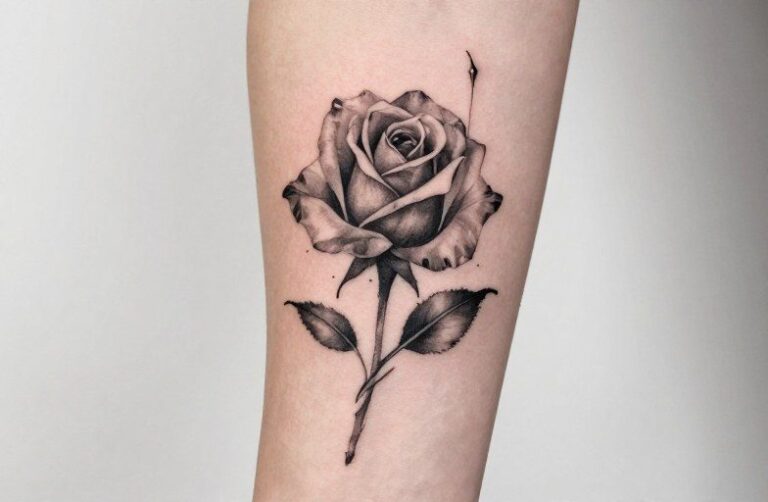
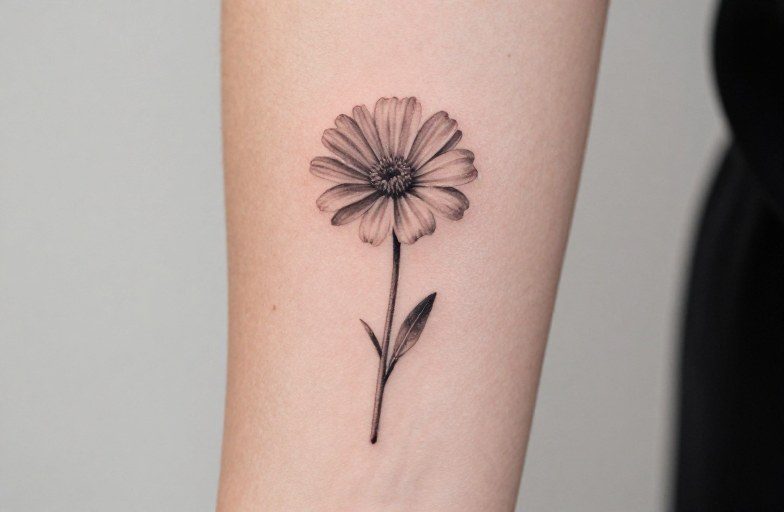
Black and grey roses strip away the sentimental associations of color, emphasizing form, texture, and contrast. On the hip or thigh, this approach reads more graphic, more architectural. The technique suits larger pieces where shading creates depth across the curved muscle of the outer thigh. Without color distraction, the eye focuses on how the petals wrap, where the light source falls, how the stem twists.
Black ink ages more predictably here than color. The carbon base resists the sun exposure that naturally reaches the thigh during summer months, and the monochrome palette forgives minor fading that would turn a red rose muddy. For someone wanting their tattoo to look consistent at fifteen years, black and grey offers practical advantages.
Best Placements
Front of Thigh: Visibility and Statement
The front thigh presents the largest, flattest canvas on the leg. A rose here scales naturally, small enough to tuck near the hip crease, large enough to dominate the quadricep. This placement speaks more openly than the hip; shorts, skirts, and swimsuits reveal it. Many choose this spot for their first large floral piece because the muscle cushion reduces bone pain and the artist can work without the awkward positioning that rib or spine tattoos require.
Hip Bone and Outer Hip: Concealment and Intimacy
The hip bone itself sits over the iliac crest, a curved ridge that makes circular compositions tricky. Roses adapt well because the bloom’s natural spiral echoes the body’s geometry. Tattoos here remain hidden under standard clothing, emerging only in specific contexts. That selective visibility becomes part of the meaning, something shared deliberately rather than displayed constantly. The outer hip, wrapping toward the glute, offers more surface area but requires careful design to prevent distortion when the body moves or weight shifts.
- Inner thigh: extremely sensitive, prone to rubbing and moisture; best for small, simple designs
- Back of thigh: excellent for trailing vines or cascading compositions that follow the hamstring
- Upper hip/hip crease: popular for matching sets or connecting to rib or side pieces
Design Tips & Pairings
Complementary Imagery That Works
Roses pair naturally with thorns, daggers, clocks, and script, but the hip and thigh location invites specific combinations. Snakes coiled through roses create tension between danger and beauty, the thigh’s length accommodating the full body of the serpent. Bees or butterflies suggest pollination, transformation, the temporary touching the eternal. For memorial pieces, dates or names nestle in the leaves below the bloom, close enough to read when the wearer chooses to show the work.
Line weight matters more here than on the back or chest. The thigh moves constantly, walking, sitting, crossing legs. Fine lines blur over time on high-mobility skin. Bold outlines, at least three needle widths, hold definition through years of flexing. Stippled shading or whip-shading techniques age better than smooth gradients on the hip’s softer tissue.
Style Selection: Realism to Traditional
American traditional roses on the thigh read bold and timeless, the limited palette and heavy black making them readable at distance. Neo-traditional allows more color variation and ornamental framing, jewels, banners, decorative borders that suit the hip’s feminine associations. Photorealism demands perfect aftercare on the thigh, where fabric contact risks scabbing and color loss. Japanese-inspired designs with wind bars or waves can extend a rose into a larger leg composition.
Who Chooses This Tattoo
The demographic has broadened significantly. Where hip and thigh roses once read as explicitly feminine and often tied to specific subcultures, the placement now attracts diverse wearers. Men choose thigh roses as part of larger leg sleeves, the flower balancing skulls, animals, or geometric patterns. Trans and non-binary clients often select this placement for its privacy, visible when wanted, concealed for safety or professional contexts.
Age patterns differ from more visible placements. The hip and thigh appeal to people in their late twenties through forties who have established careers, understand long-term consequences, and want meaningful work rather than spontaneous acquisition. The commitment required, multiple sessions for larger pieces, significant aftercare inconvenience, filters out purely impulsive decisions.
Personal & Modern Meanings
Beyond Romance: Resilience and Reclamation
Contemporary wearers frequently detach the rose from romantic love entirely. The flower’s structure, protected center, defensive thorns, seasonal rebloom, maps onto survival narratives. People who have left difficult relationships, survived illness, or rebuilt after trauma sometimes choose the hip specifically because the pain of tattooing mirrors the pain of transformation, the location keeping that memory private.
Reclamation narratives appear especially with hip placement. The area carries cultural weight around sexuality, fertility, and bodily autonomy. A rose there can mark ownership of one’s own form, a deliberate decoration of a zone often subjected to external commentary. This meaning intensifies when the design covers stretch marks, surgical scars, or other marks of bodily change.
Commemoration and Continuity
Thigh roses frequently memorialize, birth dates of children, death dates of parents, the year something ended or began. The leg’s verticality suits timelines, with blooms marking different moments along the stem. Some clients add roses to existing hip tattoos as life accumulates, the garden growing with experience rather than replacing earlier work.
Religious & Spiritual Angles
The rose carries established Christian symbolism, often linked to the Virgin Mary and the concept of divine love made visible. Hip or thigh placement rarely serves explicit devotional purposes in modern practice, but the resonance persists for Catholic-background wearers. The Sacred Heart, wrapped in thorns and topped with flames, sometimes incorporates roses at the base, the hip location making the devotion physically close to the body’s own beating center.
In broader spiritual contexts, the rose represents the unfolding of consciousness, tight bud to open flower as metaphor for awakening. The hip, near the sacral chakra in some energetic systems, connects to creativity and sexuality. Whether this alignment is intentional or coincidental varies by wearer, but the symbolic geography exists for those who work with it.
Final Word
A hip or thigh rose tattoo succeeds when the placement and image feel inevitable together, not arbitrarily combined. The meaning lives in that specificity: this flower, this body, this moment of choosing permanence. Technical decisions, color or grey, bold or delicate, visible or concealed, shape how the symbolism ages alongside the skin. Work with an artist who understands how thighs move and hips heal, who can adapt classic imagery to curved surfaces without losing the rose’s essential character. The result should feel like it grew there, not like it was placed there.
Frequently Asked Questions
Do hip and thigh rose tattoos hurt more than arm tattoos?
The outer thigh ranks among the least painful placements due to muscle padding, but the hip bone and inner thigh are significantly more intense. Pain increases sharply over bone and decreases over fleshy areas.
How well do thigh roses hold up over time?
Thigh tattoos age relatively well due to limited sun exposure, though inner thigh ink suffers from friction and moisture. Bold lines and black shading outperform fine detail and light colors long-term.
Can a hip rose tattoo be easily covered for work?
Yes, hip and upper thigh placement stays hidden under standard business attire, making it one of the most professionally safe locations for larger, visible-in-private designs.
What’s the typical healing time for a thigh rose tattoo?
Surface healing takes 2-3 weeks, with full settling around 6-8 weeks. Thighs require loose clothing during healing to prevent fabric from sticking to fresh ink.