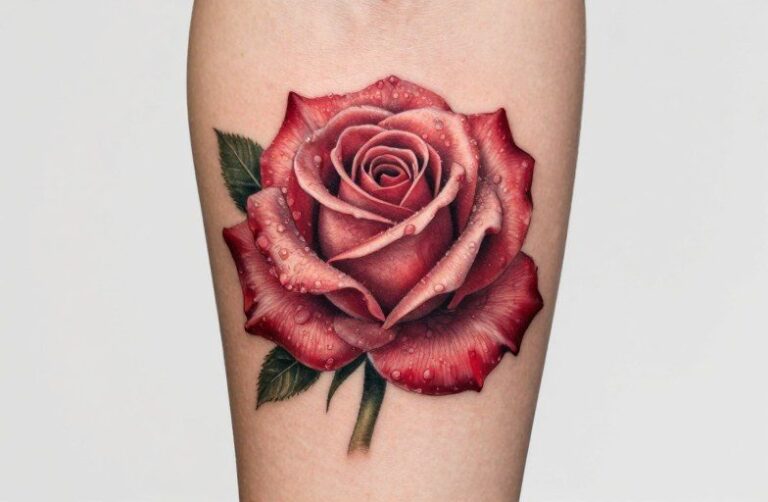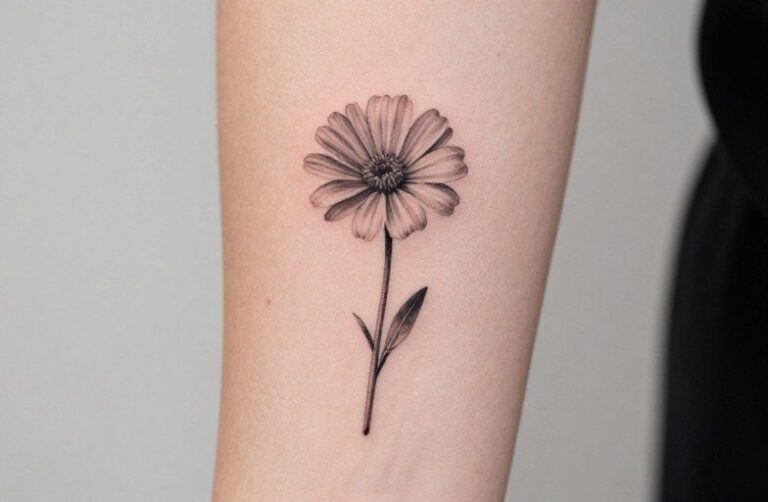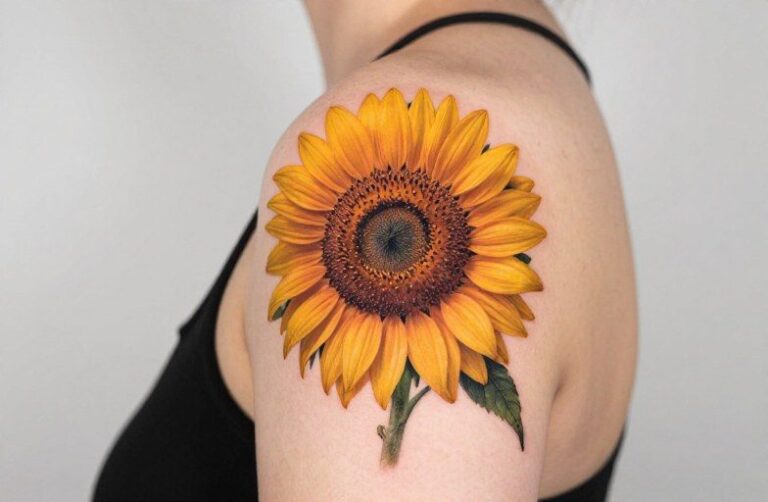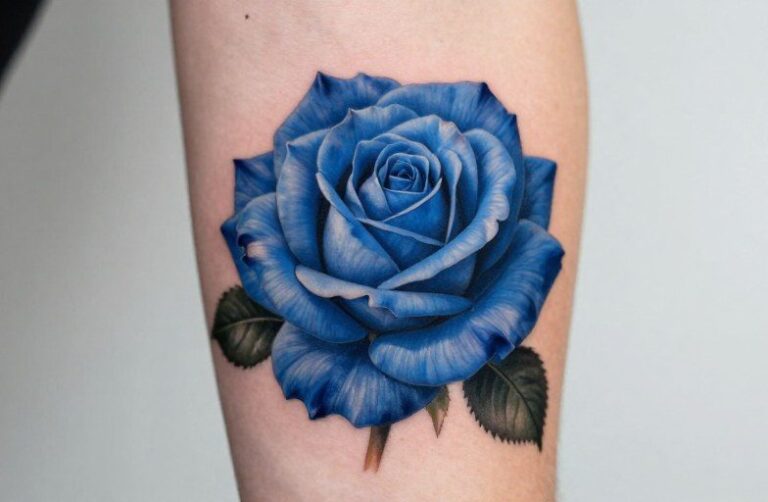
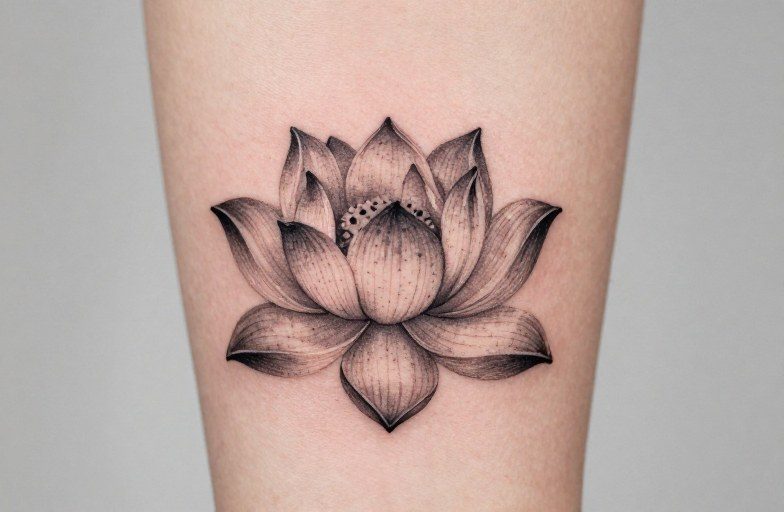
A lotus flower paired with dots typically represents the journey toward enlightenment or personal growth, with the dots marking the steps, struggles, or significant moments along the way. The lotus rises from mud to bloom on the surface, while the dots trace that upward path like a visual timeline. Together, they create a narrative of transformation that reads as both spiritual and deeply personal.
Best Placements
Where the Dots Read as a Path
Placement changes how the dots function visually. Down the spine, the lotus sits between shoulder blades with dots trailing upward toward the neck, natural, readable, and follows the body’s vertical axis. The forearm works well for a horizontal composition: lotus at the wrist, dots extending toward the elbow, or reversed with the bloom at the inner bicep and dots cascading down. This lets the dots read as a timeline you can actually trace with a finger.
Behind the ear, a small lotus with two or three dots beneath it stays subtle. The ribcage accommodates larger pieces where dots can spiral or curve with the body’s form. Ankle and foot placements suit smaller designs, though dots on the foot blur faster from friction and sun exposure. Sternum pieces center the lotus with dots radiating outward like a mandala, which flips the usual path structure into something more meditative.
- Spine: vertical narrative, largest canvas, most dramatic
- Forearm: horizontal timeline, highly visible, easy to show or cover
- Ribcage: follows body curves, private, expands well with future additions
- Behind ear: minimalist, three dots maximum before cluttering
- Sternum: radial dot patterns, pairs well with ornamental framing
Scale and Dot Density
Tiny dots packed tightly blur into a gray wash within five to seven years. Space them at least two millimeters apart for longevity. A lotus the size of a palm with eight to twelve dots spaced deliberately holds its readability far longer than a thumbnail-sized bloom with twenty micro-dots clustered beneath it.
Similar & Related Symbols
Unalome and Sacred Geometry
The unalome, a single line spiraling upward to a straight point, often accompanies lotus tattoos and overlaps conceptually with dot paths. Some designs merge the two: unalome line work feeding into a lotus bloom, with dots marking specific points along the spiral. This hybrid borrows from Buddhist iconography often linked to the path from suffering to liberation.
Mandala patterns around the lotus create a different relationship. Dots become structural elements in the geometric frame rather than a narrative path. The meaning shifts from journey to wholeness, from process to completion.
Other Flower-and-Dot Combinations
Chrysanthemums with dots appear in Japanese-influenced work, though the dots typically represent falling petals or wind bars rather than a path. Cherry blossoms with dots suggest transience, each dot a fallen bloom. The lotus differs in its upward trajectory; the dots lead toward something rather than marking loss.
- Unalome: direct symbolic cousin, shares the path-to-enlightenment concept
- Mandala: dots as structure, not narrative
- Chrysanthemum + dots: seasonal, memorial, different cultural root
- Minimalist constellation dots: modern secular alternative, no specific flower
Color vs Black and Grey
How Color Alters the Reading
Pink or red lotus petals carry specific associations in Buddhist traditions: the heart, compassion, love. Blue lotus, commonly associated with wisdom and knowledge, pairs well with dots representing studied steps or intellectual growth. White lotus suggests purity and spiritual perfection, which can make the dots read as the necessary impurity or struggle left behind.
Black and grey shifts focus to form and texture. Dots become more prominent visually without competing against saturated color. The lotus reads as universal rather than culturally specific. Grey wash in the petals can create depth that makes the solid black dots pop forward, almost floating above the flower.
Dot Color Choices
Black dots are standard. Red dots introduce blood, struggle, or vitality into the path. White ink dots (which yellow unpredictably) suggest invisible or spiritual steps. Gradient dots, fading from dark to light as they approach the lotus, literalize the journey from darkness to light, though this requires a skilled hand to execute without muddiness.
Common Variations & Styles
Dot Arrangements and Their Implications
A straight vertical line of dots beneath the lotus reads as linear progression: one thing after another. Spiral dots suggest cycles, returns, lessons repeated. Scattered dots around the bloom feel more like atmosphere or constellation, less journey, more context. Descending dots (lotus at top, dots falling below) reverse the usual growth narrative, sometimes chosen to represent grounding or the spread of influence outward from a central awakening.
Style-Specific Approaches
Fine-line single-needle work produces delicate dots that risk spreading. Traditional bold lines with thick black dots hold longer but read heavier. Ornamental styles frame the lotus with dot patterns borrowed from henna or mehndi traditions, dense and decorative rather than sparse and narrative. Dotwork (stippling) as the entire shading method builds the lotus itself from thousands of dots, with larger accent dots marking the path, visually cohesive but demanding significant session time.
- Minimalist: 3-7 dots, thin line lotus, fastest to execute, fastest to fade
- Ornamental: dense dot patterns, often symmetrical, less about personal narrative
- Stippled shading: entire image from dots, path dots distinguished by size
- Geometric: lotus as simplified polygon, dots at mathematical intervals
Personal & Modern Meanings
Beyond the Spiritual Template
The dots frequently get assigned personal milestones: one per year sober, per loss survived, per country visited, per book written. The lotus becomes the present self, the dots the specific history. This secular adaptation keeps the visual language while discarding religious specificity. Some choose prime numbers of dots for no symbolic reason beyond aesthetic preference or personal numerology.
Modern placements on visible areas, forearms, hands, neck, signal willingness to discuss the meaning. Hidden placements suggest the journey matters more to the wearer than to any audience. The choice itself becomes part of the statement.
Gender and Cultural Considerations
The lotus appears across Hindu, Buddhist, and Egyptian traditions, though specific color associations vary. Western adoption has largely stripped these specificities, which some find appropriative and others see as natural evolution. Dots as a universal graphic element avoid some of this tension by functioning as pure abstraction. If cultural roots matter to you, research the specific color and directional conventions rather than accepting the generic “spiritual growth” summary.
How It Ages on Skin
Dot Degradation Timeline
Small dots spread. A dot applied at one millimeter diameter may read as three millimeters within a decade, especially on high-movement areas like wrists or ankles. What began as twelve distinct steps becomes a smudged ladder. Larger dots, three to four millimeters, hold their integrity longer. The spaces between them must be generous; what looks spacious fresh may close up as ink bleeds.
The lotus petals, typically outlined and shaded, age more predictably than the dots. Solid black lines in the stem and petal edges hold; grey wash in the petals softens and cools toward blue-grey. Color lotus work: reds stay longest, purples and blues fade toward grey, yellows and light greens often disappear entirely. Dots in color fade faster than black dots.
Touch-Up Realities
Dot paths are easier to refresh than complex shading. A touch-up can redefine spaced dots, add new ones between blurred ones, or convert a degraded line into a deliberate gradient. Plan for this: leave space in the original design, or accept that the path will visually compress over time. The lotus itself may need less frequent attention than the dots beneath it.
Before You Decide
Count the dots deliberately, not arbitrarily. Seven dots because you like seven reads differently than seven dots for seven specific years, and both read differently than random decoration. Know which you’re choosing. Consider how the path reads if you add more dots later, will the lotus need to move, or can the line extend?
Bring reference images that show dot spacing, not just lotus style. Ask your artist about their experience with stippling and fine dotwork; this is a specific technical skill, not universal. Discuss how they’d space the dots for longevity on your chosen placement. A lotus with dots is simple to sketch and difficult to execute well, take time finding the right hand for it.
Frequently Asked Questions
How many dots should I get with a lotus flower tattoo?
There’s no fixed number. Choose dots that represent specific milestones, or select a count that balances visually with your lotus size. Most designs use 3 to 12 dots; beyond that, they risk cluttering or blurring together over time.
Can the dots go above the lotus instead of below it?
Yes, though this reverses the typical growth narrative. Dots above can represent future goals, guidance from above, or a path still unfolding. Discuss the visual flow with your artist so it reads intentionally rather than upside-down.
Do the dots have to be in a straight line?
Not at all. Spirals, curves, scattered constellations, and radial patterns all work. Straight lines read as direct progression; curves suggest organic growth; spirals imply cycles or deepening. The arrangement changes the meaning as much as the count.
Will a lotus with dots tattoo hurt more than other designs?
Dotwork requires repeated single-needle poking, which some people find more irritating than sweeping lines or shading. However, pain varies more by placement than technique. Ribs and sternum hurt regardless of style; forearms and thighs are generally manageable.