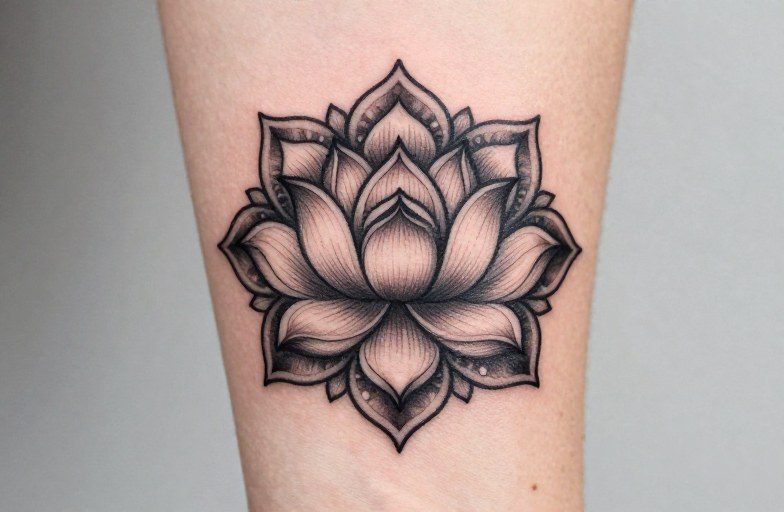
A lotus mandala tattoo combines two symbols that carry genuine weight across centuries: the lotus flower, rising from murky water to bloom clean, and the mandala, a geometric diagram representing wholeness and cosmic structure. Together, they typically signify personal growth emerging from difficulty, the pursuit of spiritual balance, or a commitment to mindfulness. The meaning shifts based on how the two elements interact, whether the lotus sits at the center, breaks the mandala’s border, or dissolves into its geometry. You do not need to practice meditation or belong to any tradition to wear this design well, but understanding what you are carrying helps you choose more deliberately and explain it with accuracy when asked.
Symbolism and Core Meaning
The Lotus: What It Actually Represents
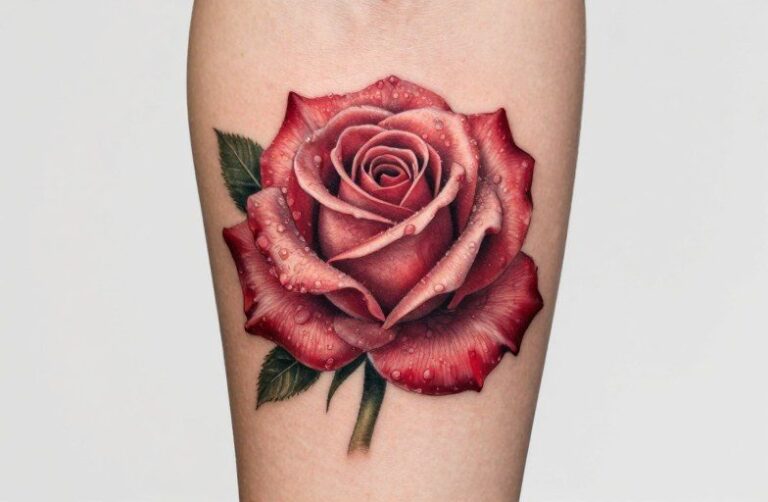
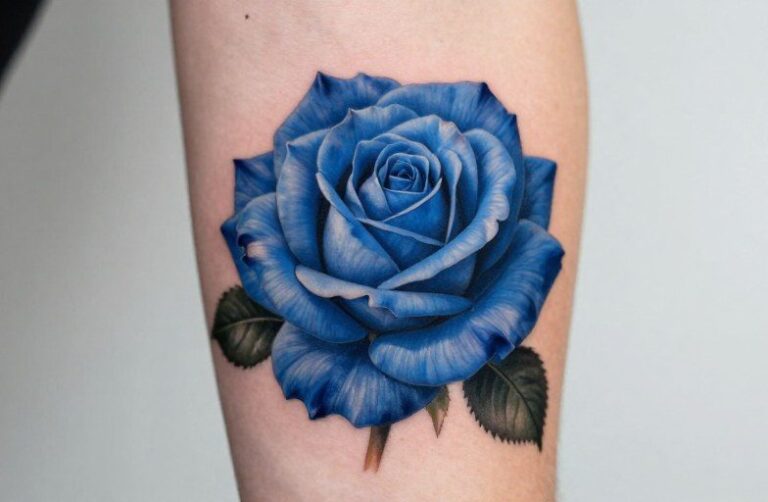
The lotus grows with its roots in mud, its stem through water, its flower above the surface. That biological reality shaped its symbolic weight across cultures. In tattoo form, an open bloom usually signals awakening or completion; a closed bud suggests potential or an ongoing process. Color matters if you choose to use it: pink and red connect to compassion and love; blue to wisdom and mastery over impulse; white to purity of mind; purple to mysticism. Black and grey versions strip away cultural color coding, letting the form itself carry meaning, resilience, primarily, or the beauty of struggle made visible. You should know that a black lotus carries no automatic association with death or grief unless you assign it that role.
The Mandala: Structure as Meaning
Mandalas are radial, balanced, and contained. In tattooing, that geometry creates visual stability and draws the eye inward. A mandala’s center traditionally represents the self or the divine; its outer rings, the layers of reality or consciousness surrounding it. When tattooed, this structure can ground a design that might otherwise feel scattered. The mandala does not mean one fixed thing. It organizes meaning, giving your personal symbolism a coherent container. This is why the form works for so many different people with different intentions.
Related reading: lotus mandala tattoo meaning | lotus flower woman meaning | purple lotus flower tattoo | red lotus flower tattoo
Where They Overlap
The fusion works because both symbols share core traits: emergence from disorder into order, the journey from base material to refined form. A lotus mandala can represent recovery from addiction, surviving trauma, religious devotion, or simply an aesthetic attraction to sacred geometry. The tattoo does not require spiritual belief to function, but it carries heavier weight when you understand the vocabulary you are wearing. You should be prepared for the question, because strangers will ask.
Best Placements
Flat Surfaces: Back, Chest, Thigh
Mandalas need space to breathe. Their symmetry depends on a relatively flat canvas, and distortion across curved or mobile areas weakens the visual impact. The upper back, centered between shoulder blades, remains the classic placement. It offers enough real estate for fine detail, visibility when you want it, concealment when you do not. Chest pieces work similarly, though sternum skin is thinner and more painful, and the area shifts with breathing. Thighs offer large, stable planes; outer thigh hurts less than inner, but inner thigh skin stays more protected from sun fading over decades. You should consider your future self here: a thigh piece at twenty-five may look different at fifty-five if your weight shifts significantly.
Smaller Adaptations: Wrist, Forearm, Behind the Ear
Scaling down sacrifices detail. A wrist mandala might simplify to eight petals and a central lotus, losing the nested rings that define the form. Forearms allow medium complexity but compete with the radius and ulna rotation. What looks centered palm-down twists when your arm turns. Behind the ear, the lotus mandala becomes a small emblem rather than a meditative diagram, best executed in bold line with minimal interior shading so it does not age into a dark smudge. You should ask your artist to show you the design rotated if you are considering forearm placement.
- Upper back: ideal for full detail, dotwork, or color gradients
- Sternum: striking but painful; plan for multiple sessions
- Thigh: good for large-scale pieces, less sun exposure than arms
- Forearm: visible, but consider how the design rotates with movement
- Small placements: simplify aggressively; prioritize readable silhouette
Mythology and Folklore
Historical Roots and Modern Synthesis
The lotus appears across multiple traditions, often linked to creation narratives. In ancient Egyptian imagery, the lotus rose from primordial waters to birth the sun. Hindu associations trace to deities like Vishnu and Lakshmi, who are depicted seated on lotus thrones. The mandala’s roots are commonly associated with Hindu and Buddhist ritual diagrams, though similar radial patterns appear in Islamic geometric art, Celtic crosses, and rose windows, parallel structures with independent origins.
Combining the two is not an ancient practice. It is a modern tattoo convention, shaped by twentieth-century cultural exchange and the global spread of yoga and meditation practices. That does not diminish its validity, but it means the traditional meaning you may read about is often a contemporary synthesis rather than an inherited code. You should know this: the tattoo’s power comes from your personal investment, not from antiquity. Claiming thousand-year lineage for your specific design would be inaccurate.
Who Chooses This Tattoo
Practitioners and Seekers
People with established meditation or yoga practices often gravitate here, drawn by symbols they have encountered in study. The tattoo becomes external commitment, marking a path taken, not just admired. Others choose it during transition: after leaving a relationship, surviving illness, starting recovery. The lotus-mandala structure suits these moments because it encodes process, the lotus’s growth, within stability, the mandala’s containment. You should wait until the acute crisis has passed, though. A tattoo chosen in raw grief often feels like a mistake once the ground stabilizes.
Aesthetic-First Collectors
Not every wearer needs spiritual intent. Sacred geometry has its own visual appeal, and a skilled mandala with a lotus center satisfies purely formal interests. These collectors often prioritize technical execution, perfect symmetry, clean linework, balanced negative space, over symbolic depth. Both approaches are legitimate. Problems arise only when someone expects spiritual protection from a design they chose for looks alone. You should be honest with yourself about which category you fall into, because that honesty shapes how you talk about the piece and whether you will still respect it in ten years.
Religious and Spiritual Angles
Buddhist Contexts
In some Buddhist traditions, the lotus represents purity of body, speech, and mind, unstained by the mud of attachment. Mandalas serve as meditation aids, temporary sand creations destroyed to teach impermanence. Tattooing a mandala permanently on skin inverts that teaching, something to consider if the tradition matters to you. The eight-petaled lotus specifically connects to the Noble Eightfold Path. Placement on the body can carry significance: crown of the head for spiritual attainment, heart center for compassion. You should not assume your tattoo artist knows these associations unless you discuss them explicitly.
Hindu and Yogic Associations
The lotus appears in chakra iconography, particularly the sahasrara at the crown and the anahata at the heart. A lotus mandala incorporating specific petal counts, four for the root chakra, ten for the navel, can map energetic anatomy. This requires precise knowledge; miscounted petals or misplaced colors signal ignorance rather than devotion. The mandala form also relates to yantras, geometric devices for meditation and ritual protection. You should research thoroughly if you intend this level of specificity, because errors are visible and permanent.
Secular wearers are not appropriating if they approach the design with respect and basic understanding. The line crosses into problem when sacred elements are treated as mere decoration without acknowledgment of source. You should know enough to answer simple questions accurately and avoid claiming authority you do not have.
Common Variations and Styles
Line-Dominant vs. Shaded Approaches
Clean linework emphasizes the mandala’s mathematical precision. Dotwork, or stippling, builds tone through point density, creating soft gradients that suit the lotus’s organic form. Heavy black shading produces dramatic contrast but ages faster; fine greywash can blur as skin settles. For longevity, bold outer contours with selective interior detail usually outlast delicate all-grey pieces. You should ask to see healed photos from your artist, not just fresh work, because the difference matters enormously for this style.
Color Strategies
Traditional palettes use saffron, deep red, and indigo. Contemporary versions might employ jewel tones, pastels, or full spectrum gradients. Watercolor-style backgrounds behind a structured mandala create tension between control and chaos, effective when deliberate, muddy when accidental. White ink highlights often yellow or disappear entirely; use sparingly if at all. You should know that watercolor effects in mandalas are particularly difficult to execute well and even more difficult to maintain over time.
- Geometric/dotwork: precise, meditative to execute, ages well with bold lines
- Neo-traditional: stronger color saturation, illustrative lotus with ornamental mandala frame
- Blackwork: maximum contrast, fastest to apply, clearest silhouette at distance
- Single-needle fine line: trendy but fragile; expect touch-ups within 5-10 years
- 3D or ornamental: lotus rendered realistically, mandala as decorative surround
Structural Variations
The lotus might sit dead center, break through the mandala’s top edge, or dissolve into geometric abstraction. Some designs place the mandala inside the lotus, reversing the expected hierarchy. Others extend mandala patterns into the lotus petals, blurring the boundary between symbols. Each choice alters the visual rhythm and, subtly, the implied relationship between growth, the lotus, and order, the mandala. You should work through several compositions with your artist before committing, because these variations are not interchangeable in feel.
What to Remember
Technical Demands
A lotus mandala tattoo succeeds when the technical execution matches the symbolic ambition. This design demands symmetry, patience, and a canvas large enough to let the geometry read clearly. You should choose an artist with specific experience in geometric or mandala work, not just someone who says they can do it. The difference between adequate and excellent here is measured in millimeters of drift that your eye will catch every day.
Personal Honesty
Know why you want this. The lotus mandala carries enough cultural weight that wearing it without understanding invites hollow performance, while wearing it with full knowledge deepens your relationship to the piece. Neither requires you to be spiritual, but both require you to be intentional. You should be able to explain your choice in a sentence that does not make you wince.
Long-Term Thinking
These designs age best with bold structure, protected placement, and sun discipline. The fine details that look stunning at month two may blur by year ten. You should plan for touch-ups and accept that the tattoo will soften. What persists is the silhouette and the meaning you have built around it. Choose accordingly, care for it consistently, and let it grow with you rather than expecting it to stay frozen at the moment of application.
Frequently Asked Questions
Does a lotus mandala tattoo require spiritual belief?
No. The design functions aesthetically and personally without religious commitment. However, understanding the symbols you wear helps you choose deliberately and answer questions accurately. The tattoo’s power comes from your investment, not from borrowed authority.
What is the most important factor in choosing an artist for this design?
Specific experience with geometric or mandala work. Symmetry errors of even a few millimeters are visible permanently. Ask to see healed photos, not just fresh work, and confirm they have executed similar scale and complexity before.
Is combining lotus and mandala an ancient tradition?
No. While both symbols have deep individual histories across Egyptian, Hindu, Buddhist, and other traditions, their combination in tattoo form is a modern development shaped by twentieth-century cultural exchange. It is valid as contemporary synthesis, not ancient lineage.
Which placement ages best for this style?
Upper back and inner thigh offer the most protection from sun and movement distortion. Forearms and wrists are visible and convenient but suffer more sun exposure and geometric twisting with rotation. Small placements require aggressive simplification to age readable.
What color choices carry specific meaning?
Pink and red connect to compassion and love; blue to wisdom and impulse control; white to mental purity; purple to mysticism. Black and grey strip away cultural coding to emphasize form and resilience. White ink highlights are generally not recommended due to yellowing or disappearance over time.