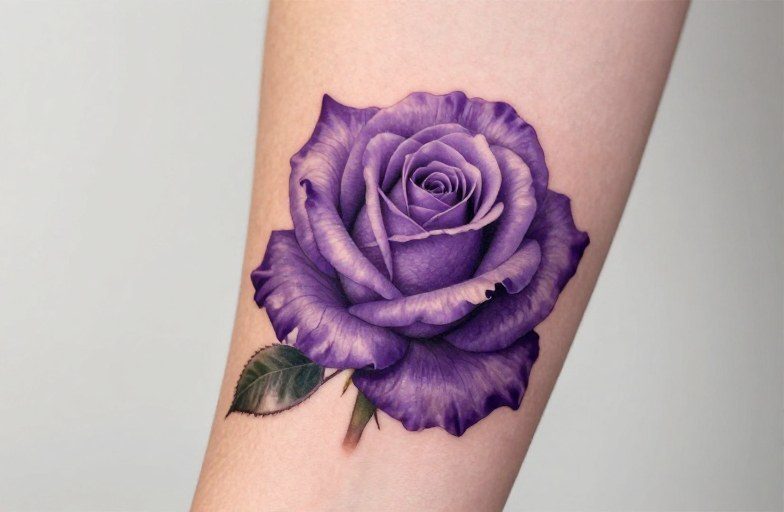
A purple rose tattoo most commonly signals enchantment, fascination, and love at first sight. Deeper shades lean toward royalty and majesty, while lighter lavenders suggest delicacy and the early tremor of attraction. Unlike red roses, which announce passion openly, purple keeps something in reserve, mystery without secrecy, admiration without possession.
Mythology & Folklore
Roses in purple hues don’t appear in nature the way red or white ones do; the color had to be coaxed into existence through breeding or, historically, imagined into being. That artificiality gave purple roses a mythic quality from the start.
The Quest for the Blue Rose
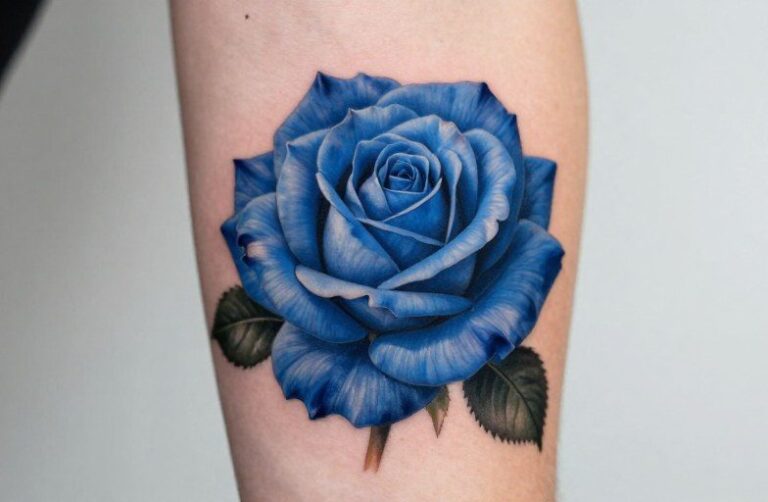
Medieval folklore often linked purple roses to the impossible quest for the blue rose, a symbol of unattainable love. Purple stood as the closest earthly approximation, the almost-but-not-quite that made it more poignant than success would have. In some traditions, suitors who failed to find the blue rose returned with purple ones as tokens of noble effort. This lineage gives the purple rose tattoo a subtle resonance: the beauty of striving, not just arriving.
Regal Associations
Purple’s historical chokehold on royalty, Tyrian dye was literally worth its weight in gold, means the purple rose inherited associations with sovereignty and divine right. Victorian flower language, which systematized rose meanings, assigned purple specifically to “enchantment” and “majesty.” A tattoo drawing on this thread doesn’t just say “I’m fancy”; it invokes a whole infrastructure of power accessed through fascination rather than force.
Symbolism & Core Meaning
The purple rose operates in a liminal space between red’s heat and white’s purity. That in-betweenness is its actual territory.
- Enchantment and fascination: The primary Victorian meaning, still dominant, love that strikes suddenly, almost supernaturally
- Royal dignity: Not mere wealth but earned or inherent nobility of character
- Love at first sight: The moment before knowledge, when attraction operates on pure intuition
- Transition and change: Purple as the meeting of warm and cool, suggesting thresholds and transformation
- Spiritual insight: The “third eye” color, associated with perception beyond the physical
Someone choosing this tattoo might be marking a relationship that began with electric recognition, or claiming an identity that doesn’t fit neatly into expected categories. The color’s rarity in nature makes the symbol feel personally discovered rather than culturally given.
Religious & Spiritual Angles
Purple carries heavy sacred weight across multiple traditions, and the rose form layers additional meaning on top.
Christian Liturgical Context
In Catholic and Orthodox traditions, purple is the color of Lent and Advent, penitential seasons, yes, but also preparation and anticipation. The purple rose tattoo can resonate with this: not suffering for its own sake, but the disciplined waiting that precedes revelation. Some Marian imagery incorporates roses, and the purple ones specifically have been associated with Mary’s mystical experiences, the moments of divine encounter that transcend ordinary understanding.
Eastern and Esoteric Traditions
The crown chakra in Hindu and yogic systems is violet-purple, the seat of spiritual connection and transcendent consciousness. A purple rose placed at the crown of the head, or even just referencing that energy through color, can signal someone working with or through spiritual awakening. The rose itself, petals unfolding from a tight center, mirrors the opening of consciousness that chakra work describes.
Modern pagan and Wiccan practice sometimes uses purple roses in spellwork for psychic development and power. A tattoo drawing on this isn’t necessarily claiming magical practice; it may simply mark affinity with intuition and the unseen.
Common Variations & Styles
The purple rose adapts to nearly every tattoo vocabulary, but some approaches particularly suit its character.
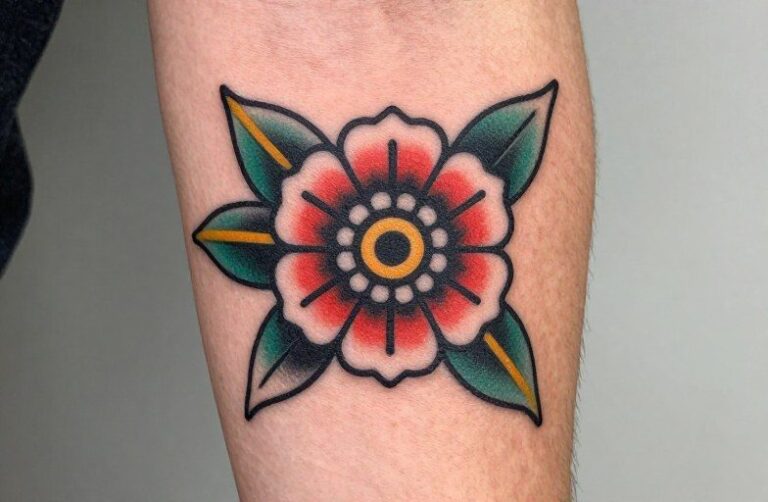
- Traditional American: Heavy purple saturation with black outlines, often paired with banners or daggers; the contrast makes the color pop against skin
- Neo-traditional: More dimensional shading, jewel-toned purples that can incorporate teal or magenta accents for complexity
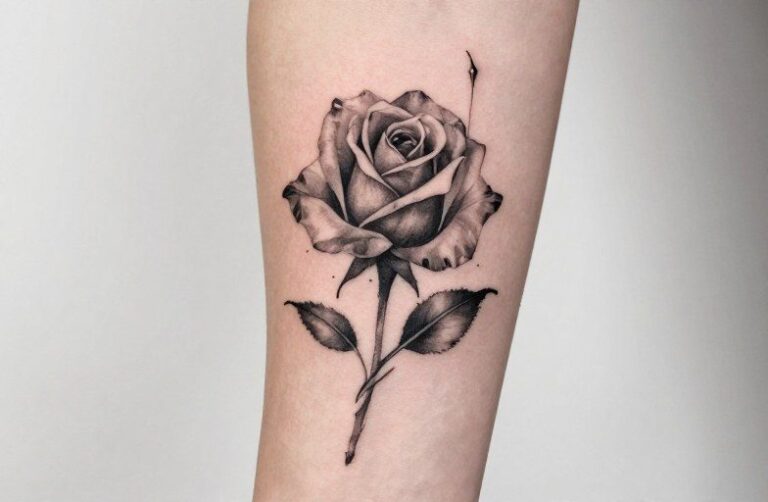
- Black and grey with selective purple: Desaturated design with only the rose in color, creating focal emphasis and narrative weight
- Watercolor: Purple bleeding beyond linework, suggesting the enchantment meaning literally, color that won’t stay contained
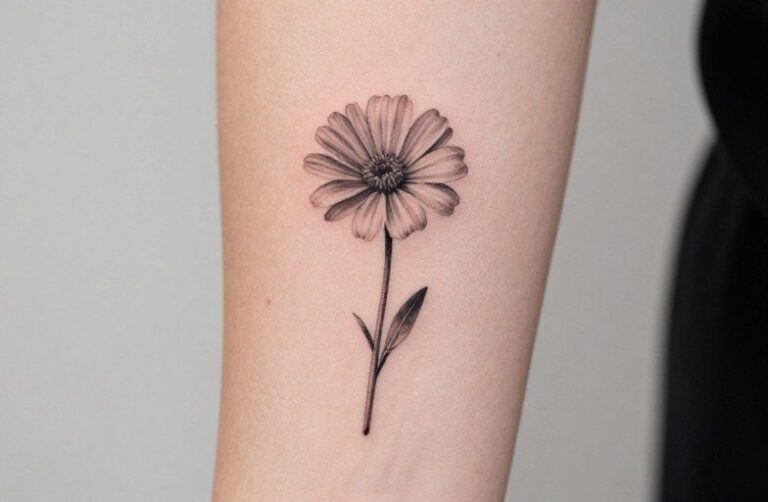
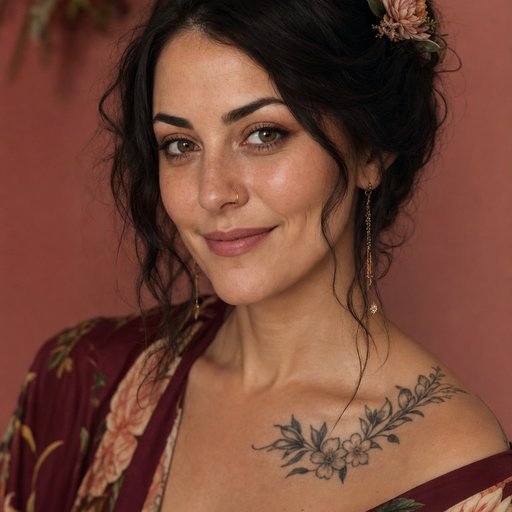
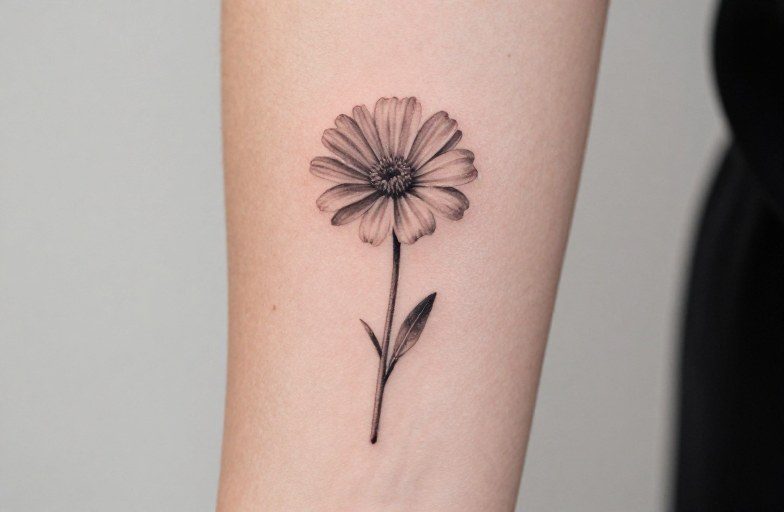
- Single needle/fine line: Delicate lavender tones, suited to smaller scales and intimate placements
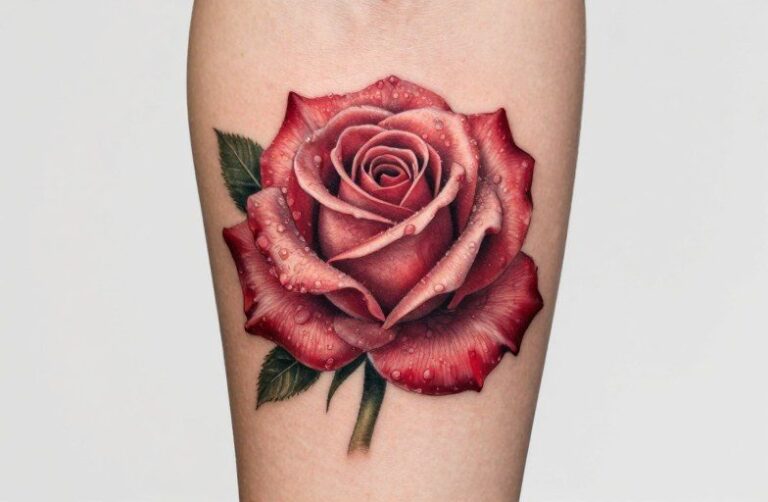
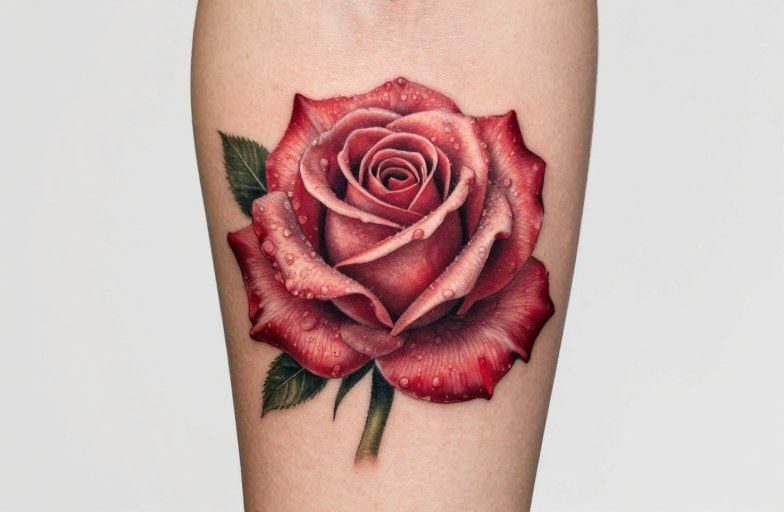
- Realism: Photographic purple roses require reference to actual flowers (“Blue Moon,” “Ebb Tide,” or “Midnight Blue” cultivars) since pure purple remains genetically elusive
Adding thorns changes the register: enchantment with awareness of cost. A bud versus full bloom shifts from potential to actualization. Dropping petals suggest fleetingness, which purple’s rarity intensifies rather than diminishes.
Color vs Black and Grey
This choice fundamentally alters what the tattoo communicates.
Color: The Full Statement
Purple ink presents specific technical realities. Purple pigments, particularly lighter lavenders, have a reputation for faster fading than black or red, though modern formulations have improved this. Deep royal purples hold better but can shift toward blue or brown as they age, depending on skin chemistry and sun exposure. A knowledgeable artist will discuss this during consultation, whether to start slightly redder or bluer than the target tone to anticipate that drift.
Color also demands more skin real estate to read clearly. A tiny purple rose becomes a purple blob faster than a black one would. The enchantment meaning needs enough detail to register as rose, not just flower-shaped color.
Black and Grey: The Subtext
Without color, the purple rose becomes a reference rather than a declaration. Someone who knows the symbolism reads it; others see a rose. This can be deliberate, personal meaning held close. Black and grey also ages more gracefully on most skin tones, and allows for finer detail at smaller sizes. The trade-off is losing the specific liminal energy that purple, as color, carries.
Some split the difference: black and grey design with a single purple accent, or healed blackwork with purple added later as a layer. This two-stage approach lets the collector assess how the base settles before committing to color.
Best Placements
Where the purple rose lives on the body shapes how its meaning lands.
- Upper arm/shoulder: Classic visibility, room for detail, the traditional “badge” placement that suits the royalty strand of meaning
- Forearm: Daily visibility to the wearer, conversational visibility to others; enchantment as ongoing experience rather than fixed memory
- Behind the ear: Intimate scale, the “secret” placement that mirrors purple’s reserved quality, there if you know to look
- Collarbone: Framing the face, near the throat’s communication center; fascination as something spoken or withheld
- Ribcage: Painful, private, expanded canvas; the transformation aspect, since rib pieces often mark major life passages
- Thigh: Ample space for detail, easily concealed or revealed; control over who encounters the symbol
Hand and finger placements are technically possible but wear fast. Purple’s fading issues make this a poor choice for longevity unless the collector accepts regular refresh sessions.
Key Takeaways
The purple rose tattoo carries concentrated, specific meaning: enchantment, majesty, love that arrives before explanation. Its rarity in nature and history of cultivation give it weight that more common colors don’t automatically possess. The tattoo works best when the collector understands both the symbol’s lineage and the technical realities of purple ink, its aging behavior, its need for adequate space, its particular relationship to different skin tones.
Style choices should serve the meaning, not just the aesthetic. A watercolor bleed suits the uncontainable aspect of fascination; a tight traditional rendering suits the royal dignity strand. Placement controls who sees what when, which matters for a symbol about thresholds and revelation. The purple rose isn’t a default choice like the red one sometimes becomes; its selection already signals someone who looked past the obvious, which may be the most authentic expression of its meaning.
Frequently Asked Questions
Does a purple rose tattoo always mean love at first sight?
Not necessarily. While that’s the Victorian primary meaning, many people choose it for the royalty, spirituality, or mystery aspects. Context and accompanying elements usually clarify which strand matters most.
Will a purple rose tattoo fade faster than other colors?
Lighter purples and lavenders do tend to fade quicker than black or deep red, though modern pigments have improved. Deep royal purples hold better but may shift toward blue or brown over years. Sun protection helps significantly.
What real rose varieties work best for purple tattoo references?
“Blue Moon,” “Ebb Tide,” “Midnight Blue,” and “Angel Face” are actual cultivars with purple tones that artists can reference. True purple remains rare in nature, so photographic reference matters for realism work.
Can darker skin tones carry purple rose tattoos effectively?
Absolutely, but the approach matters. Deep, saturated purples show better than pastels. Some artists work with magenta undertones or use bolder neo-traditional palettes rather than relying on subtle lavender shading. Consultation with an artist experienced across skin tones is essential.