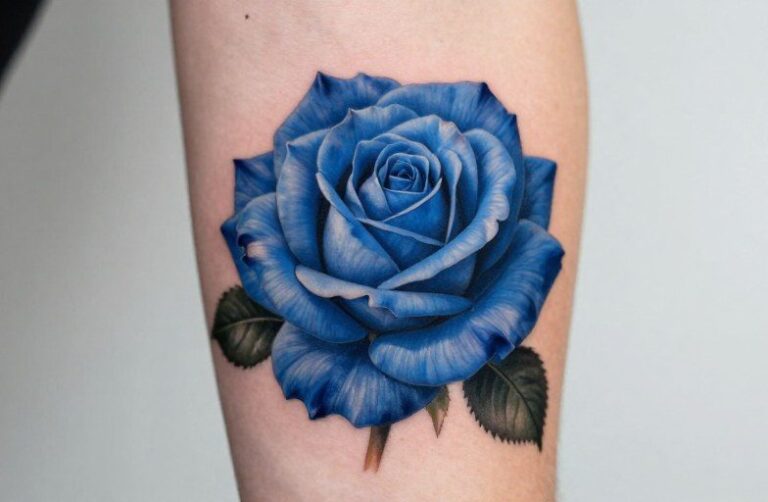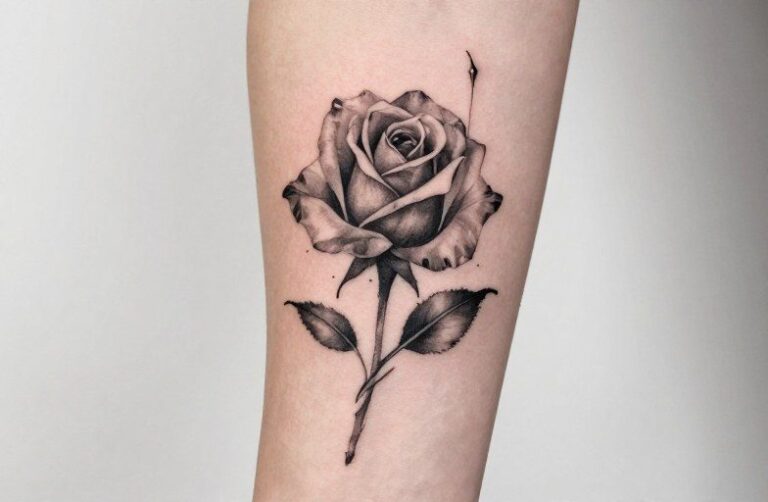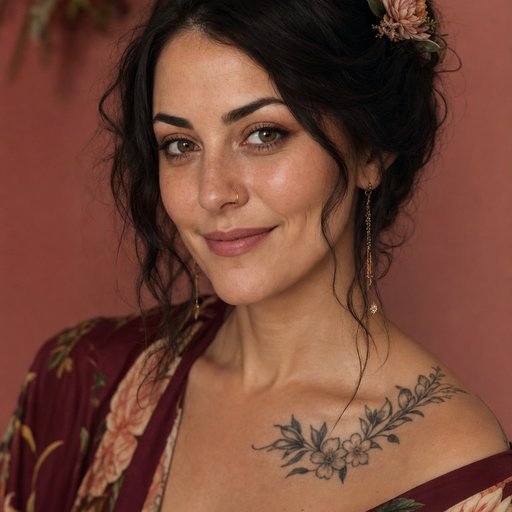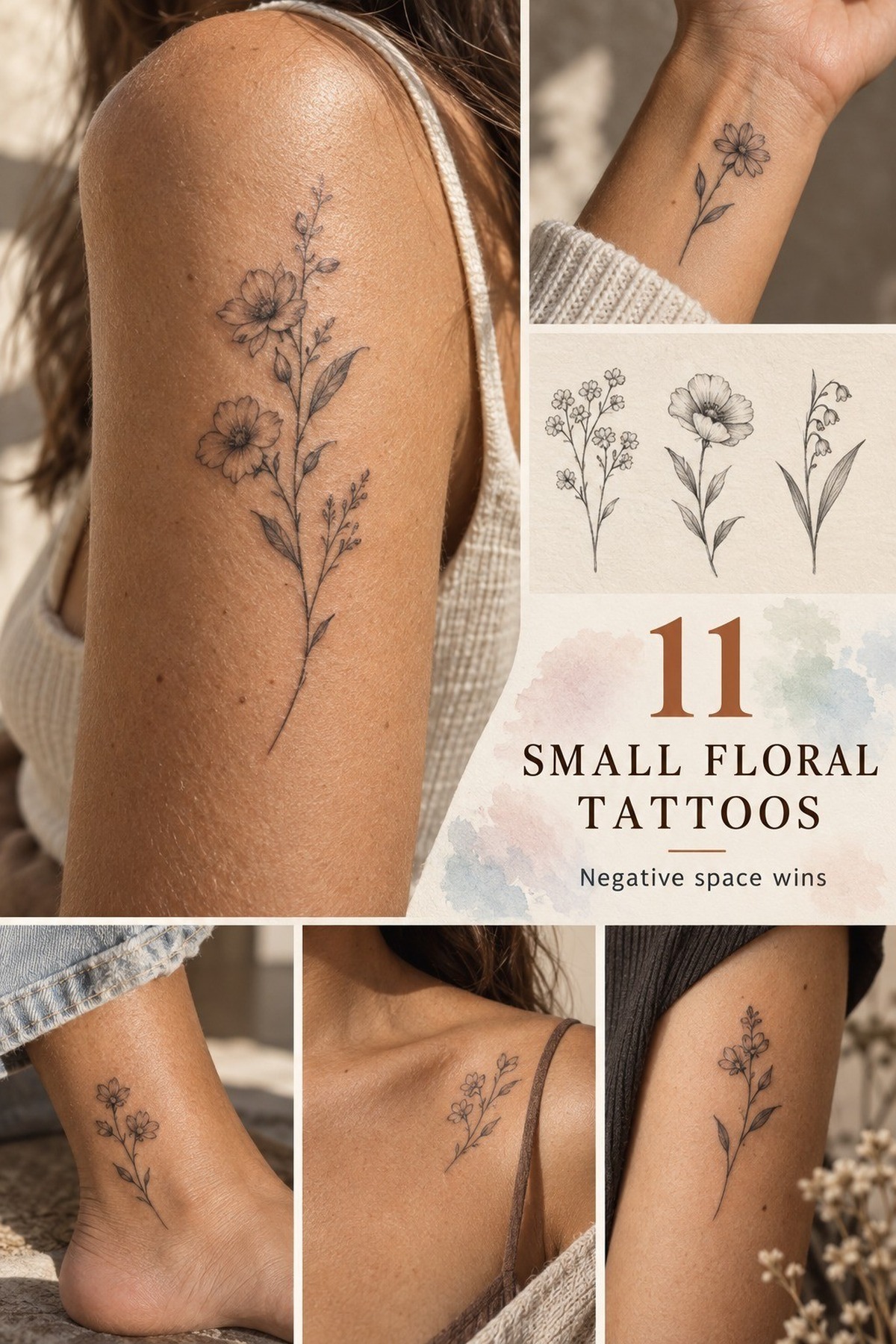
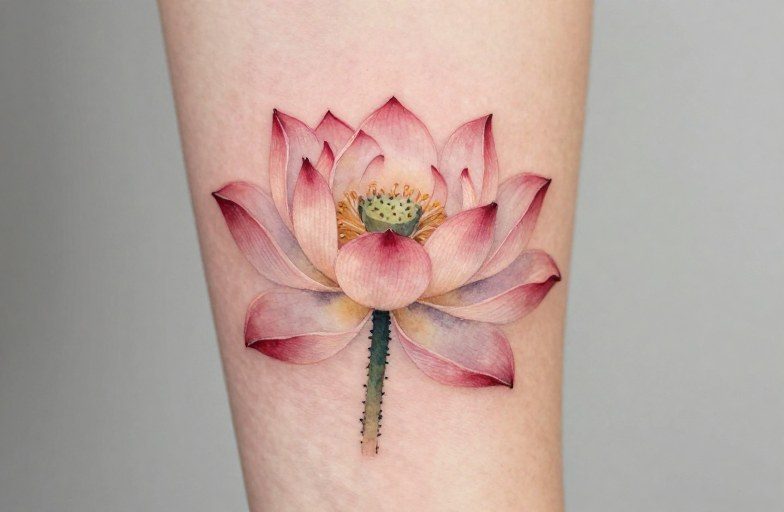
A watercolour lotus tattoo carries the core symbolism of the lotus flower, rising unstained from murky water, representing resilience, spiritual awakening, and the ability to thrive through difficulty. The watercolour technique amplifies this meaning: the bleeding edges and unpredictable pigment flows mirror the messy, non-linear reality of personal growth. Unlike traditional lotus tattoos with their crisp outlines, the watercolour style suggests that beauty and transformation don’t require perfect containment.
Who Chooses This Tattoo
People Marking Personal Recovery
Those who’ve navigated depression, addiction, or major life upheaval often gravitate toward this specific combination. The lotus provides the narrative structure, growth from darkness, while the watercolour technique acknowledges that recovery isn’t a clean line. The pigment bleeds, pools unexpectedly, and dries differently than planned. That visual honesty resonates with people who found their hardest-won stability still looks messy from the outside.
Artists and Creatives
Painters, musicians, and designers frequently request this style because the technique itself references their medium. The tattoo becomes a dual symbol: the lotus for creative process (the struggle before the work), and the watercolour for the work itself. Placement often reflects this, inner forearms where the tattoo sits near the hands that make things, or ribs where it’s private but felt during the physical act of creation.
- People transitioning between life stages (divorce, career change, relocation) who want symbolism without rigid imagery
- Those with existing traditional tattoos seeking contrast through softer, less structured work
- Individuals drawn to Eastern philosophy but wanting contemporary execution rather than classical iconography
Common Variations & Styles
Technique Spectrum
“Watercolour” in tattooing spans a genuine range. At one end, artists use actual watercolour-style washes, diluted pigments, no black outlines, visible paper-white skin creating highlight effects. At the other, some work incorporates strategic linework: a partially outlined lotus with colour bleeding beyond the boundaries, or a fully rendered flower with only the background in loose wash. The more linework present, the crisper the tattoo ages; pure watercolour without any structural ink tends to blur faster.
Colour Direction
Pink and soft red dominate, referencing the lotus’s natural colouration and its association with the heart in Buddhist tradition. Blue lotus watercolour pieces draw from Egyptian symbolism, where the blue lotus (Nymphaea caerulea) represented rebirth and the sun’s cycle. Purple and indigo variations connect to the crown chakra and spiritual awakening. Monochromatic black-and-grey watercolour exists but reads more as “ink wash” than true watercolour, still effective, different mood entirely.
- Single lotus bloom versus full plant with stem and leaves
- Closed bud (potential, beginnings) versus open flower (fullness, arrival)
- Descending petals suggesting movement or falling
- Integration with geometric frames or mandala elements behind the wash
Design Tips & Pairings
The watercolour lotus demands careful pairing because its softness can turn to mush against busy companion pieces. It works best with elements that either share its fluidity or provide deliberate contrast. Script in flowing handwriting can extend from the stem like a natural growth. Solid black geometric shapes, triangles, fine lines, stippled backgrounds, create tension that makes the watercolour pop rather than dissolve.
What Complements Without Competing
Koi fish share the lotus’s muddy-water origin story and translate beautifully into watercolour technique. Dragonflies, with their transparent wings, echo the pigment’s lightness. Moon phases in thin linework above or below the lotus ground the composition without heaviness. Avoid pairing with heavy black tribal, bold traditional Americana, or dense biomechanical, the visual languages fight rather than converse.
Scale Considerations
Watercolour technique needs room. The washes require sufficient skin real estate to read as intentional rather than accidental. A lotus smaller than three inches across often loses its petal definition within two years. Conversely, massive back pieces risk the watercolour reading as unfocused from a distance. The sweet spot for most bodies: four to seven inches at the flower’s widest point, with stem and leaves extending to create vertical or horizontal movement.
Mythology & Folklore
Eastern Frameworks
The lotus appears across Hindu, Buddhist, and Jain traditions with consistent core meaning: transcendence. In Buddhist cosmology, the lotus throne supports figures who’ve achieved enlightenment, rising above attachment. The colour matters: red lotus often linked to Avalokiteshvara’s compassion, white to purity of mind, blue to wisdom’s victory over the senses. The watercolour technique’s modern Western application doesn’t negate these associations; it translates them for contemporary skin.
Egyptian and Ancient Connections
The blue lotus in ancient Egyptian practice held different weight, associated with the sun’s rebirth each morning, and commonly used in ritual contexts. Some trace it to the narcotic or mildly psychoactive properties of Nymphaea caerulea, which complicates simple “purity” readings. This layered history means a watercolour blue lotus can carry undertones of consciousness alteration, creative vision, or liminal states alongside standard rebirth symbolism.
Japanese lotus (hasu) connections to death and memorial practice create another branch. Lotus appear in Buddhist funeral art, growing from the murk of existence into clarity. A watercolour lotus in memoriam carries this tradition with the technique’s added suggestion that grief itself is fluid, non-linear, and ultimately powerful rather than terminal.
Best Placements
Flow-Following Locations
The watercolour lotus excels where the body has natural curves that the pigment can follow or cut across. The outer thigh’s gentle convexity lets the lotus sit like a bloom on water. The shoulder blade’s flat plane accommodates the full flower with stem trailing toward the waist. Ribs work for vertical compositions, the stem following the body’s natural line, petals spreading across the intercostal spaces.
Visibility and Professional Context
Inner bicep and upper arm placements offer concealment with the option to display. The watercolour style’s softness sometimes reads as less “aggressive” to conservative workplaces than bold black traditional work, though this varies by industry and geography. Foot and ankle placements are technically possible but problematic: the skin’s thinness, constant friction, and poor healing environment cause watercolour’s already-vulnerable softness to degrade faster than elsewhere.
- Forearm: high visibility, good for medium scale, easy to show or cover with long sleeves
- Back of upper arm: private but accessible, excellent canvas size for detail
- Chest, near shoulder: dramatic central placement, works with sternum or collarbone as stem extension
- Calf: substantial flat area, less sun exposure than upper body, good for larger compositions
How It Ages on Skin
The Watercolour Challenge
This is where the romanticism meets reality. Watercolour tattoos, lotus or otherwise, age differently than lined work. Without black outlines to hold boundaries, the diluted pigments migrate through the dermis over time. What reads as soft, bleeding beauty at year two can become indistinct blurring by year eight. The lotus’s petal edges, crucial to its recognition, are particularly vulnerable. Lighter colours (yellows, pale pinks, soft greens) fade faster than deeper saturation.
Maintenance and Expectations
Sun exposure accelerates fading dramatically; SPF on the tattoo area isn’t optional if you want longevity. Touch-ups every three to five years are realistic for pure watercolour pieces, more frequent if the work was especially light. Some artists now build in “future-proofing”, subtle grey linework beneath the colour that provides structure as the pigment softens, invisible initially but emerging as insurance.
Skin type matters significantly. Oilier skin tends to spread pigment faster. The lotus’s detailed center, its seed pod with its distinctive circular pattern, often disappears first as the smallest elements blur together. Choosing slightly bolder saturation than initially desired usually ages into the softness people actually want, rather than starting soft and ending invisible.
Key Takeaways
A watercolour lotus tattoo merges enduring symbolism with contemporary technique, but that merger requires understanding both sides. The lotus’s meaning, resilience, emergence, spiritual growth, remains potent regardless of style. The watercolour execution adds layers of interpretation about messiness, process, and non-linear transformation, while demanding more maintenance and placement wisdom than traditional approaches.
The best results come from artists who specifically specialize in this technique, not generalists who list it among fifty styles. Their portfolios should show healed work at one year minimum, not just fresh photographs where the bleeding edges look dramatic. Ask about their approach to longevity, whether they build in structural elements, what pigments they trust for hold, how they handle the lotus’s critical center detail.
Your skin will change the image. The watercolour lotus embraces that inevitability rather than fighting it, which is perhaps its most honest connection to the flower it depicts: both emerge from murky conditions, transform through time, and carry their history visibly forward.
Frequently Asked Questions
Does a watercolour lotus tattoo need touch-ups more often than other styles?
Yes, typically every three to five years. Without black outlines to contain the pigment, watercolour pieces blur and fade faster than traditional work. Sun protection and choosing slightly bolder initial saturation can extend the crisp period.
Can a watercolour lotus be done with black and grey instead of colour?
Absolutely, though it reads more as ink wash or sumi-e style than true watercolour. The technique still uses diluted pigment and bleeding edges, but the limited palette creates a more contemplative, less bold mood that some prefer.
What’s the difference between a lotus and a water lily in tattoo symbolism?
The lotus (Nelumbo nucifera) rises above the water on a stem, symbolizing transcendence, while water lilies (Nymphaea) float on the surface. Many tattoo designs blend them visually, but the rising lotus carries stronger associations with spiritual growth and overcoming difficulty.
Why do some watercolour lotus tattoos include geometric elements behind the flower?
The geometric framing provides structural contrast that prevents the watercolour from looking accidental or unfocused. It also creates a visual dialogue between chaos and order, which some find enhances the lotus’s meaning about finding clarity within difficulty.