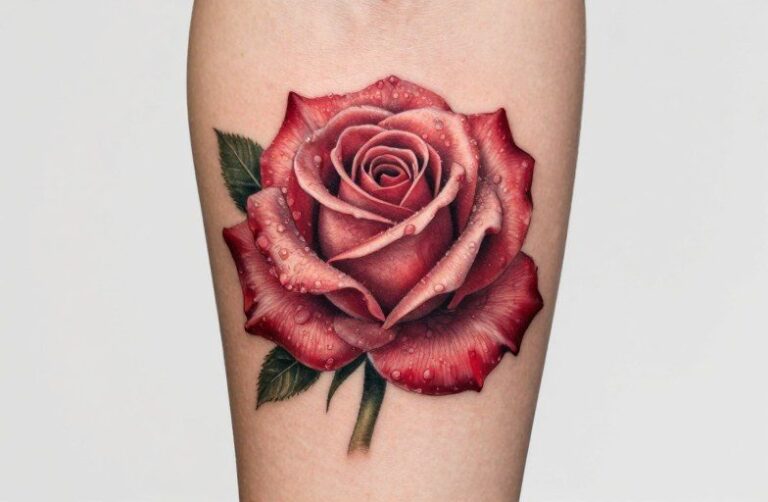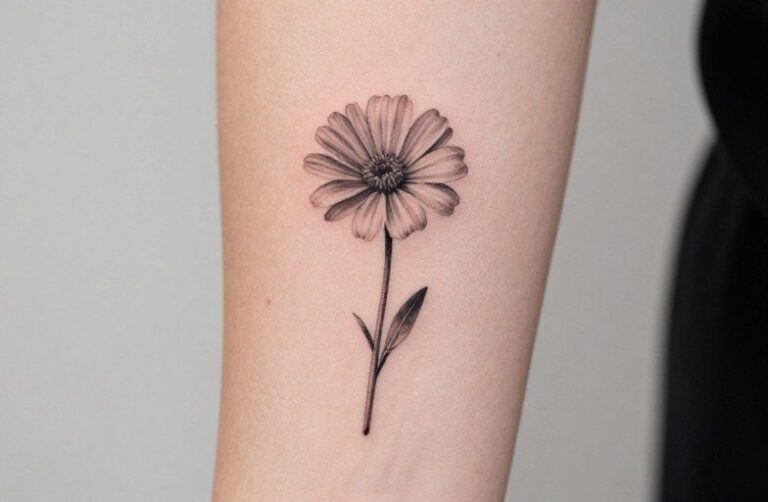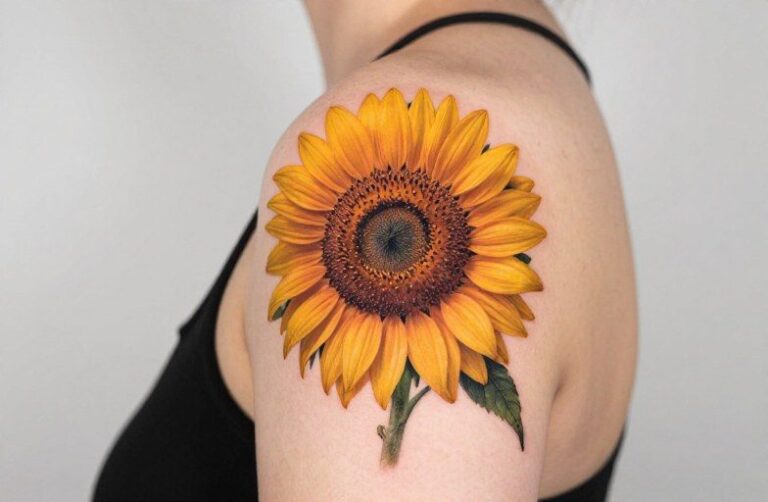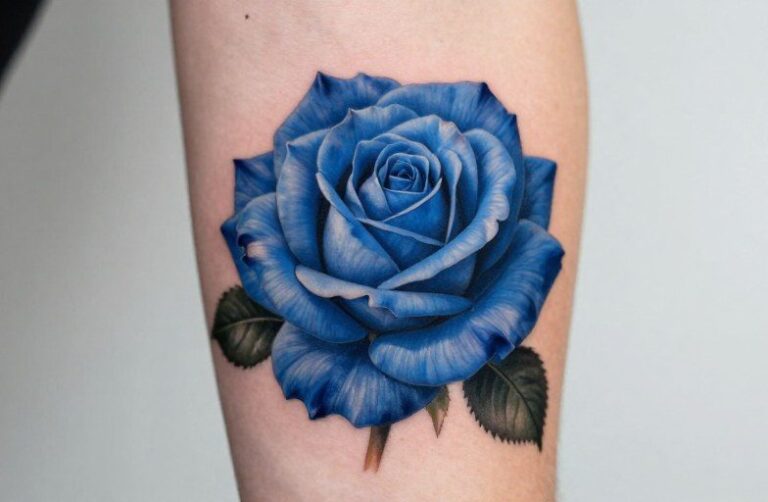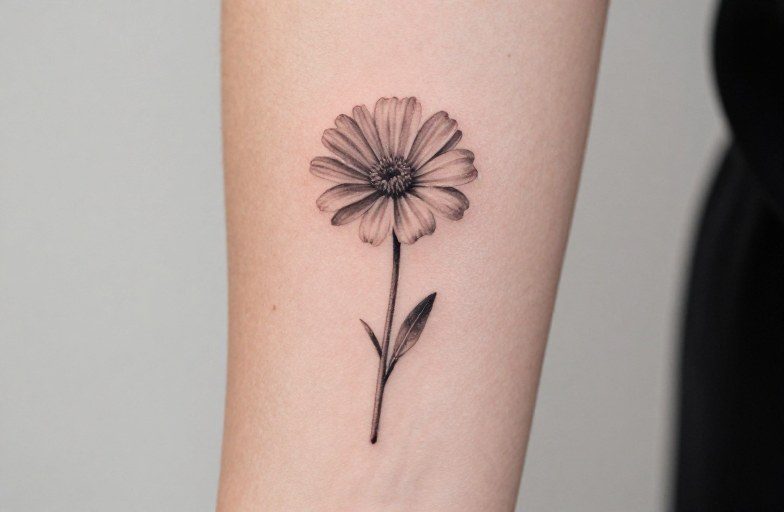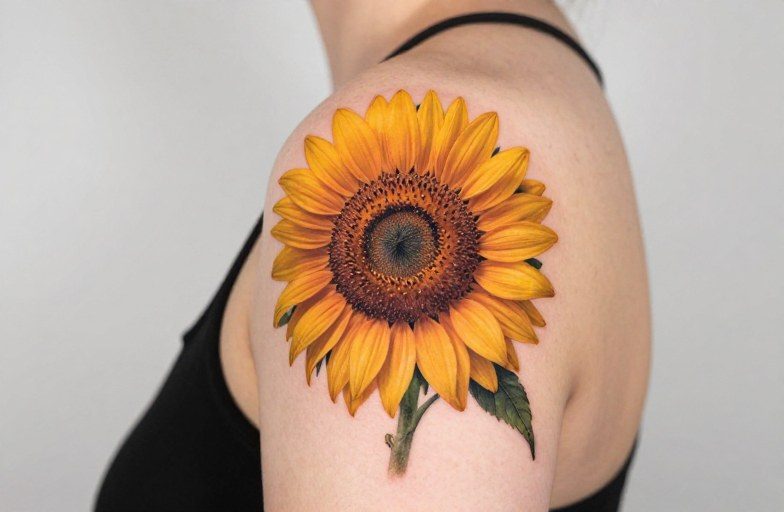
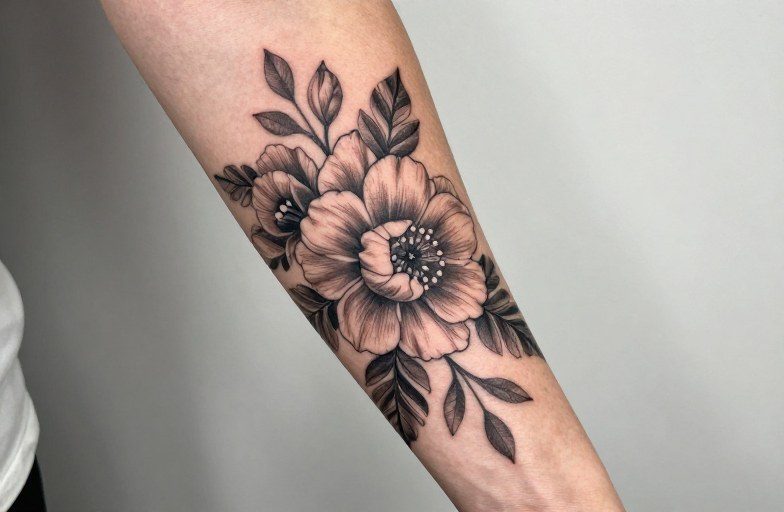
A floral arm tattoo is rarely just decoration. The specific flower, its placement on the arm, and how it interacts with muscle structure all shape what it communicates, growth, loss, resilience, or connection to a particular person or place. The arm’s visibility means these pieces are often social signals, not private ones, and that changes their weight.
Personal & Modern Meanings
Contemporary floral arm work tends to cluster around a few genuine emotional territories. Memorial pieces, roses with dates, lilies with initials, dominate the outer forearm, where the wearer can see them daily. Recovery and growth narratives often favor the upper arm, where the bicep’s flex and release mirror the idea of strength returning. Some choose blooms tied to birth months or the flowers a specific person grew.
Single Bloom vs. Bouquet
One flower reads as singular focus: this specific meaning, this specific loss or celebration. A bouquet permits contradiction, thorned stems with soft petals, dead blooms beside fresh ones. The arm’s length accommodates either, but the visual logic differs. Single large blooms work best on the outer bicep or flat inner forearm where they can hold detail at scale. Bouquets need the wrap-around logic of the full sleeve or the vertical strip of the forearm.
Color vs. Black and Grey
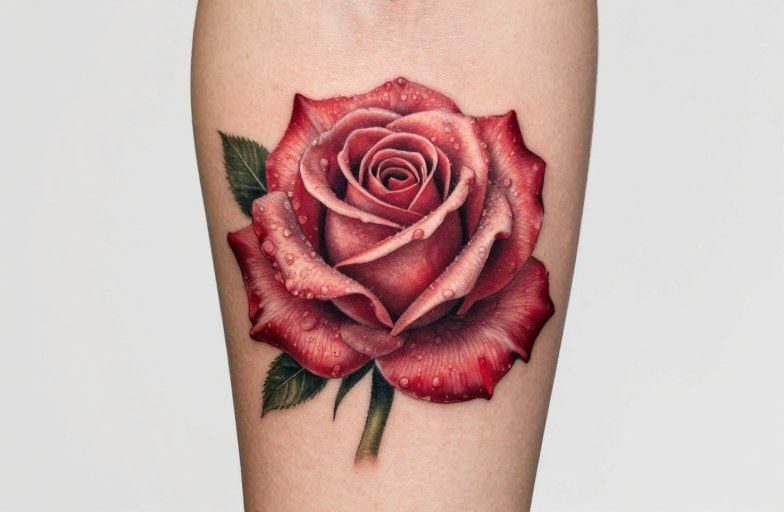
- Color carries immediate recognition: red roses, blue forget-me-nots, sunflowers
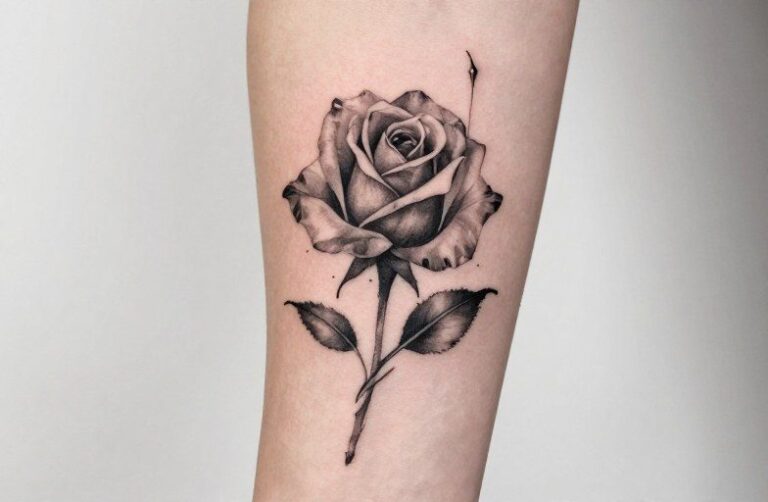
- Black and grey shifts emphasis to form, drooping heads, tight buds, the architecture of stems
- Color fades faster on arms due to sun exposure; black and grey ages more gracefully but can muddy if over-shaded
How It Ages on Skin
Arms take a beating. Sun, friction from sleeves, gym contact, and simple time all accelerate degradation. Fine lines in petals blur after five to eight years. Whip-shading in leaves softens to a haze. The inner forearm, shielded from direct sun, preserves detail better than the outer arm or shoulder cap.
Line Weight and Detail Density
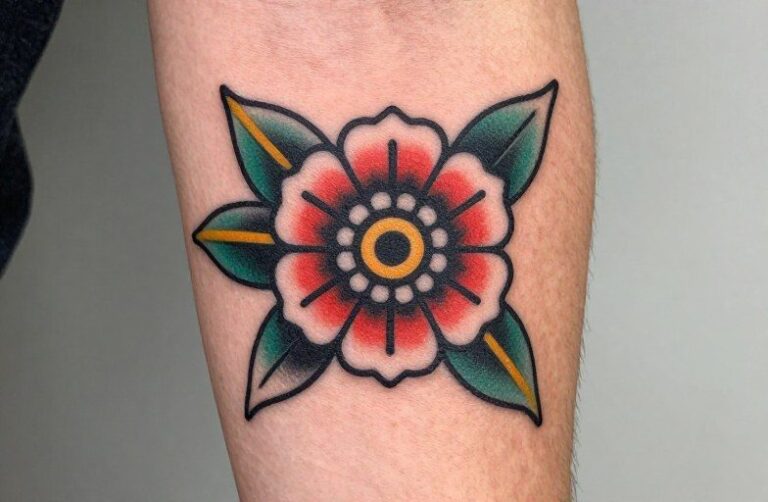
Bold outlines on petal edges hold longer than hairline stippling. Negative space, skin showing through, creates contrast that doesn’t depend on ink saturation. Dense packing of tiny flowers (cherry blossoms, baby’s breath) often becomes indistinguishable smudges within a decade. Larger, simpler shapes age cleaner.
The Stretch Zones
The inner bicep and back of the upper arm change with muscle gain or weight fluctuation. A peony placed here can distort significantly. The outer forearm, by contrast, stays relatively stable. For anyone planning substantial body changes, the forearm’s reliability matters.
Best Placements
The arm offers distinct zones with different social visibility and pain profiles. Choice of placement shapes how the tattoo functions in daily life.
- Outer forearm: Highly visible, moderate pain, flat canvas for detailed work. Best for pieces you want others to notice and ask about.
- Inner forearm: More private, slightly more painful due to nerve density, excellent for text integration or stems that follow the arm’s natural line.
- Outer bicep: Classic location, less painful, curves require design adaptation. Large blooms work well here.
- Full sleeve: Permits narrative sequencing, bud to bloom to wilt, seasonal progression, or color gradients.
- Shoulder cap: Frames the arm, connects to chest or back work. Painful near the ditch.
Similar & Related Symbols
Floral arm pieces rarely exist in isolation. They pair with or substitute for related imagery that carries overlapping resonance.
Botanical Adjacencies
Snakes coiled through roses carry different weight than snakes alone, the bloom softens the threat, or the threat poisons the beauty. Moths and butterflies share the floral space naturally, both literally and symbolically. Skulls with flowers are common memorial shorthand, though the combination has become so frequent it risks cliché without personal modification.
Non-Floral Alternatives
Some who want growth symbolism choose trees instead, roots visible, branches reaching. Others prefer geometric patterns that abstract petal structures. The arm’s visibility makes these choices legible to others; a tree reads as grounded where a flower reads as emotional.
Mythology & Folklore
Specific flowers carry accumulated cultural weight that persists in contemporary choices, though wearers often select them without knowing the full background.
The lotus, often linked to Buddhist and Hindu traditions, carries purity-through-adversity symbolism, growth from mud. On the arm, it’s frequently placed to move with the muscle, the bloom opening as the arm extends. The rose’s association with secrecy (sub rosa) and with the Virgin Mary persists in Western contexts; the color shifts the meaning substantially. White lilies connect to funerary traditions across multiple cultures, particularly for mothers.
Regional Variations
Chrysanthemums dominate Japanese funeral and imperial imagery; on a Western arm, they may read simply as “exotic flower” rather than death or nobility. Peonies in Chinese tradition carry prosperity and masculine honor associations, somewhat at odds with their feminine coding in American tattoo culture. Understanding these slippages matters if the wearer has actual cultural connection to the flower’s origins.
Design Tips & Pairings
Practical decisions shape whether a floral arm piece succeeds visually and holds meaning over time.
Working with the Arm’s Structure
Stems should follow, not fight, the arm’s long axis. A vertical forearm piece with horizontal stems looks wrong immediately and ages worse. The bicep’s curve suits round blooms, roses, peonies, dahlias, that can be centered and radiate outward. The forearm’s flat planes suit elongated forms: irises, calla lilies, trailing vines.
Complementary Elements
- Daggers through roses: betrayal, protection, sharp beauty
- Bee or hummingbird: pollination, fleeting presence, ecological awareness
- Script banners: names, dates, coordinates, risky if relationships shift
- Jeweled centers: opulence, artificial enhancement of natural form
Pairings work best when they modify rather than simply illustrate the flower’s meaning. A bee on a sunflower is expected; a bee on a corpse flower carries genuine strangeness.
Key Takeaways
Floral arm tattoos derive their meaning from specific flower choice, placement logic, and how the design interacts with the arm’s movement and visibility. They age according to sun exposure, line weight, and detail density, factors the wearer can influence but not eliminate. The arm’s social exposure means these pieces function as communication, not merely personal record. Cultural associations persist whether the wearer knows them or not, so some research repays the effort. The best designs respect the body’s structure: stems follow bone, blooms fit muscle curve, and negative space preserves readability as ink settles and spreads over years.
Frequently Asked Questions
Do floral arm tattoos hurt more than other arm designs?
Pain varies more by placement than by subject. The inner forearm and ditch (inner elbow) hurt more than the outer bicep. Floral detail work, fine lines, stippling, requires longer sessions, which can increase cumulative discomfort compared to bold, simple designs.
Which flowers fade fastest in color tattoos?
Yellows and light pinks fade quickest, especially on sun-exposed outer arms. Deep blues and blacks hold longest. Red sits in the middle, visible for years but eventually muting toward orange or grey.
Can I cover an old floral tattoo with a new floral design?
Yes, but the existing ink limits options. Dark, dense old work needs larger, darker new elements to cover it successfully. Faded pieces offer more flexibility. A skilled artist can often incorporate old stems into new growth logic.
How do I choose a flower that isn’t culturally appropriative?
Research the specific flower’s significance in its culture of origin. If you lack personal connection to that culture, consider whether your use trivializes sacred meaning. Many universal flowers, roses, daisies, lavender, carry less loaded cross-cultural weight.