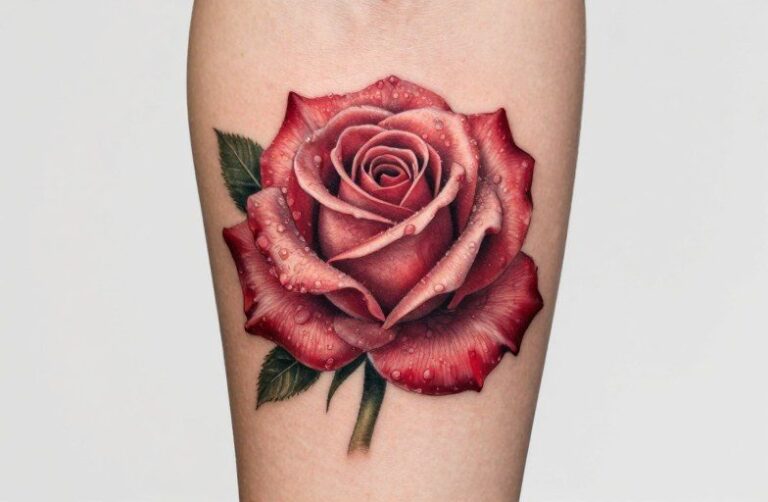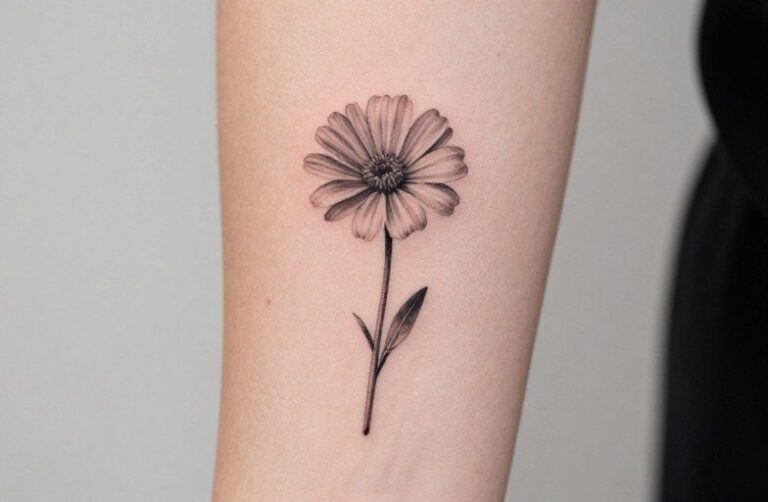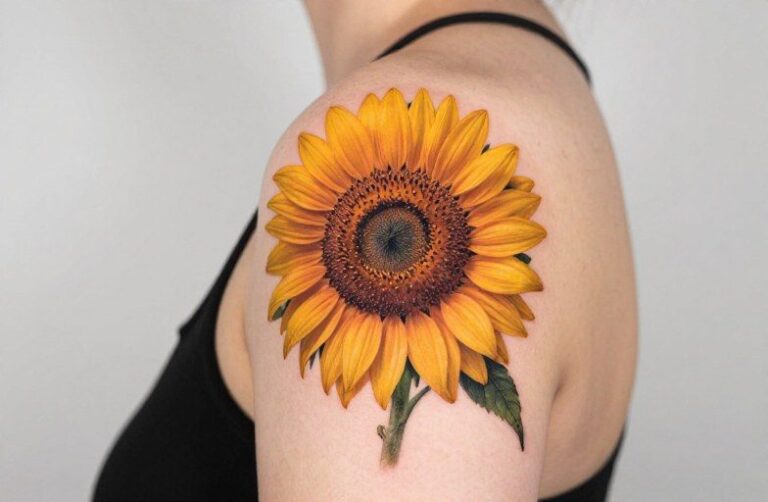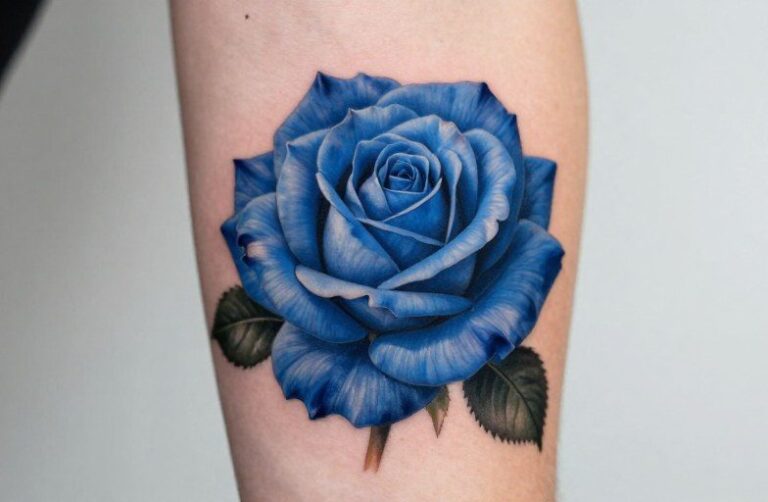
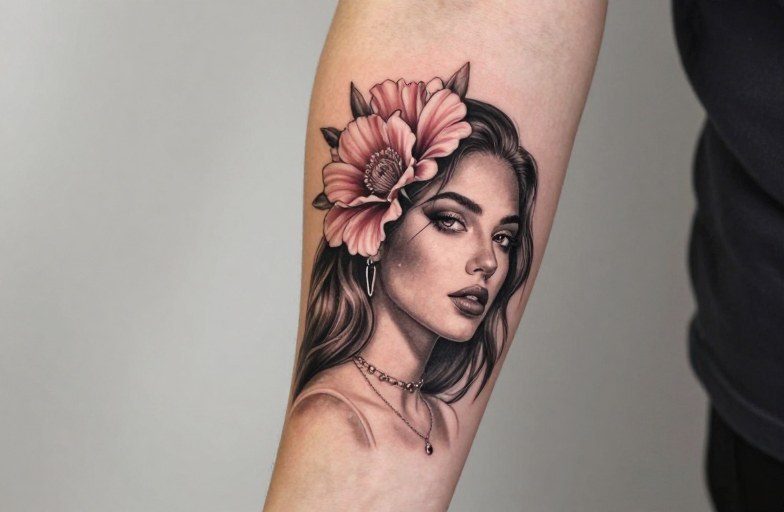
A flower woman tattoo depicts a female figure merged with or adorned by floral elements, sometimes a woman’s face emerging from petals, other times a full portrait with flowers woven through hair or replacing part of the form. The core meaning centers on the connection between human life and natural cycles: growth, decay, beauty, and resilience. It speaks to how people contain multitudes, both delicate and strong, temporary and renewing.
History & Cultural Roots
Images combining human and plant forms stretch back millennia, though the specific “flower woman” tattoo motif gained traction in Western tattooing during the 1960s-70s alongside the rise of psychedelic art and the neo-traditional movement. Earlier precedents include Art Nouveau posters of the 1890s, where women’s bodies often dissolved into vines and blossoms, and the green man foliate heads of European architecture.
Pre-Tattoo Visual Precedents
Mucha’s posters, Klimt’s paintings, and Japanese bijin-ga (beautiful person pictures) all trained the cultural eye to accept the woman-flower fusion as aesthetically natural. Tattoo artists borrowed freely from these sources, adapting two-dimensional fine art into designs that wrap around three-dimensional bodies. The transition wasn’t seamless, what reads as flat pattern on paper requires careful foreshortening and flow when applied to shoulders, ribs, or thighs.
American Traditional Roots
Classic American tattooing featured “girl heads” and separate flower motifs; combining them into a single integrated image came later. Sailor Jerry’s hula girls and roses existed side by side but rarely merged. The fusion style really developed as artists gained technical confidence with color blending and as clients requested more personalized, less stock imagery.
Religious & Spiritual Angles
Certain flower-woman combinations carry specific spiritual weight. The Virgin Mary is often linked to roses (the rosary itself derives from “rose garden”), so a woman with roses can evoke maternal divinity or sacred femininity. In Hindu and Buddhist iconography, Lakshmi and Tara are frequently depicted standing on lotus flowers, making the lotus-woman pairing resonant for practitioners of those traditions.
Earth-Based and Goddess Traditions
Modern pagan and Wiccan practitioners sometimes choose flower woman tattoos as representations of the divine feminine or the triple goddess (maiden, mother, crone). The specific flower chosen matters enormously here: hawthorn for May Day and Beltane, grain flowers for harvest aspects, snowdrops for the returning maiden. The face in these designs is often deliberately non-specific, meant to function as archetype rather than portrait.
Common Variations & Styles
The flower woman motif adapts to nearly every tattoo style, though some approaches solve the design problems better than others. The central challenge remains: making two different visual systems (human anatomy and botanical form) read as one coherent image.
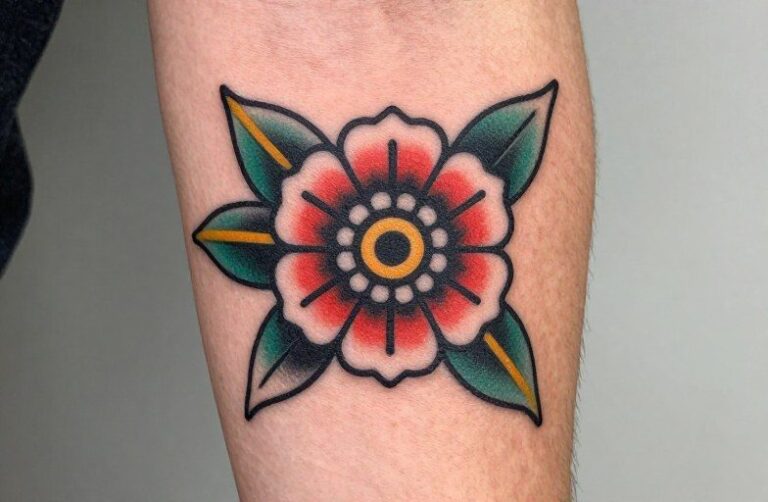
- Neo-traditional: Bold outlines, limited but saturated color palette, stylized features. Flowers often frame the face like a halo or headdress. Heals reliably; the strong line weight holds up for decades.
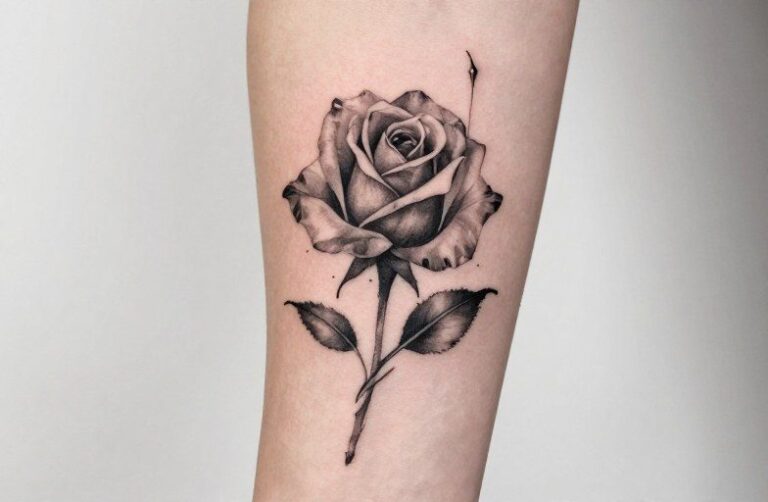
- Realism/black and grey: Photographic rendering of a woman’s face with flowers rendered at matching detail level. Requires large scale to avoid muddiness, minimum palm-sized for the face alone. Best on flat areas: outer thigh, upper arm, calf.
- Japanese-inspired: The woman’s face smaller, integrated into a larger composition with waves, wind bars, or background elements. Flowers carry specific seasonal coding: peonies for wealth, cherry blossoms for transience, chrysanthemums for longevity.
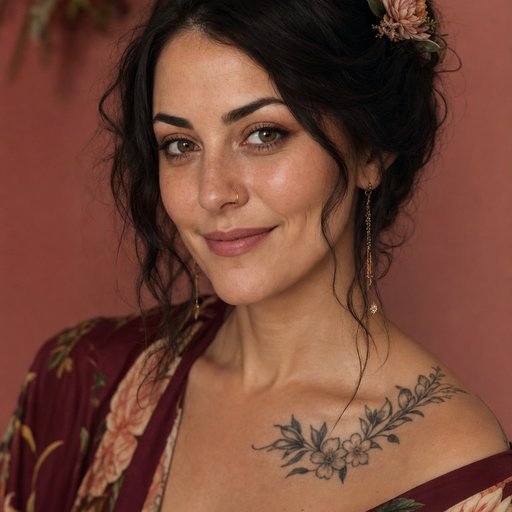
- Illustrative/etching style: Fine lines, crosshatching, botanical illustration aesthetics. The woman’s features may be slightly elongated or stylized. Ages faster than bold styles; expect touch-ups at 5-8 years.
- Abstract/geometric: Face fragmented into petal shapes, or negative space used to suggest both woman and flower simultaneously. Demands an artist with strong design sense; the concept can fail entirely if the dual read doesn’t work.
Placement Considerations
The curved surfaces of the body reward or punish this design depending on placement. The upper back/shoulder blade offers a flat canvas that suits frontal portraits. The outer thigh accommodates larger compositions with flowers trailing down. Ribs and sternum work for vertical arrangements, face at top, stem and roots below, but the pain factor and the difficulty of achieving smooth shading in that area make it expert territory. Hands and feet generally fail: too small, too much movement, too fast fading.
Similar & Related Symbols
Understanding what a flower woman tattoo is not helps clarify what it is. Related but distinct imagery includes:
- Flora/Fauna: The Roman goddess of flowers, often depicted with floral dress or surrounded by blossoms. More specifically mythological than general flower-woman imagery.
- Green Man/Green Woman: Face made entirely of leaves, no human skin visible. The flower woman preserves more human identity; the green figure dissolves into pure vegetation.
- Memento mori with flowers: Skull plus roses, often with a woman’s portrait. The flower woman typically celebrates life cycles rather than emphasizing death, though the line can blur.
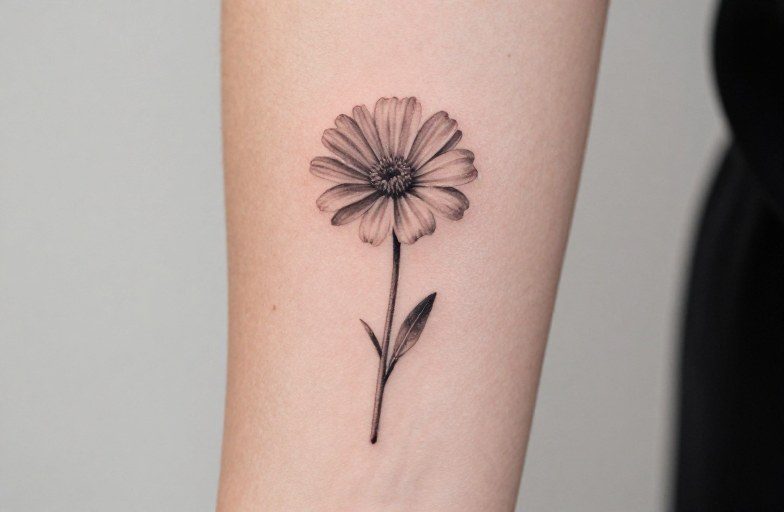
- Single flower tattoos: Peony, rose, lotus without human element. The addition of the woman complicates the symbolism from simple beauty or meaning to narrative or relational.
- Pin-up with flower props: The woman is clearly separate from the flower, holding or wearing it. The flower woman integrates; the pin-up accessorizes.
Symbolism & Core Meaning
Beyond the general life-cycle reading, specific combinations carry targeted significance. A woman’s face with half deteriorating into petals or withering suggests acceptance of aging, the Japanese concept of mono no aware, the pathos of things passing. A woman emerging from a closed bud speaks to potential, becoming, the not-yet-realized. A woman whose hair becomes the flower entirely (no hard boundary) suggests dissolution of ego into nature, or the impossibility of separating person from environment.
The Duality Reading
Flowers and women have been falsely equated with pure delicacy for centuries; the tattoo can reclaim or reinforce this. Some wearers choose thorned roses, pitcher plants, or corpse flowers to insist on the dangerous, hungry, or decaying aspects alongside beauty. The woman’s expression matters: serene, knowing, melancholic, fierce. A smiling face with a venus flytrap reads very differently than downcast eyes with cherry blossoms.
Personal vs. Cultural Symbolism
A birth flower combined with a woman’s portrait (mother, self, child) makes the symbolism specific and private. The same visual structure, woman plus flower, becomes a memorial, a self-portrait, or an aspiration depending on whose face and which bloom. This is where the tattoo moves from stock image to personal emblem, though the visual language remains culturally readable.
Color vs Black and Grey
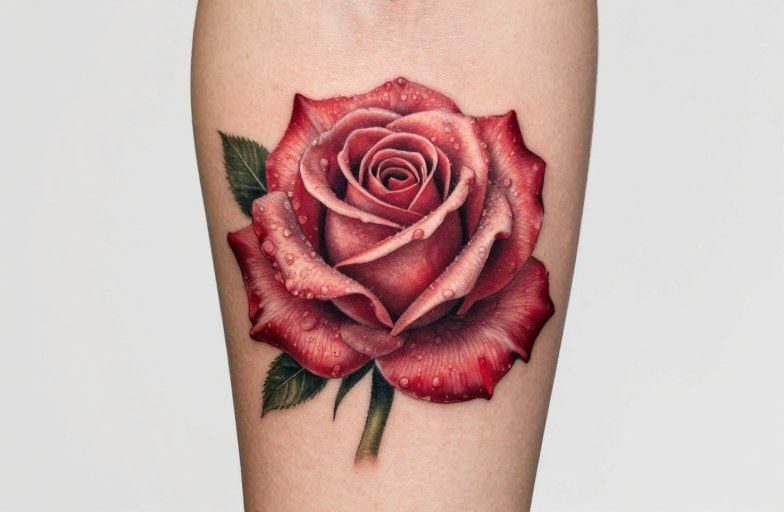
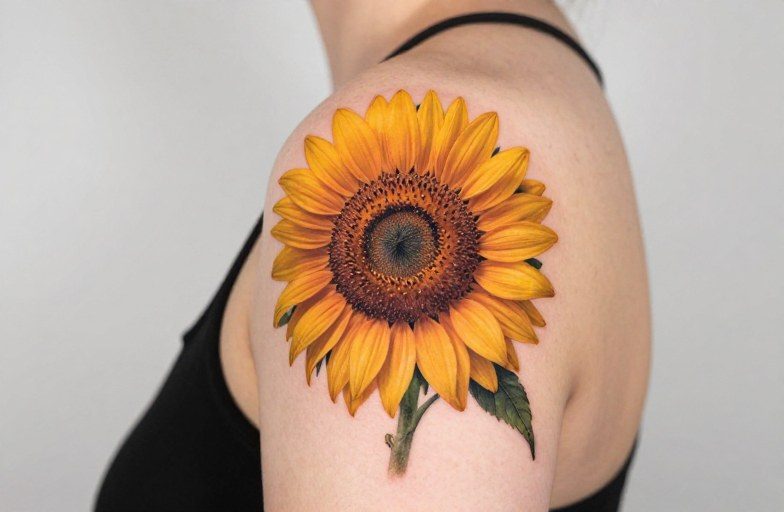
The color choice fundamentally alters both the tattoo’s impact and its longevity. Color flower women read immediately as celebratory, lush, often decorative. Black and grey shift the tone toward melancholy, timelessness, or classical reference. Technically, color demands more sessions, more ink volume, and more precise aftercare to prevent muddling.
How Each Ages
Bright reds and yellows fade fastest, often to pinkish or brownish tones within 5-10 years depending on sun exposure. Blues and greens hold longer. Black and grey ages more gracefully overall: the value range (light to dark) preserves readability even as lines soften. A color flower woman with poor planning can become a single mid-tone blur; black and grey has more forgiveness, but can look muddy if the artist overworked the skin or used too many similar grey values.
Skin Tone Considerations
On darker skin, color requires more saturation and often bolder choices to remain visible; pastel or muted tones can disappear entirely. Black and grey offers reliable contrast across all skin tones but risks ashy healing if the artist works too lightly. Some artists specialize in color realism on dark skin; seek them specifically rather than accepting a generalist’s assurances.
What to Remember
The flower woman tattoo works best when the integration is genuine, when the flower and the woman need each other visually, not just sit next to each other. Ask your artist how the design flows with your body’s movement, not just how it looks static on paper. Consider the long game: fine-lined petals around a delicate face will blur; bold shapes and sufficient contrast preserve the reading. The meaning you bring matters, but the visual logic has to function independently, otherwise you’re explaining your tattoo for twenty years instead of wearing it. Finally, this motif is common enough that finding a fresh angle, whether in style, specific flower choice, or compositional approach, separates the memorable from the merely pretty.
Frequently Asked Questions
Does a flower woman tattoo always represent the wearer themselves?
Not necessarily. Many people choose this motif to honor a mother, partner, or child, using their birth flower or favorite bloom. The woman’s face might be a specific portrait or an idealized type. Ask yourself whether you want the image to function as self-representation, tribute, or broader symbolic statement before settling on design details.
Which flowers pair most naturally with this design style?
Roses and peonies dominate because their layered petals translate well to tattoo form and frame faces gracefully. Lotuses work for spiritual contexts. Wildflowers (poppies, cornflowers, lavender) suit more delicate, illustrative approaches. Avoid flowers with extremely fine structures like baby’s breath as primary elements, they don’t hold up at tattoo scale.
How large should a flower woman tattoo be to age well?
For any facial detail to remain readable over decades, plan for at least the face itself to be palm-sized or larger. Smaller scales force the artist to simplify features to the point of generic, or to use lines so fine they blur within years. A thumbnail-sized flower woman becomes a smudge; spread across a shoulder blade, it stays legible.
Can this design work as a cover-up?
Sometimes, but the structure creates challenges. The woman’s face requires light skin tones, which won’t cover dark existing ink. However, flowers with dense dark petals can sometimes be worked around old tattoos to disguise them, with the face placed on clearer skin nearby. Consult an artist who specializes in cover-ups rather than hoping for a straightforward placement.