A hibiscus flower tattoo most commonly represents beauty that is fleeting but intense, feminine strength, and a connection to tropical or island life. Depending on the culture you pull from, it can also signal romantic availability, honor a specific place like Hawaii or Malaysia, or mark personal transformation. The meaning tightens or loosens based on color choice, placement, and what specific cultural thread you’re pulling.
Mythology & Folklore
Stories about the hibiscus grow thick in tropical soil. In Hawaiian folklore, the flower often linked to the goddess Pele and her sister Hi’iaka, though the specific flower varies by telling. The hibiscus became a symbol of the islands themselves, so much so that wearing one behind a particular ear once signaled relationship status, a detail some people still reference in tattoo choices today.
Malaysian and Pacific Threads
The national flower of Malaysia, Hibiscus rosa-sinensis, carries official weight there as a symbol of national identity. Some trace Pacific Islander associations to creation myths where the flower represents the vulva or female generative power, though this varies enormously by specific island and telling. If you’re drawing from this well, specificity matters, “Polynesian” is a massive umbrella, and a Samoan reference differs from a Hawaiian one.
Chinese and Indian Streams
In some Chinese traditions, the hibiscus is associated with fame, wealth, and glory that is showy but temporary. Indian Ayurvedic texts valued the plant medicinally, and some Hindu associations link it to the goddess Kali, where red hibiscus is used in offerings. Tattoo wearers sometimes pull from this devotional angle, though most Western interpretations skip the religious weight and keep the aesthetic.
Similar & Related Symbols
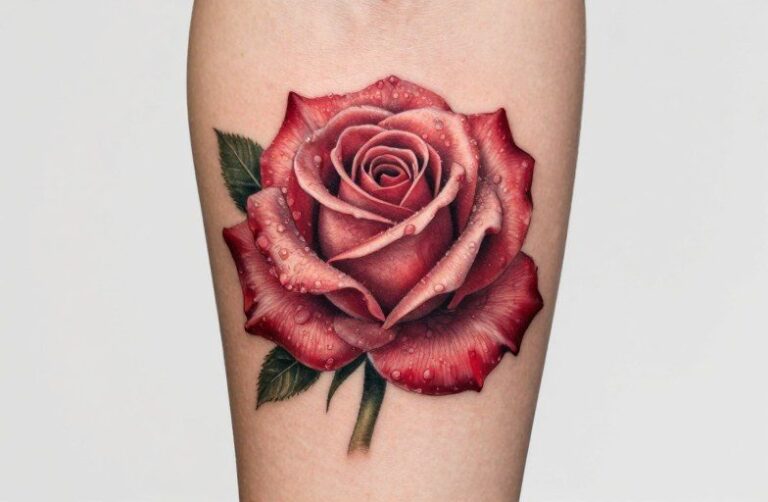
The hibiscus sits in a crowded field of floral tattoos, and understanding where it diverges helps clarify your choice. Lotus tattoos lean heavily into Buddhist or Hindu spiritual awakening, mud to bloom, suffering to enlightenment. Cherry blossoms share the “beautiful but brief” life symbolism, but with a distinctly Japanese cultural anchor and a more melancholic, seasonal tone. Roses carry European romantic baggage, thorns and all. The hibiscus occupies a lighter, more tropical register: less angst, more open-petaled immediacy.
- Plumeria: Also tropical, but more associated with fragility, new beginnings, and lei-giving in Hawaiian culture. Softer shape, less graphic punch.
- Bird of paradise: Shares tropical energy but reads more exotic, more “vacation.” The hibiscus feels more accessible, more everyday.
- Peony: Eastern wealth and honor, fuller and more layered. The hibiscus is simpler, more open, less hidden.
Someone choosing hibiscus over lotus often wants the beauty without the heavy spiritual narrative. Someone choosing it over rose wants warmth without the romantic combat imagery.
History & Cultural Roots
The hibiscus genus contains hundreds of species across warm climates globally, which explains its scattered but consistent cultural presence. European colonial contact with the Pacific spread the flower’s image back to the West, where it became shorthand for “tropical escape” in advertising and tourism from the 1930s onward. Tattoo adoption followed this visual familiarization.
From Sailor Jerry to Modern Shops
Traditional American tattooing incorporated hibiscus designs as Pacific and Asian influences filtered through sailor culture. The flower worked well in the bold, limited-palette style of the mid-20th century, large petals, clear outlines, readable from distance. Modern realism and watercolor styles have complicated this, sometimes sacrificing that clarity for soft gradients that age poorly.
National and Regional Identity
Beyond Hawaii and Malaysia, the hibiscus marks South Korea’s national flower (the mugunghwa, a different species but related genus), and Haiti’s coat of arms features a hibiscus species. Tattoo wearers with heritage connections to these places sometimes use the flower as coded regional pride, especially when more obvious national symbols feel too heavy or political.
Religious & Spiritual Angles
Direct religious hibiscus symbolism is thinner than for lotus or rose, but not absent. In Hindu practice, red hibiscus is offered to Kali and Ganesha, the flower’s five petals aligning with the five elements or five senses in some interpretations. Devotional tattoos in this mode are rare in Western shops but do appear in South Asian diaspora communities.
Secular Spirituality
More commonly, the hibiscus carries a loose spiritual association with “being present”, its brief bloom (many species last only a day) read as carpe diem imagery. This is less doctrinal, more personal philosophy. The tattoo becomes a reminder of impermanence without the Buddhist formal structure that a lotus would imply. Some trace this to Zen-adjacent thinking filtered through Western self-help culture rather than to direct religious lineage.
Feminine Divine Connections
The flower’s association with female deities across cultures, Pele, Kali, various mother figures, makes it a quiet choice for feminine power tattoos that avoid the more common moon or goddess imagery. The hibiscus doesn’t announce itself as feminist symbol the way some imagery does, which appeals to wearers wanting personal meaning without public declaration.
Who Chooses This Tattoo
Geography and heritage play obvious roles, Hawaii residents, Malaysian diaspora, Pacific Islander heritage. But the hibiscus also attracts people with no cultural claim, drawn to the aesthetic or the “vacation” association. This tension between appreciation and appropriation surfaces in consultations sometimes, though most artists report clients simply wanting something beautiful and warm.
Placement Patterns
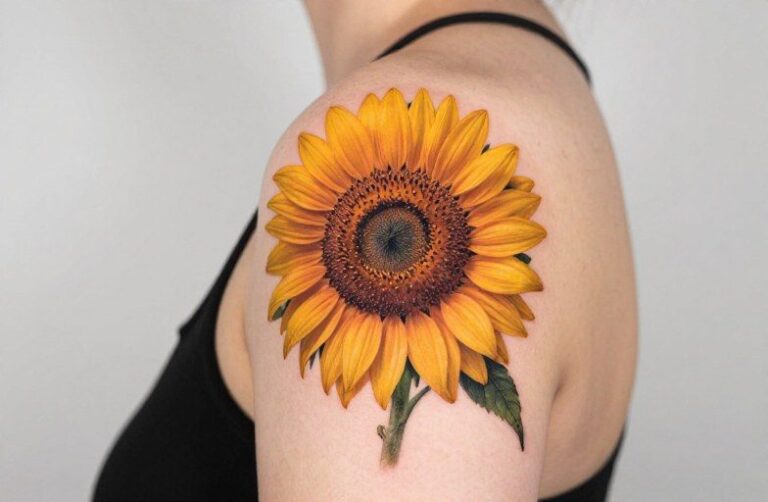
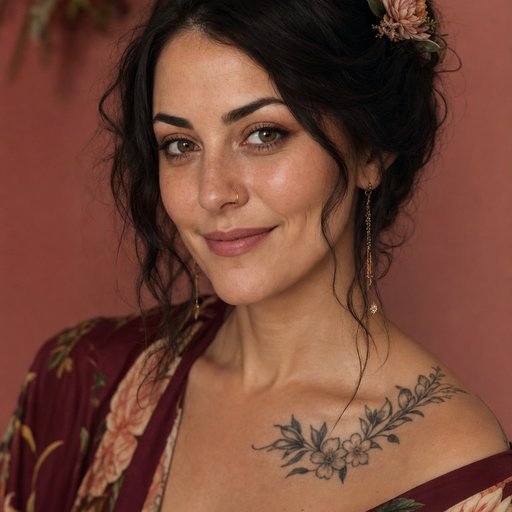
Common placements follow the flower’s shape: shoulder cap (the curve suits the bloom), outer thigh (large canvas for detail), ribs (elongated stem work), and foot or ankle (small, simple, often first tattoo). The hibiscus rarely works well as a tiny tattoo, the petal structure needs room to breathe, and minimization tends toward blobby aging. Men choosing hibiscus often pair it with other imagery (tribal backing, waves, birds) to masculinize the floral element, though this is less common now than in the 1990s.
Style Choices
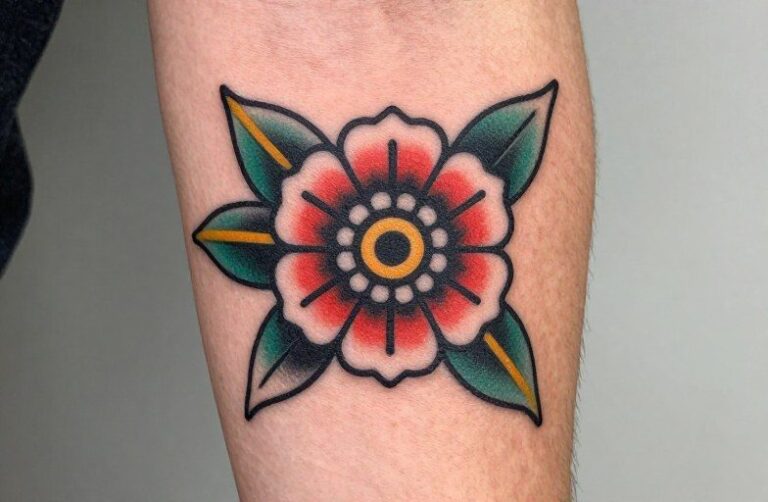
- Traditional/Americana: Bold outlines, limited color, heavy black. Ages well, reads clearly.
- Japanese-influenced: Often paired with water, wind bars, or background elements. More narrative composition.
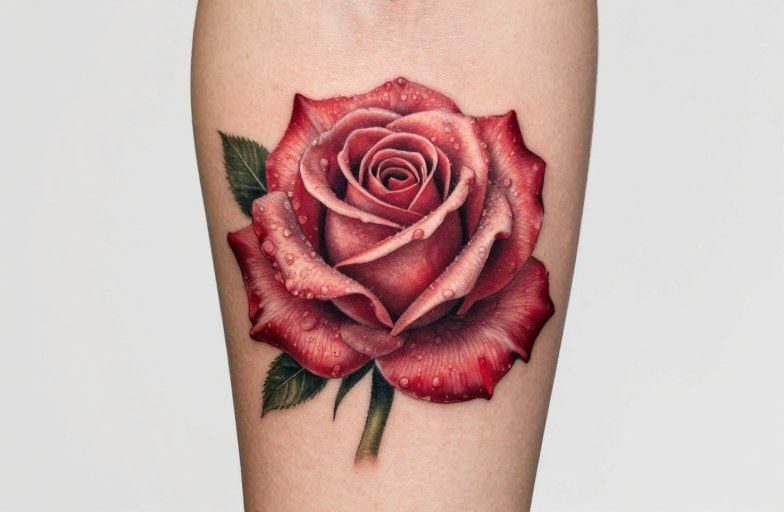
- Realism: High detail, soft shading, color gradients. Requires skilled artist; fades faster without strong black foundation.
- Watercolor: Splashy, no-outline style. Trendy but problematic for longevity, hibiscus shape can become unrecognizable as ink spreads.
Color vs Black and Grey
Color choice radically shifts the tattoo’s impact and longevity. The classic hibiscus is red, pink, or yellow with a dark center, high contrast that pops on skin. But those bright pigments fade fastest: reds and yellows are notorious for shifting to orange or dulling within five to ten years, depending on sun exposure and skin type.
Color Specifics
Red hibiscus carries the strongest cultural associations, Hawaiian, Hindu, Malaysian. Pink softens the image, reads more decorative, less charged. Yellow and orange varieties exist botanically but are less common in tattoo iconography; they tend to look dated, tied to 1990s tropical shirt aesthetics. White hibiscus (inked as negative space or very light grey) is subtle but risky, heals patchy, can look like scar tissue on some skin tones.
Black and Grey Approaches
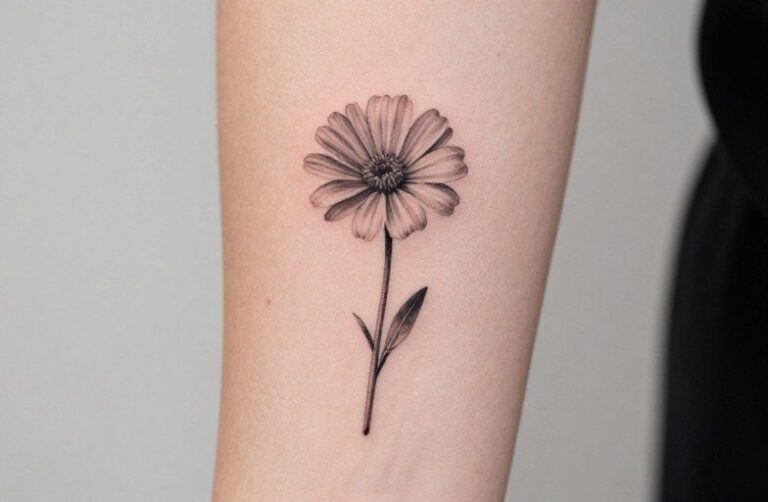
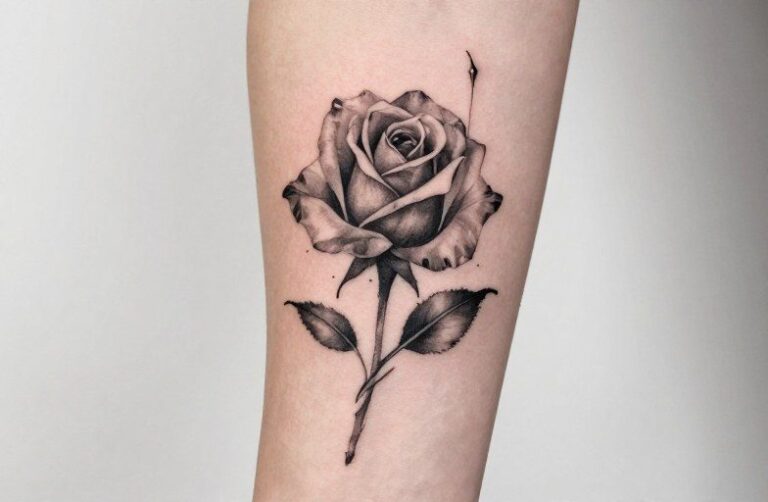
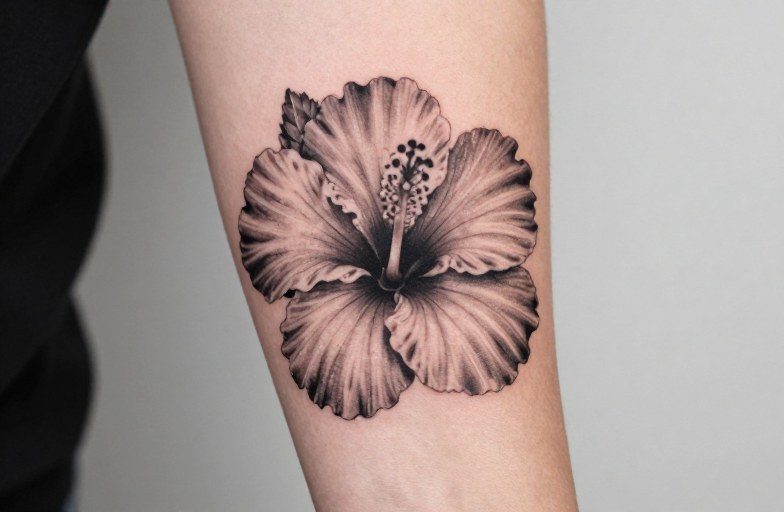
Black and grey hibiscus removes the tropical punch but gains versatility and longevity. Without color, the flower reads more botanical illustration, less “beach vacation.” The strong petal structure works well in greywash, and the absence of color slows fading significantly. Some artists build black and grey hibiscus with heavy contrast (dark center, bright highlights) to maintain visual punch without pigment dependency. This suits placements that see sun (forearm, calf) or wearers with darker skin where color saturation struggles.
What to Remember
The hibiscus flower tattoo works best when you know which thread you’re pulling: cultural heritage, personal philosophy, aesthetic preference, or some braided combination. Be specific about your source, “Polynesian-inspired” is vague to the point of meaninglessness, and artists worth your time will ask for clarification. The flower’s shape demands respect for scale; too small and it becomes mush, too large without structural support and it floats untethered on the skin.
Color is a commitment, not a default. Reds and pinks will warm and shift; black and grey will outlast them but change the emotional temperature. Discuss aging explicitly with your artist, how that soft watercolor center will look in year eight, whether the petal edges have enough black to hold definition.
Most importantly, the hibiscus carries enough cultural weight in specific places that wearing it without connection requires honest self-assessment. Not every tattoo needs ancestral permission, but understanding what you’re borrowing, and whether the borrowing matters to you, separates thoughtful work from mere decoration. The flower is beautiful enough to earn that consideration.
Frequently Asked Questions
Does a hibiscus tattoo always mean something about Hawaii?
No. While strongly associated with Hawaii, the hibiscus also carries significance in Malaysia, parts of South Asia, and Pacific Island cultures beyond Hawaii. Many people choose it simply for its aesthetic appeal without any geographic connection.
How well does a colored hibiscus tattoo age compared to black and grey?
Colored hibiscus tattoos, especially reds and yellows, fade faster and shift in tone over 5-10 years. Black and grey versions maintain their structure longer but lose the tropical warmth that makes the flower distinctive. Strong black outlines and shading help any version age better.
What’s the best size for a hibiscus tattoo to keep the detail clear?
At minimum, palm-sized for a single bloom, any smaller and petal edges blur together during healing. Larger pieces with stem and leaf work allow more detail but require more skin commitment. The center stamen detail is usually the first thing lost in over-small tattoos.
Can men get hibiscus tattoos without them looking feminine?
Absolutely. Placement and context matter more than the flower itself. Pairing with tribal elements, waves, or geometric backing shifts the tone. Black and grey execution also reads more neutral than bright pink or red coloration.