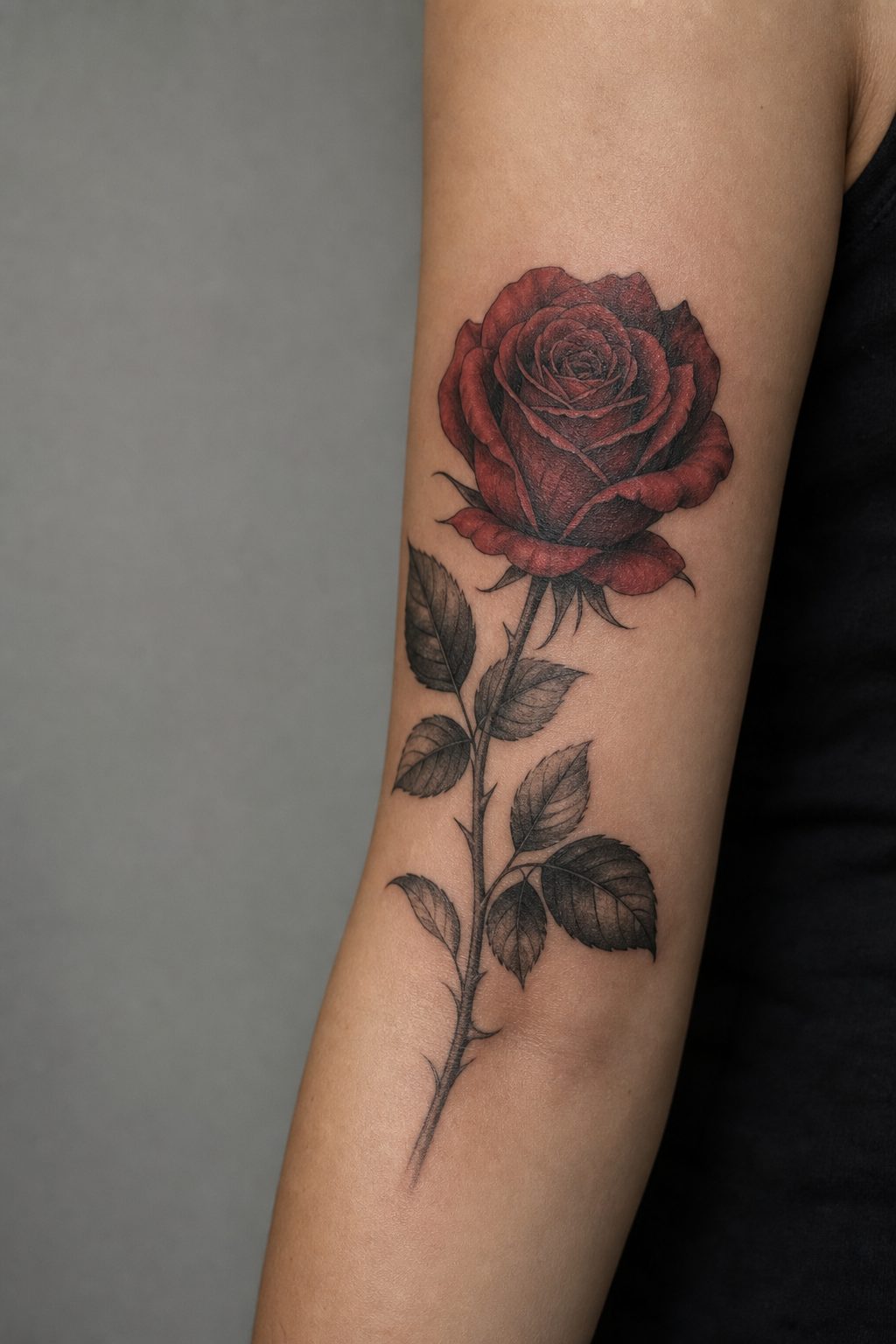
A rose tattoo most commonly signals love in its complicated forms, romantic, familial, memorial, or self-directed. The thorns add the necessary counterweight: beauty that costs something, protection wrapped in vulnerability. Specific color and placement shift the message more than most people realize.
Symbolism & Core Meaning
The Dual Nature
Roses have carried this tension for centuries without needing anyone to “explain” it. The bloom draws the eye; the thorns keep it honest. In tattoo form, that duality lands harder than in a bouquet because it’s permanent, deliberate, and carried alone. A rose without thorns reads as innocence or new love. Add the thorns back and the meaning darkens, survival, guardedness, beauty that fought to exist.
Placement amplifies this. A rose over the heart leans memorial or romantic. On the forearm, it’s more public declaration, less private shrine. Behind the ear, the small scale forces intimacy, you’re choosing who sees it. The same design at three inches versus eight inches carries completely different weight.
Historical Anchors (Without the Myth-Making)
Rose symbolism predates organized tattooing by millennia, which matters for understanding why the image persists. Greek mythology often links the rose to Aphrodite, though the specific stories vary across sources. Roman banquets scattered rose petals as symbols of secrecy, “sub rosa” still means confidential. Medieval Christianity adopted the flower for the Virgin Mary, creating the “rosa mystica” tradition.
Tattooing absorbed these layers rather than inventing them. Sailor traditions popularized the rose as a reminder of home and the women left there. That association with absence and longing still echoes in contemporary memorial pieces.
Color vs Black and Grey
What Each Shade Actually Communicates
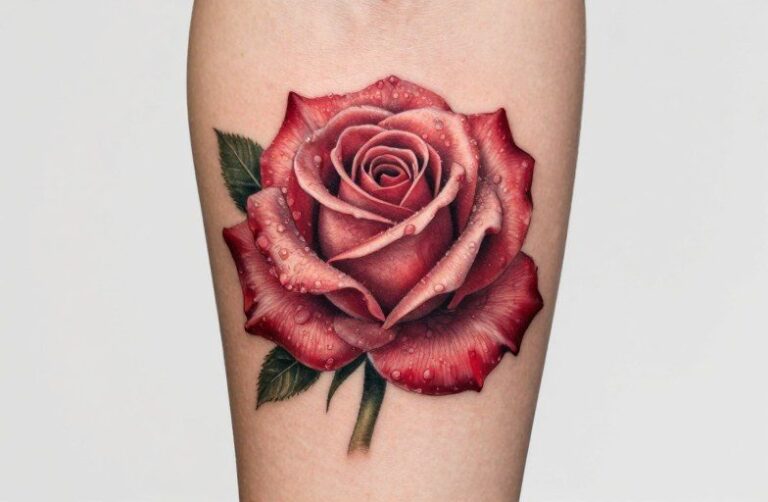
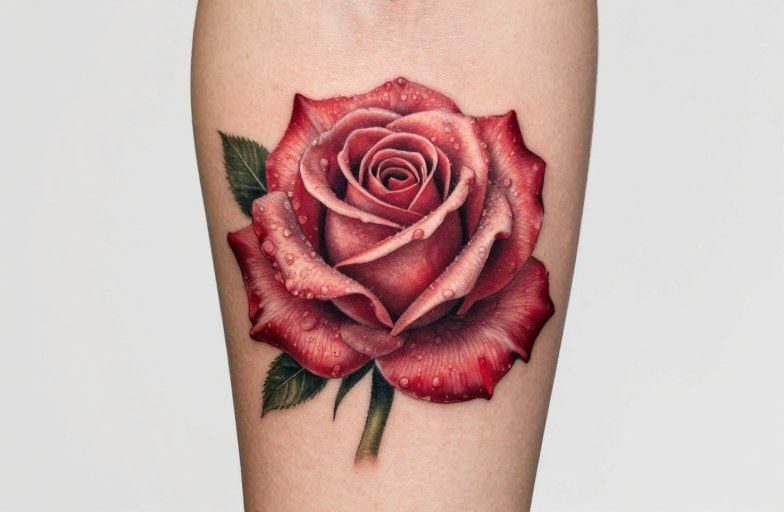
Red dominates for good reason: it’s the most immediate, least ambiguous signal. Deep crimson leans passion; blood-red can edge toward danger or warning. Pink roses soften the message, admiration, gentleness, sometimes youth. Yellow historically carried jealousy or dying love in Victorian floriography, though modern usage has shifted it toward friendship and joy. White roses in tattoo form almost always signal memorial or purity, sometimes both simultaneously.
Black roses carry the heaviest load: grief, loss, rebellion, or the end of something. They’re visually striking but communicate darkness that some wearers later regret. The ink itself ages into a softer charcoal, which can unintentionally mellow the intended severity.
Black and Grey Realities
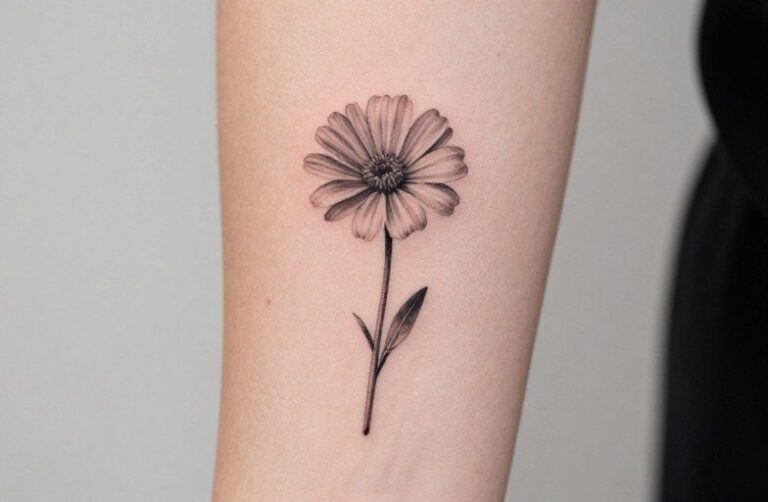
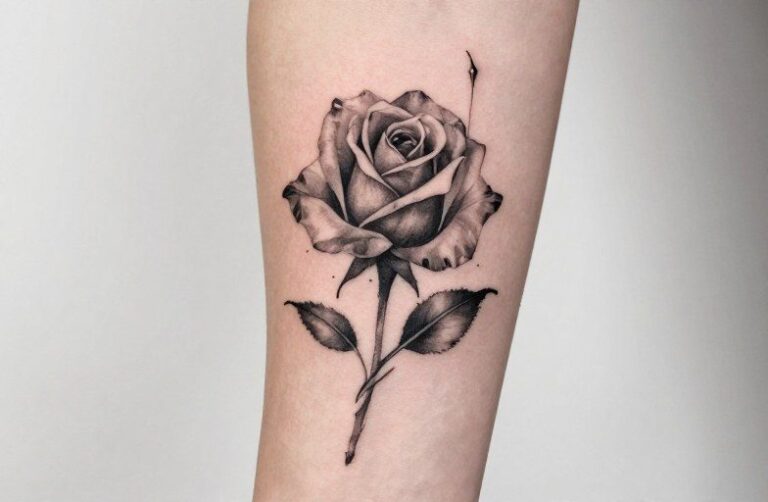
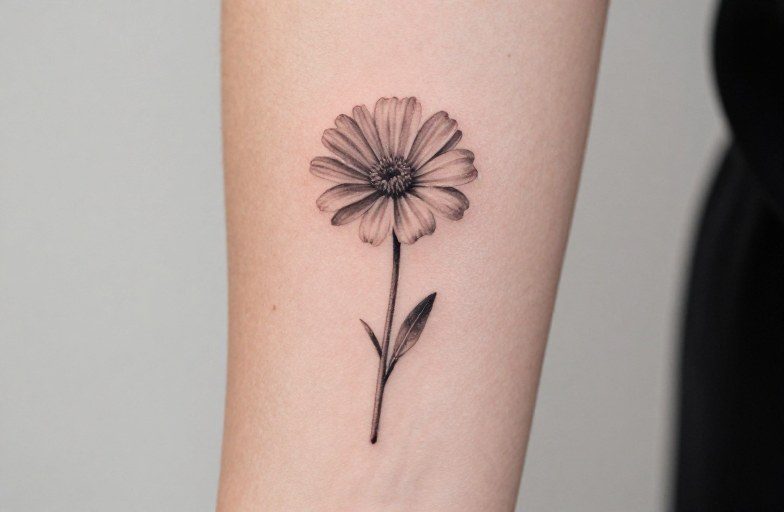
Opting out of color isn’t neutral, it’s a specific choice with specific consequences. Black and grey roses emphasize form over symbolism; the eye reads shape and shadow before it registers “rose.” This can feel more timeless or more somber depending on execution. Fine-line black and grey roses age particularly poorly if the lines are too delicate (more on that below). Bold black traditional roses with strong contrast hold their structure for decades.
- Red: love, passion, courage
- Pink: admiration, gentleness, gratitude
- Yellow: friendship, joy (reclaimed from older negative associations)
- White: purity, memorial, new beginnings
- Black: loss, rebellion, endings
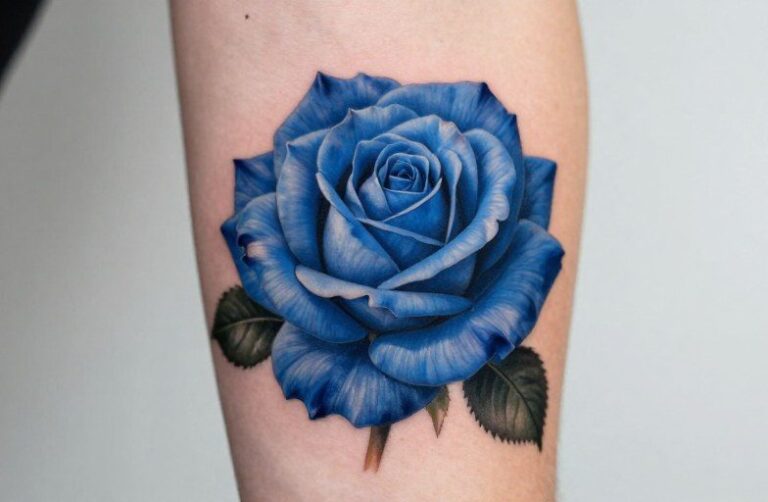
- Blue: the impossible, the unattainable (largely a tattoo convention, not botanical)
Religious & Spiritual Angles
Christian Traditions
The rose carries substantial weight in Catholic iconography, particularly through the rosary, literally “rose garden” in its etymology. The connection to Mary creates a devotional path some tattoo wearers explicitly intend. A rose paired with a cross, or integrated into a rosary bead design, signals this lineage clearly. The “wounds of Christ” were sometimes depicted as roses in medieval art, though this specific visual tradition is less common in contemporary tattooing.
Beyond Christianity
Sufi poetry, particularly Rumi, uses the rose as a central metaphor for divine beauty and the beloved. Some trace the specific association of rose and nightingale to Persian traditions representing the soul’s longing for God. In tattoo form, this usually appears as paired imagery rather than rose alone. Tarot’s rose symbolism appears in the Rosicrucian tradition and certain decks, though direct tattoo adoption of this is relatively niche.
Secular wearers often absorb these spiritual resonances without intending them, simply because the visual vocabulary is so saturated with centuries of layered meaning.
How It Ages on Skin
The Technical Reality
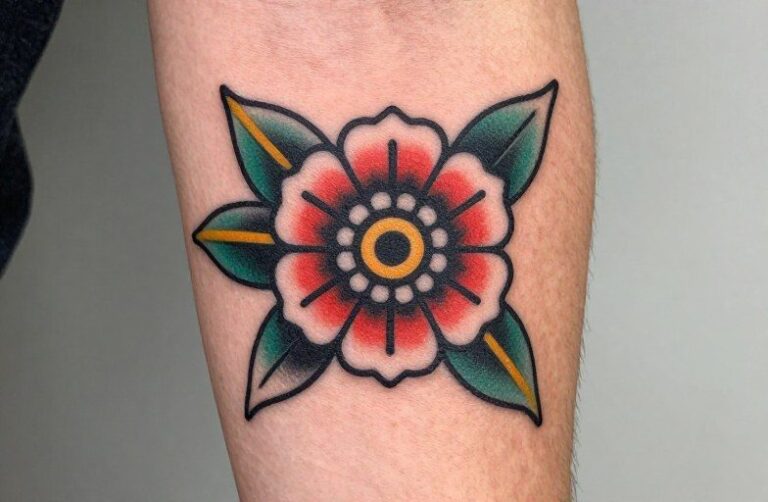
Roses are forgiving subjects, but specific approaches age badly. Fine-line single-needle roses with extensive detail in the petals blur within five to ten years. What reads as delicate texture fresh becomes muddy suggestion later. Bold outlines with limited but strategic shading age cleaner. The traditional American rose, thick black outline, saturated red, minimal green leaves, exists in part because it was built to last on skin that moves, stretches, and sun-exposes.
Color saturation matters enormously. Light pinks and yellows fade fastest, sometimes to near-invisibility on lighter skin tones. Deep reds and blacks persist but can shift hue, reds sometimes bronze, blacks can blue-green depending on ink formulation and depth.
Placement-Specific Wear
Hand and finger roses blur fastest due to constant use and sun exposure. The rose’s detailed petal structure becomes particularly unforgiving here. Inner bicep and thigh hold better, protected from sun, less constant friction. Chest roses on women require planning for potential changes in breast tissue; a design that centers nicely at 25 may drift or compress differently over decades.
- High-detail petal work: requires touch-ups, plan for maintenance
- Bold traditional: most durable, least ambiguity over time
- White highlights: often disappear entirely, design should function without them
- Color realism: stunning fresh, plan for significant softening within 10 years
Who Chooses This Tattoo
Gender and the Rose
The rose has been coded feminine in Western culture, which creates specific dynamics in tattoo choice. Men selecting roses sometimes pair them with daggers, skulls, or clocks to “harden” the image, though this impulse is itself worth examining. The rose as strictly feminine is a relatively recent construction; historical military and fraternal orders used rose imagery without gender anxiety. Contemporary tattooing sees more men choosing unaccompanied roses, particularly in black and grey, particularly large scale.
Life Stage Markers
First tattoos often include roses because the image is universally legible, parents, employers, the wearer themselves all “get it.” Memorial roses cluster around specific ages: young adult loss of a parent, mid-life loss of a peer. Relationship roses carry the known risk of outlasting the relationship. Some artists quietly discourage partner-specific rose pieces for this reason, though the final choice belongs to the person wearing it.
Personal & Modern Meanings
Contemporary rose tattooing has expanded beyond traditional symbolism into more idiosyncratic territory. A rose with a specific number of petals might reference a date, a count of something personal, a numerical obsession. Dried or dying roses in tattoo form have gained traction, beauty in decay, acceptance of endings, the Japanese mono no aware tradition filtered through Western floral imagery.
Geometric or abstracted roses strip away botanical accuracy for personal interpretation. A rose reduced to triangles and negative space requires viewer effort; the wearer is choosing obscurity over immediate legibility. This itself communicates something: privacy, complexity, refusal of easy reading.
Some combine roses with unrelated imagery, clock faces, anatomical hearts, snakes, film characters, to create specific personal narratives. The rose becomes a modular element, its traditional meaning present but not dominant. A snake through a rose retains the flower’s beauty-pain duality while adding transformation, danger, or temptation depending on the wearer’s intent.
The Takeaway
A rose tattoo works because the image is overdetermined, carrying so much accumulated meaning that it supports almost any personal intention while remaining immediately recognizable. The specific choices matter more than the symbol itself: thorns or their absence, color or its lack, scale, placement, accompanying elements. These decisions shape whether the tattoo reads as romantic declaration, memorial anchor, aesthetic choice, or something harder to categorize.
What doesn’t work is choosing a rose for safety, assuming its familiarity will protect against regret. The most successful rose tattoos come from people who know exactly why they’re choosing this specific image in this specific form, not from those who default to it because it’s “classic.” The image is classic precisely because it has meant so many different things to so many different people. Your version needs to be one you can still articulate when the novelty has worn off and the ink has settled into your skin for good.
Frequently Asked Questions
Do rose tattoos have to include thorns to be meaningful?
No. Thornless roses signal different meanings, innocence, new love, or simply aesthetic preference. The thorns add a specific layer of complexity but aren’t required for the image to function symbolically.
What’s the best color for a rose tattoo that won’t fade badly?
Deep red and black hold longest. Light pinks, yellows, and whites fade fastest and may require touch-ups. Bold saturation always outlasts delicate shading regardless of hue.
Can a rose tattoo work as a cover-up for an older piece?
Often yes. The rounded petal shapes and dense black potential in traditional rose designs make them excellent cover-up candidates, though the existing tattoo’s darkness and location will limit options.
Is a rose tattoo too common or generic to be worth getting?
Common imagery isn’t inherently lesser. The question is whether your specific design choices, placement, color, accompanying elements, personal intent, create something that belongs to you rather than defaulting to the most available option.