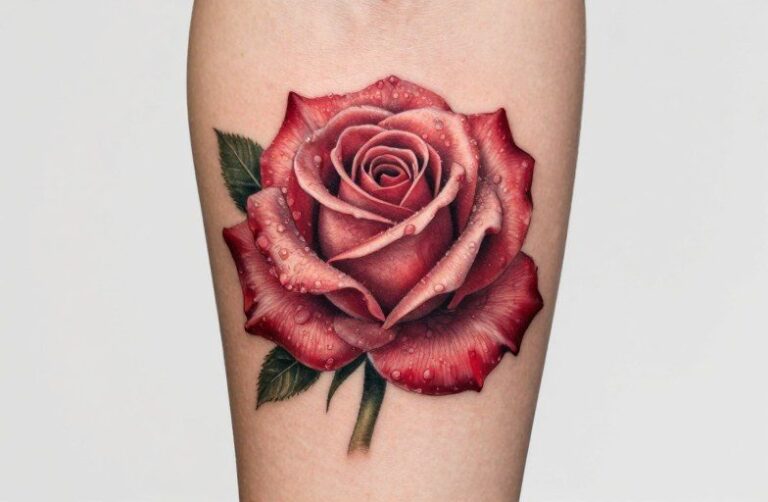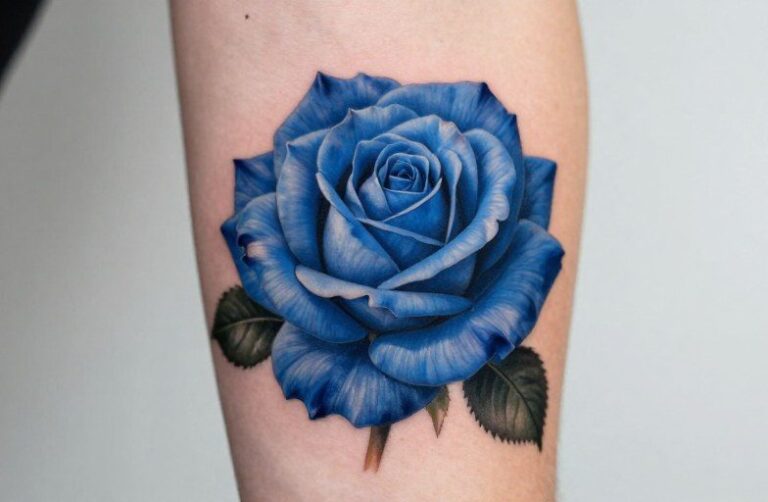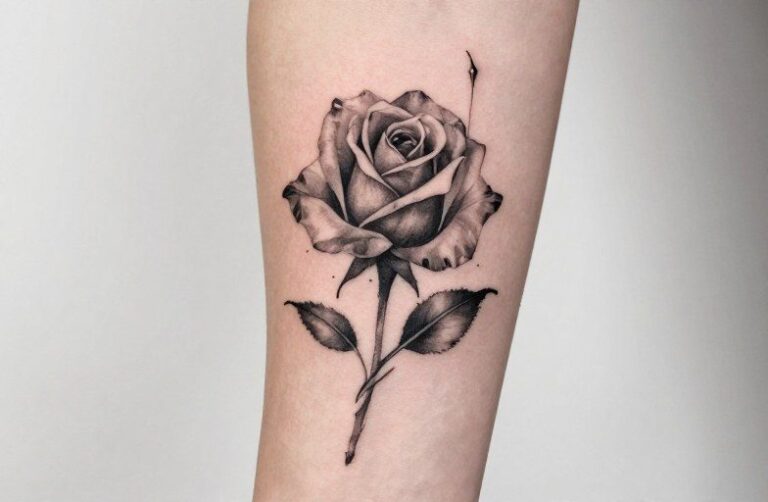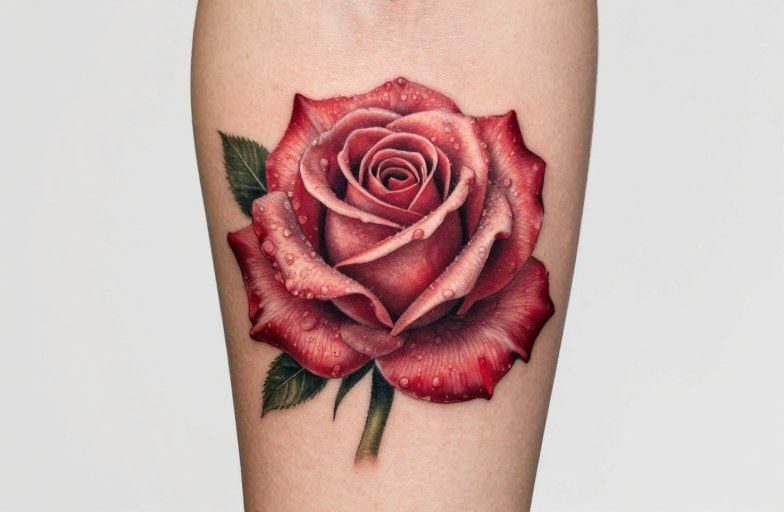
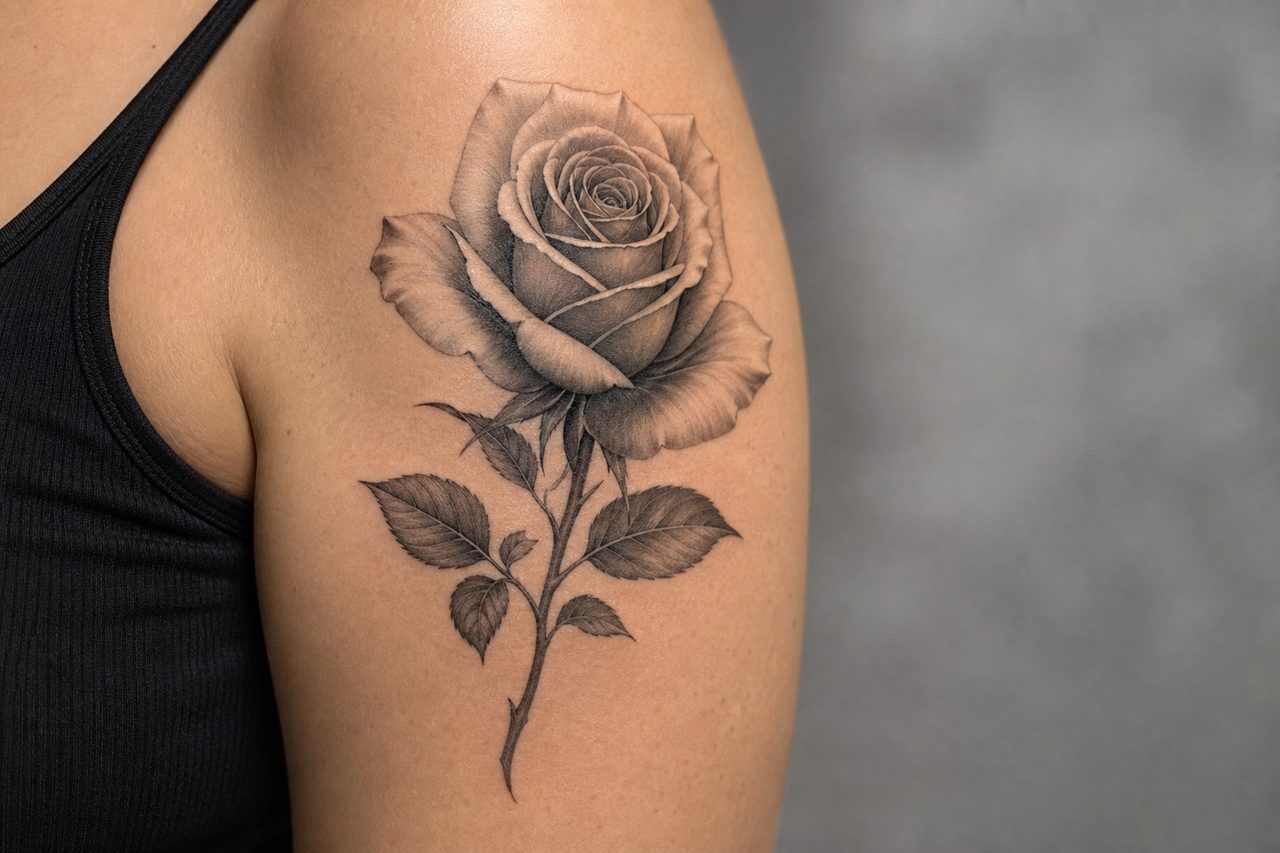
A rose flower tattoo most commonly signals love, passion, and beauty, yet the thorns introduce an equally important thread, pain, loss, or the idea that nothing worth holding comes without risk. Color shifts the message sharply: red for romantic love, black for grief or rebellion, yellow for friendship turned sour, white for purity or new beginnings. The meaning isn’t fixed; it depends on which layers you choose to emphasize.
Symbolism & Core Meaning
The Dual Nature
Roses have carried contradictory weight for centuries. The bloom attracts; the thorns defend. In tattoo form, this duality becomes personal shorthand for experiences that held both pleasure and difficulty, a relationship that transformed you, a struggle that yielded something beautiful. Some people emphasize this balance by placing a fully opened rose beside a bud or a dying bloom, tracing a narrative of growth and decline in one composition.
Color as Language
Red dominates the rose tattoo landscape, and for good reason, it anchors the design to romantic love, desire, and courage. Pink softens this into admiration or gratitude. White roses in tattoo work often mark memorials or significant personal reset points. Yellow carries a sting: it can mean friendship, but also jealousy or betrayal, depending on context. Black roses, popular in gothic and punk traditions, signal death, farewell, or radical rejection of conventional sentiment. Blue and purple roses, which don’t occur naturally, tend to read as fantasy elements or symbols of the unattainable.
- Red: romantic love, passion, courage
- Black: death, grief, rebellion, finality
- White: purity, innocence, new beginnings, memorial
- Yellow: friendship, joy, or jealousy depending on placement and accompanying elements
- Pink: admiration, gratitude, gentler affection
Religious & Spiritual Angles
Christian Tradition
The rose often links to the Virgin Mary, earning titles like the “Mystical Rose” in Catholic devotion. A rose tattoo with this framing might accompany Marian imagery, sometimes with a rosary, sometimes with the rose alone as quiet devotion. The five petals of a wild rose have been mapped to the five wounds of Christ in some medieval interpretations. A tattooed rose surrounded by thorns can echo the crown of thorns, though this reads more dramatically and requires careful handling to avoid unintended sentiment.
Other Spiritual Frameworks
In Sufi poetry, particularly the work of Rumi, the rose and nightingale pairing represents the soul’s longing for divine union. Some trace the rose’s spiritual significance to ancient Persia, where it was associated with paradise and the unfolding of spiritual truth. The rose window of Gothic cathedrals translates reasonably well to circular tattoo designs, though the geometric precision demands a specialist in ornamental or mandala-adjacent work.
Mythology & Folklore
Greek and Roman Roots
Greek myth often links the rose to Aphrodite (Venus to the Romans), born from the sea foam with roses springing from her footsteps or from the blood of her wounded lover Adonis. This origin story reinforces the love-and-loss pairing that still drives many rose tattoo choices. The Romans cultivated roses extravagantly, using them as ceiling decorations at banquets, legend says the falling petals reminded guests of mortality, a memento mori function that black rose tattoos still serve.
European Folk Beliefs
In English folklore, a rose planted near a grave was thought to keep the spirit at rest; a tattooed rose over a memorial date extends this protective function onto the body. The “sub rosa” tradition, secrets shared under a hanging rose, where the god of silence was said to preside, gives the rose a lingering association with confidentiality and hidden knowledge. A rose tattoo placed somewhere concealable, like the ribcage or upper thigh, can nod to this tradition of secrecy without requiring explicit explanation.
Who Chooses This Tattoo
Placement Patterns
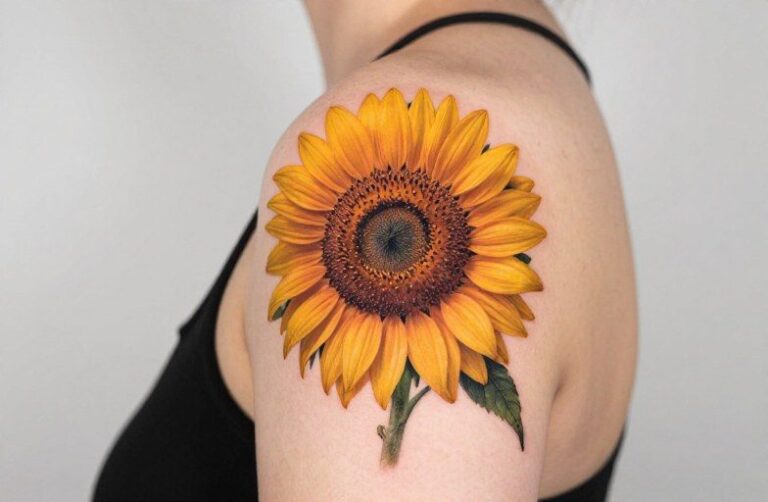
Rose tattoos appear everywhere, but certain placements carry conventional weight. The shoulder and upper arm allow for larger, more detailed work with room for stems, leaves, and accompanying elements. The forearm makes the rose visible, social, declarative. The chest, particularly over the heart, leans heavily into the romantic symbolism. The hand or neck signals commitment to the symbolism, it’s not hiding. Smaller roses behind the ear or on the ankle often read as more decorative, though they can mark private significance.
Style and Demographics
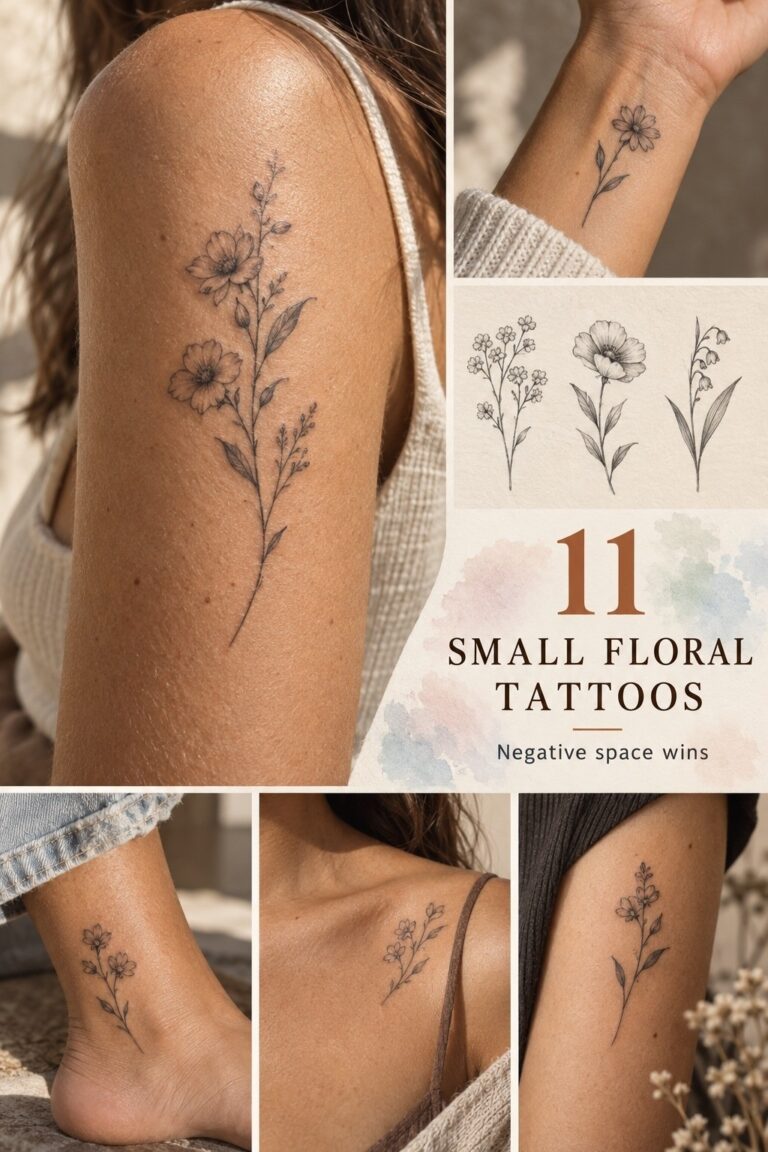
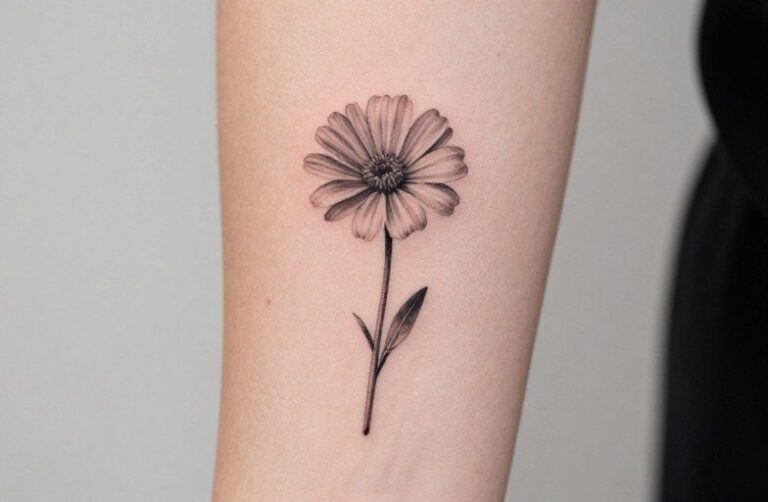
Traditional American rose tattoos, bold outlines, limited color palette, heavy black shading, remain staples in shops across the country. Fine-line single-needle roses have surged in recent years, appealing to clients who want botanical accuracy and softer presence. Black and grey realism allows for dramatic light effects and velvety petal texture. The rose crosses gender lines more easily than many floral designs, partly because of its long history in sailor and biker tattooing, partly because the thorns add an edge that balances the bloom’s softness.
- Traditional/American: bold, readable, ages well with proper care
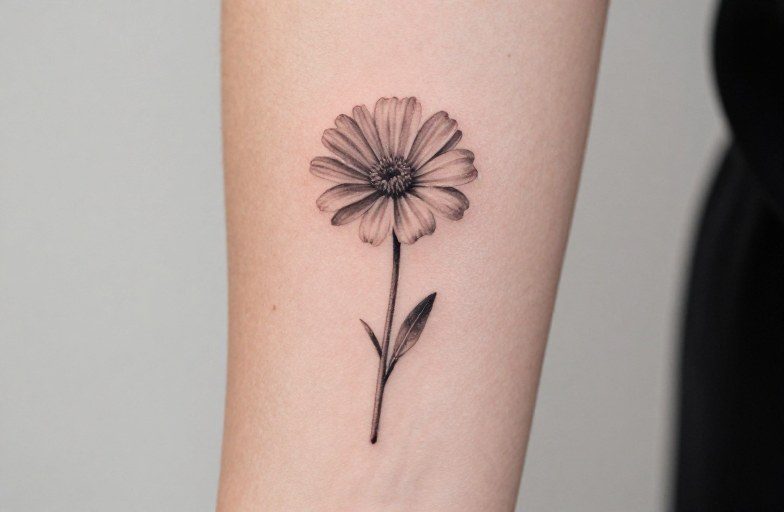
- Fine-line: delicate, requires touch-ups, best on lighter skin tones for longevity
- Black and grey realism: dramatic, technically demanding, strong aging if contrast is maintained
- Neo-traditional: expanded color range, stylized elements, good middle ground
Personal & Modern Meanings
Beyond the Romantic
Contemporary rose tattoos frequently detach from romantic love entirely. A rose with a clock or pocket watch marks time’s passage, aging, mortality, a specific moment frozen. Paired with a dagger, the rose can suggest betrayal or self-defense. With a skull, it becomes memento mori, the beauty that persists alongside death. Some people choose roses to mark recovery from illness or addiction, the bloom representing what grew from difficult soil. The personal meaning doesn’t require historical justification; the symbol’s flexibility is its strength.
Botanical Accuracy vs. Stylization
There’s a meaningful difference between a tattooed rose that references a specific species, Damask, tea rose, wild rose, and one that draws from tattoo tradition’s standardized bloom. Species-specific work can carry personal resonance: a grandmother’s garden variety, a rose from a significant location. Stylized roses communicate through tattoo language rather than botanical language, connecting the wearer to tattoo history itself. Neither choice is superior, but the distinction matters for how the tattoo functions socially and personally.
Similar & Related Symbols
The lotus shares the rose’s emergence-from-difficulty narrative, though with Eastern spiritual associations rather than Western romantic ones. The peony, in Japanese tattoo tradition, carries similar prosperity and honor meanings, and often appears alongside roses in mixed floral compositions. The lily, particularly the calla variety, overlaps with white rose territory, purity, death, transformation. Daggers, skulls, and clocks, as mentioned, modify rose meaning rather than replacing it. For those drawn to the rose but seeking something less common, the wild rose or dog rose offers a more angular, less domesticated silhouette with similar symbolic range.
Before You Decide
Consider how the rose will age. Heavy black outlines and solid color blocks hold up better over decades than fine-line work with minimal contrast. Red pigment, particularly brighter shades, can fade to pink or grey depending on sun exposure and skin chemistry. The green in leaves and stems often outlasts the red in petals, which can create an unintended visual shift.
Think about scale relative to detail. A rose the size of a quarter can’t hold the petal layers of a realistic bloom; it’ll blur into a red blob over time. Conversely, a large rose with too little black shading can look washed out. The stem and thorns offer opportunity for elongated, flowing compositions that wrap around limbs or follow the body’s natural lines, don’t neglect this structural element in favor of focusing entirely on the flower head.
Finally, the rose’s very popularity means your tattoo will exist in conversation with thousands of others. This isn’t a weakness, the shared symbol gains resonance from collective use, but it does mean your specific execution matters. The artist’s handling of petal curl, thorn sharpness, and leaf veining determines whether your rose feels personal or generic. Look at their healed work, not just fresh photos, and ask specifically about how they build contrast for long-term readability.
Frequently Asked Questions
Does a rose tattoo always mean romance?
No. While red roses lean heavily toward romantic love, black roses signal grief or rebellion, and many people choose roses to mark personal growth, recovery, or memorial without romantic intent. The surrounding elements and color choice redirect the meaning significantly.
How well do rose tattoos age over time?
Bold traditional roses with strong outlines age best. Fine-line and watercolor styles fade faster, especially red pigments, which can shift to pink or grey. Sun protection and occasional touch-ups help maintain the original color saturation.
What’s the difference between a traditional rose and a realistic rose tattoo?
Traditional roses use bold outlines, limited color palettes, and stylized forms rooted in American tattoo history. Realistic roses aim for botanical accuracy with subtle shading and no heavy outlines. Traditional work generally ages more reliably on skin.
Do thorns need to be included in a rose tattoo?
Thorns are optional but meaningful. Their inclusion emphasizes the dual nature of beauty and pain, protection and vulnerability. Removing them creates a softer, more purely decorative image. The choice should reflect what you want the symbol to communicate.