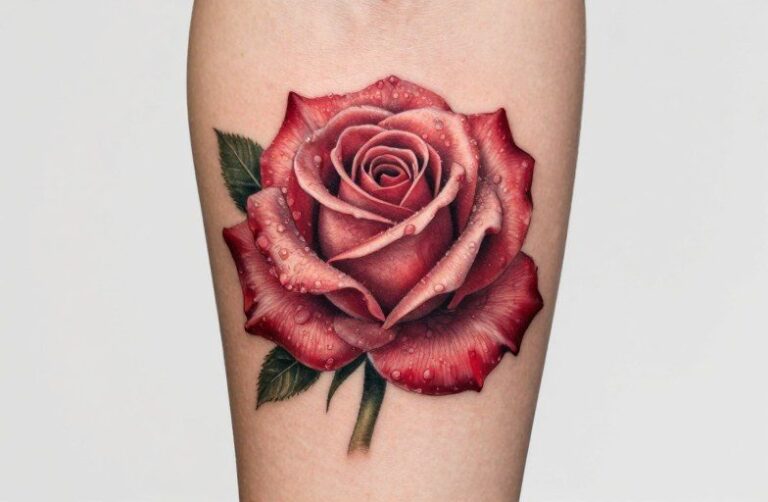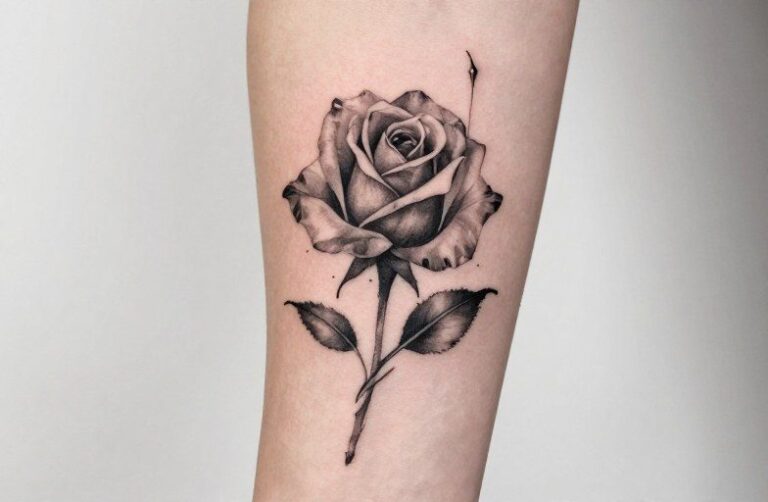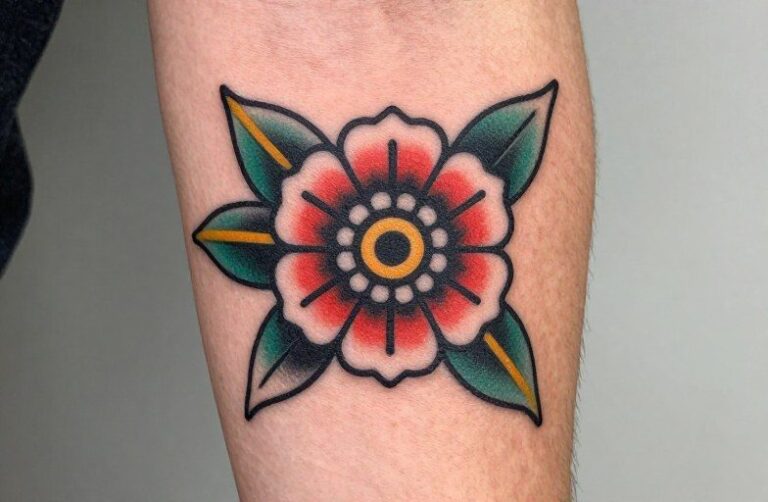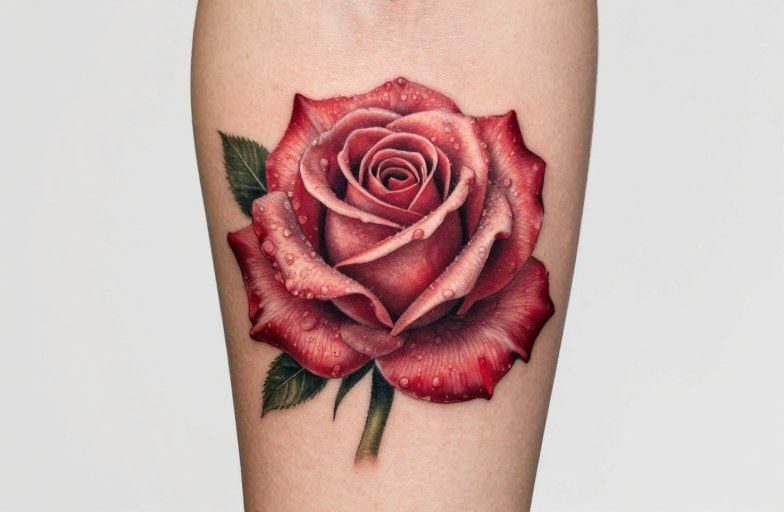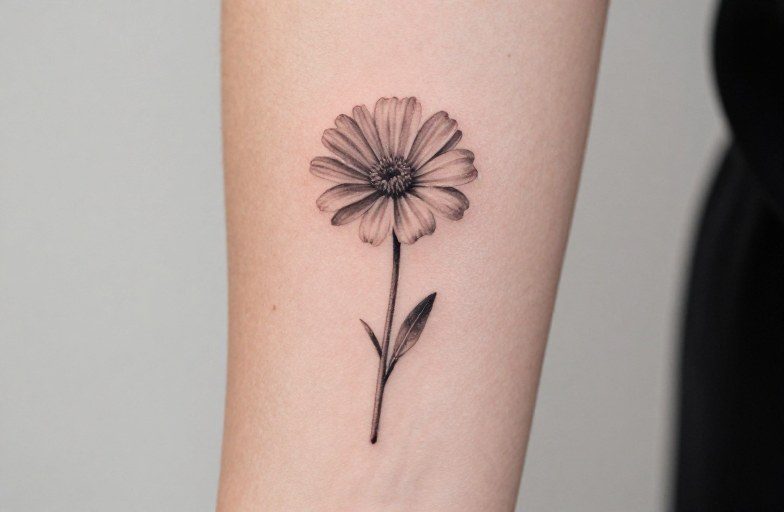
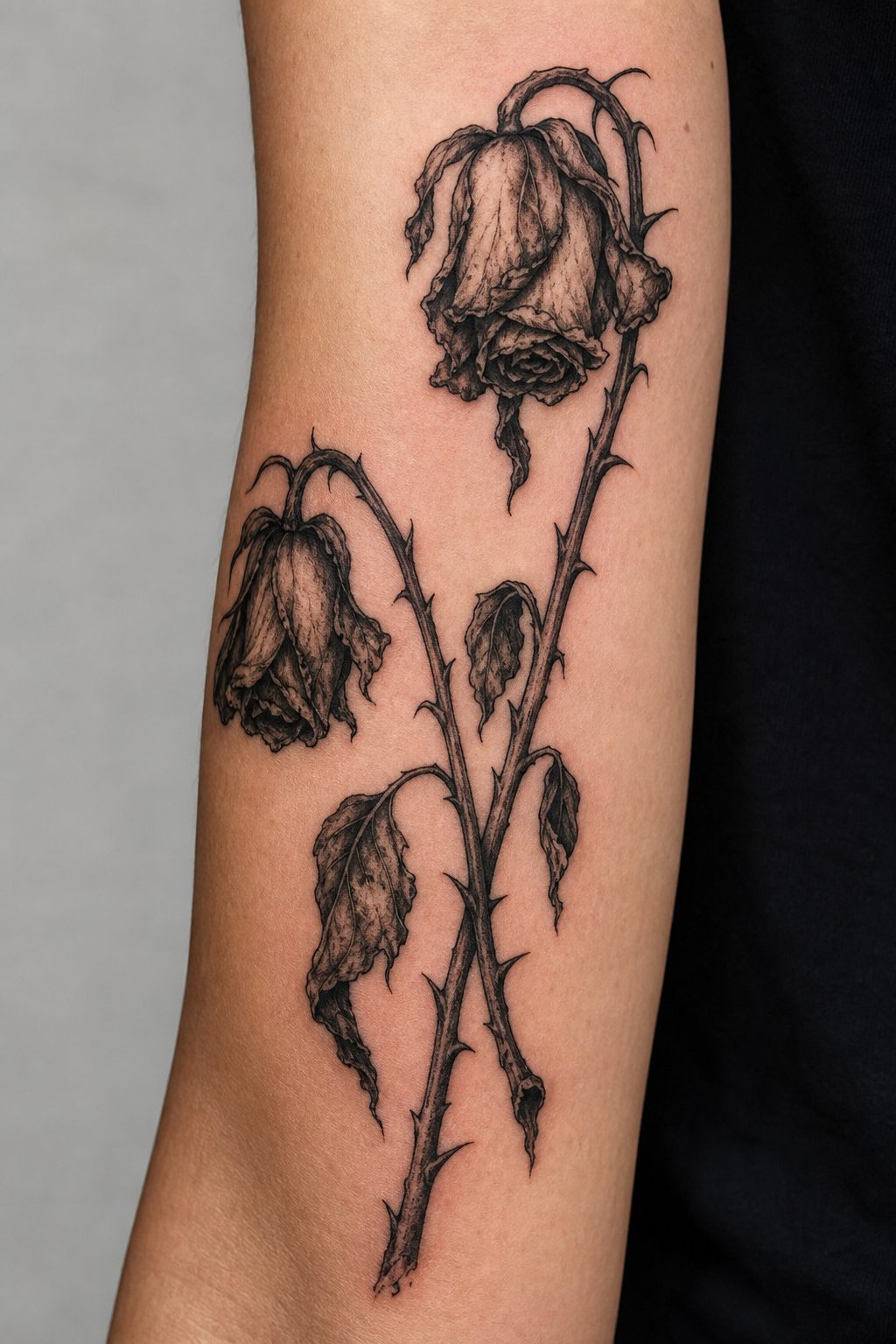
A dead rose tattoo typically represents the acceptance of loss, the natural cycle of life, and the strange beauty found in decay. Unlike living floral designs that celebrate growth and romance, the wilted or dried rose acknowledges what has ended, whether that’s a relationship, a chapter of life, or a person who has passed. The image carries weight without needing to be grim; it can be mournful, defiant, or quietly resigned depending on how it’s rendered.
Mythology & Folklore
Roses have accumulated symbolic baggage across centuries, and death has always been part of that load.
Greek and Roman Roots
In Greek myth, the rose emerged from the blood of Adonis, a figure associated with beauty cut short by violent death. The flower’s connection to Aphrodite and love was inseparable from this origin in loss. Romans used roses at funerals and scattered petals over graves, a practice that linked the bloom directly to mourning rituals. The phrase “sub rosa” (under the rose) originally carried connotations of secrecy that extended to deathbed confessions and final truths.
European Folk Traditions
Folk practices across Europe often treated the rose as a threshold plant, one that marked boundaries between life and death. Dried roses kept in homes were sometimes believed to preserve memory of the deceased. In Victorian flower language, a faded or dying rose communicated “beauty in death” or “love that transcends the grave,” giving the image a pre-existing vocabulary that tattoo wearers still draw from, consciously or not.
How It Ages on Skin
This design presents specific technical challenges that affect how it reads five, ten, or twenty years down the line.
Line Work vs. Shading
Dead roses rely heavily on fine detail, crisp edges on wilted petals, dry stem texture, the papery quality of spent blooms. Single-needle or very fine line work can blur over time, especially on high-movement areas like wrists, inner biceps, or ribs. Slightly bolder outlines (three-round or five-round groupings) hold definition better without sacrificing the delicate subject matter. Shading in dead roses often uses whip shading or stippling to create that desiccated, dusty texture; these techniques age more gracefully than solid black fills, which can blob out and lose the subtle gradations that sell the “dead” effect.
Placement Realities
- Forearms and calves: Good visibility, moderate sun exposure. The flat planes let the rose keep its shape, though outer forearm ink fades faster than inner.
- Ribs and sternum: Skin stretches and compresses significantly here. A dead rose with long stem can distort with breathing and movement; keep the bloom compact.
- Hands and fingers: High turnover skin means rapid fading. The fine lines of dried petals become unreadable quickly. Solid black or heavy stippling holds better but sacrifices nuance.
- Thighs and upper arms: Generally stable, good for larger compositions with multiple roses or accompanying elements.
Color choices matter too. Traditional red fading to brownish tones can actually enhance the dead-rose aesthetic over time, whereas bright pinks or purples turning muddy tend to look unintentionally neglected rather than deliberately decayed.
Symbolism & Core Meaning
The dead rose operates on several interpretive layers, and most people who choose it are working with more than one.
Personal Loss and Grief
The most direct reading: someone or something is gone. A relationship that ended, a parent who died, a version of oneself that didn’t survive some ordeal. The rose’s death mirrors the lived experience. Unlike more abstract memorial imagery (dates, initials, religious icons), the dead rose keeps the emotional content visual and visceral without being literal.
Impermanence and Memento Mori
There’s a philosophical thread here too. The dead rose functions as memento mori, remember you will die, without the skull’s aggression or the hourglass’s clinical precision. It’s softer, more organic, acknowledging that everything beautiful ends and that ending itself has a kind of beauty. This resonates particularly with people who’ve faced mortality directly: illness, near-death experience, or the simple accumulation of years that makes finitude feel real rather than abstract.
Similar & Related Symbols
Dead roses rarely exist in isolation; they belong to a family of imagery that deals with endings, preservation, and transformation.
Skulls with roses: The classic pairing, often read as life/death duality. When both elements are dead or decayed, the meaning shifts toward total dissolution rather than balance.
Dried flowers generally: Lavender, poppies, or baby’s breath in desiccated form carry similar associations but lack the rose’s specific cultural weight around romance and loss.
Broken hourglasses: Time stopped, time running out. More mechanical and less organic than the dead rose; pairs well with it in larger compositions.
Coffins, gravestones, willows: Victorian mourning imagery that shares the dead rose’s historical register. These elements can feel costume-dramatic where the dead rose stays subtle.
Moths and butterflies: Creatures associated with transformation and brief life. A moth on a dead rose tightens the theme: not just death, but the natural cycle that contains it.
Design Tips & Pairings
How you build the composition determines whether the tattoo reads as genuinely contemplative or merely edgy.
Effective Combinations
- Single dead rose, large scale: Forces attention to texture and detail. Works best on thigh, upper arm, or ribs where there’s room for the petals to spread and show their decay.
- Dead rose with living rose: The contrast is obvious but effective, before and after, what was and what remains. Risk of being too on-the-nose if execution is clumsy.
- Dead rose with barbed wire or chains: Leans into pain, entrapment, or suffering survived. Can get heavy-handed quickly; the rose itself already carries enough weight.
- Dead rose with script: Names, dates, or short phrases. Keep lettering sparse and well-spaced; crowding the image diminishes both elements.
Stylistic Approaches
Black and grey realism excels here, the medium literally suits the subject. Traditional or neo-traditional approaches require more creative interpretation; the bold outlines and limited palette of American traditional can read as “dead rose” through context (dropped petals, skeletal leaves) rather than photorealistic decay. Japanese-inspired work rarely features dead roses specifically; the aesthetic vocabulary favors living, blooming, or bud-stage flowers. Watercolor styles struggle with the fine detail and texture that communicate “deadness”; the medium’s tendency toward soft edges and bright pools works against the subject.
Religious & Spiritual Angles
The dead rose doesn’t map cleanly onto any single religious tradition, which is part of its appeal for eclectic or secular spiritualities.
In Christianity, the rose is often linked to Mary and the mystery of the Incarnation, divine love made flesh. A dead rose in this context might speak to the crucifixion, to human suffering within divine love, or to the Protestant memento mori tradition that urged contemplation of death to prepare the soul. Some trace the rosary’s origins to rose-garland devotions, though the etymology is disputed.
Tarot and contemporary pagan practice sometimes use the rose as a symbol of the heart, of secrets, or of elemental balance. The dead rose in these contexts might represent necessary sacrifice, the waning phase of a cycle, or shadow work, engagement with what has been rejected or lost. There’s no established liturgical or ritual use of dead roses specifically; the tattoo’s spiritual meaning tends to be individually constructed rather than received from tradition.
The Takeaway
A dead rose tattoo works because it refuses easy consolation. It doesn’t promise rebirth, though some wearers may hope for that; it doesn’t celebrate destruction, though it acknowledges it. The image sits in the difficult middle, recognizing that what was beautiful is finished, and finding something worth marking in that finishing. Technically, it demands careful placement and respect for how fine detail ages. Symbolically, it rewards the same attention: the meaning holds only if you let it be specific, personal, and unflinching about what has actually been lost.
Frequently Asked Questions
Does a dead rose tattoo always mean someone died?
Not necessarily. While many people choose it for grief, others use it to mark ended relationships, personal transformation, or philosophical acceptance of impermanence. The meaning depends on the wearer’s intention, not a fixed dictionary definition.
Will a dead rose tattoo look like a mistake as it fades?
Not if designed with aging in mind. The desaturated palette and textural shading actually age more gracefully than bright colors. Avoid extremely fine single-needle work on high-movement areas, and the tattoo will maintain its intended decayed aesthetic.
Is a dead rose tattoo bad luck or negative energy?
There’s no cultural consensus on this. Some traditions associate any death imagery with inauspicious energy; others see honest acknowledgment of endings as healthy and grounding. Your personal relationship with the symbol matters more than any generalized superstition.
How much detail can a small dead rose tattoo hold?
Less than you’d hope. Under three inches, the subtle textures that sell “dead” versus “badly drawn living” rose become nearly impossible. If you want small, simplify to bold silhouette with minimal interior detail rather than attempting photorealistic decay.