A lotus flower tattoo primarily represents resilience and the ability to rise above difficult circumstances. The flower grows from murky, muddy water and pushes upward to bloom clean and bright on the surface. That visual journey, mud to beauty, makes it one of the most enduring symbols in tattooing, one that carries weight whether you come from a spiritual tradition or simply respect the metaphor.
Color vs Black and Grey
What Color Adds
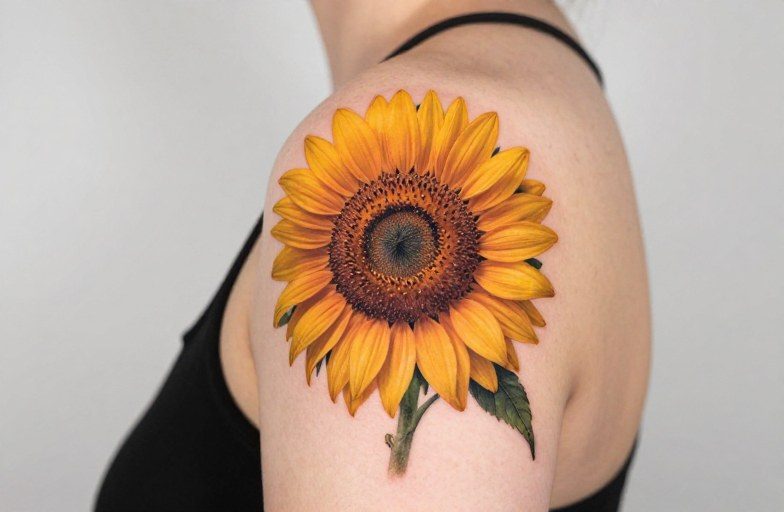
Pink and red lotus tattoos lean heavily toward love, compassion, and the heart. In several Buddhist traditions, different colors correspond to specific spiritual qualities, a red lotus ties to the heart and its original nature, while a purple or violet one connects to mysticism and esoteric practice. White lotus tattoos read as purity and spiritual perfection. A full-color piece with a soft pink gradient and yellow center tends to look more decorative, more “flower-forward,” and the color helps the eye read the layered petals immediately. Watercolor-style backgrounds in blues and greens can reinforce the aquatic origin without needing to depict literal mud.
Black and Grey Strengths
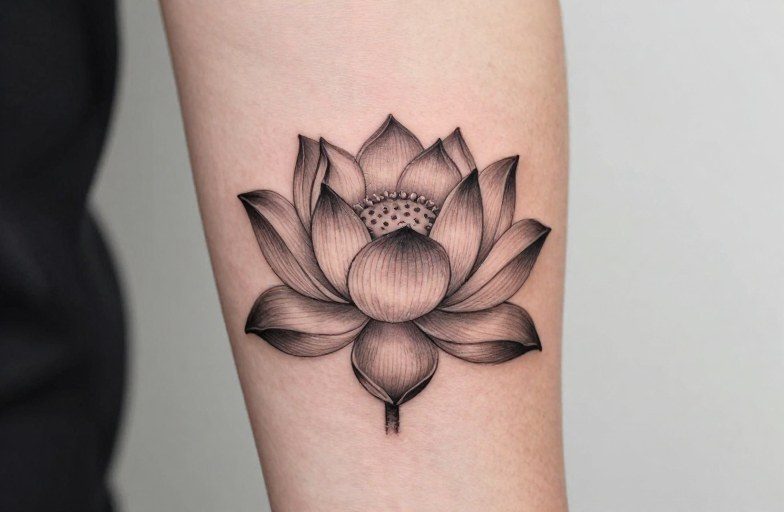
Black and grey lotus tattoos strip away the botanical specificity and push the symbol toward abstraction. Without color, the focus lands on form: the geometry of the petals, the negative space between them, the contrast that makes the bloom pop off darker skin tones. Grey wash can create soft, atmospheric depth that suggests water and shadow without literal depiction. For smaller pieces, wrists, behind the ear, the side of a finger, black and grey holds its clarity better over time because there’s no color to shift or fade unevenly.
Design Tips & Pairings
Placement and Scale
The lotus shape works across almost any placement, but it rewards certain locations more than others. The natural curve of a shoulder cap, a thigh front, or a sternum center mirrors the radial symmetry of the bloom. A lotus placed on the spine, blooming upward from the lower back toward the neck, can follow the body’s vertical line with real elegance. For smaller tattoos, the inner forearm and outer bicep give enough flat surface for the petals to read clearly; on fingers or toes, the detail crowds and the symbol can collapse into a blob within a few years.
- Single bloom vs. full plant: A cut flower floating on its own reads more decorative; a lotus with stem, pad, and roots anchors the narrative of growth-from-mud.
- Dotwork mandala center: Replacing the flower’s core with geometric dotwork pushes the design toward spiritual geometry without losing the botanical form.
- Unalome integration: The spiraling line that represents the path to enlightenment in Buddhist iconography pairs naturally with the lotus, often running up the stem or curving behind the bloom.
- Snake coiled through roots: Kundalini imagery, serpent energy rising, finds a natural partner in the upward-growing lotus.
Line Weight and Shading Approach
Clean, consistent outlines in a single needle grouping (like a tight three-round liner) keep the petal edges crisp. For a softer, more illustrative feel, some artists build the flower entirely from whip-shaded grey tones with no hard outline at all, beautiful when fresh, but riskier long-term as the tones settle and blur. Stippled texture in the center seed pod adds visual interest without fighting the overall form.
How It Ages on Skin
Like any detailed floral, the lotus faces specific aging challenges. The layered petals create narrow channels of negative space between them; as the tattoo settles and the lines spread slightly, those gaps can close up. A design with too many micro-petals, too tight together, will muddy faster than one with bold, readable separation. The seed pod at the center, with its distinctive circular pattern, often holds ink well because the dark dots and lines are packed solid.
Color lotus tattoos on high-movement areas, wrists, ribs, knees, see faster fading in the lighter pinks and yellows. Sun exposure accelerates this dramatically. A black and grey piece with strong contrast between the dark petal undersides and light top surfaces ages more gracefully because the value structure remains readable even as the greys soften. Touch-ups are common after five to eight years for color versions, less frequently for well-constructed grey work.
Similar & Related Symbols
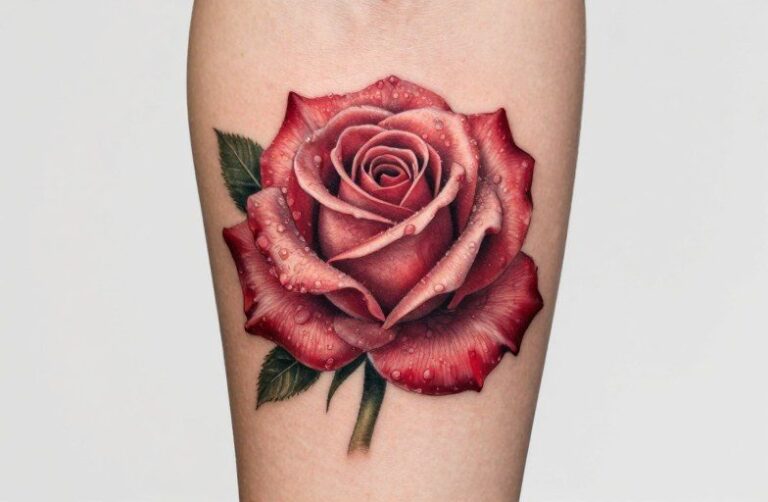
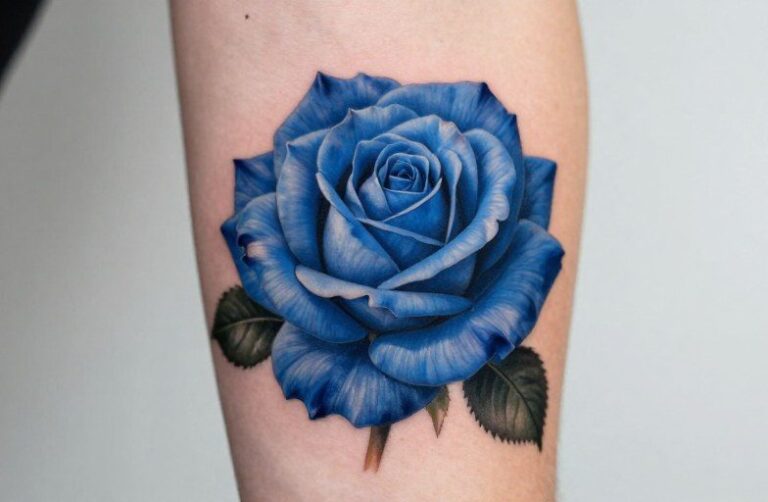
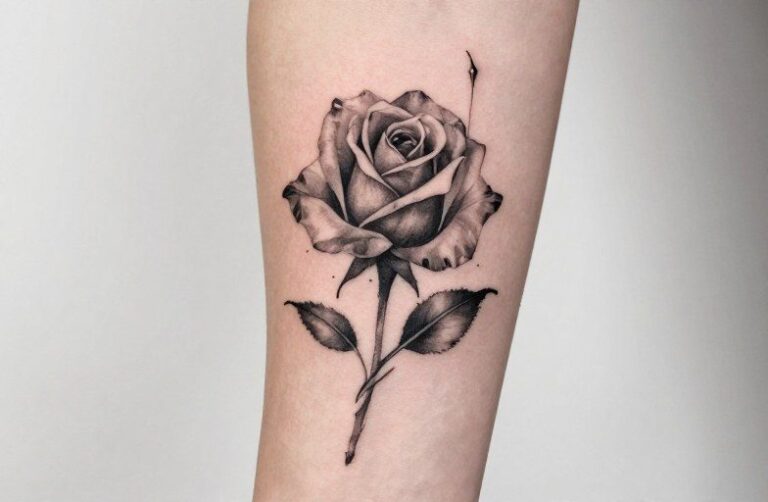
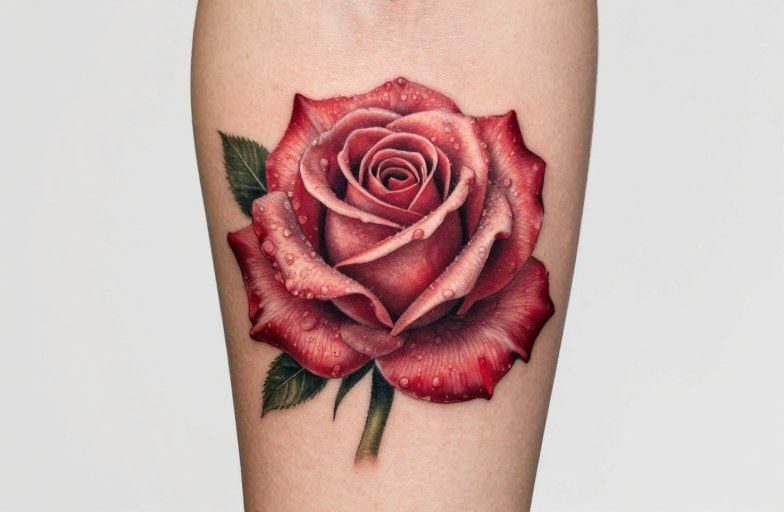
The lotus frequently appears alongside or in place of related imagery, and understanding the distinction helps clarify your own intent. The rose shares the “beauty from hardship” arc but carries Western, often romantic, associations the lotus avoids. The lily, visually similar, lacks the specific mud-to-bloom narrative and reads more generally as purity or death, depending on culture. The chrysanthemum in Japanese tradition represents longevity and the imperial family, noble, but not a story of transformation.
The Om symbol paired with a lotus amplifies the spiritual dimension without narrowing it to one tradition. The moon phases arcing around or through a lotus connect the bloom’s daily cycle (opening in morning, closing at night) to broader cycles of change. Some people choose a lotus specifically to distance themselves from the harder edges of a skull, dagger, or other “survival” imagery, same meaning, softer language.
History & Cultural Roots
Egyptian and Ancient Near Eastern Ties
The blue lotus, Nymphaea caerulea, held significance in ancient Egyptian culture, often linked to rebirth and the sun’s daily return. Tomb paintings show the flower emerging from the primordial waters. Some trace the lotus throne, seats and platforms shaped like the bloom, to these early associations, a form that later spread through trade and conquest into broader Asian iconography.
South and East Asian Development
In India, the lotus appears in Hindu creation mythology and became inseparable from several deities: Lakshmi, born from the flower; Vishnu, often depicted resting on a vast lotus; Brahma, emerging from one that grew from Vishnu’s navel. This pre-Buddhist foundation gave the symbol layers of meaning before the Buddha’s own narratives adopted it. The story of the Buddha’s first steps, lotus flowers springing up to support his feet, cemented the association in Buddhist art across Tibet, China, Japan, and Southeast Asia. Each region stylized the form differently: the Tibetan lotus tends toward ornate, multi-layered symmetry; Japanese interpretations often simplify and flatten the petals in the manner of woodblock prints.
Religious & Spiritual Angles
The lotus carries its heaviest symbolic load in Buddhist and Hindu contexts, but its use has broadened considerably in Western tattooing. For practicing Buddhists, a lotus tattoo may represent the progression through the stages of enlightenment, with the number of petals corresponding to specific teachings or energy centers. The eight-petaled lotus, for instance, commonly maps to the Noble Eightfold Path.
In Hindu practice, the lotus chakra, Sahasrara, the crown chakra, is often depicted as a thousand-petaled bloom above the head. Tattoos placing a lotus at the top of the spine or back of the neck sometimes reference this specifically. For those without religious affiliation, the symbol has become a kind of secular shorthand for personal growth, therapy, recovery, or surviving difficult periods. The meaning remains coherent because the core metaphor, emerging clean from dirty water, translates across belief systems without requiring doctrinal commitment.
That said, wearing a lotus with specific traditional elements, a particular color, a mandala structure, Sanskrit or Pali text, carries responsibility to understand the source. Cultural appropriation concerns arise less from the flower itself, which has global circulation, than from careless combination of sacred elements stripped from their context.
What to Remember
The lotus works because the metaphor is visual and immediate: everyone understands dirty water, everyone recognizes a clean flower. Your tattoo gains specificity from the choices you make around it, color or absence of color, accompanying symbols, placement that either hides or declares the meaning. A tiny lotus behind an ear whispers; a full back piece with roots and stem makes the journey explicit. Neither is more valid, but they speak at different volumes.
Give the design room to breathe. Crowded petals, over-detailed centers, and watercolor backgrounds without structural support all age poorly. The best lotus tattoos trust the simple geometry of the flower itself. Work with an artist who understands how to build contrast and negative space so the symbol stays readable for decades, not just the first photograph. The meaning you bring to it will change, that’s the nature of living with any tattoo, but the form itself, done well, remains beautiful long after the original impulse has settled into something more complex.
Frequently Asked Questions
Does the number of lotus petals change the meaning?
Yes, in Buddhist tradition petal counts carry specific significance. An eight-petaled lotus commonly represents the Noble Eightfold Path, while a thousand-petaled lotus symbolizes the crown chakra. Most Western tattoo wearers choose petal counts for visual balance rather than doctrinal meaning.
Can a lotus tattoo work with dark or gothic imagery?
Absolutely. The lotus pairs well with skulls, snakes, and moon imagery without contradiction, the contrast between the bloom’s softness and harder elements creates visual tension. The meaning shifts toward survival through darkness rather than pure spiritual ascent.
Is it culturally insensitive to get a lotus if I’m not Buddhist or Hindu?
The lotus has become a broadly circulated symbol, but context matters. A simple lotus flower is generally uncontroversial. Combining it with sacred text, specific deity imagery, or traditional mandalas without understanding carries more risk. Research and respect the source.
How much detail can a small lotus tattoo hold?
Less than most people expect. Below two inches, individual petals blur together and fine center detail becomes a solid dot. For small placements, choose simplified, bold designs with strong contrast between petals rather than intricate layering.