A floral tattoo artist is someone whose portfolio and technique center on botanical subjects: roses, peonies, wildflowers, ornamental branches, and the infinite variations between. The meaning behind seeking out this specific specialization runs deeper than mere preference for pretty petals. People gravitate toward floral specialists because the imagery carries universally understood symbolism, growth, decay, rebirth, beauty under pressure, while remaining infinitely customizable to personal narrative.
Symbolism & Core Meaning
The Life Cycle in Petal and Thorn
Flowers compress an entire biological arc into a single image: bud, bloom, wilt, seed. This makes them natural vessels for marking transitions. A cherry blossom speaks to impermanence and the Japanese concept of mono no aware, the pathos of things, while a lotus rising from mud carries connotations of spiritual emergence. Roses split along thorned stem and soft petal, suggesting beauty that defends itself. Peonies, heavy and lush, traditionally symbolize prosperity and honor, particularly in East Asian contexts.
Clients rarely choose flowers for dictionary definitions, though. The symbolism operates through association: the variety a grandmother grew, the bloom present at a specific moment, the species native to a left-behind homeland. The floral artist’s job is translating that private resonance into visual language that reads clearly on skin.
Gender and Cultural Coding
Botanical tattoos have shifted heavily in cultural perception. Where once flowers on men carried specific coded meanings, prison ink, naval tradition, subcultural signals, contemporary floral work spans all identities without automatic categorization. A fully rendered sleeve of native wildflowers on a male forearm no longer raises the eyebrows it might have two decades ago. The imagery has detached from rigid gender assignment, though certain placements and accompanying elements (daggers, script, animal skulls) still modulate how a piece reads socially.
Common Variations & Styles
Traditional and Neo-Traditional Approaches
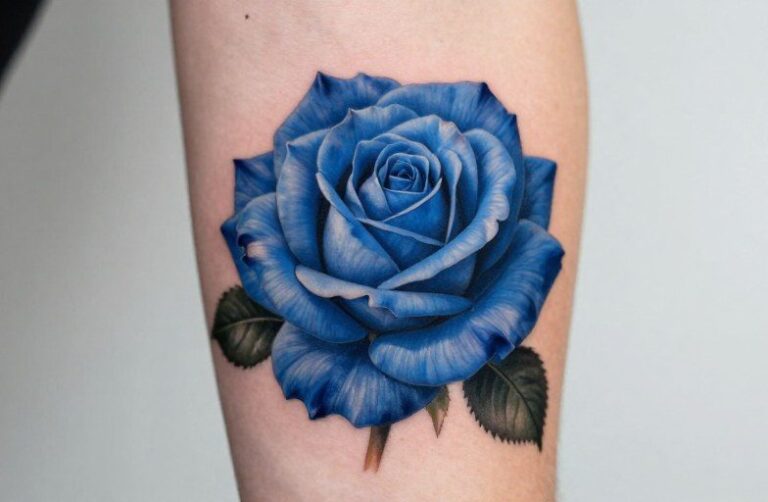
American traditional floral work relies on bold outlines, limited but saturated color palettes, and stylized rather than botanically accurate forms. Think Sailor Jerry roses: readable from across a room, built to last, deliberately simplified. Neo-traditional allows more naturalistic detail, softer color gradients, and complex compositions while maintaining the structural clarity of bold line work. Both approaches prioritize longevity over photographic realism.
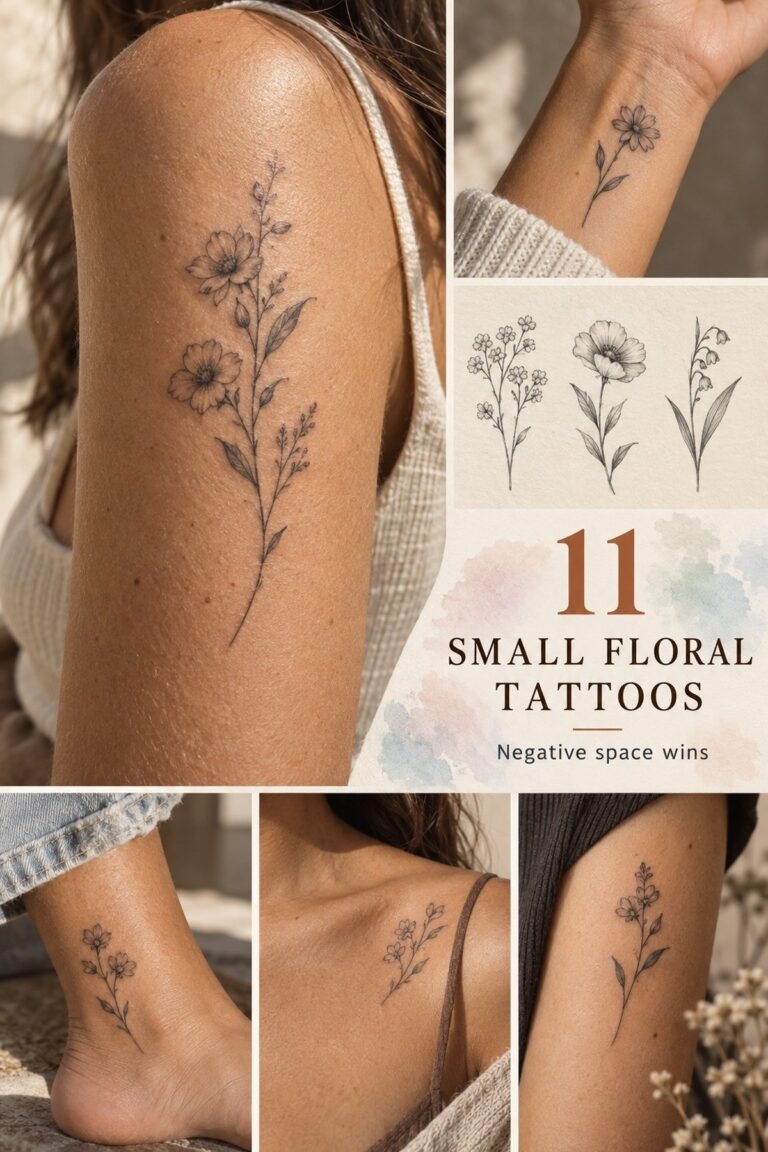
Fine Line and Botanical Illustration
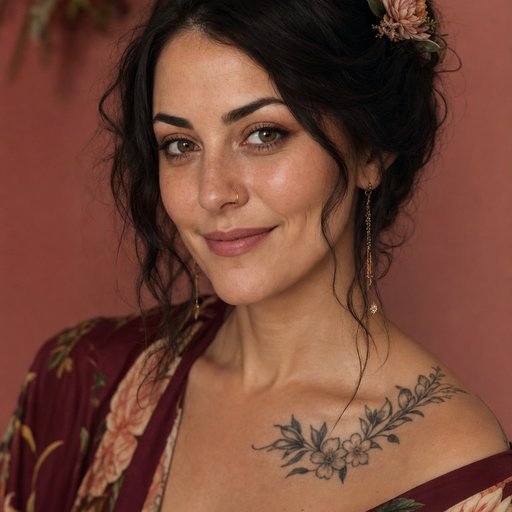
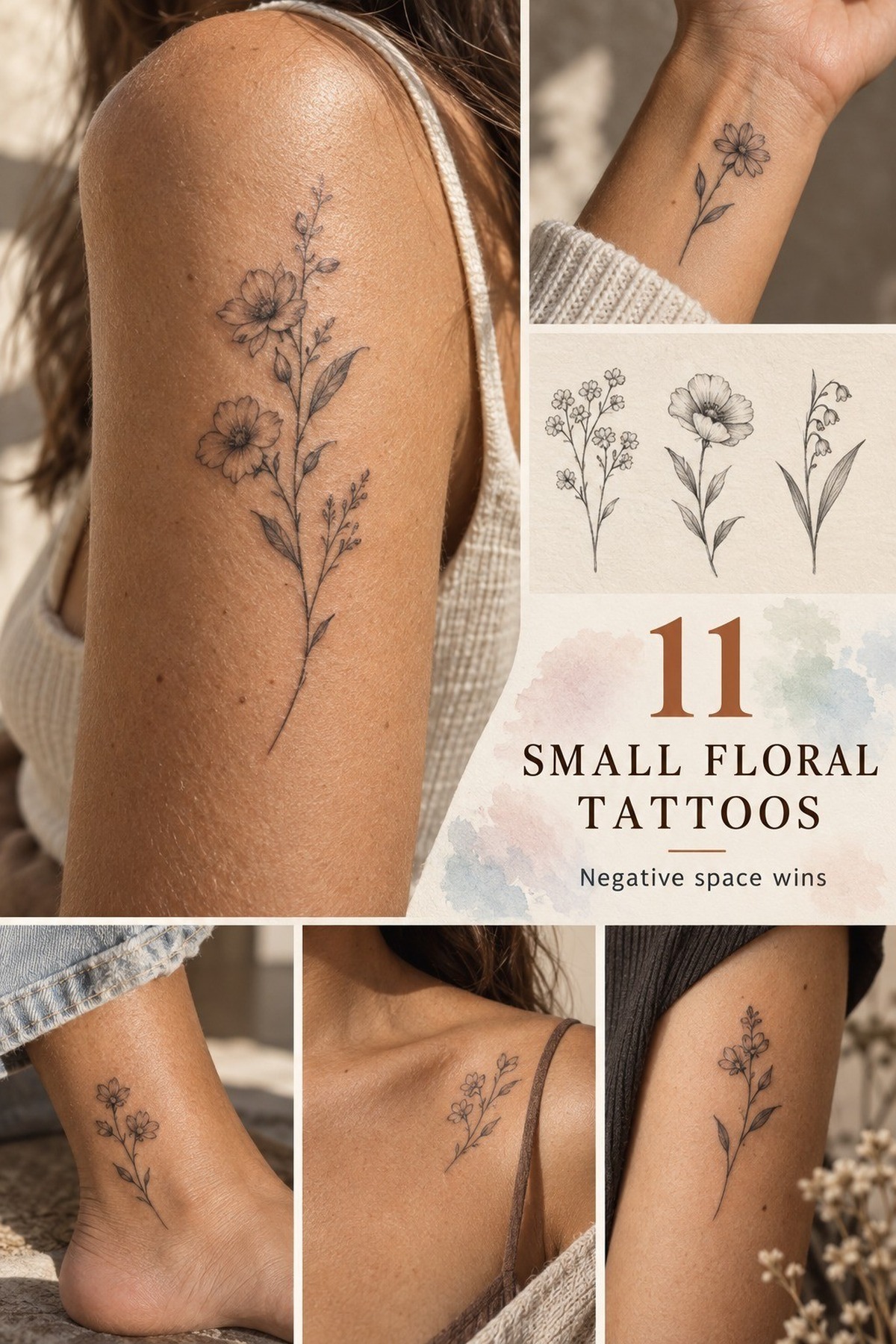
The past decade has exploded with single-needle and fine-line floral specialists. These pieces mimic scientific illustration, accurate petal veining, proper stamen structure, species-specific leaf serration. The trade-off is durability. Lines at 3rl or finer blur faster, especially in high-friction areas. A botanically precise peony on a wrist may need significant touch-up within five years. Specialists in this style often steer clients toward upper arm, rib, or thigh placements where the skin sees less abrasion.
- Watercolor floral: pigment splashes without black outlines, high initial impact, unpredictable aging
- Blackwork ornamental: heavy fill, pattern-based, often incorporating geometric frames
- Japanese irezumi: peonies, chrysanthemums, and cherry blossoms integrated into larger narrative compositions
- Minimalist silhouette: single-stem outlines, negative space emphasis, fastest to execute but least forgiving of placement errors
Color vs Black and Grey
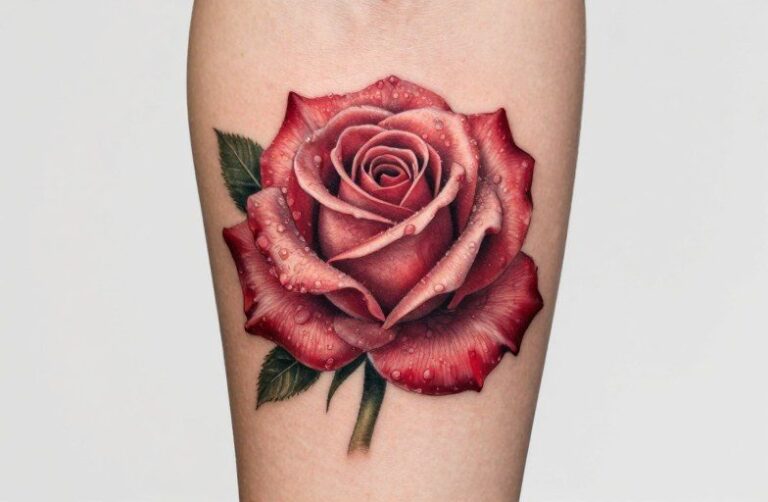
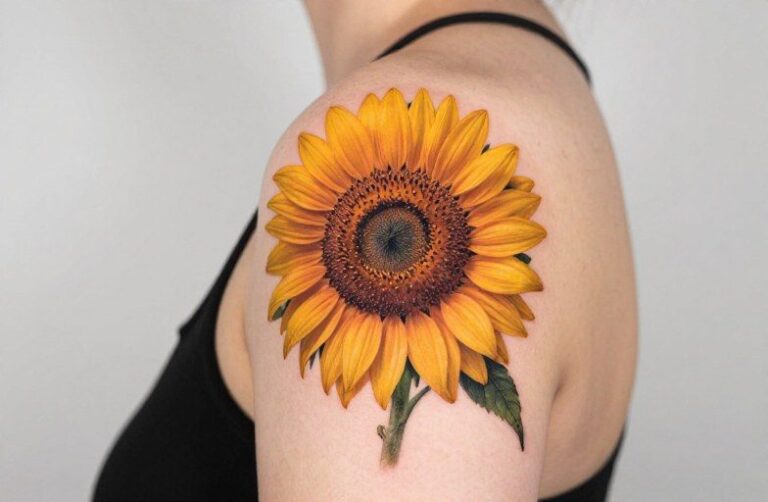
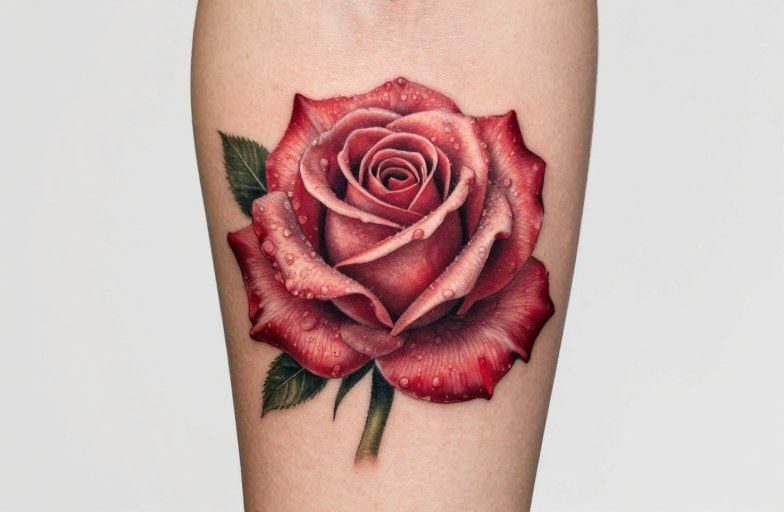
Color floral work offers immediate visual punch. Reds, pinks, and yellows carry cultural and emotional weight that greyscale cannot replicate. A red rose simply reads differently than its black and grey equivalent, more passionate, more urgent, more traditionally romantic. However, color saturation demands more frequent refresh. Yellows and light greens fade fastest; deep burgundies and forest greens hold longer. UV exposure accelerates this differential fading, creating a muddied palette years before the black line work degrades.
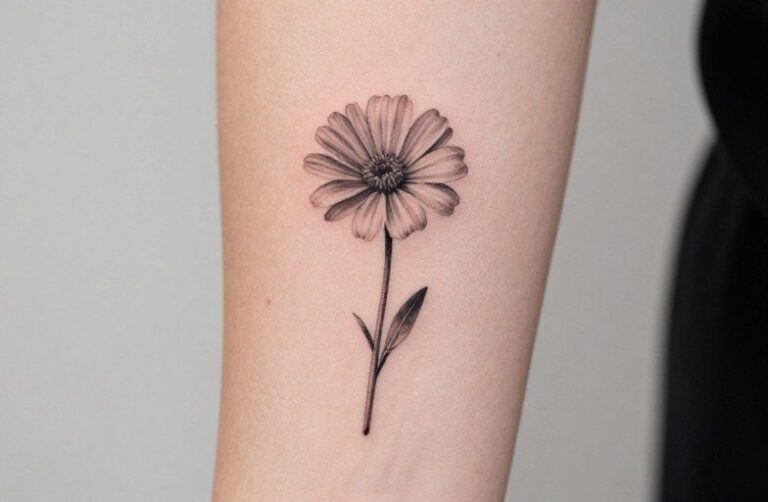
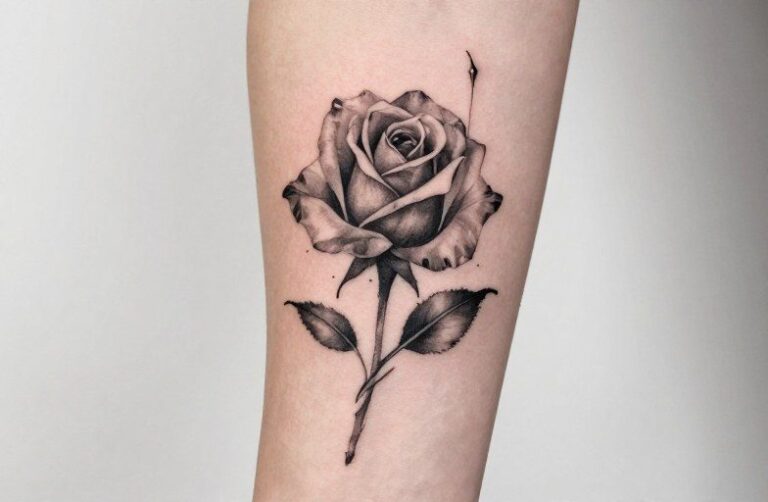
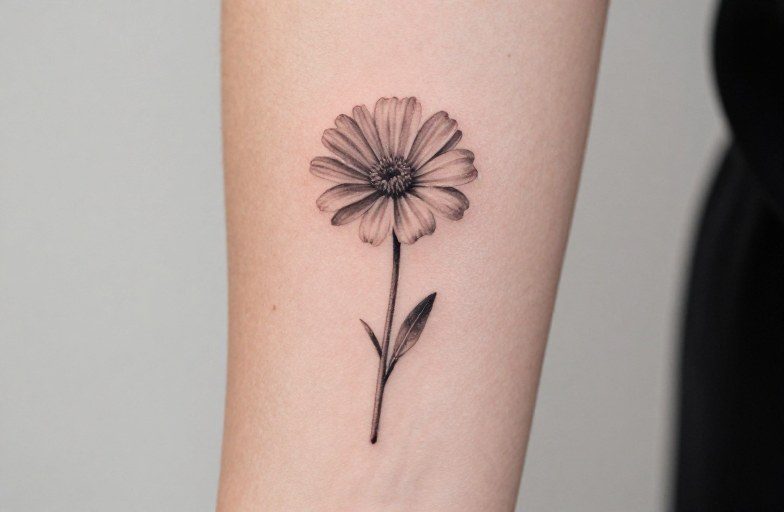
Black and grey floral relies on contrast and texture. Smooth gradations suggest petal softness; whip-shading and stippling create organic texture without chroma. The aesthetic ages more gracefully overall, no color imbalance to develop, and suits clients who prefer subdued pieces or work in environments where visible color draws unwanted attention. Many artists develop distinct specialties in one camp or the other; finding a color specialist for a black and grey piece (or vice versa) often yields inferior results.
How It Ages on Skin
The Specific Vulnerabilities of Botanical Detail
Fine petal edges, delicate veining, and small negative-space highlights are the first casualties of time. What reads as airy lightness at month six becomes indistinct grey at year ten. Artists compensate by building in structural redundancy: a slightly darker outline where petal meets petal, highlights that are larger than strictly realistic, color saturation deeper than the reference photo suggests. The best floral work looks slightly “too bold” fresh, settling into optimal readability at the three-year mark.
Placement-Driven Degradation
Hand and foot tattoos, popular for small floral pieces, age notoriously poorly. The dermis is thin, movement is constant, and regeneration is rapid. A finger rose often requires complete rebuild within two to three years. Inner bicep and upper back hold detail longest; the skin is relatively stable, protected from sun, and experiences minimal friction. Rib and sternum placements present a middle ground: good longevity but significant stretching risk with weight fluctuation or pregnancy, which distorts symmetrical floral arrangements.
Design Tips & Pairings
Compositional Elements That Strengthen Floral Work
Standalone flowers work, but most compelling pieces incorporate supporting structure. Leaves provide directional flow and fill negative space. Stems create movement and can guide the eye through a larger composition. Buds and seed pods introduce narrative time, past, present, future within a single branch. Insects (bees, moths, butterflies) add scale and ecological context without overwhelming the botanical focus.
Script pairings require careful integration. Lettering dropped beside a floral piece often looks like an afterthought. Better approaches weave text into banner scrolls, position it within negative space the flowers naturally create, or use the stem itself as a baseline. The font choice matters enormously: flowing script complements organic forms; block letters fight them.
Scaling Considerations
Small floral tattoos, under two inches, sacrifice species specificity. That “rose” becomes generic bloom below a certain threshold. Clients wanting recognizable species need to commit to minimum sizes: peonies require substantial real estate to show their characteristic ruffled layers; daisies and simpler wildflowers compress more successfully. An experienced floral artist will decline a project rather than execute a design doomed to illegibility.
Who Chooses This Tattoo
The demographic has broadened dramatically. Where floral specialists once served primarily female clients seeking feminine-coded imagery, contemporary botanical studios see roughly equal gender distribution. The unifying factor is not identity but intention: these clients want imagery that carries established symbolic weight without demanding explanation. A flower communicates something universally, yet permits personal specificity.
Cover-up clients frequently seek floral artists. The organic shapes adapt well to obscuring existing work; petals and leaves can be positioned to break up old lines and saturated color. Memorial tattoos often incorporate birth-month flowers, funeral arrangements, or species associated with the deceased. The floral vocabulary accommodates grief without requiring explicit text or portraiture.
Some collectors pursue floral pieces as part of broader thematic sleeves, nature sleeves, garden sleeves, seasonal progression across multiple limbs. Others isolate a single perfect bloom as their sole tattoo, the antithesis of accumulated patchwork work.
Final Thoughts
Choosing a floral tattoo artist means selecting someone who understands botany as visual language, not merely someone who can render a pretty picture. The best in this specialization balance aesthetic sensitivity with technical pragmatism, guiding clients toward compositions that satisfy immediately and endure decades. Ask to see healed work, not just fresh photography. Inquire about their approach to the specific species you want, and whether they’ll steer you toward modifications that improve longevity. The right artist treats the flower as living material rendered in living skin, with all the imperfection and change that implies.
Frequently Asked Questions
How do I find a tattoo artist who actually specializes in flowers versus someone who just does them occasionally?
Look for portfolios where botanical work dominates, eighty percent or more of visible pieces. Ask specifically about their experience with your chosen species and request to see healed photos from two-plus years prior. Generalists often default to generic rose forms; specialists will discuss petal structure and growth habit unprompted.
Why do fine-line floral tattoos seem to fade faster than bolder traditional ones?
Thinner lines deposit less ink at shallower depths, and the delicate detail packed into fine-line botanical work has less structural redundancy. When individual lines blur slightly, dense compositions lose definition faster than simpler bold pieces. Placement and aftercare matter enormously, but the technique itself carries inherent longevity trade-offs.
Can any flower be tattooed small, or are there realistic size limits?
Complex layered blooms like peonies and ranunculus need minimum sizes to read as specific species, generally three to four inches for recognizable structure. Simpler flowers with fewer petals (poppies, daisies, tulips) compress more successfully. A skilled artist will tell you when your desired size compromises the design rather than accepting the booking.
Is there meaningful difference between a tattoo artist who draws flowers from reference photos versus one with botanical training?
Artists who study plant morphology produce more structurally convincing work, proper petal attachment, accurate leaf venation, believable growth direction. Reference-dependent artists may copy surface appearance without understanding underlying architecture, resulting in flowers that look slightly “off” to knowledgeable viewers. Both can produce beautiful tattoos; the distinction matters most for clients wanting scientific accuracy or specific symbolic species identification.