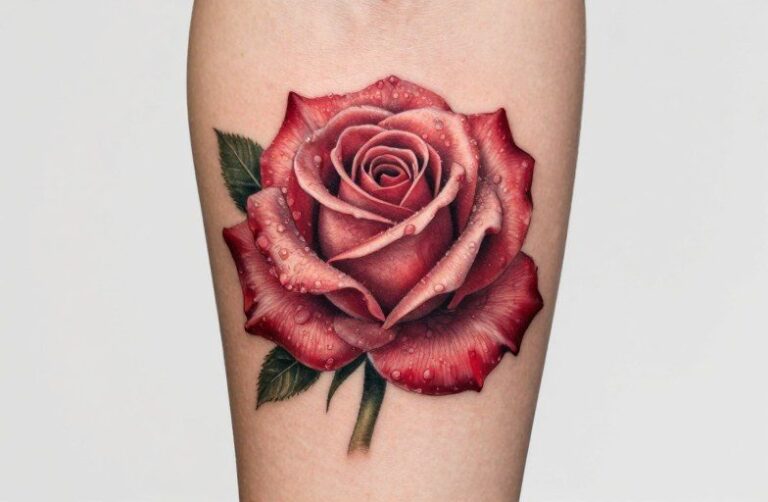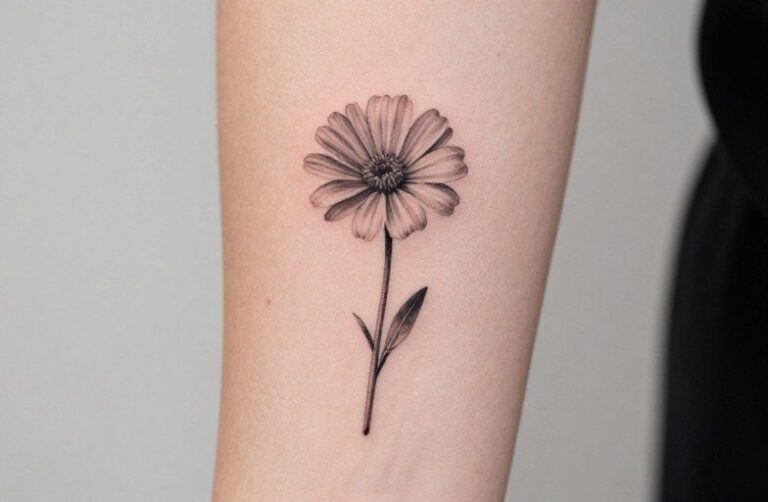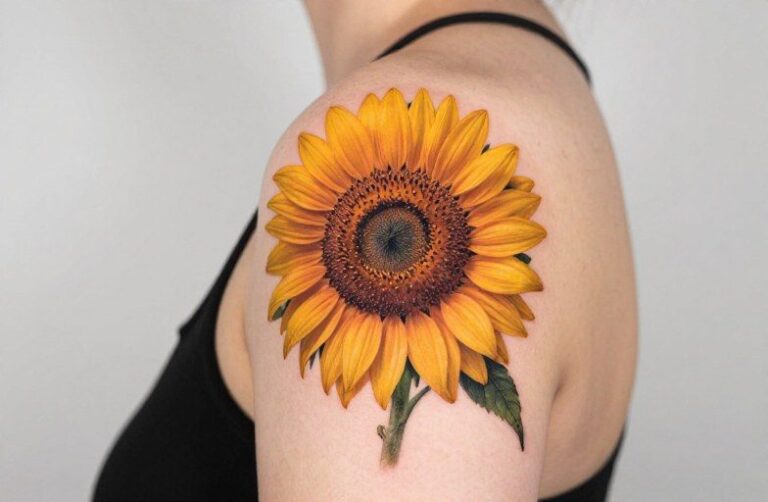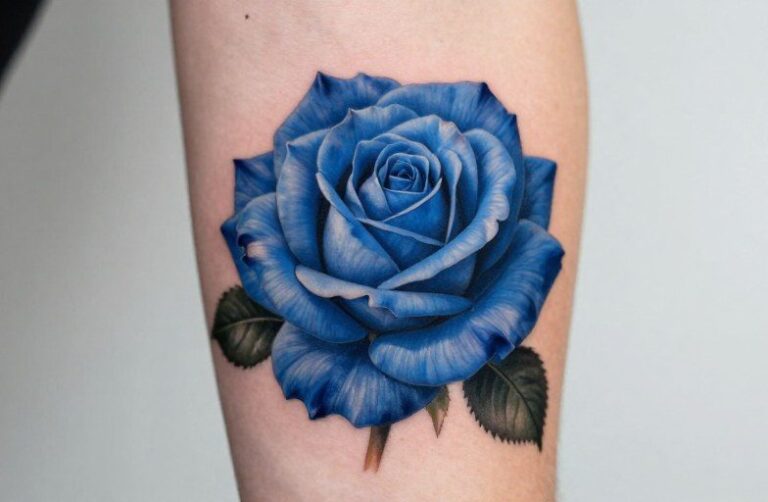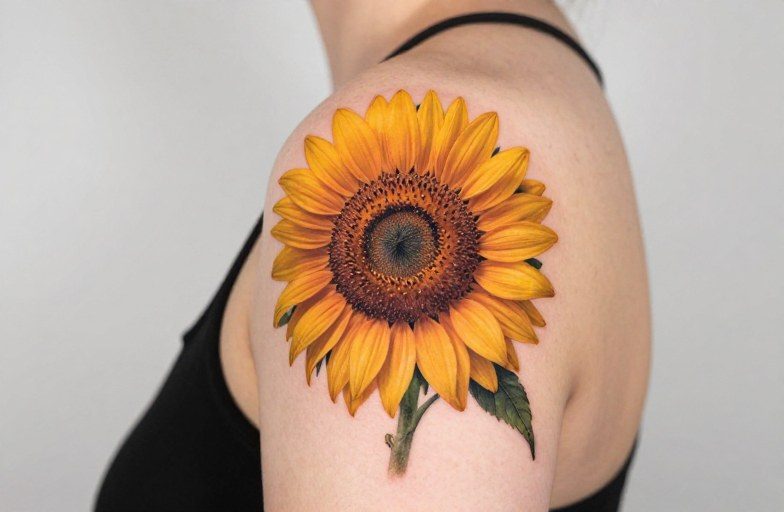
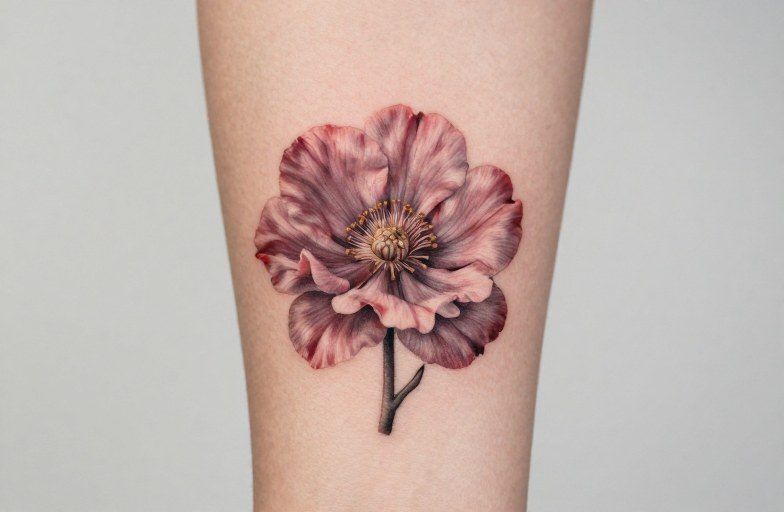
A May and October birth flower tattoo pairs the lily with the marigold, creating a dual bloom design that honors two birth months, two people, or a relationship bridging spring and autumn. The lily carries associations of purity, renewal, and motherhood, while the marigold represents passion, creativity, and the warmth of late harvest. Together, they form a visually striking contrast in both form and seasonal energy.
Color vs Black and Grey
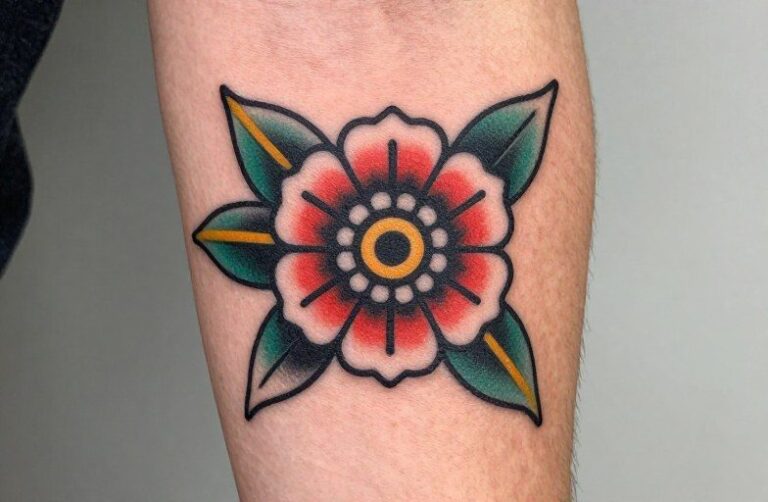
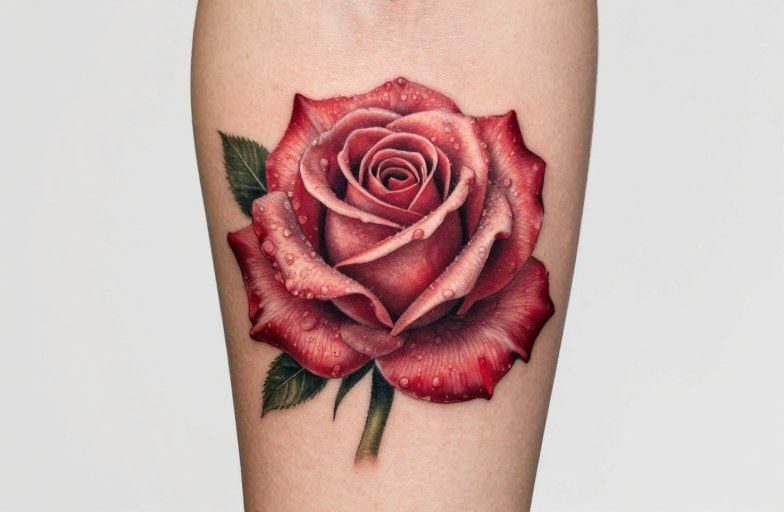
How you render these two flowers fundamentally changes their impact and longevity. Color captures what makes lilies and marigolds immediately recognizable, the lily’s white, pink, or orange trumpets, the marigold’s dense gold and russet petals. But color demands maintenance. Yellows and oranges fade fastest under UV exposure, often shifting toward a muddy brown within five to eight years depending on sun exposure and skin type.
Color Specifics for These Blooms
Marigolds in particular suffer from ink chemistry realities. The cadmium-based yellows and oranges that replicate their natural vibrancy are prone to faster breakdown than darker pigments. A color marigold benefits from strategic placement away from constant sun, think inner bicep, ribcage, or thigh rather than forearm or collarbone. Lilies offer more flexibility; their whites and soft pinks hold better, and the green stem work anchors the design even if petal color softens.
Black and Grey Advantages
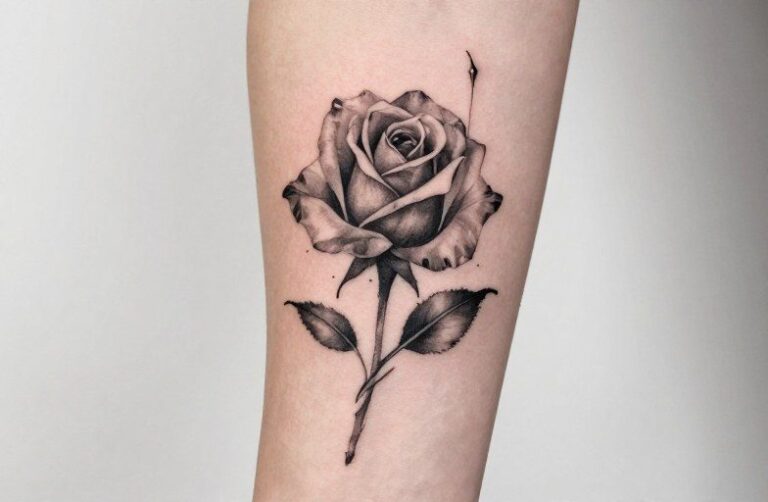
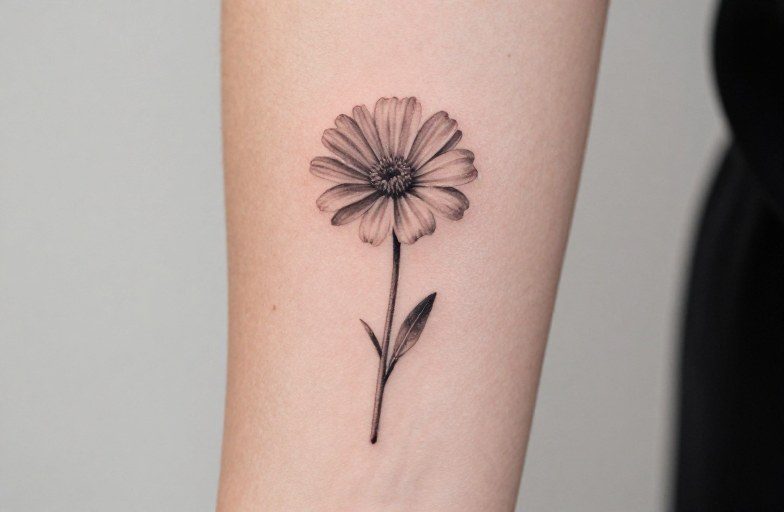
Black and grey shifts the focus to structure. The lily’s long, elegant lines and the marigold’s layered, almost ruffled texture both translate beautifully through contrast and shading. Without color, the marigold reads as a dense, textured pom-pom against the lily’s open, architectural form. This approach ages with more dignity, no color to muddy, just subtle grey wash shifts that tattoo collectors often prefer for pieces meant to last decades.
Symbolism & Core Meaning
The lily’s symbolism stretches across cultures with remarkable consistency. Often linked to Hera in Greek mythology and strongly associated with the Virgin Mary in Christian tradition, it signals purity, rebirth, and maternal devotion. The May birth flower specifically connects to the return of growth after winter, making it a natural emblem for new beginnings and fertility.
The marigold carries different weight. Its October association ties to harvest, the thinning veil between worlds in Mexican Día de los Muertos tradition, and the sun’s waning strength. Marigolds guide spirits in ofrenda practice; their bright color and strong scent mark paths between living and dead. This isn’t mere decoration, it’s functional symbolism in cultural practice.
Pairing these flowers creates tension and dialogue: the lily’s cool, opening form against the marigold’s tight, warm density. Spring emergence meets autumn completion. The design often represents duality itself, two people, two phases of life, or the balance between innocence and earned wisdom.
Religious & Spiritual Angles
The lily’s religious footprint is substantial. In Christian iconography, the Annunciation lily appears in countless paintings, the white trumpet signaling Mary’s purity and divine favor. The fleur-de-lis, a stylized lily, became the emblem of French royalty and by extension, Catholic monarchy. For tattoo wearers with Catholic upbringing, the lily can carry specific devotional weight beyond generic “purity” meaning.
Marigold Spiritual Dimensions
The marigold’s spiritual significance is often linked to Hindu practice, where garlands of zendu flowers adorn deities and decorate wedding spaces. In Mexican folk Catholicism, the cempasúchil (Aztec marigold) maintains pre-Columbian spiritual function within Christian framework. This layered history means a marigold tattoo can signal ancestral connection, particularly for Mexican-American wearers, without requiring explicit skull or sugar imagery.
Combined Spiritual Reading
Together, the lily-marigold pairing can represent a spiritual journey through seasons, birth, death, and renewal as continuous cycle rather than linear progression. Some trace this to broader pagan agricultural calendars, though specific attribution varies. The design works for wearers who want floral symbolism with spiritual depth but prefer natural imagery over explicit religious iconography.
Who Chooses This Tattoo
This pairing attracts specific situations. Parents of children born in May and October represent the most straightforward group, one flower per child, unified in a single design. Couples with those birth months, particularly partners or spouses, form another significant category. The tattoo functions as private commemoration without requiring names, dates, or explicit family imagery.
Less commonly, individuals born in one month with profound connection to someone born in the other choose this design. The relationship need not be romantic; memorial tattoos for parents or siblings frequently use birth flowers as respectful, aesthetically flexible tribute.
Placement Patterns by Motivation
- Parental commemoration: forearm, shoulder blade, or calf, visible but not dominant
- Romantic partnership: inner wrist, ribcage, or matching placements on two people
- Memorial: chest near heart, or upper back where the wearer sees it privately
- Self-reference (dual-month personal meaning): thigh, upper arm, or side
The dual-flower design demands more space than single bloom tattoos. Attempting to compress both into a small area sacrifices the marigold’s necessary texture detail. Minimum workable size runs about three to four inches in longest dimension.
Similar & Related Symbols
Birth flower pairings exist for every month combination, but the lily-marigold contrast is unusually strong visually. The rose (June) and chrysanthemum (November) offer a softer autumn pairing, while the daisy (April) and cosmos (October) share a more delicate register. The lily’s formal structure against the marigold’s informal density remains distinctive.
Related symbols that sometimes accompany this design include butterflies (transformation, often paired with lilies), honeybees (pollination, industry, connection to marigold’s agricultural role), and crescent moons (lunar cycles, seasonal change). Some wearers incorporate subtle birthstone color references, emerald green for May, opal iridescence for October, without rendering literal gemstones.
Common Variations & Styles
Botanical illustration style dominates this pairing, emphasizing accurate petal structure and stem curvature. The lily’s six tepals (three petals, three sepals, visually similar) require careful attention to fold and shadow. The marigold’s hundreds of tiny florets forming a single head present the opposite challenge, suggesting density without overworking the skin.
Line Work vs. Fully Rendered
Single-needle fine line approaches suit the lily’s elegant architecture but struggle with the marigold’s necessary texture. Many artists solve this by rendering the lily in precise line with minimal shading, the marigold in heavier stipple or whip-shading to create visual weight difference. Fully rendered color or black-and-grey pieces treat both flowers with equal detail attention, requiring larger scale.
Composition Approaches
- Vertical stem alignment: lily above, marigold below, connected by winding vine or ribbon
- Mirror or yin-yang: flowers facing each other, negative space between them forming a shape
- Overlapping bouquet: naturalistic cluster with one flower dominant, the other supporting
- Separated but paired: one flower on each forearm, ankle, or shoulder for symmetrical body placement
Watercolor-style backgrounds behind traditional botanical rendering have trended in recent years, though this ages unpredictably. The soft color bleeds that look fresh at two years often blur into indistinct haze by ten.
Key Takeaways
The May and October birth flower tattoo combines the lily’s clean, opening form with the marigold’s dense, warm texture, a spring-and-autumn pairing with genuine visual and symbolic tension. Color captures seasonal vibrancy but demands maintenance and careful placement; black and grey emphasizes structural contrast and ages more gracefully. Religious and spiritual associations run deep for both flowers, particularly Catholic tradition for the lily and Mexican folk practice for the marigold. The design most commonly commemorates children, partners, or family members born in those months, though it also serves personal symbolic purposes. Successful execution requires sufficient scale to render the marigold’s texture without losing the lily’s elegant line work. Choose an artist with demonstrated botanical tattoo experience, and discuss aging expectations openly before committing to color versus black and grey.
Frequently Asked Questions
Will the yellow in a marigold tattoo fade faster than other colors?
Yes, yellow and orange pigments generally break down faster under UV exposure than darker colors. Expect more noticeable fading within five to eight years, especially on sun-exposed areas like forearms or collarbones.
Can I add a third flower if I have another child born in a different month?
Absolutely. Three-flower designs work well in triangular compositions or vertical arrangements. Discuss spacing with your artist, the marigold’s density needs breathing room that a single lily doesn’t require.
Is this design culturally appropriative if I’m not Mexican?
The marigold itself is a global flower; using it as an October birth flower carries no specific cultural claim. However, pairing it with Día de los Muertos imagery like skulls or ofrenda elements without personal connection to that tradition would be appropriative.
How much should I expect to pay for a quality lily and marigold piece?
Botanical work with this detail level typically runs $400, 800 for a palm-sized piece from an experienced artist, scaling up for larger sizes, color work, or high-demand metropolitan shops. Avoid bargain pricing, fine petal detail requires genuine technical skill.