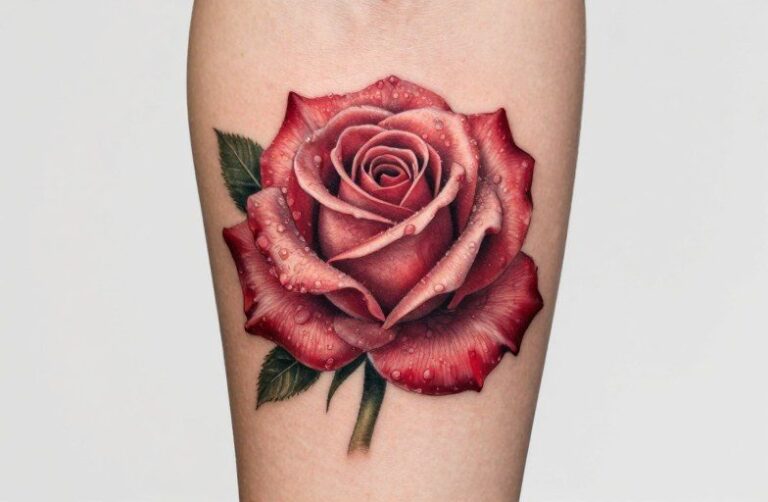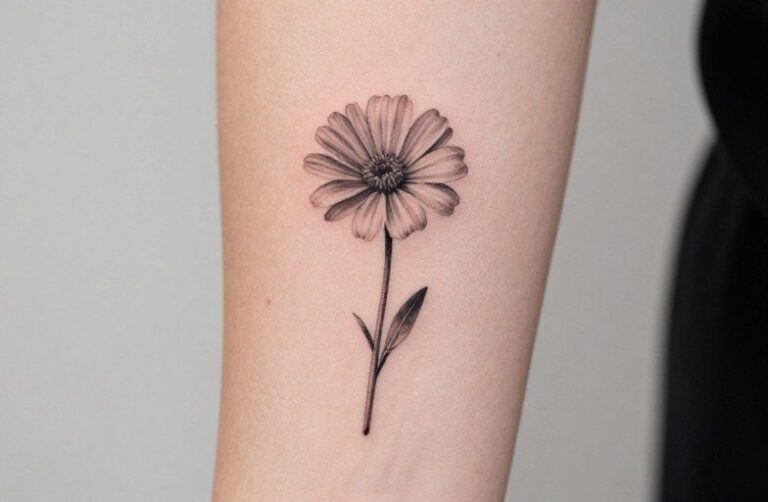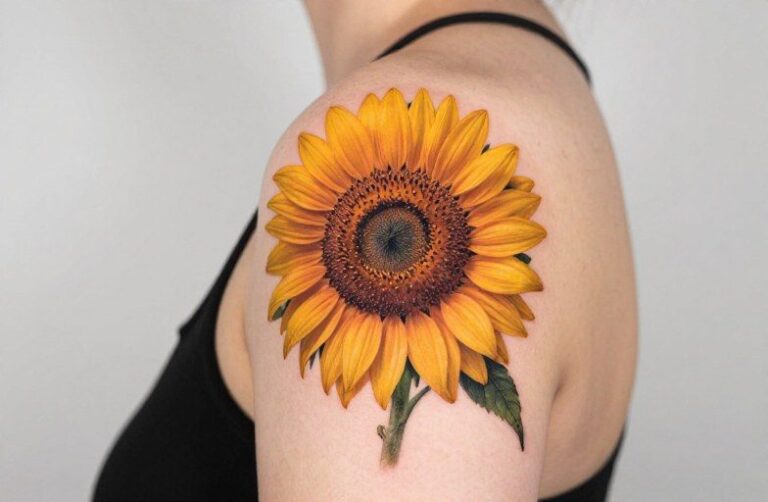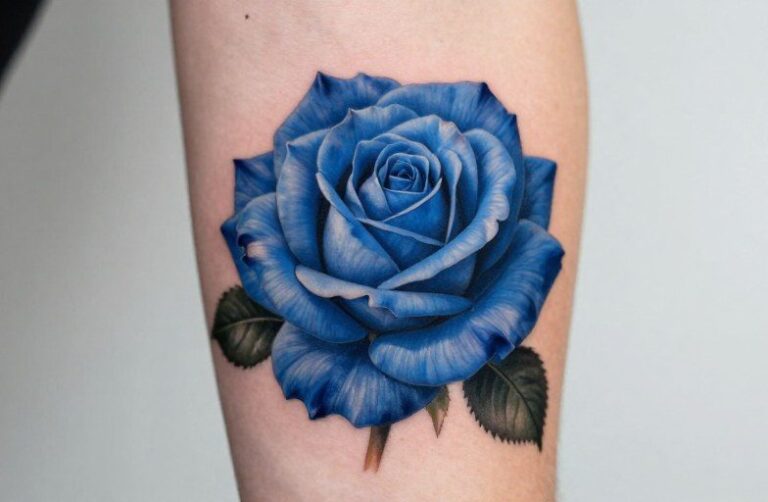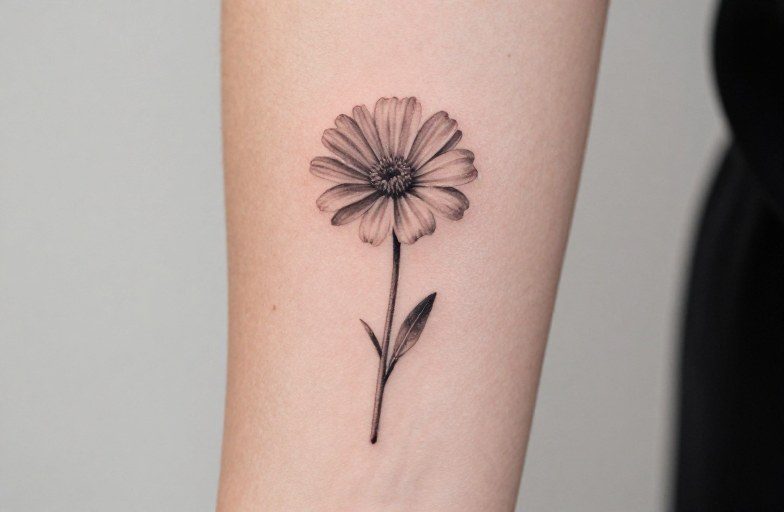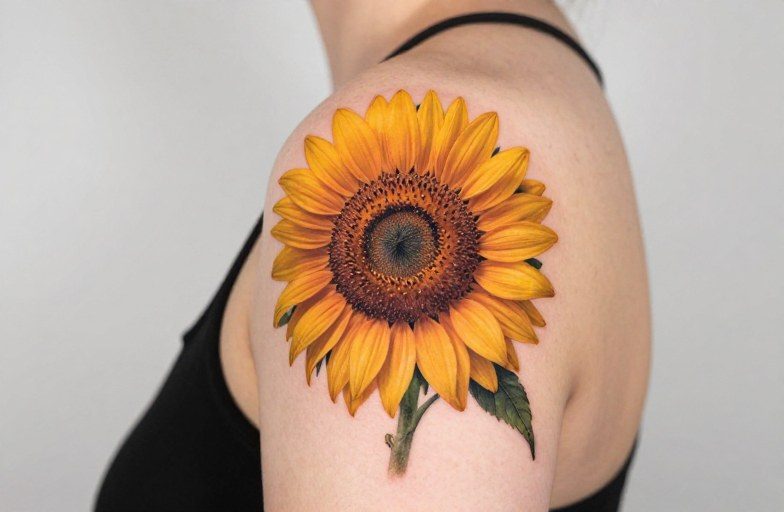
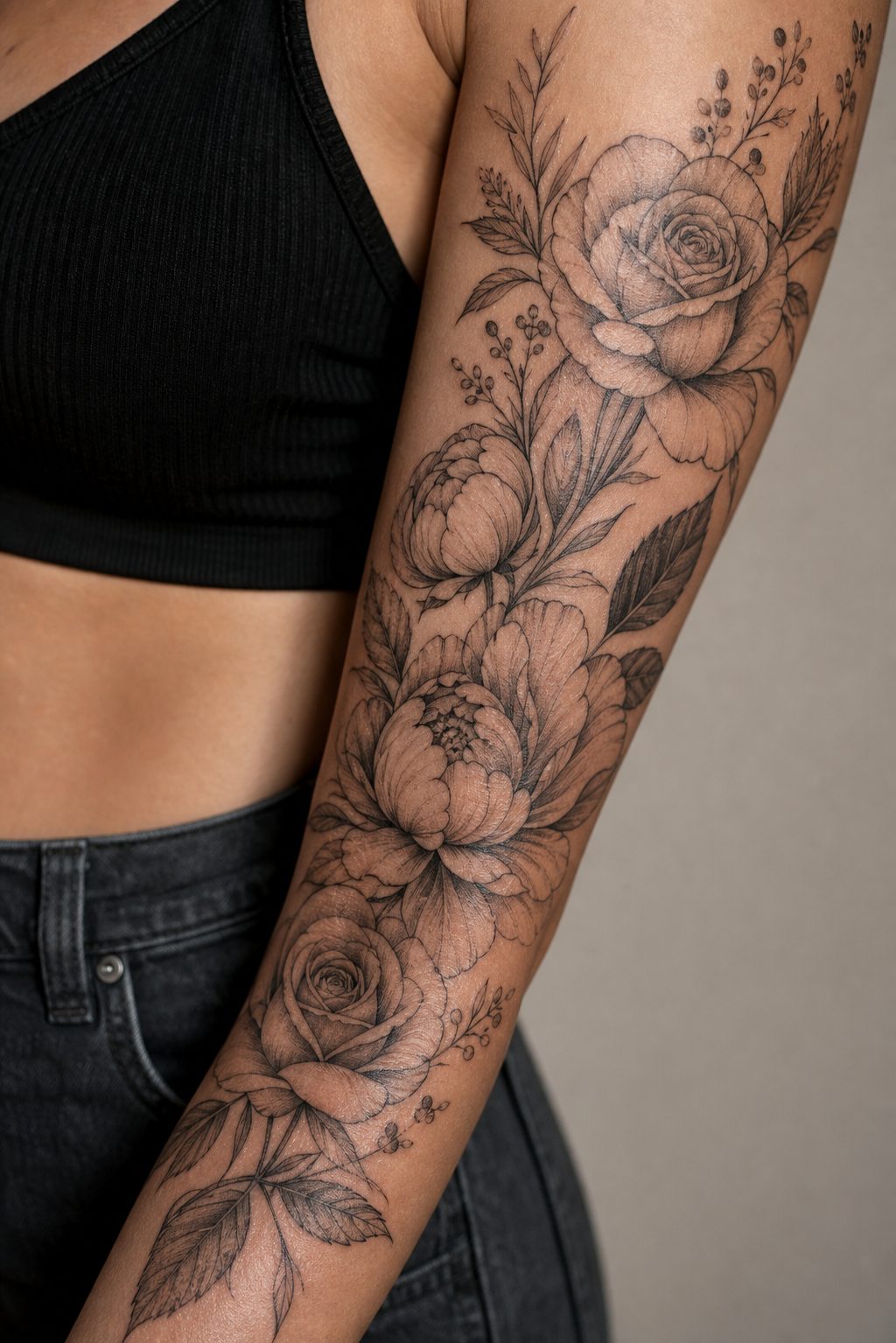
Floral tattoo designs for women carry layered symbolism rooted in growth, resilience, beauty, and the cycle of life. Specific flowers carry distinct meanings, roses for passion, peonies for prosperity, lotuses for emergence from difficulty. The appeal spans cultures and centuries because flowers communicate what words often cannot: transformation, remembrance, and the acceptance of impermanence.
Design Tips & Pairings
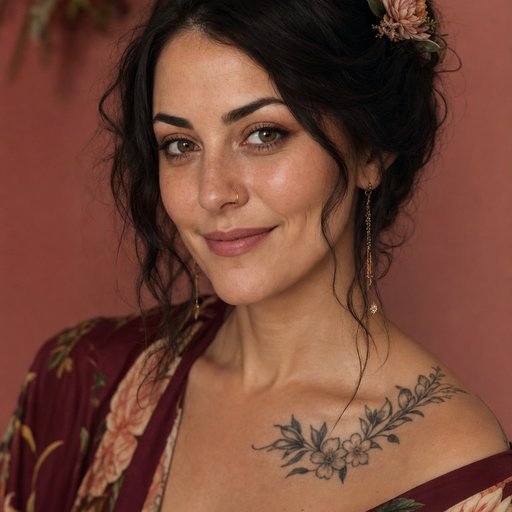
Placement shapes how a floral tattoo reads. Small clusters behind the ear or on the collarbone read as delicate accents; a full sleeve of winding vines demands different line weight and spacing. Consider how the body moves, shoulder blooms shift with muscle, ribcage flowers compress and expand with breath.
Line Work vs. Shading Choices
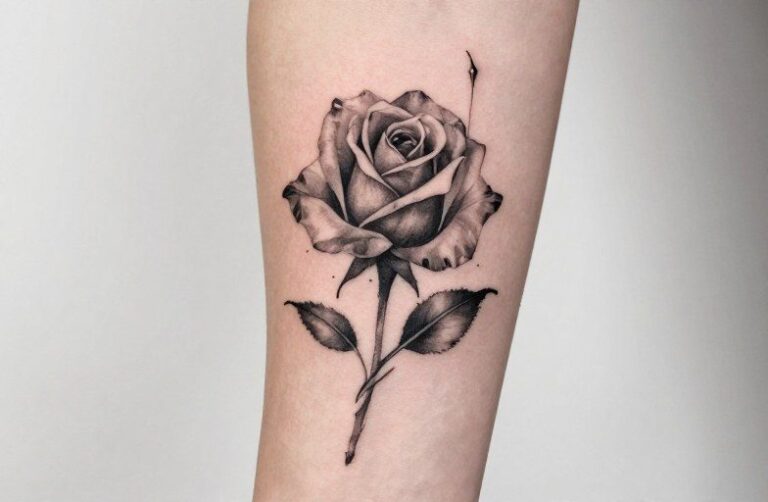
Single-needle outlines create a botanical illustration feel, crisp and archival. Soft whip shading or stippled graywash produces depth and dimension, mimicking how light hits actual petals. Black-and-gray florals age more predictably than heavy color saturation, which can muddy as yellows and pinks fade unevenly. If you want color, jewel tones, deep burgundy, emerald, sapphire, hold longer than pastels.
Complementary Elements
- Bees, butterflies, or moths: animate the composition, suggest pollination and transformation
- Script or lettering: best kept minimal; let the flower dominate
- Geometric frames: contrast organic forms with structure, but avoid over-trendy mandala surrounds that date quickly
- Negative space: leaving skin untouched within petals creates luminosity
How It Ages on Skin
Flowers are detail-dependent, and detail is the first thing time erodes. Fine lines between petals blur. High-contrast pieces with clear separation between elements maintain readability longer than dense, uniformly shaded work. Sun exposure accelerates fading; a forearm rose sees more UV than a thigh peony.
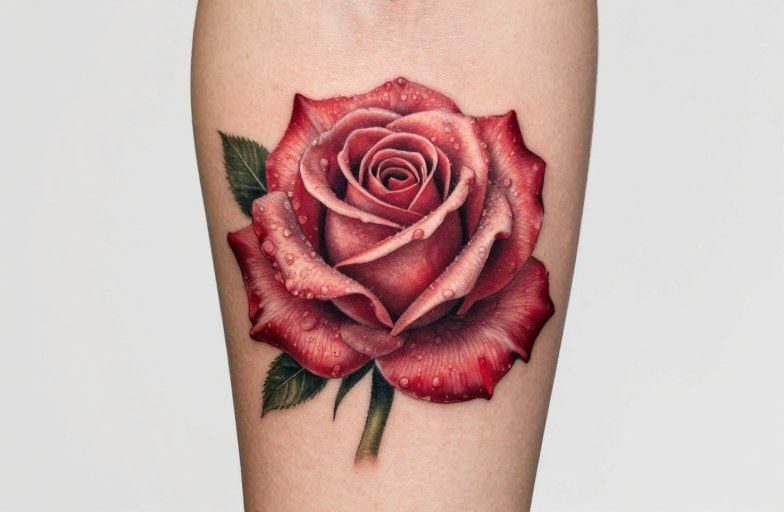
White ink highlights, popular for “realistic” petal glow, often yellow or disappear entirely within five years. Plan for touch-ups. Skin type matters too, oilier skin can spread ink slightly more, softening edges. Dry skin holds crisp lines but may flake more during healing, risking patchy color.
Size and Longevity
Tiny finger florals trend hard and fade faster. The constant use, washing, and thinner skin there means detail loss within two to three years. Larger pieces with bolder outlines on the upper arm, back, or calf preserve their structure for decades. If you want something small and permanent, simplify the design: a five-petal silhouette rather than a photorealistic daisy.
Common Variations & Styles
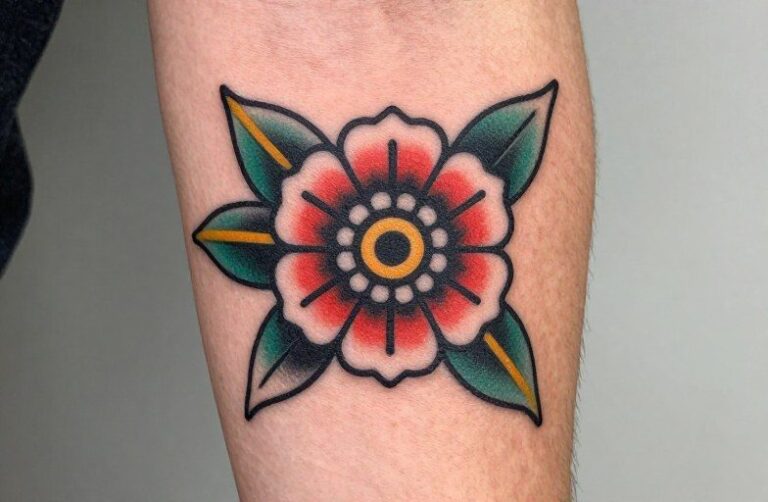
Botanical tattooing has fractured into distinct visual languages. Traditional American florals, thick black outlines, limited saturated color, bold simplicity, read immediately and last well. Japanese irezumi incorporates peonies and chrysanthemums into larger narratives, often with wind bars or waves. Fine-line single needle, pioneered in Korean and European studios, prioritizes ethereal delicacy over longevity.
- Watercolor: splashed, bleeding color without outlines; striking when fresh, unpredictable as it ages
- Blackwork/dotwork: stippled texture creates tonal variation; slower to execute, distinctive result
- Realism: demands exceptional technical skill; reference photography heavily; expect faster degradation of subtle gradations
- Neo-traditional: bolder color palettes, decorative elements, more illustrative than literal
Each style carries maintenance implications. Watercolor and realism need more frequent refresh sessions. Traditional and neo-traditional hold their ground with less intervention.
Similar & Related Symbols
Plants beyond flowers carry parallel resonance. Ferns suggest resilience and ancient lineage, they predate flowers by millions of years. Ivy represents attachment and memory, often overgrowing ruins in European graveyards. Trees anchor the same life-cycle symbolism vertically: roots, trunk, branches, seasonal leaf loss.
Animal pairings shift meaning. A snake coiled through roses evokes danger within beauty, often associated with Eve’s temptation in Western iconography. A skull nestled in blooms is memento mori, death acknowledged, not feared. Birds carrying flowers in beak suggest messenger energy, communication across distance.
Non-Floral Botanical Alternatives
Mushrooms have surged in popularity, carrying decay-to-renewal symbolism similar to flowers but with darker, more subterranean connotations. Succulents and cacti offer drought-resistance as metaphor, thriving in neglect, storing resources. These appeal when the softness of traditional florals feels mismatched to personal temperament.
History & Cultural Roots
Flower symbolism predates tattooing by millennia. Ancient Egyptian garlands carried religious significance; Greek and Roman cultures assigned specific meanings to blooms for communication. The Victorian language of flowers, floriography, codified this into a near-cryptographic system, where a bouquet’s composition sent precise messages. This coded communication likely influenced early Western tattoo culture, particularly among sailors and traveling workers who carried visual shorthand across languages.
Japanese horimono tradition incorporated peonies as “the king of flowers,” often paired with lions to represent strength balanced with beauty. Mexican papel picado and ofrenda traditions link marigolds, cempasúchil, to the dead, guiding spirits home. These associations persist in contemporary Chicana tattoo aesthetics.
Some trace the European popularization of floral tattoos for women to circus performers and “ladies of the stage” in the late 19th and early 20th centuries, though documentation remains scattered. What is certain: by the 1960s, flower imagery was deeply embedded in countercultural visual language, often linked to peace movements and psychedelic aesthetics.
Religious & Spiritual Angles
Christian iconography frequently features lilies for purity, often associated with the Virgin Mary, and roses for the blood of martyrs or divine love. The rosary, literally “little rose,” connects prayer beads to floral devotion. Hindu and Buddhist traditions raise the lotus above all: rooted in mud, rising through water, blooming unstained. This trajectory mirrors spiritual awakening narratives across multiple traditions.
Specific Flowers and Faith
- Chrysanthemums: in East Asian Buddhism, associated with autumn, impermanence, and the imperial family
- Marigolds: Día de los Muertos, Hindu wedding rituals, sacred to Kali in some Bengali traditions
- Jasmine: used in garlands for Hindu deities, also common in Filipino Catholic devotion
- Poppy: sleep and death in Greco-Roman context; remembrance of war dead in 20th-century Commonwealth countries
Secular wearers often adopt these forms without religious intent, which can raise questions about appropriation when sacred symbols are stripped of context. The lotus, particularly, circulates so widely that its Buddhist origins are sometimes erased in Western tattoo culture. Awareness matters; intent does not override impact.
Before You Decide
Research your specific flower beyond generic “meaning” lists. A peony in Japanese tradition differs from a peony in Victorian floriography. Consider your artist’s specialty, a fine-line specialist may struggle with bold traditional, and vice versa. Ask to see healed photos, not just fresh work. Instagram and portfolios show best-case scenarios; healed results reveal technical truth.
Think about seasonality in your own life. A flower tied to a specific month or loss anniversary may feel different as years pass. Some clients choose birth flowers; others deliberately select what blooms at a time of personal transformation, not birth. Either choice is valid if made consciously.
Finally, the body changes. Pregnancy, weight fluctuation, muscle gain or loss, all shift skin and thus the tattoo. Placement near joints (wrist, elbow, knee) experiences more distortion. A floral piece should accommodate some movement without destroying its composition. Discuss this with your artist; experienced hands know how to build in flexibility.
Frequently Asked Questions
What flower tattoo holds up best over time?
Bold, simplified designs with strong outlines age most predictably. Peonies, roses, and chrysanthemums translate well to traditional or neo-traditional styles where clear petal separation is built into the design. Avoid fine-line realism on high-movement areas if longevity matters.
Do color floral tattoos fade faster than black and gray?
Yes, particularly yellows, pinks, and light greens. These pigments have less titanium dioxide and break down faster under UV exposure. Jewel tones and black-based designs maintain their structure longer. Plan for touch-ups regardless, but expect color to need more maintenance.
Is it culturally appropriative to get a lotus tattoo if I’m not Buddhist?
The lotus circulates widely in secular contexts, but its sacred significance in Hinduism and Buddhism deserves acknowledgment. If you choose it, understanding its meaning rather than treating it as generic “exotic” decoration matters. Some practitioners appreciate respectful engagement; others find any non-devotional use inappropriate.
What’s the most painful placement for a floral tattoo?
Ribcage, sternum, and inner bicep rank highest for most people due to thin skin over bone or nerve density. The outer thigh and upper arm are generally more manageable. Floral designs often wrap or spread, so pain varies across the same piece.