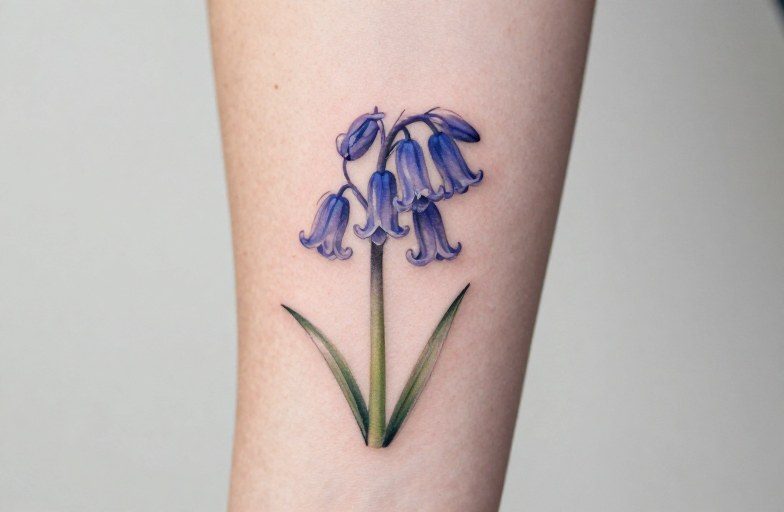
A bluebell tattoo most commonly signals humility, gratitude, and unwavering devotion. The flower’s nodding posture and brief blooming period give it a natural association with quiet constancy rather than loud declaration. On skin, it appeals to people who want botanical symbolism that reads as personal without broadcasting its meaning to everyone who glances at it.
Similar & Related Symbols
Bluebells share symbolic territory with several other flowers, and understanding these overlaps helps clarify what makes this specific bloom distinct.
Bluebells vs. Lavender and Forget-Me-Nots
Lavender carries similar associations with devotion and calm, but leans harder into medicinal and cleansing symbolism. Forget-me-nots overlap almost directly in the “constancy and remembrance” lane, though their story is more explicitly romantic. Bluebells occupy a middle space: less clinical than lavender, less narrative-heavy than forget-me-nots. The nodding habit of the flower, literally bending its head downward, gives humility a physical form that upright blooms can’t quite match.
Woodland Flower Cluster Symbolism
Bluebells rarely grow alone. In nature they carpet forest floors in dense blue-violet drifts, and this clustering tendency translates into tattoo composition. A single bluebell reads as delicate, even fragile. A cluster suggests community, shared experience, or the idea that small individual presences accumulate into something immersive. This makes the bluebell unusually flexible for memorial pieces, you can scale from one flower to many without losing coherence.
- Lily of the valley: Similar woodland habitat, but more strongly associated with sweetness and return of happiness
- Wild violet: Overlaps in modesty and faithfulness, but carries more Christian iconography
- Hyacinth: Shares the bell shape and spring timing, but carries heavier mythological baggage (Apollo, Hyacinthus)
Mythology & Folklore
The bluebell’s folkloric reputation is often linked to fairy lore and woodland superstition, particularly in British and Irish traditions. Some trace the flower’s name to the “bell” shape and the belief that ringing these bells would summon fairies, or worse, trap the ringer in fairy territory. This gives the bluebell a slightly more dangerous edge than its gentle appearance suggests, a tension that some tattoo wearers deliberately play up.
The “Death Bell” Association
In certain regional folklore, bluebells growing in unexpected places were treated as omens. The same flower that signals spring’s return could, in specific contexts, mark boundaries between worlds. Tattoo artists working with this symbol sometimes incorporate subtle visual cues, slight wilting, unusual color shifts, or compositional isolation, to hint at this duality without making the piece feel morbid.
Romantic Folklore
There’s also a gentler tradition: bluebells were commonly associated with constancy in love, the idea that someone who picks a bluebell and keeps it alive proves their devotion. This makes the flower a low-key alternative to more obvious romantic tattoos like roses or lock-and-key imagery. It works particularly well for long-term partnerships where both parties want matching or complementary pieces that don’t read as generic couple tattoos.
Best Placements
Bluebell’s slender, vertical growth habit makes it naturally suited to certain body areas and awkward in others. The stem-and-bell structure gives artists a built-in compositional line to work with.
Where the Form Works
The forearm’s inner or outer length accommodates a single stem or small cluster with minimal distortion. Ribs and side torso allow for slightly larger groupings that follow the body’s natural curve. Ankle and calf placements are common for smaller pieces, though the ankle’s bony terrain and frequent friction from socks and shoes mean touch-ups are more likely. The upper arm’s outer surface provides stable, relatively flat skin that ages predictably for medium-sized designs.
Placement Challenges
Hands and fingers are poor choices for bluebell tattoos. The flower’s fine details, thin stems, delicate bell edges, subtle color gradations, don’t survive well in high-wear areas with thin skin and constant movement. Similarly, the sternum’s central placement can force the naturally vertical form into an uncomfortable horizontal orientation unless the artist deliberately breaks from literal representation.
- High success: Forearm, outer upper arm, calf, ribcage
- Moderate success with caveats: Shoulder cap (works if scaled up), behind ear (very small, will soften quickly)
- Generally avoid: Fingers, palms, tops of feet, sternum center
Who Chooses This Tattoo
There’s no single demographic for bluebell tattoos, but certain patterns show up consistently in shop consultation conversations. People drawn to this flower often want botanical imagery that isn’t immediately recognizable as “trendy”, no peonies, no snakes-and-wildflower combinations that flooded Instagram in recent years. The bluebell’s relative obscurity in mainstream tattoo culture is part of its appeal.
Regional and Personal Connections
People with British or Irish heritage sometimes choose bluebells as a specific landscape reference, particularly if they grew up around ancient woodlands where bluebells form seasonal carpets. Others connect to the flower through gardening, childhood memories, or family associations with April and May birthdays. The tattoo functions as a geographic or temporal anchor rather than a generic nature symbol.
Memorial and Devotional Use
Because bluebells bloom briefly and return reliably, they work well for memorial pieces marking anniversaries or ongoing relationships with someone absent. The symbolism of quiet persistence, coming back year after year without demanding attention, resonates with people who value endurance over drama in their emotional lives. This isn’t a tattoo for people who want their skin to perform grief or loyalty loudly.
How It Ages on Skin
Bluebell tattoos present specific aging challenges that both artists and clients should plan for from the initial design stage.
Color Fading Reality
The blue-violet range is notoriously difficult in tattoo pigments. Purple inks often shift toward brown or gray as they age, particularly if exposed to significant sunlight. Blues can hold better but tend to soften toward a more generic “blue” rather than retaining the subtle violet undertone that distinguishes real bluebells. Artists sometimes compensate by building color with multiple blue and purple layers, or by designing pieces that will read as successful even if the color mutes significantly.
Line Weight and Detail Preservation
The flower’s thin stems and delicate bell edges are vulnerable to spread over time. Lines that look crisp at six months can soften substantially by year five, especially on areas with thinner skin or more movement. Experienced artists typically use slightly heavier line weight than the flower’s literal appearance would suggest, or rely on strategic shading rather than pure outline to define the bell’s shape. White highlight dots, sometimes added to suggest the flower’s interior texture, are almost guaranteed to disappear or yellow within a few years.
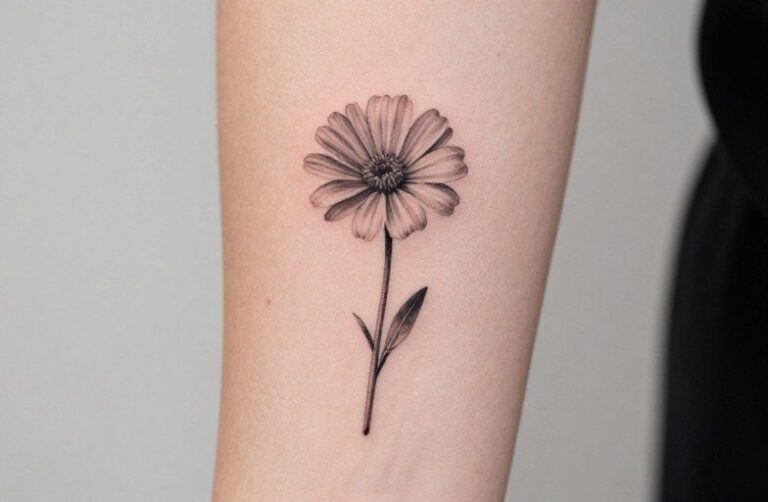
- Black and gray: Ages more predictably than color, loses the specific “bluebell” recognition but maintains the form
- Color realism: Requires commitment to sun protection and likely future touch-ups
- Watercolor-style: The soft edges that define this style accelerate the natural aging process; not recommended for long-term clarity
Personal & Modern Meanings
Contemporary bluebell tattoos often layer personal significance onto traditional symbolism without displacing it entirely. The flower’s existing associations provide a foundation; individual experience builds the specific structure.
Neurodivergence and Sensory Experience
Some people connect bluebells to sensory memories of specific places, the cool, damp quality of woodland air in spring, the particular quality of light filtering through new leaves. For individuals who experience strong place-memory or sensory processing differences, the tattoo can function as a portable grounding trigger, a way to access a specific felt state through visual reference. This isn’t universal symbolism but it’s a meaningful pattern in consultation conversations.
Reclamation and Quiet Resistance
The bluebell’s traditional association with humility can be deliberately inverted or reclaimed. For people who’ve been pressured to perform modesty or self-effacement, choosing this flower as a deliberate tattoo subject can paradoxically assert agency over that narrative. The design becomes a private acknowledgment of strength rather than a public declaration of submission. This reinterpretation works best when the wearer understands the traditional meaning they’re engaging with, not when they’re simply selecting a pretty flower.
The Bottom Line
A bluebell tattoo succeeds when its specific qualities, slender vertical form, nodding bloom posture, blue-violet color range, woodland habitat associations, are matched to the wearer’s actual priorities rather than generic “nature tattoo” desires. It ages best with deliberate technical choices: slightly heavier line weight than literal accuracy would dictate, color planning that accounts for purple’s instability, placement on stable skin that doesn’t distort the vertical form. The symbolism offers genuine depth for people who connect to its themes of quiet persistence, humility as strength, or specific geographic and temporal memory. For everyone else, it’s still a visually distinctive botanical choice that avoids the oversaturated flower-tattoo canon without requiring obscure explanation.
Frequently Asked Questions
Does a bluebell tattoo work in black and gray, or does it need color to read correctly?
Black and gray bluebell tattoos work fine and actually age more predictably. You’ll lose the immediate “bluebell” color recognition, but the bell shape and growth habit remain distinctive. Many artists prefer this approach for longevity.
How big should a bluebell tattoo be to hold its detail over time?
For a single stem with 2-3 bells, minimum 3-4 inches of vertical height. Cluster pieces need more space to avoid muddying the individual flowers. Smaller than this, and the bell interiors become indistinct blobs within a few years.
Can bluebells be combined with other flowers in a bouquet tattoo?
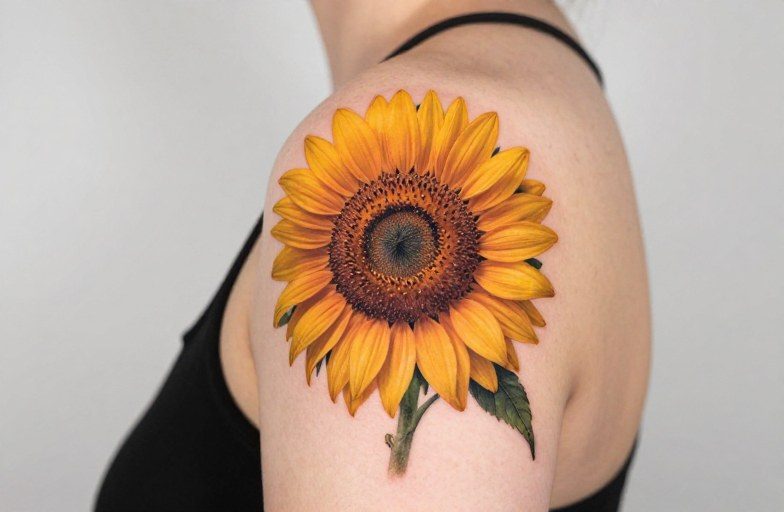
Yes, but choose companions carefully. Bluebells’ thin stems and downward-facing bells clash visually with large, upright blooms like sunflowers or peonies. Better pairings include wildflowers with similar scale and posture: wood anemone, wild garlic, or delicate ferns.
Is there a specific time of year that’s best to get a bluebell tattoo?
There’s no technical advantage to specific seasons for this design. However, people who choose bluebells for personal seasonal significance sometimes deliberately schedule around April or May, when the actual flowers bloom, as a ritual alignment with their meaning.