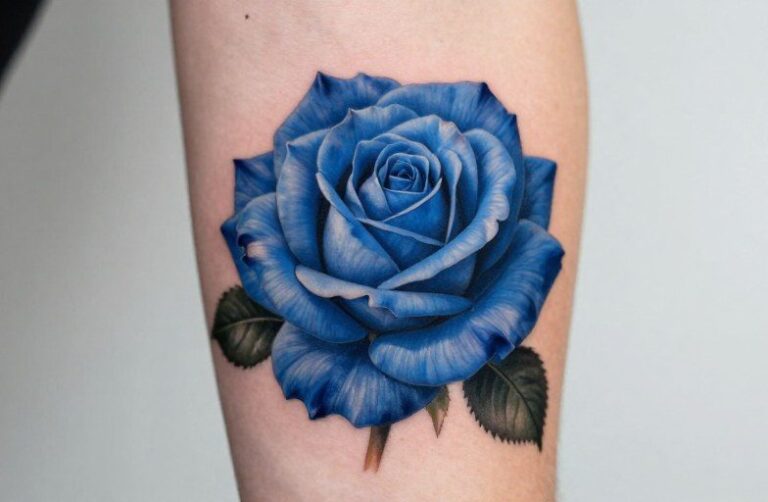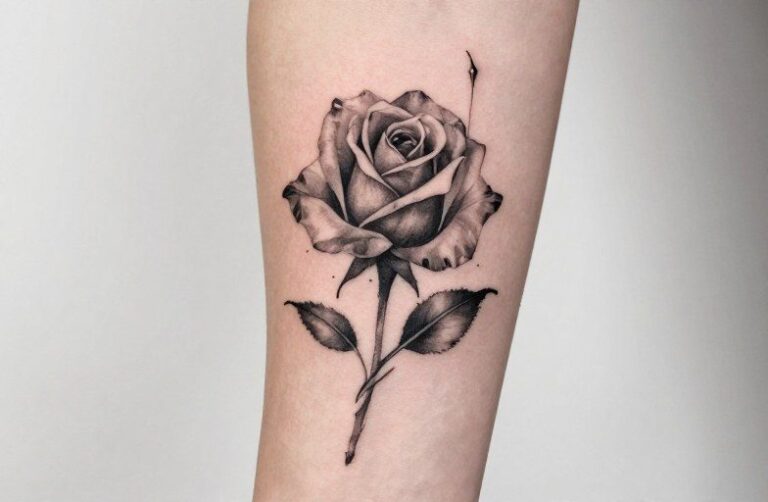
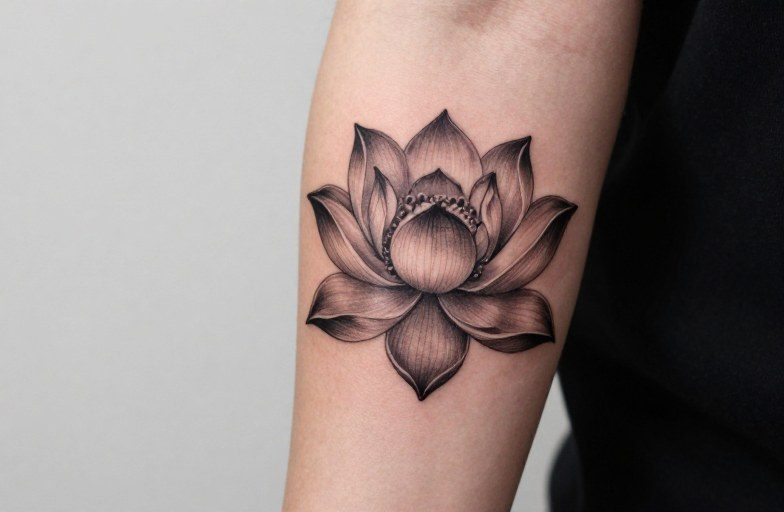
A dark lotus tattoo typically represents resilience forged through hardship, the beauty that persists despite darkness, or a spiritual journey that acknowledges suffering rather than denying it. Unlike the bright, pure lotus common in Eastern traditions, the dark version embraces shadow, loss, and transformation as part of growth.
Color vs Black and Grey
The choice between color and black and grey fundamentally changes what a dark lotus communicates visually and how it holds up over time.
Deep Purples and Burgundies
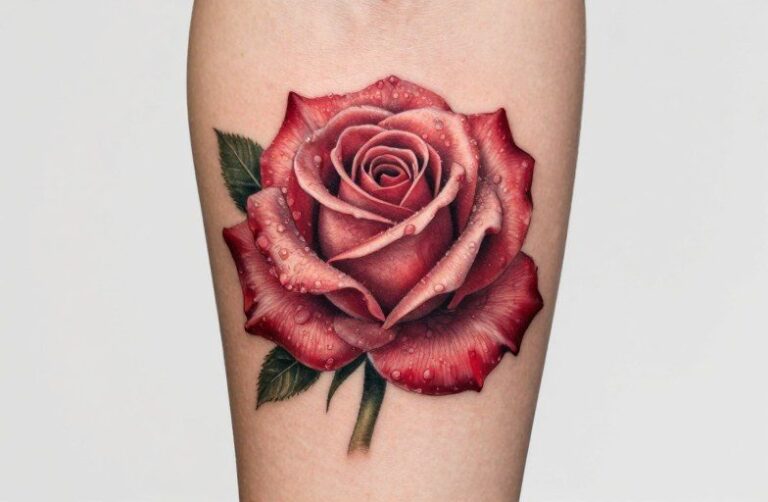
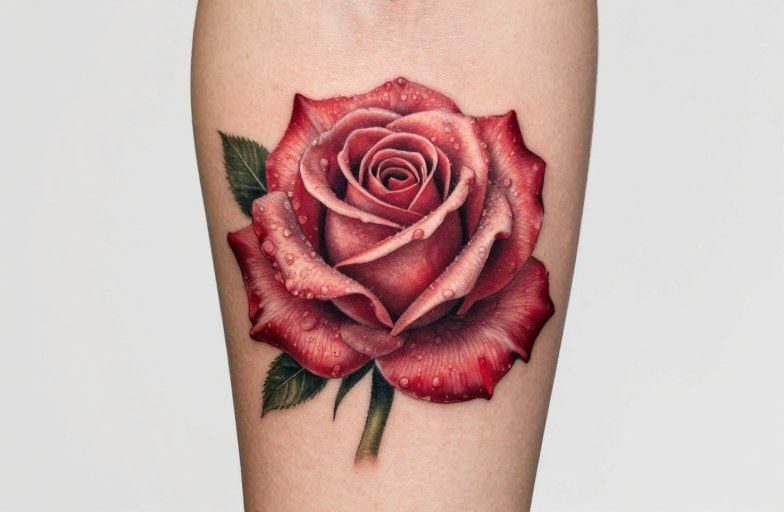
Color dark lotus tattoos often use saturated plums, wine reds, or near-black blues. These shades carry immediate visual weight and can suggest royalty, mourning, or intense passion. Purple specifically has long associations with spirituality and transformation across multiple cultures. The downside: darker pigments in the red and purple families are notorious for fading toward muddy brown or grey within five to ten years, especially with sun exposure. Touch-ups become part of the lifecycle.
Black and Grey Approaches
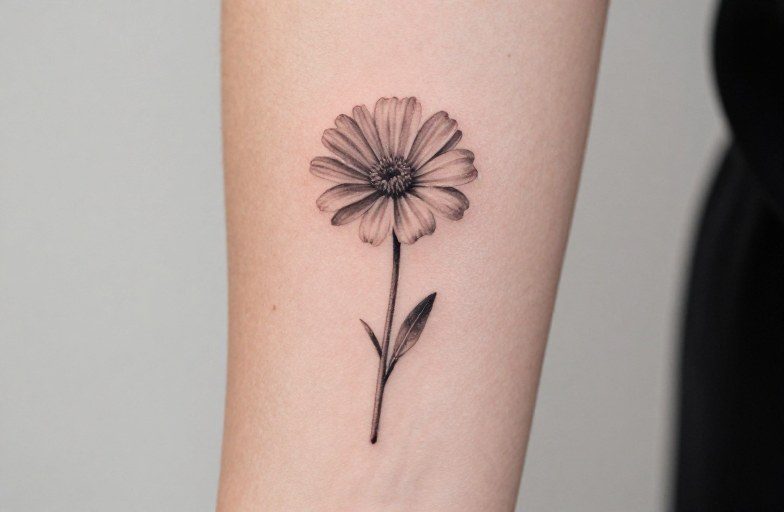
Black and grey dark lotus tattoos rely on contrast, negative space, and tonal variation to create depth. This approach ages more predictably, black ink breaks down slowly and uniformly, while grey washes soften into a consistent range rather than shifting to unexpected colors. The aesthetic reads more somber, more architectural, and often integrates more cleanly with existing tattoos or future additions. For a piece meant to carry weight for decades, black and grey offers practical advantages.
Symbolism & Core Meaning
Lotus flowers grow from mud, bloom above water, and close at night, biology that cultures have mapped meaning onto for millennia. The dark lotus specifically inverts or deepens several of these associations.
Shadow Work and Integration
Psychologically, the dark lotus often symbolizes the acceptance of difficult experiences as formative rather than purely negative. Where a traditional lotus might represent rising above suffering, the dark version suggests the suffering itself becomes part of the beauty, integrated, not transcended. This resonates with people who have moved through depression, addiction recovery, or significant loss and do not want to sanitize that history.
Death and Rebirth Cycles
In some interpretations, the dark lotus marks a completed cycle: something that has died and been reborn, or the understanding that endings are inseparable from beginnings. The closed bloom, the withered petal, the seed pod, all of these appear in dark lotus designs and reference different stages of this cycle.
Design Tips & Pairings
Placement and companion elements shape how a dark lotus reads on the body. Poor pairing can dilute the impact or create visual confusion.
Consider these placement dynamics:
- Upper arm/shoulder: The rounded muscle structure echoes the bloom’s natural curve. Large enough for detail, visible but controllable.
- Ribcage: Painful placement, but the lotus naturally follows the body’s vertical axis here. The proximity to the heart and lungs adds unconscious resonance for many people.
- Thigh: Flat, stable skin that ages well. Ample room for a full composition with stems, water lines, or secondary elements.
- Forearm: Highly visible; commits the symbolism to daily public presentation. Good for smaller, graphic treatments.
Effective pairings include:
- Broken or tarnished geometric frames (sacred geometry with wear and damage)
- Skulls integrated into the center or base, not as separate floating elements
- Water or mud rendered in dark, turbulent strokes rather than clean lines
- Text in scripts that complement the organic form, Gothic blackletter, rough brushwork, or no text at all
Avoid pairing with bright, unrelated color palettes or overly cheerful companion imagery unless the contrast is intentional and well-executed. The dark lotus loses coherence when visually shouted down.
How It Ages on Skin
Dark lotus tattoos face specific aging challenges based on their typical visual characteristics.
Line Weight and Detail Loss
Many dark lotus designs use fine lines for petal texture, stamen detail, or water ripple effects. These blur fastest, within three to seven years depending on skin type, sun exposure, and placement. Thicker outline work around the bloom’s perimeter holds definition longer and provides structural support as interior detail softens. A design that relies entirely on hairline strokes will become indistinct faster than one with bold contour and strategic negative space.
Dark Saturation and Blowout Risk
Heavy saturation in dark pigments, especially in smaller pieces, risks ink spreading slightly under the skin (blowout) or healing with uneven density. This is more common on thinner skin or areas with frequent movement. An experienced artist manages this by working in multiple passes rather than saturating in one heavy session, and by adjusting needle depth for different body zones.
Healing reality: dark areas often scab more heavily and peel in visible flakes. The temptation to pick at these scabs is strongest where the tattoo is most saturated. Resisting this during the two-to-three-week healing window determines final evenness more than almost any other factor.
Common Variations & Styles
The dark lotus adapts across tattoo traditions with varying degrees of success.
Neo-traditional: Bold outlines, limited but deep color palette, illustrative shading. Maintains readability at smaller sizes. The dark lotus translates naturally here, strong graphic presence, controlled emotion.
Japanese (Irezumi): Often integrated into larger compositions with water, wind bars, or background elements. The lotus in Japanese work carries Buddhist associations; darkening it shifts toward more somber narrative themes. Requires larger scale to do properly, attempting a small dark lotus in pure Japanese style usually fails.
Blackwork/Dotwork: Uses solid black or stippled texture to build form. Extremely effective for dark lotus concepts because the medium itself embodies the theme. Heals uniformly. Can appear flat if not carefully planned for three-dimensional readability.
Realism: Photographic rendering of an actual dark lotus cultivar or a manipulated bloom. Demands significant skin real estate and a specialist artist. The risk: without strong contrast planning, realistic dark flowers can age into murky shapes lacking clear form.
Graphic/Minimal: Stripped to essential silhouette or heavy black petals with minimal detail. Surprisingly durable. The limitation is expressive range, works best when the concept is simple and direct.
Mythology & Folklore
The lotus appears across multiple traditions, though specific dark lotus mythology is less codified.
Eastern Associations
In Buddhist and Hindu contexts, the lotus is commonly associated with purity, spiritual awakening, and divine birth. The dark lotus has no direct canonical equivalent, though some trace it to Tantric traditions where conventional morality is transcended, or to the concept of the “black lotus” in certain Hindu texts representing the dissolution of form. These connections are interpretive rather than established doctrine. The dark lotus as a tattoo motif is largely a contemporary Western development, drawing on Eastern symbolism but not directly replicating it.
Contemporary and Pop Culture Threads
The dark lotus gained visibility through music, gaming, and fantasy literature, most notably the Magic: The Gathering card “Black Lotus,” which became a cultural touchstone for rarity and power. This creates a secondary association for some wearers: exclusivity, underground knowledge, or subcultural identity. The tattoo meaning splits here, some intend the spiritual reading, others the pop culture reference, many a deliberate fusion of both.
Separately, the Juggalo subculture’s “Dark Lotus” musical group introduced the term to a different audience entirely, though visual crossover with tattoo imagery is minimal.
Final Thoughts
A dark lotus tattoo works when the darkness is substantive, not merely decorative. The best versions carry personal weight, specific loss, specific survival, specific transformation rendered visible. The worst read as aesthetic posturing, darkness adopted for surface effect without the lived experience to ground it.
Technically, this design rewards patience in artist selection and honesty about placement realities. It will fade, blur, and change. The question is whether the underlying symbolism remains legible to you through those changes. Choose line weight for longevity, placement for personal significance over trend, and pairings that deepen rather than distract. The dark lotus, properly done, holds its power not despite its shadows but because they are fully inhabited.
Frequently Asked Questions
Does a dark lotus tattoo always mean something negative or sad?
Not necessarily. The darkness often represents integration of difficult experiences rather than ongoing suffering. Many people choose it to mark completed transformation, survival, or the acceptance that growth includes shadow.
How big should a dark lotus tattoo be to age well?
At least palm-sized for designs with detail, though simple graphic versions can work smaller. Fine lines and stippled texture need room to blur without losing recognizability. Larger pieces also allow stronger contrast between dark saturation and skin.
Can a dark lotus tattoo be covered up or lightened later?
Covering up heavy blackwork is difficult and usually requires larger, darker replacement imagery. Laser lightening is possible but challenging with dense black saturation. Consider this a permanent commitment, not a temporary experiment.
What’s the difference between a dark lotus and a black lotus tattoo?
The terms overlap but “black lotus” often specifically references the Magic: The Gathering card or pure black ink rendering. “Dark lotus” typically encompasses deep colors, shadow symbolism, and broader spiritual or emotional associations beyond the gaming reference.