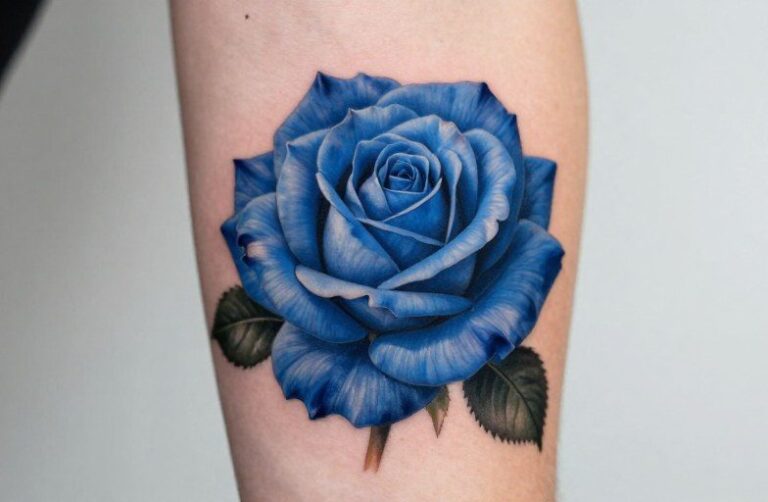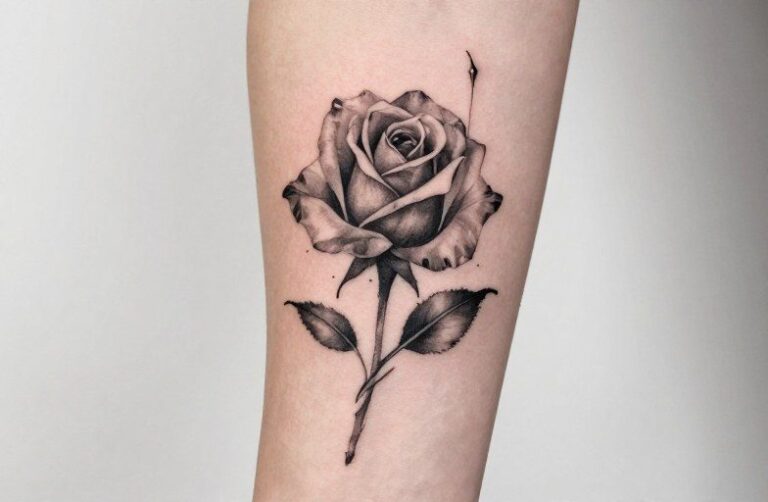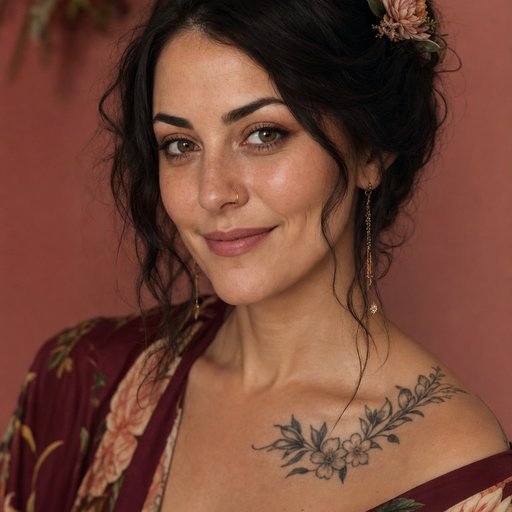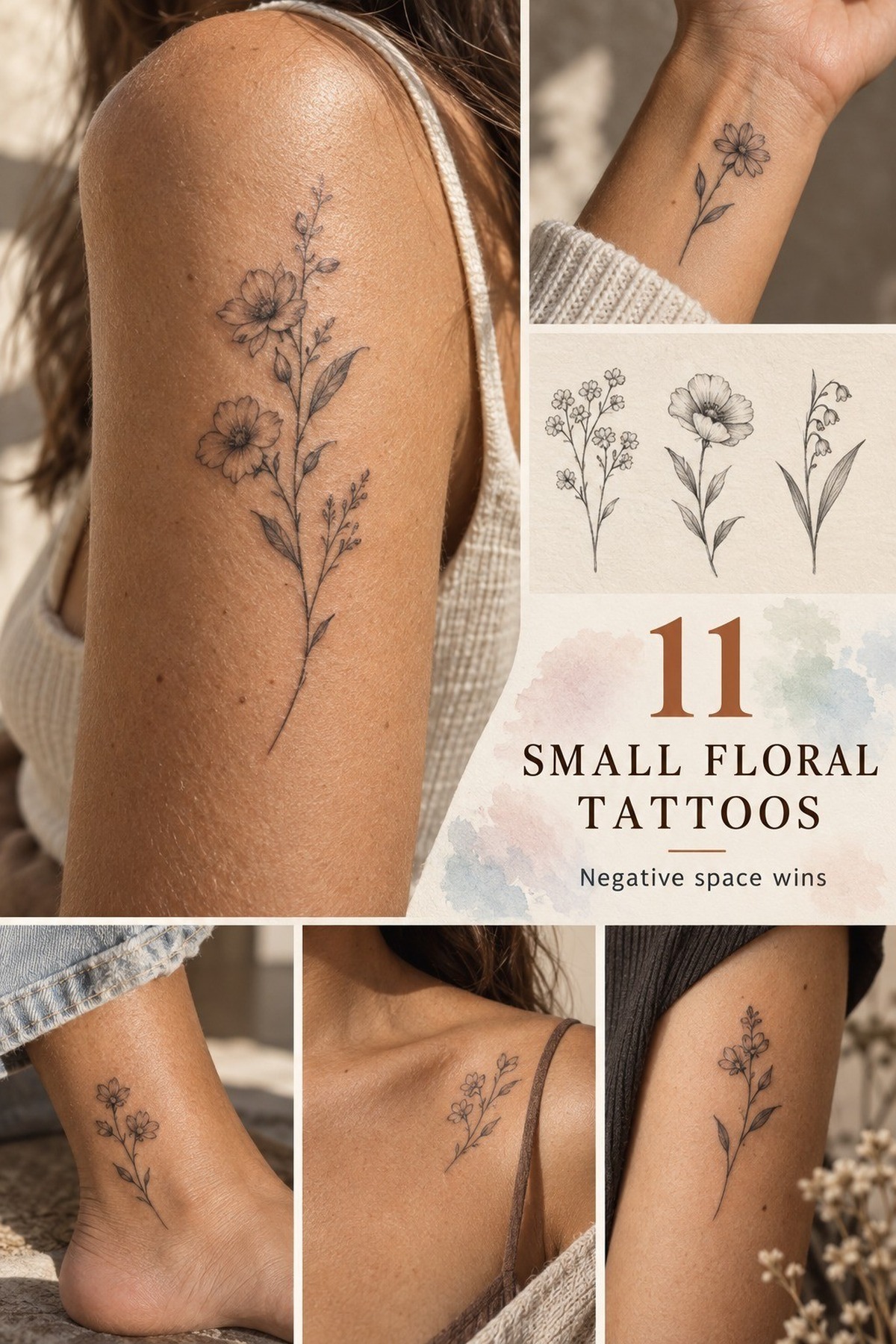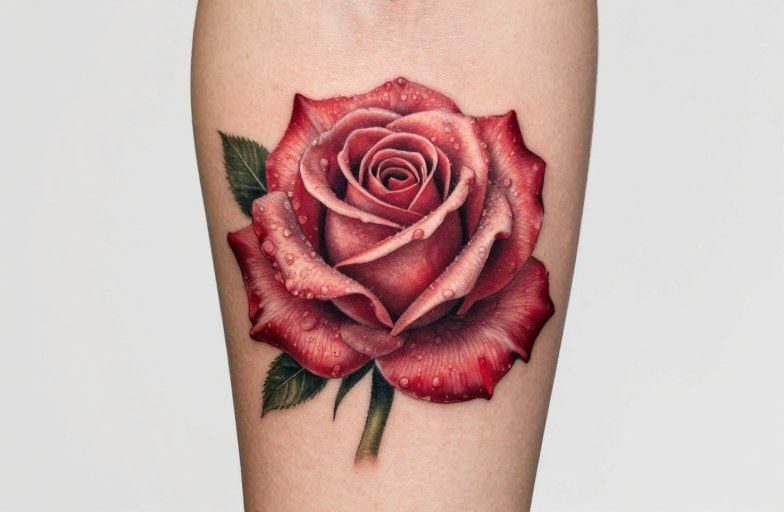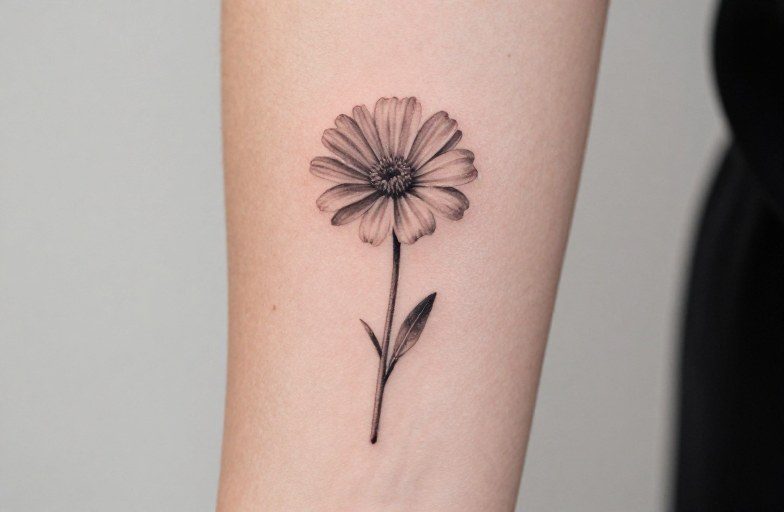
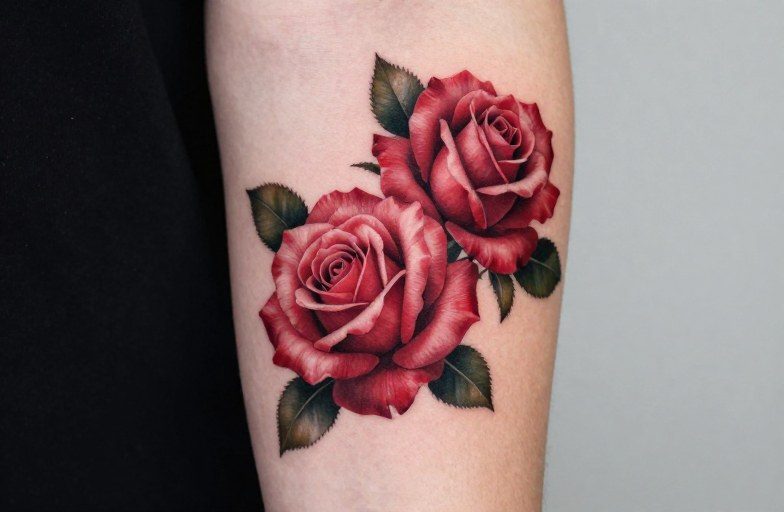
Two roses tattoo meaning generally centers on duality, two forces held together. Most commonly this reads as romantic partnership, but it also stretches to memory (one rose for someone living, one for someone gone), the balance of beauty and pain, or two distinct values someone wants to keep in tension. The pairing matters more than a single rose; the design insists on relationship, not isolation.
Common Variations & Styles
How the two roses relate to each other changes the entire read. Side by side on a stem suggests unity. Facing each other creates dialogue. One drooping, one upright introduces asymmetry that can signal loss, resilience, or the passage of time.
Placement and Scale
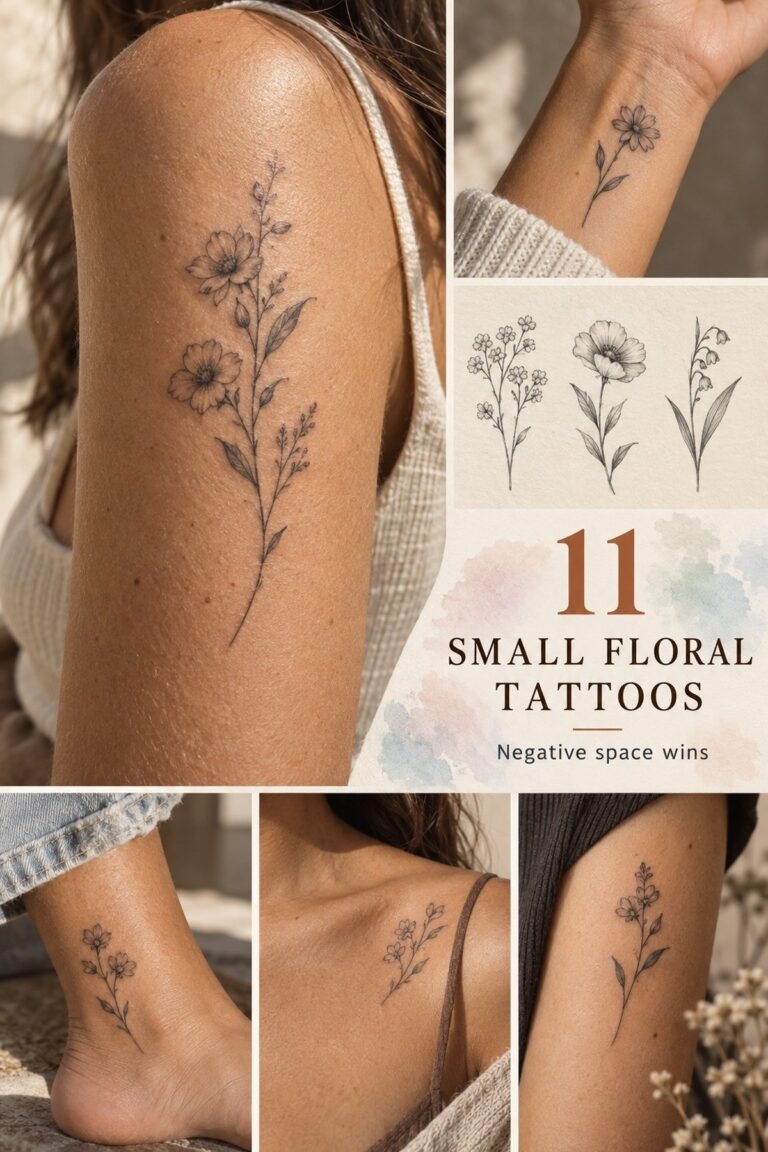
Small two-rose designs, two to three inches, work well on the wrist, behind the ear, or along the collarbone. At this scale, artists typically simplify to line work or minimal black shading. Fine lines here age faster; the small petals blur together over five to ten years, especially on spots with frequent sun exposure. Larger pieces on the forearm, thigh, or ribs allow for full shading, color saturation, and detail that holds longer. The ribs and inner bicep, though, move and stretch, petal edges soften there sooner than on the outer forearm or calf.
Line Work vs. Realistic Shading
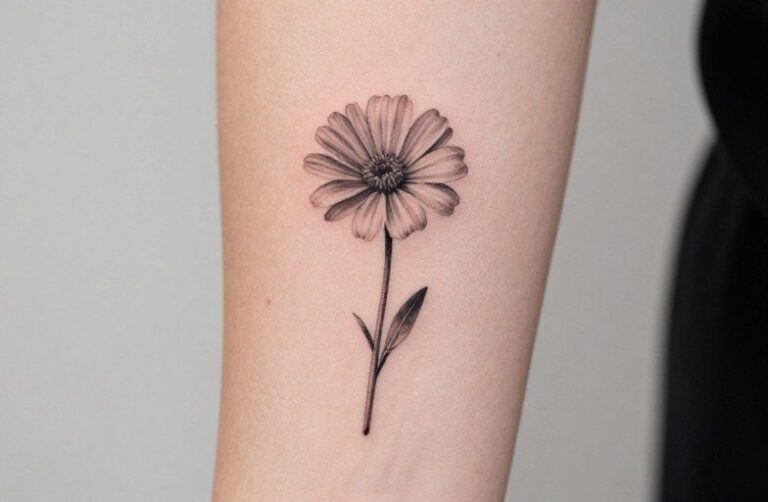
- Line work: Clean, graphic, faster to execute. Heals straightforwardly. Loses crispness over time; lines spread slightly. Best for simple, iconic reads.
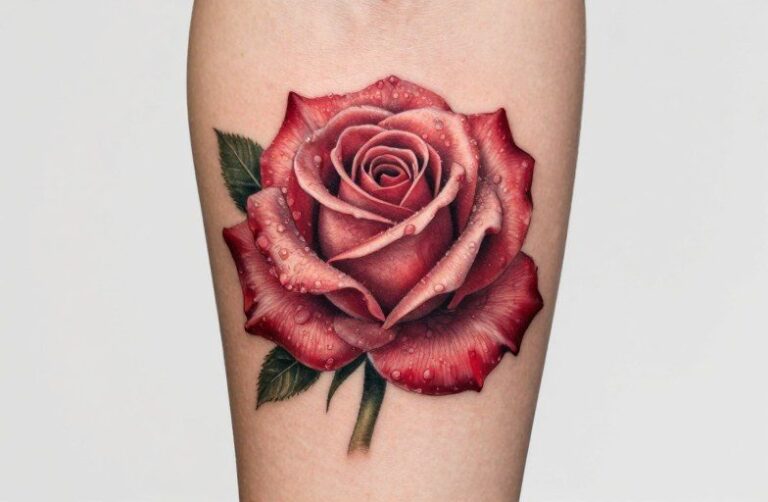
- Black and grey realistic: Depth through shading, not color. Requires an artist comfortable with smooth gradation. Heals with a matte finish; touch-ups every several years keep contrast alive.
- Traditional/Americana: Bold outlines, limited color palette, heavy black. Extremely durable. The two roses read immediately from across a room.
- Neo-traditional: Expanded color range, more illustrative detail. Sits between traditional durability and contemporary flexibility.
Who Chooses This Tattoo
People arrive at two roses from genuinely different starting points. Couples get matching or complementary pieces, sometimes each person carries one rose, the pair completing only when together. Others choose two roses to mark a before and after: who they were, who they became. Parents occasionally select two roses for two children, or one rose for a child and one for a partner.
The design also attracts people who want floral imagery without the softness of a full bouquet. Two roses carry weight without clutter. They suit someone who wants the symbol to read clearly even as personal significance stays private.
Gender and Conventional Readings
Historically marketed as feminine, rose tattoos have long since crossed that boundary. On masculine-presenting bodies, two roses often appear in traditional or blackwork styles, paired with daggers, skulls, or script. The combination softens the secondary imagery while keeping edge. On feminine-presenting bodies, the same two roses might stand alone or integrate into larger botanical compositions. The core symbol remains stable; styling shifts the social signal.
History & Cultural Roots
The rose as tattoo imagery traces back to at least the late 19th century in Western tattooing, often linked to sailors and soldiers carrying reminders of home. Two roses specifically appear in early flash sheets, though whether this signified romantic pairings or something broader is harder to pin down. Some trace the dual rose to Victorian language of flowers, where combinations carried coded messages. A red and white rose together, for instance, commonly associated with unity or the joining of houses.
In Japanese tattoo tradition, roses entered the repertoire through cross-cultural exchange in the late 1800s and early 1900s. Paired roses there often sit within larger compositions rather than standing alone. The meaning bends toward the surrounding imagery, dragons, wind bars, waves, rather than carrying independent symbolic weight.
How Aging Affects Historical Designs
Older two-rose tattoos, especially from the 1970s through 1990s, frequently show heavy black outlines with limited red. The red pigment available then faded faster than black, so many vintage pieces now read as two black roses with faint pink or brown ghosts. Modern pigments hold better, but the lesson remains: if you want color to last, saturation and sun protection matter more than pigment choice alone.
Mythology & Folklore
Greek mythology often links the rose to Aphrodite, with the flower springing from her tears or the blood of her lover Adonis. A two-rose design can draw on this narrative of love and loss intertwined. Roman parallels with Venus follow similar threads. In these contexts, the second rose sometimes represents what remains after sacrifice, beauty persisting through pain.
Northern European folklore treated the rose as a threshold plant, one that grew at boundaries between worlds. Two roses might mark a passage: childhood to adulthood, single to partnered, living to dead. This reading stays less common in contemporary tattooing but surfaces in requests where someone wants to mark a specific transformation rather than a static identity.
The Thorn Question
Whether to include thorns changes the emotional register. Thorns acknowledge that the beauty costs something. A two-rose design with thorns on both stems suggests mutual struggle; thorns on only one rose can introduce asymmetry of sacrifice. Some artists recommend thorns for black and grey pieces where they add structural contrast, and omit them for color designs where the petals themselves provide enough visual interest.
Color vs Black and Grey
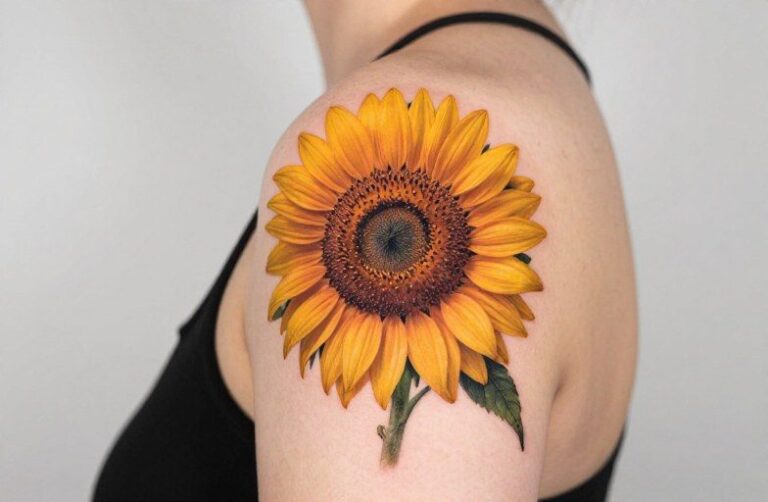
Color carries specific, fairly stable associations in rose tattooing. Red: passion, romantic love, courage. Pink: gentler affection, admiration, sometimes youth. White: purity, remembrance, new beginnings. Yellow: friendship, joy, occasionally jealousy depending on context. Purple: enchantment, royalty, sometimes mourning in European traditions. Orange: desire, fascination.
Two roses in different colors create explicit contrast: red and white for unity, red and yellow for combined passion and friendship, black and red for love and loss. Two roses in identical color read as sameness, partnership without hierarchy.
Black and grey removes this color language but gains longevity and versatility. It also shifts the symbol toward timelessness rather than specificity. A black and grey two-rose tattoo from 1995 and one from 2025 look more similar than their color counterparts, which can be desirable or not depending on whether you want the piece to mark a particular era of your life.
Religious & Spiritual Angles
In Christian iconography, the rose often links to Mary, sometimes called the Mystical Rose. Two roses in this context might represent the dual nature of Christ, human and divine, or the relationship between Mary and the Church. The Rosary itself derives from “rose garden,” and devotional tattoos occasionally incorporate two roses into larger religious compositions.
Sufi poetry, particularly Rumi and Hafez, uses the rose and nightingale as symbols of the lover and beloved, the human soul and divine presence. Two roses can gesture toward this tradition without explicit representation of the bird, though the reference usually requires some cultural knowledge to read.
Contemporary spiritual tattooing, less tied to specific traditions, sometimes uses two roses to represent balance, masculine and feminine energies, action and receptivity, or the integration of shadow and light. These readings tend to be personal rather than communal, chosen by individuals working with therapists or spiritual practitioners rather than inherited from religious practice.
Final Word
Two roses tattoo meaning ultimately depends on what you bring and what you ask for. The symbol is sturdy enough to carry love, grief, transition, or simple aesthetic preference without collapsing. Work with an artist who understands how the roses relate, stem to stem, facing or turned, and choose scale and color with aging in mind. The best two-rose tattoos look intentional ten years after healing, not merely fresh two weeks after the session.
Frequently Asked Questions
Do two roses always mean a romantic relationship?
No. While romantic partnership is common, two roses also mark memory, personal transformation, family bonds, or simply an appreciation for the design’s balance. The meaning depends on your intention and any accompanying elements.
How well do two rose tattoos age compared to other floral designs?
Roses age reasonably well because their layered petals create natural depth that survives some blurring. Simpler two-rose designs with strong outlines age better than hyper-detailed realistic pieces. Color reds fade faster than blacks and greys.
What’s the best placement for a two roses tattoo to minimize distortion?
Outer forearm, calf, and upper back age most predictably. Areas with frequent movement or stretching, inner bicep, ribs, stomach, soften details faster. Small designs behind the ear or on fingers require more frequent touch-ups.
Can two roses work in a cover-up or as part of a larger sleeve?
Yes. Their rounded shapes and layered structure make two roses adaptable for covering older tattoos, and they integrate well into botanical sleeves or mixed-theme compositions. An experienced artist can adjust scale and density to fit surrounding work.