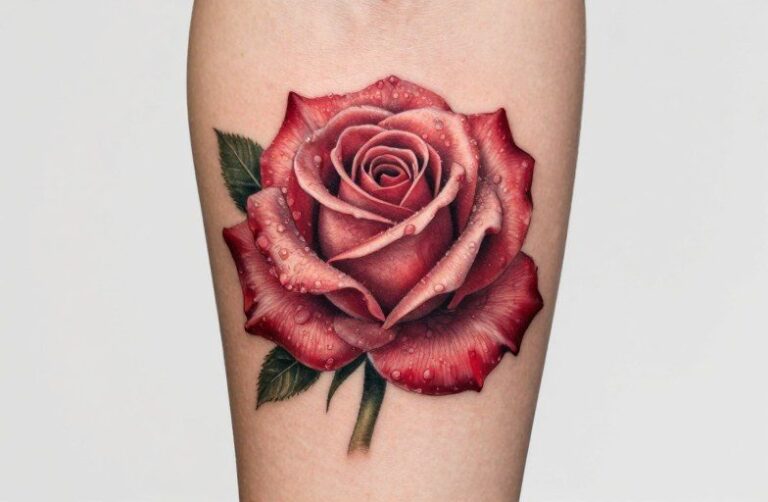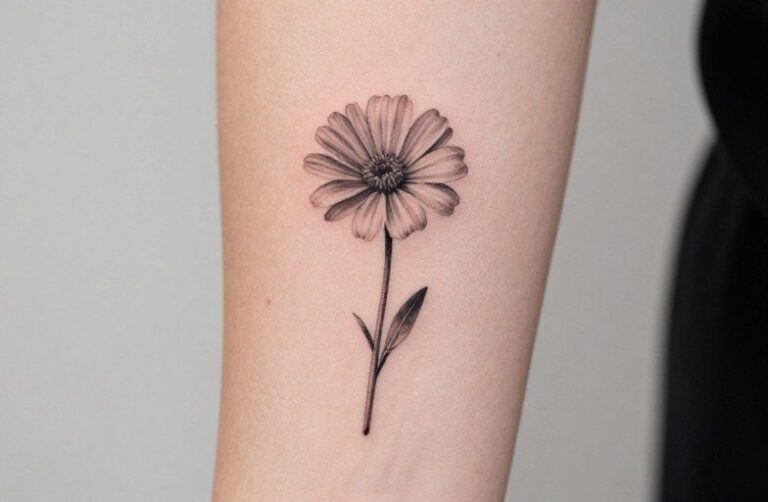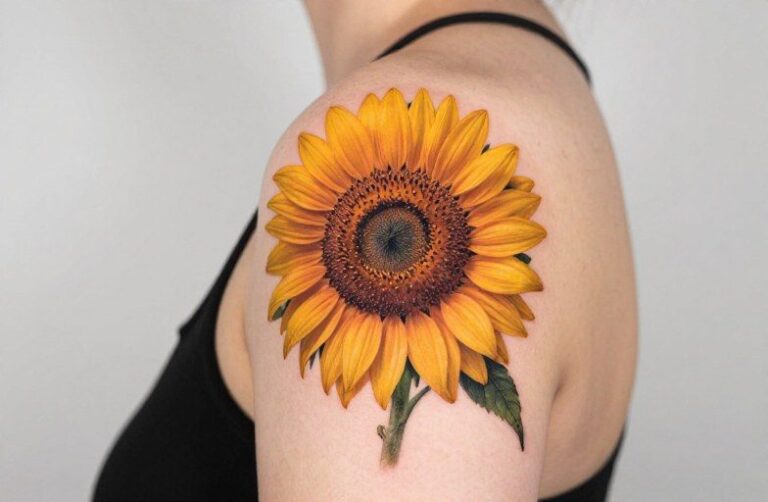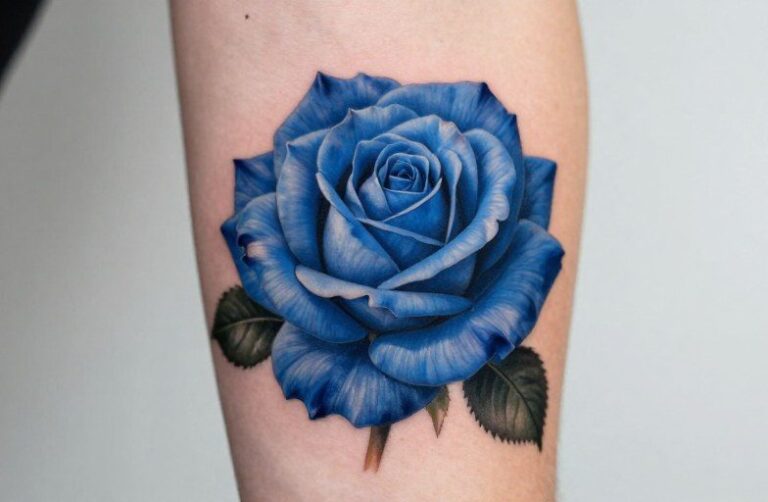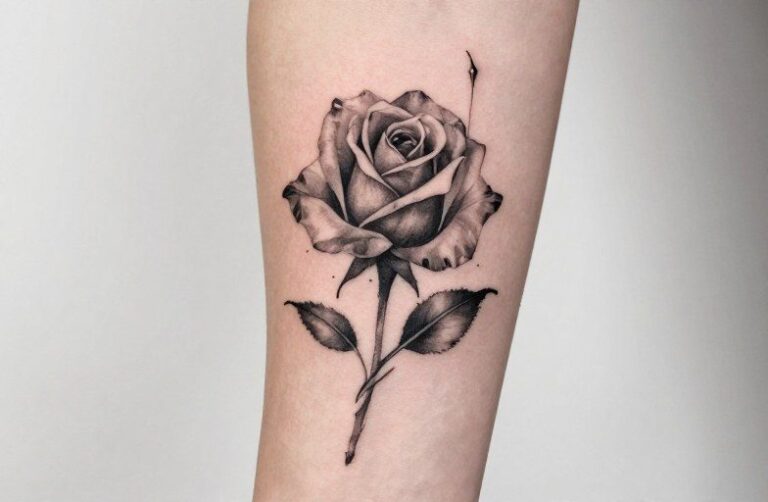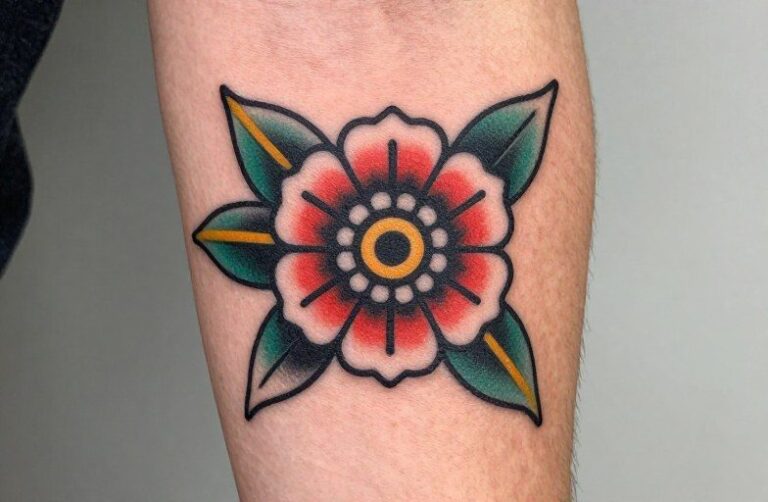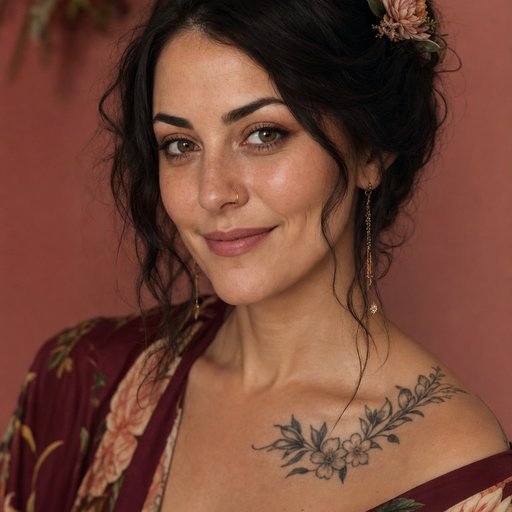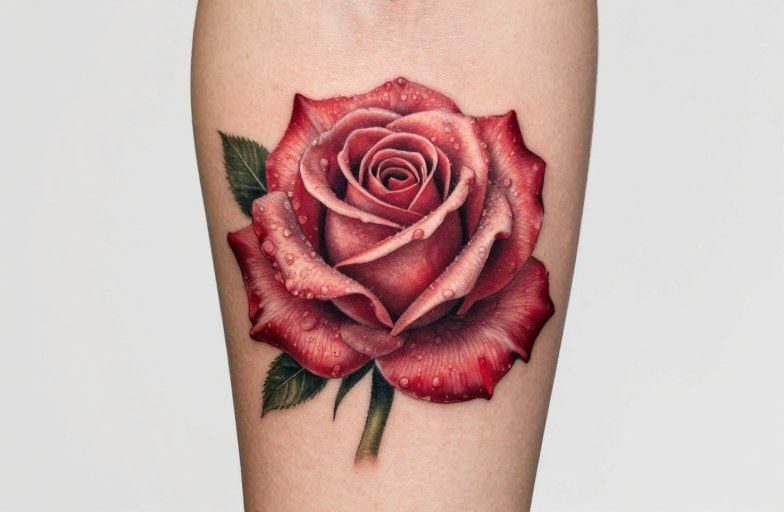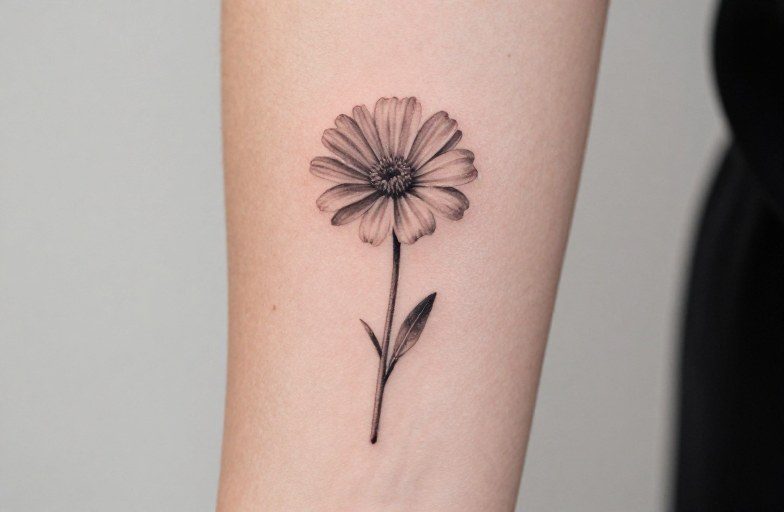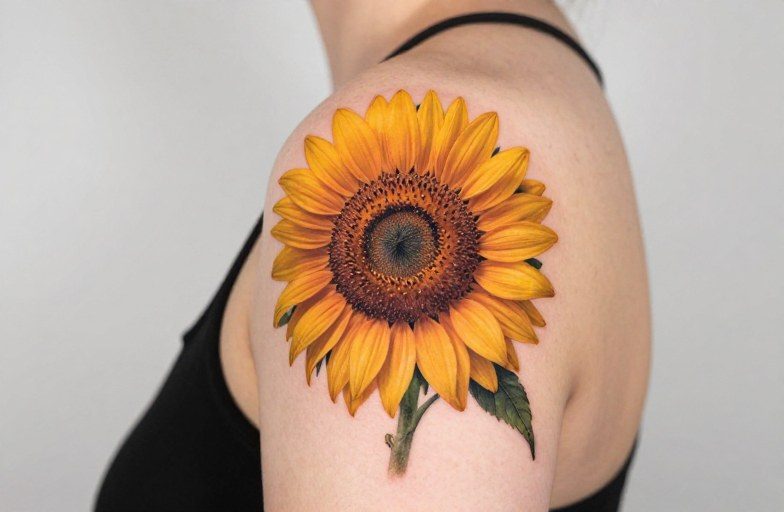
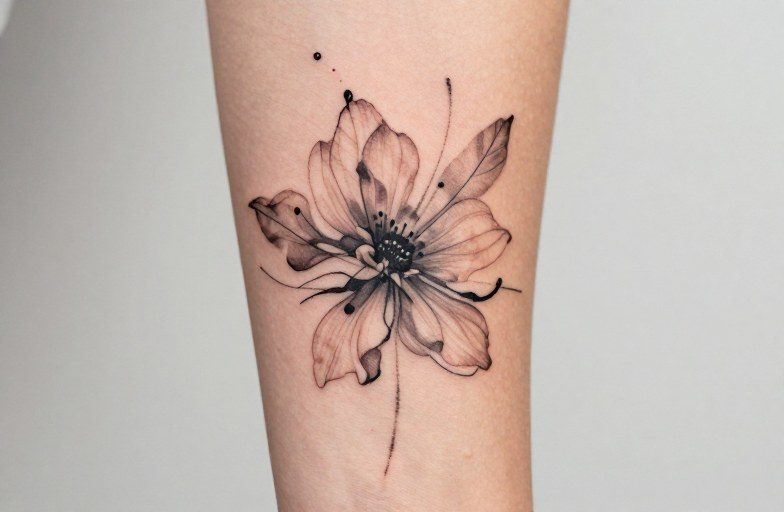
An abstract floral tattoo distorts, fragments, or reimagines botanical forms into something felt rather than literally seen. It typically symbolizes personal growth, emotional resilience, beauty in imperfection, and the cycles of change, rendered through flowing lines, negative space, or color fields rather than realistic petals and stems.
Symbolism & Core Meaning
What Gets Lost and What Remains
Traditional rose or lotus tattoos carry centuries of fixed meaning. Abstract florals deliberately shed that baggage. A peony reduced to three brushstrokes and a wash of magenta no longer says “prosperity” in any dictionary sense. Instead, it captures the sensation of that flower, lushness, fullness, a brief overwhelming bloom. The symbolism becomes associative rather than codified. Someone might choose an abstract cherry blossom not for Japanese cultural resonance but for the specific spring when they started rebuilding after loss. The form holds the memory; the viewer completes the meaning.
Movement and Impermanence
Many abstract floral designs emphasize motion: stems that dissolve, petals that spiral into geometric patterns, buds that fragment into dotwork. This visual instability mirrors the actual life of flowers. Real blooms wilt, drop, rot. Abstract versions make that transience visible rather than hiding it. A stem breaking into fine parallel lines at the wrist suggests continuation beyond the body’s edge. Color bleeding outside linework implies process over perfection. These aren’t flaws in the design, they’re the point.
Color vs Black and Grey
Color: Emotional Temperature
Watercolor-style abstract florals use saturation to carry weight. A single slash of vermillion where a petal should be reads as urgent, almost violent. Muted ochres and dusty pinks feel nostalgic, sun-faded. The key difference from realistic floral color: abstract work doesn’t need to “match” nature. A blue peony, a black daffodil, these become mood statements rather than botanical errors. Over time, bright watercolor techniques soften and blur as the ink settles. That aging process actually suits the subject; a fuzzy, muted abstract flower often looks more intentional at year five than it did fresh.
Black and Grey: Structure and Restraint
Without color, abstract florals rely on line weight, negative space, and texture contrast. Fine single-needle lines can suggest delicacy without literal detail. Heavy black saturation against skin creates the same visual pop as a dark center in a real bloom. Black and grey ages more predictably than color, less fading, less blurring, though blowout in fine linework remains a risk. The tradeoff is emotional range: black and grey reads more somber, more architectural, less immediately “floral” to casual observers. That ambiguity appeals to people who want the symbolism without the obviousness.
History & Cultural Roots
From Botanical Illustration to Modern Abstraction
Floral tattooing has deep roots across cultures, Japanese irezumi, European sailor traditions, Mexican folk art. The abstract variant, however, is largely a late-20th and 21st-century development, often linked to the broader fine-art tattoo movement of the 1990s and 2000s. Some trace it to artists adapting watercolor painting techniques directly to skin, influenced by gallery artists like Georgia O’Keeffe whose enlarged, simplified flowers blurred representation and abstraction. Others point to Japanese sumi-e ink painting, where a few brushstrokes suggest entire landscapes. The connection is stylistic rather than direct lineage; most contemporary abstract floral artists aren’t formally trained in those traditions but absorb their visual logic through reproduction.
Regional Variations Today
Korean tattoo studios have pushed abstract florals toward extreme minimalism, single continuous lines, tiny placements behind ears or on fingers. Brazilian artists often work larger, with bold color blocking and tropical forms abstracted into near-geometric shapes. These aren’t rigid schools but tendencies, visible in portfolio browsing rather than any codified tradition. The style’s youth as a tattoo category means it’s still forming, borrowing freely from painting, illustration, and digital art.
Design Tips & Pairings
Placement and Scale
Abstract florals work at unexpected scales. A tiny orchid reduced to three dots and a curve fits the inner wrist or ankle bone. Large thigh or back pieces can treat the flower as pure compositional element, letting the form stretch and distort across muscle movement. Ribs and sternum suit the style’s emotional register, those placements hurt more, carry more private weight, and the abstraction keeps the imagery from feeling decorative rather than meaningful. Avoid wrapping complex abstract florals around highly mobile areas like elbows or knees unless the design is simple enough to read when stretched; fine detail distorts unpredictably on joints.
Complementary Elements
- Geometric frames: A circle or triangle containing the floral form creates tension between organic and structured
- Text integration: Abstract stems can flow into or around lettering, though the lettering should share the same loose linework quality
- Negative space: Leaving skin bare where petals “should” be is a defining abstract technique; plan this with your artist, not as an afterthought
- Dotwork or stipple shading: Adds texture without literal detail, especially effective in black and grey
Pairing with realistic elements rarely works. An abstract rose next to a photorealistic portrait creates visual confusion, not dialogue. Commit to the abstraction degree and let everything in the composition share it.
Religious & Spiritual Angles
Secular Spirituality
Abstract florals attract people with complicated or absent relationships to organized religion. The form suggests reverence without doctrine, growth, death, renewal as universal processes rather than specific theological events. Some practitioners of modern paganism or witchcraft use abstract florals as devotional marks, but the style itself carries no required spiritual content. A Christian might see resurrection symbolism in a fragmented lily reassembling upward; a secular humanist might see the same image as pure formal beauty. The abstraction permits both readings without demanding either.
Buddhist and Hindu Resonance
The lotus in particular carries weight across Dharmic traditions, and abstract versions sometimes appear in tattoos for people with cultural or convert connections to Buddhism or Hinduism. Here, abstraction can serve respectfully, avoiding the tourist-lotus cliché of realistic pink blooms, if the simplification comes from understanding rather than avoidance. A lotus rendered as concentric circles of decreasing density references mandala structure without copying it. The distinction matters: abstraction as informed choice reads differently than abstraction as aesthetic laundering of sacred imagery.
Similar & Related Symbols
Abstract florals overlap with several neighboring tattoo categories without fully merging into them:
- Botanical fine-line: More detailed, usually recognizable species; abstract florals push past identification
- Organic abstract: Non-floral natural forms, stones, water, smoke, sharing the same visual language of flowing lines and soft edges
- Biomechanical: The opposite impulse; machine-organic fusion rather than nature simplified
- Minimalist nature tattoos: Often single-stem or single-leaf; abstract florals typically layer more complexity
- Mandala or sacred geometry: Shared symmetry and repetition, but florals retain organic irregularity
Someone drawn to abstract florals might also consider abstracted trees, especially roots and branches rendered in similar linework. The symbolic territory overlaps, growth, groundedness, seasonal change, while offering different compositional possibilities.
Final Word
Abstract floral tattoos succeed when they resist easy reading. The best pieces don’t decode quickly; they reward return attention, shifting as the viewer’s own context shifts. That quality makes them durable as personal symbols, less likely to feel dated because they were never fully fixed in time to begin with. If you’re considering one, spend time with the specific forms that move you, not just the general category. Bring reference images that aren’t tattoos: paintings, photographs of actual flowers in bad light, patterns of decay. The abstraction your artist builds from those sources will carry more weight than any Pinterest collection of existing tattoo work. The ink lasts decades; the meaning should have room to move within it.
Frequently Asked Questions
Do abstract floral tattoos age worse than realistic ones?
Not necessarily, but the aging differs. Fine linework and watercolor techniques blur over time, which can actually enhance the abstract quality. Bold black lines and solid color blocks age more predictably than delicate detail. Discuss longevity specifically with your artist based on your chosen style.
Can any flower be rendered abstractly, or are some better suited?
Any flower can work, but forms with strong silhouette recognition, roses, peonies, tulips, lilies, translate most clearly. Highly complex flowers like orchids sometimes lose all readable form when simplified too far. The best abstract florals preserve one or two identifying structural elements.
How do I explain what I want to an artist who mainly does realism?
Bring non-tattoo references: paintings, photography, even fabric patterns or ceramics. Focus on feeling words rather than visual instructions. Ask if they’ve worked abstractly before; if not, consider whether their linework precision in other styles suggests they can adapt, or whether you need a different specialist.
Are abstract florals more acceptable in professional settings than traditional tattoos?
Placement matters more than style. A small abstract floral on the forearm reads similarly to any visible tattoo. The abstraction might soften initial reaction slightly, but it doesn’t erase visibility. Consider your specific industry’s norms rather than relying on the style’s relative subtlety.