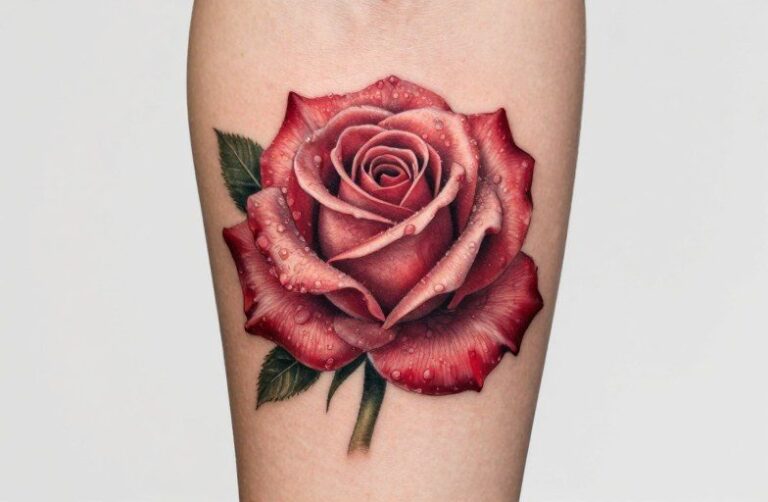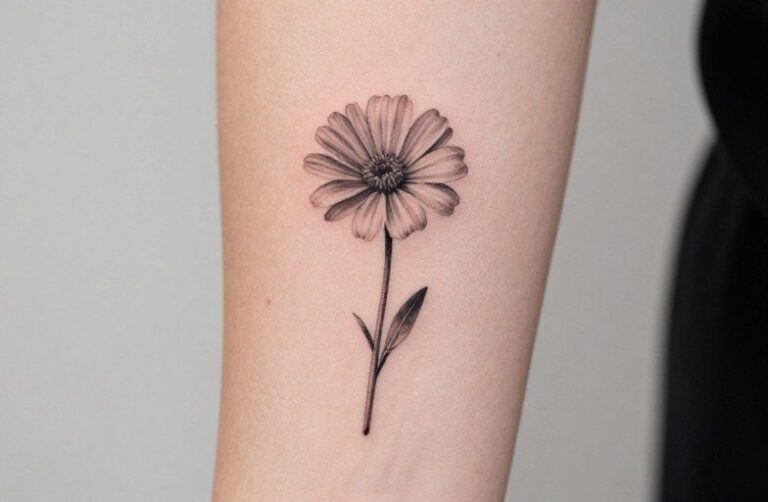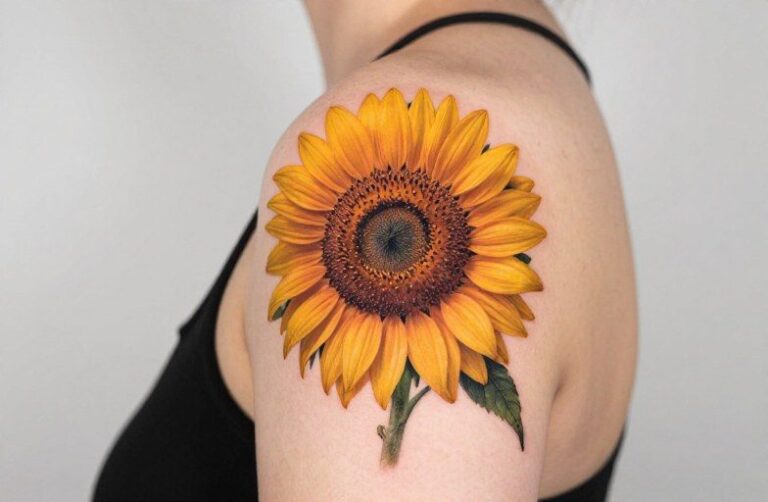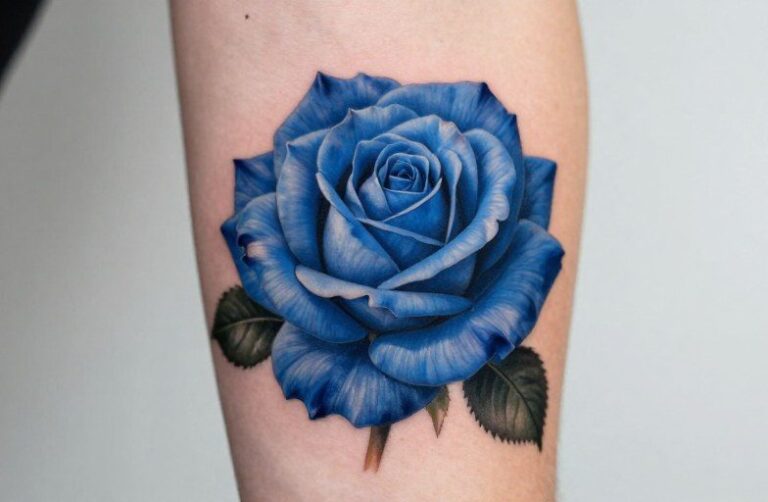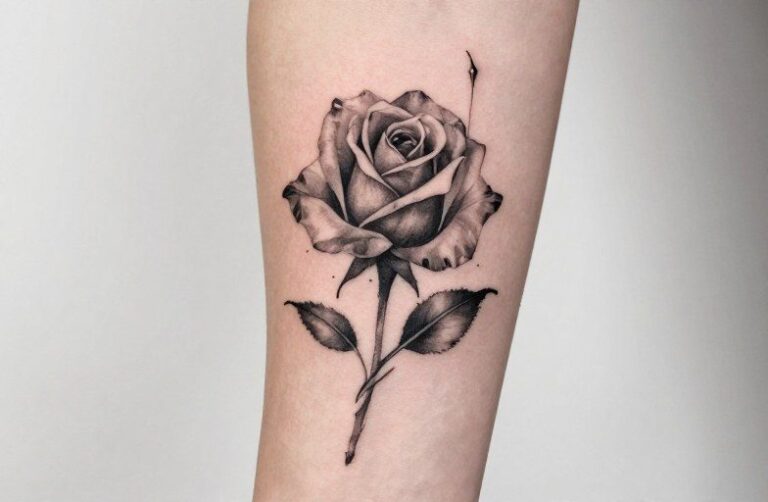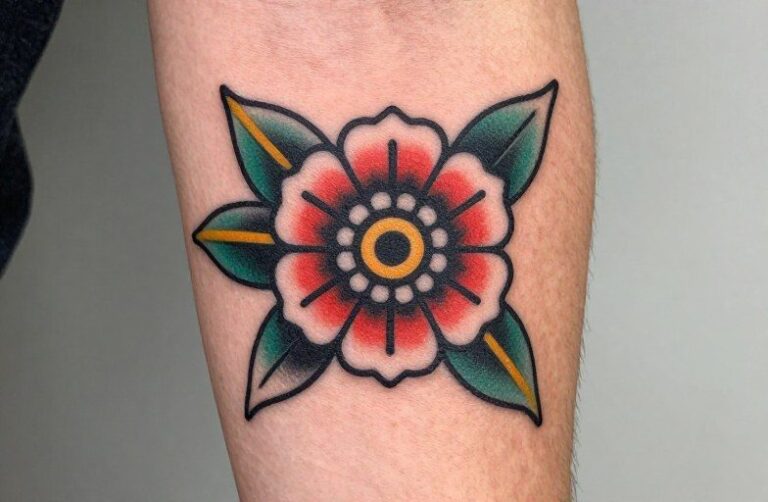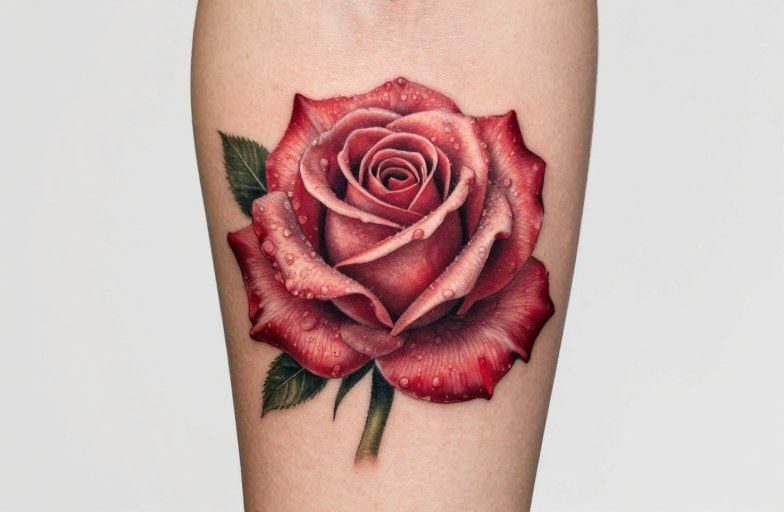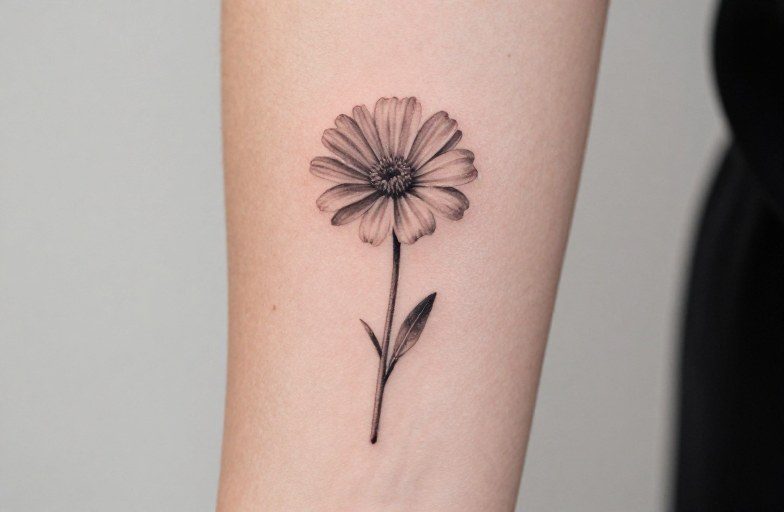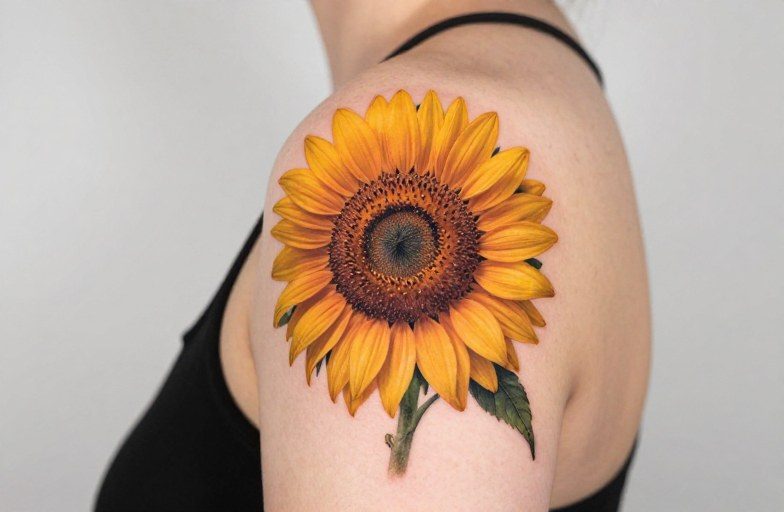
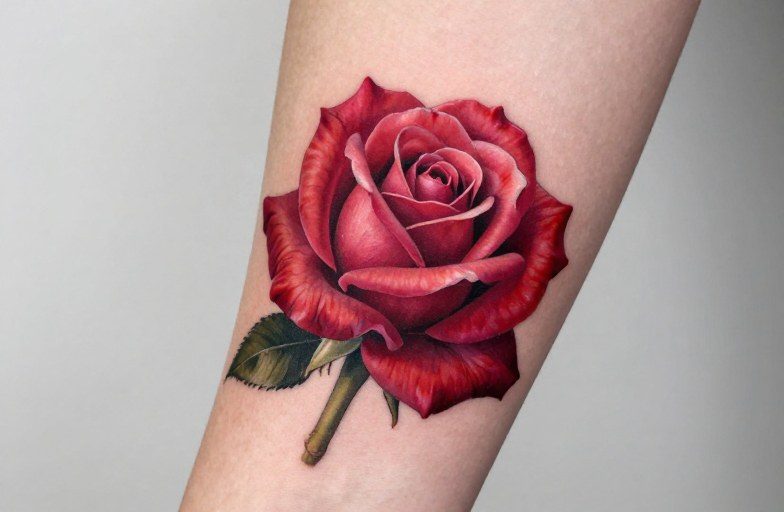
A ruby rose tattoo most commonly symbolizes love that burns intensely, romantic, familial, or self-directed, alongside the thornier realities of loss and resilience. The deep red-to-crimson palette distinguishes it from traditional black or pink rose work, signaling urgency, sacrifice, or a bond that survived difficulty. People choose this imagery after breakups that rebuilt them, for memorial pieces, or to mark periods of personal transformation where beauty emerged from struggle.
History & Cultural Roots
The red rose’s association with powerful emotion stretches back millennia, though the specific “ruby” designation as a tattoo motif gained traction alongside the neo-traditional revival of the 1990s and 2000s. Before that, crimson roses appeared in sailor Jerry-era flash, but the gemstone naming convention helped collectors distinguish a particular saturation and symbolic weight from softer pinks or classic American Traditional reds.
From Victorian Floriography to Skin
During the Victorian era, a deep red rose in the language of flowers meant “unfading love” or “I love you still.” A ruby rose tattoo often inherits this lineage, particularly when placed as a memorial or commitment piece. The color shift from standard red toward ruby, darker, with blue undertones, also connects to the actual gemstone’s historical association with protection and vitality in multiple cultures.
Regional Tattoo Traditions
- Japanese irezumi: Red roses occasionally appear in mixed-style pieces, though peonies dominate; the ruby tone reads as more aggressive, less decorative
- Chicano black-and-grey: Ruby accents in rose tattoos emerged as color realism expanded in Los Angeles and San Antonio shops during the 1980s
- Eastern European prison tattooing: Dark crimson roses sometimes marked a violent loss or blood loyalty, though this usage remains niche and culturally specific
Symbolism & Core Meaning
The ruby rose compresses several emotional registers into one image. Unlike a black rose, which leans heavily into grief or rebellion, or a yellow rose signaling friendship, the ruby variant refuses a single reading. Its symbolism operates in tension: the softness of petals against the hardness implied by the gemstone reference, the warmth of red cooled by blue undertones.
Love and Romantic Commitment
As a couples or anniversary tattoo, the ruby rose works best when personalized beyond stock imagery. Names woven through stems, specific dates in Roman numerals on thorns, or a partner’s birth flower paired alongside all prevent the generic “rose tattoo” problem. The color itself matters here, true ruby reads as mature love, not infatuation. It’s the difference between a first-date bouquet and decades of shared weather.
Grief and Memorial Usage
For memorial work, the ruby rose carries particular weight because the gemstone is traditionally associated with blood and life force. A stem snapped but not severed, a single fallen petal, or roots visible beneath soil all communicate survival without collapsing into cliché. Placement matters enormously here: over the heart reads as intimate and permanent; on the forearm becomes a more public conversation that the wearer may not always want.
How It Ages on Skin
Red ink has a reputation for faster fading, and ruby tones, especially those mixed with magenta or purple bases, are no exception. The specific pigment chemistry matters more than most collectors realize. Cadmium-based reds hold saturation longer but carry known health concerns; newer organic alternatives shift toward orange or pink as they degrade. A skilled artist discusses this during consultation, not after the fact.
Line Work vs. Saturated Color
Outline-heavy ruby rose designs with minimal shading age more gracefully than fully saturated color realism. The black or dark grey structural lines maintain definition even as red tones mute to a softer rose-pink. For collectors wanting longevity, consider:
- Neo-traditional approaches with bold outlines and limited color fields
- Leaving negative space within petals rather than flooding them solid
- Strategic placement away from sun-exposed areas (hands, neck, upper arms see more UV damage)
Touch-Up Reality
Expect to refresh red tones within 5-8 years depending on sun exposure and skin type. Darker ruby shades with brown or black mixed in last longer than bright, pure reds. The touch-up process is generally straightforward if the original line work remains intact, another argument for prioritizing structure over color volume in the initial session.
Mythology & Folklore
Greek mythology often links the red rose to Aphrodite and Adonis, with the flower springing from the goddess’s tears and her lover’s blood, a union of love and mortality that resonates in memorial ruby rose tattoos. In some Islamic poetic traditions, the rose and nightingale (gul-o-bulbul) represent divine love and the suffering soul’s longing, though the ruby color specifically connects more to Persian miniature painting traditions than to tattoo practice directly.
Medieval European alchemy sometimes associated the ruby with the philosopher’s stone and transformation, an esoteric layer occasionally referenced in occult-influenced tattoo design. The rose cross symbol of Rosicrucianism uses a different color language, but the underlying structure of beauty emerging from sacrifice carries through.
Design Tips & Pairings
The ruby rose functions as a centerpiece or accent, but struggles as filler unless scaled appropriately. Its visual weight demands space to breathe.
Complementary Imagery
- Daggers or broken blades: the classic “beauty and pain” pairing, effective when the metal reflects the rose’s red tones
- Hourglasses or clocks: time’s passage, often used in memorial contexts; keep the glass clear to avoid muddying the ruby color story
- Snakes coiled through stems: transformation and danger, particularly striking in Japanese-influenced composition
- Skulls: mortality made explicit; the ruby rose softens the skull’s aggression without diluting the message
Placement and Scale
Thighs and outer upper arms offer the best canvas for detail and color saturation. Ribs and sternum work for intimate, hidden pieces but heal more painfully and unpredictably. Small ruby rose tattoos below 3 inches often lose the color nuance that makes them distinctive, what reads as “ruby” at 5 inches becomes “red blob” at 1.5. Wrist and ankle placements are common but challenging; consider simplified, graphic approaches rather than realistic rendering at these sizes.
Religious & Spiritual Angles
Christian iconography uses the red rose extensively, the rosary’s name derives from “rose garden,” and Marian devotion often features roses as symbols of mystical love. A ruby rose tattoo in this context might signal passionate devotion rather than quiet piety, the color intensity suggesting an emotional rather than doctrinal relationship to faith.
In some Hindu and Buddhist tantric imagery, red flowers represent the root chakra and vital energy, though the rose specifically is less central than the lotus. Contemporary spiritual tattoo practice sometimes borrows across these traditions, creating hybrid symbolism that individual wearers define privately. The ruby rose in this space becomes a personal anchor rather than a doctrinal statement.
Final Word
The ruby rose tattoo endures because it refuses easy categorization. It is not purely romantic, not simply memorial, not exclusively decorative. The color itself, deep enough to suggest shadow, warm enough to insist on life, creates this productive ambiguity. For anyone considering this imagery, the most important decision is specificity: what particular shade of love, loss, or transformation does your ruby rose carry? Answer that honestly with your artist, and the result avoids the generic tattoo-shop flash trap. The best ruby rose tattoos look like they grew from particular soil, not like they were picked from a wall of premade options.
Frequently Asked Questions
Does a ruby rose tattoo have to be realistic to carry meaning?
Not at all. Neo-traditional, graphic, or even abstract approaches communicate the symbolism effectively. The color relationship, deep red with cooler undertones, matters more than botanical accuracy. A well-executed stylized piece often ages better than photorealistic work.
Why does my artist suggest adding black or grey to the ruby color?
Pure red pigments fade fastest and can shift to orange or pink. Adding black or dark grey creates a “ruby” depth that maintains its character longer. This isn’t artistic conservatism, it’s practical knowledge about how different molecular structures break down under skin and light.
Is a ruby rose appropriate for a first tattoo?
The imagery itself poses no issue, but the color commitment does. Red-dominant pieces require more maintenance and sun protection than blackwork. First-time collectors sometimes underestimate this ongoing relationship with their tattoo. Discuss realistic expectations with your artist before committing.
Can a ruby rose work in a black-and-grey sleeve with just one color accent?
Absolutely, and this approach can be striking. The isolated red draws the eye immediately, creating a focal point that reads as intentional rather than incomplete. The key is sufficient saturation, too muted and it looks like a healing error rather than a deliberate accent.