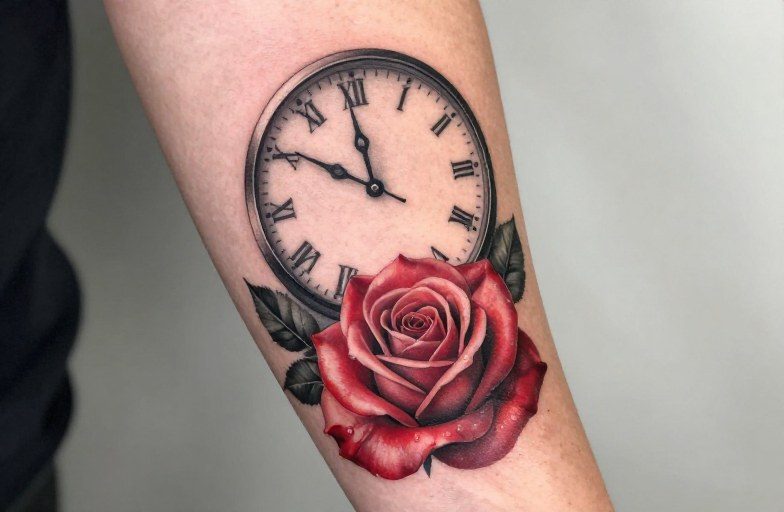
A clock paired with a rose most commonly represents the intersection of time and emotion, love that exists within mortality, moments that pass, and beauty that fades. The clock marks duration, deadlines, and memory; the rose stands for passion, beauty, and the natural cycle of blooming and wilting. Together, they create a meditation on carpe diem: seize what you love before time takes it.
Symbolism & Core Meaning
These two symbols carry weight independently, and their combination creates tension that neither achieves alone. The clock is relentless, mechanical, indifferent. The rose is organic, temporary, specific. That friction is where the meaning lives.
The Clock: Mortality and Memory
Clock imagery in tattooing rarely celebrates punctuality. Instead, it functions as memento mori, a reminder that time is finite. Specific times on clock faces (midnight, a birth hour, a moment of loss) anchor the symbol to personal narrative. Stopped clocks suggest a frozen moment; melting or distorted clocks, popularized by Dalí but common in tattooing, hint at time’s subjective, slippery nature. Roman numerals age more gracefully than Arabic on skin, their classical forms holding up better as lines soften over decades.
The Rose: Beauty and Decay
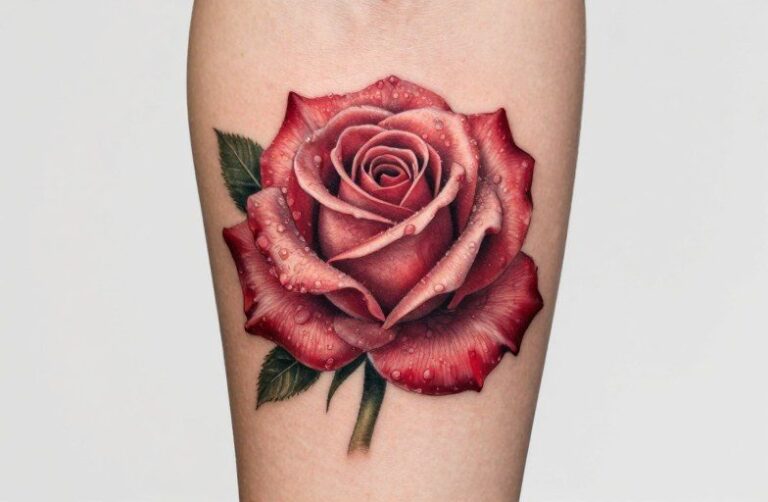
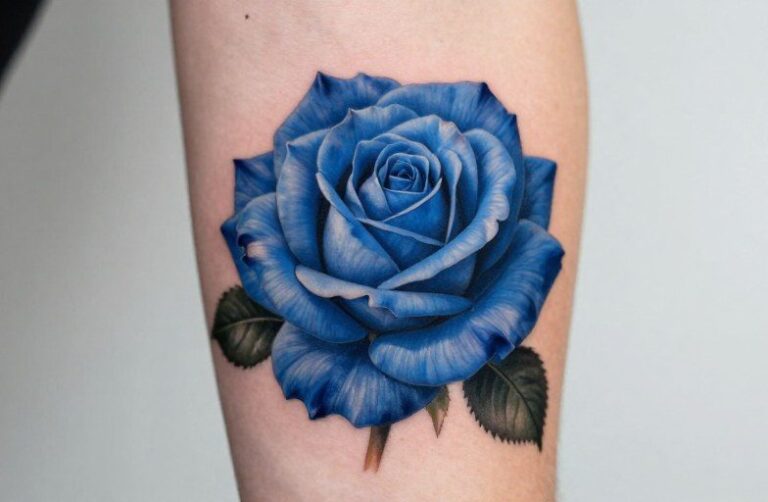
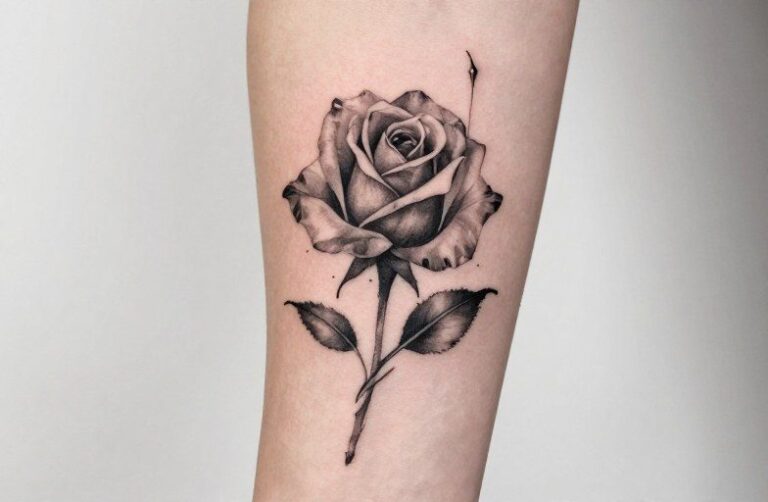
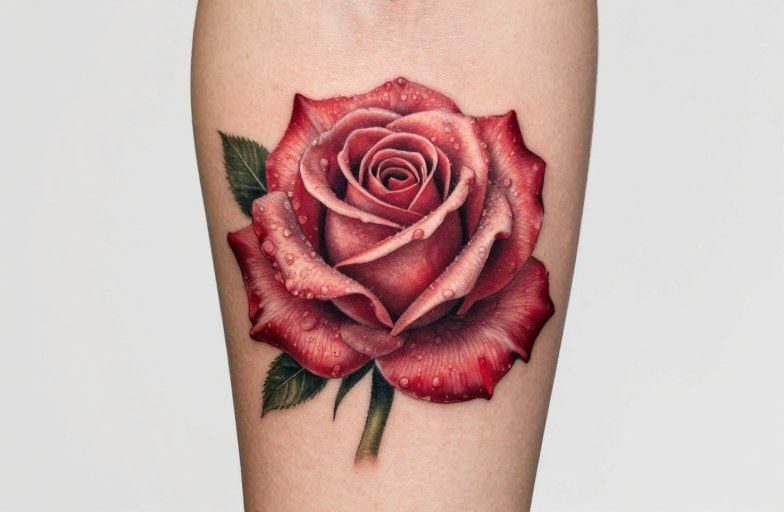
The rose’s symbolism is ancient and cross-cultural: love, secrecy, blood, the Virgin Mary, the cycle of life. In this pairing, its most relevant quality is impermanence. A rose in full bloom paired with a running clock emphasizes what you’re losing. A wilting rose with a stopped clock marks what you’ve already lost. Color matters sharply here. Red roses carry romantic and sometimes violent connotations. Black or grey roses suggest mourning, memory, or gothic sensibility. White roses read as purity or new beginnings, sometimes jarring against clock imagery, sometimes deliberately hopeful.
Design Tips & Pairings
How these elements interact visually determines whether the tattoo feels cohesive or like two separate images sharing skin.
Composition Approaches
Wrapping the rose around the clock face creates unity and flow, the stem becoming a natural frame. Clock hands emerging from or piercing the rose introduce violence or urgency. Separate but connected elements, clock above, rose below, linked by a banner or smoke, allow each symbol to breathe while maintaining relationship. Negative space between them can represent distance, time elapsed, or emotional separation.
Stylistic Choices and Aging
- Black and grey realism: Ages exceptionally well; clock gears and rose petals maintain readability for decades with proper depth variation
- Traditional/Americana: Bold lines hold up longest; limited color palette (red, black, green) stays legible at small sizes
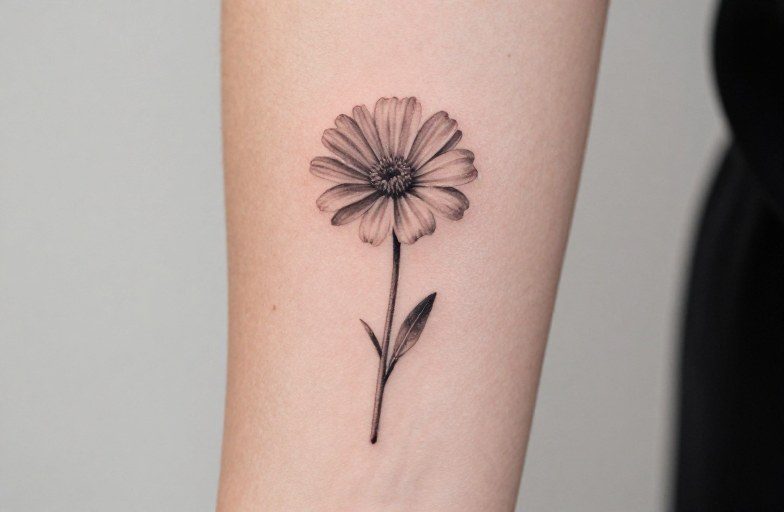
- Fine line: Risky for clock faces, tiny numbers blur within 5-10 years; better suited to simplified clock silhouettes with detailed roses
- Neo-traditional: Allows stylized clock faces with exaggerated rose proportions; good balance of detail and durability
Shading technique matters. Whip shading on roses creates soft, organic texture that contrasts nicely with the harder edges of clock gears. Smooth grey wash on clock faces reads as metal and glass. Mixing these approaches within one piece requires an artist comfortable with both.
Mythology & Folklore
Neither symbol lacks precedent in human storytelling, though their pairing is more modern invention than ancient tradition.
Time in Myth
Chronos, the Greek personification of time, is often linked to the scythe and serpent, harvest and cycles. The medieval vanitas tradition painted skulls, hourglasses, and wilting flowers together to remind viewers of death’s certainty. Clocks replaced hourglasses in this imagery as mechanical timekeeping spread through Europe. The rose appears in vanitas works too, but less frequently than tulips or peonies, which were more valuable and thus more potent symbols of wealth’s emptiness.
Rose Lore
The rose’s association with secrecy, sub rosa, under the rose, dates to Greek mythology, where Aphrodite gave a rose to Eros, who passed it to Harpocrates, god of silence, to bribe him about divine indiscretions. In Christian tradition, the five petals mapped to Christ’s wounds. The War of the Roses, the Rosicrucians, the rose windows of Gothic cathedrals, all layer meaning that some tattoo wearers knowingly reference, others absorb unconsciously through cultural osmosis.
Best Placements
Scale and detail requirements shape where this design works.
High Detail, Large Scale
The forearm (inner or outer) offers flat canvas and easy viewing for complex gearwork and layered petals. The thigh provides ample space for vertical compositions, clock above, trailing vine below. The chest, particularly over the heart, makes the emotional symbolism literal and allows for symmetrical framing with sternum or collarbone extensions.
Smaller, Simplified Versions
- Wrist or ankle: Simplified clock face (no numerals, or Roman only at 12, 3, 6, 9) with small rose accent
- Behind the ear: Single rose with clock hand motif, extremely simplified
- Hand or fingers: Risky for longevity; bold blackwork only, expect significant fading and blowout
Rounded body parts (shoulder caps, knees, elbows) distort clock faces unflatteringly. Flat planes preserve the geometry that makes clock imagery satisfying.
Similar & Related Symbols
Clock and rose exists within a broader visual vocabulary. Understanding adjacent symbols helps clarify what this specific pairing does differently.
Common Variations and Combinations
Adding a skull pushes the memento mori reading to foreground, less romantic, more confrontational. Pocket watches with roses feel Victorian, nostalgic, masculine in a particular vintage way. Hourglasses instead of clocks make the time element more abstract, less tied to specific moments. Doves or butterflies introduce hope, transformation, or spiritual release that can soften or complicate the pairing’s melancholy.
Symbols That Contrast
Anchor and rose (stability versus fleeting beauty) occupies similar emotional territory but with different emphasis. Snake and rose (danger and desire) shares the organic element but loses the temporal. Cross and rose (faith and love) is more explicitly devotional. Clock without rose tends toward anxiety, productivity, or existential dread; rose without clock tends toward romance, beauty, or commemoration without the urgency of time’s passage.
Personal & Modern Meanings
Contemporary wearers layer individual significance onto traditional symbolism in ways that reshape the design’s public meaning.
Commemorative Functions
Birth times, death times, anniversary moments, specific numerals transform generic symbolism into biography. Some choose the time a child was born, the rose in the child’s birth color. Others mark a parent’s death, the wilting rose literalizing loss. These personal readings don’t erase the broader symbolism; they concentrate it.
Contemporary Adaptations
Digital clock faces (rare, but increasing) shift the aesthetic from timeless to specifically modern, sometimes jarringly. LED-style numbers age poorly in tattoo form and carry different cultural weight, alarm clocks, work schedules, digital anxiety. Some artists refuse them on aesthetic grounds. Biomechanical roses with clock gears visible inside petals merge the organic and mechanical more literally, popular in certain horror-influenced subcultures. Watercolor backgrounds behind traditional clock-and-rose line work create contrast between permanence and apparent spontaneity, though the watercolor elements fade faster than the linework.
Final Thoughts
The clock and rose endures because it addresses something unavoidable: the fact that what you love will end, and that this ending is precisely what makes the loving matter. Good execution requires an artist who can handle both mechanical precision and organic softness, two skill sets that don’t always coexist in one person. Ask to see healed photos of both elements in their portfolio, not just fresh work. The design’s emotional weight deserves technical execution that lasts as long as the memory it marks.
Frequently Asked Questions
Does a clock and rose tattoo always mean someone died?
No. While it’s commonly used for memorials, many people choose it to mark birth times, anniversaries, or simply as a reminder to value fleeting moments. The meaning depends on the specific time shown and the wearer’s intent.
What clock time should I choose for my tattoo?
Pick a time that actually matters to you, birth of a child, a wedding moment, a personal turning point. Avoid random times; the specificity is what gives the design weight and protects it from feeling generic.
Will the clock numbers still be readable in ten years?
Tiny numerals blur over time. For longevity, keep numbers bold and minimum 3-4mm tall, or use Roman numerals which maintain readability better than Arabic. Simplified clock faces without numbers age most gracefully.
Should the rose be realistic or traditional style?
Match the rose style to your clock. Realism pairs with realism; traditional bold lines pair with traditional roses. Mixing styles can work but requires an artist deliberately bridging them, not accidentally mismatching.