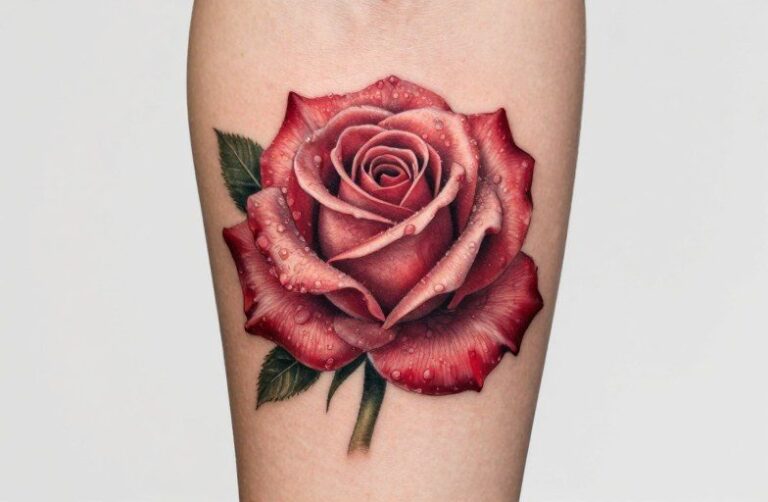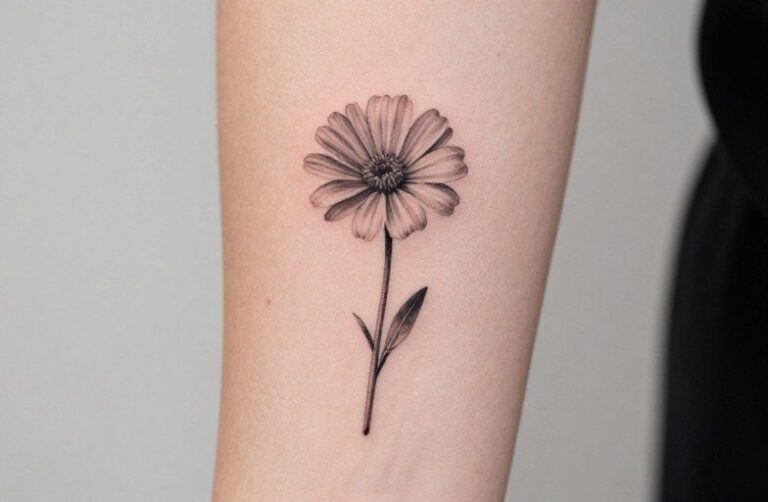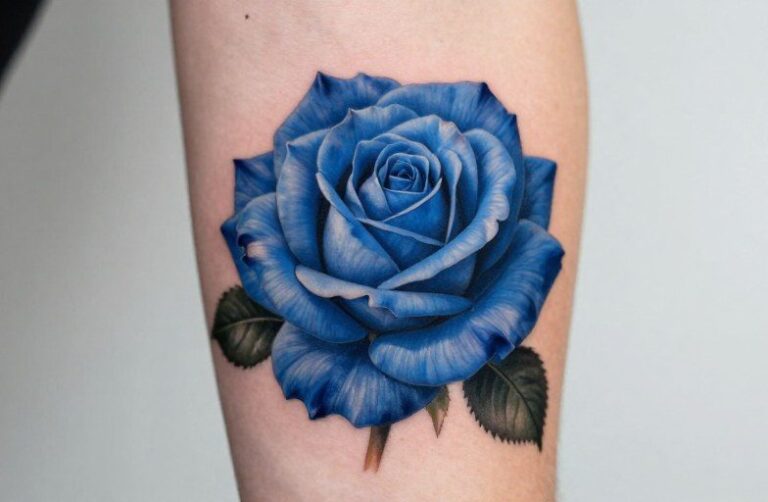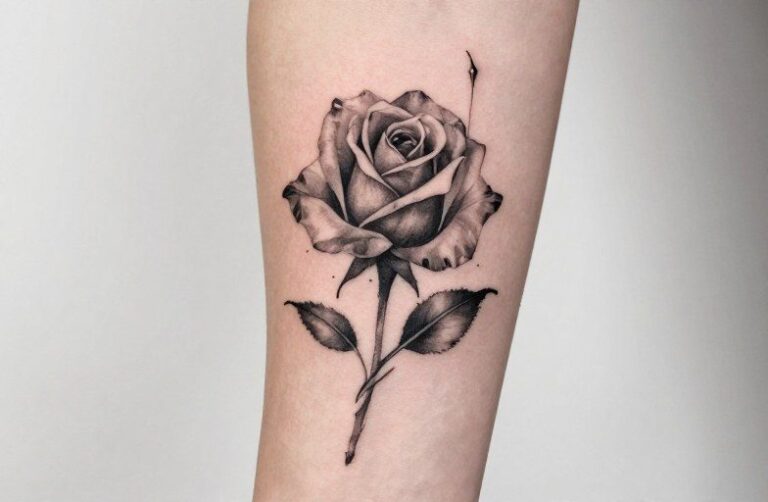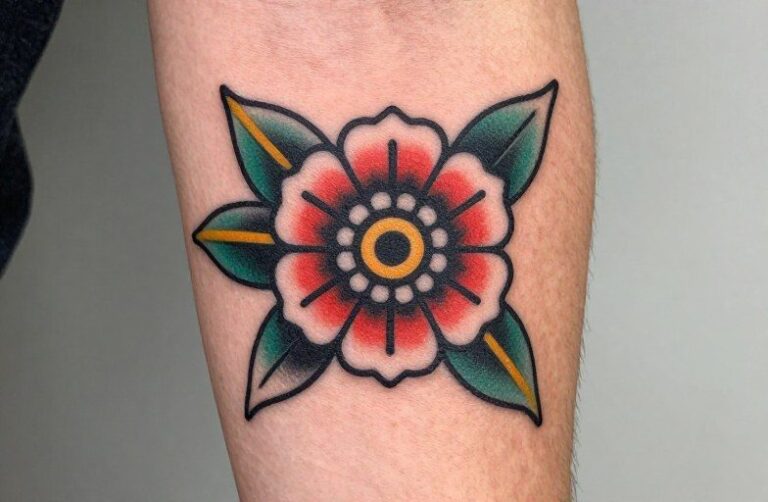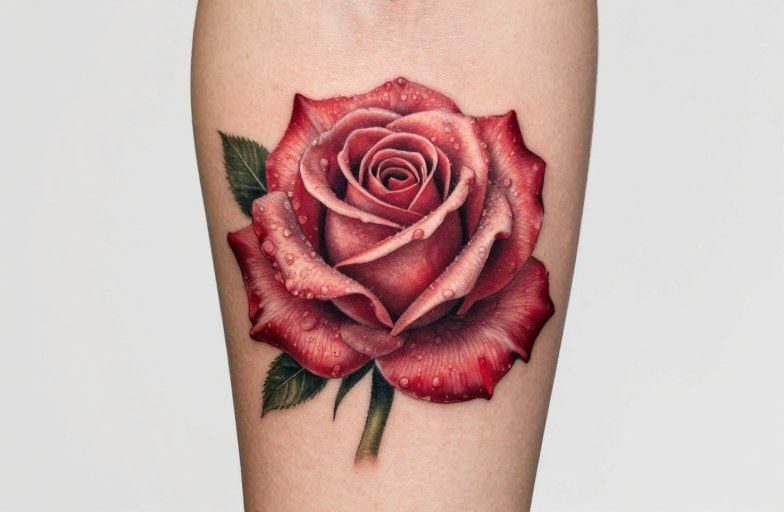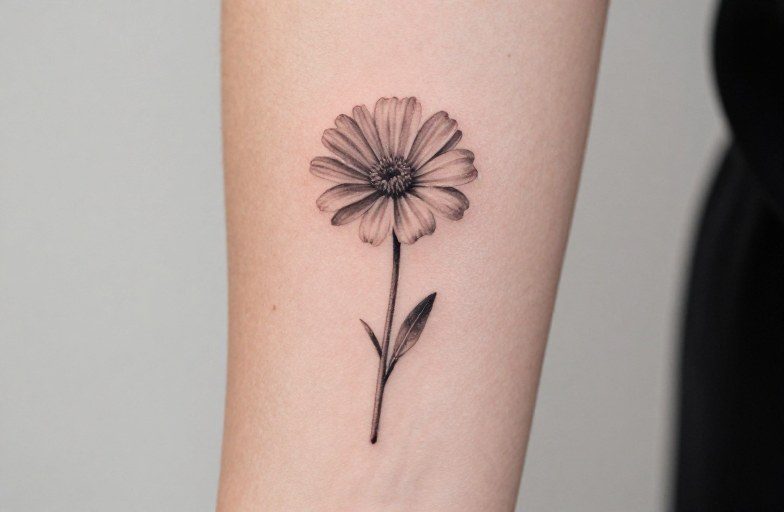
A ghost rose tattoo typically combines a rose rendered in pale, desaturated tones with ethereal, transparent, or skeletal elements, think wilting petals dissolving into smoke, a skull nested among thorns, or a bloom stripped of color except for a single drop of red. The core meaning centers on beauty that persists through loss: a love remembered, a life cut short, or resilience forged through grief. The rose remains recognizable but altered, suggesting something that once flourished and now exists in a different form.
Symbolism & Core Meaning
The tension between the rose and its ghostly treatment creates the tattoo’s emotional weight. A rose alone carries centuries of accumulated meaning, passion, secrecy, mortality, but stripping it of vitality changes the message entirely.
Loss and Remembrance
The faded or translucent quality often reads as memory rather than presence. Petals that seem to evaporate, stems that trail off into negative space, or a bloom that appears behind a veil of gray wash all suggest someone or something that has passed but not disappeared. This resonates strongly for memorial pieces, though many choose it simply to acknowledge formative grief without naming it explicitly.
Beauty in Decay
There’s a distinct aesthetic tradition, Victorian mourning jewelry, memento mori painting, Japanese wabi-sabi, that finds visual power in deterioration. The ghost rose participates in this: the color drains, the edges soften, yet the structure remains elegant. For some wearers, this symbolizes survival that doesn’t demand full recovery. The rose doesn’t pretend to be freshly cut; it owns its altered state.
History & Cultural Roots
The visual vocabulary draws from several sources that converged in tattoo culture over recent decades.
Memento Mori and Victorian Mourning
European art traditions often linked roses with death and remembrance. Memento mori paintings from the 16th and 17th centuries included wilting flowers alongside skulls to mark life’s brevity. Victorian mourning practices extended this into material culture: hair jewelry, post-mortem photography, and botanical imagery in memorial cards. The pale, almost colorless rose echoes the visual language of that era, beauty deliberately restrained by grief.
Chicano and Black-and-Grey Tattoo Traditions
The technical approach, smooth black-and-gray gradients, soft edges, photographic realism, owes much to Chicano tattooing from the 1970s onward, particularly in Los Angeles and Southern California. Religious imagery, portraits of lost loved ones, and symbolic objects rendered in muted tones established a visual grammar that ghost rose designs often employ. The style’s spread through prison culture and then mainstream tattooing made this restrained palette widely available for floral subjects that might otherwise have been brightly colored.
Common Variations & Styles
The ghost rose adapts across tattoo approaches, each carrying slightly different connotations.
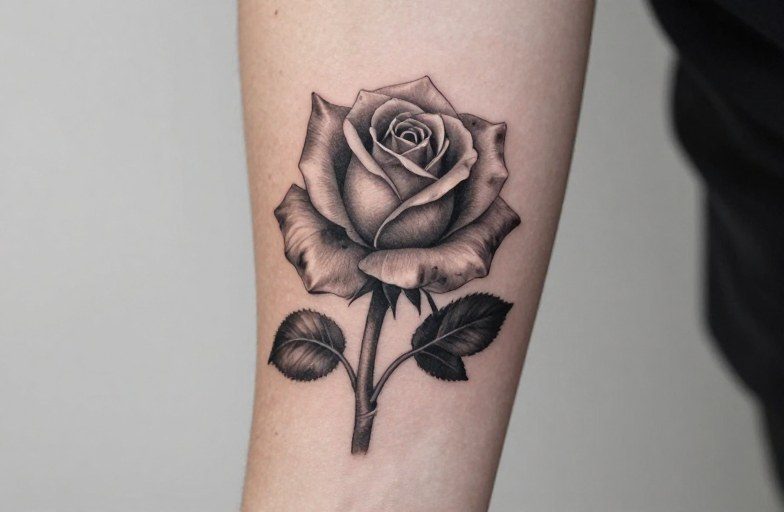
- Black-and-gray realism: Soft gradients create a photographic, almost three-dimensional bloom with petals that seem to curl in space. Often includes water droplets, thorns, or leaves for contrast. Heals cleanly but requires an artist skilled in smooth shading.
- Neo-traditional: Bold outlines contain the pale fill, creating a graphic quality that reads more illustrative than photographic. The rose remains stylized, symmetrical, idealized, but the color palette stays muted: bone white, slate gray, maybe a single accent of burgundy or black.
- Fineline and single needle: Delicate, wispy lines suggest fragility rather than decay. The rose may appear half-formed, as if still materializing or dissolving. Ages faster than bolder work; touch-ups likely needed within a few years.
- Skull fusion: The rose and skull interweave, petals peeling back to reveal bone, or a skull’s eye sockets sprouting stems. More overtly memento mori; less ambiguous about mortality.
- Smoke and negative space: The rose emerges from or dissolves into swirling gray wash, using the skin itself as part of the image. Requires significant untattooed area to work effectively.
Best Placements
Where you put this tattoo affects how the symbolism lands and how well the detail holds up.
High-Detail Areas
The shoulder cap, outer upper arm, and thigh offer flat, broad surfaces that suit the smooth gradients of black-and-gray realism. These spots also allow the rose to be sized large enough for petal detail to remain legible as the tattoo ages. The outer forearm works for medium-sized pieces with moderate detail; the inner forearm’s thinner skin and more frequent movement can blur fine shading over time.
Intimate or Concealed Spots
The ribs, sternum, and upper chest near the collarbone carry natural associations with vulnerability and protection. A ghost rose here often reads more personally, less display, more private significance. The sternum specifically allows for vertical compositions where the stem can trail downward, creating a sense of growth or falling. These placements hurt more and may heal unevenly due to movement and friction from clothing.
Smaller Adaptations
Behind the ear, the wrist, or the ankle suit very simplified versions, perhaps a single pale petal or a tiny outlined bloom. The ghost quality becomes harder to achieve at this scale; the tattoo risks reading as simply a light-colored rose rather than something spectral. A skilled artist can suggest transparency through strategic use of negative space, but expectations should be modest.
Design Tips & Pairings
Specific choices sharpen or shift the meaning.
- Color strategy: A single preserved element, a red petal tip, a green leaf, a blue tear, creates focal point and narrative. The eye goes to what remains vivid, implying that’s what survived the fading.
- Thorn emphasis: Prominent, sharp thorns against soft petals suggest protection that outlasts beauty, or pain that persists after loss has dulled.
- Clocks, candles, or hourglasses: Classic time motifs reinforce the memento mori reading. These pairings are common enough to be almost expected; consider whether you want that directness.
- Names and dates: Lettering integrated into the stem or banner beneath the bloom personalizes the memorial aspect. Script style matters: flowing cursive matches the organic form; block letters create deliberate contrast.
- Moths or butterflies: Creatures drawn to the fading bloom suggest persistence of attraction despite decay, or transformation of what once was living.
Consider also what surrounds the tattoo. A ghost rose floating alone on skin emphasizes isolation; one framed by dense background or additional imagery reads as part of a larger narrative.
Religious & Spiritual Angles
The rose carries specific weight in several traditions that wearers sometimes invoke, sometimes ignore.
Christian Symbolism
The rose often linked to Mary in Catholic tradition, the Rosa Mystica, represents purity and divine love. A ghosted version might suggest faith tested by suffering, or the persistence of grace through worldly loss. The thorns obviously connect to Christ’s crown. Protestant traditions, less Marian, tend to read the rose more generally as created beauty pointing toward the Creator. A fading bloom in this context could suggest earthly things passing while the eternal remains.
Spiritualist and Esoteric Traditions
Some trace the pale rose to alchemical imagery where the rosa alba, the white rose, marked stages of purification. In 19th-century Spiritualism, flowers were sometimes used as symbolic language in séance contexts, though specific ghost rose associations are more contemporary invention than historical practice. Modern witchcraft and pagan practice sometimes employ the withered or pale rose in ancestor work, offerings to the dead, or spells of release and transition.
Many wearers have no religious framework at all; the imagery works effectively as purely personal symbolism without doctrinal attachment.
Before You Decide
The ghost rose’s popularity means plenty of reference images exist, but that same availability can lead to derivative work. Spend time identifying what specifically draws you, the particular quality of fading, the emotional register, the visual style, and communicate that to your artist rather than requesting “a ghost rose like this picture.”
Consider the long-term visual reality: pale gray tattoos can appear muddy or greenish as they age, especially if the artist’s black wash was inconsistent. Sunscreen matters more for these than for bold blackwork. The ethereal quality you want now may require maintenance to preserve.
Finally, sit with whether you want the meaning readable to others. The skull-rose fusion announces mortality; the softly fading bloom alone leaves more ambiguity. Both are valid, but they create different social interactions. Choose the version that matches how publicly you want to wear what it represents.
Frequently Asked Questions
Does a ghost rose tattoo always mean someone died?
Not necessarily. While many choose it for memorial purposes, others connect it to ended relationships, personal transformation, or simply an aesthetic preference for muted, melancholic imagery. The meaning depends on your intention, not universal rules.
Will a ghost rose tattoo fade faster than a colorful one?
Pale gray wash can appear to fade more quickly because there’s less contrast with skin tone, but the actual ink remains. What often reads as “fading” is skin texture changes over time. Bold black outlines and deeper black shading generally age more legibly than very light gray alone.
How much should a detailed ghost rose tattoo cost?
Expect to pay for an artist’s expertise in smooth black-and-gray shading. Small, simple designs might start around $200-400, while detailed realism covering a shoulder or thigh can run $800-1500 or more depending on location and artist reputation. Quality matters significantly with this subject.
Can a ghost rose work as a cover-up tattoo?
Generally no, cover-ups require dense, dark ink to mask previous work, which contradicts the pale, translucent quality that defines a ghost rose. Some artists might incorporate very old, faded tattoos into the negative space, but this is case-by-case and requires significant creativity.