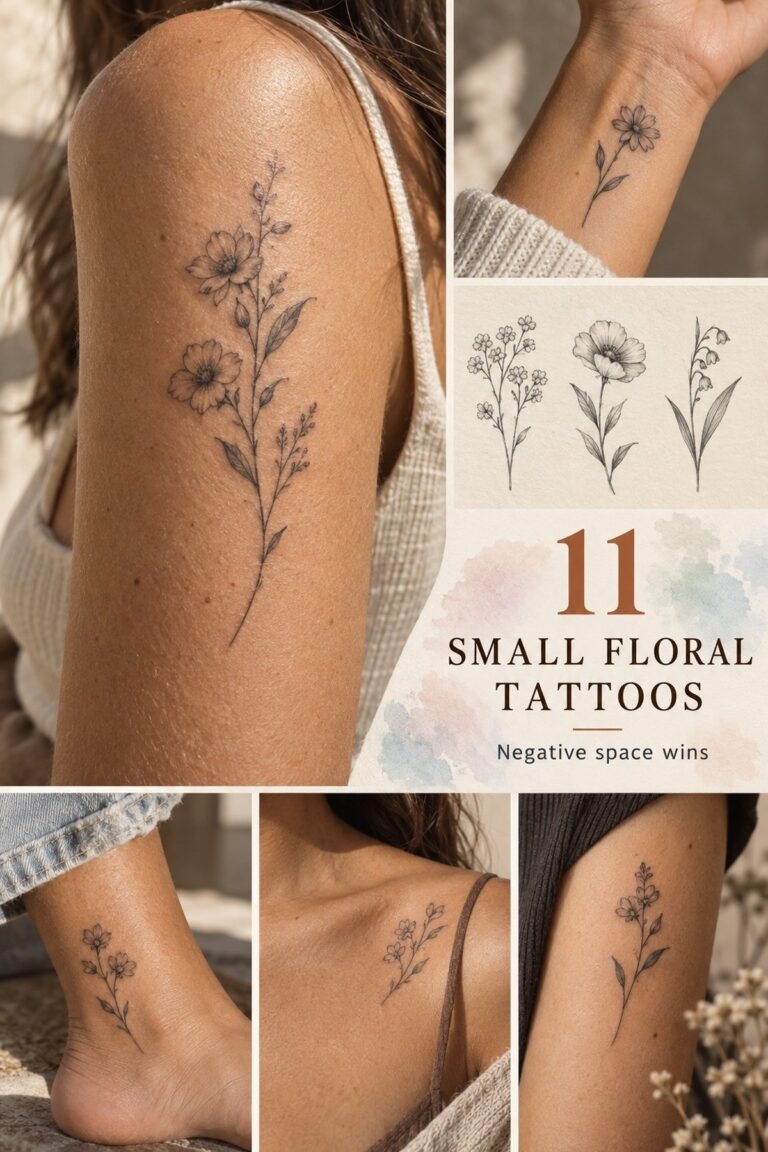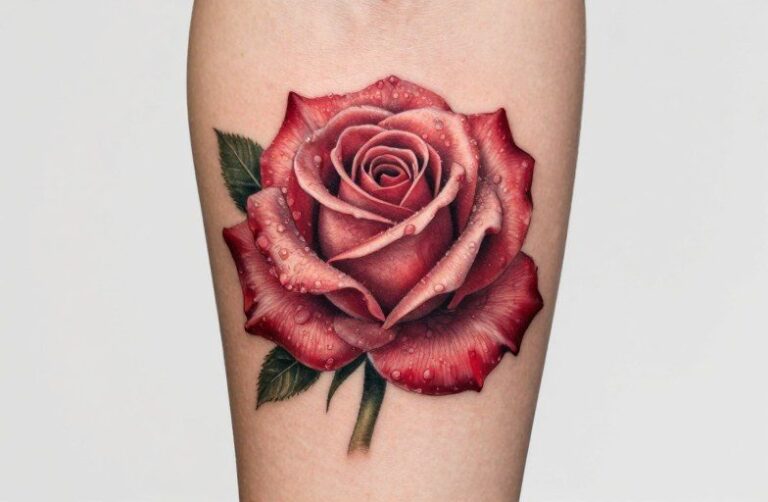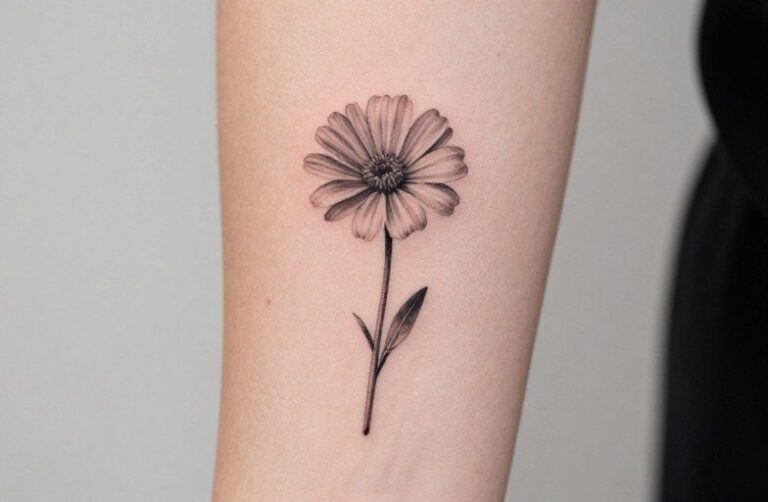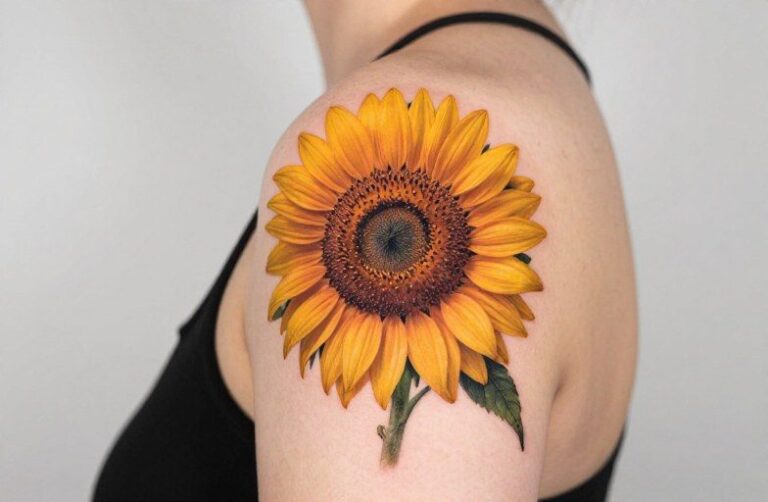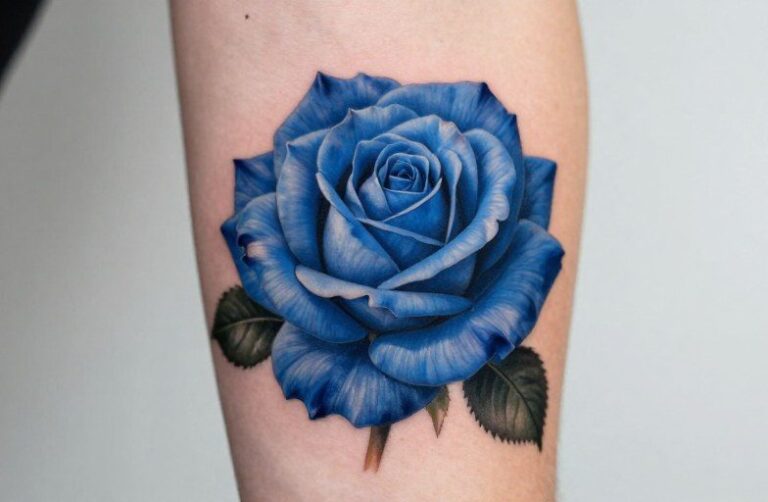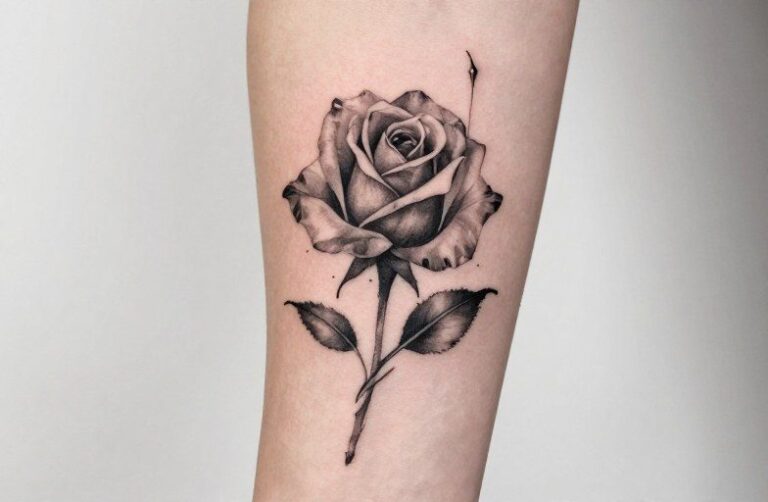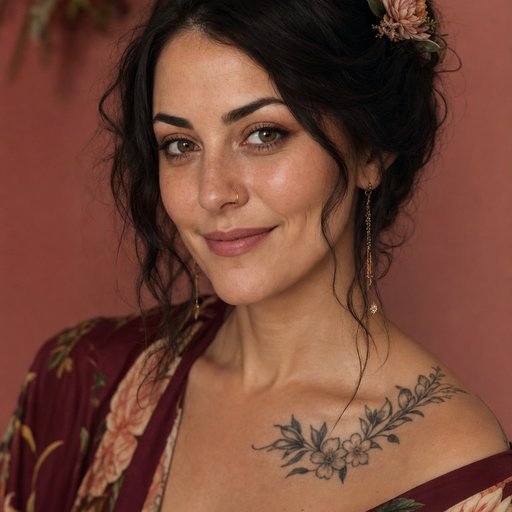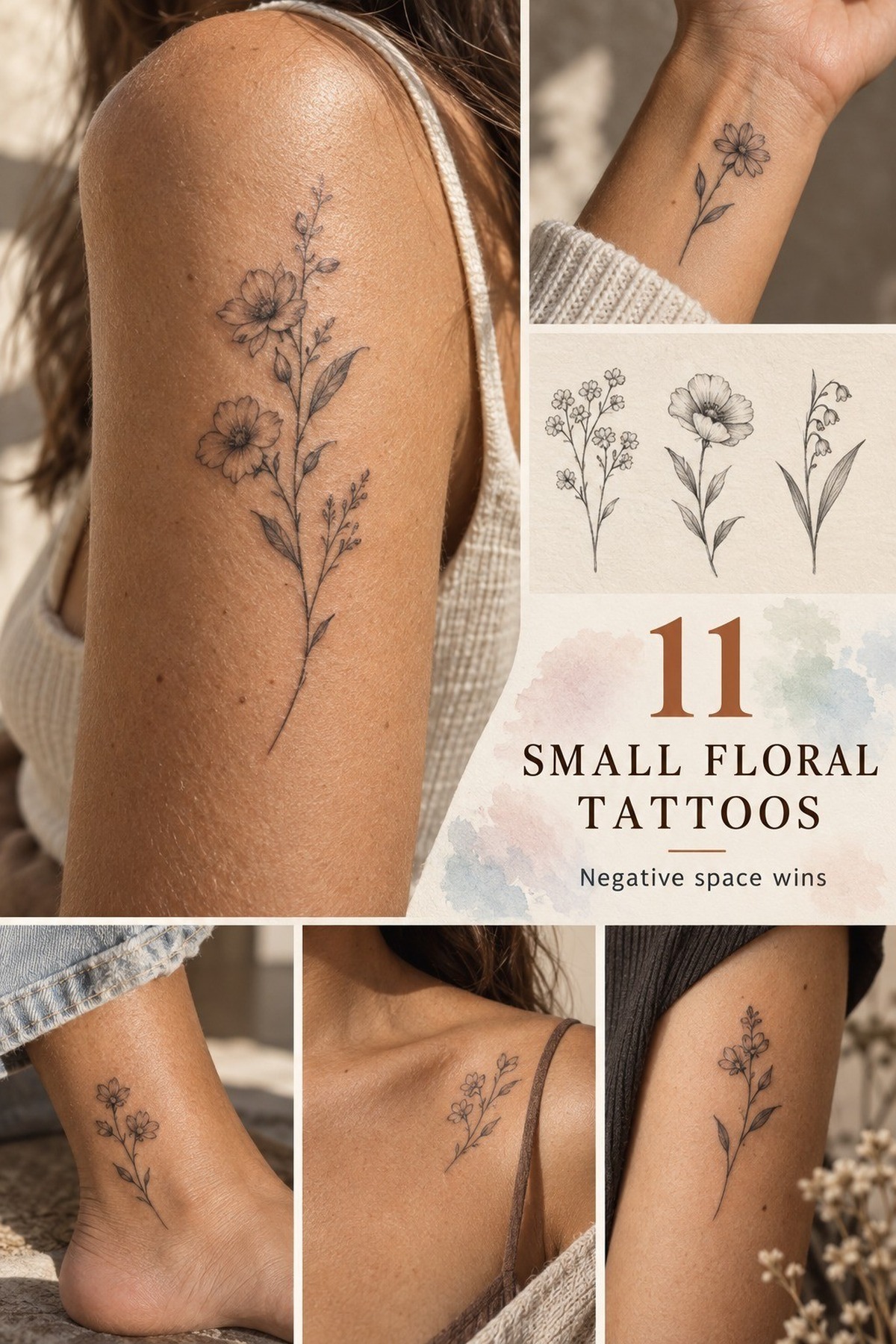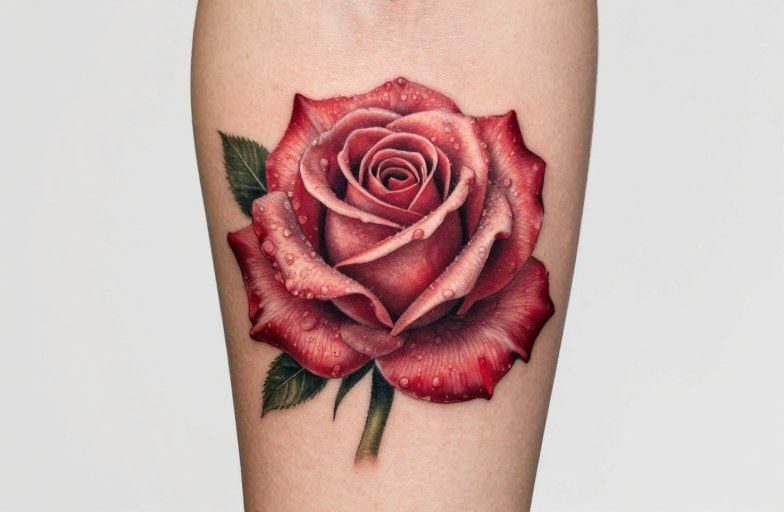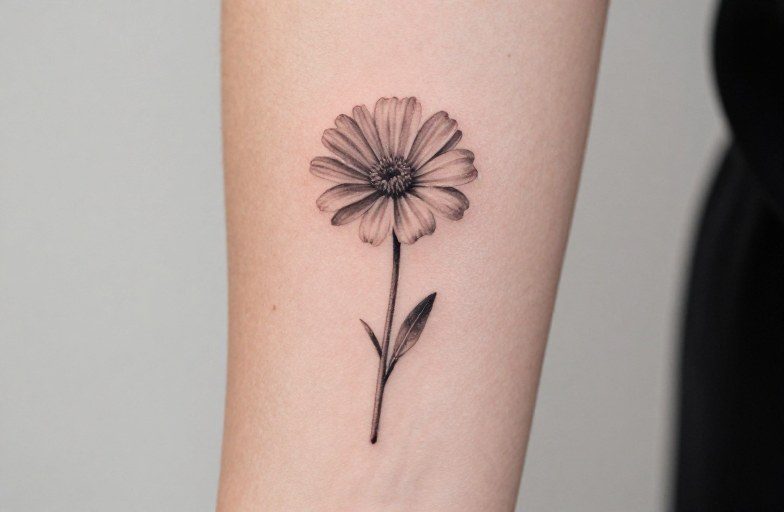
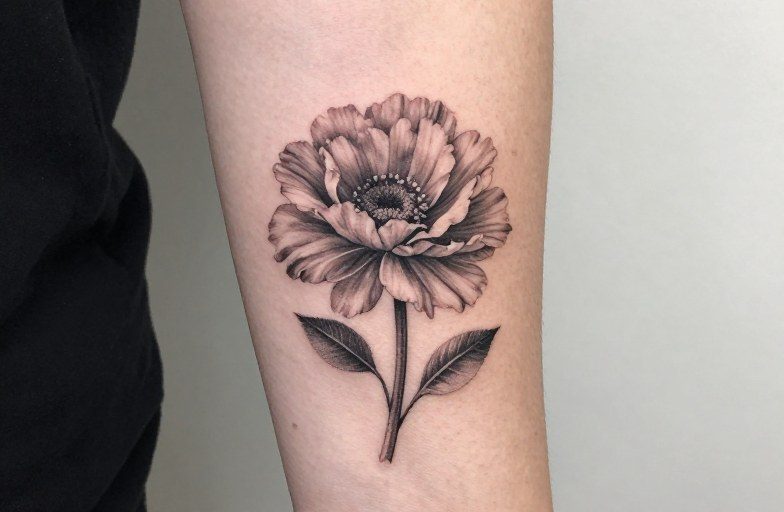
A unique flower tattoo typically signals a deliberate rejection of the obvious. While roses and lotuses dominate shop flash sheets, choosing something like a ghost pipe, welwitschia, or night-blooming cereus says you want symbolism that requires explanation, that rewards curiosity. These designs often carry meanings of resilience, adaptation, hidden beauty, or the briefness of life, filtered through the specific biology of the plant itself.
Design Tips & Pairings
Botanical accuracy matters more here than with generic flower designs. A protea’s dense, spiky bracts demand different line weight than a ghost pipe’s translucent, waxy stems. Getting the structure wrong makes the tattoo unrecognizable to anyone who knows the plant, defeating the purpose of choosing something distinctive.
Line Work vs. Shading for Botanical Detail
Thin, consistent lines (typically 3RL or 5RL needles) preserve the delicate architecture of unusual flowers. Heavy black shading can swallow the subtle features that make these plants identifiable, the papery texture of a strawflower, the veining on a bat flower’s whiskers. Color realism works well for specimens with shocking natural hues: the deep burgundy of a black dahlia, the electric blue of a Himalayan poppy. Watercolor techniques, meanwhile, suit flowers with soft edges and gradient tones, like a ghost pipe fading from white to pink at its bell-shaped tip.
Complementary Elements
- Scientific name in small script beneath the bloom, grounds the design in botanical fact
- Cross-section diagrams showing seed structure or root systems
- Geometric frames containing organic forms, emphasizing the contrast between wild growth and human order
- Pressed-flower aesthetic with visible stems, leaves, and drying imperfections
- Moth or beetle pollinators specific to that flower’s actual biology
Skip the butterflies unless they’re documented pollinators. Generic insect pairings cheapen the specificity you’re paying for.
Similar & Related Symbols
Botanical tattoos cluster around certain thematic neighborhoods. Understanding these helps you either commit to the flower or recognize you might want something adjacent.
Close Botanical Cousins
Seed pods and dried flowers extend the same lifecycle narrative, beauty in decline, potential in dormancy. A banksia pod’s woody, fire-blackened cones carry similar resilience symbolism to the living flower. Roots and rhizomes flip the visual focus underground, emphasizing hidden growth over visible bloom. Fungi, particularly mycorrhizal networks, pair logically with ghost pipes (which are actually mycoheterotrophs, lacking chlorophyll and feeding on fungal networks).
Non-Floral Overlaps
- Compass or astrolabe with specific coordinates where the flower grows wild
- Geological strata referencing the soil conditions it requires
- Weather symbols, arid-zone flowers pair with sun-bleached imagery, cloud-forest specimens with mist
The key distinction: standard flower tattoos lean on established cultural symbolism (rose = love, lotus = enlightenment). Unique flower tattoos derive meaning from the plant’s actual ecology and life cycle.
Who Chooses This Tattoo
People drawn to unusual floral work usually share a few traits. They tend to research heavily, coming in with photos, Latin names, sometimes field notes. They often have some connection to the plant’s native habitat: a protea for someone who spent years in South Africa, a ghost pipe for northeastern US hikers who’ve spotted them in dark forest understories.
The Specificity Seekers
These clients want tattoos that function as identifiers within niche communities. A welwitschia marks desert ecologists. A Rafflesia signals Southeast Asia travelers or biologists. The tattoo becomes a shibboleth, recognized by those who know, inscrutable to those who don’t. This differs from the “conversation starter” motivation; it’s closer to wearing a band t-shirt for a group with no mainstream radio presence.
The Anti-Obvious
Some choose unusual flowers simply to avoid the visual fatigue of common designs. They’ve seen too many peonies and cherry blossoms. They want something that won’t date to a specific tattoo trend cycle. The trade-off: you’ll explain it more often, and the explanation needs to be accurate to satisfy the choice.
How It Ages on Skin
Every flower tattoo faces the same biological reality, ink spreads, colors shift, fine detail blurs. Unique flowers present specific aging challenges because their recognizability depends on precise structural details.
High-Risk Elements
- Translucent effects: ghost pipe’s waxy, almost see-through stems rely on negative space and subtle gray wash that fades to muddy indistinction
- Extreme color saturation: Himalayan poppy blue and black dahlia burgundy are notoriously difficult to stabilize; blues especially tend toward green or gray
- Hair-fine details: bat flower’s long whiskers, protea’s individual florets, lines below certain thresholds (roughly 0.5mm healed) disappear within 5-10 years
Built-to-Last Approaches
Bolder outlines around key structural elements preserve readability even as interior detail softens. Simplified color palettes, two or three strong hues rather than subtle gradients, age more predictably. Black and gray with strategic single-color accents (a flash of red on a corpse flower’s spathe, for instance) often outperforms full color realism for longevity.
Placement affects this significantly. Inner forearm and calf, with relatively stable skin and moderate sun exposure, preserve detail better than ribs or feet where movement and friction accelerate degradation.
Mythology & Folklore
Common flowers carry centuries of accumulated symbolic weight. Unique flowers often have sparser cultural records, which can be liberating or limiting depending on your goals.
Documented Traditions
The protea, named for the shape-shifting Greek god Proteus, is often linked to diversity and transformation, though this connection is more botanical garden signage than ancient myth. Some trace the corpse flower’s name to its use in Indonesian death rituals, though documentation remains thin. Ghost pipes, lacking chlorophyll and appearing almost fungal, have been commonly associated with death and the spirit world in Appalachian folk traditions, fitting their pale, upright emergence from dark forest floors.
The Absence as Feature
Many unusual flowers simply don’t have deep folklore. This emptiness lets you build personal meaning without competing against centuries of accumulated symbolism. A welwitschia, surviving centuries in Namib Desert fog, can mean whatever your experience with endurance suggests. The lack of cultural pre-loading is itself the point for some wearers.
Be cautious of sources inventing indigenous significance for dramatic effect. Actual cultural connections require verification; the tattoo community has seen too many “ancient meanings” that originated on Pinterest.
Best Placements
Unusual flowers vary enormously in scale and structure, which dictates placement more than standard designs.
Vertical Formats
Proteas, with their dense, rounded heads atop woody stems, suit upper arms and thighs where the bloom can sit at shoulder or hip level with stem trailing downward. Rafflesia, the largest single flower on record, demands space to communicate scale, upper back or outer thigh work best. The visual joke of a “giant” flower on a small body part undercuts the reference.
Intimate Scale
- Behind ear: ghost pipe’s pale, nodding form echoes the curve of the mastoid bone
- Side of finger: tiny pressed-flower aesthetic, though expect significant fade
- Inner bicep: vertical space for stem-and-bloom compositions, protected from sun
- Ankle/calf: horizontal spreads for flowers with radial symmetry, like sea anemones (technically animals, but visually similar to certain floral forms)
Consider the flower’s actual size. A life-sized ghost pipe is roughly 10-15cm tall, scaling it to 3cm loses the identifying structure. A protea bloom can reach 30cm across; miniature versions become generic spiky circles.
Final Word
Choosing a unique flower tattoo is a commitment to specificity over convenience. You’ll research more, explain more, and possibly wait longer for an artist comfortable with botanical accuracy. The payoff is a design that genuinely reflects something you sought out rather than accepted from a flash sheet. Just ensure the plant’s actual characteristics, its growth habit, its habitat, its lifecycle, support whatever meaning you’re attaching. The best unusual flower tattoos function as small acts of education, turning skin into a field guide entry that happens to also be personal.
Frequently Asked Questions
How do I find an artist who can accurately tattoo an unusual flower?
Look for portfolios with botanical or scientific illustration backgrounds, not just floral tattoos. Ask specifically about their experience with your plant, if they can’t identify structural features like bracts versus petals, keep looking. Some artists specialize in natural history subjects and maintain reference libraries of pressed specimens.
Will a ghost pipe tattoo look like a mushroom as it ages?
Without strong structural definition, yes, the pale color and lack of leaves make it easy to misread. A skilled artist will emphasize the flower’s nodding bell shape and distinct stem structure with slightly heavier line work than the living plant suggests, preserving recognizability as fine detail fades.
Are there copyright issues with using botanical illustrations as reference?
Illustrations published before 1929 are generally public domain. Modern field guides and contemporary botanical artists hold copyright to their work. Use them as reference for understanding structure, but don’t ask an artist to directly copy a living illustrator’s composition or stylistic choices.
Why do some unusual flower tattoos cost significantly more than standard roses?
Botanical accuracy requires more preparation time, studying reference material, understanding structural relationships, sometimes drafting multiple versions. The tattoo itself often involves more technical complexity: varied line weights, subtle color mixing, or unusual compositional challenges. You’re paying for specialized knowledge applied to specialized subject matter.