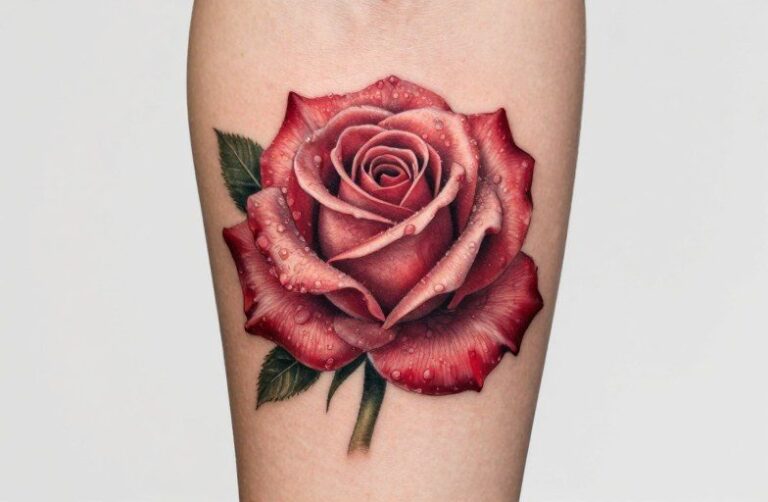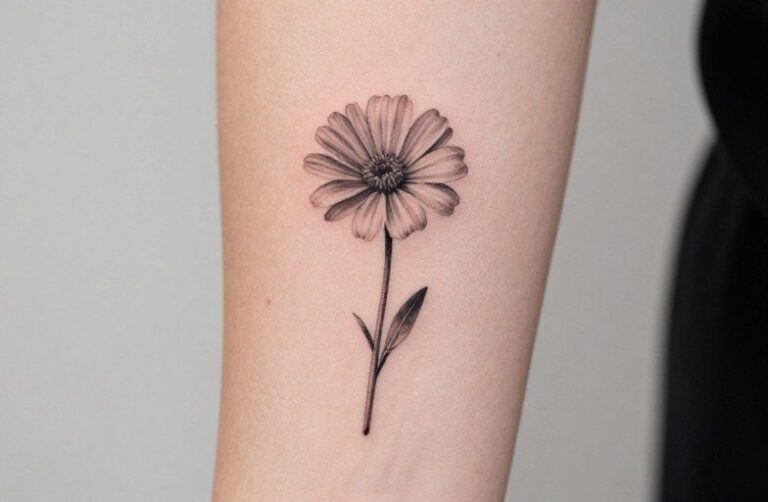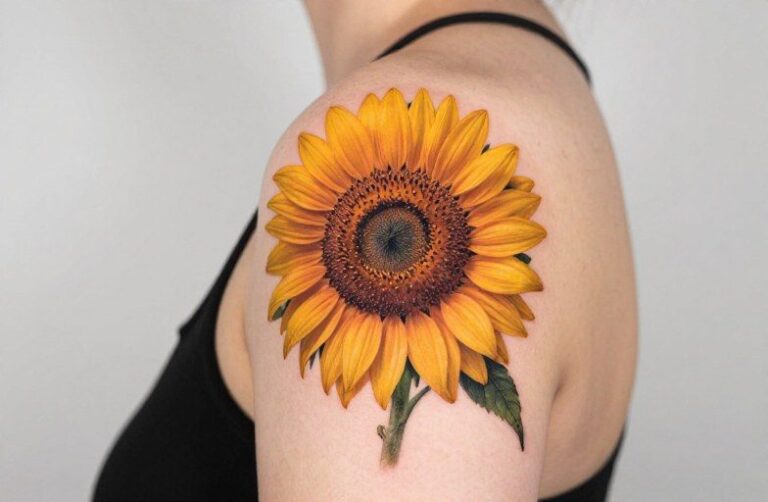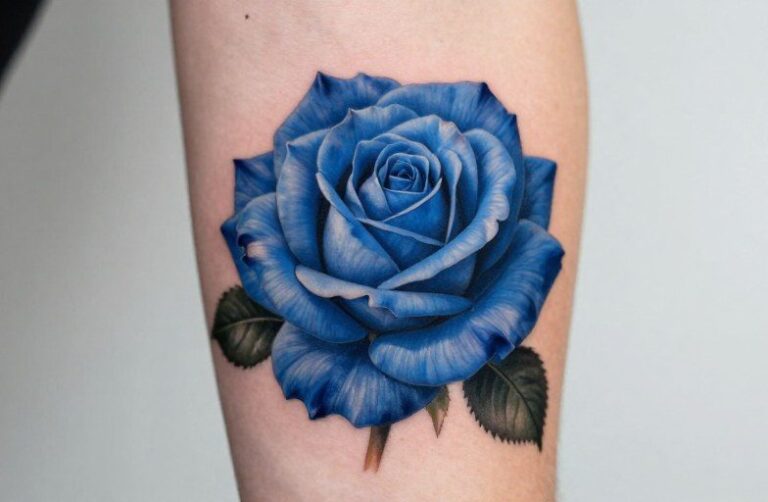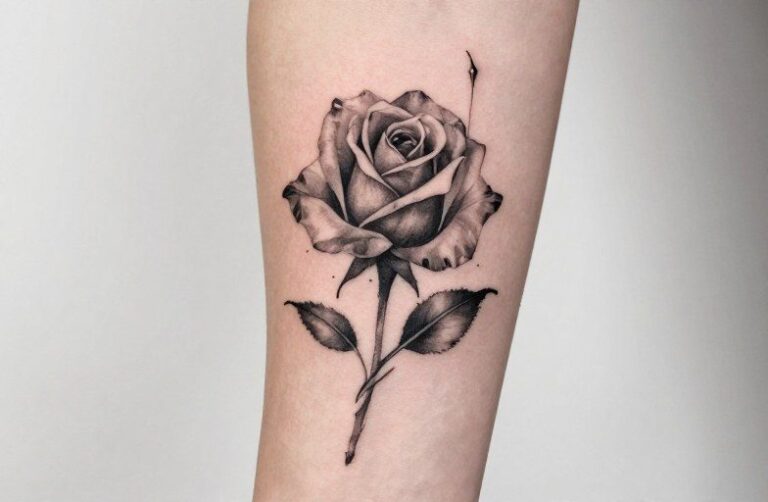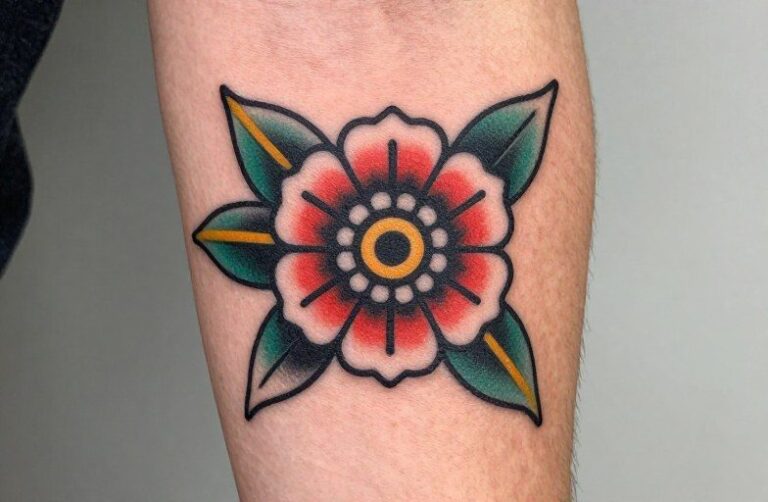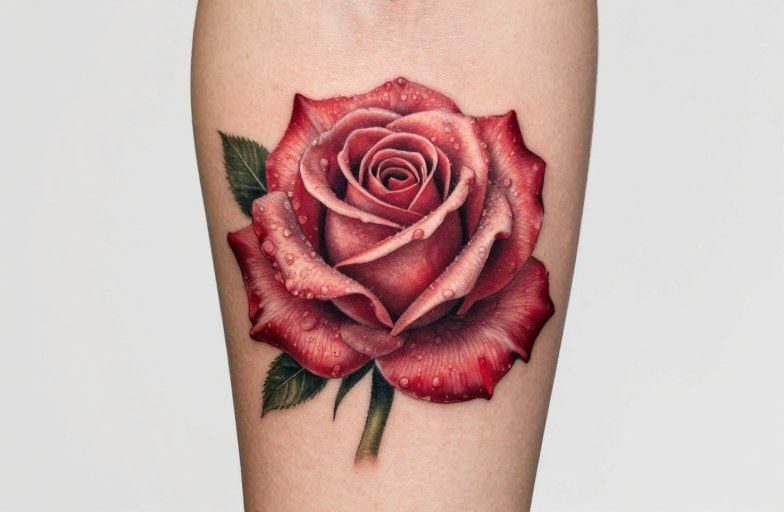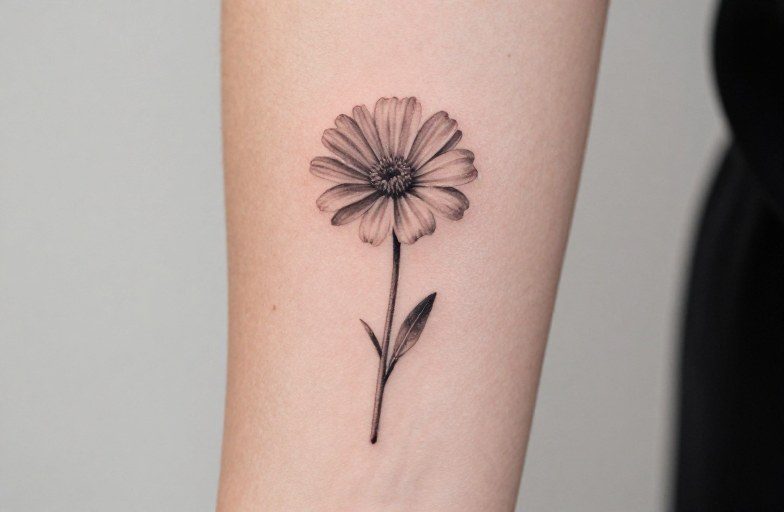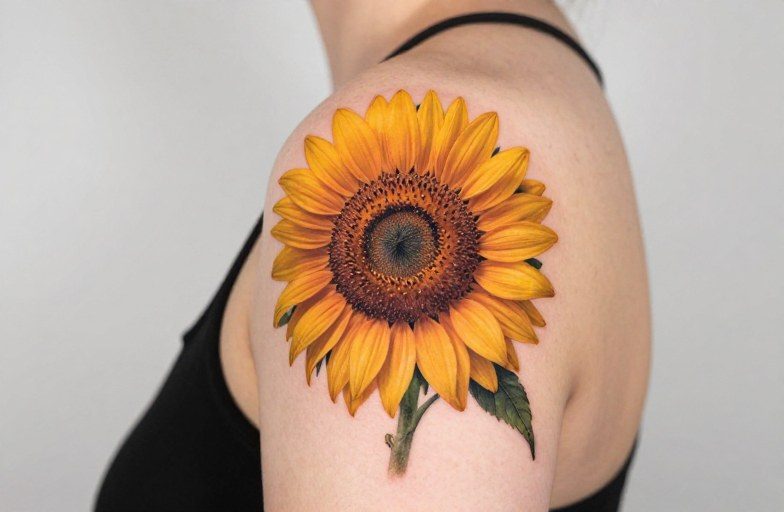
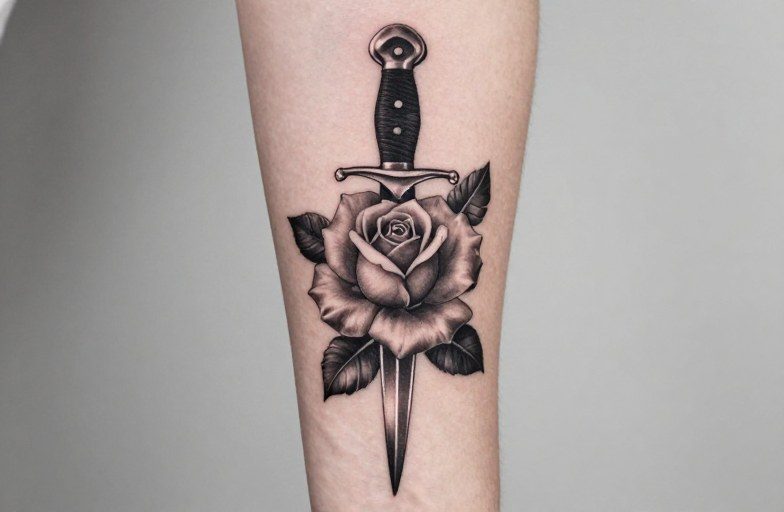
The dagger and rose tattoo pairs two images that pull in opposite directions: beauty that opens and invites, and steel that cuts and protects. Together, they usually speak to love with an edge, passion that can wound, or pain that still blooms. The meaning shifts with how you weight each element, which element draws the eye first, and where you place it on the body.
Symbolism & Core Meaning
The Rose Side
Roses carry the weight of every romance language and half the poetry written in the last six centuries. In skin, they represent beauty, desire, devotion, and the fleeting nature of both. A rose in full bloom suggests something alive and present; a bud hints at potential; dead petals or falling ones mark loss, memory, or time passing. The thorns matter too, they’re not decorative filler. They acknowledge that getting close to something beautiful costs something.
The Dagger Side
Daggers are intimate weapons. Unlike swords, which keep distance, a dagger requires closeness, even embrace. That changes the symbolism entirely. The dagger can stand for betrayal, something sharp slipped between ribs by someone trusted. It can mean protection, vigilance, or the willingness to cut something loose. Sometimes it represents sacrifice, the blade that severs one bond to preserve another. The direction the blade points matters: toward the rose suggests threat or defense of love; away from it reads more as readiness, guard up.
How They Interact
The tension between the two images creates the meaning. A dagger piercing a rose is the most direct read: love wounded, beauty destroyed, or perhaps the necessary violence of passion. A dagger and rose simply laid beside each other, balanced, suggests coexistence, danger and beauty as partners rather than combatants. The hand gripping the dagger, if included, changes everything: whose hand? Yours, or another’s? That question turns a stock image into something personal.
Design Tips & Pairings
Placement and Scale
This pairing works across sizes, but the relationship between the two elements needs space to read clearly. Too small, and the dagger becomes a needle, the rose a smudge. The forearm and outer bicep give enough real estate for detail without requiring a full sleeve. The chest, over the heart, loads the symbolism heavily, effective if that’s the intent, but worth considering whether you want that literalness. The thigh offers privacy and scale; the calf, visibility and a natural vertical that suits the dagger’s line.
Ribs and sternum demand commitment. The curve of the body distorts straight blades, so experienced artists often angle the dagger to follow the body’s geometry rather than fight it. The rose, being organic, adapts more naturally to these contours.
Complementary Elements
- Snakes coiled around the dagger shift the tone toward temptation, knowledge, or renewal
- Skulls beneath or behind the pairing deepen the mortality aspect, often linked to memento mori traditions
- Banners with names or dates can tip the design into memorial territory
- Clocks or pocket watches introduce time explicitly, love measured against its limits
- Drops of blood, rendered well, add visceral reality; rendered poorly, they look like clip art
Line weight deserves attention. A heavy dagger with a delicate, single-needle rose creates visual imbalance that mirrors thematic imbalance, useful if that’s the story. Matched weight reads as partnership, equality, two forces of comparable strength.
Color vs Black and Grey
What Color Adds
A red rose against a steel-grey dagger is the classic read, and color makes the contrast immediate. Deep crimson reads as passion, blood, life; darker burgundy suggests mourning, memory, or love grown heavy. Pink softens the pairing, sometimes too much, the dagger can start looking theatrical rather than threatening. Yellow roses, traditionally friendship or jealousy, create an interesting friction with the dagger’s violence. White roses, purity or death, push the design toward memorial or spiritual territory.
Color saturation affects longevity. Bright reds fade fastest, especially on hands, feet, or anywhere that sees sun and friction. A color dagger and rose needs touch-ups to keep its punch; black and grey ages more forgivingly, the softening of edges sometimes improving the mood rather than diminishing it.
Black and Grey Nuances
Without color, the design relies on contrast of texture: the smooth, reflective planes of the dagger against the layered, organic folds of the rose. A good artist uses white ink or negative space for highlights on the blade, creating the illusion of polished metal catching light. The rose needs depth through shading, flat black petals look like paper cutouts. Black and grey suits smaller scales where color would muddle, and it carries a timelessness that resists dating itself to any particular trend.
History & Cultural Roots
Western Traditions
The pairing’s visual logic draws from several streams. Memento mori art of the 16th and 17th centuries often combined symbols of life and death in single compositions, skulls with flowers, hourglasses with blooming gardens. The dagger and rose condenses that same juxtaposition into two legible images. Some trace the specific pairing to Victorian sentimental jewelry, where weapons and flowers appeared on mourning brooches and lockets, though the exact lineage is difficult to pin down.
Traditional American tattooing, often linked to sailors and soldiers, popularized the image from the early 20th century onward. In that context, the dagger often represented service, readiness, or the violence of war, while the rose softened it with thoughts of home, sweetheart, or mother. The Sailor Jerry school rendered these bold, readable, designed to hold up on skin that saw weather and work.
Other Cultural Touchpoints
In Japanese tattoo tradition, similar pairings exist, weapon and flower, violence and beauty, but the dagger and rose specifically is not native to that vocabulary. Some contemporary artists blend the Western motif with Japanese compositional techniques, creating hybrid pieces that borrow the dynamism of ukiyo-e prints. Mexican folk art, particularly around Day of the Dead, sometimes pairs blades with marigolds rather than roses, the meaning shifting toward sacrifice and remembrance of ancestors.
Mythology & Folklore
Classical Echoes
No single myth binds the dagger and rose as a fixed pair, but the components appear constantly. Cupid’s arrows and the wounds of love run through Ovid and later poets; the dagger is the literal version of that metaphor. The rose’s association with secrecy, sub rosa, under the rose, adds a layer: this is a private wound, or a private passion, not for public display. That reading suits placements that can be hidden.
The story of Pyramus and Thisbe, often linked to the mulberry tree’s darkening, involves a dagger and blood and love destroyed by misunderstanding. Shakespeare borrowed it for Romeo and Juliet. The dagger and rose can carry that narrative weight: lovers’ deaths, communication failed, beauty destroyed by the same passion that created it.
Modern Folklore and Subcultural Use
Post-World War II, the image circulated in biker and rockabilly communities, sometimes with specific gang or club significances that varied by region and era. Contemporary wearers may inherit these visual associations without intending them, worth researching if you’re drawn to the aesthetic but want to avoid unintended signals. The pairing has also appeared in album art, film noir posters, and fashion photography, accumulating layers of pop-culture reference that each wearer activates or ignores.
Similar & Related Symbols
Understanding what the dagger and rose is not helps clarify what it is. The sword and rose, often linked to the Order of the Golden Rose or certain chivalric traditions, carries more institutional, noble, or religious weight. The sword is public, ceremonial; the dagger is private, intimate. That distinction matters in choosing between them.
The skull and rose shares the life-death contrast but removes the element of human agency, no hand, no choice, no violence committed or suffered. The snake and rose, often linked to temptation or the Garden of Eden narrative, introduces deception rather than direct harm. The heart and dagger, a narrower pairing, strips away the natural world entirely, making the symbolism more abstract and less grounded in physical reality.
For those drawn to the dagger and rose but seeking variation, consider: a broken blade with a blooming rose (survival, resilience), a dagger through a rose stem rather than the bloom itself (love wounded but not killed), or multiple roses with a single dagger (one loss among many loves, or one defense for many vulnerabilities).
The Takeaway
The dagger and rose endures because it refuses to resolve. It doesn’t settle into pure romance or pure threat; it holds both in suspension, and that tension matches how many people actually experience love, loss, and self-protection. The design succeeds when the artist respects both elements, the rose needs as much craft as the dagger, not treated as soft filler around a hard center. Your placement, scale, color choice, and any additional elements should push the meaning in your specific direction, because the stock image alone says something general. The good version says something yours.
Frequently Asked Questions
Does a dagger through a rose always mean a broken heart?
Not necessarily. While that reading is common, the piercing can also represent sacrifice, the necessary pain of commitment, or protection of something vulnerable. Context and additional elements shift the meaning significantly.
How well does this design age on hands or fingers?
Poorly, like most detailed work in high-friction areas. The fine lines of a rose petal and the highlights on a dagger blade blur and fade faster there. Forearms, thighs, and upper arms hold the detail much longer.
Is this design considered masculine or feminine?
The pairing has been worn across genders for decades. Traditional American tattooing popularized it among sailors and soldiers, while contemporary versions appear on all bodies. The rendering style matters more than the motif itself.
Can the dagger face different directions, and does it change the meaning?
Yes. A blade pointing toward the rose reads as threat or defense of love; pointing away suggests readiness, guard up, or moving past something. Downward often links to sacrifice or mourning; upward can read as aspiration or aggression.