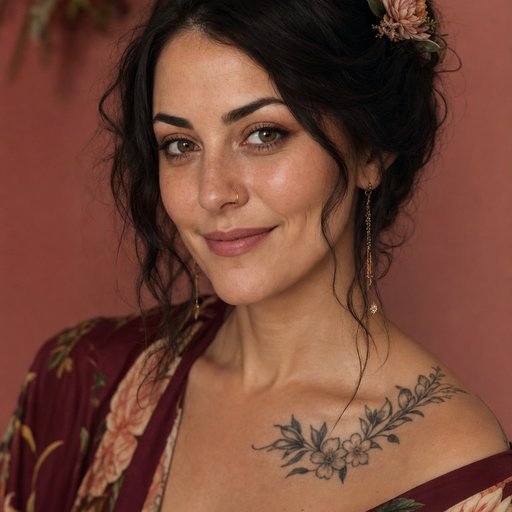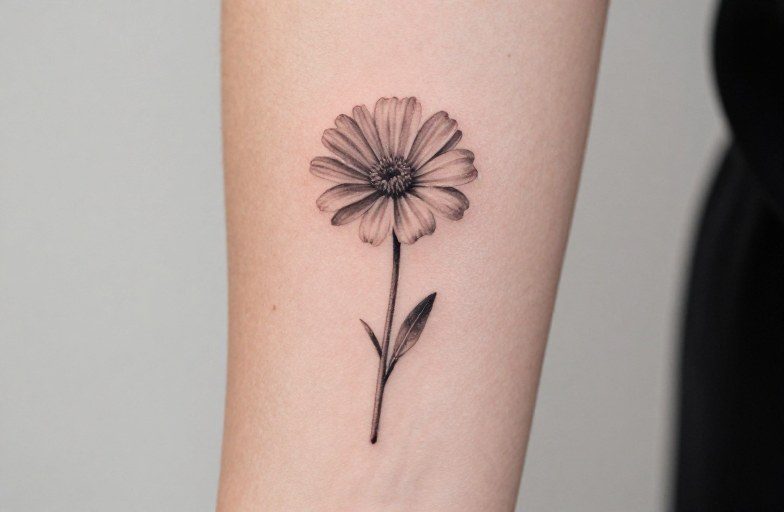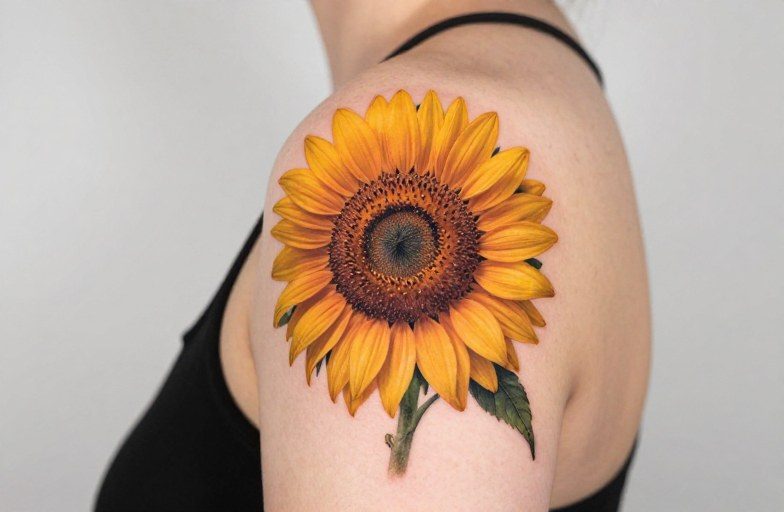
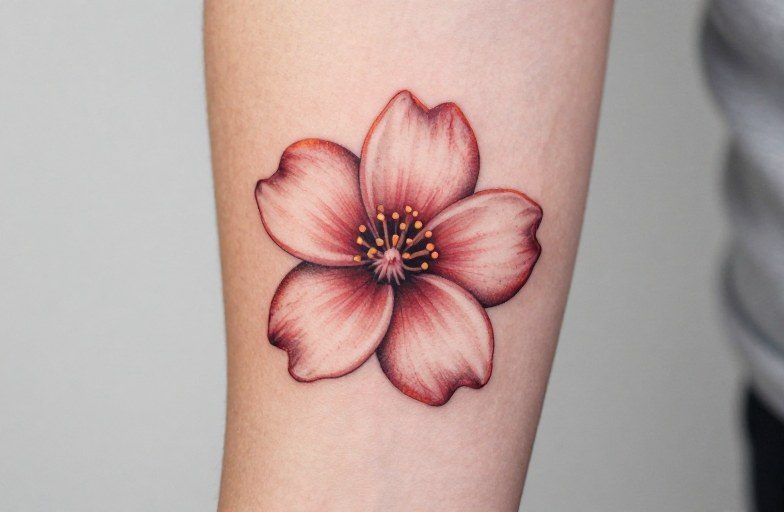
The Hannah Flowers tattoo refers to work inspired by or directly created by the Australian tattoo artist Hannah Flowers, whose signature style blends Victorian botanical illustration, Art Nouveau curves, and unflinching feminine portraiture. this tattoo carries meaning around feminine autonomy, the tension between beauty and darkness, and a reclamation of historical imagery once used to constrain women. The style has become a recognizable aesthetic movement in contemporary tattooing, distinct enough that “Hannah Flowers style” now functions as shorthand for a specific visual language.
Personal & Modern Meanings
Feminine Autonomy and Reclamation
Women seeking this style often gravitate toward its refusal of passive prettiness. The portraits stare back. The flowers entwine without wilting. There’s a deliberate hardness to the softness, lace rendered in solid black ink, roses with thorns left in, faces that look bored rather than beckoning. This duality resonates with people who want to claim decorative femininity without submitting to it.
Modern collectors frequently choose these pieces to mark transitions: leaving relationships, recovering agency, or simply arriving at a self-image that accommodates both vulnerability and edge. The meaning isn’t universal, someone might select a Hannah Flowers piece purely for its visual impact, while another person layers personal narrative onto every petal and shadow.
Queer and Nonbinary Adoption
The style has found particular traction in queer tattoo communities. The androgynous quality of many portraits, full lips, strong brows, ambiguous gazes, offers representation outside traditional feminine archetypes. Collectors who don’t see themselves in mainstream tattoo imagery find space here. The botanical elements function as natural motifs without the hyper-gendered baggage of, say, traditional American roses or pin-up aesthetics.
History & Cultural Roots
Victorian Botanical Illustration
The visual DNA draws heavily from nineteenth-century scientific illustration, think Flora Graeca or the work of Marianne North. These images were products of colonial extraction, often painted by women who traveled under constrained circumstances to document “exotic” specimens. The Hannah Flowers style repurposes this visual vocabulary: the same precise linework, the same attention to stamen and leaf vein, but stripped of scientific pretense and infused with subjective emotion.
Art Nouveau provides another clear lineage. Alphonse Mucha’s flowing hair and organic borders, Aubrey Beardsley’s decadent blacks, these echo in the ornamental framing and sinuous lines. The style doesn’t copy; it metabolizes, producing something that reads as vintage without being derivative.
Tattooing’s Feminine Aesthetic Turn
The rise of this style coincides with a broader shift in tattooing’s demographics and aesthetics. As more women entered the industry as artists and collectors, imagery evolved beyond the masculine-coded traditions of American, Japanese, and black-and-grey realism. The Hannah Flowers style emerged from this ferment, neither rebellion against nor imitation of male traditions, but something parallel, with its own rules and references.
Symbolism & Core Meaning
Flowers as Active Agents
In this style, flowers don’t function as passive decoration. They grip. They strangle. They grow through eye sockets and coil around throats. The botanical elements carry specific traditional meanings, poppies for sleep and death, peonies for prosperity and shame, foxglove for both healing and poison, but their placement and treatment alter the reading. A peony in a Hannah Flowers piece might reference its Victorian language-of-flowers meaning, or it might simply exploit the flower’s visual weight, its capacity to fill space with layered petals that hold ink beautifully.
- Poppies: Frequently appear, often near faces or eyes. Their crumpled tissue-paper texture translates well to tattoo ink, and their association with oblivion and remembrance adds narrative weight.
- Peonies: Provide dense, sculptural forms that anchor compositions. The many petals create natural opportunities for contrast between saturated black and negative space.
- Foxglove: Less common but visually distinctive; the spotted bells and tall spires introduce vertical movement and subtle poison symbolism.
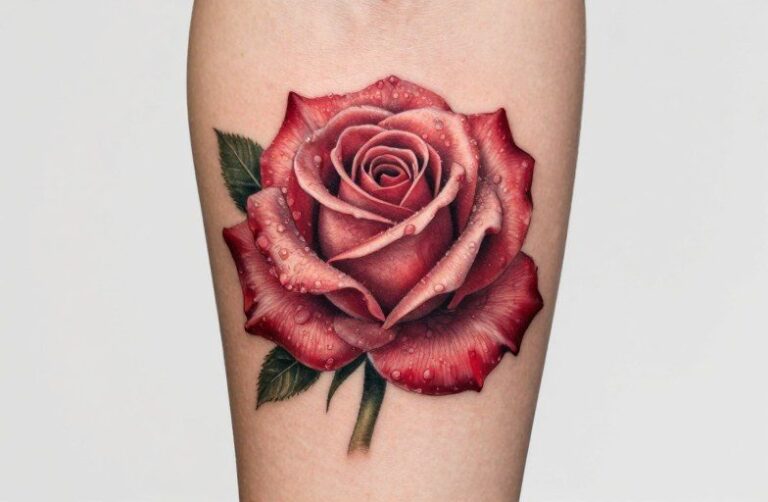
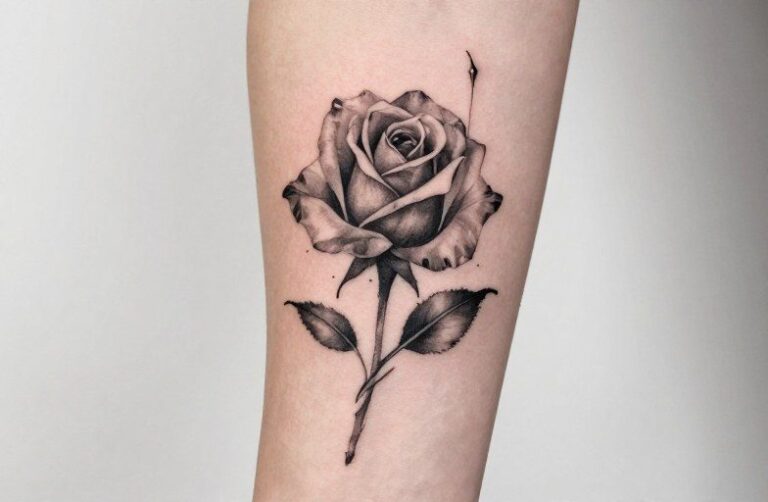
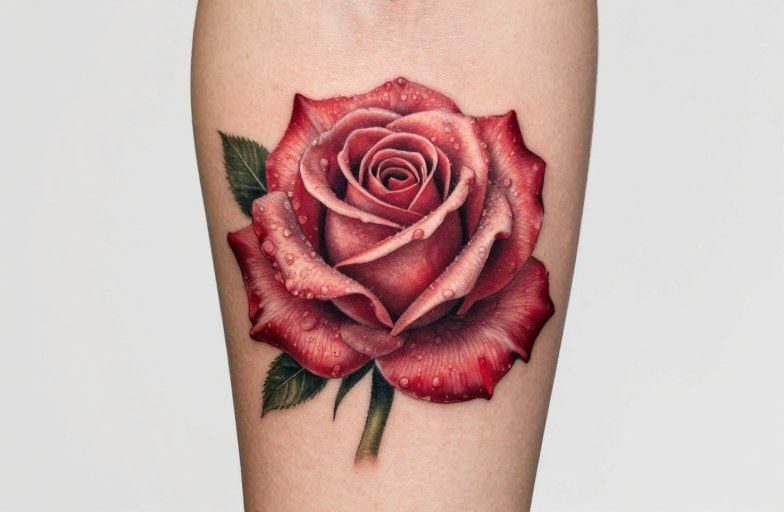
- Roses: Present but often de-romanticized, stems prominent, thorns exaggerated, blooms past their prime.
The Gaze and Its Refusal
Portraiture in this style almost always involves a direct or averted gaze, never the inviting glance of traditional pin-up. The subjects look past the viewer, or through them, or at something unseen. This transforms the tattoo from image to encounter. The meaning shifts from “look at this beautiful thing” to “this thing looks back, and judges.”
Best Placements
Working With the Style’s Scale
These pieces demand space. The detail work, fine lines for hair strands, stippled shading for petal texture, solid blacks for background depth, requires room to resolve. Small tattoos in this style often age poorly; what reads as delicate precision at two inches becomes muddy blur at five years. Minimum viable size for a portrait-and-flowers composition is roughly palm-sized, with larger pieces (forearm, thigh, ribs, back panel) allowing the artist to fully deploy the style’s ornamental potential.
- Thigh: Offers the flat plane and generous real estate this style prefers. The natural curve of the muscle can complement the organic flow of botanical elements.
- Forearm: Visible without being dominant; the vertical orientation suits portrait compositions. Expect some fading on the inner forearm from sun and friction.
- Ribs/side: The canvas many serious collectors choose. Painful, slow, but the elongated format accommodates the style’s tendency toward vertical compositions with cascading hair and trailing stems.
- Back: Allows for the largest, most elaborate pieces, full portraits with elaborate framing, multiple flower species, ornamental borders that reference Art Nouveau posters.
Healing Considerations by Placement
Areas with thin skin and frequent movement (inner arm, ribs, ankle) will experience more ink spread during healing, potentially compromising fine lines. The style’s reliance on precise detail makes this a genuine concern. Thigh and outer upper arm offer more forgiving tissue. Wherever you place it, expect two weeks of careful afterwater, this isn’t a style that forgives sun exposure or premature swimming.
Religious & Spiritual Angles
Pagan and Witchcraft Resonances
The style’s botanical specificity and feminine power associations attract practitioners of various pagan paths. The flowers aren’t generic; they’re identifiable species with established herbal and magical correspondences. Someone might select foxglove specifically for its faerie associations, or poppies for dreamwork and divination. The portraits sometimes incorporate horned figures, moon imagery, or other pagan iconography that deepens this dimension.
Secular Spirituality
Even without religious framework, the style accommodates spiritual readings. The Victorian obsession with death and mourning, hair jewelry, post-mortem photography, language-of-flowers bouquets, permeates the aesthetic. Collectors sometimes approach these pieces as memento mori, reminders of mortality wrapped in beauty that refuses to comfort. The meaning becomes existential rather than doctrinal: life is brief, flowers rot, but the image persists on skin.
Design Tips & Pairings
Working With the Artist, Not Just the Style
True Hannah Flowers pieces come from Hannah Flowers or the small circle of artists she has directly influenced. The style has been widely imitated, often poorly. If you’re drawn to this aesthetic, research matters. Look for artists who demonstrate the specific skills: confident line weight variation, understanding of Victorian illustration conventions, ability to render faces that avoid doll-like prettiness. Portfolio review should show healed work, fresh tattoos always look sharper than they stay.
Complementary Elements
- Text: Victorian lettering, especially flowing script or serif type, integrates naturally. Keep it minimal, this style is already visually dense.
- Jewelry and objects: Lockets, daggers, scissors, and cameo frames appear frequently. These ground the organic elements in material culture.
- Animal elements: Moths, snakes, and ravens extend the gothic-naturalist vocabulary without disrupting the visual system.
- Color vs. black-and-grey: Flowers’s original work is predominantly black with limited selective color. Full color can work but risks losing the style’s distinctive atmosphere. Discuss with your artist whether they work in color within this style or strictly in black.
Line weight deserves particular attention. The style depends on contrast between hair-fine detail lines and bold blacks. An artist who can’t commit to both extremes will produce something that looks tentative rather than atmospheric. Ask to see healed pieces from two-plus years prior to assess how the fine lines have held.
Final Thoughts
The Hannah Flowers tattoo occupies a specific cultural moment: enough recognition to function as a style category, enough specificity to risk dilution through imitation. Its meaning operates on multiple registers, personal narrative, feminist reclamation, aesthetic affinity, subcultural identification. What unites these readings is the style’s refusal of easy consumption. The images demand attention without offering simple pleasure. They decorate without submitting to decoration.
Choosing this tattoo means accepting its visual weight. It will read as feminine, as gothic, as referential to historical aesthetics you may not personally know. The meaning you bring won’t erase these associations; it will complicate them, which is perhaps the most honest thing any tattoo can do. Heal it carefully. Live with it long enough to see the lines settle, the blacks soften, the image become part of your skin rather than sitting on it. That’s when you know what it actually means.
Frequently Asked Questions
How do Hannah Flowers tattoos age compared to traditional American or Japanese styles?
The fine linework and delicate shading require more maintenance over time. Expect some softening of detail within five to seven years, especially on high-movement areas. The bold black elements hold better, creating a natural evolution where contrast increases as subtlety fades. Plan for potential touch-ups, and prioritize sun protection from day one.
Can a male or masculine-presenting person wear this style effectively?
Absolutely, though the composition may need adjustment. The style’s core elements, botanical precision, ornamental framing, dramatic contrast, work on any body. Many artists adapt the portraiture to more androgynous or masculine features, or replace the figure entirely with animal or object-focused compositions while maintaining the visual vocabulary.
What’s the typical time and cost for a medium-sized piece in this style?
A palm-sized portrait with botanical elements typically requires six to twelve hours across multiple sessions, depending on the artist’s pace and your pain tolerance. Rates vary widely by region and artist reputation, but expect to invest significantly, this style rewards patience and budget over rushing for a bargain. Book consultations with multiple artists to calibrate expectations.
How do I distinguish authentic Hannah Flowers influence from generic ‘girly tattoo’ imitation?
Look for specific technical markers: confident variation between extremely fine lines and solid blacks, anatomically informed faces that avoid anime or doll proportions, identifiable botanical species rendered with scientific attention to structure, and compositional flow that references Art Nouveau rather than random decoration. Generic imitations often flatten these elements into mere prettiness without the underlying tension.