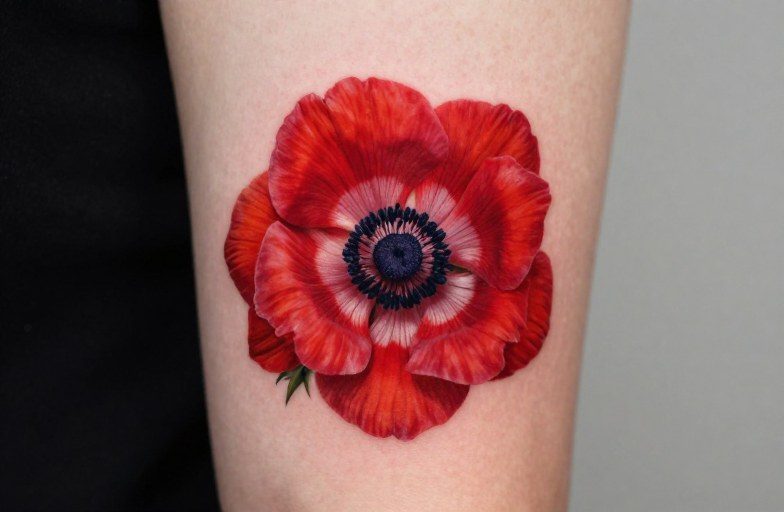
The red anemone flower tattoo most commonly signals forsaken love, anticipation, and protection against harm. In Greek myth, the flower sprang from Aphrodite’s tears and Adonis’s blood, binding it forever to themes of mourning intertwined with devotion. That tension, beauty cut short, love that outlasts death, makes it a heavy but honest choice for memorial work and for marking personal resilience.
Symbolism & Core Meaning
Red anemones carry a sharper emotional charge than their white or purple cousins. The color itself amplifies the flower’s traditional associations: passion, blood, warning, and sacrifice. Where a white anemone might read as gentle remembrance, the red variety insists on being felt.
The Greek Root
The Adonis and Aphrodite story is often linked to this flower’s meaning. In the myth, the anemone blooms where Adonis falls, stained red from the lovers’ mingled blood and tears. That origin gives the tattoo a dual register: grief for what was lost, and proof that love persisted through the loss. People choose this not for generic sadness, but for specific absence, a death, a ended relationship that still shapes them, a version of themselves that didn’t survive.
Protection and Warding
Some trace the anemone’s protective meaning to European folk traditions where carrying the flower was thought to ward off evil and illness. The name itself derives from Greek anemos, wind, suggesting something that survives buffeting and disruption. In tattoo form, this translates to a symbol of endurance: the bearer has been through something, has been shaken, remains rooted.
- Forsaken or lost love, actively mourned rather than buried
- Protection and personal resilience after harm
- Anticipation, waiting for return, for change, for peace
- Blood and sacrifice, literal or metaphorical
Religious & Spiritual Angles
Christian iconography sometimes uses the anemone as a symbol of the blood of Christ and the sorrow of the Virgin Mary, particularly in medieval and early Renaissance art. The red petals and dark center read easily as wound and depth of grief. This makes the flower viable for religious memorial tattoos that need something less common than crosses or praying hands.
In some pagan and neopagan practice, the anemone is associated with death and rebirth cycles, with the wind that carries spirits. The tattoo can function as a seasonal marker, someone who identifies with spring’s brutal, brief blooming, who rejects the pressure to be perennial.
Secular Spiritual Use
Even without religious framework, the anemone works for people processing grief through natural imagery. The flower’s actual behavior, closing at night, reopening with light, mirrors the uneven rhythm of mourning. That lived parallel matters more than any assigned meaning.
Best Placements
Where you put this flower changes how its meaning lands. The red anemone’s emotional weight needs space to breathe, but doesn’t require massive scale to read clearly.
- Upper arm/outer bicep: Classic placement, enough flat surface for detail, visible when you want it. Good for single stem or small cluster.
- Ribcage: Intimate, painful to sit for, suits private memorial work. The curve of ribs can echo the flower’s natural droop.
- Thigh: Large canvas for full botanical composition with leaves and buds. Heals relatively well, less sun exposure than arms.
- Forearm: Visible daily, which suits protective symbolism, you’re carrying the ward with you. Risk of faster fading.
- Behind the ear or collarbone: Small, delicate, often chosen for first tattoo or for someone else’s memory kept close.
The stem’s curve matters for placement. A straight stem reads differently than one that bends, that seems to yield. Discuss the angle with your artist; the flower’s posture carries meaning.
How It Ages on Skin
Red ink is notorious. It fades faster than black, shifts toward orange or pink depending on the pigment base, and can blur more noticeably at edges. The anemone’s layered petals, thin, numerous, overlapping, present specific challenges.
Red Fading Patterns
Bright scarlet and crimson pigments typically mute toward coral or rose within five to eight years, sooner with sun exposure. The dark center (stamen disk) usually holds better if done in black or deep brown, providing contrast even as the red softens. Some artists build red over a pink or orange undertone to extend apparent vibrancy; others accept the fade as part of the flower’s life cycle metaphor.
Line vs. Shading Decisions
Heavy black outline preserves structure but can overwhelm the anemone’s delicacy. Soft shading without outline ages more gracefully in some styles, but risks the petals bleeding together into a red blob. A middle path, fine line work with selective black in the deepest shadows, tends to hold best. The petal edges should remain distinct even at small sizes; too much detail packed too tight collapses within a few years.
White highlights, often used for petal sheen, almost always disappear entirely. Plan the design assuming they’ll vanish.
Similar & Related Symbols
The red anemone sits in a crowded field of floral memorial tattoos. Knowing the alternatives helps clarify whether this is the right choice.
- Poppies: Similar red petal, black center, also tied to sleep, death, and remembrance. Poppies are more explicitly military in Western context; anemones carry more personal grief.
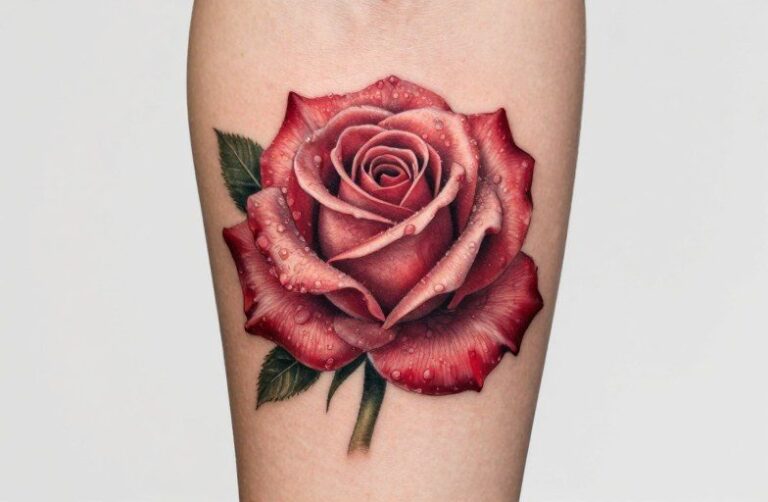
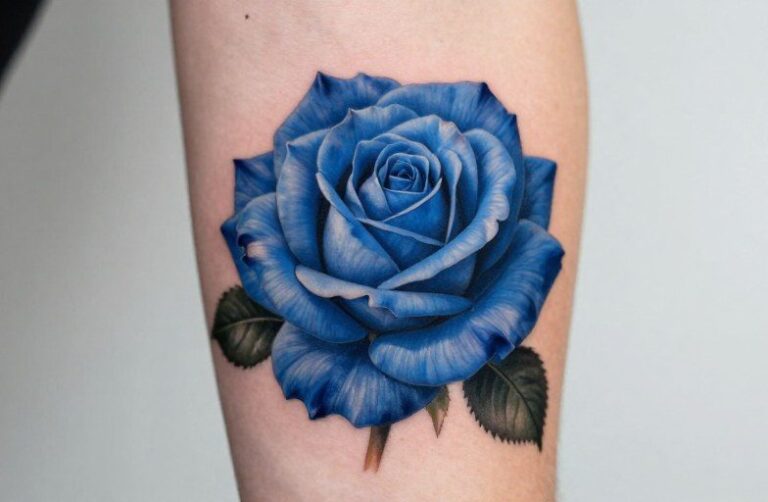
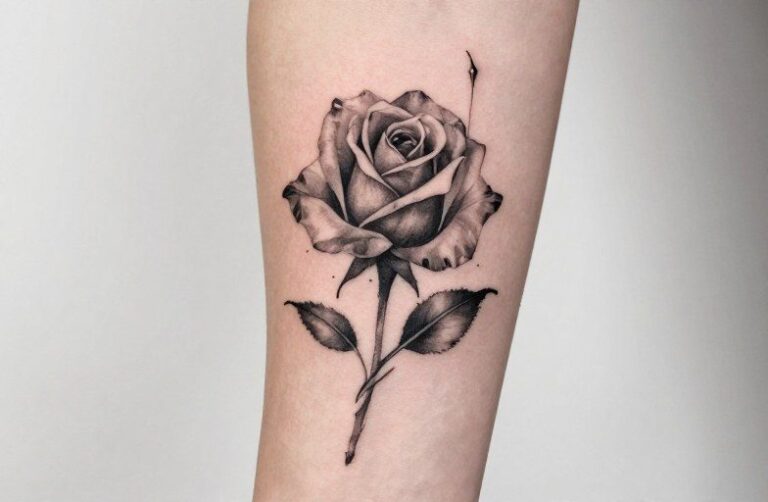
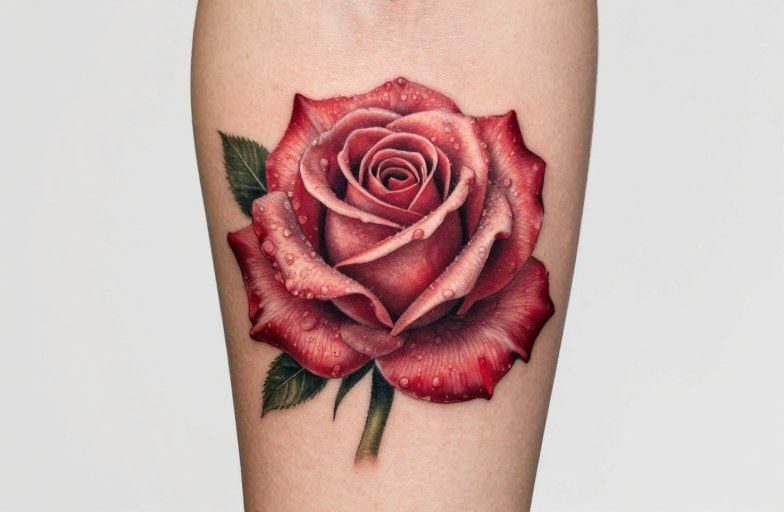
- Roses: Broader meaning range, less specific. A red rose tattoo can read as romance, beauty, or generic love. The anemone’s obscurity adds precision.
- Carnations: Common for maternal memorials, less mythic weight, more domestic.
- Spider lilies: Japanese and Chinese associations with final goodbyes, death, and reincarnation. Sharper, more ominous than anemones.
- Bleeding hearts: Direct visual metaphor for heartbreak, less botanical accuracy, more cartoonish at small sizes.
The anemone’s advantage is its relative rarity. It signals that the bearer did research, chose something specific, isn’t working from a Pinterest top-ten list.
Design Tips & Pairings
Composition choices deepen or shift the meaning.
What Works With It
Single stem with drooping head emphasizes grief, the weight of loss. Upright cluster suggests resilience, collective memory. Buds alongside open flowers indicate ongoing process, some things still closed, some fully felt.
Pairing with actual text (names, dates, short phrases) grounds the symbol in specific event. Without text, it remains more interpretable, more private. Greek key pattern or meander border can nod to mythological origin without being literal. Moths or butterflies landing on or near the flower introduce transformation narrative; bees or other pollinators suggest persistence, life continuing.
Style Considerations
Traditional/Americana: Bold lines, limited red palette, readable from distance, less subtlety in the grief register.
Black and grey with single red accent: The anemone as sole color focus, dramatic, draws the eye immediately.
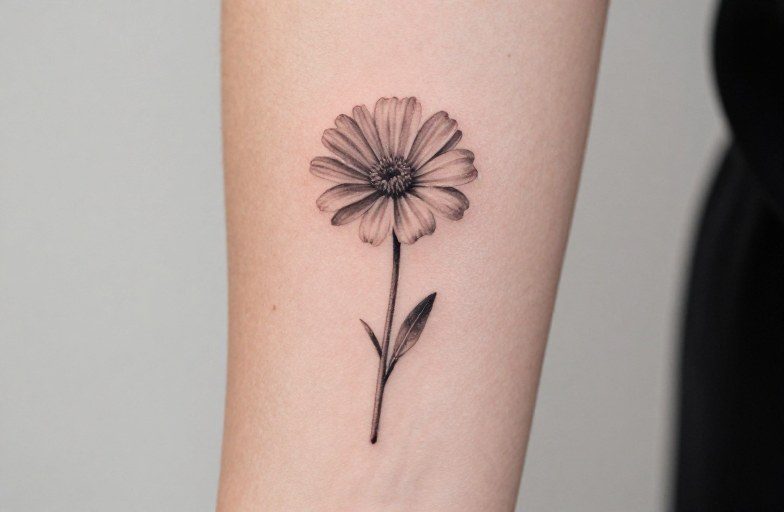
Fine line botanical: Maximum detail, fastest fade risk, most delicate emotional tone.
Watercolor: Can mimic the flower’s actual translucency, but red watercolor in skin often ages poorly, muddy edges, unclear form.
I generally advise clients toward styles with some structural line integrity for this particular flower. The petals are too thin to survive pure softness.
The Bottom Line
The red anemone tattoo means what the bearer brings to it, but it arrives with heavy cultural preparation: blood, tears, wind, waiting. It’s not a cheerful flower. It suits people who want their skin to acknowledge damage without claiming to have transcended it. The aging red ink, the drooping stem, the myth of love outlasting death, these aren’t flaws to work around. They’re the point.
Choose it for specific absence, for protection you still need, for the honesty of a beauty that doesn’t pretend to be permanent.
Frequently Asked Questions
Does the red anemone always mean death or can it represent positive love?
It can signal passionate love and anticipation, but the red color and Greek myth bind it tightly to loss. Most bearers intend the full tension, love that existed, love that was cut short. Purely positive readings are possible but less common.
How small can a red anemone tattoo be before detail is lost?
Below two inches, petal separation becomes unreliable and the dark center may heal as a solid blob. For single flowers, aim for at least two and a half to three inches in height to preserve readable structure as the ink spreads slightly over time.
Why choose an anemone over a more common memorial flower like a rose?
The anemone’s obscurity signals deliberate choice and specific meaning. Roses carry broad, sometimes generic associations; anemones communicate that the bearer researched and selected for mythic weight and emotional precision.
Do red anemone tattoos work on darker skin tones?
Red ink is visible on all skin tones but achieves different saturation. On deeper skin, brighter scarlet may read more subtly; darker crimson or burgundy bases often hold better contrast. An experienced artist can adjust tone and saturation for your specific melanin level.