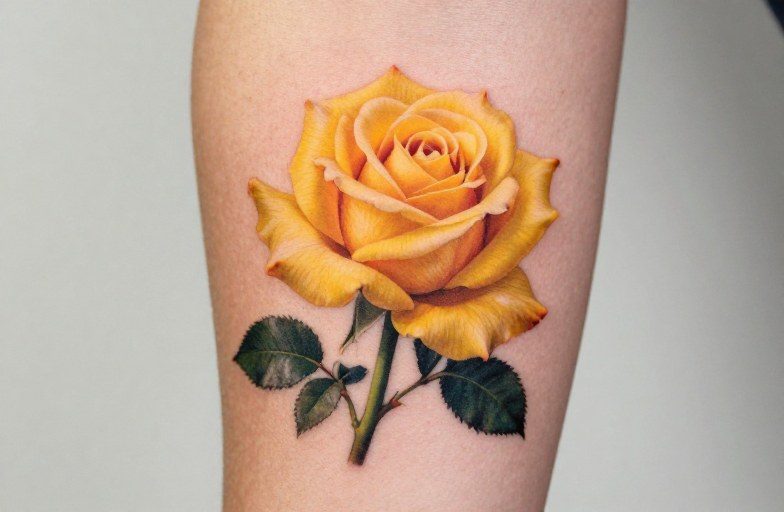
A yellow rose tattoo most commonly signals friendship, platonic love, and warm affection, distinct from the romantic red rose. The color carries associations with joy, new beginnings, and sometimes remembrance or Texas cultural pride. What starts as a simple floral choice often layers with personal history, making the yellow rose one of the more versatile flower designs in tattooing.
Who Chooses This Tattoo
People drawn to yellow roses usually want something softer than the dramatic red or black rose. The design appeals across age groups and genders, though placement and style often shift the vibe significantly.
Common Placements and Why They Matter
Small yellow roses cluster on wrists, ankles, and behind ears for subtle, personal reminders. Larger pieces spread across shoulders, thighs, or ribs where the petals can open fully and the color reads cleanly from a distance. Forearm placements work well for visibility; many who choose friendship-themed roses want them seen, not hidden. Chest pieces over the heart lean memorial, especially when paired with dates or names.
- Wrist/ankle: Discrete, often matching sets between friends
- Shoulder/thigh: Room for detail, color saturation, and surrounding elements
- Ribcage: Private, frequently tied to grief or personal transformation
- Forearm: Social visibility, friendship declarations
Style Preferences by Intent
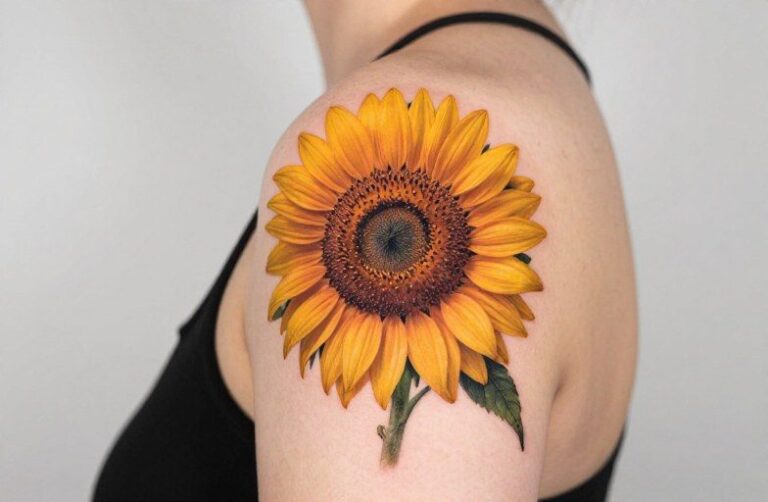
Traditional American styling with bold outlines and limited shading suits the Texas pride angle, think sailor-jerry roots with a Lone Star twist. Fine-line single-needle work dominates the friendship and delicate-meaning crowd, though this style demands more touch-ups over time. Watercolor backgrounds, often criticized as trendy, actually help yellow roses read more clearly against skin by providing contrast without heavy black outlines.
Color vs Black and Grey
The choice between color and black-and-grey fundamentally changes what a yellow rose communicates. Color is almost always the point with this specific flower.
Why Yellow Specifically Matters
A red rose tattooed in black and grey still reads as “rose.” A yellow rose in black and grey loses its entire symbolic anchor; the color is the meaning. Without yellow, it becomes generic floral, indistinguishable from any other rose memory piece. Artists who do black and grey yellow roses often rely on heavy stippling or negative-space techniques to suggest “lightness,” but the visual connection to friendship or joy weakens significantly.
Color Longevity Reality
Yellow ink sits in a tricky spot. It is inherently lighter than red, blue, or black, and it fades faster under sun exposure. On lighter skin tones, fresh yellow pops beautifully. On darker skin, achieving saturated yellow requires more passes, and the color may heal more orange-gold than true yellow. Expect noticeable fading within 3-5 years without consistent sunscreen use. Touch-ups are not optional for color yellow roses; they are maintenance.
- True yellow: High fade risk, needs sun protection, reads best on lighter skin
- Gold/amber: More stable, often chosen as practical compromise
- Yellow with orange core: Adds depth, ages more gracefully than flat yellow
Symbolism and Core Meaning
The yellow rose’s symbolic history is messier than most people realize. Victorian floriography assigned it meanings ranging from jealousy to decreasing love, hardly the friendship association we know now. The modern “friendship and joy” meaning solidified in the 20th century, often linked to commercial flower marketing and cultural shifts rather than ancient tradition.
Texas claims the yellow rose through the folk song “The Yellow Rose of Texas,” though the historical Emily West connection is more legend than documented fact. For Texans, the tattoo functions as regional identity marker, sometimes paired with state outlines, bluebonnets, or the lone star itself.
Memorial and Grief Associations
Less commonly discussed: yellow roses mark remembrance. Some families associate them with specific loved ones based on funeral flowers or garden preferences. In tattoo form, this often pairs the rose with dates, handwriting, or religious text. The “joy” meaning shifts to “joy that person brought” rather than active happiness.
Personal and Modern Meanings
Contemporary tattoo clients rarely stick to dictionary definitions. The yellow rose accumulates private significance through timing, pairing, and personal narrative.
Common Modern Layerings
Friendship tattoos between non-romantic partners, often matching or complementary designs, frequently use yellow roses. Recovery and sobriety communities sometimes adopt them as symbols of new beginnings, the “fresh start” after difficult periods. Transitional life moments, graduations, relocations, career changes, get marked with yellow roses more often than people discuss openly.
Paired elements shift meaning dramatically:
- With a bee: Productivity, nature, sometimes matching couple tattoos
- With a clock or pocket watch: Time-bound friendship, memorial
- With a dagger: Betrayed friendship, complicated joy, edgier aesthetic
- With script names: Almost always memorial or specific-person dedication
Gender and the Yellow Rose
While floral tattoos carry feminine coding in broad culture, the yellow rose escapes some of this through its Texas association and through bold traditional styling. Men choosing this design often go larger, heavier on black outlines, or pair it with overtly masculine imagery like eagles or flags to balance the flower’s softness.
Religious and Spiritual Angles
Direct religious symbolism for yellow roses is thinner than for lilies, crosses, or doves. Some Catholic traditions associate yellow roses with the Virgin Mary’s joy, though this is far less established than the white rose’s purity connection. The yellow rose appears occasionally in Marian apparition accounts, but artists and theologians debate whether this reflects genuine symbolic tradition or later embellishment.
Spiritual Without Doctrine
More commonly, the yellow rose functions in non-denominational spirituality: solar energy, happiness as practice, gratitude. Chakra-adjacent interpretations sometimes link it to the solar plexus, though this is modern synthesis rather than traditional practice. Tattoo clients drawn to this angle often request mandala backgrounds, geometric frames, or dotwork halos around the rose.
How It Ages on Skin
Yellow ink demands more technical honesty than darker colors. Understanding aging helps set realistic expectations and informs design choices.
Technical Realities
Yellow pigments, especially lighter lemon tones, scatter more in skin over time. The color can “bloom” or blur at edges faster than black. On areas with frequent movement, wrists, fingers, feet, this accelerates. Solid yellow holds better than shaded yellow; watercolor-style washes fade to near-invisibility fastest.
Skin type matters significantly. Oily skin tends to blur color faster. Older skin (50+) holds less ink initially, requiring more passes for saturation. Keloid-prone individuals face higher risk with color packing, though this is true for all tattooing, not specific to yellow.
Maintenance Expectations
Plan for first touch-up at 2-4 years. Sunscreen is non-negotiable; UV exposure degrades yellow pigment fastest of all common tattoo colors. Moisturizing helps prevent the dry, cracked appearance that makes aged color tattoos look neglected. Black outlines around yellow petals extend readability by years, which is why traditional styling ages more gracefully than pure color realism for this specific subject.
The Bottom Line
A yellow rose tattoo works when the color choice is intentional, not default. It communicates friendship, joy, Texas identity, or personal transition most clearly when the design respects what yellow actually does on skin, its limitations and its specific visual punch. Go color if the meaning matters; accept the maintenance. Go bold-outline traditional if you want it readable at twenty years. Avoid watercolor washes unless you are comfortable with significant fading. The yellow rose is not a safe, neutral choice; it is a statement about warmth, and it demands the technical commitment to keep that warmth visible.
Frequently Asked Questions
Does a yellow rose tattoo always mean friendship?
Not always. While friendship is the most common association, yellow roses also mark Texas pride, memorials, personal transitions, and non-denominational spiritual meanings. The specific pairing and context usually reveal the intent.
How long does yellow tattoo ink last?
Without sun protection, noticeable fading appears in 3-5 years. True yellow fades faster than gold or amber tones. Plan for touch-ups every 2-4 years, and use sunscreen consistently to extend clarity.
Does yellow rose ink work on dark skin?
Yellow requires more saturation passes on darker skin and may heal more orange-gold than true yellow. An experienced artist who understands color packing on melanin-rich skin is essential. Gold or amber bases often prove more stable choices.
What style ages best for yellow roses?
Traditional bold-outline styles age most gracefully. Fine-line and watercolor techniques fade significantly faster. Black outlines around yellow petals maintain readability for years longer than pure color realism.
Can a yellow rose be a memorial tattoo?
Yes. Though less common than red or white roses for memorials, yellow roses mark remembrance when tied to specific funeral flowers, garden preferences, or the “joy someone brought” interpretation. Usually paired with dates, names, or handwriting.