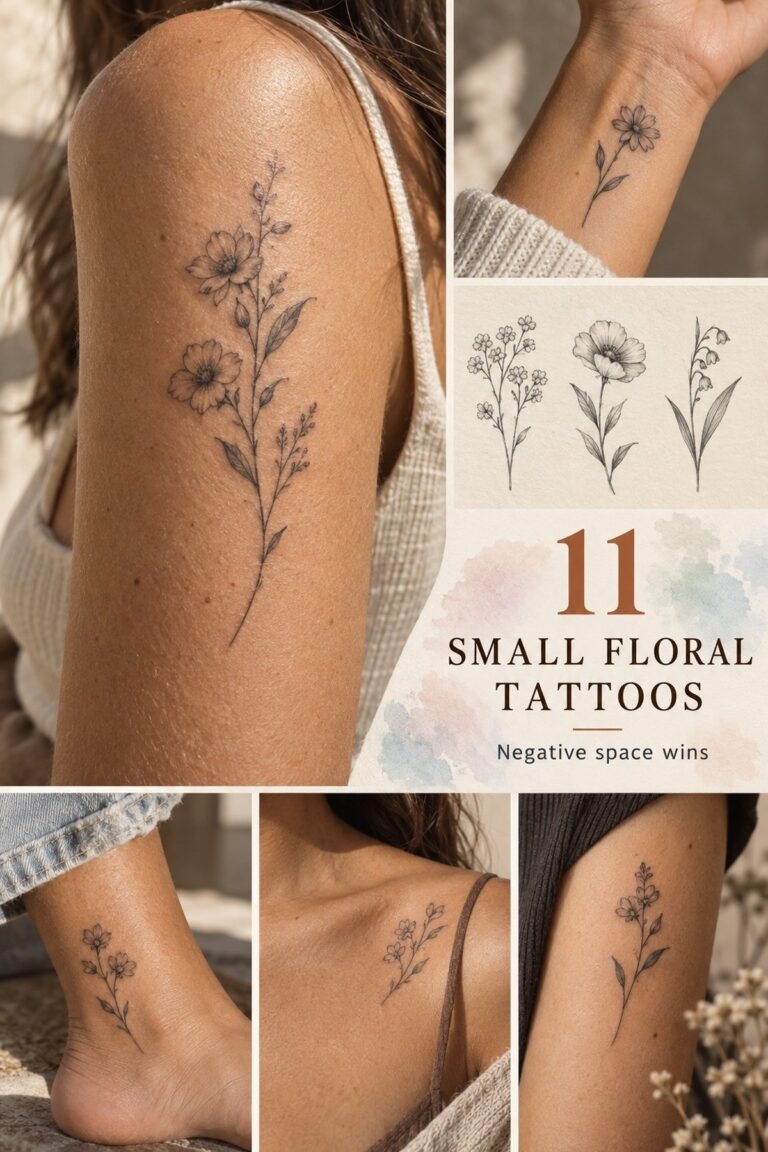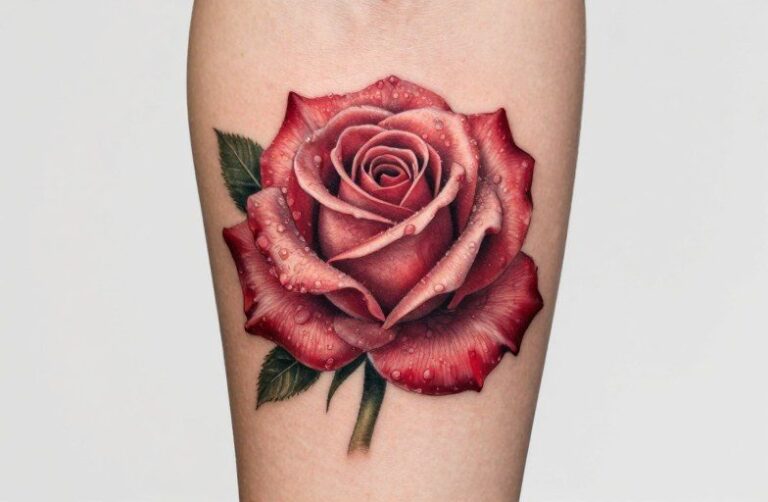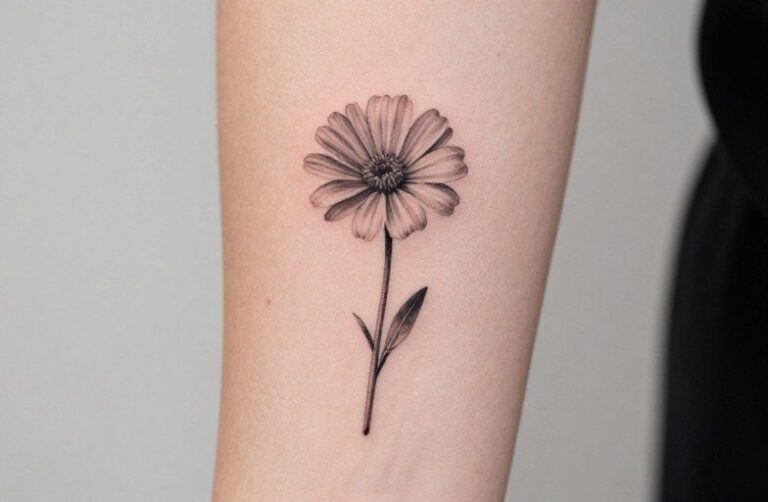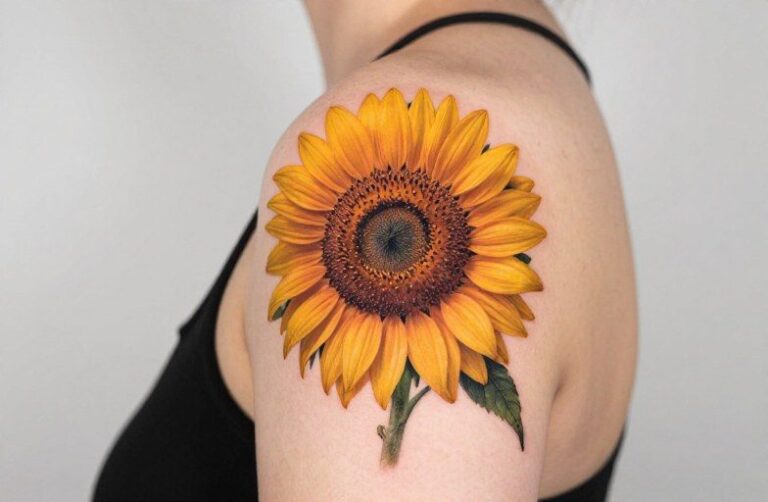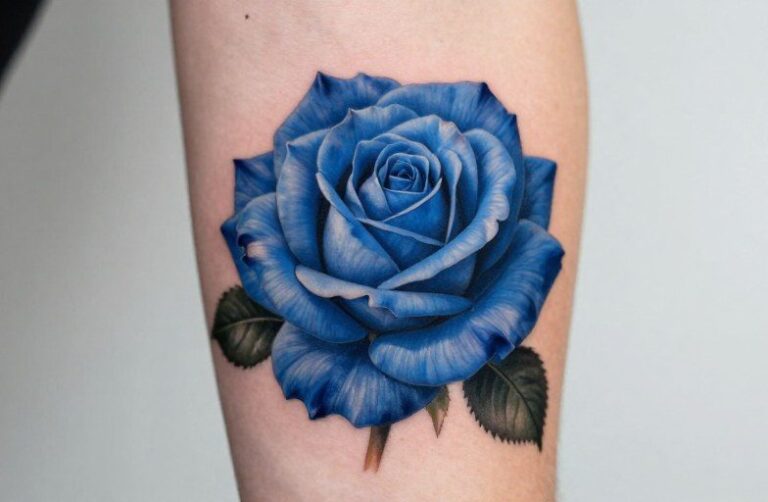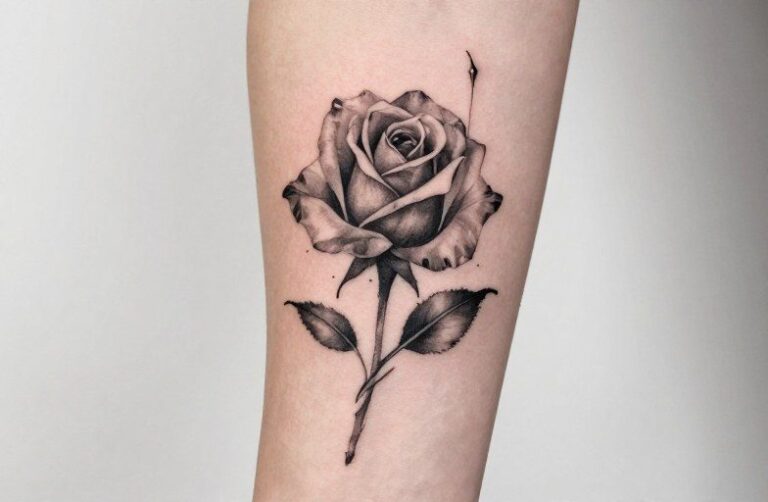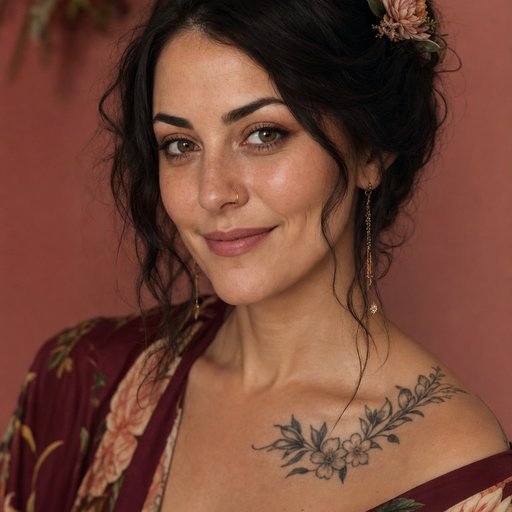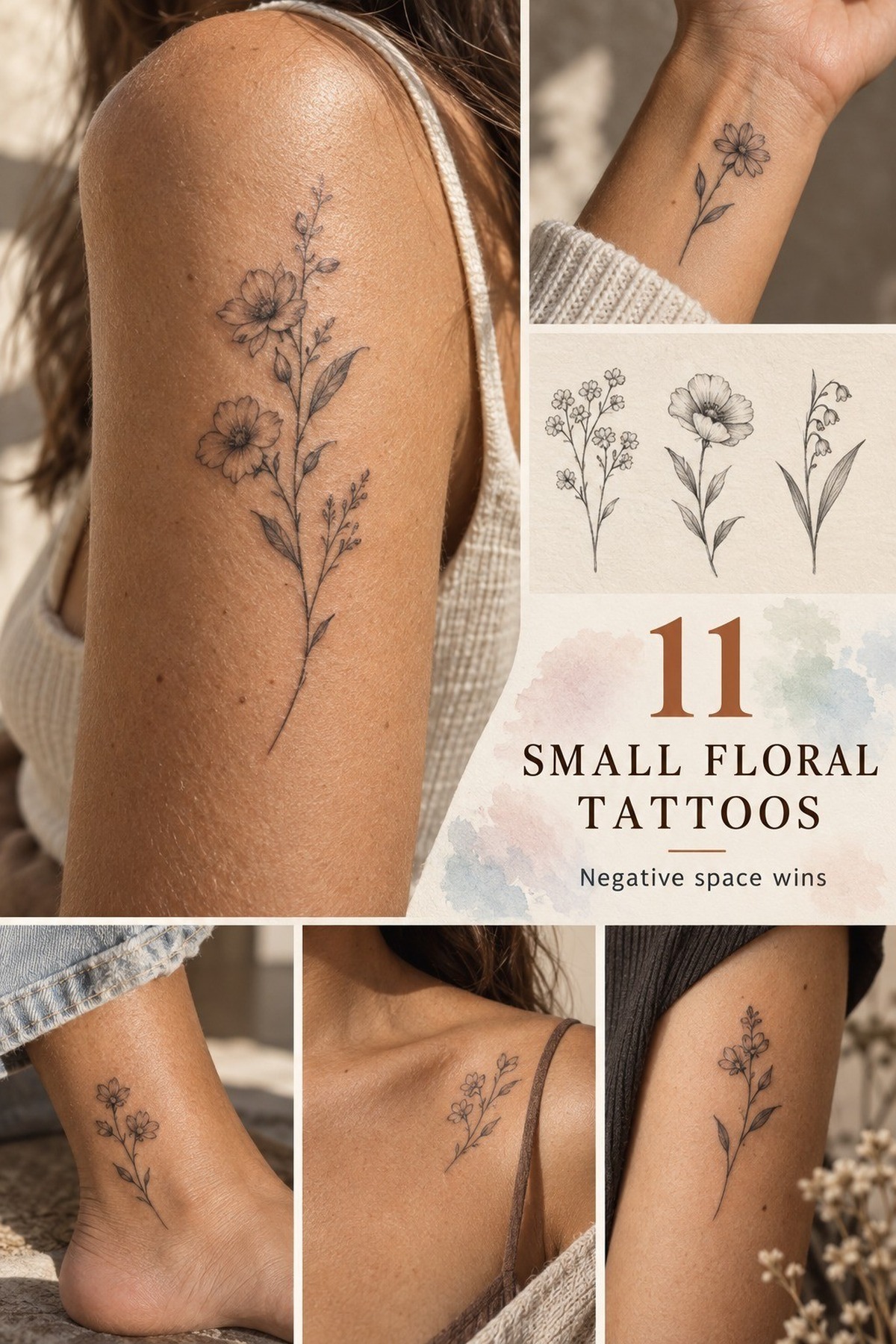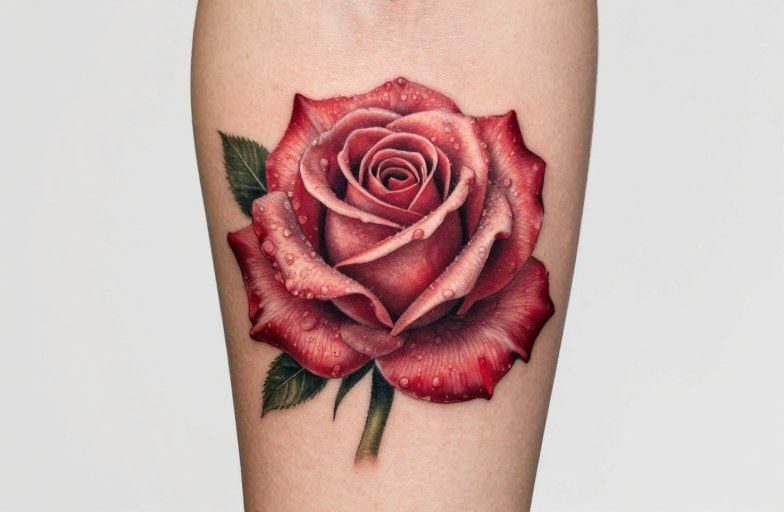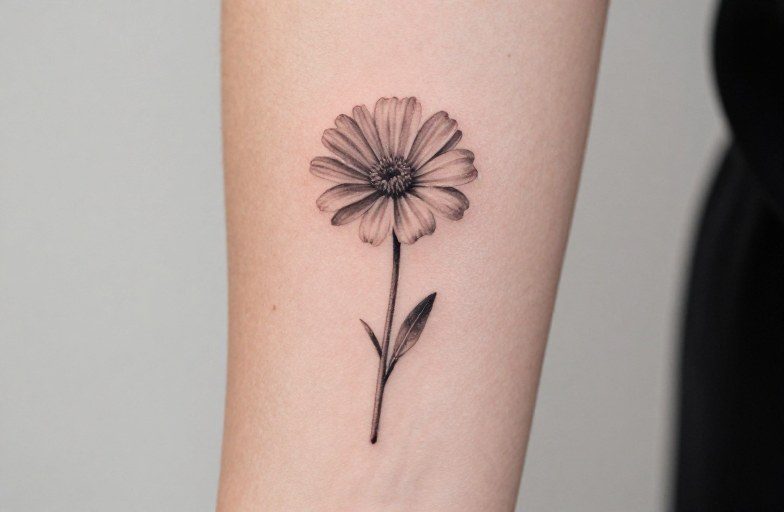
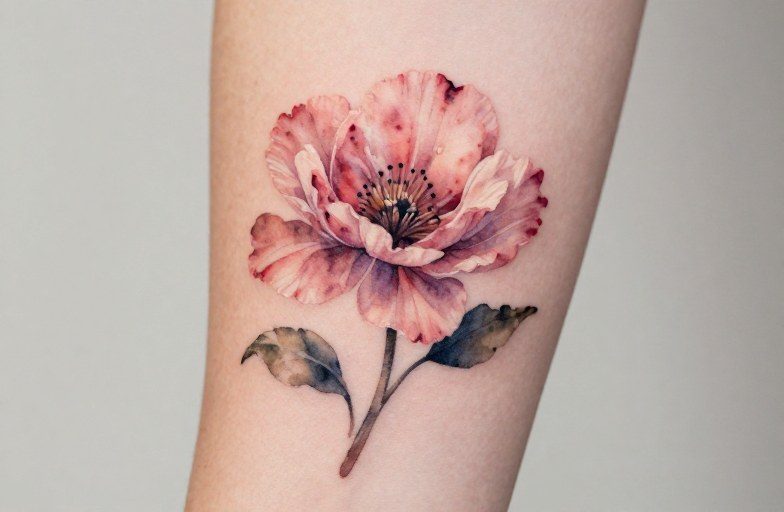
A flower watercolour tattoo typically represents beauty in impermanence, emotional fluidity, and the natural cycle of growth and decay. The watercolour technique, with its bleeding edges, splatter effects, and absence of hard outlines, amplifies the flower’s traditional symbolism by suggesting something fleeting rather than fixed. Someone might choose this style to honor a memory that softens over time, to mark a period of personal transformation, or simply because they respond to the visual tension between organic subject and painterly method.
Color vs Black and Grey
The choice between color and monochrome fundamentally changes what the tattoo communicates and how it holds up.
Color: The Fading Reality
Bright watercolour florals, magentas, cobalt blues, sunflower yellows, look stunning fresh. The technique relies on saturation gradients, which means heavy ink load in some areas and almost none in others. Over five to ten years, those soft edges blur further. Reds and pinks tend to linger; purples and teals often shift muddy. Yellows fade fastest. The lack of black outline means there’s no structural backbone to hold the shape as pigment disperses. Touch-ups become essential maintenance, not optional.
Placement matters enormously for color longevity. Inner bicep, upper back, and thigh, areas with less sun exposure and slower skin turnover, preserve color better than forearms, hands, or collarbones. Someone committed to a color watercolour piece should budget for a refresh every seven to ten years.
Black and Grey: Subtlety and Staying Power
Monochrome watercolour florals use dilute black wash to create the same bleeding, atmospheric effect. They age more gracefully because grey tones shift uniformly rather than patchily. The mood changes, though: less celebratory, more contemplative. Often reads as rain-soaked, nocturnal, or winter-dormant rather than peak-bloom. This suits memorial pieces or themes of quiet endurance over exuberant growth.
- Color: higher initial impact, higher maintenance, faster fade
- Black and grey: softer initial impact, slower fade, more atmospheric mood
- Both: require experienced artist; amateur watercolour technique looks like accidental blowout
History & Cultural Roots
The watercolour tattoo style emerged in the early 2010s, often linked to artists experimenting with fine art techniques on skin. Some trace it to Amanda Wachob’s painterly abstractions in New York, others to European artists pushing against traditional tattoo illustration. The style isn’t tied to any single cultural tradition, it’s a contemporary fusion, which means its symbolism comes almost entirely from personal and botanical sources rather than inherited cultural code.
Flower symbolism itself carries deeper roots. Japanese ikebana and hanakotoba (the language of flowers) assign specific meanings: cherry blossoms for transient beauty, chrysanthemums for longevity, peonies for prosperity. Victorian floriography encoded secret messages through bouquet composition. A watercolour tattoo can draw on any of these systems, but the technique itself doesn’t belong to any of them. That’s worth understanding: you’re borrowing imagery, not inheriting technique.
The Fine Art Connection
Watercolour as a medium has always embraced accident and imperfection, blooms, backruns, granulation. Translating that to tattoo means accepting that the artist’s hand and your skin’s reaction become collaborators. The best pieces don’t look like transfers from paper; they acknowledge the body as a different surface with its own absorbency and texture.
Design Tips & Pairings
Successful watercolour florals require specific technical decisions that affect both meaning and longevity.
Structural Elements
Even “outline-free” watercolour tattoos usually need some anchor. A thin grey stem, scattered black dots suggesting stamens, or a single concentrated dark area where petals meet, this gives the eye somewhere to rest. Without it, the piece can dissolve into attractive but meaningless color wash. The splatter and drip effects that read as spontaneous on Instagram often look calculated up close; restraint usually ages better than excess.
Common pairings and their effects:
- Single flower with negative space: emphasizes isolation, a specific moment or person
- Bouquet with overlapping blooms: suggests relationships, family, complexity
- Flower with geometric frame or mandala: tension between organic and structured, often marks recovery or intentional rebuilding
- Dissolving into birds or abstract shapes: transformation narrative, but risks cliché if not personalized
Placement and Scale
Watercolour technique needs room to breathe. A piece smaller than four inches can’t achieve real gradient subtlety; it becomes muddled. The upper arm, outer thigh, ribs, and shoulder blade offer enough canvas for the effect to register. Finger or behind-ear placements rarely work, the skin’s different texture and constant movement destroy the soft edges that define the style.
Religious & Spiritual Angles
Specific flowers carry established spiritual weight that the watercolour treatment can amplify or subvert.
The lotus, commonly associated with Buddhist and Hindu traditions, rises from murky water to bloom. In watercolour technique, the surrounding wash can literally suggest that water, the pigment pool becoming the mud the lotus transcends. The rose, linked to Catholic Marian devotion and mystical Christianity, gains fragility when rendered without thorns or hard edges, perhaps emphasizing sacrifice over triumph.
Some choose watercolour specifically to soften religious imagery they find too rigid in traditional representation. A watercolour cross intertwined with florals can read as questioning rather than declarative faith. The technique’s inherent impermanence resonates with Buddhist anicca (impermanence) in ways that bold traditional tattooing doesn’t. But this is interpretive, not doctrinal, no tradition formally prescribes watercolour technique.
Common Variations & Styles
The category contains more diversity than the Instagram hashtag suggests.
Botanical Illustration vs Abstract
Some artists render identifiable species with scientific accuracy, veins, stamens, petal count correct, then surround them with atmospheric wash. Others abstract the flower to gesture and color field, recognizable only by context. The first approach suits someone attached to a specific plant’s meaning (a grandmother’s garden roses, a native wildflower). The second prioritizes emotional effect over narrative clarity.
Technique Substitutions
“Watercolour” gets used loosely. True watercolour tattoos use no black line. “Watercolour-style” may incorporate light grey illustration with color accents. “Trash polka” borrows splatter and drip but adds heavy black graphic elements, much harder visually, different mood entirely. When consulting artists, bring reference images that match the specific sub-style you want.
- True watercolour: no outlines, pure gradient and splatter
- Illustrated watercolour: light linework with color wash overlay
- Neo-traditional watercolour: bolder color blocks, more structure, longer legibility
Who Chooses This Tattoo
There’s no single demographic, but patterns emerge in why people gravitate here.
Often it’s someone’s first or second tattoo, chosen for visual appeal rather than tribal or familial tradition. The style reads as accessible, less threatening than heavy blackwork. People with fine art backgrounds sometimes select it as the tattoo equivalent of a gallery aesthetic they already live with. Others come after black-and-grey pieces, wanting something that feels lighter, less permanent in its visual weight even though it’s equally permanent in the skin.
Memorial applications are common, watercolour’s softness suits grief that doesn’t want bold declaration. Conversely, some choose it for celebration: the birth of a child, recovery, new love. The technique accommodates both because its emotional register is ambiguous. That flexibility is strength and limitation; it rarely communicates specifics without added symbolic elements.
Before You Decide
Research your artist’s healed work, not just fresh photos. Watercolour tattoos photograph beautifully at one week; at one year, the difference between skilled and mediocre application becomes obvious. Ask to see pieces they’ve done that are two-plus years old. If they can’t show any, they may not have enough experience with the technique’s aging behavior.
Consider whether your attachment is to the flower’s meaning or the watercolour aesthetic. If it’s primarily the flower, traditional or neo-traditional rendering will stay legible longer. If it’s the technique, accept the maintenance commitment and design accordingly, larger scale, protected placement, simpler composition.
The meaning of a flower watercolour tattoo ultimately crystallizes in the combination of chosen bloom, personal context, and the willingness to let the image soften and change along with the skin that holds it. That’s either the point or the problem, depending on what you need from permanence.
Frequently Asked Questions
How long does a flower watercolour tattoo last before needing a touch-up?
Most color watercolour pieces need significant refresh work within 7-10 years, sometimes sooner on high-movement areas like wrists or ankles. Black and grey versions age more slowly, often 10-15 years before substantial fading.
Can you add watercolour effects to an existing black flower tattoo?
Sometimes, but it’s technically challenging. The existing linework competes with the soft gradients, and older ink may have settled differently than fresh skin. Consult an artist who specifically shows cover-up or rework watercolour in their portfolio.
Why do some watercolour tattoos look blurry or blown out after healing?
The technique requires pushing dilute pigment into the skin at inconsistent depths. Too shallow and it fades fast; too deep and it spreads beyond the intended shape. Skin type, placement, and aftercare all affect this delicate balance.
Are certain flower species harder to render in watercolour style?
Highly structured flowers like orchids or lilies with precise petal architecture can lose their identity without some linework. Loose, layered blooms like peonies, roses, or wildflowers adapt more naturally to the soft, bleeding technique.