A lotus flower tattoo primarily symbolizes rising above difficult circumstances and emerging stronger. The image draws from how the actual flower pushes through murky water to bloom clean on the surface. Most people who choose this design connect it to personal struggle, transformation, or spiritual awakening. The specific meaning depends heavily on color choice, placement, and cultural context.
Color vs Black and Grey
Color changes everything with lotus tattoos. Each shade carries established associations that shift how the piece reads.
What Each Color Signals
- Pink: The most common choice. Associated with devotion, the heart, and compassion. Often picked for its softness and accessibility.
- White: Purity, spiritual awakening, and mental clarity. Works well in fine-line or single-needle styles.
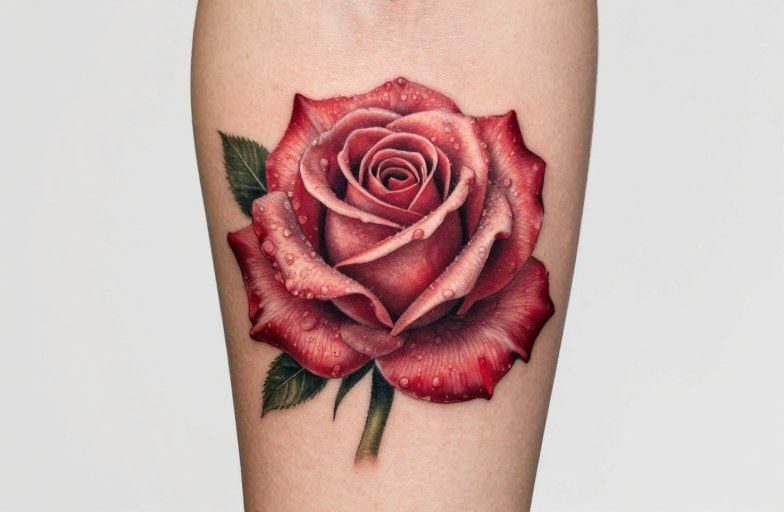
- Red: Passion, love, and strong emotional bonds. Can feel intense; pairs naturally with bold traditional or Japanese approaches.
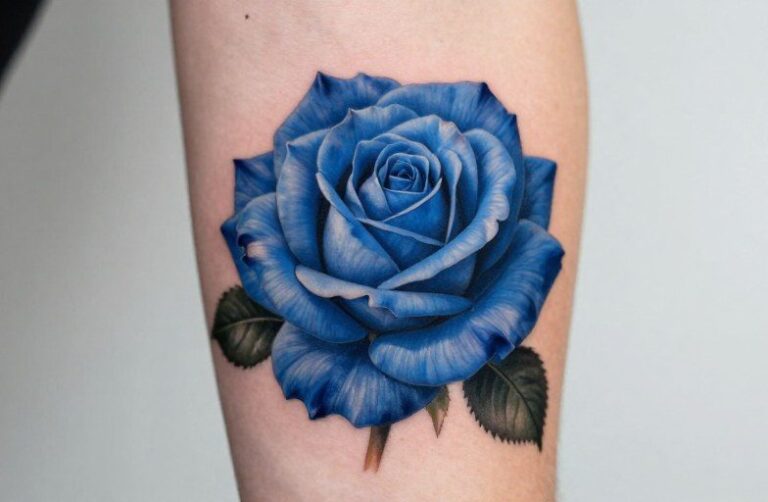
- Blue: Wisdom, depth of understanding, and control over the self. Less common but distinctive.
- Purple: Mysticism, royalty, and esoteric knowledge. Frequently seen in neo-traditional or ornamental designs.
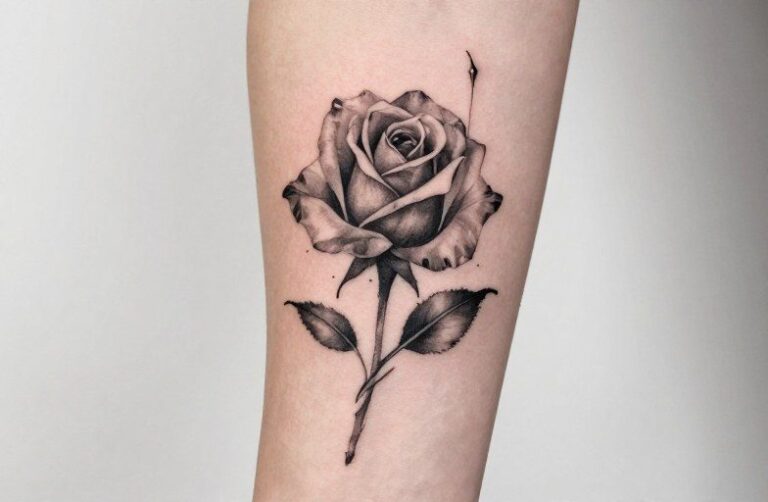
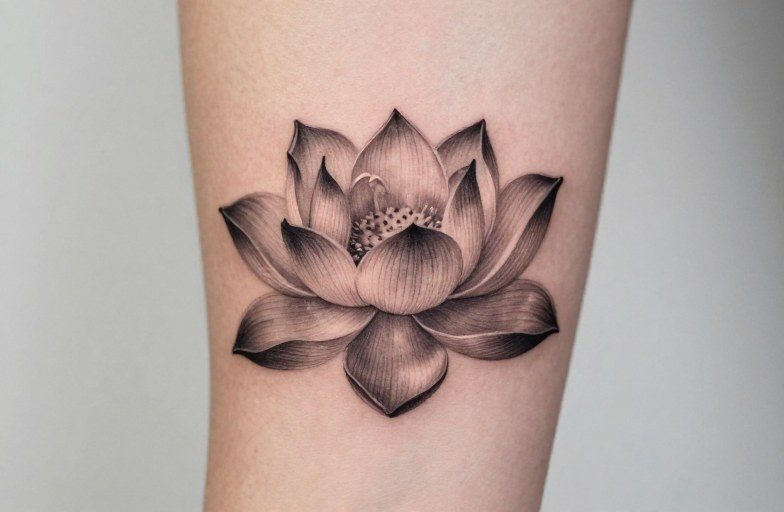
- Black and grey: Strips away color symbolism entirely. Focuses on form, shadow, and the core idea of resilience. Ages cleaner on most skin tones and holds up better over decades.
How Ink Ages in Lotus Designs
Color saturation matters long-term. Bright pinks and reds tend to soften and muddy faster than black and grey, especially on high-movement areas like wrists or ankles. Watercolor-style lotus pieces, popular in the 2010s, often require significant touch-ups as the soft edges blur. Solid black linework with minimal shading preserves the flower’s silhouette best. If you want color, packing it densely and avoiding heavy white highlights helps longevity.
Similar & Related Symbols
The lotus rarely stands alone in tattoo culture. Understanding adjacent symbols clarifies what the lotus does and doesn’t do.
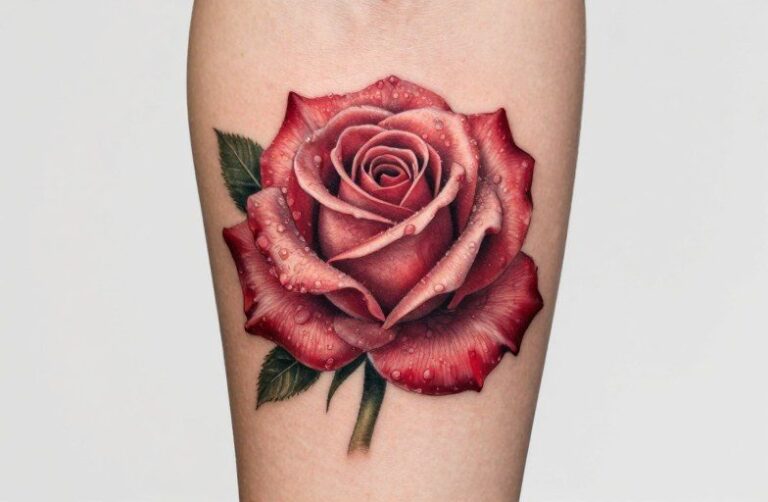
The rose shares the flower-as-struggle motif but anchors to Western romantic and Christian traditions. Roses emphasize passion and sacrifice; lotuses emphasize transcendence and rebirth. The cherry blossom speaks to impermanence and the briefness of beauty, where the lotus speaks to endurance through difficulty. Water lilies look similar but carry no parallel spiritual weight in most traditions, they’re decorative, not symbolic.
Common pairings include:
- Om or unalome: Directly ties the lotus to Buddhist spiritual progression. The unalome’s spiral path to the lotus bloom is a frequent forearm or rib piece.
- Koi fish: Shared water origin, shared perseverance narrative. Often placed swimming beneath the lotus in larger compositions.
- Mandala patterns: Geometric expansion of the lotus’s natural radial symmetry. Creates ornamental back pieces or sternum tattoos.
- Snake: Less intuitive, but the snake’s shedding and the lotus’s emergence from mud parallel each other as renewal symbols.
Religious & Spiritual Angles
The lotus carries weight across several traditions, though the specifics differ significantly.
Buddhist and Hindu Roots
In Buddhist iconography, the lotus often represents the purity of body, speech, and mind rising above attachment. Different colored lotuses appear in specific deity depictions, Padmasambhava, the lotus-born, is a central figure in Tibetan Buddhism. The flower’s growth stages (bud, bloom, seed pod) map to spiritual development stages.
Hindu associations often link to creation myths, with the lotus emerging from Vishnu’s navel. Lakshmi, goddess of prosperity, frequently stands on a lotus throne. Saraswati, of knowledge and arts, also carries the association. These roots matter for people with actual cultural connection versus those drawn to the aesthetic.
Modern Spiritual and Secular Use
Many contemporary wearers separate the lotus from specific religious practice. Yoga practitioners may reference the chakras, where the lotus appears as a base symbol, without full doctrinal adherence. Others use it purely as a personal emblem of overcoming depression, addiction, or trauma. The symbol has broadened enough that religious specificity is no longer assumed, though context of surrounding imagery usually clarifies intent.
Common Variations & Styles
How the lotus is drawn changes its feel as much as color does.
Geometric/ornamental lotus uses ruled lines and symmetry, often dotwork or stippled shading. Reads as controlled, mathematical, meditative. Fits well on flat planes: sternum, upper back, thighs. Realistic/botanical approaches aim for accurate petal structure and natural shading. Softer, more feminine-coded in Western tattoo culture, though this is shifting. Demands skilled shading to avoid looking flat or muddy.
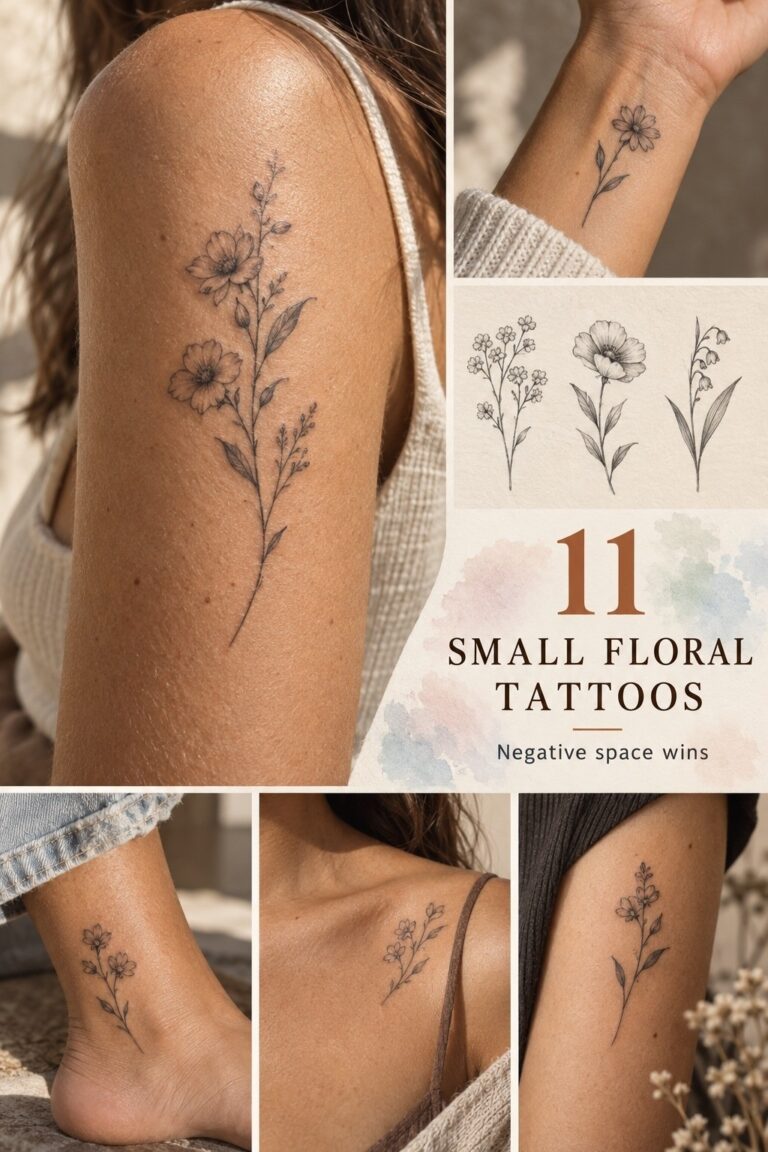
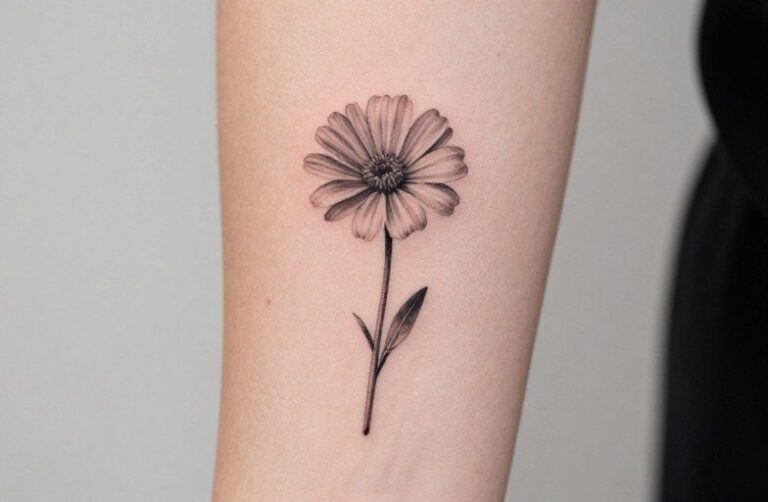
Traditional/Japanese (irezumi) lotus appears in water scenes, often large-scale. Bold outlines, limited color palette, heavy black. The lotus here is part of narrative composition, not isolated symbolism. Minimalist/fine-line strips the flower to essential contours. Popular for first tattoos, behind-ear placement, or finger tattoos. Risks aging poorly if lines are too thin or too close together.
Closed bud versus open bloom is a meaningful choice. The bud suggests potential, ongoing struggle, or early stages of change. The open flower signals arrival, completion, or full expression. Some designs incorporate both, showing progression.
Mythology & Folklore
The lotus appears in origin stories across cultures, though the connections are often linked to rather than definitively established.
Egyptian and Ancient Near Eastern Associations
The blue lotus (Nymphaea caerulea, actually a water lily) held significance in ancient Egypt, often associated with rebirth and the sun’s cycle. Some trace it to creation imagery and the emergence of order from chaos. The flower closes at night and opens at dawn, mapping naturally to solar mythology. However, this is distinct from the Asian lotus (Nelumbo nucifera) in both botany and symbolic lineage.
Chinese and Japanese Traditions
In Chinese folklore, the lotus frequently represents harmony and marital happiness, the phrase “he tong” (lotus harmony) sounds like words for union. The flower’s seed pod and root also carry practical associations with fertility and continuity. Japanese tradition, heavily inflected by Buddhism, often uses the lotus in memorial contexts, marking the transition of the deceased to enlightenment. This makes it a considered choice for memorial tattoos, though not exclusively so.
Who Chooses This Tattoo
Demographics here are genuinely broad, but patterns exist in placement and context.
Women have historically dominated lotus tattoo requests, particularly for sternum, rib, and hip placements where the flower’s radial symmetry flatters body contours. This gender association has softened significantly in the last decade. Men now commonly request lotus pieces integrated into larger work, sleeves, chest panels, or leg compositions, often paired with koi, demons, or geometric frameworks.
Age patterns: younger clients (18-25) often choose small, delicate lotus designs as first tattoos, frequently in visible but socially acceptable placements like the wrist or ankle. Older clients (30+) more often request the lotus as part of larger, more considered pieces, or as cover-up elements where the emergence narrative literally overlays old work.
Recovery communities, sobriety, mental health, trauma survivors, frequently gravitate to the lotus for obvious symbolic reasons. The “from mud to bloom” narrative maps cleanly onto personal narrative. This is genuine cultural use, not marketing fabrication.
Key Takeaways
- The lotus tattoo’s core meaning is resilience and emergence from difficulty, but color, style, and context significantly modify that message.
- Black and grey ages better and focuses on form; color adds specific symbolic layers but requires more maintenance.
- Religious and spiritual associations are historically grounded but not mandatory, modern use is often secular and personal.
- Style choice (geometric, realistic, traditional, minimalist) changes the tattoo’s feel as much as subject choice.
- Placement and scale should account for how the design will age, particularly for fine-line or highly detailed approaches.
Frequently Asked Questions
Does a lotus tattoo always have a spiritual meaning?
No. Many people choose it for purely personal or aesthetic reasons. The resilience narrative works secularly, and the flower’s symmetry appeals to those who simply like how it looks.
What’s the best placement for a lotus flower tattoo?
The sternum, upper back, and outer forearm work well for showing the radial symmetry. Smaller versions suit wrists, ankles, or behind the ear. Consider how the design will age in high-movement areas.
How do I avoid cultural appropriation with a lotus tattoo?
If you’re not from Buddhist or Hindu traditions, avoid pairing the lotus with specific religious iconography like deities or sacred syllables. The flower alone, or with secular symbols, generally raises no issues.
Can a lotus tattoo be used for a cover-up?
Yes, the layered petal structure works well for concealing older tattoos, especially if the previous piece is small or faded. Darker color choices or black and grey shading provide more coverage power.