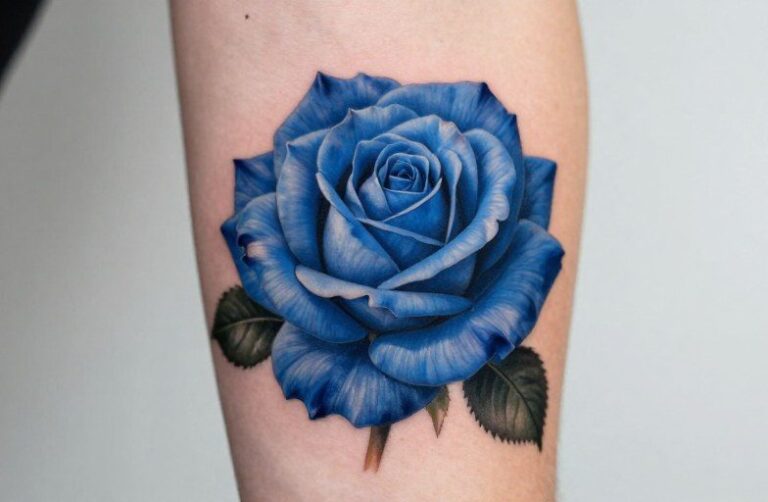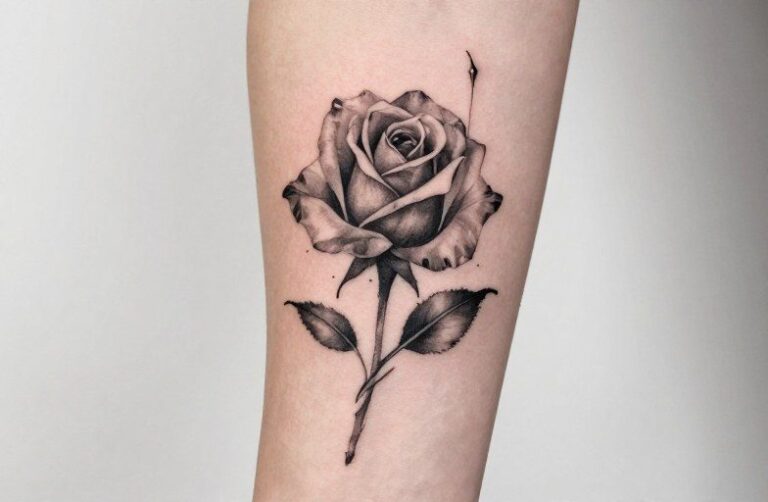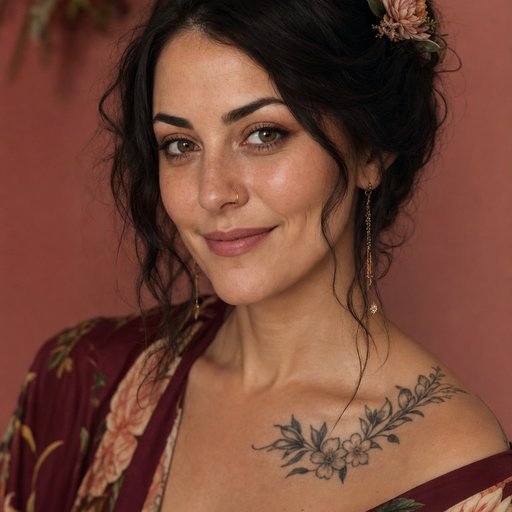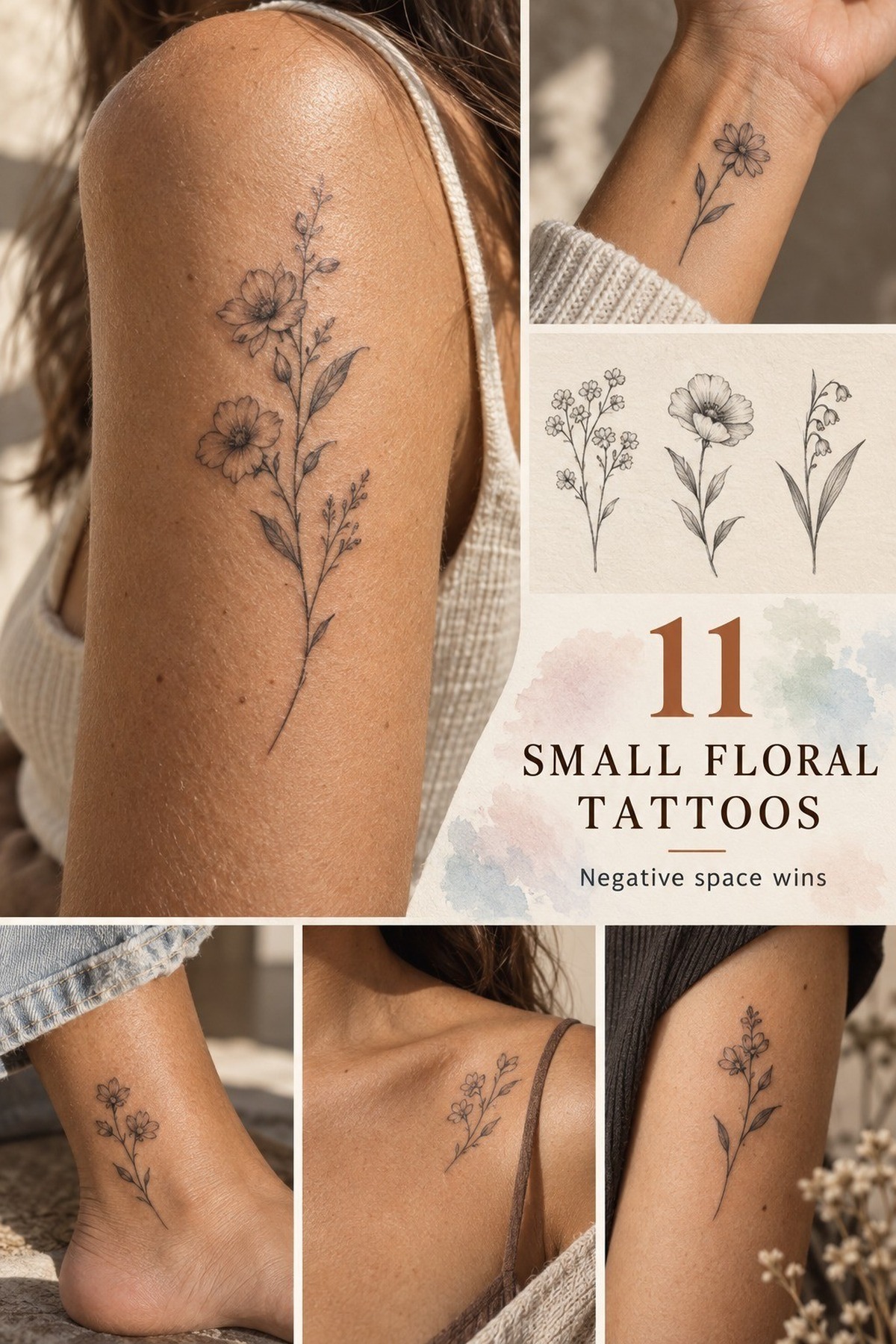
A flower tattoo most commonly signals growth, beauty, and the temporary nature of life. Specific blooms carry sharper meanings: roses for passion and pain, lotuses for rising above difficulty, peonies for prosperity and honor. The flower you choose and how it’s rendered, open or closed, wilting or in full bloom, alone or with other elements, shapes what the tattoo actually communicates.
History & Cultural Roots
Floral imagery in skin art stretches across continents and centuries, though pinning down exact origins means accepting some ambiguity. Japanese irezumi often linked chrysanthemums to longevity and nobility, with specific petal arrangements carrying clan significance. Sailors in the early 20th century marked milestones with hibiscus or roses, though whether this started in Polynesia, the Caribbean, or European ports remains debated among historians.
Eastern Traditions
The lotus dominates Buddhist and Hindu visual culture, commonly associated with purity emerging from muddy conditions. In Chinese practice, peonies, called the “king of flowers”, often appeared on those seeking recognition or financial stability. Japanese cherry blossoms, or sakura, carry a more melancholic weight: beauty that must fall, tied to samurai readiness for death. These weren’t decorative choices; placement on the body itself carried social meaning, with full back pieces versus single blooms signaling different commitments.
Western and Indigenous Lines
European flower language, floriography, peaked in Victorian England, where a single sprig could communicate what speech could not. Daisies for innocence, marigolds for grief, violets for modesty. This coded system sometimes transferred into tattoo selection, though how directly is unclear. Some trace Mexican Día de los Muertos marigold tattoos to Aztec associations with the dead, but the modern calavera and flower combination is largely a 20th-century fusion. Indigenous North American floral traditions in tattooing are often linked to specific nations’ medicinal and spiritual plant relationships, not generic “tribal” flower patterns.
How It Ages on Skin
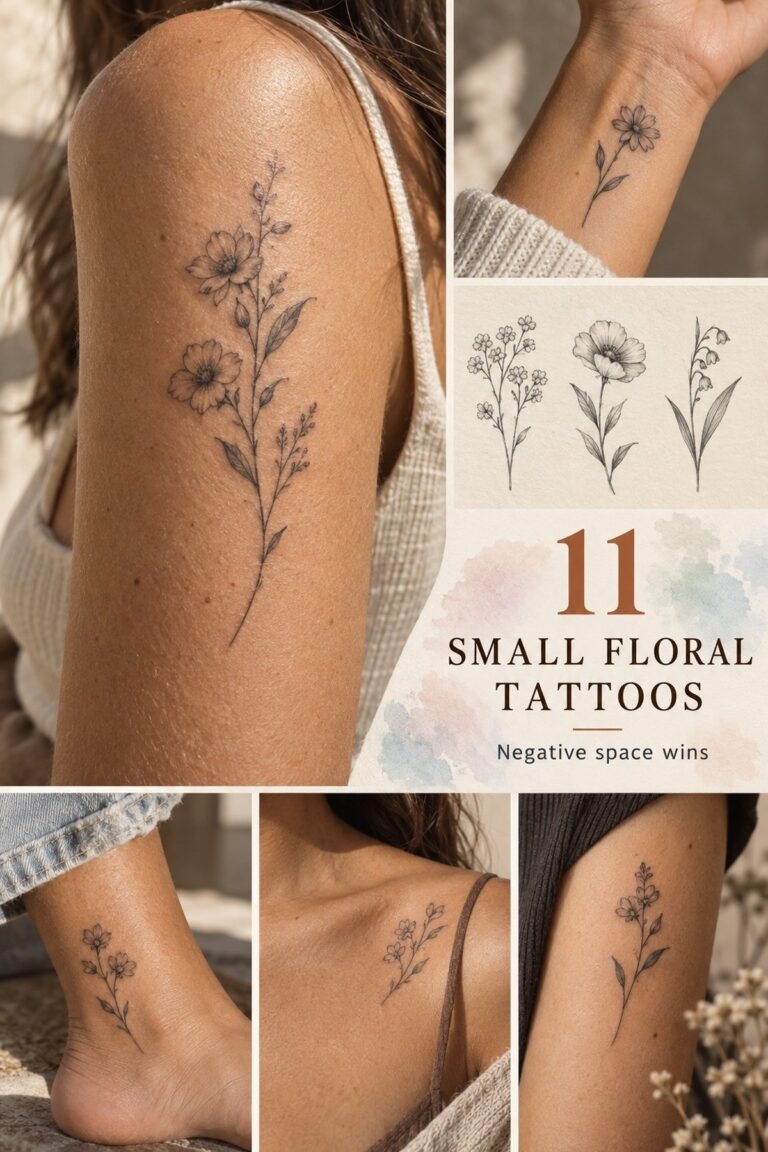
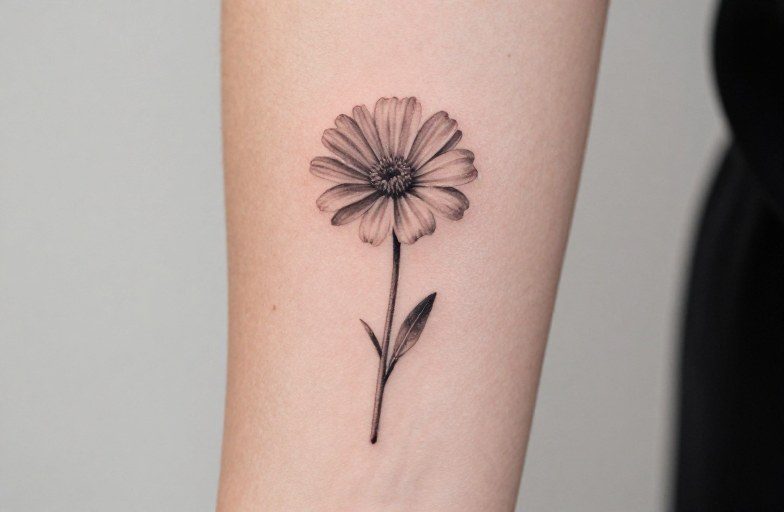
Flower tattoos age in ways that either dignify or destroy the original design, depending on choices made at the needle. Fine-line petals with minimal contrast tend to blur into soft, indistinguishable shapes within five to eight years. Bold outlines and strategic negative space preserve legibility for decades.
High-Risk Placements
- Fingers and hands: constant friction and sun exposure fade color fast; small flower details become blobs
- Inner bicep and ribcage: stretching from muscle gain or weight fluctuation distorts petal shapes asymmetrically
- Feet and ankles: shoes rub, healing is complicated, and linework suffers
What Holds Up
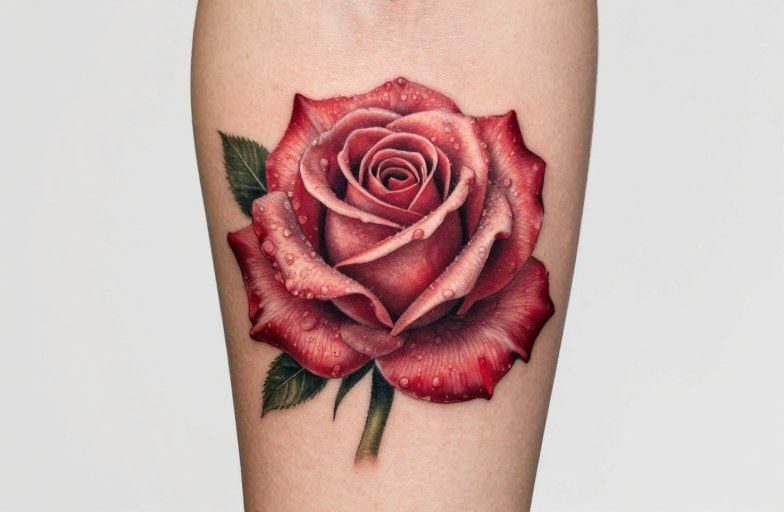
Outer forearms, calves, and upper backs age more gracefully for floral work. Thicker skin in these areas accepts ink evenly, and they’re easier to protect from sun. A rose on a calf with solid black leaves and a defined stem will still read as a rose at fifteen years. The same design in all fine-line greywash on a foot may need complete reconstruction within five. Darker pigment concentrations in centers, stamens, seed pods, shadowed petal undersides, create natural focal points that survive fading better than evenly distributed light tones.
Design Tips & Pairings
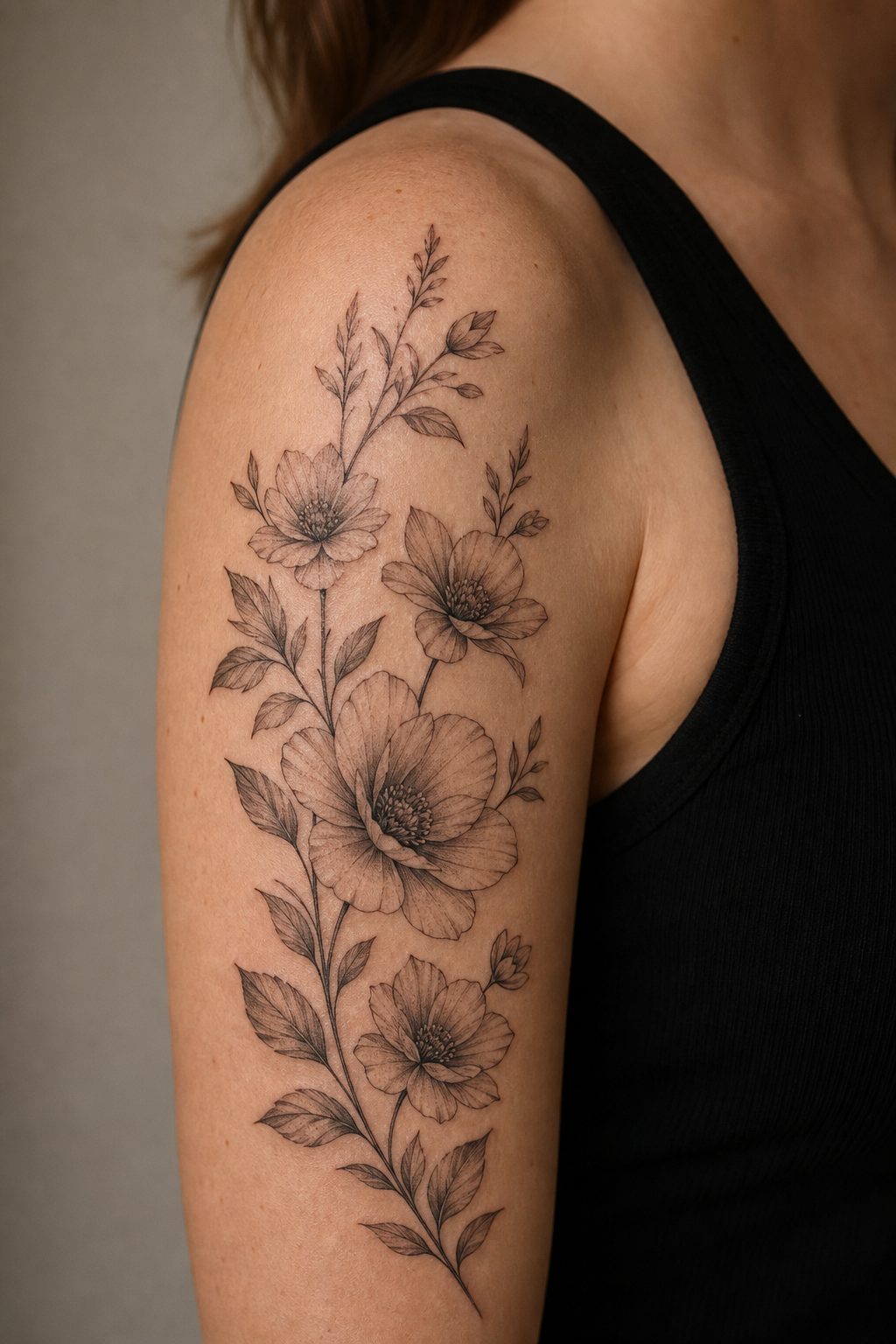
Single flower versus bouquet changes the tattoo’s visual weight and meaning. A solitary bloom reads as emblem, as icon. Multiple flowers create narrative sequence, buds, full blooms, and fallen petals can suggest time’s passage without explicit clock or hourglass imagery.
Complementary Elements
- Snakes coiled through stems: danger and beauty intertwined, or transformation (shedding skin, seasonal bloom)
- Daggers through roses: classic sailor motif, betrayal or sacrifice depending on blood drops and orientation
- Bees or butterflies: pollination, fleeting presence, ecological awareness
- Script banners: usually weakens the image; the flower should carry meaning without text crutch
Composition Mechanics
Flowers want to face somewhere, toward the heart, toward the viewer, or upward toward light. A rose facing down on a forearm reads differently than one facing the wearer. Consider stem curvature for muscle flow: a lotus on a shoulder flows naturally with deltoid rounding, while a rigid vertical stem fights the body’s architecture. Leaves and thorns provide structural framing that separates floral tattoos from sticker-like floating images.
Color vs Black and Grey
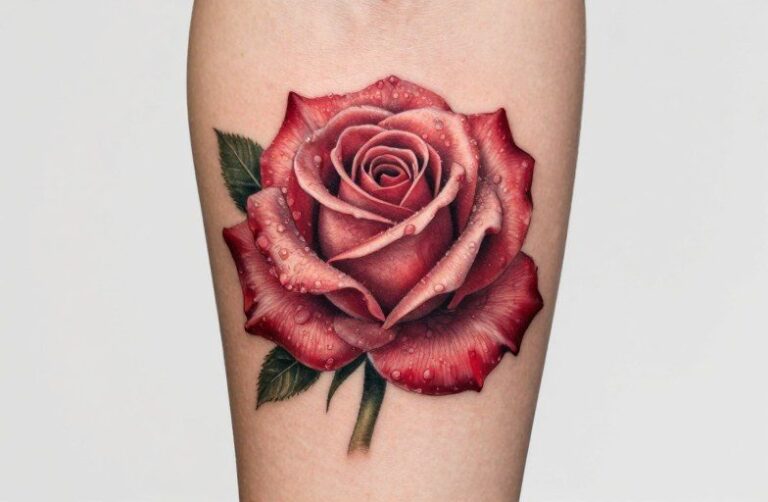
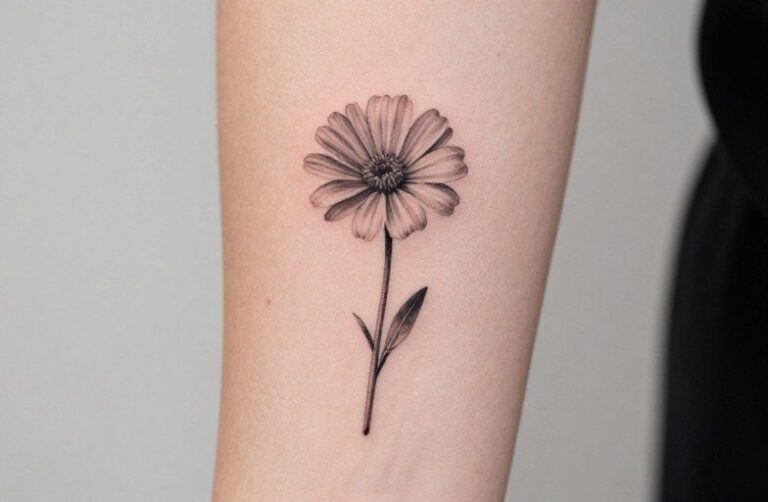
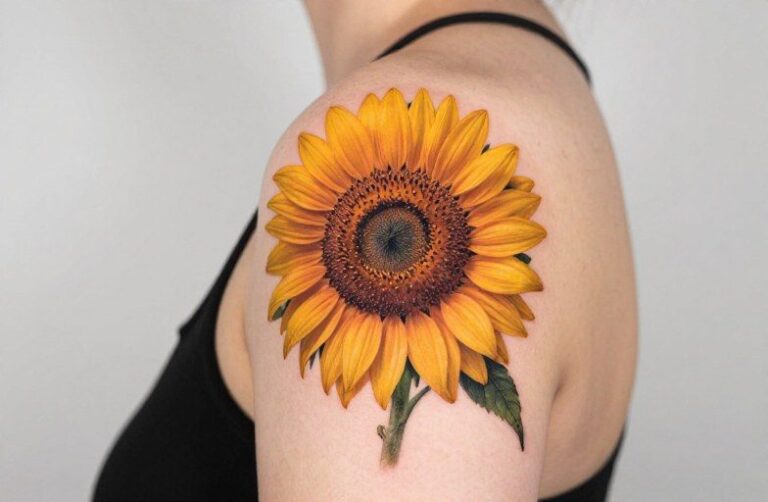
Color flower tattoos demand more maintenance and fade faster, but certain blooms lose their identity without hue. A greyscale sunflower reads as generic daisy-like form; the specific yellow-brown center defines the species. Conversely, roses and peonies translate powerfully to black and grey through value contrast alone, deep blacks in folded inner petals, white highlights on outer edges.
Color Realities
- Reds and pinks: fastest to fade, often shifting to salmon or grey within sun-exposed years
- Yellows: notoriously difficult to saturate; many appear patchy even when fresh
- Purples and blues: generally stable, with cobalt and violet pigments holding better than organic-derived alternatives
- Whites: rarely stay white; settle into skin-tone or greyish within two years
Black and grey floral work relies on whip-shading and smooth gradients to suggest petal softness. Poorly executed, it looks like a photograph photocopied too many times. Mastered, it carries a timeless quality that color sometimes distracts from. For cover-up situations, black and grey offers more flexibility; color over old color requires specific pigment chemistry and often limits design options.
Symbolism & Core Meaning
Specific flowers carry meanings that have solidified through repeated cultural use, though personal selection always overlays these traditions. Understanding the baseline helps avoid unintended messages.
Common Blooms and Their Weight
- Rose: love and beauty, but also the blood of Christ in Christian iconography, or secrecy (sub rosa)
- Lotus: spiritual awakening, commonly associated with detachment from material concerns
- Chrysanthemum: death and grief in European contexts; joy and longevity in Japanese tradition
- Lily: purity, restored innocence, also death and resurrection in Catholic art
- Poppy: remembrance of war dead, sleep, and opiate-derived oblivion
- Peony: wealth, honor, masculine nobility in Japanese tattooing, often paired with lions or foo dogs
State of Bloom
A tight bud suggests potential, withheld emotion, or future promise. Full bloom celebrates arrival, peak experience, or mortality’s beauty. Wilting or fallen petals acknowledge loss, acceptance, or the Japanese aesthetic of wabi-sabi, beauty in imperfection and impermanence. Some choose the three stages together as temporal narrative; others find that too literal and prefer a single arrested moment.
Religious & Spiritual Angles
Flowers saturate sacred visual systems, sometimes as decoration, sometimes as theology made visible. The Christian rosary incorporates roses in its name and sometimes its carved beads, with Marian apparitions often linked to floral garlands. A rose tattoo combined with a rosary or cross carries specific Catholic devotional weight that a standalone rose lacks.
Eastern Frameworks
The lotus position in yoga and meditation takes its name from the flower’s stability above water. Tattoos of lotus mandalas or yantra combinations often signal committed practice rather than casual aesthetic interest. In Tibetan contexts, the utpala (blue lotus) specifically represents transformation of ignorance into wisdom. These aren’t casual selections for those within practicing communities; they mark identity and commitment.
Contemporary Spirituality
Modern eclectic practice sometimes combines flowers with moon phases, crystals, or geometric patterns. The meaning here is less inherited tradition than personal symbolic grammar. A wildflower with a crescent moon might signal connection to nature cycles without belonging to any specific religious lineage. This freedom carries risk of cultural borrowing without understanding, lotus and om combinations selected for visual balance rather than doctrinal meaning can read as disconnected from the traditions they sample.
The Bottom Line
Flower tattoos work because the subject is universally legible yet infinitely variable. The difference between a tattoo that lasts as meaningful image and one that becomes regrettable decoration lies in technical choices, line weight, placement, color strategy, married to genuine understanding of what your specific bloom has signified across time and culture. A rose because it’s pretty ages poorly in every sense. A rose chosen for what it has meant to others and what it means to you, rendered with attention to how skin changes, holds value longer than the pigment lasts.
Frequently Asked Questions
Do flower tattoos have to be feminine?
Not at all. Japanese tradition pairs peonies with lions and samurai. Sailor culture used roses and daggers. Masculinity in floral imagery depends on composition, accompanying elements, and placement, not the flower itself.
What’s the best flower for a memorial tattoo?
Marigolds connect to Mexican Day of the Dead traditions. Forget-me-nots carry obvious literal weight. Lilies and roses are common Christian memorial choices. The best choice is one that meant something to the person being remembered, not just generic sympathy symbolism.
Can a flower tattoo be fully covered up later?
Dense, dark floral work with heavy black centers covers more easily than fine-line or light watercolor styles. Roses and sunflowers with dark central disks provide natural cover-up real estate; sparse daisies or cherry blossoms do not.
How much should a detailed flower sleeve cost?
Quality floral sleeves from established artists typically run several thousand dollars across multiple sessions. Single large blooms on arms or legs might range from four hundred to over a thousand depending on color complexity and artist reputation. Extremely low quotes usually mean rushed work or inexperience with botanical detail.