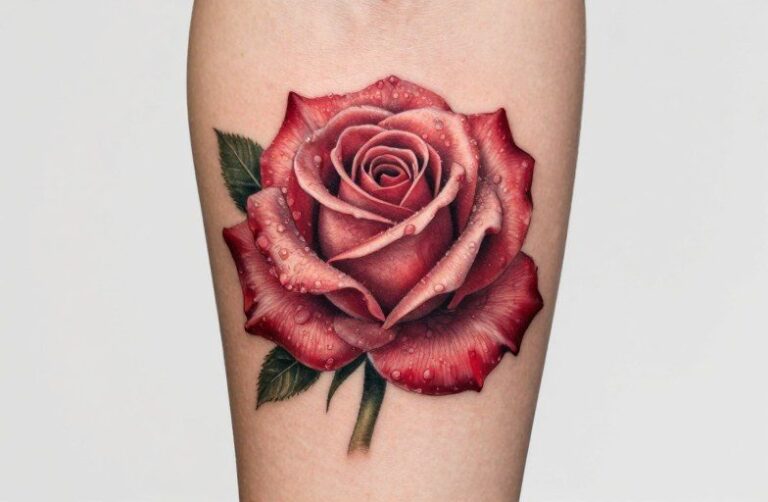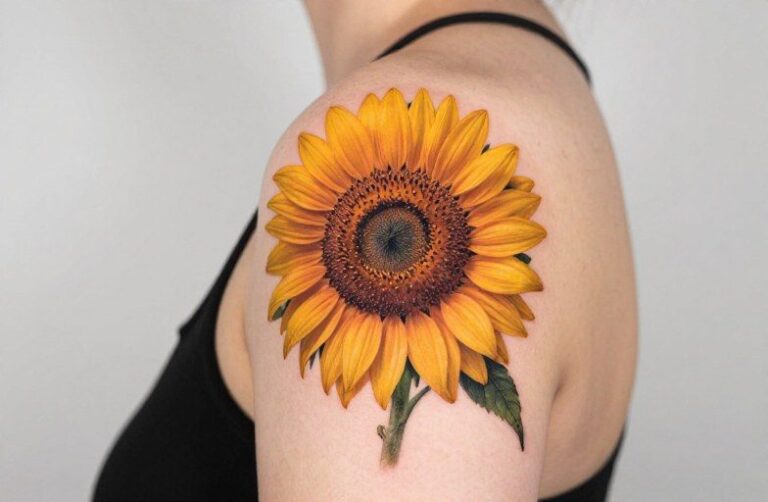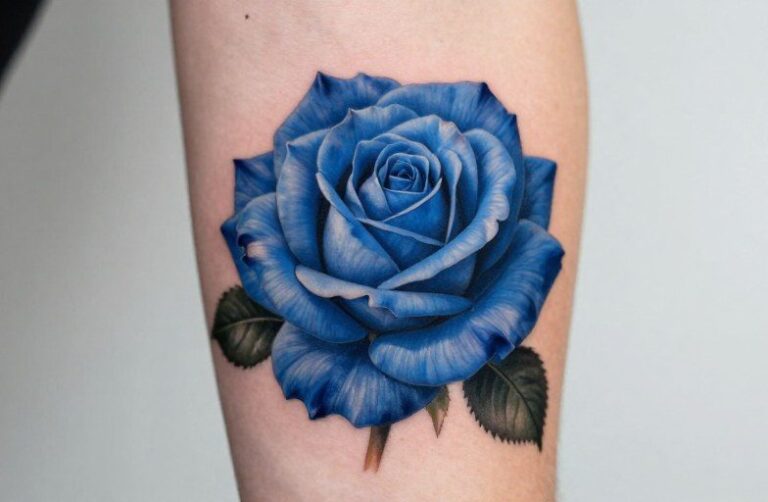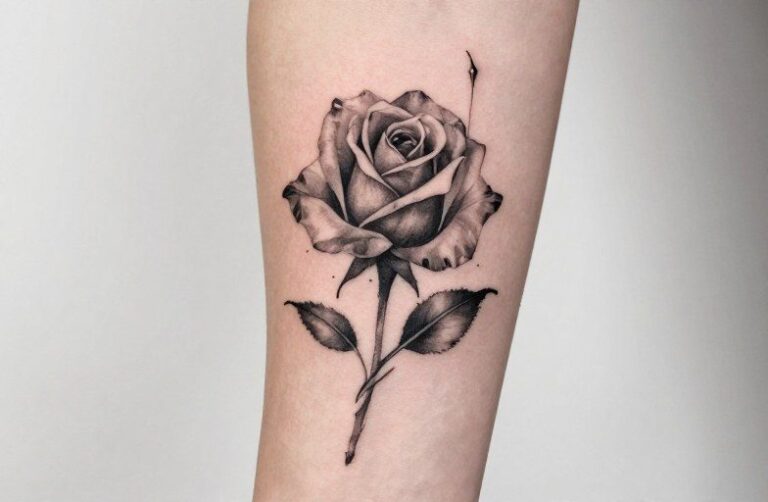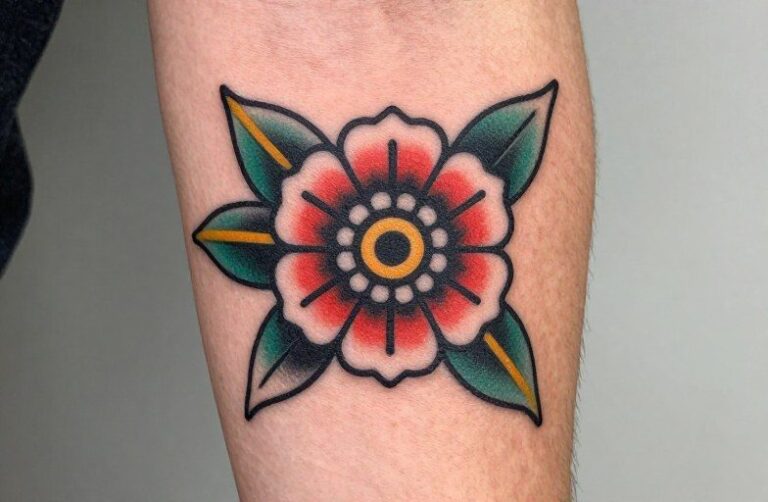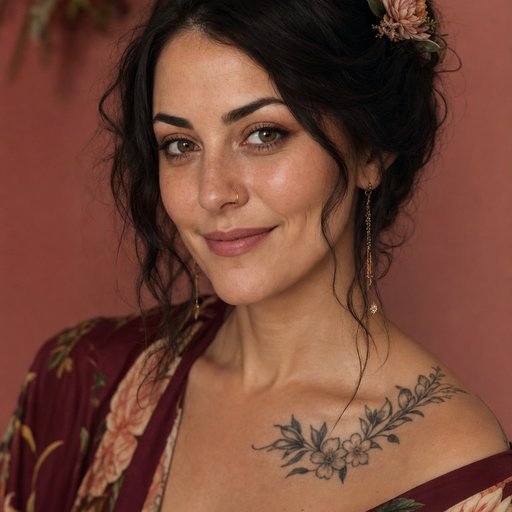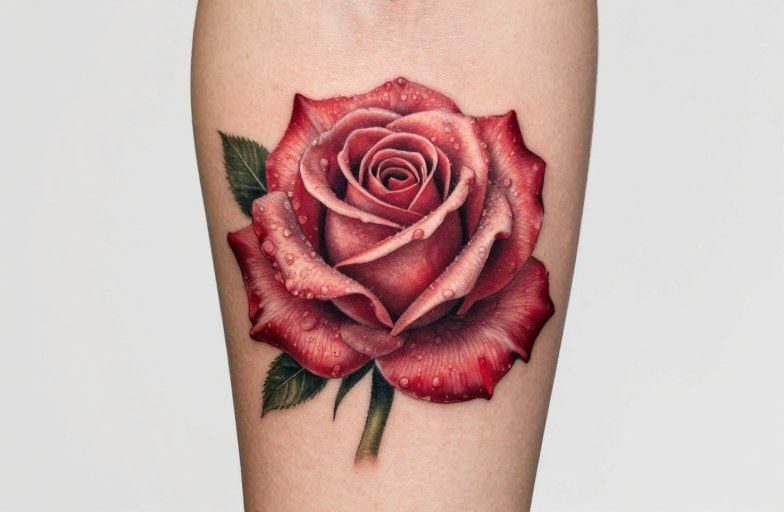
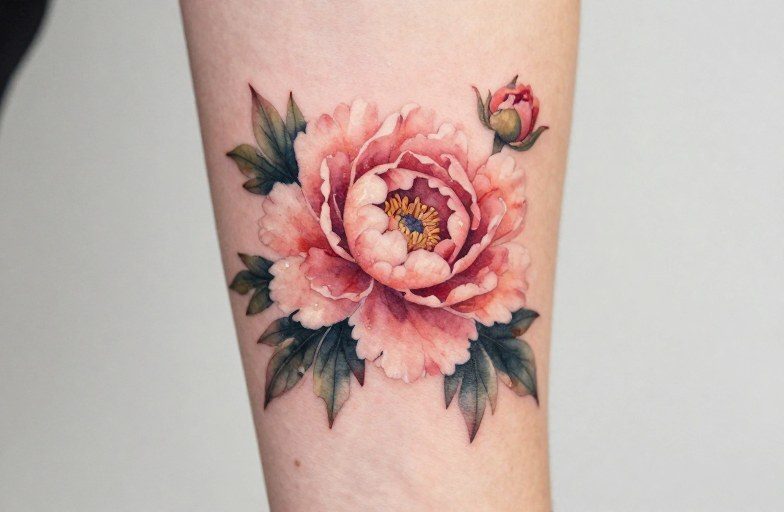
A watercolor peony tattoo takes the layered, ruffled petals of the peony flower and renders them with the loose, bleeding washes of watercolor painting, no heavy black outlines boxing in the color. Instead, the flower’s natural edges often dissolve into splatters, gradients, and negative space. The peony’s dense, complex structure gives the watercolor technique something solid to anchor against; without that botanical architecture, the style can turn to mush on skin.
Linework & Technique
What Holds the Color Together
Traditional watercolor tattoos rely on skin tone to create “white” space and use minimal dark linework to suggest form. With peonies, that approach gets risky. The flower has dozens of overlapping petals, and without strategic dark accents, deep magentas, burgundies, or concentrated purples at the petal bases, the whole bloom flattens into a pink blur. Skilled artists lay down a “skeleton” of desaturated or darker watercolor lines first, then build lighter washes outward. This isn’t the same as black-and-gray linework with color packed over it; the darks need to read as watercolor too, or the style breaks.
Edge Control and Splatter
The hardest part: knowing where to stop. Peony petals have soft, ruffled edges that watercolor can mimic naturally, but uncontrolled splatter across the entire piece reads as sloppy, not painterly. Good artists map the splatter, droplets radiating from the bloom’s underside, a wash fading toward the collarbone, a single hard edge where the flower meets the sternum. Machine speed matters here. Slower passes deposit more saturation; faster passes create the feathery, translucent layers that make watercolor convincing. The peony’s center, with its tight cluster of stamens, usually needs the most density. Artists often switch to a tighter grouping of needles for that core, then open up to a mag or curved mag for the petal washes.
- Dark watercolor “anchors” at petal bases prevent the bloom from floating away
- Negative space must be planned, not accidental, skin tone is your white paint
- Splatter works best when asymmetric and directional, not sprinkled evenly
- Peony centers need needle groupings that can pack tight, concentrated color
Origins & History
The watercolor tattoo style emerged around the early 2010s, often linked to artists like Amanda Wachob and Ondrash who pushed painterly techniques beyond traditional boundaries. It wasn’t a single invention but a gradual loosening of rules, less black, more color theory, acknowledgment that skin isn’t paper and ink behaves differently. Peonies entered the mix because the flower already carried heavy symbolic weight in Japanese and Chinese tattoo traditions, plus Victorian floriography. The crossover made sense: take a respected botanical subject, free it from the rigid structure of Irezumi or American traditional. Some trace the specific peony-watercolor pairing to the broader trend of “feminine” tattooing that gained traction in the 2010s, though that framing oversimplifies both the style and the flower’s long history in masculine Japanese bodysuits.
East Asian Roots vs. Western Adaptation
In Japanese tattooing, the peony, botan, symbolizes wealth and honor, often paired with shishi lions. That tradition demands bold outlines, flat color fields, and specific compositional rules. Watercolor peony tattoos abandon almost all of that, keeping only the flower itself. The result is a distinctly Western interpretation, sometimes criticized as aesthetic borrowing without cultural fluency. If you’re drawn to the peony specifically, knowing this tension exists helps you choose whether to lean into the Japanese visual language or commit fully to the watercolor departure.
How It Ages
The Fading Timeline
Watercolor tattoos age harder than their lined counterparts. The lack of black outline means color migration is more visible, those soft edges don’t stay soft; they fuzz outward. Peonies help somewhat because the dense petal structure creates natural boundaries where color can fade without the whole image losing coherence. Expect the brightest pinks and corals to mute toward rose and salmon within three to five years, depending on sun exposure and your skin’s chemistry. The darker anchors, burgundies, deep reds, plum purples, hold longer and become more critical to the design’s readability over time.
Placement and Aging Speed
Inner bicep, upper thigh, and rib cage: these spots see less sun and less friction, so watercolor peonies hold better there. Wrist, foot, and finger placements are poor choices, the constant abrasion and UV exposure turn watercolor into indistinct smears faster than almost any other style. The peony’s scale matters too. A small watercolor peony, under three inches, loses detail fast; the petal layers collapse into a single pink blob. Go bigger than you think, or accept that the piece will need significant refreshes.
- Sunscreen is non-negotiable; UV is watercolor’s fastest killer
- Touch-ups every 3-5 years keep the color washes distinct
- Peony designs over 4-5 inches age more gracefully than small ones
- Darker skin tones may need adjusted saturation; the “white space” effect relies on contrast with skin
Choosing the Right Artist
Not every artist who does color realism or traditional work can handle watercolor. Look for portfolios with healed photos, not just fresh work. Fresh watercolor tattoos photograph beautifully, skin is red and irritated, colors look extra saturated, the splatter seems alive. Healed photos show whether the artist understands how much saturation to pack, where to place dark anchors, and how the color settles into skin tones. Ask specifically about their peony or botanical experience; the flower’s structure is unforgiving. An artist who only does abstract watercolor splashes may struggle with the peony’s layered anatomy.
Questions to Ask
How do they handle the transition from tight peony center to loose outer petals? Do they work from reference photos of real peonies, or stylized illustrations? What’s their approach to touch-ups, flat rate, hourly, included? An artist who bristles at these questions or claims watercolor doesn’t need touch-ups is either inexperienced or dishonest. The style demands maintenance; anyone telling you otherwise hasn’t watched their own work age five years.
Cost & Sessions
Watercolor peony tattoos run higher than comparable black-and-gray pieces because of the color mixing, layering, and time spent on transitions. A medium-sized piece, say, 5-6 inches on the upper arm, typically needs 3-5 hours for a single session if the artist works efficiently. Larger compositions, like a peony spanning shoulder to collarbone with multiple blooms and background wash, might break into two sessions to manage skin trauma and artist fatigue. Hourly rates for specialized watercolor artists range broadly, $150-$300+ in most US markets, with total piece costs from $400 for small, simple designs to $2,000+ for extensive work. The color itself costs more, quality pigments, multiple mixes, disposable cups for each wash. Don’t bargain hunt; cheap watercolor ages into cheap watercolor.
Aftercare Notes
Healing a watercolor peony requires the same fundamentals as any color tattoo: gentle wash, thin moisturizer, no picking, no sun. But the style has specific vulnerabilities. The lightest washes, those barely-there pinks and yellows, are the easiest to pull out during scabbing. If the piece scabs heavily, those areas may heal patchy. Keep it slightly more moist than you might a bold traditional piece, but not soggy. Aquaphor or similar for the first 3-4 days, then switch to unscented lotion. The splatter edges, where color is intentionally thin, are where you’ll notice healing issues first. Blotchy splatter that doesn’t match the artist’s intention usually means you dried out or over-moisturized those zones.
Long-Term Maintenance
After the initial heal, the real work begins. Sunscreen every day the tattoo is exposed, SPF 30 minimum. Moisturize regularly; dry skin makes faded watercolor look chalky and dead. Plan that touch-up around year three, sooner if you swim frequently, work outdoors, or have a fast metabolism that processes ink aggressively. The peony’s structure will hold longer than abstract watercolor, but only if you put in the maintenance.
Before You Decide
Watercolor peony tattoos are beautiful when fresh, demanding over time, and genuinely difficult to execute well. The style flatters certain skin tones more than others, very fair skin makes the pale washes pop, very dark skin needs bolder saturation and rethinks the negative-space strategy entirely. Consider whether you want the peony for its look or its associations; the watercolor style strips away most traditional symbolism, leaving primarily visual impact. Commit to the artist search, the higher cost, the maintenance schedule, and the reality that this tattoo will need future attention. If that fits your tolerance, the watercolor peony offers something no other style does: a flower that seems to still be blooming, still wet, caught between pigment and skin.
One honest note: watercolor’s trend peak has passed, and some artists have moved on. That doesn’t make it a bad choice, but it means the pool of specialists is smaller than it was. Take your time finding someone whose healed work still moves you.
Frequently Asked Questions
Do watercolor peony tattoos need black outlines to last?
Not necessarily black, but they need dark color anchors, deep reds, burgundies, or concentrated purples, to maintain structure as the lighter washes fade. Purely pastel watercolor peonies blur fastest.
Can a watercolor peony tattoo be covered up later?
Cover-ups are challenging because the lack of dense black and the light color palette leave little to work with. Laser fading first is often necessary, and the original design’s size and placement matter hugely.
Why does my healed watercolor peony look duller than when it was fresh?
Fresh tattoos sit on inflamed skin, which reflects light and makes colors pop. Healing adds a layer of settled skin over the ink, and watercolor’s translucent nature means that dulling is more visible than in opaque styles.
Are watercolor peonies more painful than other color tattoos?
The pain level depends on placement and your personal threshold, not the style. However, watercolor sessions often run longer due to layering and blending, which can mean more cumulative discomfort in a single sitting.