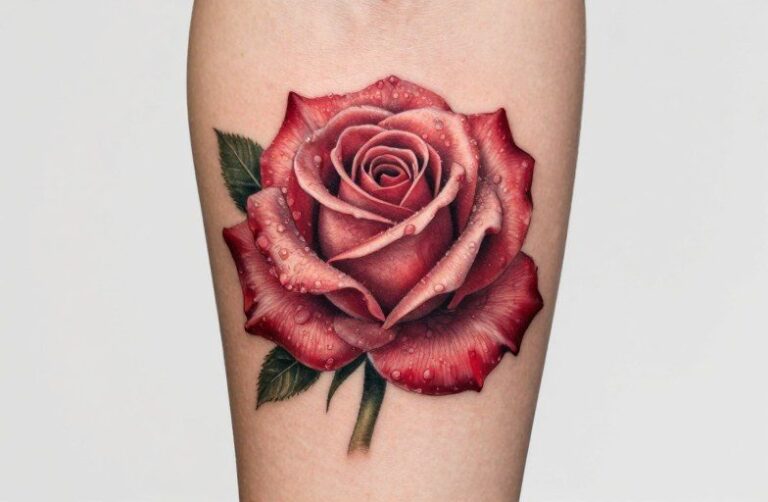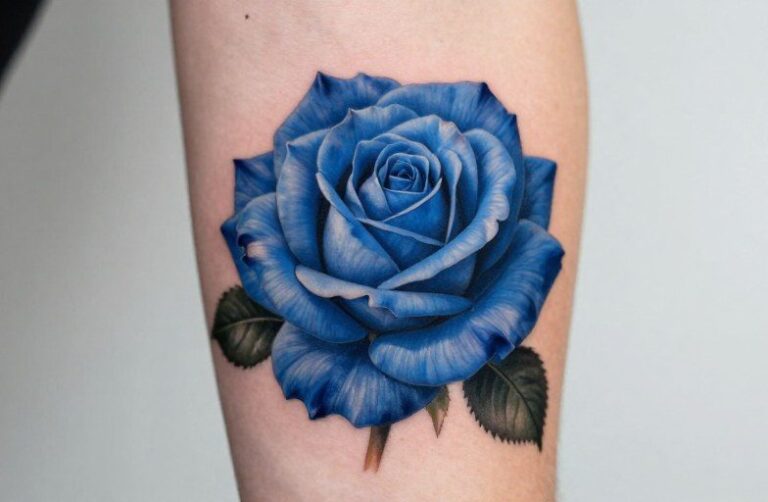
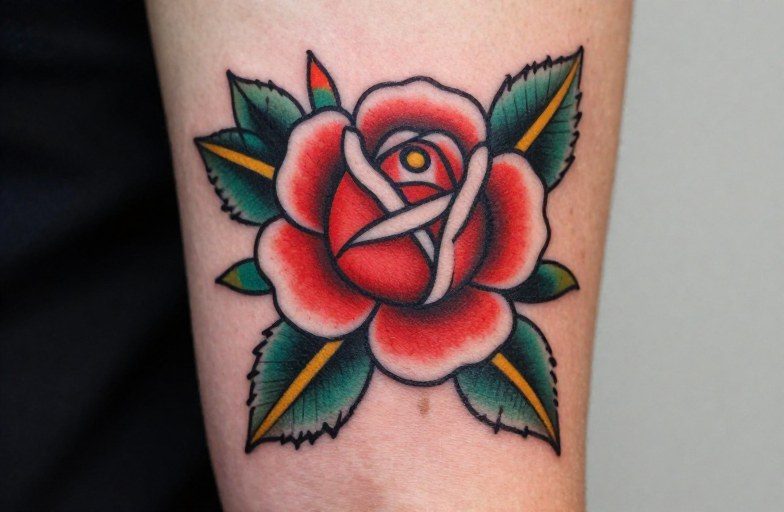
The American traditional rose is one of the most recognizable images in tattooing: thick black outlines, flat saturated color, minimal shading, and a composition built to last. Born from the flash sheets of early 20th-century American shops, this style prioritizes clarity over realism. A traditional rose reads as a rose from across the room, not a botanical study. The leaves are stylized daggers, the petals are blocks of red or pink with maybe a highlight dot or two, and the stem curves with deliberate swagger. Understanding what makes this style work, and where it falls apart, helps you get a piece that honors the tradition without looking like a cheap imitation.
Color vs Black and Grey
The Classic Palette
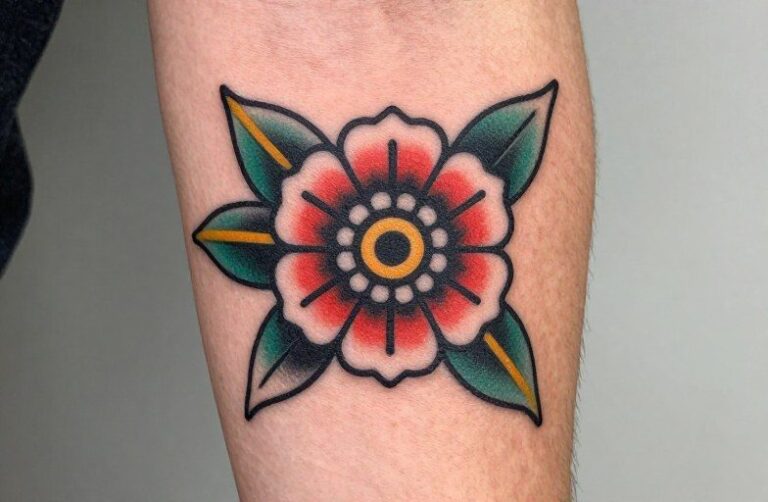
Traditional rose color is deliberately constrained. You are looking at red or dark pink for the bloom, green for leaves and stem, black for outlines and drop shadows, and yellow or white for small accents. That is it. The red is usually a warm, slightly orange-toned vermilion rather than a blue-based crimson. Green tends toward olive or forest, not neon or teal. These pigments were originally chosen for what was available and what held in the skin; now they are chosen because the combination is instantly readable as “traditional.”
Application matters as much as hue. Color is packed in solid, not airbrushed or gradiented. You will see “whip shading” on petals sometimes, a quick, flicking motion that creates a soft edge, but the core of each petal is flat color. Skin tone affects the final look significantly. On darker skin, that classic red can heal toward burgundy; experienced artists adjust by leaning into deeper, more saturated pigments rather than trying to force a bright scarlet that will muddy.
Black and Grey Traditional
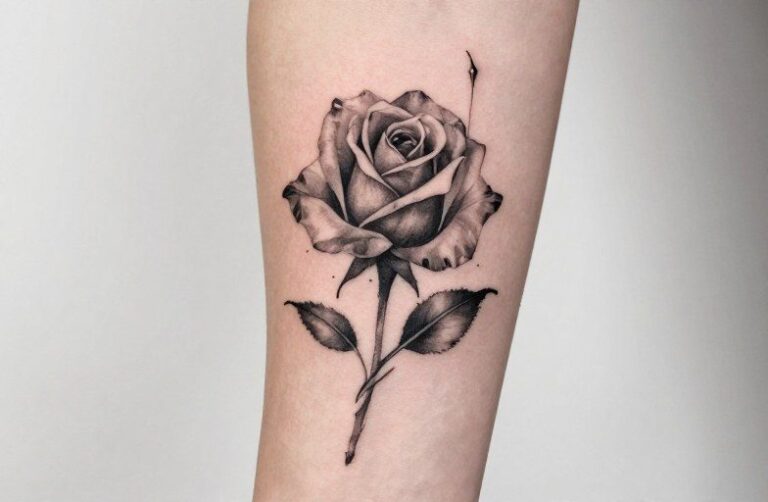
Black and grey American traditional rose is less common but absolutely valid. The challenge is maintaining the style’s graphic punch without color to separate elements. Stronger line weights help. So does using solid black fills for background elements or leaves, creating contrast against grey-washed petals. A black and grey traditional rose often looks heavier, more aggressive, and can age faster if the grey tones blur together. The solution is keeping values distinct, light grey, medium grey, black, with no subtle gradations between them.
Aftercare Notes
American traditional work tends to heal cleaner than finely shaded or color-realistic pieces because the skin receives less total trauma. Large solid fields of color do weep and peel more dramatically though, and the thick scabbing can be alarming if you have not experienced it.
- Keep the bandage on for the time your artist specifies, usually 2-6 hours, sometimes overnight with second-skin products.
- Wash gently with unscented soap, pat dry, apply a thin layer of recommended aftercare. Do not suffocate the tattoo under thick ointment.
- Red ink in traditional roses has a slightly higher reputation for irritation during healing. This is usually mild and passes; do not panic if the area stays warmer or itchier longer than surrounding black lines.
- Peeling will lift in sheets for solid color areas. Let it come off naturally. Picking at a traditional rose risks pulling out whole patches of pigment, leaving obvious gaps in those flat color fields.
- Sun exposure during the first month will fade red faster than black. Plan clothing coverage or timing accordingly.
How It Ages
The 10-Year View
American traditional rose tattoos are built for longevity. The bold outlines act as fences, keeping color from migrating. The limited palette means less chance of one pigment fading unevenly and creating a muddled look. After a decade, a well-executed traditional rose will have softened, the lines thickened slightly, but the image remains legible. The red may have cooled toward a dusty rose or brick tone. The black stays black.
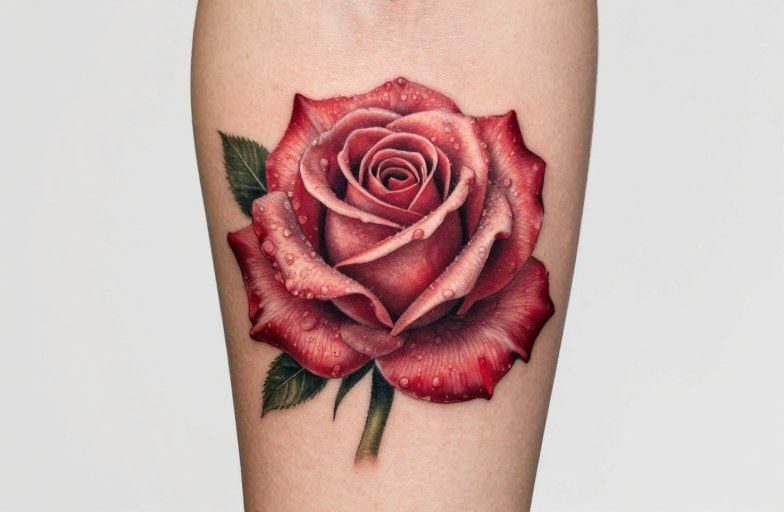
What fails is when an artist tries to hybridize traditional with softer styles, thinning the outlines, adding too much grey shading, trying for “realistic” petal texture. Those delicate elements blur first. A rose with a 3mm outline and solid color blocks has structural integrity. One with hairline details and subtle color transitions does not.
Touch-Up Reality
Traditional roses often benefit from a single touch-up 5-15 years in, usually to brighten the red and sharpen any outline spread. This is normal maintenance, not a failure of the original work. The touch-up is typically quick and straightforward because the underlying structure is still there. Compare this to a photorealistic rose that needs constant revision as fine details disappear, traditional aging is graceful by design.
Cost & Sessions
Pricing varies by region and artist reputation, but American traditional rose tattoos follow predictable parameters. A small, simple rose with no background, palm-sized or smaller, might run 1-2 hours at standard shop rates. A larger piece with multiple roses, scrollwork, or a dagger through the bloom moves into 3-5 hour territory. Full sleeves or large thigh pieces with traditional rose motifs as centerpieces can be multi-session projects spanning months.
Specialists in authentic American traditional work often charge premium rates. The style looks simple but demands precise line confidence, consistent color packing, and understanding of how the image will settle. A cheap traditional rose usually reveals itself in wobbly outlines, patchy color, or proportions that feel slightly off. Budget for quality; this is a style where corner-cutting is obvious forever.
Best Placements
Classic Locations
The outer forearm, upper arm, and outer thigh are the traditional homes for this rose. These areas offer flat or gently curved surfaces that let the design sit without distortion. The outer forearm in particular has become almost synonymous with the single traditional rose, visible, socially acceptable, and enough real estate for the image to breathe.
The chest plate, over the heart, carries historical weight for rose-and-dagger or rose-and-anchor combinations. Hand and knuckle placements work but require accepting faster fade and potential blowout; the skin there is thin and mobile. Neck and throat roses are bold choices that read as committed to the aesthetic.
Placement Pitfalls
Inner arm, inner thigh, and torso sides are softer, more prone to stretching and weight fluctuation. A traditional rose can work there, but the stem curve and leaf angles need designing specifically for the location, not just shrinking a standard design. Ribs and stomach demand the artist understand how the body moves; a rose that looks centered when standing may twist oddly when seated if not planned for.
Modern Variations
Neo-Traditional Hybrids
Neo-traditional rose work keeps the bold outlines and general composition but introduces more color complexity, smoother gradients, and sometimes more naturalistic petal shapes. The risk is losing the graphic punch that makes traditional durable. Successful neo-traditional roses maintain heavier line weights than true realism and keep the color scheme somewhat restrained, maybe six colors instead of three, not twenty.
Contemporary Twists
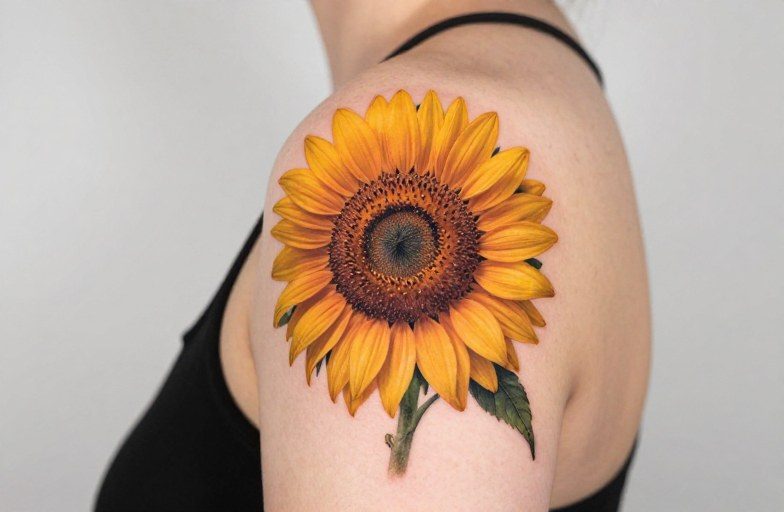
Some artists are playing with negative space, letting skin tone serve as “white” petals against black or red fills. Others incorporate geometric frames or unexpected companion imagery, skulls, snakes, hourglasses, while keeping the rose itself classically rendered. The unifying rule: the rose portion should still read as traditional at a glance. Once the bloom itself goes soft or realistic, the piece has left the category entirely.
The Bottom Line
An American traditional rose tattoo succeeds through restraint and confidence. The style offers no place to hide shaky technique, every line is visible, every color block is a declaration. Choose an artist whose portfolio shows healed work, not just fresh photos. Ask about their pigment choices for red on your specific skin tone. Commit to the limitations: bold outlines, flat color, graphic clarity. The reward is a tattoo that looks as intentional in thirty years as it does today, a rose that does not need explanation because its visual language is universal.
Frequently Asked Questions
How big should an American traditional rose be to stay readable?
Palm-sized is the practical minimum for the style’s details to hold. Smaller than that, the lines blur together and the color blocks become indistinct. A slightly larger scale gives the artist room to execute clean whip shading and solid color packing without cramming.
Can a traditional rose be covered up or modified later?
Yes, the bold black outlines and dense color actually make traditional roses excellent cover-up foundations. The existing structure can be incorporated into larger traditional pieces, or blacked out and rebuilt if the original was poorly executed.
Why do some traditional roses look ‘muddy’ after healing?
Usually because the artist used too many grey tones or tried to blend colors smoothly. Traditional work should have distinct value steps, solid red, solid black, clean skin. When values sit too close together, they merge during healing into a murky middle tone.
Is it okay to bring my own reference image of a traditional rose?
Bring references for mood and composition, but let the artist redraw for the style. A traced photograph will not have the correct proportions or line weights for authentic traditional work. Good artists adapt references into proper traditional vocabulary.