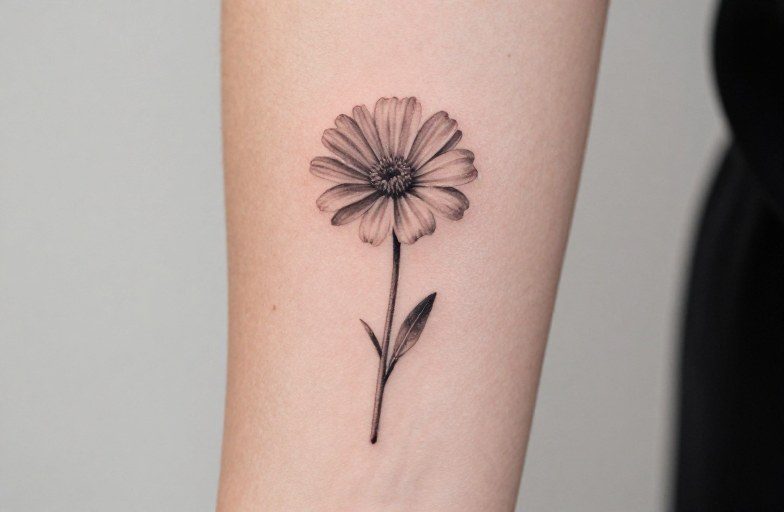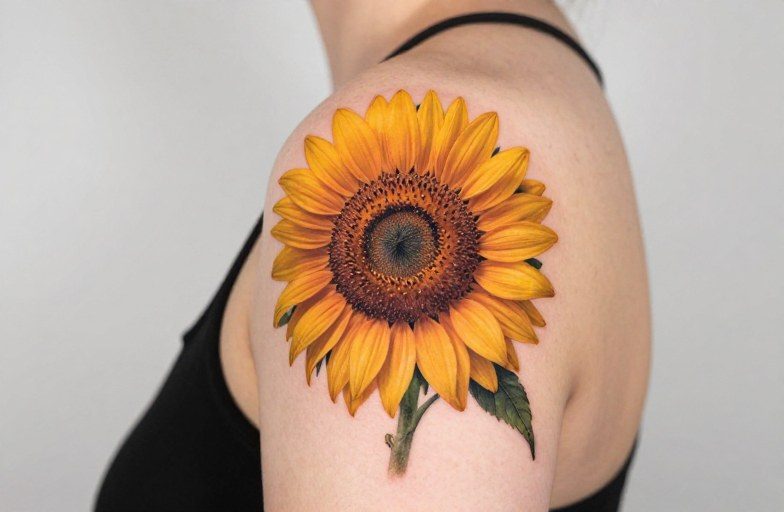
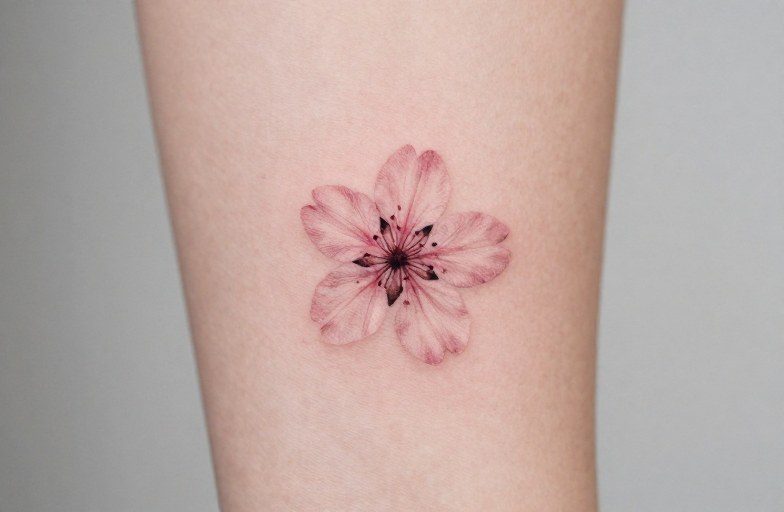
Cherry blossom tattoos have saturated the mainstream for decades, but the minimalist approach strips away the noise. What remains is a design that relies on restraint, thin lines, negative space, and ink that ages gracefully rather than fighting time. The difference between a delicate piece that holds up and one that blurs into a pink smudge comes down to specific technical choices, not just aesthetic preference. Here’s how to get it right.
Popular Styles
Minimalist cherry blossoms aren’t one look. The style splits into distinct approaches, each with different longevity and visual impact.
Single-Needle Linework
Single-needle work uses one round liner to create hair-thin branches and sparse petals. The result reads as botanical illustration rather than traditional tattoo. This style demands an artist with steady machine control, wobbly lines in single-needle work don’t have surrounding boldness to hide them. On fair skin, the contrast stays crisp for years. On darker skin tones, the same lines can soften faster, so some artists slightly weight the branch work while keeping petals minimal.
Dotwork and Stipple Shading
Instead of solid pink fills, stipple shading builds tone through clustered dots. This technique mimics the soft gradient of real sakura without the heavy saturation that blurs over time. Dotwork also solves a common problem: cherry blossoms are pale pink, and pale colors fade fastest. Dots in black or diluted gray create the impression of color without relying on pigments that disappear. The trade-off is longer session time and higher cost per square inch.
Trending Variations
Current minimalist cherry blossom work pushes beyond the standard branch-across-shoulder blade formula.
Falling Petal Sequences
Rather than intact flowers, scattered petals in various stages of descent create motion without complexity. A single petal near the collarbone, another at the ribcage, a third at the hip, this vertical sequencing turns the body into a timeline. Each petal stays small, often under an inch, which keeps touch-ups simple and allows the design to expand later if desired.
Abstracted Botanical Forms
Some artists are reducing the blossom to its essential geometry: five curved lines radiating from a center point, no shading, no branch. These read as cherry blossom to those familiar with the form, abstract shape to others. The ambiguity appeals to people who want the reference without the literalism. This approach works particularly well at very small sizes, behind the ear, on the inner wrist, where detail would be lost anyway.
For First-Timers
Minimalist cherry blossoms are a common first tattoo for good reason: they’re small, socially acceptable in most professional settings, and carry established cultural resonance. But first-timers often make specific mistakes with this design.
- Going too small. A cherry blossom cluster under two inches loses petal definition within five years. The minimum readable size for a five-petal bloom with center detail is roughly 1.5 inches in diameter.
- Choosing watercolor-style fades. The bleeding, unpigmented edges popular in watercolor tattoos blur unpredictably. Minimalist work needs controlled edges to stay legible.
- Ignoring the branch. A blossom floating without attachment looks like a generic flower. Even a minimal branch, two thin lines with slight taper, anchors the design botanically.
Pain varies by placement, but the thin linework typical of this style means more needle passes in the same area to build saturation. What looks delicate often takes longer than bolder work of the same size.
Best Placements
Where you put a minimalist cherry blossom changes how it’s read and how it ages.
High-Mobility Areas
Wrists, ankles, and fingers see constant flexing and friction. A minimalist branch wrapping the wrist sounds elegant, but the repeated bending accelerates line spread. If you want wrist placement, keep the design on the outer wrist (less movement) and avoid crossing into the palm-side crease. Finger placement is generally discouraged for fine linework, the skin there sheds and regenerates faster than anywhere else on the body.
Stable Canvas Options
The upper outer arm, shoulder blade flat, and ribcage (on the side, not directly over the floating ribs) offer relatively stable skin with good visibility. The collarbone area works well for single-petal or small-cluster designs, though sun exposure here is constant, plan on SPF commitment or expect faster fading. Behind the ear suits the tiniest minimalist interpretations but requires precise aftercare; the area traps moisture and is easy to bump during healing.
Tips for Choosing
Selection criteria for this specific design differ from general tattoo advice.
- Reference the specific species. Prunus serrulata (Japanese cherry) has notched petals; Prunus avium (wild cherry) has smoother edges. Most tattoo flash defaults to the notched form, but specifying matters if you’re particular.
- Consider bloom stage. Tight buds, partial opens, full blooms, and falling petals each carry different visual weight. A design mixing stages looks more natural than uniform full blooms.
- Plan for color loss. If you choose pink ink, select a shade with some red undertone rather than pure pastel. Magenta-leaning pinks fade to a visible warm tone; baby pinks often disappear to nothing.
- Evaluate the artist’s healed work. Fresh minimalist tattoos look universally clean. Ask to see photos at one year and three years. Lines that spread or dots that merged into solid gray indicate technique issues.
Black and gray versions last longer but read differently, more winter branch, less spring bloom. Decide which season you want to carry.
Matching & Pairing Ideas
Cherry blossoms pair naturally with certain companion elements, but restraint remains the rule.
Complementary Minimal Motifs
Small crescent moons, single kanji characters, or geometric shapes (hexagons, thin circles) can share a placement area without competing. The key is scale parity, don’t pair a delicate blossom with a heavy black snake. Wind lines, suggested by two or three parallel curves, can extend the falling-petal narrative without adding objects.
Multi-Person Coordination
Matching sibling or friend tattoos often default to identical images. More interesting: one person carries the branch, another the falling petals, a third a single bud. The designs read as related without being clones. For couples, avoid the cliché of one blossom and one branch, instead, consider same-design different-placement, or matching single petals in different stages.
The Bottom Line
Minimalist cherry blossom tattoos succeed when technical restraint meets informed placement. The design’s popularity means abundant reference material, but also abundant mediocre execution. Prioritize artists who demonstrate healed fine-line work, size the design for longevity rather than immediate discretion, and choose pigment strategies, black dotwork, deeper pinks, or pure linework, that won’t disappear into your skin tone within a decade. The blossom itself is ephemeral by nature; the tattoo doesn’t have to be.
Frequently Asked Questions
How small can a minimalist cherry blossom tattoo be before it starts to blur?
A single blossom needs at least 1.5 inches in diameter to keep petal separation readable over time. Clusters require more space, generally 3 inches minimum for a three-bloom design with branch detail. Going smaller risks the center dot and petal edges merging into an indistinct blob within a few years.
Do minimalist cherry blossom tattoos have to be pink?
Not at all. Black and gray versions age more predictably and avoid the fading issues common with light pink ink. Some artists use diluted red or magenta for subtle warmth. Pure black linework with no fill is the most durable option and often reads as more graphic and modern.
How much does a good minimalist cherry blossom tattoo cost?
Fine linework typically runs higher than bold traditional work because it demands more technical precision and often more time. Expect $150-$300 for a small single-needle piece from a reputable artist, with larger or multi-bloom designs going higher. Extremely low prices often indicate rushed work that won’t hold its detail.
Can you add to a minimalist cherry blossom tattoo later?
Yes, and this is one of the style’s advantages. A single branch can extend into a larger composition; additional blossoms can fill in around an existing one. Plan initial placement with expansion in mind, leave negative space that reads as intentional rather than incomplete. Your artist can map a potential growth path even if you start small.